Junk Silver Coins Identification Guide: 90% Silver US Coins, Values, and Stacking
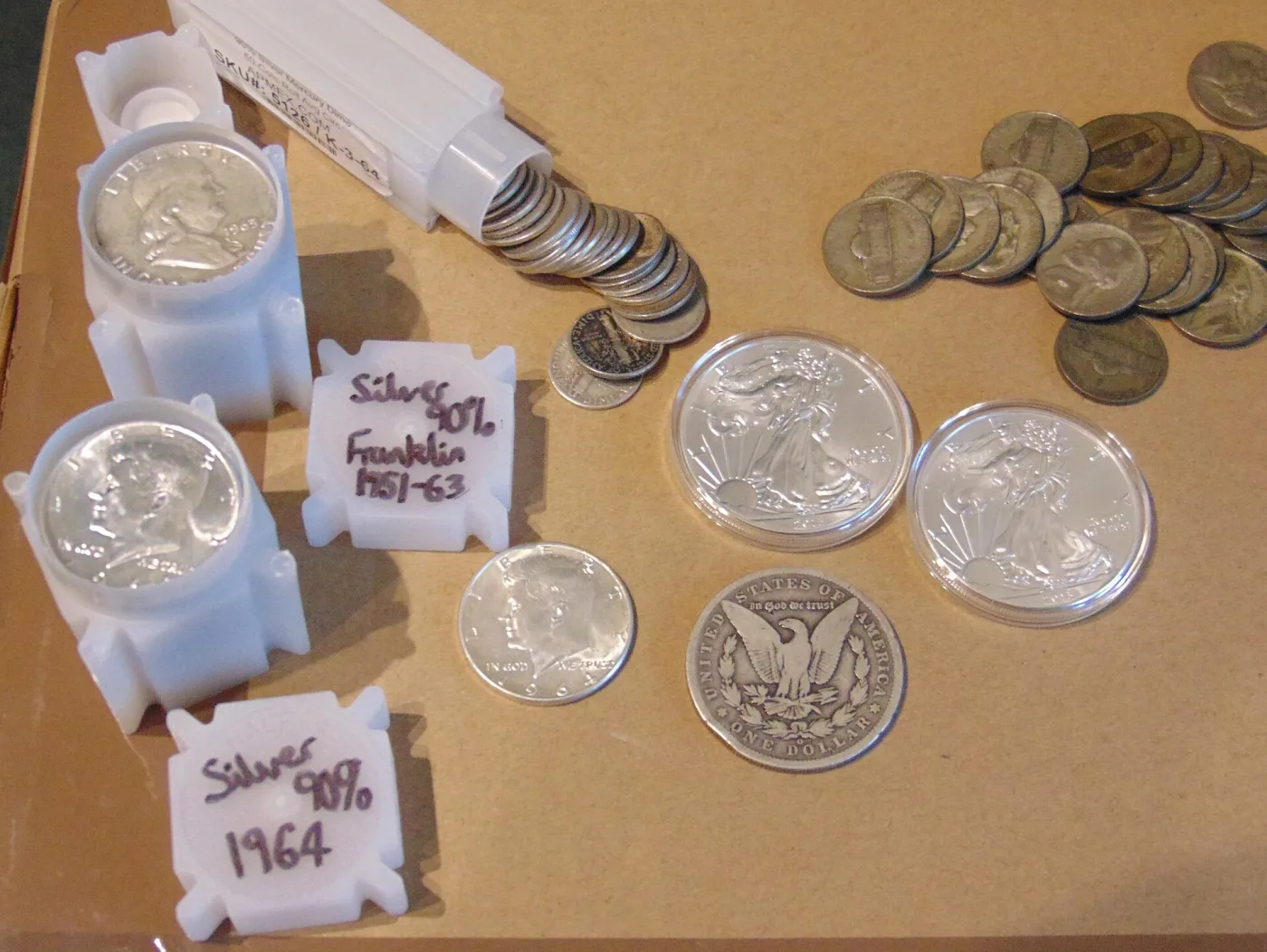
“Junk silver” is one of the most misleading terms in all of coin collecting. There is nothing junky about it. The phrase simply refers to common-date United States dimes, quarters, half dollars, and dollars that contain 90% silver but carry little or no collector premium above their metal content. Because their value tracks the price of silver rather than rarity, dealers and stackers lumped them together as “junk” decades ago, and the name stuck. For anyone who wants to own physical silver at the lowest possible cost, these coins are among the smartest purchases in the entire precious-metals market.
The single most important fact to memorize is this: with only a handful of exceptions, every US dime, quarter, and half dollar dated 1964 or earlier is 90% silver, and every one dated 1965 or later is copper-nickel clad with no silver at all. That one date—1965—is the great dividing line of American circulating coinage, the result of the Coinage Act of 1965 that removed silver from everyday money as rising bullion prices threatened to make the coins worth more melted than spent.
This guide covers everything you need to identify, verify, and value junk silver coins. You’ll learn exactly which coins qualify, how to spot silver at a glance using the rim test, how much actual silver each denomination contains, how to calculate melt value from the current spot price, where to find these coins in circulation, and how to buy and store them wisely. Whether you inherited a coffee can of old coins or you’re building a stack one roll at a time, this is your complete reference.
What Is Junk Silver?
Junk silver is any silver-content coin whose market value comes from its precious-metal weight rather than its numismatic rarity. The overwhelming majority of junk silver in the United States consists of 90% silver dimes, quarters, and half dollars struck for circulation before 1965. These are ordinary coins that once bought bread, gasoline, and bus fares—worn, common, and produced by the hundreds of millions—but each one holds a small, meltable quantity of pure silver.
The word “junk” describes value, not condition or desirability. A heavily circulated 1962 Roosevelt dime and a pristine key-date coin can share the same design, yet one is junk silver and the other is a collectible worth many times its metal content. The difference is scarcity and grade. Junk silver coins are the ones so common that no collector will pay extra for the date or mint mark, leaving their price to float with the silver market.
Other Names for Junk Silver
You will encounter several interchangeable terms in the marketplace. “Constitutional silver” is a favorite among precious-metals enthusiasts, referencing the era when US money was backed by and made of silver as the Constitution’s framers arguably intended. “90% silver” and “90 percent” refer to the fineness of the alloy. “Pre-1965 silver” and “pre-’65” point directly to the cutoff date. Dealers also sell it by composition of the bag, such as “$1,000 face bag” or “half bag.” All of these describe the same underlying product: common-date circulated US silver coinage.
Why People Buy It
Junk silver appeals to a wide range of buyers for several reasons. It carries one of the lowest premiums over spot silver of any physical silver product, meaning you pay less above the metal value than you would for a bullion round or bar. It comes in small, divisible units—a single dime holds roughly a fourteenth of a troy ounce—making it ideal for barter scenarios where a one-ounce bar would be too large to break. It is instantly recognizable as genuine US currency, which builds trust in private transactions. And because these coins were legal tender, they enjoy a familiarity that foreign or private-mint silver—such as the .900 silver of the classic French coins, the .917 silver of pre-1940 British India rupees, or the sterling of pre-1946 Australian coins—cannot match.
The 1965 Cutoff: Why the Date Matters
To understand junk silver, you must understand the Coinage Act of 1965. Through the early 1960s, the price of silver climbed steadily. Because US dimes, quarters, and half dollars were 90% silver, there came a tipping point where the metal in a coin was worth more than its face value. When that happens, coins vanish from circulation as people hoard and melt them—a phenomenon economists call Gresham’s Law, where “bad money drives out good.”
To stop this, Congress passed the Coinage Act of 1965, which eliminated silver from the dime and quarter entirely, replacing it with a copper-nickel “clad” composition: pure copper core bonded between layers of 75% copper, 25% nickel. The half dollar was given a reduced 40% silver content as a transitional compromise from 1965 through 1970 before it, too, went fully clad in 1971.
The Practical Rule
For everyday identification, the rule could not be simpler. Look at the date on any US dime, quarter, or half dollar:
- 1964 and earlier: 90% silver (junk silver)
- 1965 and later: copper-nickel clad, no silver (with the notable exception of 40% silver half dollars from 1965–1970 and special collector issues)
Because so many silver coins were pulled from circulation in the years right after 1965, finding a pre-1965 coin in your pocket change today is a genuine, if increasingly rare, thrill. They still turn up, which is what makes searching rolls and change so rewarding.
A Note on Mint Marks and Silver
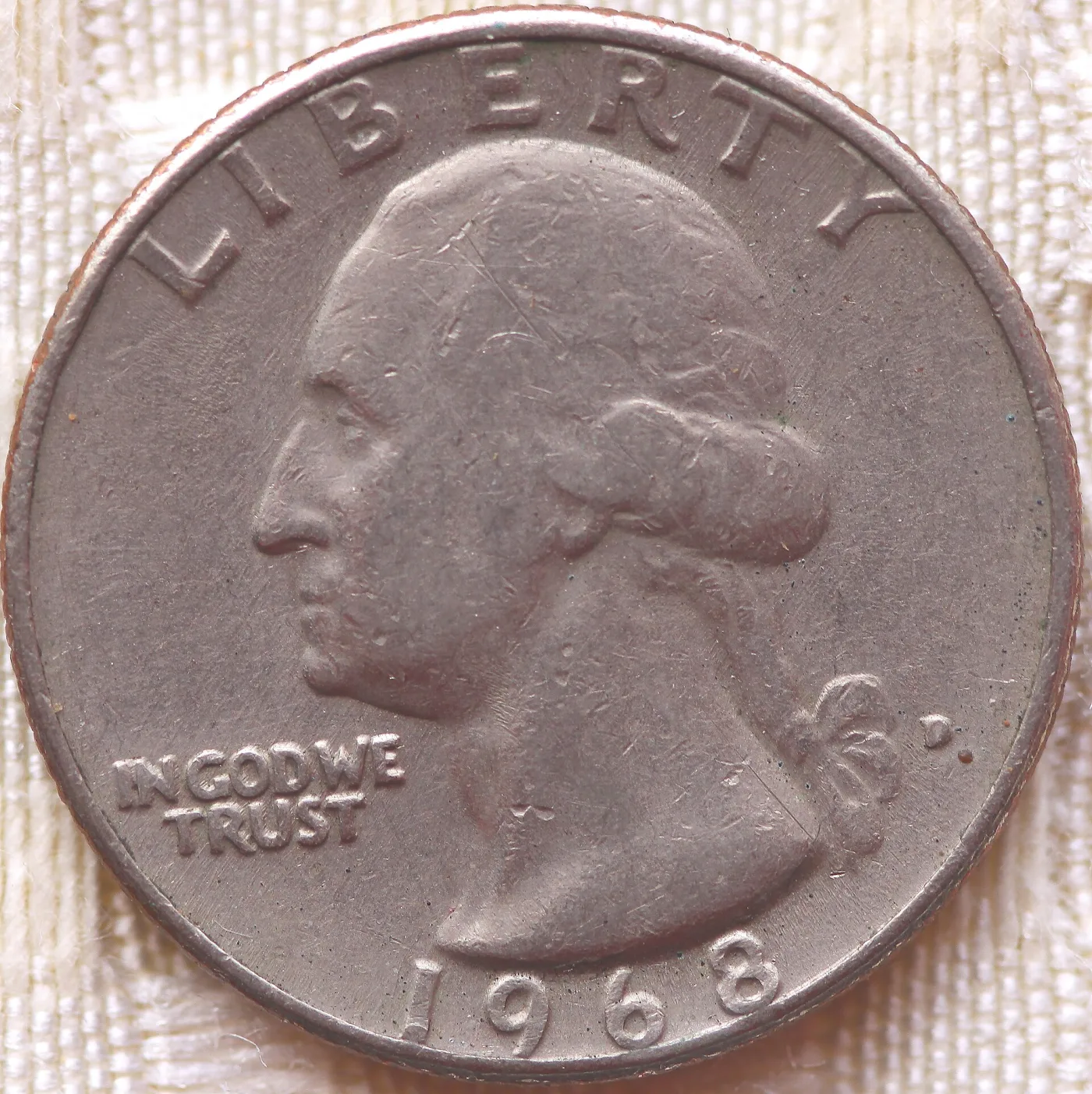
The date determines silver content, not the mint mark. A 1964 dime is 90% silver whether it was struck in Philadelphia (no mint mark), Denver (D), or San Francisco (S). Understanding where to find and read mint marks is useful for deeper collecting, but for junk silver purposes, the year alone tells you what you need to know. The only wrinkle is a small number of special collector coins struck in silver after 1965, which we cover below.
Which US Coins Are 90% Silver
Several distinct coin designs fall under the 90% silver junk category. Knowing the specific series helps you recognize silver coins even when the date is worn or hard to read, because each design was only ever produced in silver during its run.
Silver Dimes (90% Silver)
- Barber Dime (1892–1916): Liberty in a laurel wreath and cap, designed by Charles Barber. Every business-strike Barber dime is 90% silver.
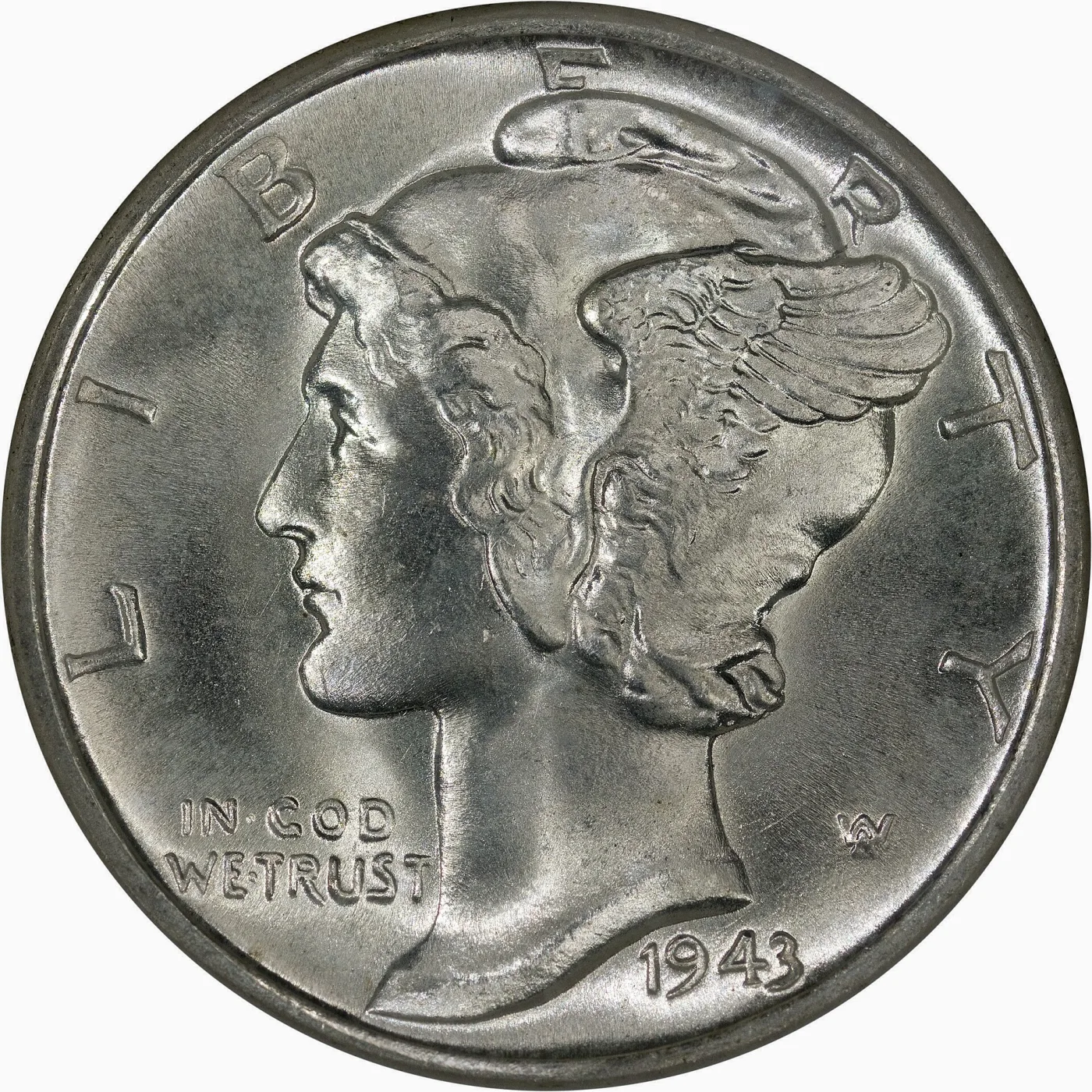
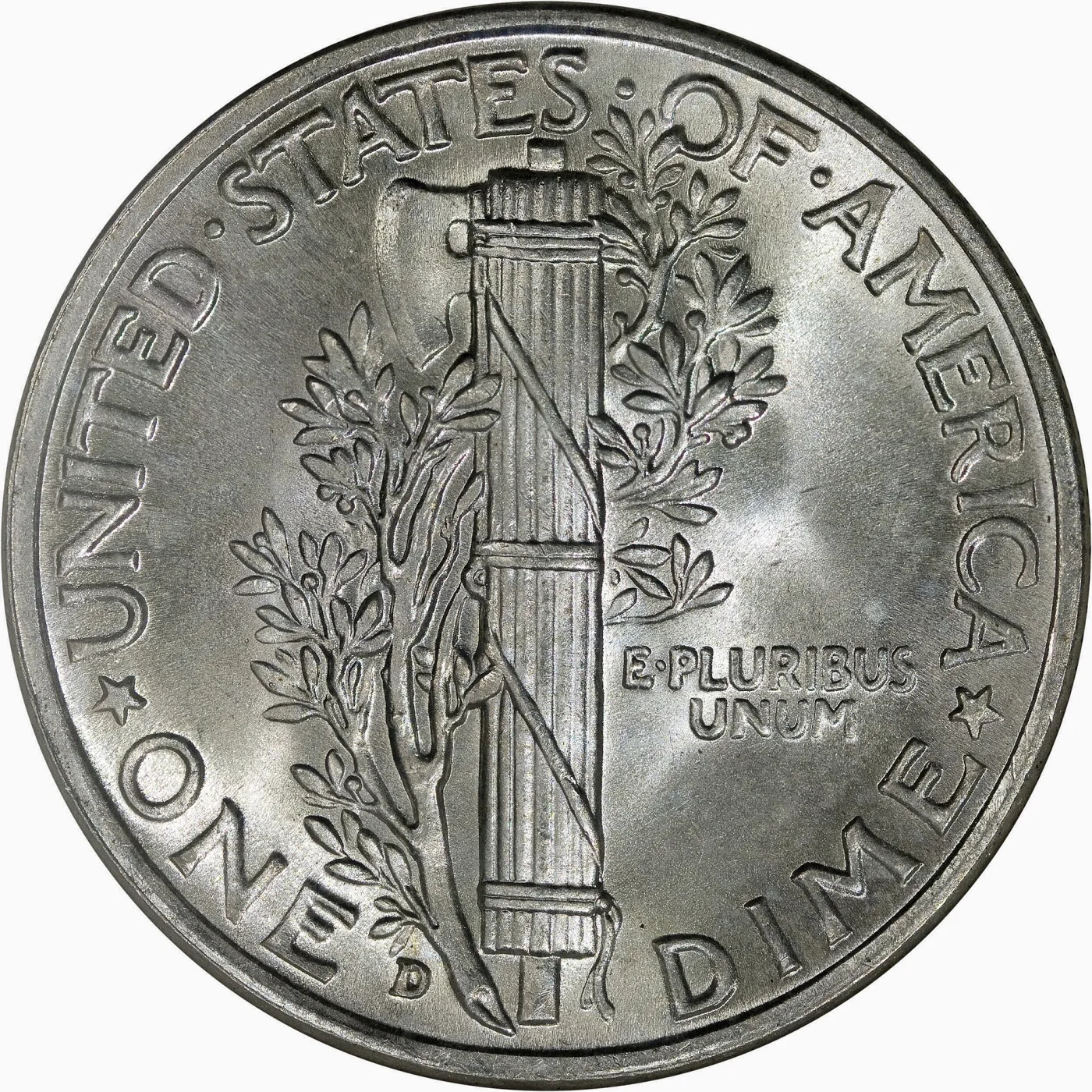
- Mercury Dime (1916–1945): The winged Liberty head, often mistaken for the Roman god Mercury. One of the most beloved US coin designs, all 90% silver.
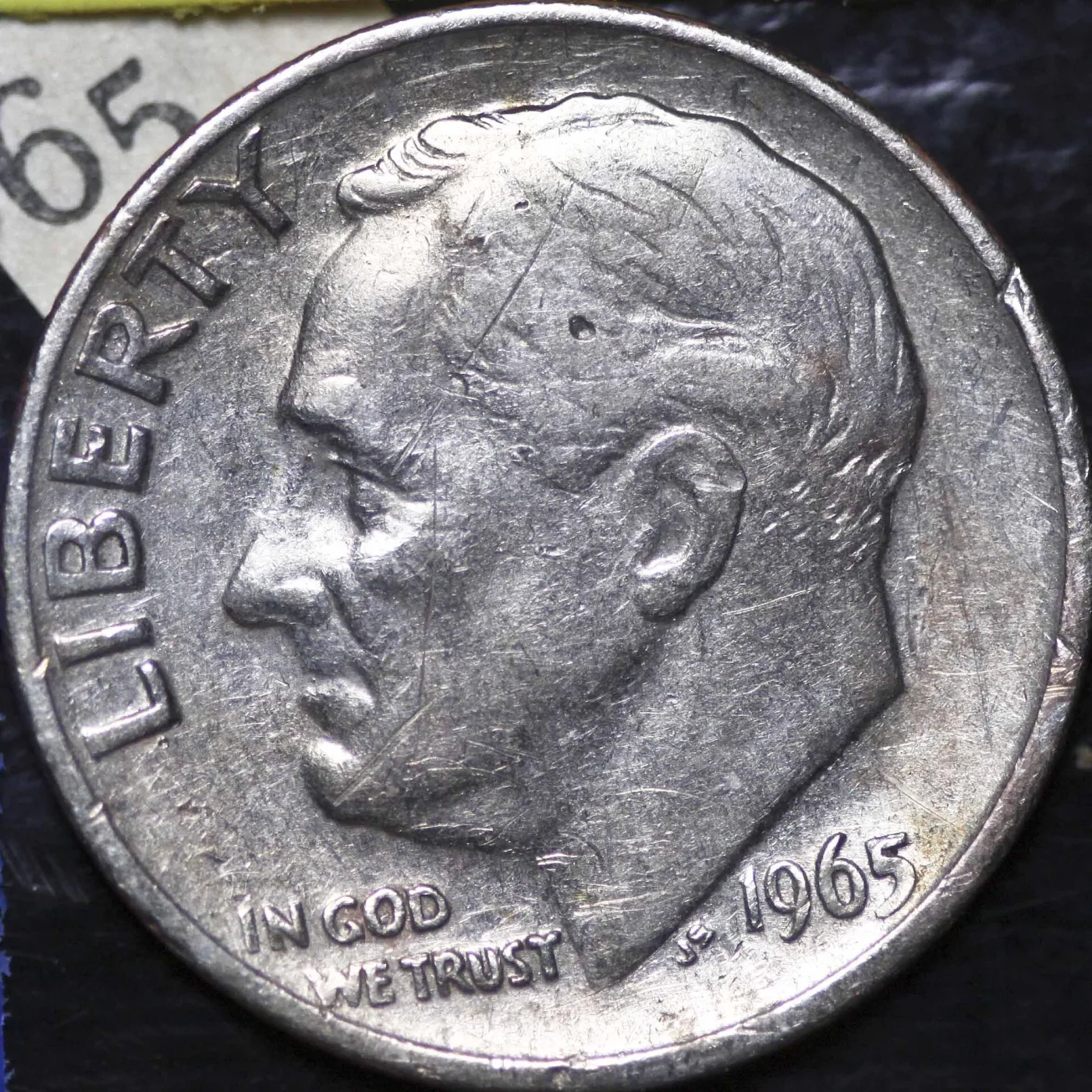
- Roosevelt Dime (1946–1964): The Roosevelt design continues today in clad, but every Roosevelt dime dated 1964 or earlier is 90% silver.
- Seated Liberty Dime (1837–1891): The earlier seated figure of Liberty. All are 90% silver, though many now carry collector premiums beyond junk value.
Silver Quarters (90% Silver)
- Barber Quarter (1892–1916): The quarter-dollar companion to the Barber dime, all 90% silver.
- Standing Liberty Quarter (1916–1930): A striking full-figure Liberty, all 90% silver.
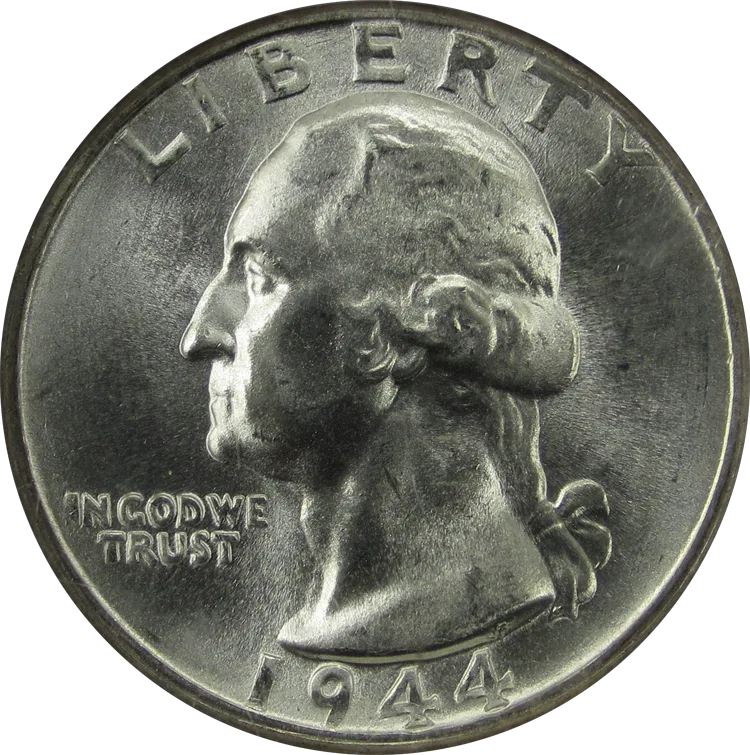
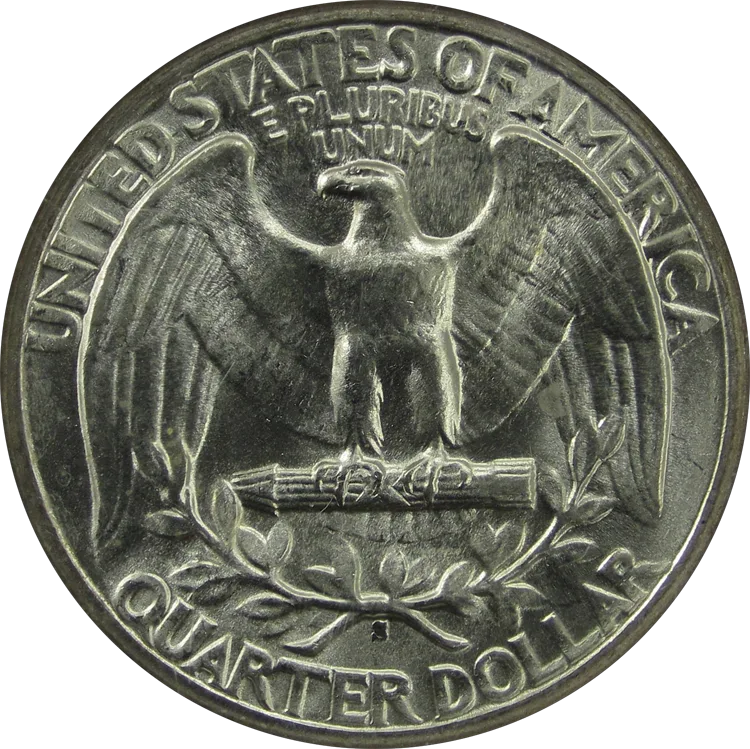
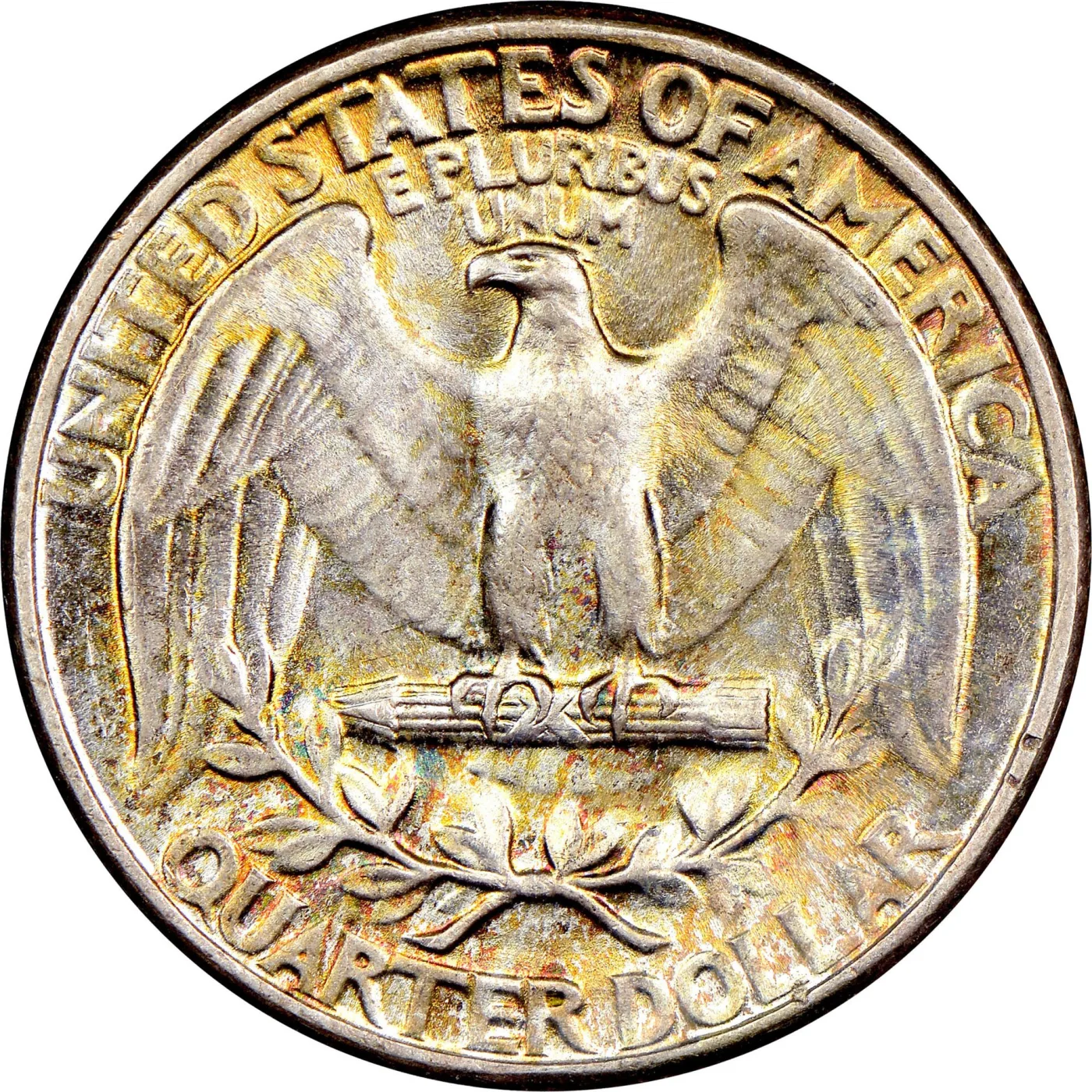
- Washington Quarter (1932–1964): The familiar Washington portrait, 90% silver through 1964 before switching to clad in 1965.
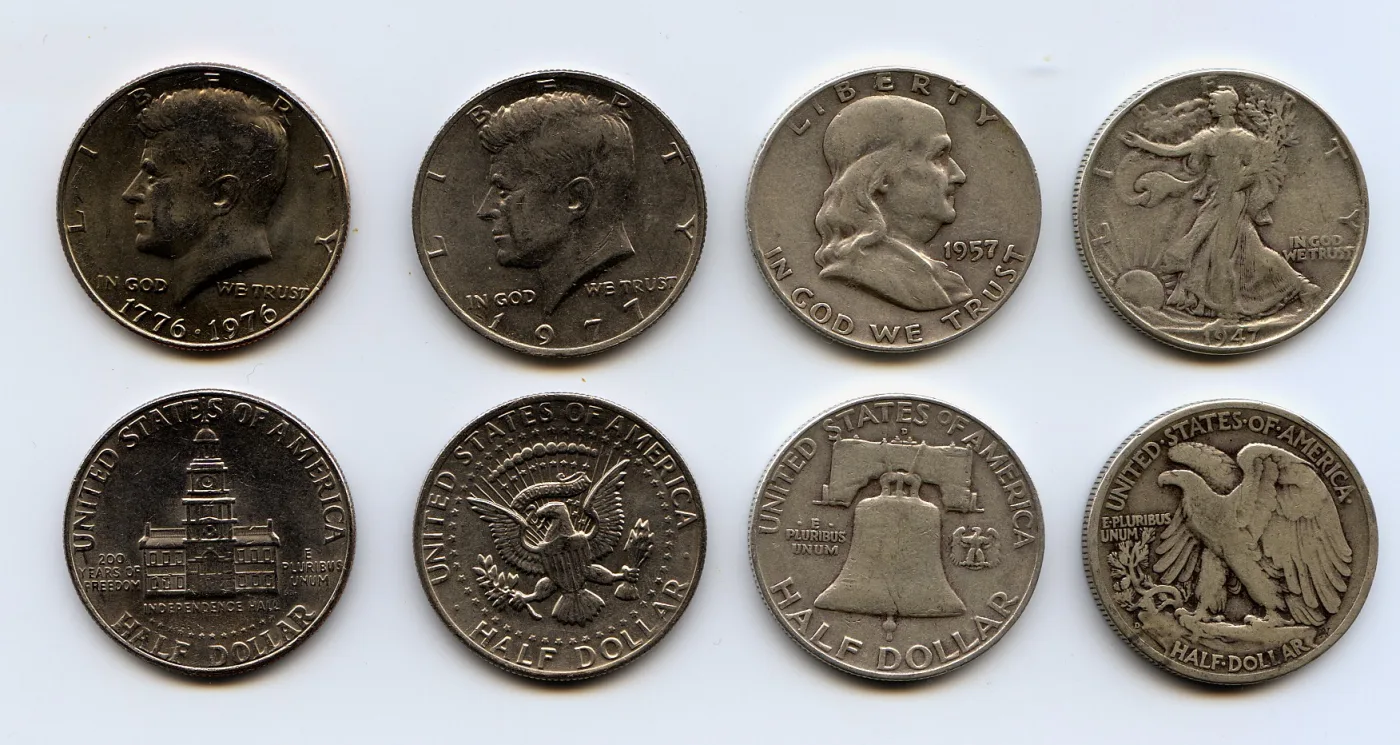
Silver Half Dollars (90% Silver)
- Barber Half Dollar (1892–1915): The largest of the Barber trio, all 90% silver.
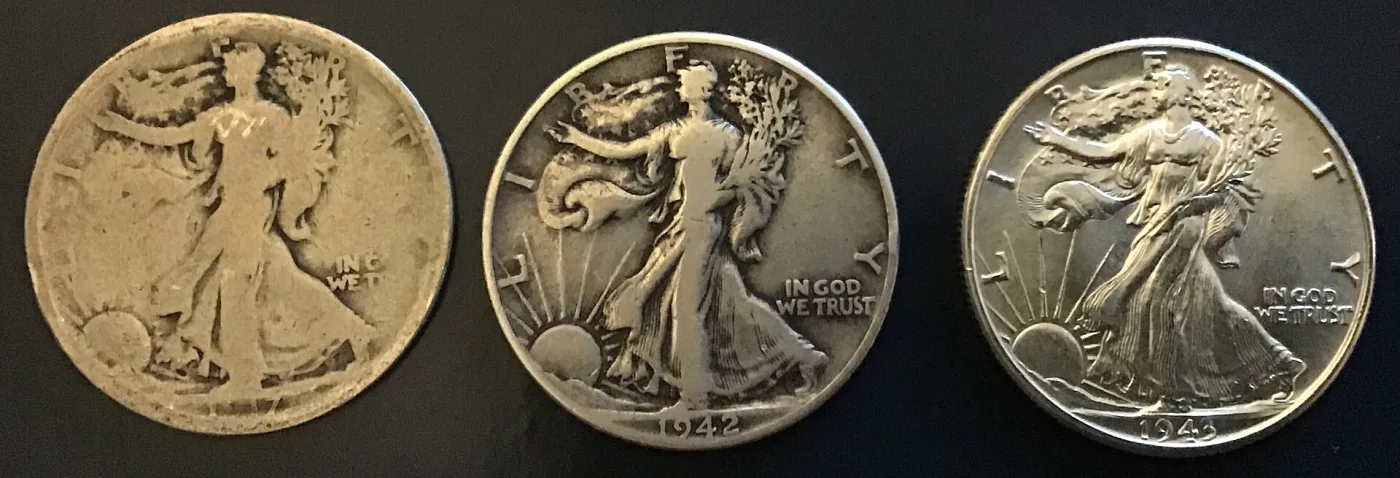
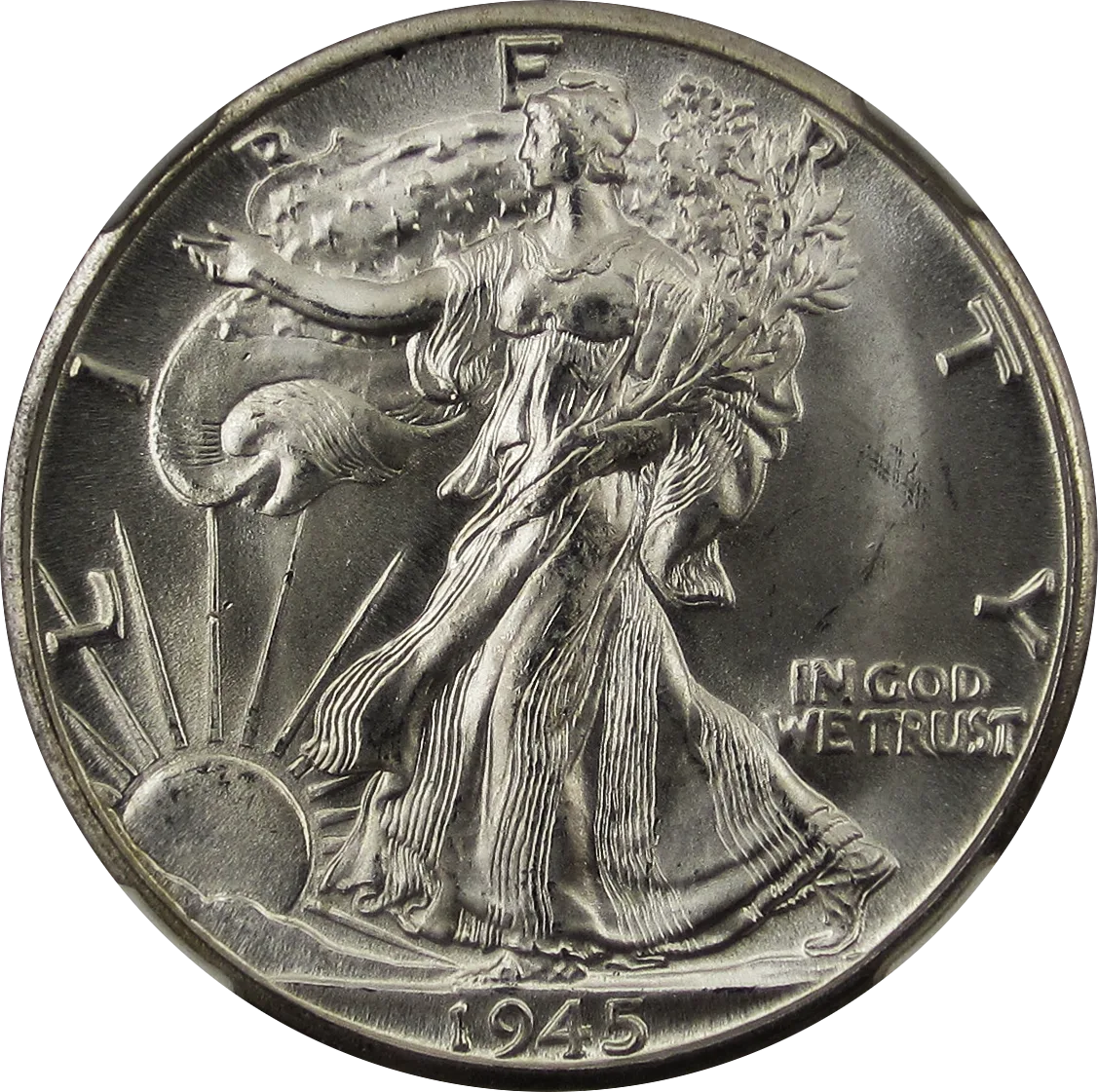
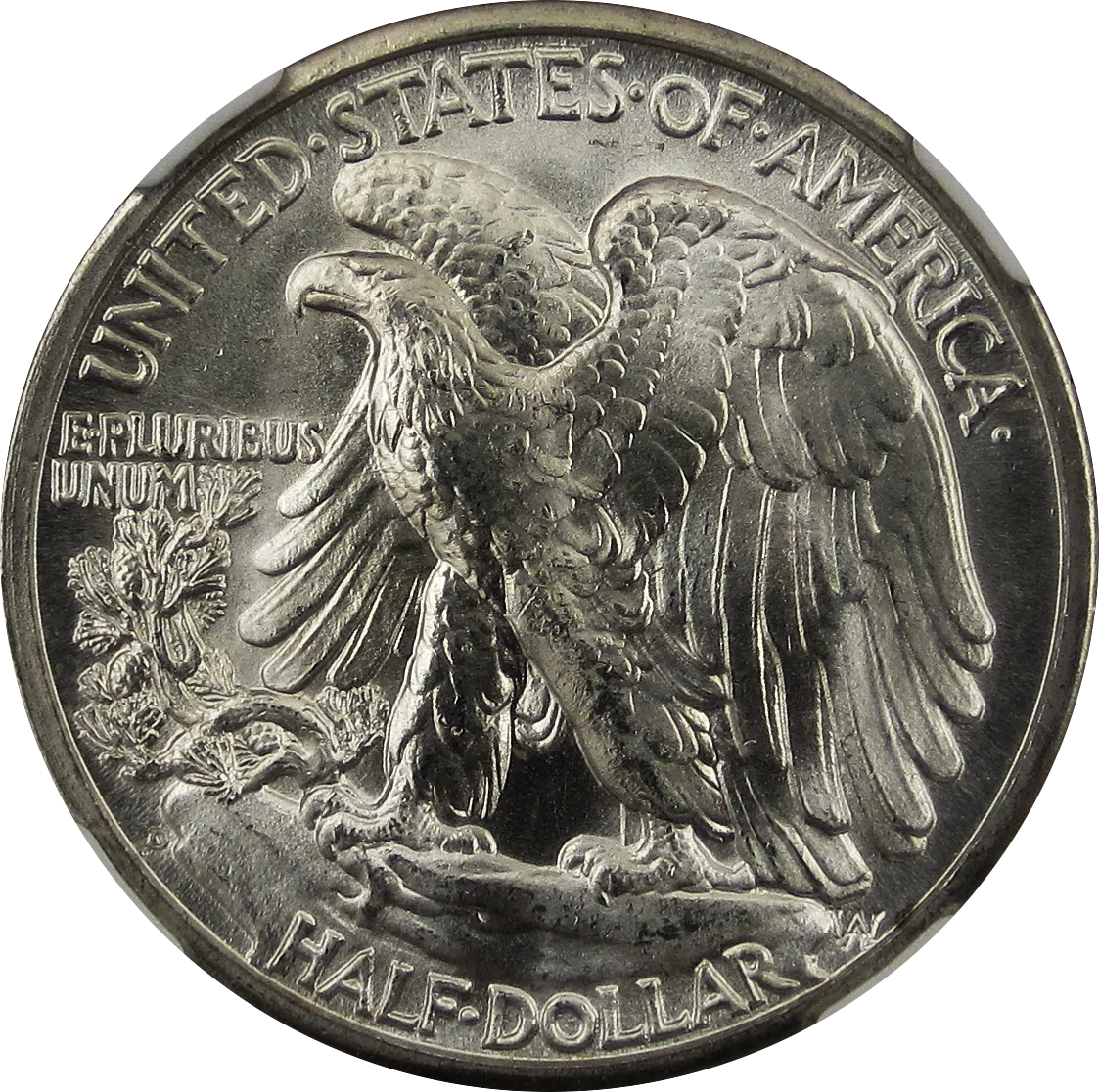
- Walking Liberty Half Dollar (1916–1947): Widely regarded as one of the most beautiful American coins ever made, all 90% silver.
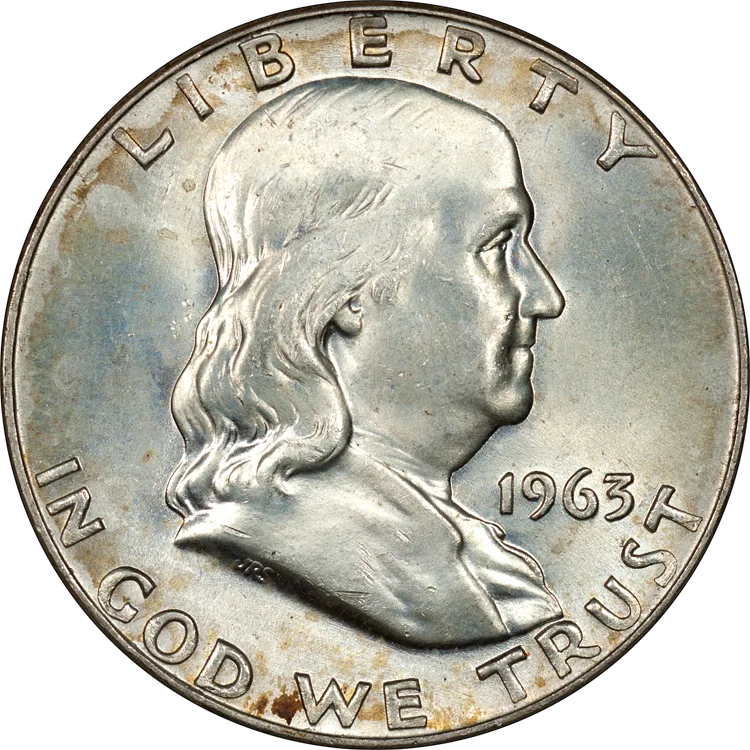
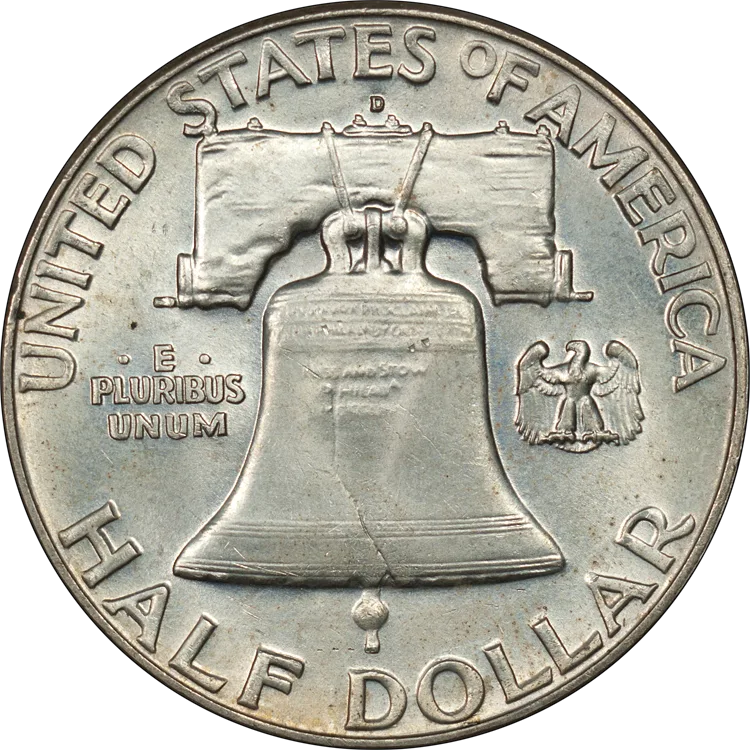
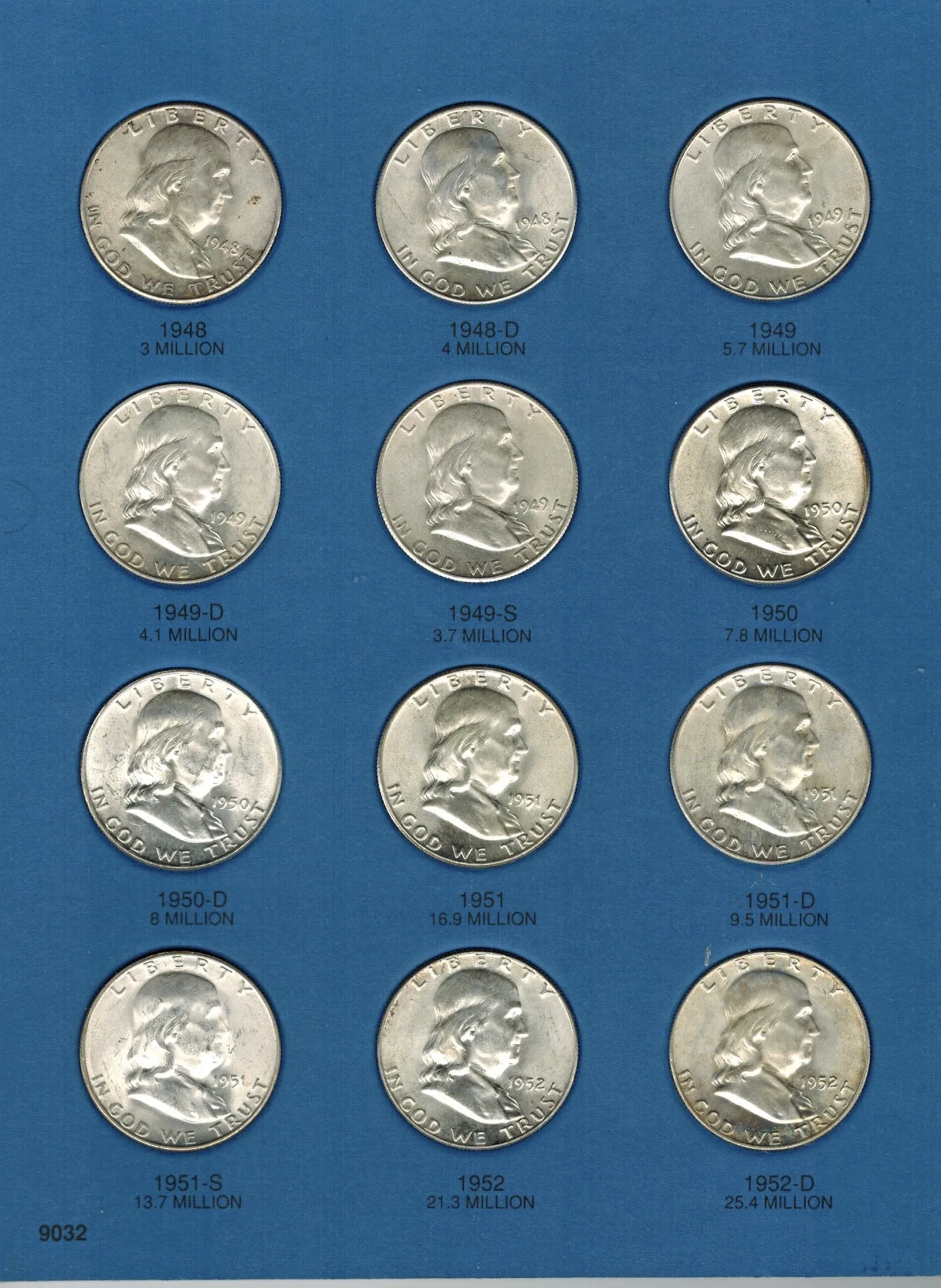
- Franklin Half Dollar (1948–1963): Benjamin Franklin with the Liberty Bell reverse, all 90% silver.
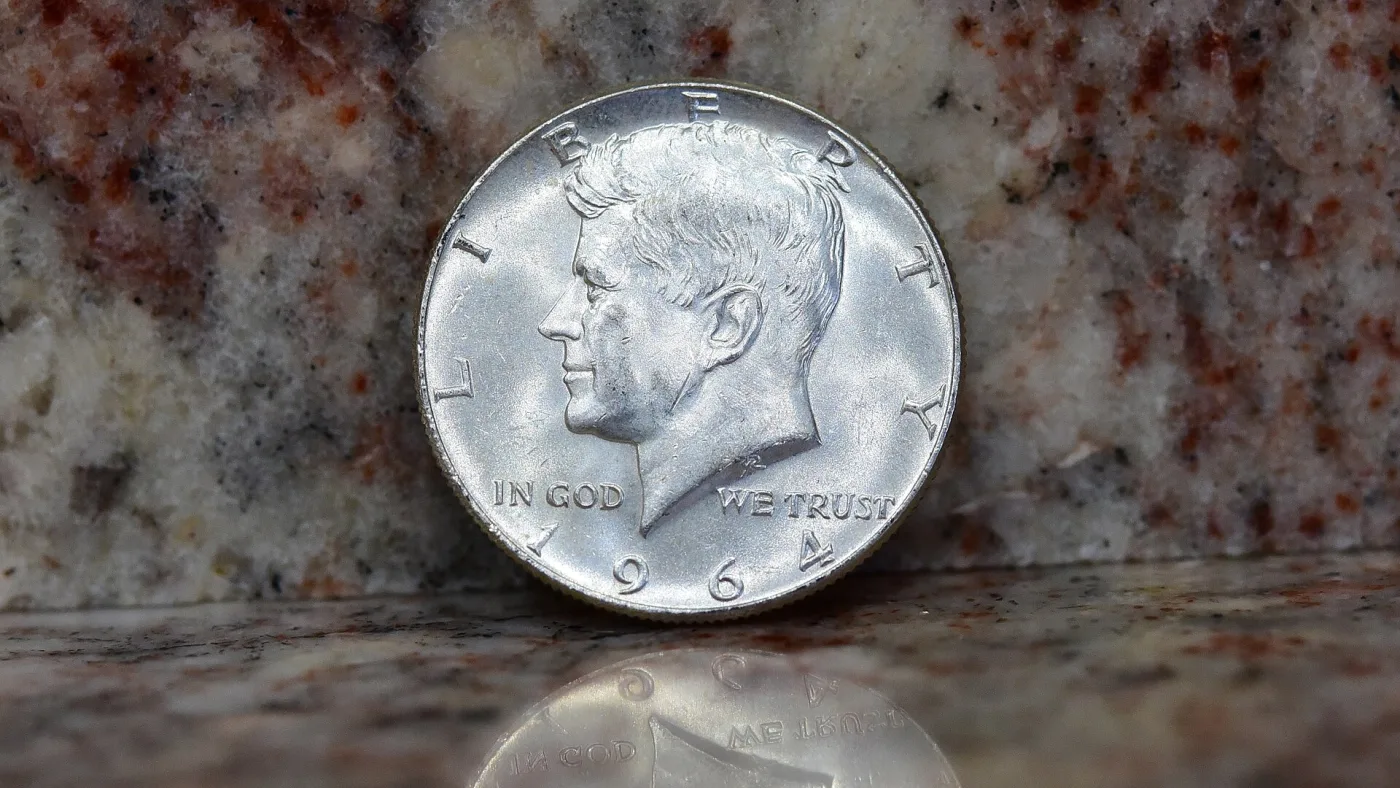
- Kennedy Half Dollar (1964 only for 90%): The 1964 Kennedy is 90% silver; 1965–1970 issues dropped to 40% silver, and 1971 onward are clad.
Silver Dollars (90% Silver)
Large silver dollars are technically 90% silver but are usually collected individually rather than treated as junk, because even common dates often carry a premium. The Morgan Silver Dollar (1878–1904, 1921) and the Peace Dollar (1921–1935) each contain about 0.7734 troy ounces of silver. Because collector demand keeps their prices well above melt, most stackers buy dimes, quarters, and halves for pure silver exposure and treat silver dollars as a separate, semi-numismatic category.
40% Silver Coins and Wartime Nickels
Not all US silver is 90%. Two important categories contain silver at lower fineness, and recognizing them prevents you from either overpaying or accidentally discarding real silver.
40% Silver Kennedy Half Dollars (1965–1970)
When silver was removed from dimes and quarters in 1965, the Kennedy half dollar received a transitional 40% silver composition to soften the change. These halves have a distinctive construction: an outer layer of 80% silver bonded to an inner core of about 20.9% silver, averaging 40% silver overall. Each 40% Kennedy contains roughly 0.1479 troy ounces of silver—less than a 90% half but still meaningful. Because they are frequently overlooked, 40% Kennedy halves are a favorite target of roll hunters. Note that 1970-D and 1970-S halves were only issued in mint sets and proof sets, not for circulation.
40% Silver Eisenhower Dollars (Select 1971–1976)
Certain collector versions of the Eisenhower Dollar were struck in 40% silver and sold directly to collectors in special blue-envelope and brown-box packaging. Circulation-strike Eisenhower dollars, by contrast, are copper-nickel clad. The silver “Ikes” carry an “S” mint mark and were never released into general circulation, so you will not find them in change, but they do appear in inherited collections and at estate sales.
Wartime “Silver” Nickels (1942–1945)
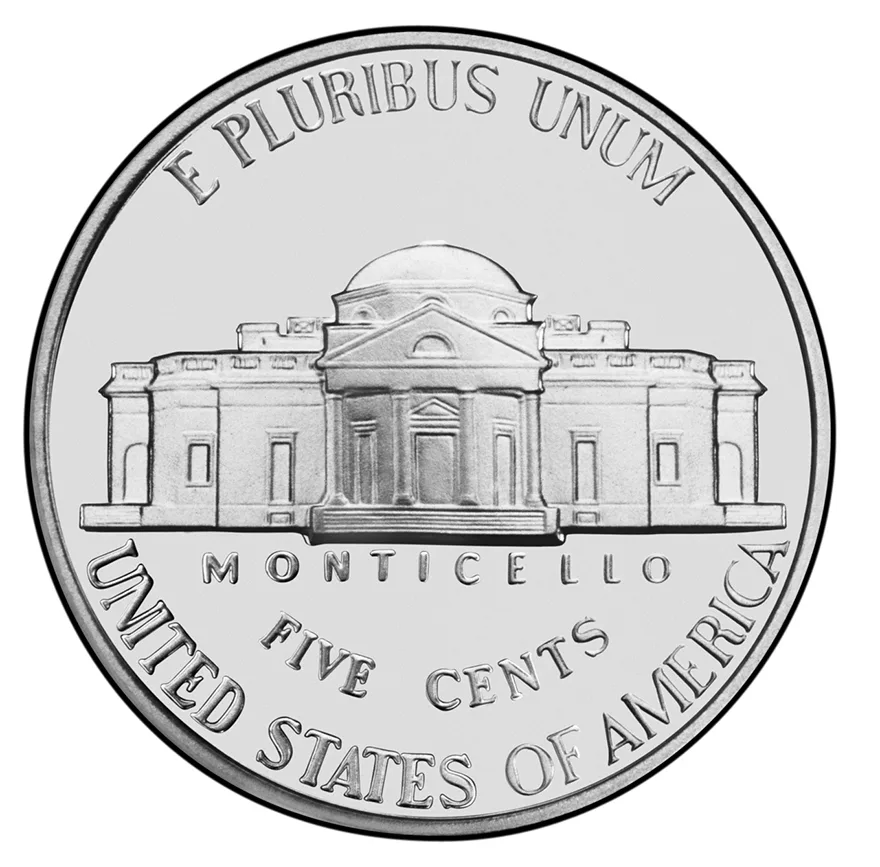
During World War II, nickel metal was needed for the war effort, so from mid-1942 through 1945 the Jefferson Nickel was struck in a 35% silver alloy (56% copper, 35% silver, 9% manganese). These “war nickels” are identified by a large mint mark—P, D, or S—placed prominently above the dome of Monticello on the reverse, a location never used before or after. This is the only regular US nickel to contain silver. Each war nickel holds about 0.0563 troy ounces of silver. If you see a nickel with a big mint mark over Monticello, set it aside—it is real silver hiding in plain sight.
Silver Content by Denomination
To value junk silver, you need to know how much actual silver each coin contains. Silver content is measured in troy ounces (a troy ounce is about 31.1 grams, slightly heavier than a standard ounce). The figures below reflect the pure silver weight in a coin with no wear; heavily worn coins lose a tiny fraction of their silver, which is why bulk junk silver is priced with a small allowance for wear.
Pure Silver Content per Coin (90% Silver)
- Dime (Barber, Mercury, Roosevelt): 0.0723 troy oz of silver
- Quarter (Barber, Standing Liberty, Washington): 0.1808 troy oz of silver
- Half dollar (Barber, Walking Liberty, Franklin, 1964 Kennedy): 0.3617 troy oz of silver
- Silver dollar (Morgan, Peace): 0.7734 troy oz of silver
Pure Silver Content per Coin (Other Fineness)
- 40% Kennedy half (1965–1970): 0.1479 troy oz of silver
- 35% war nickel (1942–1945): 0.0563 troy oz of silver
The $1 Face Value Rule of Thumb
Here is the single most useful shortcut in junk silver: one dollar of face value in 90% silver coins contains approximately 0.715 troy ounces of pure silver. This holds true regardless of denomination mix. Ten dimes, four quarters, or two half dollars all equal one dollar face and all contain about 0.715 troy ounces of silver. This is why dealers price junk silver by face value—it is a reliable proxy for silver weight. A common industry figure rounds this to “0.715 ounces per dollar face,” though some use 0.7234 for uncirculated coins and as low as 0.715 for well-worn coins to account for lost metal.

How to Identify Silver Coins
Most of the time, the date settles the question instantly. But dates wear off, coins tone dark, and inherited hoards contain surprises. These identification methods, used together, will confirm silver content with confidence.
1. Check the Date
Always start here. For dimes, quarters, and half dollars, a date of 1964 or earlier means 90% silver. If the date is legible, you are usually done. If it is worn smooth, move to the other tests.
2. Read the Design
Each design existed only in silver during specific years. A Mercury dime, a Standing Liberty quarter, a Walking Liberty or Franklin half—these designs were never made in clad, so identifying the design confirms silver even without a readable date. That is why so many dateless Standing Liberty quarters trade as bullion: the design alone proves the metal, and typing the coin as Type 1 or Type 2 narrows the year even when the date is long gone. A Washington quarter or Roosevelt dime, however, spans both eras, so for those you must confirm the date is 1964 or earlier.
3. Examine the Rim (Edge)
This is the fastest visual test and deserves its own section below. In short, a 90% silver coin shows a solid silver-white edge, while a clad coin reveals a reddish-brown copper stripe sandwiched in the middle of the edge.
4. Listen to the Ring
Silver coins produce a distinctive high, sustained ring when balanced on a fingertip and tapped, or dropped onto a hard surface. Clad coins give a duller, shorter “clunk.” This “ping test” is the same principle used to detect counterfeit and altered coins, and while it takes practice, experienced stackers can distinguish silver by ear alone.
5. Weigh the Coin
A precise scale settles ambiguous cases. A 90% silver quarter weighs 6.25 grams when new, versus 5.67 grams for a clad quarter. A silver dime weighs 2.50 grams versus 2.27 grams clad. A silver half weighs 12.50 grams versus 11.34 grams clad. A worn silver coin will weigh slightly less than its minted weight, but still noticeably more than its clad counterpart.
6. Use the Magnet and Color Cues
Silver is not magnetic, but neither is clad copper-nickel, so a magnet mainly rules out steel counterfeits rather than confirming silver. More telling is color and toning: silver coins often develop soft gray, gold, or even rainbow toning over decades, while clad coins tend toward a flat gray or show copper bleeding at worn high points.
The Rim Test Explained
If you learn only one identification trick, make it the rim test. It is fast, requires no equipment, and works even when the date is illegible. Because clad coins are built from a copper core sandwiched between copper-nickel outer layers, that copper core is visible along the edge of the coin as a distinct colored line. Silver coins have no such core—they are the same alloy all the way through—so their edge is a uniform silver-white.
How to Perform the Rim Test
Hold the coin so you are looking directly at its edge (the rim), not the face. Roll it slowly between your fingers under good light. On a clad dime, quarter, or half dollar, you will see a clear reddish-copper stripe running around the middle of the edge, bordered by lighter metal above and below—like a copper filling in a sandwich. On a 90% silver coin, the edge is solid silver-gray with no copper stripe at all.
What You’re Seeing
- Solid silver-white edge: 90% silver coin (pre-1965)
- Copper stripe in the middle of the edge: copper-nickel clad coin (1965 and later)
- Faint or partial copper tone: examine further; some 40% silver halves show a subtle difference and benefit from a weight check
Rim Test Cautions
The rim test is highly reliable for the 90%-versus-clad distinction, but a few caveats apply. Very dirty or heavily toned coins can obscure the edge, so clean lighting helps. The 40% silver Kennedy halves have their own layered structure and a subtler edge appearance, so confirm those by date and weight. And always combine the rim test with the date when the date is readable—the two together are essentially foolproof for common circulating coinage.
Calculating Melt Value
The melt value of a junk silver coin is the market value of the pure silver it contains. Because silver trades on global markets and its price—the “spot price”—changes every second the markets are open, junk silver value is always a moving target. The good news is that the math is simple once you know a coin’s silver content.
The Basic Formula
To find any silver coin’s melt value, multiply its pure silver content by the current spot price of silver per troy ounce:
Melt value = (silver content in troy oz) × (spot price per troy oz)
For example, if silver is trading at a given spot price per ounce, a 90% silver quarter (0.1808 troy oz) is worth 0.1808 times that price. A silver dime (0.0723 troy oz) is worth 0.0723 times spot. A 90% half dollar (0.3617 troy oz) is worth 0.3617 times spot. To get a live number, look up the current silver spot price from any financial site or precious-metals dealer and plug it into the formula.
Worked Example
Suppose you want to know what a roll of 40 silver quarters ($10 face) is worth in melt. A roll of 40 quarters contains 40 × 0.1808 = 7.232 troy ounces of silver. Multiply 7.232 by the current spot price to get the melt value of the roll. If instead you have a $10 face mix of dimes and halves, you can use the face-value shortcut in the next section to reach nearly the same answer.
Why Coins Sell Above Melt
In practice you will rarely buy junk silver at exactly melt value. Dealers add a premium to cover their costs and profit, and that premium rises and falls with supply and demand. During periods of high demand, junk silver premiums can climb sharply because the coins are popular and supply is finite—no more 90% silver coins are being made. When you sell, dealers typically pay slightly below melt (a “buy price”), and the spread between buy and sell is how they make money. Always compare the premium, not just the spot price, when shopping.
The Face Value Multiplier Method
Because pricing individual coins is tedious, the entire junk silver trade runs on face value. This method lets you value any quantity of mixed 90% silver coins in seconds without sorting them by denomination.
The Multiplier Shortcut
Recall that $1 of face value in 90% silver contains about 0.715 troy ounces of silver. This gives you a simple multiplier:
Melt value of a pile = (total face value) × 0.715 × (spot price per troy oz)
So if you have $50 in face value of mixed silver dimes, quarters, and halves, the pile contains roughly 50 × 0.715 = 35.75 troy ounces of silver. Multiply by spot to get the melt value. This works no matter how the denominations are mixed, which is exactly why dealers quote junk silver as a multiple of face—“20 times face,” “22 times face,” and so on. That multiple already bakes in the spot price and the dealer’s premium.
Understanding “Times Face”
When a dealer says junk silver is selling at “20x face,” they mean a coin’s price is 20 times its denomination: a dime costs $2.00, a quarter costs $5.00, a half costs $10.00. You can reverse-engineer the implied silver price: since $1 face holds 0.715 oz, a 20x-face price implies roughly $28 per ounce of silver ($20 ÷ 0.715). Comparing the “times face” multiple against the live spot price instantly tells you how large a premium you are paying.
Standard Bag Sizes
Junk silver is traditionally sold in bags defined by face value. A full bag is $1,000 face value and contains roughly 715 troy ounces of silver—about 10,000 dimes, 4,000 quarters, or 2,000 half dollars, or any equivalent mix. Half bags ($500 face) and quarter bags ($250 face) are common, and many dealers sell smaller lots down to $1 or $5 face for new stackers. Half-dollar bags and dime bags sometimes carry slightly different premiums based on demand for particular denominations.
Where to Find Junk Silver
Junk silver comes from two broad sources: it still trickles through circulation, and it is actively traded in the collector and bullion markets. Knowing where to look shapes both your strategy and your cost.
Pocket Change and Circulation
Although the vast majority of silver was pulled from circulation after 1965, coins still surface. People cash in inherited collections at banks, spend old coins unknowingly, and break up hoards during hard times. Every silver coin that re-enters circulation is available to whoever notices it first. Checking your change habitually costs nothing and occasionally rewards you with free silver at face value.
Bank Rolls and Boxes
Requesting rolls or boxes of coins from a bank—especially half dollars, which no longer circulate widely—lets you search large quantities. Half dollars are the roll hunter’s favorite because they see so little use that silver and 40% halves survive in them at higher rates than in dimes or quarters. We cover this method in the next section.
Estate Sales, Flea Markets, and Coin Shops
Estate sales and flea markets often include jars of old coins priced with little awareness of silver content, occasionally allowing purchases near or even at face value. Coin shops, by contrast, know exactly what junk silver is worth and price it at a transparent premium to spot—but they offer volume, reliability, and the chance to build relationships. Coins with genuine collector value beyond metal, such as key dates and rarities, are worth pulling from any junk lot before it is melted or spent.
Online Dealers and Marketplaces
Established precious-metals dealers sell junk silver online in every bag size, with live pricing tied to spot. This is the most convenient way to acquire silver in bulk, though you pay shipping and sometimes a slightly higher premium than a local shop. Peer-to-peer marketplaces can offer lower prices but require vigilance against counterfeits and altered coins.
Coin Roll Hunting for Silver
Coin roll hunting, or CRH, is the hobby of buying rolls of circulating coins from banks, searching them for silver and other treasures, and returning the unwanted coins for face value. It is the closest thing to free silver, since your only cost is time and the occasional bank fee. Done patiently, it is both a treasure hunt and a way to understand US coinage intimately.
Best Denominations to Hunt
- Half dollars: The top target. Because half dollars rarely circulate, banks often hold rolls for years, and silver 90% and 40% halves survive in them at surprisingly high rates. Many hunters find silver in their first few boxes.
- Dimes and quarters: Lower hit rates than halves because they circulate heavily and have been picked over for decades, but silver still appears. The 1964 and earlier dates are what you are scanning for.
- Nickels: Worth checking for 1942–1945 war nickels with the large mint mark over Monticello, and for older Buffalo Nickels that carry collector value even though they contain no silver.
How to Hunt Efficiently
The rim test is your best friend during a hunt. Instead of reading every date, riffle the coins on their edges and scan for the copper stripe—silver coins jump out as solid-edged among a sea of copper-striped clad. For halves, look also for the 40% silver 1965–1970 Kennedys, which have a subtler edge and are easy to miss. Keep a loupe handy for confirming worn dates and for spotting error coins and varieties, which can be worth far more than silver value.
Etiquette and Logistics
Build relationships with a few banks that will order coins for you. Return your “rejects” to a different branch than the one you bought from, or rotate branches, to avoid re-buying the same searched coins. Keep your searched and unsearched coins clearly separated. And always handle coins carefully—never clean them—because a valuable date or variety can be ruined by improper handling, a point we explain in our guide to coin cleaning and preservation.
Buying Junk Silver
When you buy rather than hunt, a few principles will help you get the most silver for your money and avoid costly mistakes.
Compare Premiums, Not Just Price
The single most important number is the premium over spot—how much you pay above the coin’s melt value. A dealer selling at 21x face when spot implies 20x is charging roughly a 5% premium. Shop several dealers and compare their “times face” multiples or their explicit premium percentages against the live spot price. Junk silver premiums fluctuate with demand and can spike during periods of market stress, so timing matters.
Buy Common, Circulated Coins for Stacking
If your goal is silver exposure, buy the most worn, common-date coins you can. You are paying for metal, not for a date or grade, so there is no reason to pay extra for nicer coins. Reserve any premium spending for coins you genuinely want to collect. Understanding basic coin grading helps you recognize when a coin in a junk lot is actually a collectible worth setting aside rather than stacking.
Verify Authenticity
Counterfeit junk silver exists, though it is less common than fake bullion because the per-coin value is low. Use weight, the rim test, and the ring test to screen purchases, and buy from reputable sources for large quantities. For any coin you suspect might be a valuable date, professional authentication is worthwhile. Our counterfeit detection guide walks through the full battery of tests.
Decide on Denomination Mix
Dimes offer the smallest, most divisible units and are prized for barter scenarios, but they can carry slightly higher premiums for that reason. Half dollars pack the most silver per coin and are easy to count. Quarters strike a balance. Many buyers accumulate a mix, weighting toward dimes if divisibility matters to them and toward halves if they simply want silver by weight.
Storage and Preservation
Junk silver is durable, but proper storage protects both its metal and any hidden collector value. Silver tarnishes when exposed to sulfur and humidity, and while light toning does not reduce melt value, it can matter if a coin turns out to be collectible.
Practical Storage for Stackers
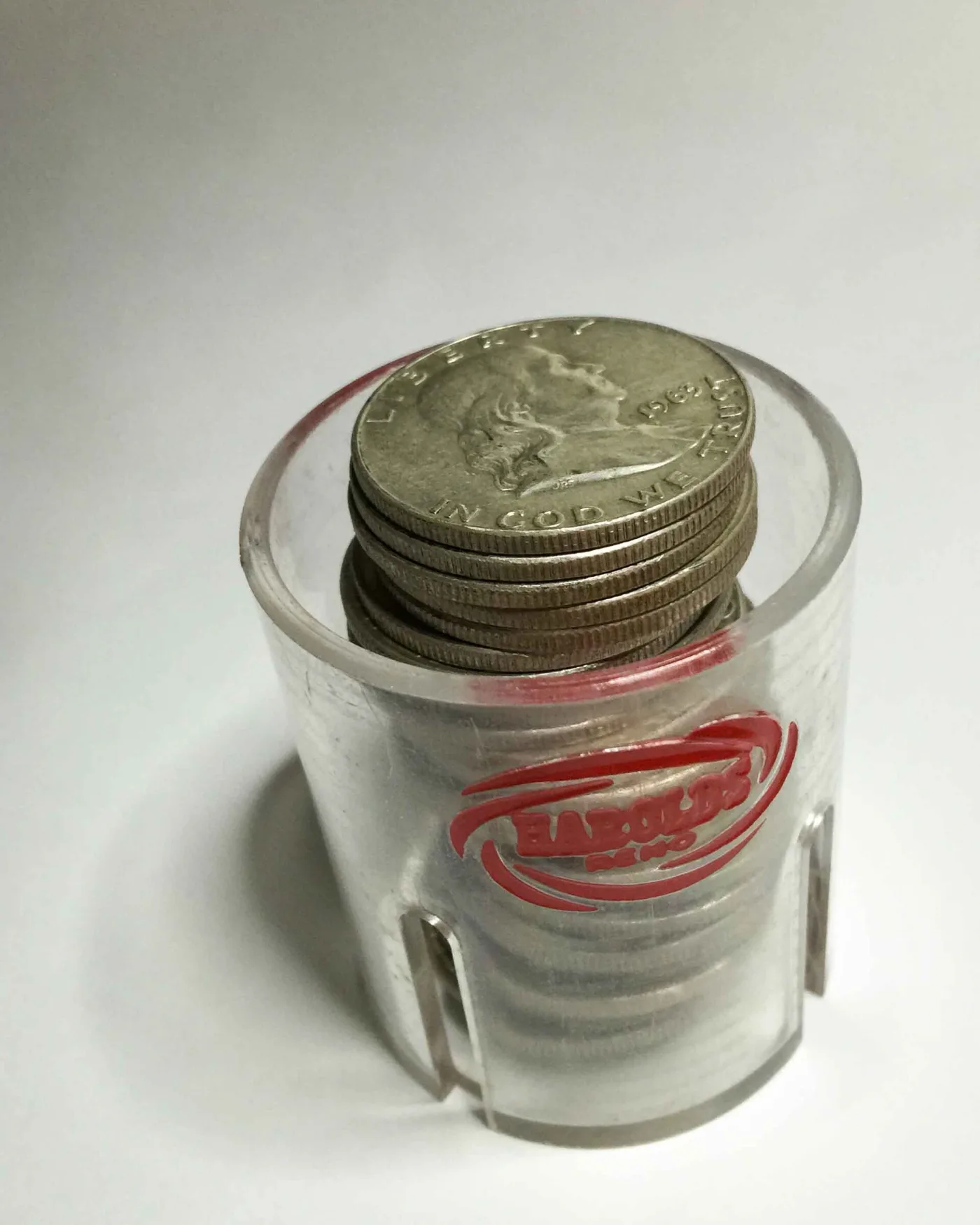
- Coin tubes: Rigid plastic tubes sized per denomination keep coins organized and countable. Ideal for bulk 90% silver you plan to hold as metal.
- Canvas bags: The traditional way to hold large face-value quantities. Practical for full and half bags, though coins will jostle and tone.
- Dry, stable environment: Store silver in a cool, dry place away from humidity, ideally with silica gel packets to control moisture. Avoid basements, attics, and garages with temperature swings.
Protecting Potential Collectibles
Before consigning coins to bulk storage, scan for dates and varieties worth more than melt. Any coin you want to preserve individually should go into an inert, PVC-free holder—a 2x2 flip, an Air-Tite capsule, or a certified holder for high-value pieces. Soft vinyl flips contain PVC that leaves a corrosive green film over time, so avoid them for long-term storage.
Never Clean Your Coins
It bears repeating: do not clean silver coins. Cleaning leaves microscopic scratches and strips original surfaces, destroying numismatic value even if the silver content is unchanged. A tarnished but original coin is worth more to a collector than a shiny, cleaned one. If a coin is dirty, leave it be and let a professional advise you if you believe it may be valuable.
Common Mistakes to Avoid
New junk silver buyers and hunters tend to make the same handful of errors. Avoiding them will save you money and protect the value of what you find.
Assuming All Old Coins Are Silver
Pennies and nickels (except 1942–1945 war nickels) never contained silver, no matter how old. An 1890s Indian Head cent or a 1930s Buffalo nickel is collectible but not silver. Conversely, do not assume a coin lacks silver just because it looks worn or modern—a 1964 Kennedy half looks almost identical to later clad versions but is 90% silver.
Overpaying on Premium
Because junk silver’s value is transparent, there is no reason to pay a steep premium. Buyers who ignore the “times face” multiple and focus only on spot can overpay significantly during demand spikes. Always translate the asking price into a premium percentage before buying.
Melting or Spending Collectible Coins
The costliest mistake is treating a valuable coin as junk. Key dates, low-mintage issues, high-grade survivors, and error coins can be worth many multiples of their silver content. Before any coin enters a melt bag or a spending jar, confirm it is genuinely common. When in doubt, look it up or have it appraised.
Cleaning, Mishandling, or Poor Storage
Cleaning coins, handling them by the faces, and storing them in PVC flips all cause damage. For pure-metal stacking this only matters at the margins, but for any coin with collector potential, these habits can erase real value. Handle coins by the edges and store them properly.
Ignoring 40% Silver and War Nickels
Many hunters scan only for 90% coins and toss back 40% Kennedy halves and 35% war nickels, leaving real silver on the table. Learn to recognize the 1965–1970 halves and the large-mint-mark wartime nickels so you capture every bit of silver you come across.
Junk Silver vs. Bullion Coins
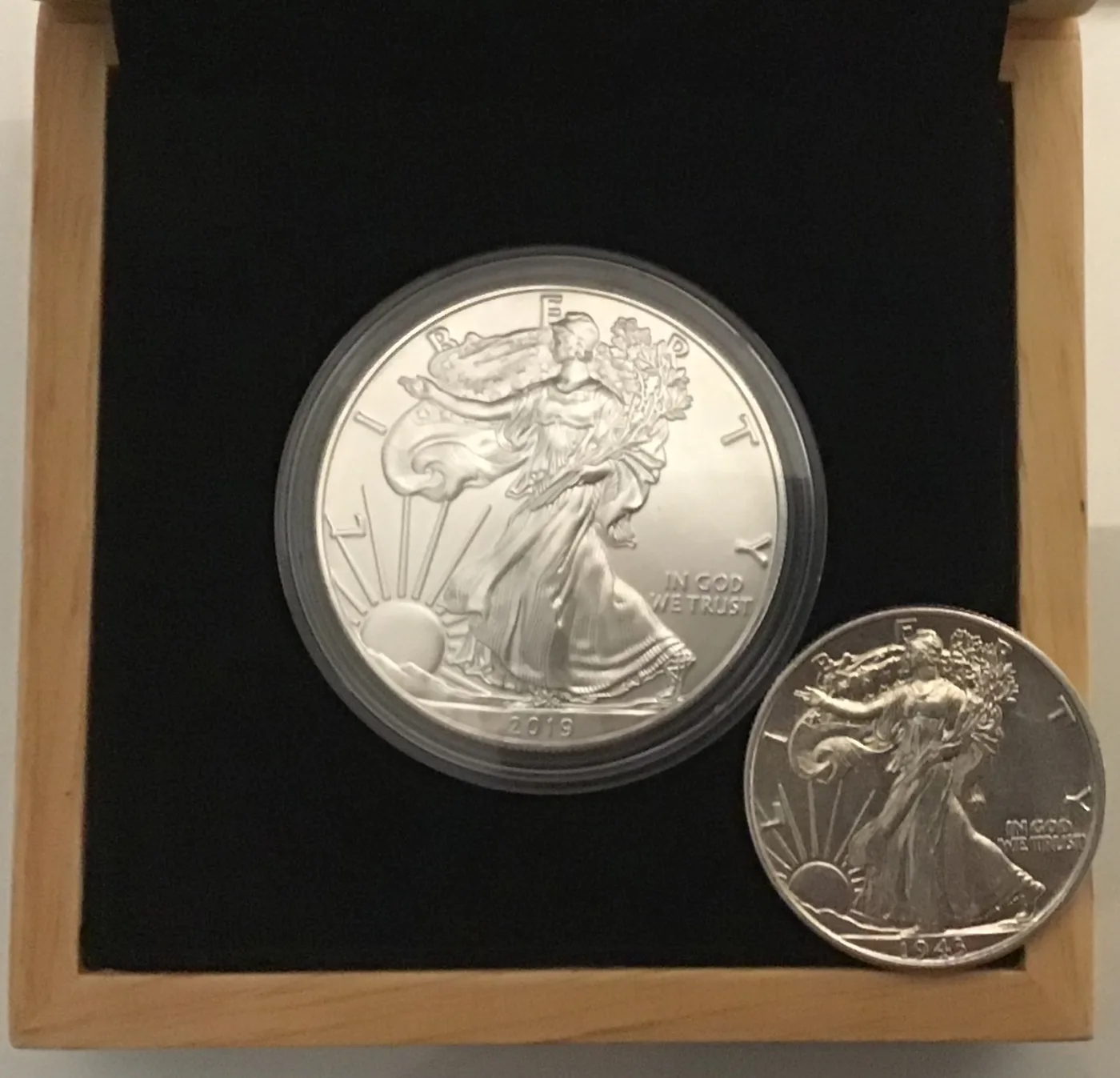
New stackers often wonder whether to buy junk silver or modern bullion such as the American Silver Eagle. Each has distinct advantages, and many collectors own both.
Advantages of Junk Silver
- Low premium: Junk silver usually carries a smaller premium over spot than one-ounce bullion coins, so you get more metal per dollar.
- Divisibility: Small denominations make junk silver ideal for barter and partial sales—you can trade a dime’s worth of silver where a one-ounce coin would be too large.
- Recognizability: These are familiar US coins, instantly trusted in private transactions.
- No numismatic guesswork for common dates: Value tracks metal, so pricing is straightforward.
Advantages of Bullion Coins
- Purity: Modern bullion like the Silver Eagle is .999 fine, so one coin equals one troy ounce exactly—no fractional math.
- Uniformity: Bullion coins are standardized, easy to count and stack, and often come in protective tubes.
- Recognized worldwide: Government bullion coins are known and traded globally, sometimes with legal-tender protections.
- Condition: Bullion coins are typically pristine, whereas junk silver is worn.
Which Should You Choose?
For maximum metal at the lowest premium and for divisibility, junk silver is hard to beat. For purity, uniformity, and global recognition, bullion coins excel. A common strategy is to build a base of junk silver for its low cost and barter utility while adding bullion coins for their purity and stackability. Whichever path you choose, understanding what you own—its silver content, its melt value, and whether any given coin is worth more than metal—is the foundation of smart collecting and stacking. When a coin turns out to be more than junk, our coin identification guide can help you place it.
Conclusion
Junk silver is the friendliest doorway into physical silver ownership. The rules are simple: US dimes, quarters, and half dollars dated 1964 or earlier are 90% silver, the rim test confirms silver at a glance, and $1 of face value holds about 0.715 troy ounces of pure silver. With those three facts, you can identify silver coins, estimate their melt value from the current spot price, and shop intelligently by comparing premiums rather than headline prices.
Beyond the metal, junk silver connects you to a vanished era of American money—coins that once circulated by the hundreds of millions and now survive as small, tangible stores of value. Whether you hunt them from bank rolls one box at a time, buy them by the bag, or rescue them from an inherited jar, the same discipline applies: verify what you have, watch for the occasional collectible worth far more than melt, and store your silver with care. Do that, and every “junk” coin you own is quietly working in your favor.