Coin Toning: Natural vs. Artificial Color and How It Affects Value
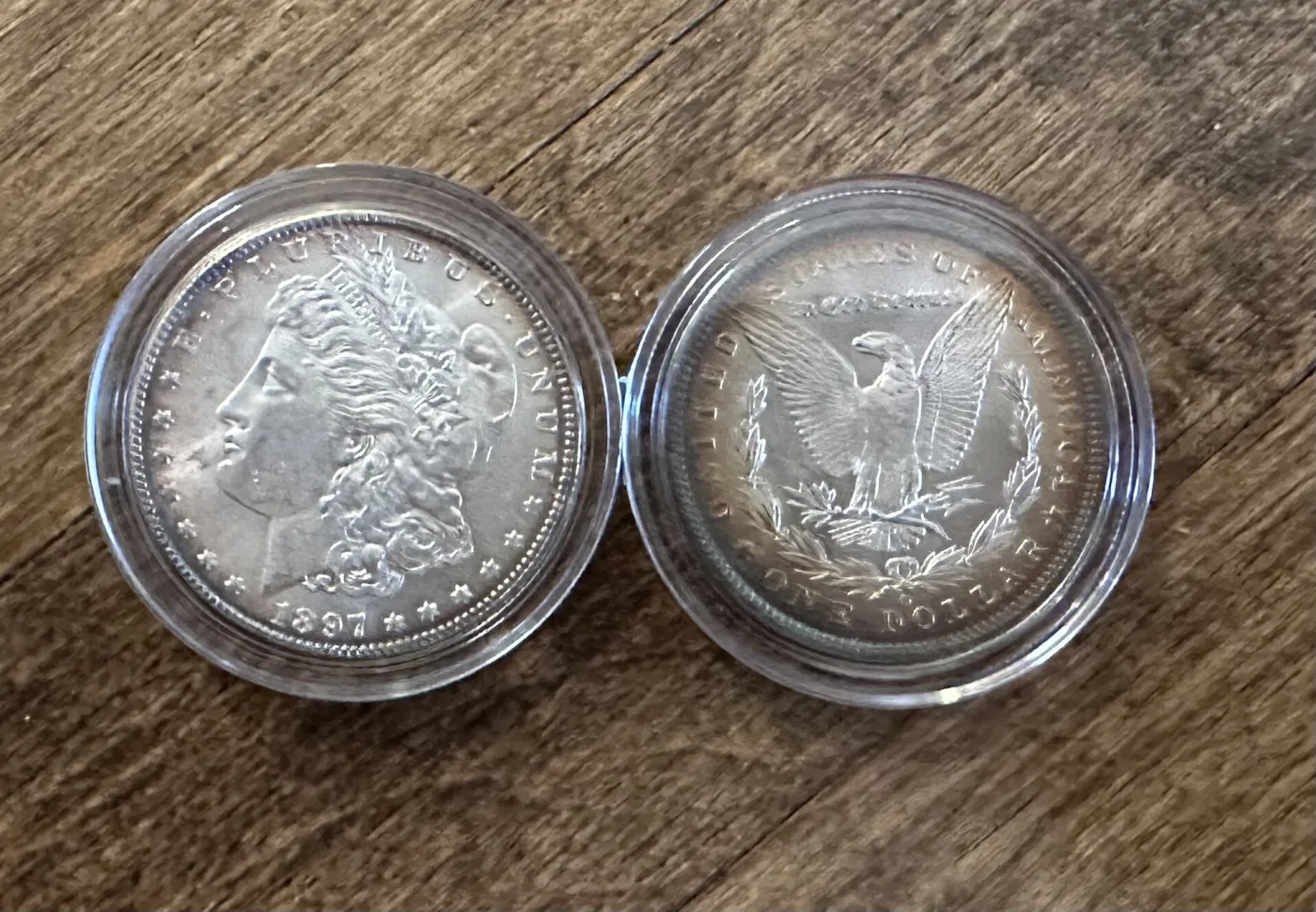
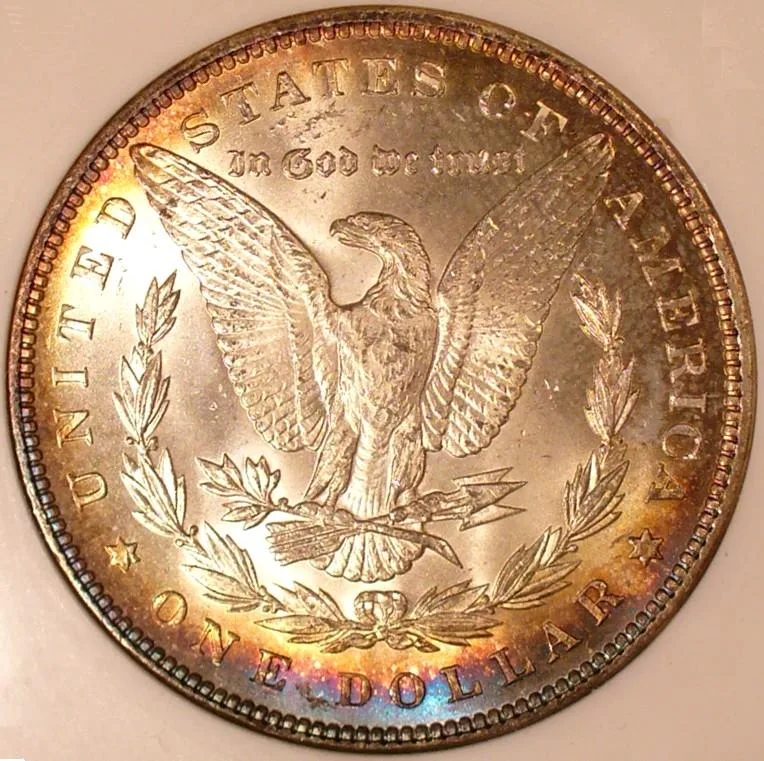
Pull an old silver dollar out of a dusty album and you might find it wrapped in color — soft gold at the center deepening through amber and magenta to electric blue at the rim. To a newcomer it can look like damage, something gone wrong with the metal. To a seasoned collector it can look like a small fortune. This film of color is called toning, and few subjects in the hobby stir up more fascination, more money, and more argument.
Toning is the natural chemical change that happens to a coin’s surface as its metal reacts with the world around it. On silver it can bloom into breathtaking rainbows; on copper it settles into rich browns; on gold it barely moves at all. When it forms slowly and beautifully, the market pays enormous premiums for it. When someone tries to fake it — baking coins, gassing them, or cooking them over chemicals to force instant color — the same market punishes the result as damaged, doctored goods. The entire game turns on one question: is this color natural, or was it made to happen?
This guide explains what toning actually is and why it forms, how it differs from destructive tarnish, and why collectors chase attractive natural color instead of avoiding it. It covers the named toning patterns you will hear about — target, album, tab, and bag toning — how toning changes value in both directions, and, most importantly, how professionals tell genuine toning from the artificial kind. You will also learn why cleaning toning off is almost always a mistake, how grading services treat questionable color, and how to store coins so their toning develops gracefully instead of turning ugly.
What Coin Toning Actually Is
Toning is the color that develops on a coin’s surface over time as the metal reacts with its environment. It is not paint, not dirt, and not a coating applied by the mint — it is a genuine, microscopically thin layer that forms on top of the metal through natural chemical reactions. Numismatists often use the word patina to describe this layer, especially on copper and on ancient Roman coins, and the terms are used more or less interchangeably. Whatever you call it, toning is a surface phenomenon: the coin underneath is unchanged, but the way light interacts with that thin altered layer produces the colors you see.
The single most important thing to understand is that toning is normal. Almost every coin that has existed for more than a few years shows some degree of it. A coin that appears bright silver-white or bright copper-red has either been kept in unusually protective conditions, been recently cleaned or dipped, or is very young. The natural state of an old coin is to carry some color. Learning to read that color — to judge whether it is attractive, whether it is stable, and whether it is genuine — is one of the core skills of coin collecting, and it sits right alongside grading and authentication in importance.
Toning Is Not the Same as Damage
Beginners often assume any darkening is bad, lumping toning together with corrosion, spots, and grime. In reality these are different things. Light-to-moderate toning is a stable, often beautiful surface film that many collectors prize. Corrosion is active destruction of the metal — pitting, verdigris, and crust that eat into the surface. Grime is loose dirt sitting on top. Toning belongs in its own category: a natural, generally stable transformation that can either enhance or harm a coin’s appeal depending on how it looks. Confusing beautiful toning with damage leads people to ruin valuable coins by cleaning them, which is why understanding toning is really a form of protection.
Why the Topic Generates So Much Debate
Toning is contentious for two reasons. First, its effect on value is subjective — one collector sees a stunning rainbow, another sees an ugly blotch, and the same coin can be worth very different amounts to each. Second, because attractive toning commands huge premiums, there is a powerful financial incentive to fake it, and the line between “genuine natural toning” and “artificially induced color” can be genuinely hard to draw even for experts. These two tensions — beauty is subjective, and money invites fakery — run through everything else in this guide.
The Chemistry: Why Coins Change Color
Understanding why coins tone makes it far easier to recognize what natural toning should look like and why forced toning so often looks wrong. The colors come from real chemistry, not magic, and the process follows predictable rules.
Metal Meets the Environment
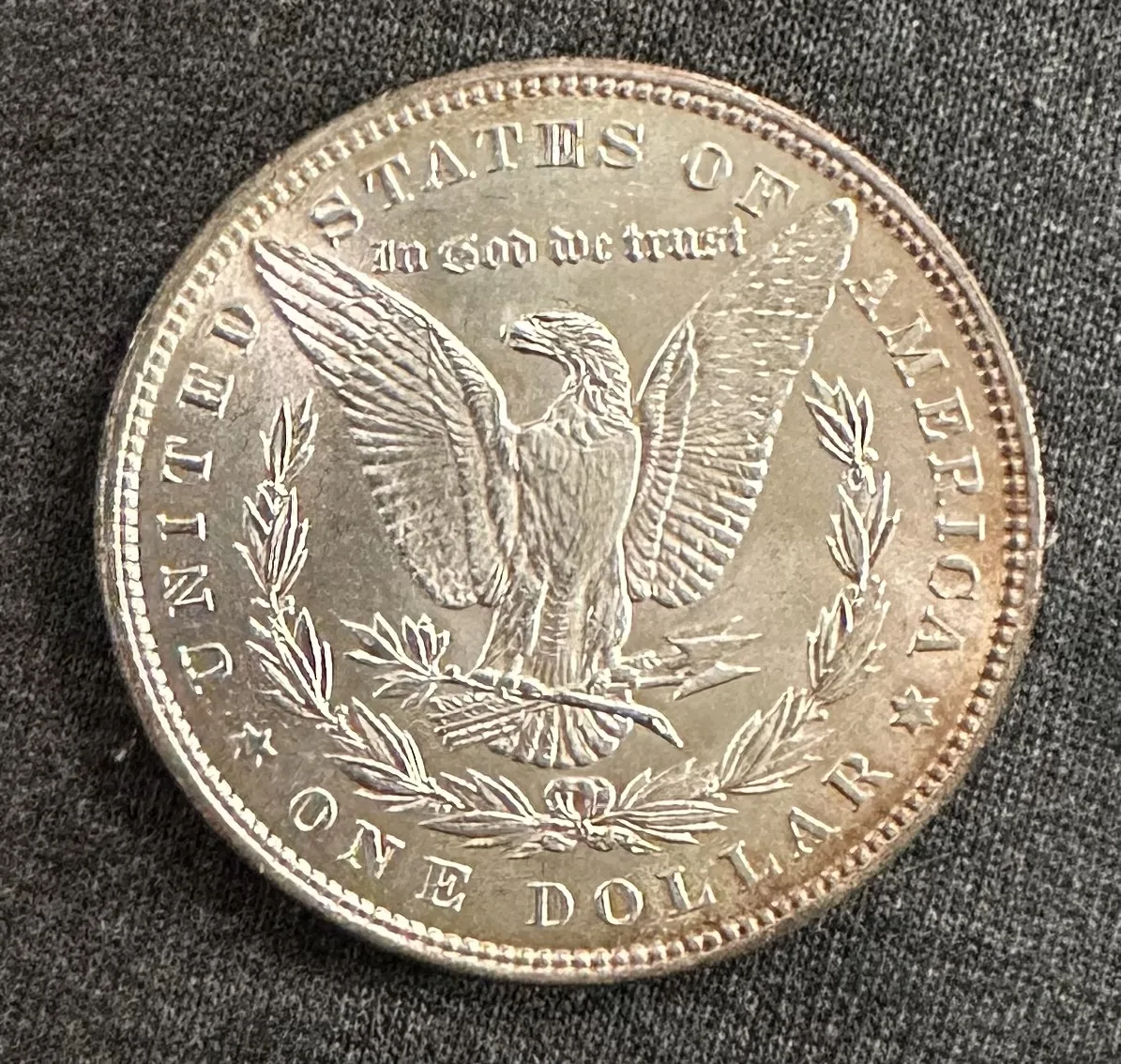
Toning is fundamentally a reaction between the coin’s metal and elements in the surrounding air — most importantly sulfur, along with oxygen and moisture. Sulfur compounds are everywhere: in the air, in paper and cardboard, in cloth, in rubber, in the adhesives of old albums. When these compounds contact a silver surface, they react with it to form silver sulfide, an extremely thin film on the metal. That film is what we see as toning. The more sulfur and moisture present, and the more time that passes, the further the reaction proceeds.
Where the Colors Come From
The rainbow colors of toned silver are produced by a phenomenon called thin-film interference — the same effect that paints an oil slick on wet pavement or colors a soap bubble. As the silver sulfide layer grows, its thickness changes, and different thicknesses reflect different wavelengths of light. A very thin film shows pale yellow and gold; as it thickens it shifts through russet and magenta into blue, and eventually to deep blue-black. In other words, the color you see is a direct readout of how thick the toning layer has become. This is a crucial insight: natural toning follows a specific, physics-driven color sequence, and toning that skips around or shows colors in the wrong order is a red flag for artificial treatment.
Slow Is Beautiful, Fast Is Ugly
The single biggest factor separating gorgeous toning from ugly toning is speed. When toning develops slowly over years and decades — a gentle, even reaction across the surface — it produces the smooth, luminous, well-blended colors that collectors adore. When toning is forced quickly, the reaction is uneven and aggressive, producing harsh, blotchy, oversaturated, or muddy color that experienced eyes recognize as unnatural. This is the fundamental reason artificial toning usually looks wrong: you cannot rush a process whose beauty comes from being slow. Nature’s version is patient; the faker’s version is not.
Toning by Metal: Silver, Copper, Gold, and Nickel
Different coinage metals tone in completely different ways, and knowing what is normal for each metal is essential to judging a coin. What looks alarming on one metal is perfectly ordinary on another.
Silver: The Rainbow Metal
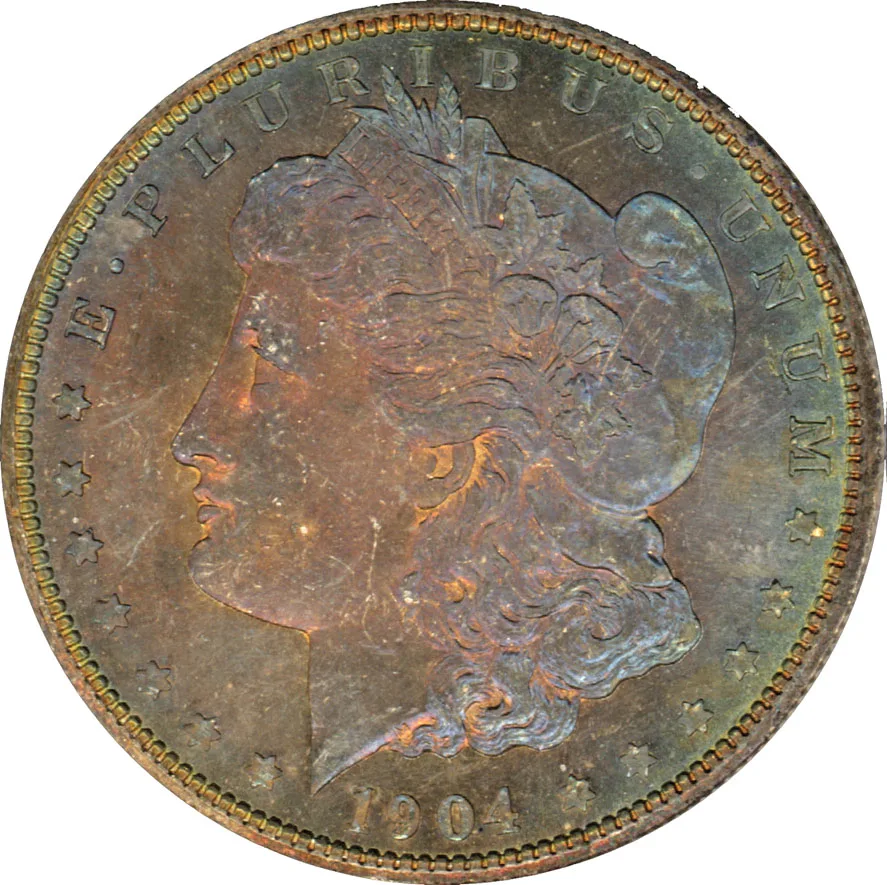
Silver is the star of the toning world because it produces the widest and most spectacular range of colors. Silver reacts readily with sulfur to form silver sulfide, and thanks to thin-film interference that reaction can generate the full spectrum — golds, ambers, rose and magenta, cobalt and electric blue, violet, and finally deep smoky black. This is why the most famous and valuable toned coins are almost always silver: Morgan silver dollars, Peace dollars, Walking Liberty halves, and classic commemoratives with vivid rainbow color routinely sell for large multiples of their untoned value. When people talk about “rainbow toning,” they are almost always talking about silver.
Copper: Rich Browns and Fragile Surfaces
Copper tones very differently. Fresh copper is bright orange-red, and as it ages it progresses through various shades toward brown and eventually a deep chocolate or near-black patina. Attractive copper can also show subtle iridescent hints of blue, purple, and red over a brown base, prized on early coins. The critical fact about copper is that its patina is both protective and fragile: the brown layer shields the metal beneath from further corrosion, but once disturbed it can never be restored to an original appearance. This is why collectors of large cents, half cents, and other early copper are famously protective of original surfaces, and why grading services use special color designations — Red, Red-Brown, and Brown — for copper coins.
Gold and Nickel: The Quiet Metals
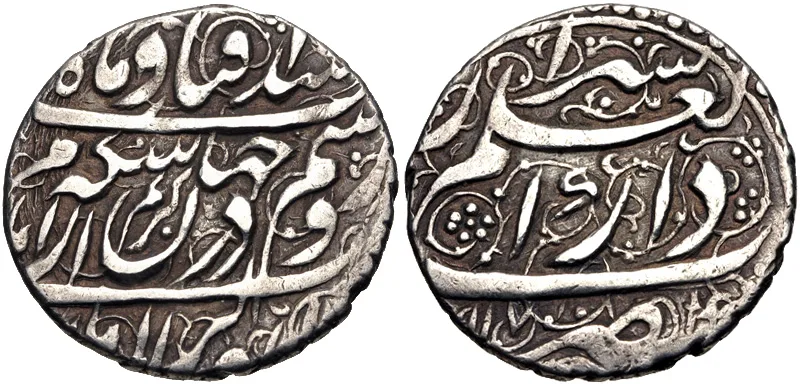
Gold is chemically stable and resists toning strongly, which is one reason gold coins survive so well. Pure gold barely tones at all, though the copper alloyed into most circulating gold can produce subtle orange, red, or greenish hues over long periods, sometimes called “coppery” toning on classic U.S. gold. Nickel and copper-nickel alloys (used in coins like the Buffalo nickel and Jefferson nickel) tone slowly and modestly, usually taking on a gray, gold, or hazy hue rather than dramatic rainbows. Knowing that gold and nickel tone quietly helps you spot a fake: vivid, saturated rainbow color on a gold coin is far more suspicious than the same color on silver, because gold simply does not do that naturally.
The Color Progression on Silver
Because silver toning follows a predictable sequence, learning that sequence is one of the best tools for telling natural color from artificial color. Natural toning respects the order; forced toning frequently violates it.
The Natural Sequence
As a silver coin’s toning film thickens over time, the color it displays moves through a consistent progression. It begins with the faintest pale yellow, deepens to a richer gold and amber, then shifts into russet and magenta or rose. From there it moves into the blues — first a lighter cyan, then a deep cobalt or electric blue — and on into violet and purple. If toning continues even further, the colors darken and mute toward a smoky gray and finally a dense blue-black. This order — yellow, gold, russet, magenta, blue, violet, black — is the fingerprint of genuine progressive toning.
Why the Order Matters
Because each color corresponds to a specific film thickness, the colors on a naturally toned coin transition smoothly from one to the next, blending in bands or gradients that follow the physics. A coin toning from the rim inward will typically show the deepest colors at the edge (where exposure was greatest) fading toward lighter color in the center. When you see colors that blend logically in this sequence, it is a strong sign of natural formation. When you see, for instance, a patch of blue sitting directly beside a patch of yellow with no transition through the intermediate colors, or a chaotic jumble of unrelated hues, the physics has been violated — a classic tell of artificial toning done too fast to respect the sequence.
Muted, Blended, and Living
Beyond the order of colors, natural toning has a certain quality that is hard to fake: it looks integrated with the coin’s luster, as though the color is coming from within the metal rather than sitting on top of it. On an original coin, the underlying mint luster still rolls across the surface and shines through the toning, giving it depth and a living, three-dimensional look. Artificial toning, by contrast, often looks flat, painted-on, or hazy, sitting like a film over dead or disturbed luster. Developing an eye for this “living” quality versus a “painted” quality takes practice, but it is one of the most reliable instincts experienced collectors rely on.
Named Toning Patterns: Target, Album, Tab, and Bag
Collectors have named the common toning patterns because a pattern’s shape often reveals how and where a coin was stored — and, importantly, whether the toning is consistent with a genuine storage history. Recognizing these patterns helps confirm natural toning.
Target (Concentric) Toning
Target toning shows concentric rings of color radiating from the center of the coin to the rim, like an archery target or a bullseye. It forms when a coin sits in an environment where air and sulfur reach the edges first and work inward, producing progressively deeper color toward the rim. This pattern is highly sought after when the rings are vivid and well-defined, and its orderly, physics-consistent structure is itself evidence of natural formation. Target toning is common on coins stored in paper envelopes and certain album types.
Album Toning
Album toning develops on coins stored for long periods in the classic cardboard coin albums and folders that generations of collectors used. The sulfur in the cardboard reacts with the coin over decades, and because the album’s window frames the coin, the toning often appears as bands or crescents of color near the rim where the coin met the album opening. Beautifully album-toned silver — especially Barber halves, Washington quarters, and classic commemoratives — is a favorite among collectors precisely because it carries the unmistakable signature of decades of honest storage.
Tab Toning
Tab toning is a specific, recognizable pattern seen mainly on commemorative coins and proofs that were sold in cardboard holders with a circular cutout and a paper tab. The tab and the cardboard leave a distinctive ring or arc of toning matching the shape of the holder. Because the pattern precisely mirrors a known original packaging type, genuine tab toning is strong evidence of an original, undisturbed coin, and it is prized on the commemoratives where it appears.
Bag Toning
Bag toning occurs when coins are stored in cloth bags — the way Morgan and Peace dollars were held by the millions in Treasury and bank vaults. Contact with the sulfur-bearing cloth over decades produced streaks, crescents, and patches of color, often along the high points and edges where the coin touched the fabric. Vividly bag-toned Morgan dollars are among the most celebrated toned coins in the hobby, and the pattern’s association with authentic vault storage adds to their appeal. Learning to recognize these named patterns helps you connect a coin’s color to a plausible, honest history.

How Toning Affects Value
Toning is one of the few coin characteristics that can move value dramatically in both directions — adding a large premium or imposing a steep discount depending entirely on how the color looks. This two-way effect is what makes toning so financially significant.
When Toning Adds Value
Attractive, vivid, well-blended natural toning can multiply a coin’s value many times over. Collectors actively compete for silver coins with brilliant rainbow color, and premiums of two, five, or even ten times the untoned price are common for exceptional examples. The most desirable toning is bright and colorful without being so dark that it obscures detail, evenly distributed or arranged in a pleasing pattern, and clearly natural. A common-date Morgan dollar worth a modest sum untoned can command hundreds or thousands with a spectacular rainbow, because the beauty is rare and cannot be convincingly faked. Toning, in short, is a major driver of a coin’s eye appeal, and eye appeal is a core component of market value.
When Toning Hurts Value
Not all toning is good toning. Dark, heavy, or “terminal” toning that dulls the surface and hides the design detracts from a coin and lowers its value. Blotchy, uneven, or muddy toning is unappealing. And any toning that a buyer suspects is artificial is a serious liability, because it signals possible doctoring. A coin can be technically high grade yet sell at a discount because its toning is ugly, splotchy, or questionable. The lesson is that toning is not simply “present or absent” — its quality is what matters, and poor-quality toning is a negative.
The Subjectivity Problem
Complicating everything is the fact that toning appeal is genuinely subjective. Some collectors love bold, dark toning; others want only bright pastel color; others prefer blast-white coins with no toning at all and view any color as a defect. This means the “toning premium” on a given coin is not fixed — it depends on finding a buyer who values that particular look. Because beauty is in the eye of the beholder, toned coins can be harder to price than blast-white ones, and the same coin may fetch wildly different results in different sales. When toning is involved, condition grade alone (explained in our coin grading guide) tells only part of the value story.
Natural vs. Artificial Toning
The central question with any toned coin is whether the color formed naturally over time or was deliberately induced to boost value. This distinction determines whether the toning is an asset or a fatal flaw, so it deserves careful definition.
What “Natural” Toning Means
Natural toning (often abbreviated NT) is color that developed on its own through the coin’s ordinary exposure to its storage environment over an extended period — years to decades. No one set out to create it; it is the honest result of the coin sitting in an album, a bag, an envelope, or a drawer while its metal slowly reacted with the sulfur and air around it. Natural toning is universally accepted and, when attractive, highly valued. It is considered part of the coin’s originality and history.
What “Artificial” Toning Means
Artificial toning (AT) is color deliberately induced by a person, usually to make a coin more attractive and more valuable than it would otherwise be. The methods range from mild to extreme: exposing coins to heat, sulfur, chemicals, cigar or cigarette smoke, potato or egg fumes, specialized coloring compounds, or direct flame. The goal is to fast-forward the toning process and produce rainbow color in hours or days instead of decades. Because the intent is to deceive a buyer about the coin’s originality and value, artificial toning is considered a form of coin doctoring and is condemned throughout the hobby.
Why the Distinction Is So Consequential
The stakes are high because the price difference is enormous. A genuinely rainbow-toned silver dollar might sell for many times its untoned value, so a faker who can convincingly toned a common coin stands to multiply their money. Conversely, a buyer who pays a big toning premium for a coin later exposed as artificially toned suffers a large loss, because AT coins are worth less than the same coin blast-white — the doctoring is a defect, not an enhancement. This is why so much expertise in the toned-coin market is devoted to one skill: telling NT from AT. And it is why, for valuable toned coins, third-party authentication is essentially mandatory.
How to Spot Artificial Toning
No single test is foolproof, and even experts are sometimes fooled, but a combination of visual cues gives you a strong basis for suspicion. Here are the tells professionals rely on when judging whether toning is natural.
Colors That Are Too Bright or Wrong
Artificial toning is frequently oversaturated — the colors are too vivid, too neon, too intense compared to the softer, more muted tones nature produces. Forced toning can also show unnatural hues or color combinations that do not occur in the normal thin-film sequence, such as garish greens or a jumble of colors that do not blend logically. When rainbow color looks almost cartoonishly bright, or “too good to be true,” suspicion is warranted. Genuine toning tends toward richness and depth rather than fluorescent intensity.
Colors in the Wrong Order or Places
As explained earlier, natural silver toning follows the yellow-gold-russet-magenta-blue-violet sequence, with colors transitioning smoothly. Artificial toning often violates this: colors appear in the wrong order, jump abruptly from one to another without intermediate shades, or sit in patterns that make no physical sense given how the coin would have been stored. Toning that ignores the coin’s design — for example, color pooling in a way unrelated to how air and sulfur would actually reach the surface — is suspicious. Natural toning has a logic to its placement; artificial toning frequently does not.
Toning Over Problems
A major red flag is toning that sits on top of existing damage. If color appears over hairlines from a prior cleaning, inside contact marks, or across a spot of corrosion, the toning must have been applied after that damage occurred — which means it was almost certainly induced deliberately, often specifically to hide the underlying problem. Natural toning forms on an original surface as it ages; it does not conveniently appear over scratches. Examining a toned coin under magnification for damage hiding beneath the color is one of the most revealing checks you can make, and it overlaps directly with the skills covered in our counterfeit and altered-coin detection guide.
Wrong Metal, Wrong Look
Context matters. Vivid rainbow toning is normal on silver but highly suspicious on gold, which barely tones naturally. Toning that looks hazy, cloudy, or “painted on” rather than integrated with the luster is a warning sign. Chalky or flat surfaces beneath the color, a lack of the living luster that should shine through genuine toning, or an overall sense that the color is a coating rather than a transformation of the surface all point toward artificial treatment. When several of these signs appear together, the case for AT becomes strong.
When in Doubt, Defer to the Experts
Even with all these cues, distinguishing NT from AT is genuinely difficult, and skilled doctors work hard to mimic natural results. For any coin where the toning premium is significant, the safe move is to rely on the major third-party grading services, whose experts examine thousands of toned coins and will refuse to certify color they judge artificial. Buying a valuable toned coin already certified by a top service, rather than trusting your own eye on a raw coin, is the single best protection against paying a premium for fake color.
Toning as Coin Doctoring
Artificial toning is not a harmless cosmetic touch-up; within the hobby it is classified as coin doctoring, a serious form of deception. Understanding why clarifies the ethics and the risk.
Why It Is Considered Fraud
Coin doctoring is the deliberate alteration of a coin’s surface to misrepresent its condition or value. Artificial toning fits squarely in this category because its purpose is to make a buyer believe a coin has valuable natural color — and therefore pay more — when the color was manufactured. When a doctor tones a common coin to sell it at a rainbow premium, or tones a damaged coin to hide its flaws, the buyer is being defrauded. The grading services and major numismatic organizations treat artificial toning as unacceptable, and reputable dealers will not knowingly sell it as natural.
Hiding Problems Under Color
One of the most insidious uses of artificial toning is concealment. A coin with hairlines from cleaning, unsightly spots, or minor corrosion can be toned to mask those defects, turning a problem coin into one that superficially looks attractive. This is doubly harmful: the buyer pays a premium for the color and unknowingly acquires a damaged coin hidden beneath it. This is exactly why examining beneath the toning for underlying problems is so important, and why toning that appears over damage is such a damning sign.
The Market Consequences
When artificial toning is detected, the coin’s value collapses. An AT coin is worth less than the same coin would be blast-white, because the doctoring is a permanent strike against it, and because the market distrusts a coin known to have been manipulated. Sellers caught passing AT coins as natural damage their reputations severely. For the collector, the practical takeaway is stark: the upside of a genuine rainbow is large, but so is the downside of a fake one, and the only reliable defense is authentication by experts who specialize in reading color.
How Grading Services Treat Toning
Third-party grading services play a decisive role in the toned-coin market, both by authenticating color and by refusing coins they judge artificially toned. Knowing how they handle toning helps you buy and sell with confidence.
Natural Toning and the Grade
When a coin’s toning is judged natural, the grading services encapsulate it with a normal numeric grade, and attractive toning generally helps rather than hurts because it enhances eye appeal. On copper, the services formally recognize color with the Red (RD), Red-Brown (RB), and Brown (BN) designations, which significantly affect value — a full Red early copper coin can be worth far more than the same coin in Brown. For silver, spectacular toning can push a coin to strong prices within its grade and is often specifically sought by registry-set collectors and specialists.
The “Questionable Color” Rejection
When the graders believe a coin’s toning is artificial, they will not straight-grade it. Instead they return it as “not genuine” for that purpose or apply a “Questionable Color” or “Questionable Toning” designation, refusing to certify the color as natural. Such a coin is effectively branded as doctored and sells at a steep discount, much like the “Details” grades applied to cleaned or damaged coins. Because the services examine enormous volumes of toned coins, their judgment carries great weight, and a coin rejected for questionable color is very hard to sell as naturally toned.
Why Certification Is Essential for Toned Coins
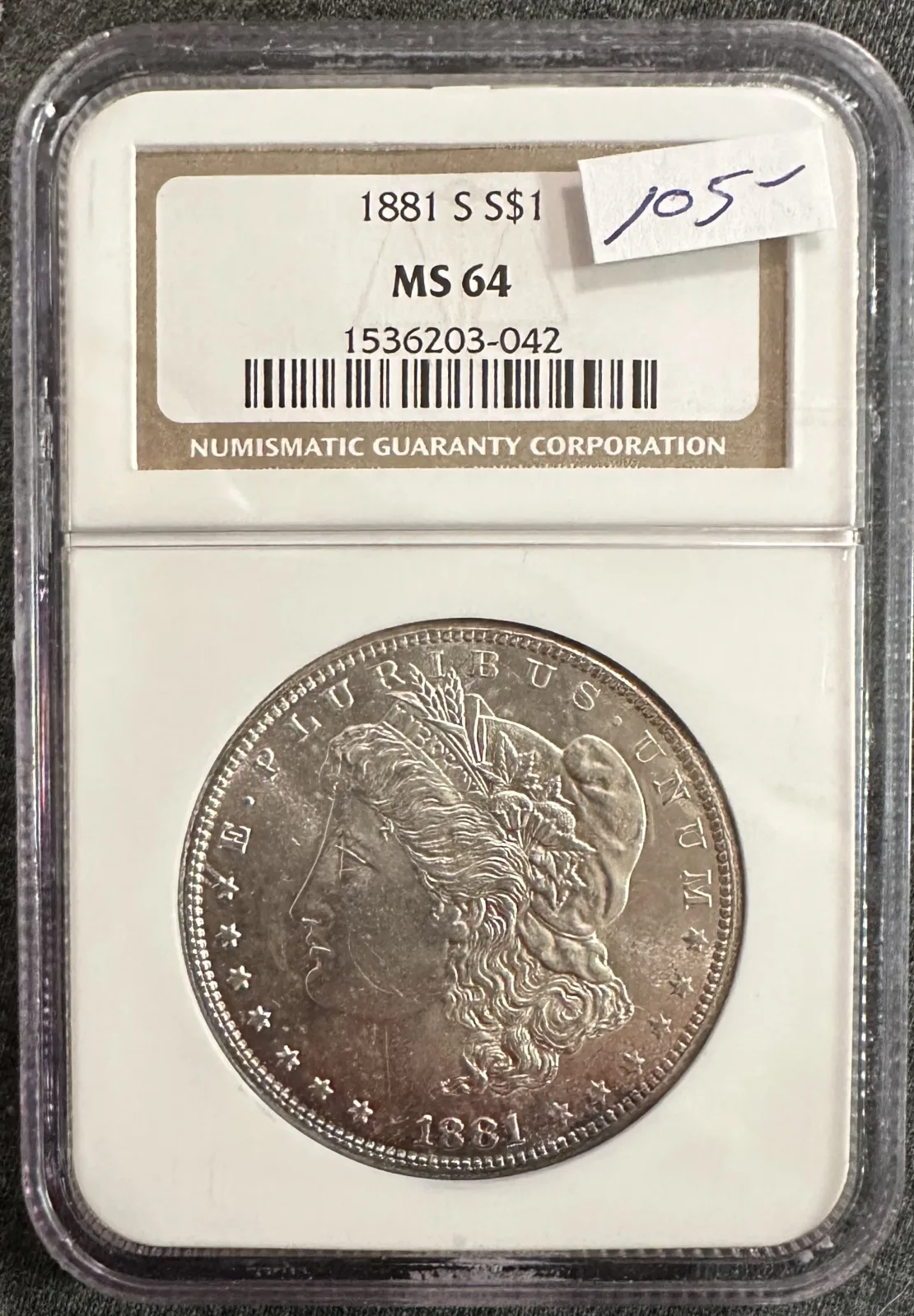
The upshot is that for any toned coin carrying a meaningful premium, third-party certification is not a luxury but a necessity. A coin graded and encapsulated by a top service, with attractive natural toning intact and no questionable-color flag, gives a buyer confidence that experts have vetted the color. Conversely, a raw toned coin with spectacular color but no certification should be approached with caution, because the very best fakes are made to fool exactly the buyer who trusts their own eye. When toning drives value, let the specialists’ judgment, embodied in the grade, guide your purchase.
Should You Remove Toning?
Faced with a heavily toned coin, many owners wonder whether to strip the color off and restore a bright surface. In almost every case, the answer is a firm no — and understanding why prevents a costly, irreversible mistake.
Toning Is Original; Removing It Is Damage
Because attractive natural toning is prized and considered part of a coin’s originality, removing it destroys value rather than adding it. Stripping toning requires cleaning or dipping the coin, and both processes damage the surface — dipping in particular removes not just the toning but a microscopic layer of the metal, leaving the coin bright but often lifeless, with impaired luster. A coin that has been dipped to remove toning frequently looks “washed out” and can tone again unevenly and unattractively. On copper especially, disturbing the patina is catastrophic and permanent. The market strongly prefers original toned surfaces to stripped bright ones.
The Dipping Temptation and Its Risks
Experienced dealers do sometimes lightly dip coins with unattractive or minimal toning to brighten them for sale, and a skillful, brief dip of a common coin can be acceptable. But this is a professional judgment call fraught with risk: over-dipping ruins a coin, dipping a coin with beautiful toning throws away a premium, and dipping copper is almost never wise. For the everyday collector, dipping is best avoided entirely. The general principle, explained in depth in our coin cleaning and preservation guide, is that you should not clean coins — and stripping toning is a form of cleaning.
Let Professionals Decide on Valuable Coins
If a valuable coin has toning you find unappealing, the right move is not a home remedy but a consultation with a reputable dealer or a professional conservation service. They can advise whether the coin is better left alone, and if any intervention is warranted, they can perform it with proper techniques. Because removing toning is irreversible and usually harmful, the default should always be to preserve the coin as it is and let its natural surface speak for itself. When in doubt, do nothing.
Storage: Controlling How Coins Tone
You cannot stop toning entirely, but how you store coins largely determines whether they tone gracefully or turn ugly. Good storage slows and evens the process; bad storage accelerates and ruins it.
Inert Holders Slow Toning
The most effective way to control toning is to store coins in archival, inert, PVC-free holders that limit their exposure to sulfur and air — Mylar flips, hard capsules and slabs, and albums made with inert pages. These materials do not off-gas the sulfur compounds that drive toning, so coins housed in them change far more slowly. For coins you want to keep bright, or whose current toning you want to preserve, inert holders in a stable environment are essential. Certified coins sealed in grading-service holders are particularly well protected.
What Causes Ugly and Rapid Toning
The materials that tone coins fastest and least attractively are the sulfur-rich ones: certain papers and cardboards, rubber bands, felt and wool, and many adhesives. Soft PVC plastic is doubly dangerous because it both tones and actively corrodes coins, leaving the green residue described in our preservation guide. High humidity accelerates all of these reactions and encourages spotting. Coins stored carelessly in such conditions can develop the dark, blotchy, uneven toning that lowers value, rather than the slow, even color that raises it.
Environment: Cool, Dry, and Stable
Beyond holders, the storage environment matters. Keep coins in a cool, dry place with low, stable humidity, away from chemical fumes, cooking sulfur, and big temperature swings. Silica gel desiccant packs help control moisture. A coin kept in an inert holder in a cool, dry, stable environment will tone slowly and evenly if at all, giving you control over its appearance. Ironically, the same practices that prevent ugly toning also allow beautiful toning to develop gracefully over decades — the difference is simply keeping harsh, fast-acting sulfur sources away while letting time do gentle work. Thoughtful storage is the collector’s main lever over how coins age.
Buying Toned Coins Safely
The toned-coin market rewards knowledge and punishes naivety. A few disciplined habits will let you enjoy toned coins while avoiding the traps that catch inexperienced buyers.
Insist on Certification for Premium Coins
The most important rule is simple: for any toned coin carrying a real premium, buy it certified by a major third-party grading service, with the toning judged natural and no questionable-color flag. The services’ experts are your best defense against artificial toning, and a certified coin transfers that expertise to you. Raw toned coins with spectacular color and no certification are exactly where the most convincing fakes live, so treat uncertified rainbow coins with healthy skepticism unless you are highly experienced and paying only an untoned price.
Pay for the Coin, Not Just the Color
Never pay a large premium for toning you cannot verify. If a coin’s color turns out to be artificial, you want to have paid no more than the coin’s value without the toning, so that the worst case is a coin you can still enjoy at fair value. Be especially wary of “too good to be true” toning at bargain prices, of sellers pushing spectacular color on inexpensive raw coins, and of any pressure to buy quickly. The genuine rainbow premium is real, but so is the incentive to fake it, and discipline about what you pay protects you either way.
Buy What You Love, and Learn Constantly
Finally, toning appeal is subjective, so collect the look you actually enjoy rather than chasing what you think others value. Some collectors treasure bold dark toning, others want only bright pastels, others prefer blast-white — all are valid. Spend time looking at many certified naturally toned coins to train your eye, compare them against suspected artificial examples, and learn the color sequences and patterns described here. The more genuine toning you study, the faster you will recognize the fake kind, and the more confidently you can build a collection of toned coins you love and trust. Identifying exactly what a coin is remains the essential first step, because a coin’s type and value frame every judgment you make about its color.
Frequently Asked Questions
What is coin toning?
Coin toning is the color that naturally develops on a coin's surface over time as the metal reacts with elements in its environment, chiefly sulfur, oxygen, and moisture. It is a genuine, microscopically thin surface film — not paint, dirt, or a mint coating — and it can range from subtle gold and brown to spectacular rainbows of gold, magenta, blue, and violet on silver. On copper it appears as browns and iridescent hues, and it is often called patina. Toning is completely normal and, when attractive and natural, is prized by collectors as part of a coin's originality.
Does toning increase or decrease a coin's value?
It can do either, depending on how the toning looks and whether it is natural. Attractive, vivid, well-blended natural toning — especially rainbow color on silver — can multiply a coin's value many times over because it dramatically boosts eye appeal. But dark, heavy, blotchy, or ugly toning that hides detail lowers value, and any toning suspected to be artificial is a serious liability that makes the coin worth less than it would be untoned. In short, high-quality natural toning is a premium; poor or fake toning is a discount.
How can I tell if toning is natural or artificial?
Look for several cues together. Natural silver toning follows a specific color sequence (yellow, gold, russet, magenta, blue, violet) with smooth transitions and colors that blend logically, and it looks integrated with the coin's living luster. Artificial toning is often oversaturated or "too bright," shows colors in the wrong order or in patterns that make no physical sense, looks hazy or painted-on rather than luminous, or sits on top of hairlines and damage (a major red flag). Vivid rainbow color on gold is especially suspicious. Because even experts can be fooled, the safest approach for valuable toned coins is to rely on third-party certification.
Why do collectors pay so much for rainbow-toned coins?
Because beautiful, natural rainbow toning is rare, cannot be convincingly faked, and gives a coin exceptional eye appeal. Silver coins with vivid, evenly distributed color are visually striking and highly sought after, so collectors compete for them and drive prices to multiples of the untoned value — sometimes hundreds or thousands of dollars over a common coin's base price. The toning represents decades of honest, undisturbed storage and is considered a mark of originality, which makes an attractively toned coin both a beautiful object and a scarce one.
Should I clean or dip a toned coin to make it bright?
Almost never. Attractive natural toning is valuable and original, so removing it destroys value. Stripping toning requires cleaning or dipping, both of which damage the surface — dipping removes a thin layer of metal and leaves the coin dull and prone to uneven re-toning, and disturbing copper's patina is permanent and catastrophic. Even unappealing toning is usually best left alone or evaluated by a professional rather than treated at home. As a rule, do not clean coins, and treat stripping toning as a form of cleaning to be avoided.
What is artificial toning and why is it condemned?
Artificial toning (AT) is color deliberately induced by a person — using heat, sulfur, chemicals, smoke, or flame — to fast-forward the toning process and make a coin look more valuable than it is. It is classified as coin doctoring because its purpose is to deceive buyers about a coin's originality and value, and because it is often used to hide underlying damage. When detected, artificial toning collapses a coin's value below its untoned worth, and grading services flag such coins with a "Questionable Color" designation and refuse to certify them as natural.
What are target, album, tab, and bag toning?
These are named patterns that reveal how a coin was stored. Target toning shows concentric rings of color from center to rim. Album toning appears as bands or crescents near the rim from decades in cardboard albums. Tab toning is a ring or arc matching the cutout of a commemorative or proof holder. Bag toning is streaks and patches from storage in cloth bags, famous on Morgan and Peace dollars. Because each pattern matches a plausible storage history, recognizing them helps confirm that toning is natural, and vivid examples of these patterns are highly collectible.
How should I store coins to control toning?
Store coins in archival, inert, PVC-free holders — Mylar flips, hard capsules, slabs, or inert-page albums — which limit exposure to the sulfur and air that drive toning. Avoid sulfur-rich materials like ordinary cardboard, paper, rubber bands, felt, and especially soft PVC plastic, which both tones and corrodes coins. Keep coins in a cool, dry place with low, stable humidity (silica gel packs help) and away from chemical fumes and heat. These practices slow toning and keep it even, preventing the dark, blotchy color that lowers value while allowing any natural toning to develop gracefully.
Can the Coin Identifier app help with toned coins?
Yes, by handling the essential first step: identifying exactly what your coin is — its type, date, and mint — so you understand its base value before you judge the color. Knowing whether you have a common coin or a scarce one frames every decision about its toning, from how much a color premium might be worth to whether the coin deserves professional certification. Snap a photo to identify the coin and gauge its value, and for any coin where toning drives a significant premium, rely on third-party grading experts to confirm the color is natural before you pay for it.