Mercury Dime Identification Guide: Key Dates, Mint Marks, and Values
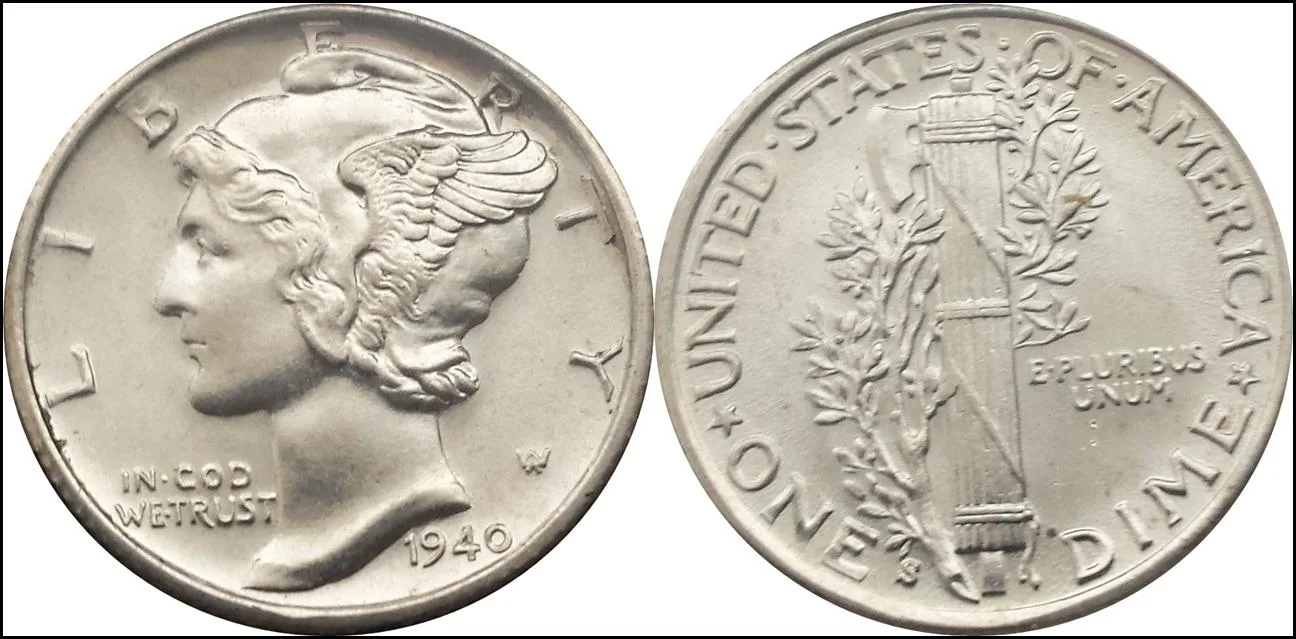
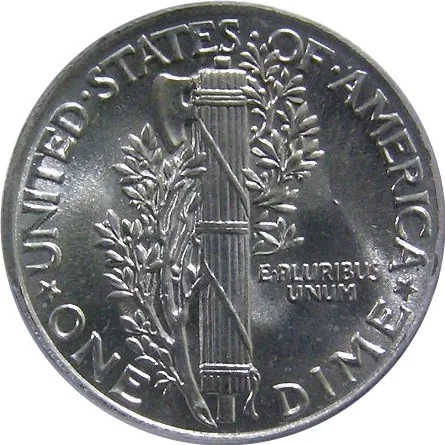
The Mercury Dime, officially known as the Winged Liberty Head Dime, remains one of the most beloved and widely collected coins in American numismatics. Designed by Adolph A. Weinman and minted from 1916 to 1945, this small silver coin replaced the long-running Barber Dime and features a striking depiction of Liberty wearing a winged Phrygian cap, a symbol of freedom of thought. The reverse displays a Roman fasces intertwined with an olive branch, representing military preparedness tempered by a desire for peace.
Despite being only 17.9 millimeters in diameter, the Mercury Dime packs enormous collector appeal. The series includes some of the most famous key dates in all of numismatics, notably the legendary 1916-D, along with numerous overdate varieties, Full Bands specimens, and wartime issues that tell the story of America from World War I through the end of World War II.
This guide covers everything you need to identify, authenticate, grade, and value Mercury Dimes. Whether you have found one in an old coin collection or are building a complete set, you will learn how to recognize key dates, locate mint marks, assess Full Bands designation, and determine current market values across every year and mint of the series.
History and Design of the Mercury Dime
The Mercury Dime emerged from a broader redesign initiative led by the U.S. Treasury in 1916. Treasury Secretary William McAdoo invited sculptors to submit designs for the dime, quarter, and half dollar. Adolph A. Weinman won the competitions for both the dime and the half dollar, creating two of the most iconic coin designs in American history. His Walking Liberty Half Dollar design is equally celebrated among collectors, and was revived decades later as the obverse of the American Silver Eagle bullion coin.
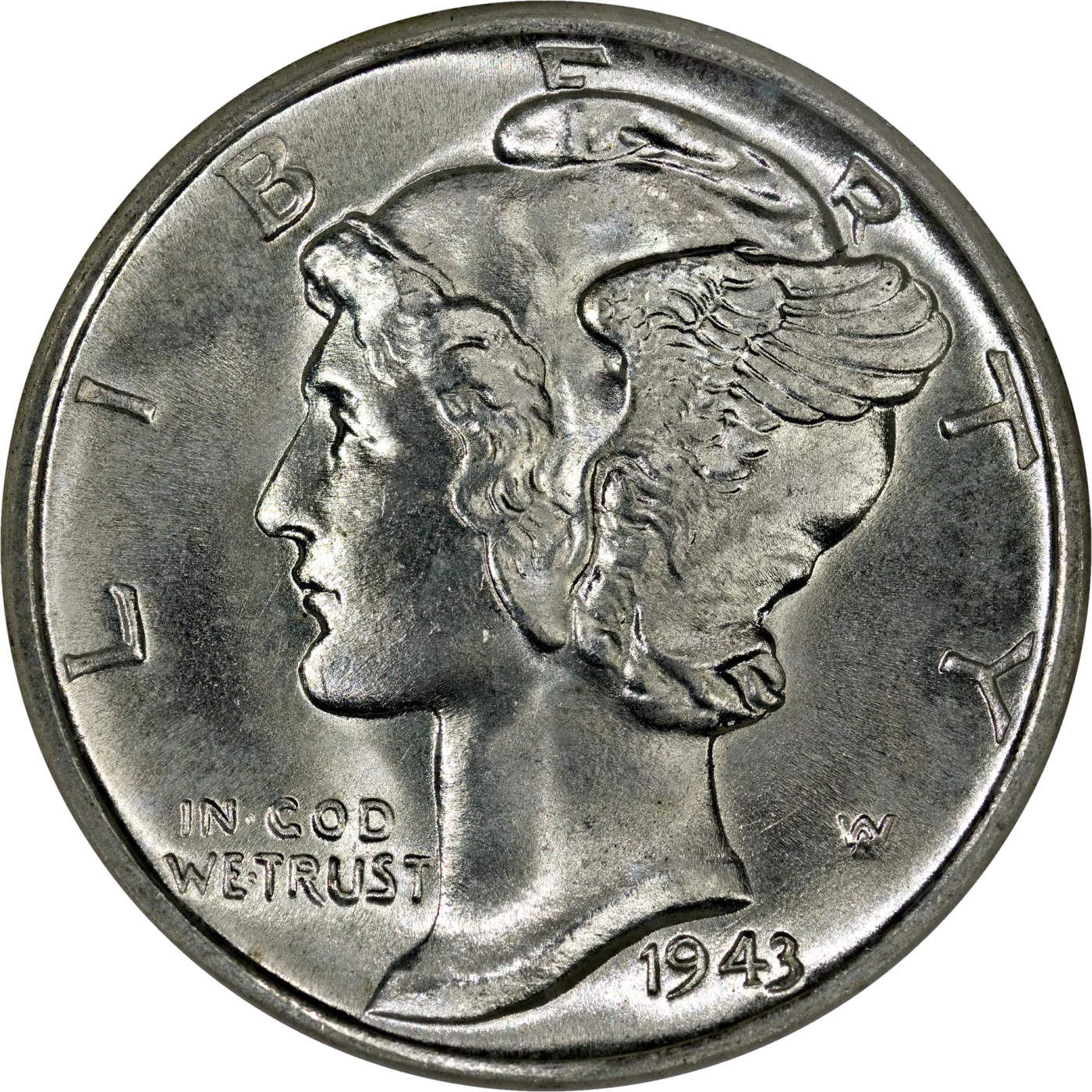
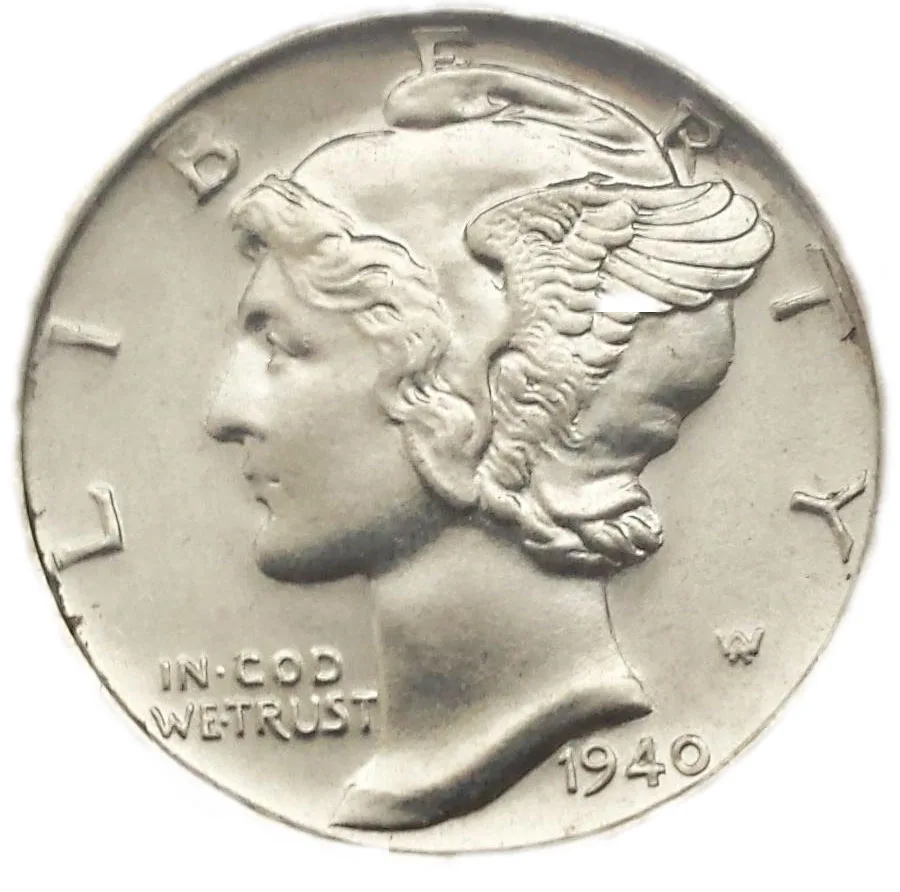
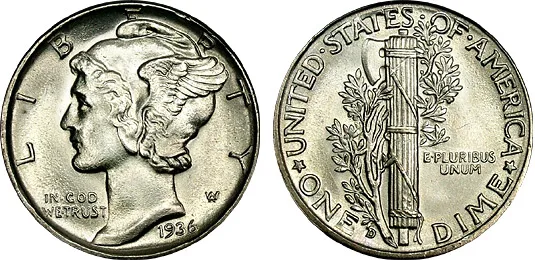
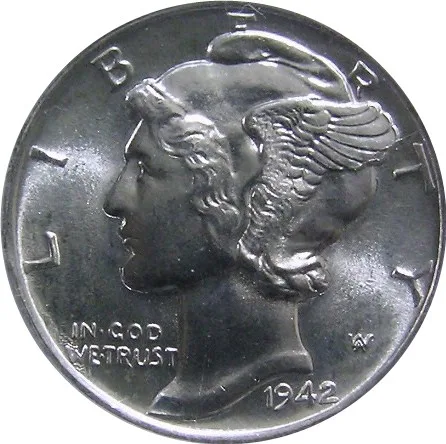
The obverse design shows a youthful Liberty facing left, wearing a winged Phrygian cap. The public quickly nicknamed the coin the “Mercury Dime” because the winged cap resembled the winged helmet of Mercury, the messenger god familiar from ancient Roman coins. The word “LIBERTY” appears along the upper rim, “IN GOD WE TRUST” sits to the left of Liberty’s neck, and the date occupies the lower right area.
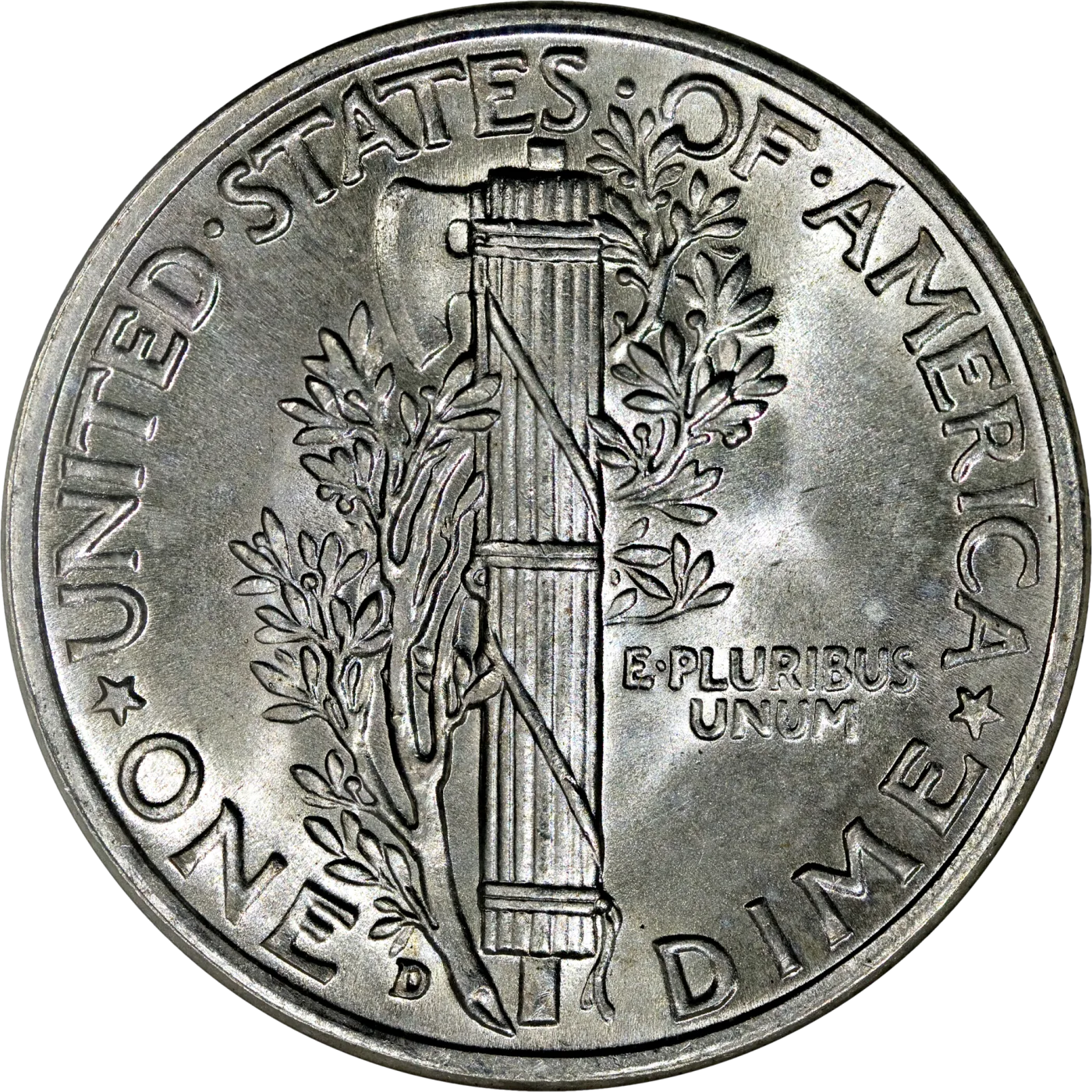
Weinman’s reverse design features a fasces, the ancient Roman symbol of authority consisting of a bundle of rods bound together with an axe. An olive branch wraps around the fasces, symbolizing peace. The inscription “UNITED STATES OF AMERICA” curves around the top, “ONE DIME” sits at the bottom, and the motto “E PLURIBUS UNUM” appears along the left side.
The Design Competition
Weinman competed against Hermon Atkins MacNeil, who won the Standing Liberty Quarter design — a quarter design that was itself replaced in 1932 by the long-running Washington Quarter. Weinman reportedly used Elsie Stevens, the wife of poet Wallace Stevens, as his model for the Liberty portrait, though this has been debated by numismatic historians. The elegance of the design has made the Mercury Dime a favorite among both collectors and artists, with many considering it the most beautiful small-denomination coin ever produced by the U.S. Mint.
Production Timeline
Mercury Dimes were struck from 1916 through 1945 at three mint facilities: Philadelphia (no mint mark), Denver (D), and San Francisco (S). Production was halted in 1945 when the Roosevelt Dime was introduced to honor President Franklin D. Roosevelt following his death. The series spans 30 years and encompasses 77 regular-issue date and mint mark combinations, making it a challenging but achievable set for dedicated collectors.
Physical Specifications and Composition
Understanding the physical characteristics of the Mercury Dime is essential for proper identification and authentication. Every genuine Mercury Dime shares the following specifications throughout the entire series run.
Coin Dimensions and Weight
The Mercury Dime has a diameter of 17.9 millimeters (0.705 inches) and a thickness of 1.35 millimeters. Each coin weighs 2.50 grams (0.08038 troy ounces). The edge features a reeded pattern with 118 reeds, which helps distinguish genuine coins from cast counterfeits that often show mushy or irregular reeding. These specifications remained constant throughout all 30 years of production.
Metal Composition
Mercury Dimes are struck in 90% silver and 10% copper, the same composition used for Morgan Silver Dollars and other silver denominations of the era. Each coin contains 0.07234 troy ounces of pure silver. At current silver prices, even heavily worn common-date Mercury Dimes carry a base value tied to their silver content, which collectors refer to as “melt value.” This silver composition also means that Mercury Dimes will exhibit natural toning over time, ranging from golden amber to deep blue and violet hues.
Strike Characteristics
The quality of strike varies significantly across Mercury Dimes depending on the mint, year, and position of the coin in the die’s life cycle. Philadelphia strikes tend to be the sharpest, while Denver and San Francisco coins sometimes show softer details, particularly on the central bands of the reverse fasces. This variation directly impacts the highly sought-after Full Bands designation discussed later in this guide.
Mint Mark Locations and Identification
Locating and identifying mint marks is one of the most critical skills for Mercury Dime collectors. The mint mark location changed during the series, and correctly reading the mint mark can mean the difference between a common coin worth a few dollars and a rarity worth thousands.
Where to Find the Mint Mark
On Mercury Dimes, the mint mark appears on the reverse (tail side) of the coin, positioned to the lower left of the fasces, just above the last letter “E” in “ONE DIME.” The mint mark is small and can be difficult to see on worn specimens, so a magnifying loupe of at least 5x magnification is recommended for accurate identification.
Mint Mark Types
Three mint facilities produced Mercury Dimes during the series run:
- No mint mark (Philadelphia): The Philadelphia Mint produced dimes every year from 1916 to 1945. Philadelphia coins carry no mint mark. These are generally the most common issues for each year.
- “D” (Denver): The Denver Mint struck Mercury Dimes in most years of the series, though it skipped several years during the 1920s and 1930s. Denver produced the most famous rarity in the series, the 1916-D.
- “S” (San Francisco): The San Francisco Mint also contributed to Mercury Dime production in most years. San Francisco issues are often noted for slightly softer strikes compared to Philadelphia coins.
Reading Worn Mint Marks
On heavily circulated Mercury Dimes, the mint mark can be partially or fully worn away. Tilting the coin under a strong directional light source at various angles can help reveal remnants of the mint mark. For dateless or nearly dateless coins, some collectors use the nic-a-date acid treatment method, though this significantly reduces the coin’s numismatic value. Similar techniques for reading worn details are used when identifying Buffalo Nickels, which are notorious for losing their dates through circulation wear.
Key Dates and Rarities
The Mercury Dime series contains several coins that are recognized as key dates due to low mintages, high collector demand, or both. Knowing these key dates is essential for any collector or dealer working with the series.
The 1916-D: King of Mercury Dimes
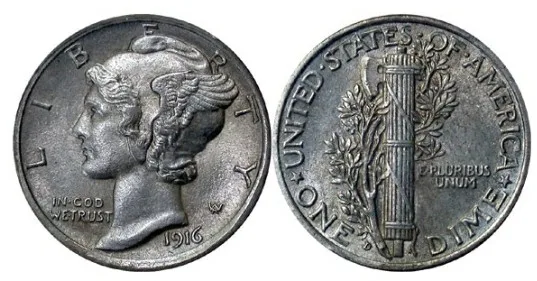
The 1916-D Mercury Dime is the undisputed key to the series and one of the most famous rarities in all of American numismatics. With a mintage of just 264,000 coins, it is by far the lowest-mintage issue in the series. In Good (G-4) condition, a genuine 1916-D commands prices starting around $1,200 to $1,500. In MS-65 Full Bands condition, values can exceed $50,000. Because of its high value, the 1916-D is also one of the most frequently counterfeited Mercury Dimes. Many fakes are created by adding a “D” mint mark to the far more common 1916 Philadelphia issue.
Other Major Key Dates
- 1921 (Philadelphia): Mintage of 1,230,000. One of the scarcest dates in higher grades, with values of $60-$80 in Good condition and $1,500+ in MS-65.
- 1921-D: Mintage of 1,080,000. Slightly scarcer than the Philadelphia issue, with similar value ranges. Full Bands examples are extremely rare.
- 1926-S: Mintage of 1,520,000. While the mintage seems moderate, survival rates in higher grades are very low. MS-65 examples can bring $10,000 or more.
- 1931-D: Mintage of 1,260,000. A Depression-era rarity that is scarce in all grades, particularly in Full Bands condition.
- 1931-S: Mintage of 1,800,000. Similar to the 1931-D in scarcity and value, this San Francisco issue is tough to find well-struck.
Semi-Key Dates
Several additional dates carry significant premiums over common issues and are considered semi-keys in the series:
- 1916-S: The San Francisco issue from the first year of production, with a mintage of 10,450,000. While not rare, it carries a premium as a first-year issue.
- 1919-D: With a mintage of 9,939,000, this issue is scarce in grades above VF and rare with Full Bands.
- 1919-S: Mintage of 8,850,000. Like its Denver counterpart, this is a conditionally rare coin.
- 1925-D: Mintage of 6,966,000. Scarce in Mint State, particularly with full strike details.
- 1927-D: Mintage of 4,812,000. An underrated issue that is genuinely scarce in higher grades.
- 1942/1 (Philadelphia): An overdate variety that commands strong premiums in all grades.
- 1942/1-D: The Denver overdate, which is even scarcer than the Philadelphia version.

Full Bands Designation Explained
The Full Bands (FB) designation is one of the most important factors affecting Mercury Dime values, comparable to the Full Bell Lines designation on Franklin Half Dollars and the Full Steps designation on Jefferson Nickels. Understanding what Full Bands means and how to identify it can significantly impact your collecting decisions and the prices you pay or receive for coins.
What Are Full Bands?
On the reverse of the Mercury Dime, the fasces features two horizontal bands that bind the rods together. On a coin with a strong strike, these two bands are fully separated with a visible split between them. When both the upper and lower bands show complete, unbroken separation, the coin qualifies for the Full Bands designation from third-party grading services like PCGS and NGC.
Why Full Bands Matters
The Full Bands designation can multiply a Mercury Dime’s value dramatically. For example, a 1945 Mercury Dime in MS-65 might sell for $25 without the FB designation, but an MS-65 FB example could bring $50 to $75. For scarcer dates, the multiplier is even more dramatic. A 1926-S in MS-65 might sell for $5,000, while an MS-65 FB example could reach $20,000 or more.
Checking for Full Bands
To evaluate Full Bands, examine the reverse fasces under strong magnification (at least 7x-10x). Look at the horizontal bands near the center of the fasces. Both the upper and lower sets of bands must show complete, unbroken separation across their full width. Even a tiny area where the bands merge disqualifies the coin from the FB designation. Be aware that some coins may appear to show Full Bands to the naked eye but fail under magnification, and vice versa.
Dates Rarely Found with Full Bands
Certain dates are notoriously difficult to find with Full Bands, making FB examples extremely valuable:
- 1916-D: Nearly impossible with true Full Bands. Fewer than a dozen FB examples are known.
- 1918-S: Extremely rare in FB, with soft strikes being the norm for this issue.
- 1919-D and 1919-S: Both branch mint issues are very scarce with Full Bands.
- 1921 and 1921-D: Already rare coins that become extraordinarily valuable with FB.
- 1926-S: Perhaps the most celebrated FB rarity after the 1916-D.
- 1931-S: Genuine FB examples are extremely scarce and highly sought after.
Overdate Varieties and Die Errors
The Mercury Dime series includes several fascinating overdate varieties and die errors that are actively collected and carry significant premiums. These varieties occurred when the Mint reused or improperly prepared dies.
1942/1 Overdate (Philadelphia)
The 1942/1 overdate is the most famous Mercury Dime variety. Created when a 1942-dated die was punched over a 1941-dated hub, the underlying “1” is clearly visible beneath the “2” in the date. In Good condition, this variety sells for $400 to $500. In MS-65, prices can reach $5,000 or more. The overdate is most visible in the crossbar area of the “2,” where the top of the underlying “1” can be seen.
1942/1-D Overdate (Denver)
The Denver version of the 1942/1 overdate is even scarcer than the Philadelphia issue. Values start around $500 in Good condition and climb to $8,000 or more in MS-65. The overdate characteristics are similar to the Philadelphia version but can be slightly less pronounced on some specimens.
Repunched Mint Marks
Throughout the series, numerous repunched mint mark (RPM) varieties exist where the mint mark was punched into the die more than once, resulting in a doubled or shifted appearance. Notable RPM varieties include the 1917-D with a dramatically repunched D, and various S mint mark varieties from the 1920s and 1930s. While most RPMs carry modest premiums, some significant examples can be worth substantially more than normal strikes.
Other Notable Varieties
- 1945-S Micro S: A small mint mark variety that is distinctly smaller than the normal S punch used that year. This variety carries a premium in all grades.
- 1942-D doubled die obverse: Shows doubling on “LIBERTY” and the date. A scarce variety valued by specialists.
- Off-center strikes: Mercury Dimes struck off-center by 5% or more carry premiums. Dramatically off-center examples (20%+ with full date visible) can be worth several hundred dollars regardless of date.
- Clipped planchets: Coins struck on planchets with curved or straight clips. Moderate clips with full date visible are collectible.
Grading Mercury Dimes
Accurate grading is essential for determining the value of any Mercury Dime. The Sheldon scale from 1 to 70 is used, with higher numbers indicating better condition. Understanding the key grading points specific to Mercury Dimes will help you assess your coins accurately. The same fundamental grading principles, explained step by step in our coin grading guide, apply across many classic coin series, including Indian Head Pennies and other popular collectibles.
About Good (AG-3)
The outline of the design is visible but details are heavily worn. The date may be barely readable. The rim may be worn into the design in places. At this grade, the coin is primarily identifiable as a Mercury Dime by its overall shape and size.
Good (G-4 to G-6)
Major design elements are visible but flat. On the obverse, Liberty’s head is a smooth outline with no wing detail. “LIBERTY” and “IN GOD WE TRUST” are partially readable. The date is clear. On the reverse, the fasces is visible as a flat shape with no band detail.
Very Good (VG-8 to VG-10)
Some design detail begins to emerge. On the obverse, a few wing feathers are visible, and the hair around Liberty’s ear shows some definition. On the reverse, the bands on the fasces are partially visible but not separated. The rim is distinct and fully separated from the design.
Fine (F-12 to F-15)
Moderate wear is evident on the high points. On the obverse, approximately half the wing feathers show detail. The hair above Liberty’s ear shows separation. On the reverse, the bands are visible but the vertical lines of the rods are mostly smooth. The olive branch shows partial leaf detail.
Very Fine (VF-20 to VF-35)
Light to moderate wear on the high points only. On the obverse, most wing feathers are visible with some flat spots on the highest areas. The hair shows good detail with minor wear. On the reverse, the fasces shows clear band and rod details with light wear. The olive branch is well defined.
Extremely Fine (EF-40 to EF-45)
Only slight wear on the highest points. On the obverse, all wing feathers are distinct with just traces of wear on the highest feather tips. The hair shows full detail with minor flatness. On the reverse, the bands show near-complete detail, and the rods display individual separation.
About Uncirculated (AU-50 to AU-58)
Traces of wear visible only on the highest points. The coin retains most of its original mint luster, which may be broken in the fields. At AU-58, wear is visible only under magnification on the hair above Liberty’s ear and the highest wing feathers.
Mint State (MS-60 to MS-70)
No trace of wear. The coin shows full original mint luster. Differences between MS grades are based on the quantity and severity of contact marks, the quality of the strike, and the overall eye appeal. MS-65 (Gem) coins show only minor contact marks not visible to the naked eye, with strong luster and eye appeal.
Authentication and Counterfeit Detection
Due to the high values of key-date Mercury Dimes, counterfeiting is a significant concern. Learning to spot fakes is essential, especially for the 1916-D and overdate varieties.
Common Counterfeit Types
The most frequently counterfeited Mercury Dime is the 1916-D. Counterfeiters typically use one of two methods: adding a fake “D” mint mark to a genuine 1916 Philadelphia coin, or producing a complete cast or struck counterfeit. Added mint marks are the most common type and can often be detected with careful examination.
Detecting Added Mint Marks
When examining a suspected 1916-D, look for these red flags:
- Mint mark shape: The genuine 1916-D mint mark has a distinctive shape that differs from mint marks used in later years. Compare the suspect coin to confirmed genuine examples.
- Disturbed field: Added mint marks often show tool marks, displaced metal, or an unnatural flow of metal around the mint mark area. Examine the surface under magnification for signs of tooling.
- Mint mark depth: A genuine mint mark should have a consistent depth and crisp edges proportional to the coin’s overall wear level. An added mint mark may appear too sharp for the coin’s grade or may sit at an incorrect depth.
- Die characteristics: Genuine 1916-D dimes share specific die characteristics that have been extensively documented. Comparing your coin to known die markers can confirm or deny authenticity.
Weight and Composition Testing
A precision scale accurate to 0.01 grams can help detect cast counterfeits, which often weigh slightly more or less than the standard 2.50 grams. A specific gravity test can also confirm the silver composition. Genuine Mercury Dimes have a specific gravity of approximately 10.34, consistent with the 90% silver, 10% copper alloy.
Professional Authentication
For any Mercury Dime valued at $500 or more, professional authentication through PCGS, NGC, or ANACS is strongly recommended. The cost of authentication and grading is a small price to pay compared to the risk of purchasing a counterfeit key date. Both PCGS and NGC maintain extensive databases of genuine die characteristics for 1916-D dimes and other key issues.
Year-by-Year Production Guide
Understanding the production history of Mercury Dimes helps collectors appreciate the relative scarcity and significance of each issue. Here is a breakdown of the major production periods.
Early Years: 1916-1920
The first Mercury Dimes entered circulation in October 1916, with the Philadelphia Mint leading production. The 1916 Philadelphia issue had a substantial mintage of 22,180,080, while the 1916-S saw 10,450,000 coins produced. Denver produced only 264,000, creating the series key date. In 1917, all three mints produced large quantities as the nation’s economy expanded during World War I. The years 1918-1920 saw moderate to high mintages, with branch mint issues from this period being conditionally scarce in higher grades.
The Scarce 1920s: 1921-1929
The 1921 issues (Philadelphia and Denver only, with no San Francisco production) are among the lowest mintages in the series aside from the 1916-D. From 1923 through 1929, mintages varied significantly. No Denver Mint dimes were produced in 1922, 1923, 1924, or 1925. The 1926-S with its mintage of 1,520,000 stands out as a conditional rarity that is particularly tough in Full Bands. This period is the most challenging section for collectors building a complete set.
Depression Era: 1930-1939
The Great Depression dramatically impacted coin production. No dimes were struck in 1932 or 1933, creating a two-year gap in the series. The 1931-D and 1931-S are both scarce, with relatively low mintages driven by reduced economic activity. Production resumed more robustly in the mid-1930s, and by 1937-1939, mintages had recovered to pre-Depression levels. Coins from the Depression years tend to survive in lower grades, as people kept their coins in circulation longer.
War Years: 1940-1945
The final years of the Mercury Dime series saw enormous production volumes to support the wartime economy. Mintages frequently exceeded 100 million coins per year across all three mints. While individual coins from this period are common, the 1942/1 and 1942/1-D overdates from this era are significant varieties. The 1945-S Micro S variety is another notable issue from the final year of production. The series concluded in 1945, replaced by the Roosevelt Dime following FDR’s death in April of that year.
Wartime Issues 1941-1945
Mercury Dimes produced during World War II hold a special place in the series. While most wartime dates are common due to high mintages, they carry historical significance and offer unique collecting opportunities.
Production Surge
The wartime economy demanded enormous quantities of coinage. The Philadelphia Mint alone produced over 175 million dimes in 1943 and over 231 million in 1944. These high-production years mean that common wartime Mercury Dimes remain affordable in most grades, making them excellent entry points for new collectors.
Strike Quality Variations
Despite high mintages, the quality control during wartime production varied. Some wartime Mercury Dimes exhibit excellent strikes with Full Bands, while others show soft, mushy details due to overworked dies. San Francisco issues from 1941 to 1945 are particularly known for inconsistent strike quality. Finding well-struck examples with Full Bands from this era requires patience and careful selection.
The 1942/1 Overdates in Context
The famous 1942/1 overdates were created during the transition from 1941 to 1942 production. As the nation shifted to a wartime footing, the urgency of coin production may have contributed to the error of using leftover 1941-dated dies. Both the Philadelphia and Denver versions are eagerly sought by collectors, representing a tangible connection between numismatics and wartime history.
Final Year: 1945
The 1945 Mercury Dimes were the last coins struck in this beloved design. Production occurred at all three mints, with Philadelphia striking 159,130,000, Denver producing 40,245,000, and San Francisco minting 41,920,000. The 1945-S Micro S variety, using a smaller-than-normal S punch, is the most notable variety from this final year. President Roosevelt’s death on April 12, 1945, led to the decision to replace the Mercury Dime with a new design honoring the late president.
Proof Mercury Dimes
The U.S. Mint produced proof Mercury Dimes for collectors from 1936 through 1942, offering some of the most visually stunning examples of Weinman’s design.
Proof Production Years
Proof Mercury Dimes were struck exclusively at the Philadelphia Mint during the following years with these approximate mintages:
- 1936: 4,130 proofs
- 1937: 5,756 proofs
- 1938: 8,728 proofs
- 1939: 9,321 proofs
- 1940: 11,827 proofs
- 1941: 16,557 proofs
- 1942: 22,329 proofs
Identifying Proof Mercury Dimes
Genuine proof Mercury Dimes exhibit mirror-like reflective fields with frosted design elements (on the earliest strikes from each die). The edge reeding is sharper and more precisely defined than on business strikes. Proof coins were struck twice on specially polished planchets using polished dies, resulting in extraordinary sharpness and detail throughout. Most proofs from 1936 to 1942 will show Full Bands as a result of the double striking process.
Proof Values
Proof Mercury Dimes in PF-65 condition range from approximately $800 for a 1942 to $3,000 or more for a 1936. Cameo and deep cameo proof examples, which show strong contrast between frosted devices and mirror fields, command substantial premiums. A 1936 in PF-67 Deep Cameo could bring $10,000 or more at auction.
Storage and Preservation
Proper storage and handling of Mercury Dimes is essential to maintain their condition and value over time. Silver coins are particularly susceptible to environmental damage if not stored correctly.
Handling Best Practices
Always hold Mercury Dimes by their edges, never touching the obverse or reverse surfaces. Natural skin oils contain acids that can cause permanent fingerprint stains on silver. Wear cotton or nitrile gloves when handling valuable specimens. Work over a soft, padded surface to prevent damage from accidental drops.
Storage Options
For individual valuable coins, hard plastic capsules (such as Air-Tite holders) provide the best protection against environmental damage. For collections of moderate-value coins, 2x2 cardboard or Mylar flips offer good protection at lower cost. Avoid PVC-containing soft vinyl flips, which can cause green, slimy deposits on silver coins over time. For complete sets, Dansco or Whitman albums provide an attractive display option while protecting the coins from direct handling.
Environmental Considerations
Store Mercury Dimes in a cool, dry environment with stable temperature and humidity. Avoid attics, basements, and areas prone to temperature swings or moisture. Silica gel packets in your storage area can help absorb excess humidity. Never store coins in direct contact with rubber bands, newspaper, or cardboard that has not been specifically manufactured for coin storage, as these materials release sulfur compounds that accelerate toning.
Cleaning Warning
Never clean a Mercury Dime. Cleaning removes the natural patina and surface quality, immediately reducing the coin’s value to collectors. Even gentle cleaning with soap and water can create hairline scratches visible under magnification. Professional grading services will note cleaned coins as “details” grades, which carry significantly lower values than problem-free examples. If a coin has been damaged or contaminated, consult a professional conservator rather than attempting to clean it yourself. The same principles apply to all collectible coins, from Peace Dollars to small denomination coins.
Current Market Values
Mercury Dime values vary enormously based on date, mint mark, grade, and Full Bands designation. Here is a general guide to current market values across the series.
Common Dates (1930s-1940s Philadelphia Issues)
In circulated grades (Good to Fine), common-date Mercury Dimes typically sell for $2 to $5, closely tracking their silver melt value. In Very Fine to Extremely Fine, values range from $5 to $15. Mint State examples (MS-60 to MS-63) bring $15 to $40. Gem Mint State (MS-65) common dates sell for $30 to $60 without Full Bands, and $50 to $120 with Full Bands.
Better Dates (1916-S, 1920s Branch Mints)
Semi-key dates in circulated grades range from $8 to $50 depending on the specific date and condition. Mint State examples of better dates typically start at $100 and can reach several hundred dollars. Full Bands examples of better dates carry substantial premiums, often 2x to 5x the non-FB price.
Key Date Values
The major key dates carry significant value in all grades:
- 1916-D: $1,200 (G-4) to $50,000+ (MS-65 FB)
- 1921: $60 (G-4) to $1,500+ (MS-65)
- 1921-D: $70 (G-4) to $2,500+ (MS-65)
- 1926-S: $15 (G-4) to $10,000+ (MS-65)
- 1931-D: $12 (G-4) to $500+ (MS-65)
- 1942/1: $400 (G-4) to $5,000+ (MS-65)
- 1942/1-D: $500 (G-4) to $8,000+ (MS-65)
Full Bands Premium
The Full Bands designation typically adds a premium of 50% to 300% over non-FB examples in Mint State grades. For conditionally rare FB dates like the 1918-S, 1926-S, and 1931-S, the premium can be 500% or more. The FB designation has no meaningful impact on circulated coins, as the bands are already worn to the point where the designation cannot be assessed.
Building a Mercury Dime Collection
The Mercury Dime series offers multiple approaches for collectors at every budget level. Whether you aim for a complete date-and-mint set or a more focused collection, having a strategy will help you build a more satisfying and valuable collection over time.
Complete Date and Mint Set
A complete set of Mercury Dimes includes 77 regular-issue coins spanning all dates and mint marks from 1916 to 1945. The biggest challenge is the 1916-D, which many collectors save for last due to its high cost. One popular approach is to build the set in circulated grades (Fine to Very Fine), which keeps costs manageable for all dates except the 1916-D and the overdates. A complete circulated set without the 1916-D can be assembled for approximately $800 to $1,500.
Short Set: 1934-1945
Many collectors start with a short set covering the final years of the series, from 1934 to 1945. This 36-coin set avoids the scarce and expensive early dates, making it achievable on a modest budget. A complete short set in Fine to Very Fine condition can be built for under $150, while an MS-65 short set might cost $1,000 to $2,000 depending on Full Bands status.
Full Bands Specialty Set
Advanced collectors sometimes focus on assembling a set of Mercury Dimes where every coin carries the Full Bands designation. This is one of the most challenging and expensive endeavors in modern numismatics, as several dates are virtually unknown with true Full Bands. A complete FB set in MS-65 would likely cost well over $100,000, assuming all dates could even be located.
Type Collecting
For collectors who want just one representative Mercury Dime for a type set, a common-date coin from the late 1930s or 1940s in MS-65 FB offers the best combination of quality and affordability. These coins beautifully showcase Weinman’s design at a fraction of the cost of key dates. Type collecting is a great way to sample many different series, from classic American coins and the affordable Lincoln Wheat Penny series to modern issues.
Buying Tips
When purchasing Mercury Dimes, keep these strategies in mind:
- Always buy certified coins (PCGS or NGC) for key dates and any coin valued above $200.
- Compare prices across multiple dealers and auction results before making significant purchases.
- For raw coins, learn to grade accurately yourself before spending significant money.
- Be especially cautious with 1916-D dimes offered at suspiciously low prices.
- Consider the Full Bands designation when buying Mint State coins, as it significantly impacts long-term value.
- Buy the best quality you can afford for key dates, as these coins tend to appreciate faster in higher grades.