US Gold Coin Pictures: Identify Every Type by Sight
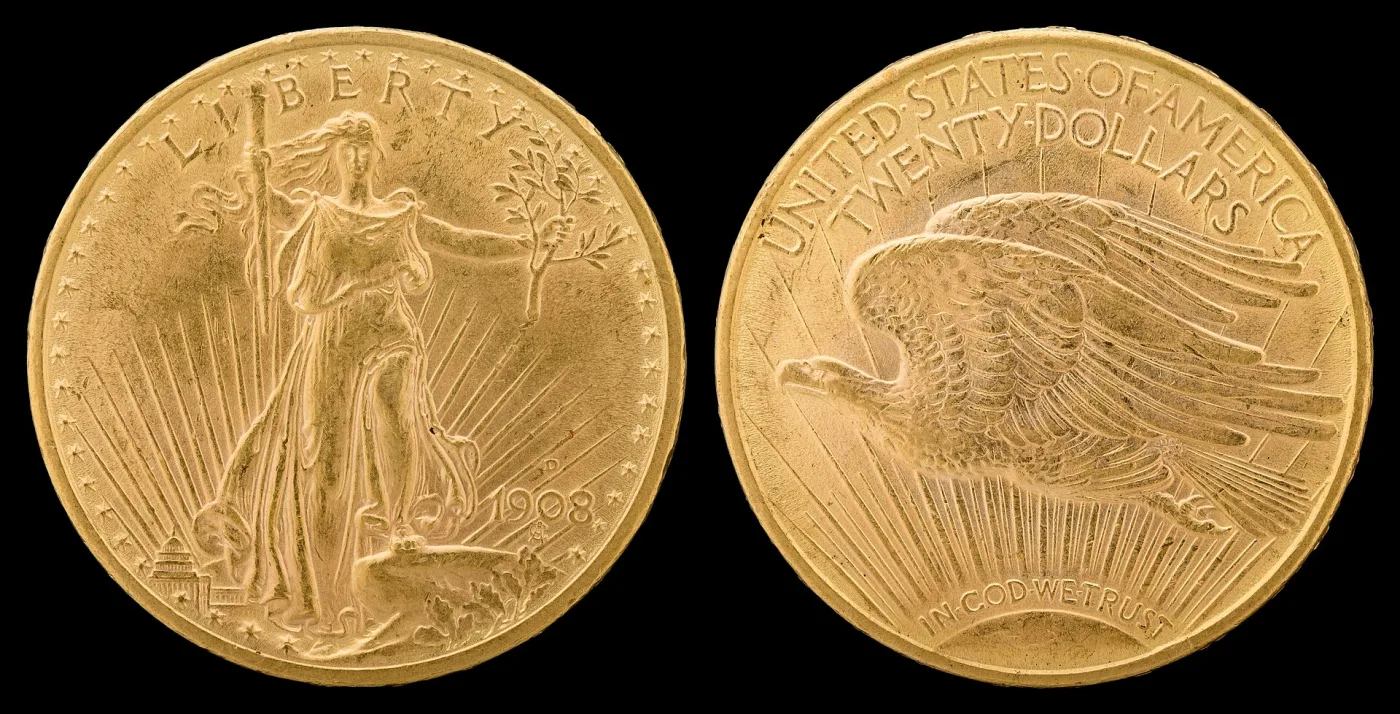
If you searched for pictures of gold coins, you probably have one in your hand, or in a photo from a relative’s estate, and want to know what it is. Most old American gold falls into six denominations and about a dozen designs, and three things tell them apart: the denomination written on the reverse, the size of the coin, and the portrait on the front.
This guide shows a photograph of each major type, every one from the Smithsonian’s National Numismatic Collection, and points you to the full guide for each coin.
The quick answer
Turn the coin over and find the denomination. Pre-1933 gold almost always abbreviates it, which is the fastest clue you have. Then match the portrait and date.
| Denomination | Written as | Struck | Main designs | Diameter | Weight |
|---|---|---|---|---|---|
| Gold dollar ($1) | 1 DOLLAR | 1849-1889 | Liberty Head; Indian Princess | about 13 mm, later about 15 mm | 1.672 g |
| Quarter eagle ($2.50) | 2½ D. / 2½ DOLLARS | 1796-1929 | Liberty Head 1840-1907; Indian Head 1908-1929 | 18 mm (from 1840) | 4.18 g |
| Three dollars ($3) | 3 DOLLARS | 1854-1889 | Indian Princess | 20.5 mm | 5.015 g |
| Half eagle ($5) | FIVE D. / FIVE DOLLARS | 1795-1929 | Liberty Head 1839-1908; Indian Head 1908-1929 | 21.6 mm (from 1840) | 8.359 g |
| Eagle ($10) | TEN D. / TEN DOLLARS | 1795-1933 | Liberty Head 1838-1907; Indian Head 1907-1933 | about 27 mm | 16.718 g |
| Double eagle ($20) | TWENTY D. / TWENTY DOLLARS | 1849-1933 | Liberty Head 1849-1907; Saint-Gaudens 1907-1933 | 34 mm | 33.436 g |
Weights are for the standard used from 1837 onward, 90% gold and 10% copper. Earlier coins (1795 to 1834) were struck to a heavier, slightly finer standard, so a very early piece will not match this table, and it does not need to.
Sources disagree on the gold dollar’s diameter: Wikipedia gives 12.7 mm and 14.3 mm, while dealer catalogs round to 13 mm and 15 mm. Either way, the first type is the smallest coin the United States has issued, and the later types are visibly wider and thinner.
Gold dollar ($1)
The smallest gold coin is also the easiest to recognize. It is barely larger than a fingernail and reads 1 DOLLAR inside a wreath. James B. Longacre designed it, and it came in three types: a Liberty Head with a coronet (1849-1854), then an Indian Princess with a small head (1854-1856) and one with a large head (1856-1889) on a wider, thinner planchet.
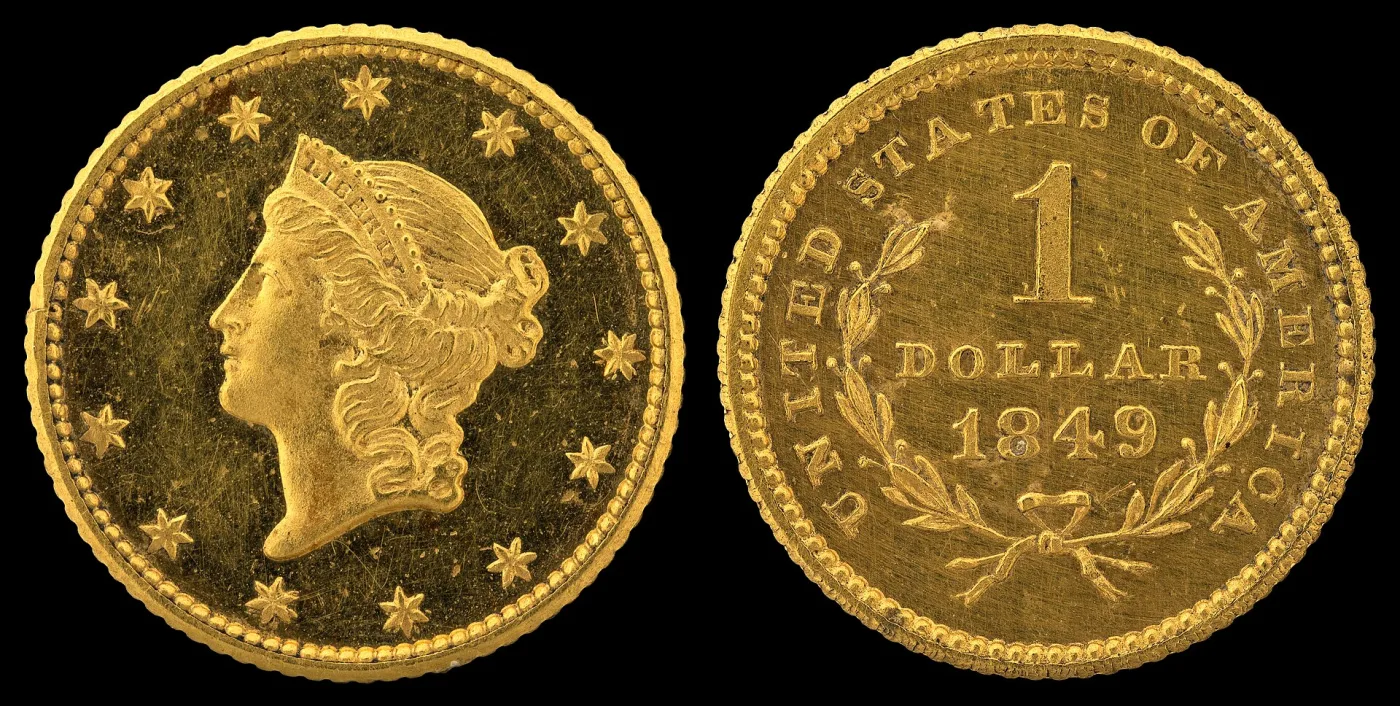
Gold dollars were often mounted in jewelry, so check the edge for solder before you value one. The gold dollar guide separates the three types and the branch-mint key dates.
Quarter eagle ($2.50)
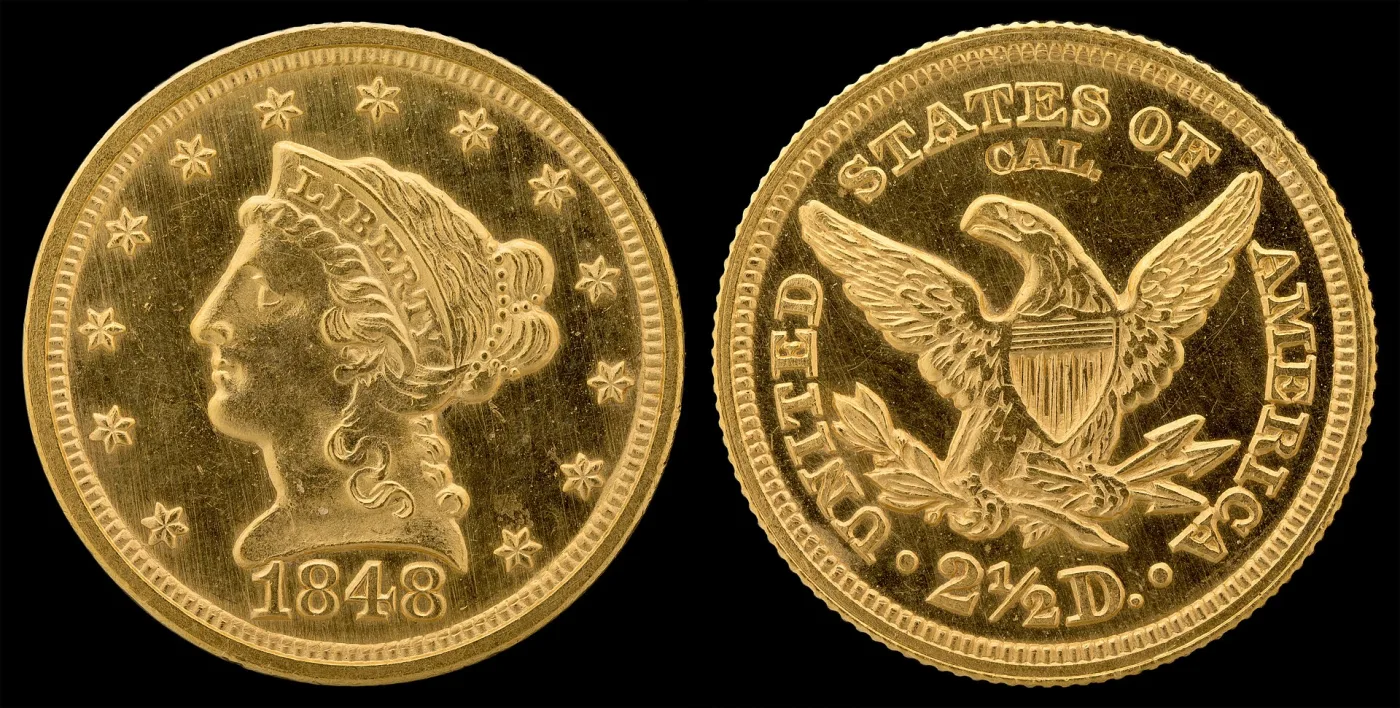
The quarter eagle ran longer than any other gold denomination, from 1796 to 1929. Most of the ones collectors see are the Liberty Head type, struck with very little change from 1840 to 1907: Liberty faces left wearing a coronet marked LIBERTY, and the reverse eagle carries a shield above 2½ D.
From 1908 the quarter eagle carried Bela Lyon Pratt’s Indian Head design, which looks unlike any other US coin: the portrait and eagle are sunk into the surface rather than raised above it, so the flat field is the highest part of the coin.
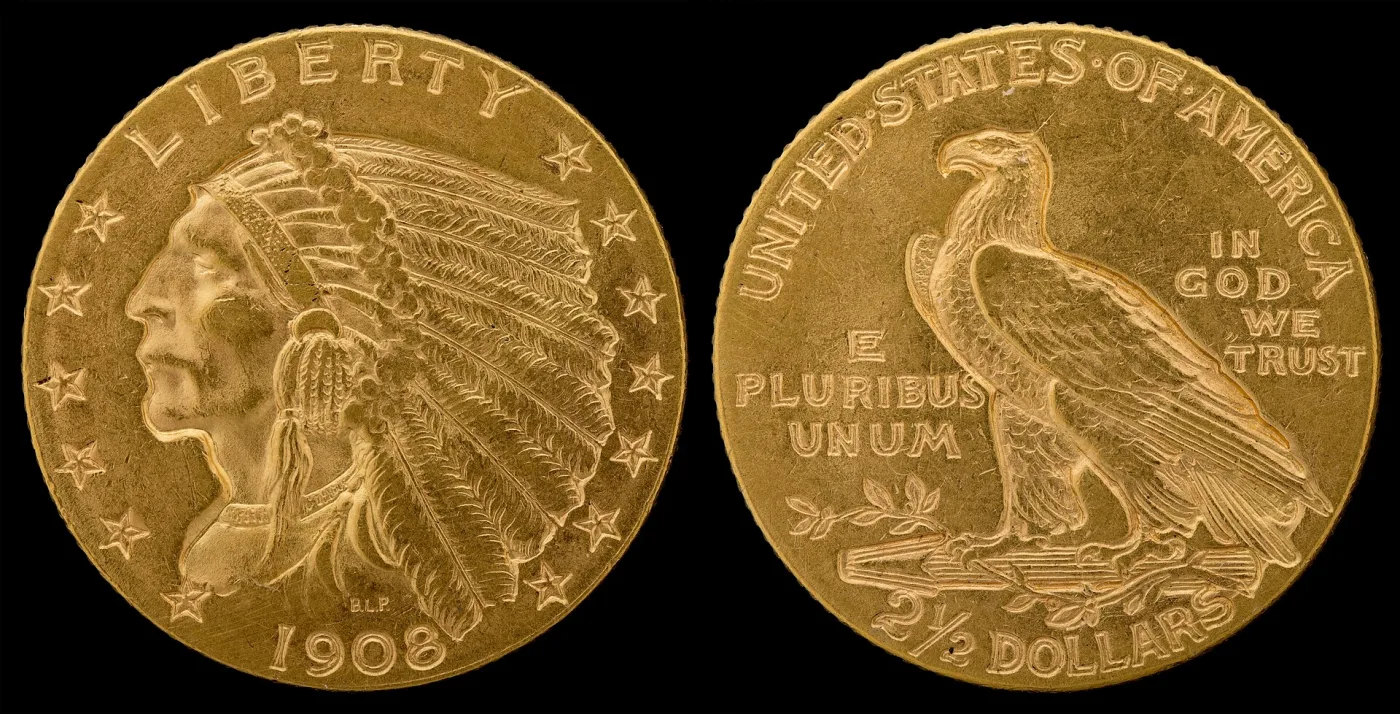
Full guides: Liberty Head quarter eagle and Indian Head quarter eagle.
Three-dollar piece ($3)
The odd denomination is easy to name, because it says 3 DOLLARS inside a wreath. Longacre’s obverse shows Liberty in a feathered headdress, and the design ran unchanged in its main features from 1854 to 1889.
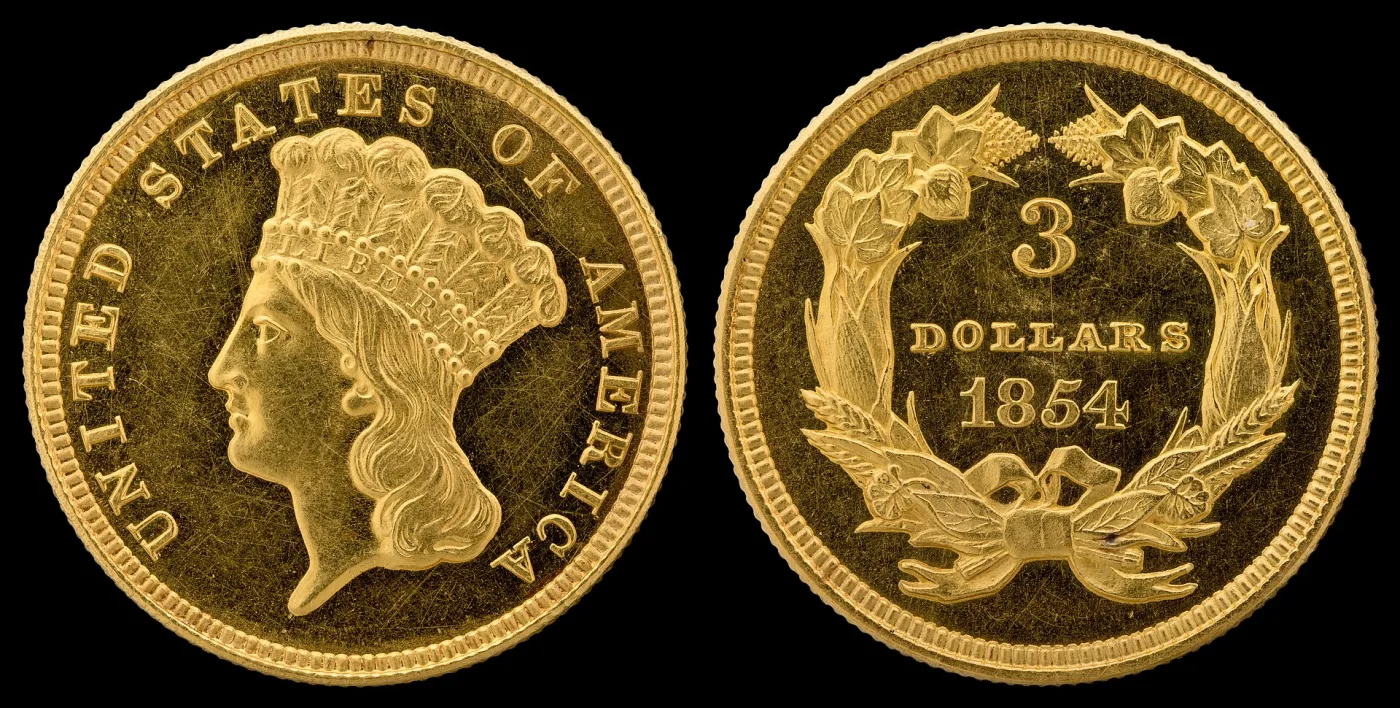
The three-dollar gold guide covers the dates and mint marks.

Half eagle ($5)
The half eagle was the first gold coin the United States struck, in 1795, and those first pieces look nothing like later ones: Liberty wears a tall cap, and a small eagle holds a wreath in its beak.
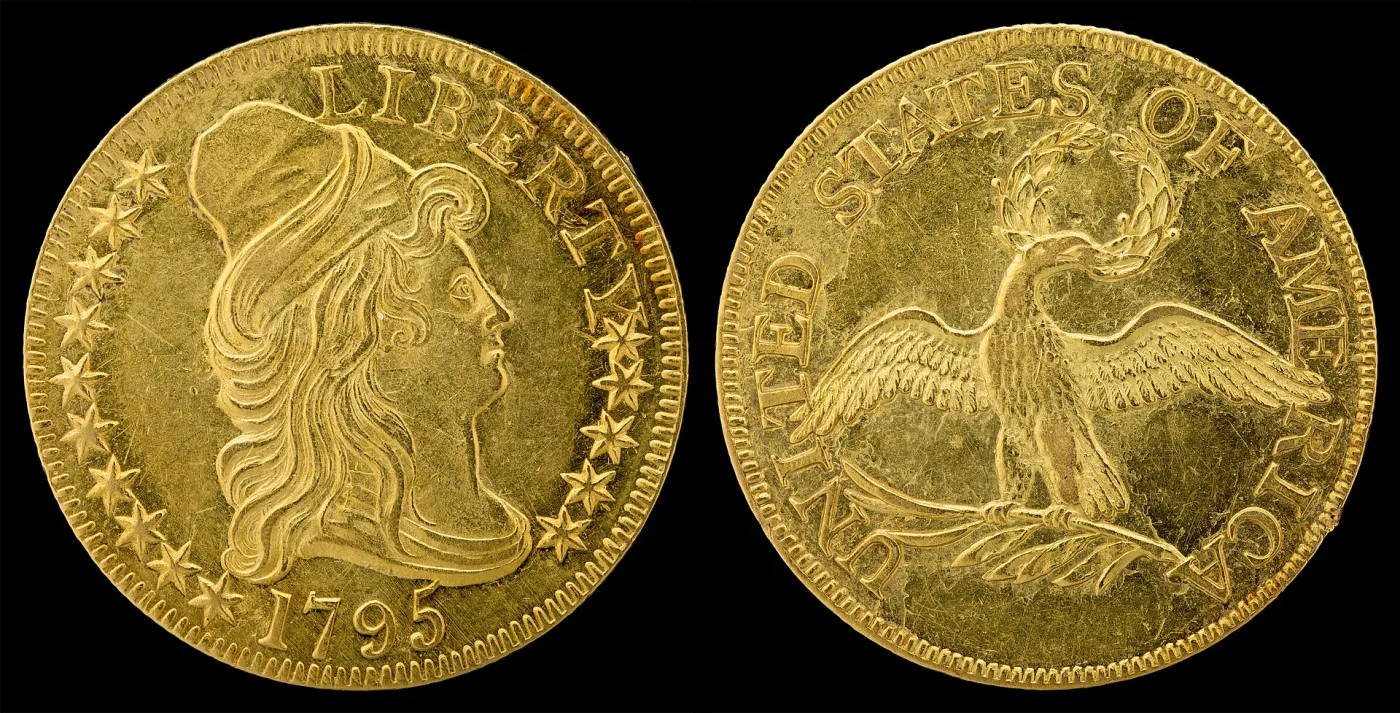
The half eagle you are far more likely to hold is the Liberty Head type of 1839 to 1908, which shares its coronet portrait with the quarter eagle, eagle and double eagle. Size and the FIVE D. on the reverse tell them apart. From 1908 the half eagle took Pratt’s incuse Indian Head design, struck through 1916 and once more in 1929.
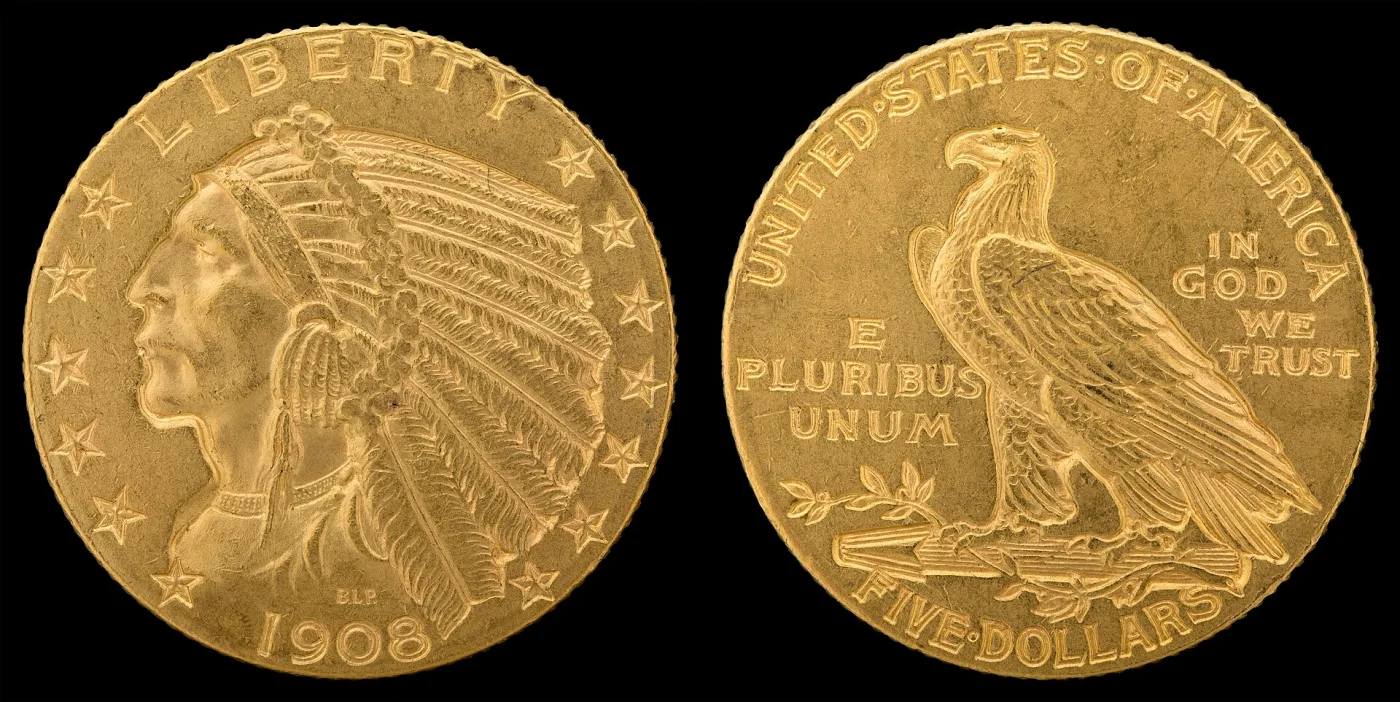
Full guides: Capped Bust half eagle, Liberty Head half eagle, Indian Head half eagle.
Eagle ($10)
The eagle was the standard unit the other gold coins were named against. Its Liberty Head type ran from 1838 to 1907 and reads TEN D. under the eagle.
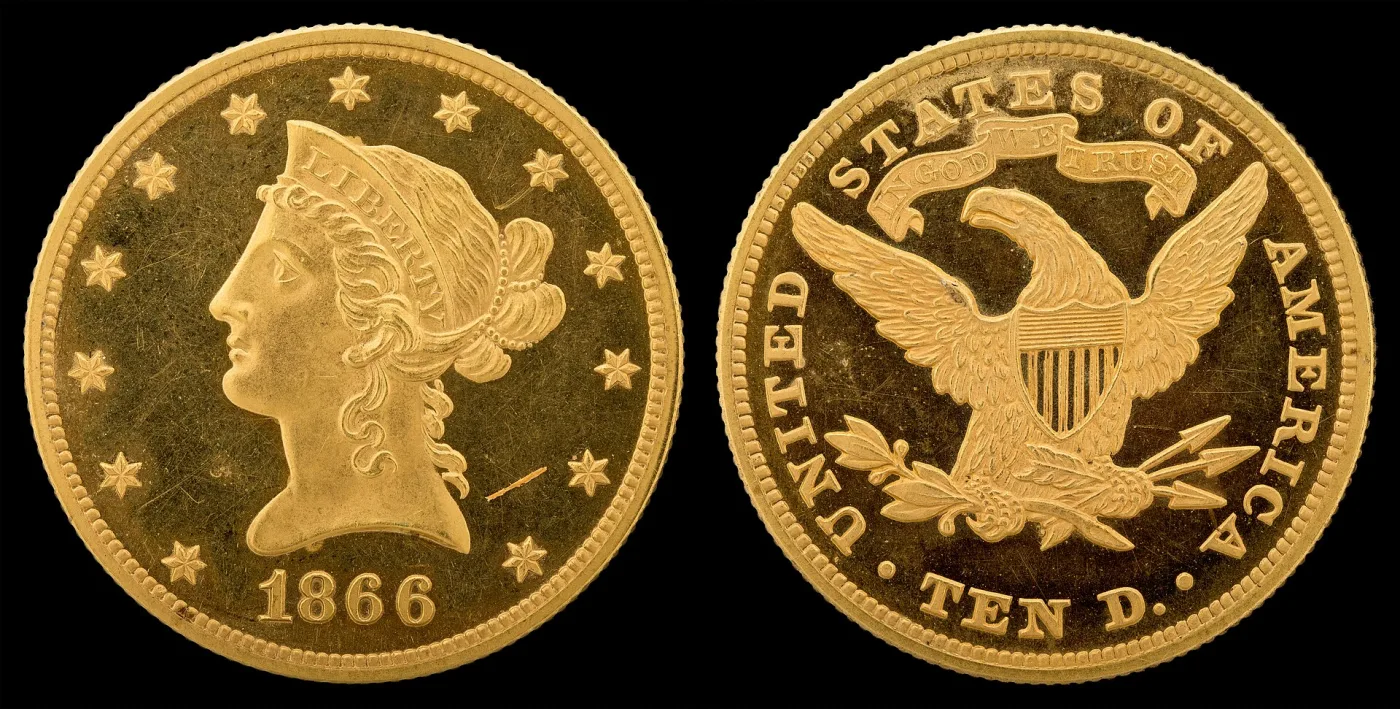
In 1907 the sculptor Augustus Saint-Gaudens replaced it with the Indian Head eagle: Liberty in a feathered war bonnet on the front, a standing eagle on the back. It was struck until 1933.
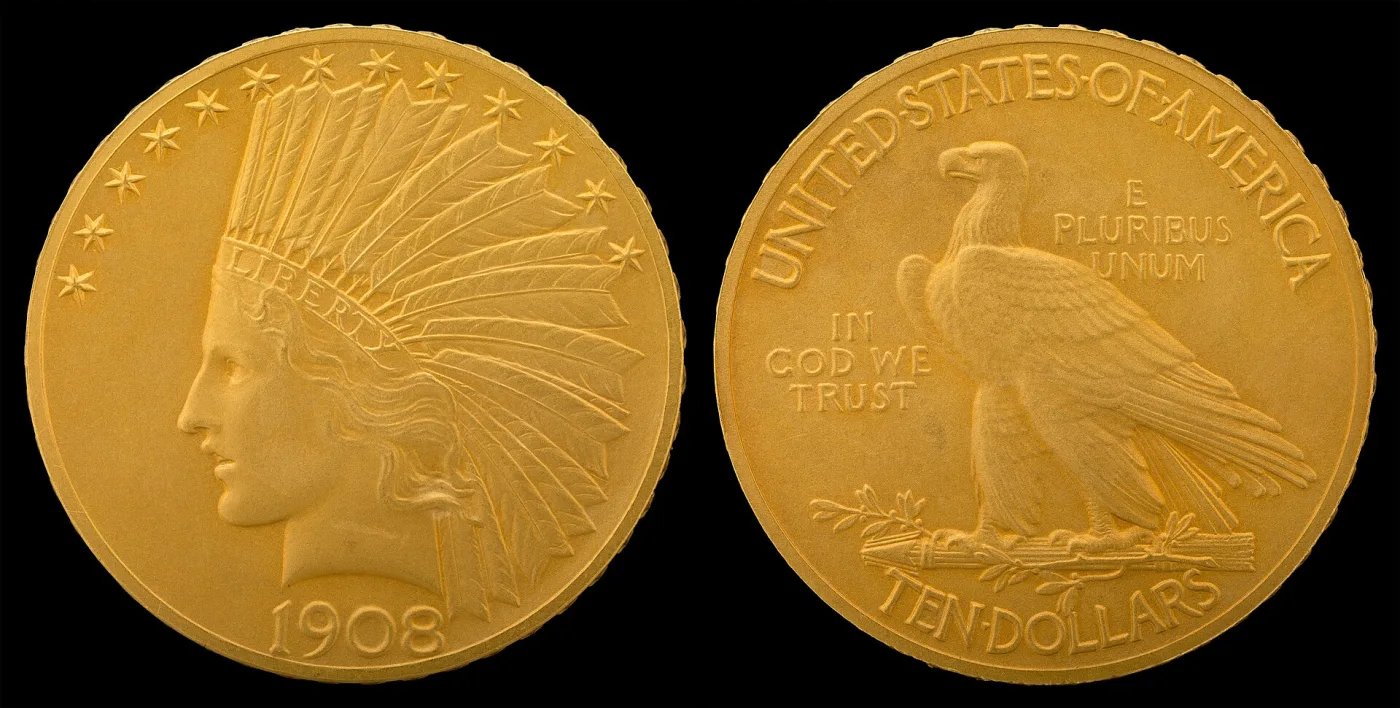
Do not confuse this coin with the Indian Head quarter eagle and half eagle: the eagle’s design is raised in the normal way, not incuse. Full guides: Capped Bust eagle, Liberty Head eagle, Indian Head eagle.
Double eagle ($20)
The double eagle is the coin most people picture when they think of old gold. At 34 mm and 33.436 grams it holds just under one troy ounce of gold (0.9675 oz), which is why so many survived as stores of value.
The Liberty Head double eagle comes in three versions, and the reverse dates each one. The first reads TWENTY D. with no motto. In 1866 IN GOD WE TRUST was added above the eagle, and in 1877 the denomination was spelled out as TWENTY DOLLARS.
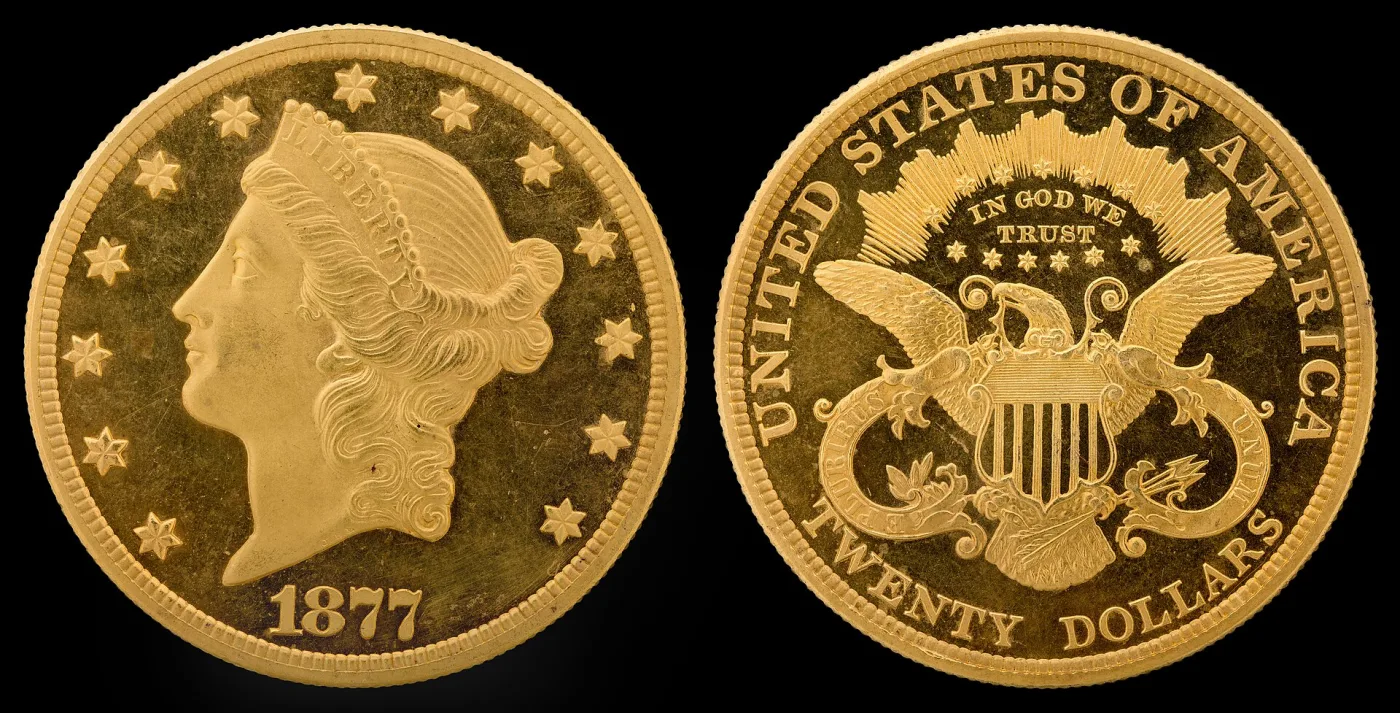
In 1907 Saint-Gaudens’ design replaced it: Liberty striding forward with a torch and olive branch, and an eagle in flight over the rising sun. The first 1907 coins carry the date in Roman numerals; later that year the date switched to Arabic numerals. The motto, left off at first, was added in 1908, as on the coin at the top of this page.
Full guides: Liberty Head double eagle, Saint-Gaudens double eagle, and the 1907 double eagle for the Roman numeral and high-relief pieces.
Three clues that date a gold coin
Even before you find the date, the design narrows it down:
- No written denomination at all. The earliest gold, from 1795 into the early 1800s, often carries none. That alone says early.
- IN GOD WE TRUST on a Liberty Head coin. On the half eagle, eagle and double eagle the motto arrived in 1866. A Liberty Head coin of these sizes without it is from 1866 or before.
- A design cut into the surface. Only the Indian Head quarter eagle and half eagle, from 1908 on, are incuse. They remain the only US circulating coins made that way.
Why American gold coins stop in 1933
On April 5, 1933, Franklin D. Roosevelt signed Executive Order 6102, which required gold coin, bullion and gold certificates to be turned in to the Federal Reserve. It exempted gold coins with a recognized special value to collectors of rare and unusual coins, which is one reason so many still exist. The Gold Reserve Act of 1934 then raised the official price of gold from $20.67 to $35 an ounce, and regular gold coinage never resumed. The last quarter eagles and half eagles are dated 1929, and the last eagles and double eagles 1933.
Modern gold that looks old
If your coin carries a date after 1933, it is not a circulating gold coin. The American Gold Eagle, issued since 1986, revives Saint-Gaudens’ striding Liberty on 22-karat bullion coins in 1/10, 1/4, 1/2 and 1 ounce sizes. The American Gold Buffalo, first issued in 2006, is 24-karat. Both are sold by gold weight and say so on the coin, which the old denominations never do.
Gold pieces dated in the 1840s and 1850s that name a private company or an assayer instead of the United States are Gold Rush issues, covered in the private and territorial gold guide.
Checking that it is real
Old gold is one of the most counterfeited areas of US coinage, and a good copy looks right in a photograph. The specifications table above is your first test: a genuine coin should match its denomination’s diameter and weight closely, and a coin that is too light, too thick, or attracted to a magnet is not solid gold. Weight alone does not prove anything, because skilled fakes are made of real gold, so anything that passes should still go to a grading service before you buy or sell it. The counterfeit detection guide covers the tests in detail, and the mint marks guide explains the C, D, O, S and CC branch-mint letters that drive many gold values.
Frequently Asked Questions
How do I tell which US gold coin I have?
Read the denomination first. Older gold coins abbreviate it: 1 DOLLAR, 2½ D., 3 DOLLARS, FIVE D., TEN D., and TWENTY D. or TWENTY DOLLARS. Then look at the design, Liberty Head with a coronet, an Indian headdress, or Saint-Gaudens' striding Liberty, and check the date against the years each design was struck.
What denominations of gold coins did the US make for circulation?
Six: the gold dollar ($1, 1849-1889), the quarter eagle ($2.50, 1796-1929), the three-dollar piece ($3, 1854-1889), the half eagle ($5, 1795-1929), the eagle ($10, 1795-1933) and the double eagle ($20, 1849-1933). The $4 Stella of 1879-1880 is a pattern and was never issued for circulation.
Why do some gold coins have the design sunk into the surface?
Those are the Indian Head quarter eagle and half eagle designed by Bela Lyon Pratt, struck from 1908. Their designs are incuse, cut below the field instead of raised above it, and they remain the only US circulating coins made that way.
When did the US stop making gold coins?
Gold coinage for circulation ended in 1933. Executive Order 6102, signed by Franklin D. Roosevelt on April 5, 1933, required most gold coin to be turned in, with an exemption for coins of special value to collectors. The last quarter eagle and half eagle are dated 1929, the last eagle and double eagle 1933.
Is a gold coin with no IN GOD WE TRUST older?
On the Liberty Head half eagle, eagle and double eagle, yes: the motto was added to their reverses in 1866, so a Liberty Head coin without it is dated 1866 or earlier. The Saint-Gaudens double eagle and Indian Head eagle began in 1907 without the motto, and Congress restored it in 1908.
Are modern American Gold Eagles the same as old gold coins?
No. The American Gold Eagle is a bullion coin first issued in 1986, sold by gold weight rather than spent. Its obverse revives the Saint-Gaudens Liberty, but its sizes are 1/10, 1/4, 1/2 and 1 ounce rather than the old denominations' weights. The American Buffalo, first issued in 2006, is the 24-karat bullion coin.