Classic Commemorative Coins Identification Guide: The 50 Types, 144 Varieties, Columbian and Hawaiian Keys, Gold Issues, and Values
The classic commemoratives are the most artistic, varied, and storied family in all of United States coinage. Struck from 1892 through 1954, they are not regular circulating money at all but special-issue coins authorized by Congress one event at a time — sold above face value to raise funds for an exposition, a monument, a centennial, or a cause. Across those six decades the Mint produced commemoratives for 53 different occasions, and the resulting series encompasses some of the finest medallic art America has ever made, designed by sculptors like Laura Gardin Fraser, Gutzon Borglum, and Jo Mora rather than by Mint engravers alone.
For collectors this is one of the most accessible and rewarding fields in numismatics. A complete set is large and contains several genuine rarities, but the standard goal — a “type set” of one example of each basic design — is achievable for a patient collector, since most issues survive in high grade and many can be bought in beautiful condition for a few hundred dollars. The catch is that the series is riddled with look-alike varieties, mint-mark sets sold as a unit, and a long history of marketing abuse, all of which make accurate identification essential before you buy or value a coin.
This guide explains what a classic commemorative is, how to recognize one, and how to navigate the confusing structure of types versus varieties versus PDS sets. We walk through the silver half dollars from the 1892 Columbian to the 1954 Washington-Carver, the small group of commemorative quarters and dollars, and the prized gold commemoratives including the colossal Panama-Pacific fifty-dollar pieces. Along the way we cover the 1936 commemorative boom, why Congress finally halted the program in 1939, how to grade and authenticate these coins, and what they are worth in the 2026 market.
What Are Classic Commemorative Coins?
A commemorative coin is a legal-tender coin struck to honor a specific person, place, event, or institution, rather than for general circulation. In the United States, each classic commemorative was authorized by its own individual act of Congress, which specified the occasion, the design theme, the denomination, and the maximum mintage. The coins were then sold — usually by a sponsoring commission or organization — at a price well above face value, with the surplus going to fund the commemorated cause.
The term “classic” (or “traditional,” or “early”) distinguishes the 1892-1954 commemoratives from the “modern” commemorative program that began in 1982 and continues today. The two eras are collected separately and look quite different. Classic commemoratives were struck only in silver and gold: the silver issues are almost all half dollars (with one quarter and one silver dollar), and the gold issues are dollars, quarter eagles, and the two famous fifty-dollar pieces.
Commemoratives Were Not Spent
Because they cost more than face value, classic commemoratives were bought as keepsakes and souvenirs, not spent. That single fact explains almost everything about how they survive today: most were saved carefully, so the typical survivor grades About Uncirculated or Mint State, and truly worn examples are the exception. It also means these coins are condition-common but variety-complex — the opposite of the heavily circulated early type coins like the Draped Bust dollar.
A Field Defined by Art
Unlike regular coinage, where one design might run for decades, nearly every commemorative had its own unique design created for the occasion, frequently by an outside sculptor. The result is a gallery of American relief art in miniature — pioneers and pilgrims, explorers and statesmen, eagles and bison — that draws collectors as much for the imagery as for the rarity.
History: Birth, Boom, and Abuse (1892-1954)
The arc of the classic commemorative series is a story of a good idea that grew out of control. Understanding that arc is the key to understanding why some issues are common and cheap while others are scarce and dear.
The Beginning (1892-1900)
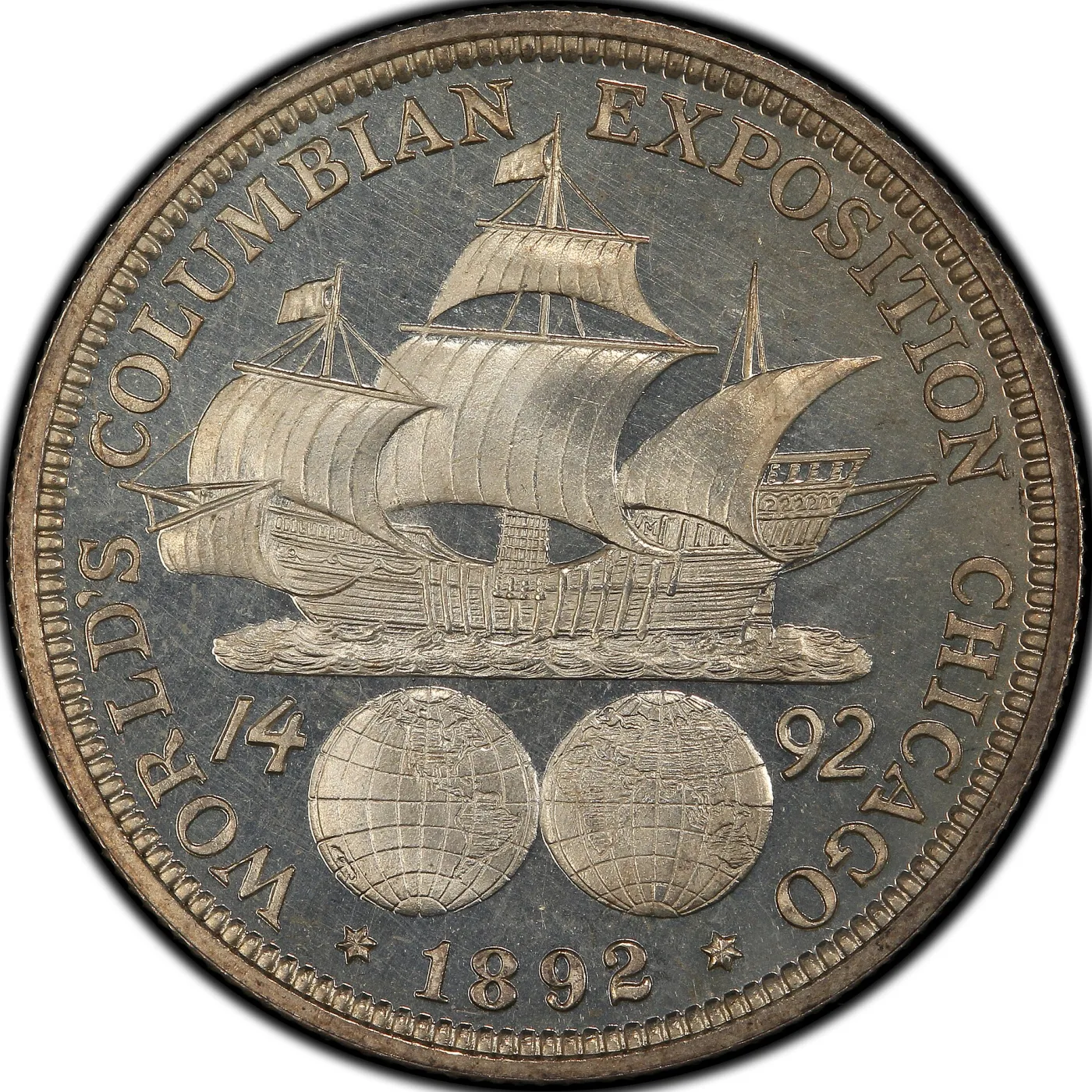
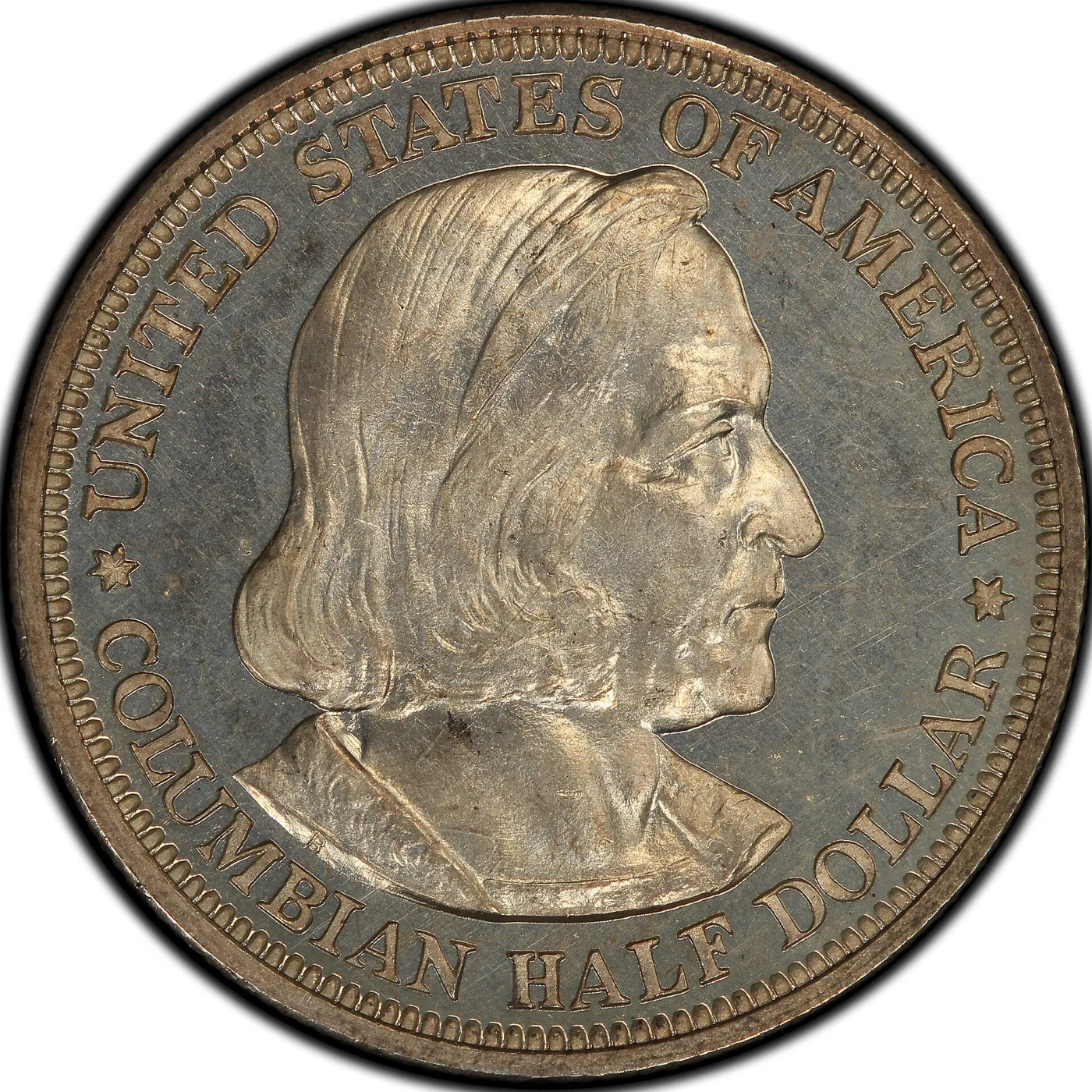
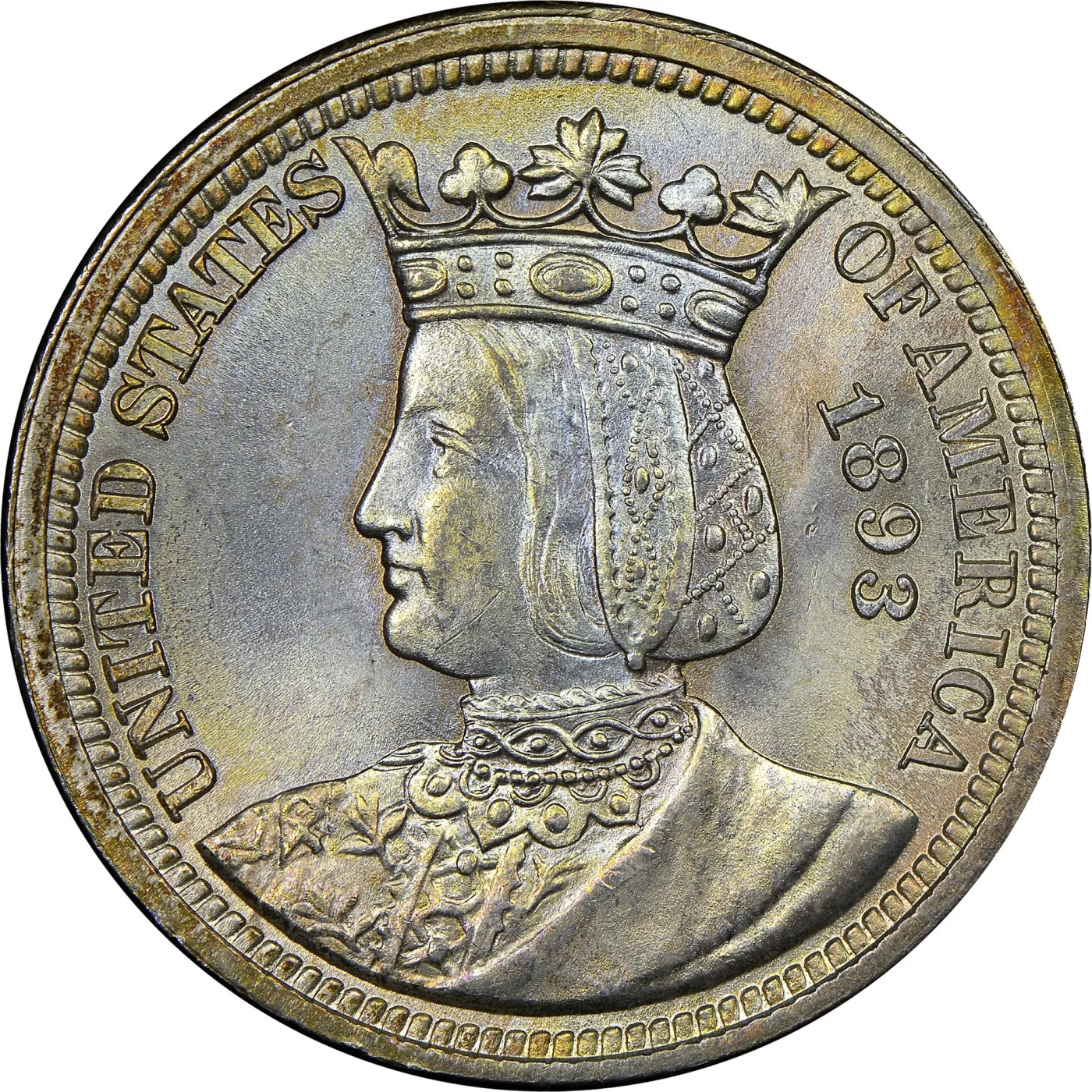
The series began in 1892 with the Columbian half dollar, struck to raise money for the World’s Columbian Exposition in Chicago and to mark the 400th anniversary of Columbus’s first voyage. It was the first traditional U.S. commemorative coin and the first American coin to depict a real historical person. It was joined in 1893 by the Isabella quarter — the only commemorative quarter ever made — and in 1900 by the Lafayette dollar, the only classic commemorative silver dollar. The first gold commemoratives followed in 1903.
The Quiet Decades (1900s-1920s)
For the first three decades, commemoratives were issued sparingly — a handful of expositions and anniversaries, including the spectacular Panama-Pacific issues of 1915 that included the largest U.S. coins ever struck. Through the 1920s the program remained modest, with iconic single issues like the 1921 Alabama, the 1922 Grant, and the 1925 Stone Mountain (which had a huge mintage and remains the most common commemorative of all).
The Boom and the Abuse (1934-1939)
In the mid-1930s the program exploded. Promoters realized that a low-mintage commemorative, struck at multiple mints over several years, could be sold to collectors at a steady profit. Congress obliged with a flood of authorizations: 1936 alone saw a record number of new commemorative types released, mostly for local city and state anniversaries. Some issues — notably the Oregon Trail, Texas, Daniel Boone, and Arkansas designs — were struck year after year at the Philadelphia, Denver, and San Francisco mints and sold as complete “PDS sets,” forcing collectors to buy the same design many times over to stay complete. Prices climbed and speculation ran hot.
The End (1939-1954)
The abuse became a scandal. In 1939 Congress stopped authorizing new commemorative programs, alarmed that the glut was harming collectors and that so many coin types could facilitate counterfeiting. A few previously authorized issues continued, and after a wartime pause two long-running series resumed — the Booker T. Washington (1946-1951) and the combined Washington-Carver (1951-1954). When the final Washington-Carver half dollar was struck in 1954, the classic commemorative era ended. No more would be made until the modern program revived the idea in 1982.
Types vs. Varieties vs. PDS Sets
No part of this series confuses newcomers more than the difference between a “type” and a “variety,” so it is worth getting straight before anything else. The numbers everyone quotes — 50 types and 144 varieties for the silver commemoratives — come directly from this distinction.
What a “Type” Means
A type is a basic design. The Oregon Trail Memorial half dollar is one type, no matter how many years or mints produced it. The Texas Centennial is another type. There are 50 distinct silver commemorative types in the classic series, and the most popular collecting goal — the “50-piece type set” — means owning one example of each of those 50 designs, choosing whichever date and mint mark is cheapest.
What a “Variety” Means Here
A variety (in the commemorative-collecting sense) is a specific date-and-mint-mark combination of a type. The Oregon Trail type, for instance, was struck across many years at three mints, producing roughly a dozen separate date/mint varieties. Counting every such date/mint issue across all 50 types yields the 144 varieties that make up a “complete” silver commemorative set. This is far harder and far more expensive than the 50-piece type set.
PDS Sets
“PDS” refers to coins from Philadelphia (no mint mark), Denver (D), and San Francisco (S). Several types were deliberately issued as three-coin PDS sets in a given year, identical in design but differing only in mint mark. Promoters sold them as units, and collectors pursuing the full 144-variety set must acquire each one. The mint mark on commemoratives appears in different spots depending on the design, so locating it is a routine identification step (covered below).
Why It Matters for Value
A coin’s value depends heavily on which level you are collecting at. A common date of a given type, bought for a type set, might cost a fraction of a scarce date/mint variety of the very same design. Always identify the exact date and mint mark before assuming a price.
How to Identify a Classic Commemorative
Telling a commemorative from a regular coin is usually easy once you know what to look for. Work through these checks.
Step 1: Look for a One-Off, Pictorial Design
Regular U.S. coins of the era carry standard, long-running designs — a Walking Liberty or Franklin on the half dollar, for example. A commemorative half dollar instead shows a unique, often crowded scene tied to a specific event: a covered wagon, a pioneer couple, a city skyline, an explorer, a monument. If the design looks like a custom illustration rather than a familiar circulating type, you are probably holding a commemorative.
Step 2: Read the Inscriptions
Commemoratives name their occasion. Look for legends like “OREGON TRAIL MEMORIAL,” “TEXAS INDEPENDENCE,” “DANIEL BOONE BICENTENNIAL,” “HAWAIIAN SESQUICENTENNIAL,” or an exposition name and date. These commemorative legends sit alongside the standard “UNITED STATES OF AMERICA,” “LIBERTY,” “IN GOD WE TRUST,” and the denomination.
Step 3: Confirm the Denomination
The vast majority of classic commemoratives read “HALF DOLLAR” or “50 C.” A few are gold (reading “ONE DOLLAR,” “2½ DOLLARS,” or “FIFTY DOLLARS”), one is the Isabella quarter (“25 C.”), and one is the Lafayette silver dollar. There is no commemorative cent, nickel, dime, or eagle in the classic series.
Step 4: Find the Date and Mint Mark
Locate the date (which may be the year of the event, not the year of striking) and then hunt for a mint mark. On commemoratives the mint mark’s position varies by design — it might be near the rim, beneath a figure, or tucked beside a device — so examine the whole coin. No mint mark means Philadelphia; “D” is Denver and “S” is San Francisco. The exact date/mint combination determines the variety and the value.
Step 5: Cross-Check Against a Reference
Because the designs are so individual, the fastest confirmation is to match your coin to a catalog image of the issue. For broader identification techniques across all U.S. coin types, see our complete coin identification guide, and remember that an app can identify the design from a photo in seconds.
Composition and Physical Specifications
Classic commemoratives follow the metal standards of their denomination, which makes weight and size useful authentication tools.
Silver Half Dollars
Every classic commemorative half dollar is struck in the standard .900 fine silver (90% silver, 10% copper), weighs 12.5 grams, and measures 30.6mm in diameter with a reeded edge — identical in metal and size to the circulating half dollars of the period. Each contains about 0.3617 troy ounces of silver, which provides a modest bullion floor under even the most common issues.
The Isabella Quarter and Lafayette Dollar
The 1893 Isabella quarter matches the standard quarter: .900 silver, 6.25 grams, 24.3mm. The 1900 Lafayette dollar matches the Morgan silver dollar standard: .900 silver, 26.73 grams, 38.1mm.
Gold Commemoratives
The gold dollars weigh 1.672 grams of .900 fine gold; the quarter eagles weigh 4.18 grams; and the great Panama-Pacific fifty-dollar pieces weigh 83.59 grams of .900 gold — roughly 2.42 troy ounces apiece, making them the heaviest U.S. coins ever produced. Because gold is so dense, a genuine gold commemorative has unmistakable heft, and a significantly underweight piece is an immediate warning sign.
Why Specifications Help
Counterfeiters often get the weight or diameter slightly wrong. A commemorative half dollar that does not weigh close to 12.5 grams, or a gold piece that is light, fails the most basic authentication test before you even examine the design.
The 1892-1893 Columbian Half Dollar
The coin that started it all deserves its own section, both for its history and because it is the entry point most new collectors choose.
Design and Designers
Charles E. Barber — the Mint’s Chief Engraver, whose name also defines the circulating Barber half dollar — created the obverse, a profile bust of Christopher Columbus facing right. George T. Morgan, designer of the Morgan dollar, modeled the reverse, which shows Columbus’s flagship the Santa María sailing above two hemispheres of the globe. The legends read “UNITED STATES OF AMERICA” and “COLUMBIAN HALF DOLLAR.”
Mintage and Two Dates
The Columbian comes in two dates. The 1892 issue saw roughly 950,000 coins distributed; the 1893 issue saw about 1,550,000 distributed, out of more than 5 million struck (the unsold balance was largely melted or released into circulation). Both were sold at the Exposition for $1 each — double face value. Because so many survive, the Columbian is among the most affordable of all commemoratives and the natural first purchase for the series.
Identification and Value
The two dates are distinguished simply by reading the year on the reverse. In circulated and low Mint State grades the difference in value is small, but in gem condition the 1893 can command a strong premium because fewer were saved carefully. Typical retail runs from around $20-$25 in lightly circulated grades to a few hundred dollars in gem Mint State, with finest-known examples worth four figures.
The Other Early Issues (1893-1925)
Between the Columbian and the 1930s flood, commemoratives appeared occasionally and each tends to be historically significant.
1893 Isabella Quarter and 1900 Lafayette Dollar
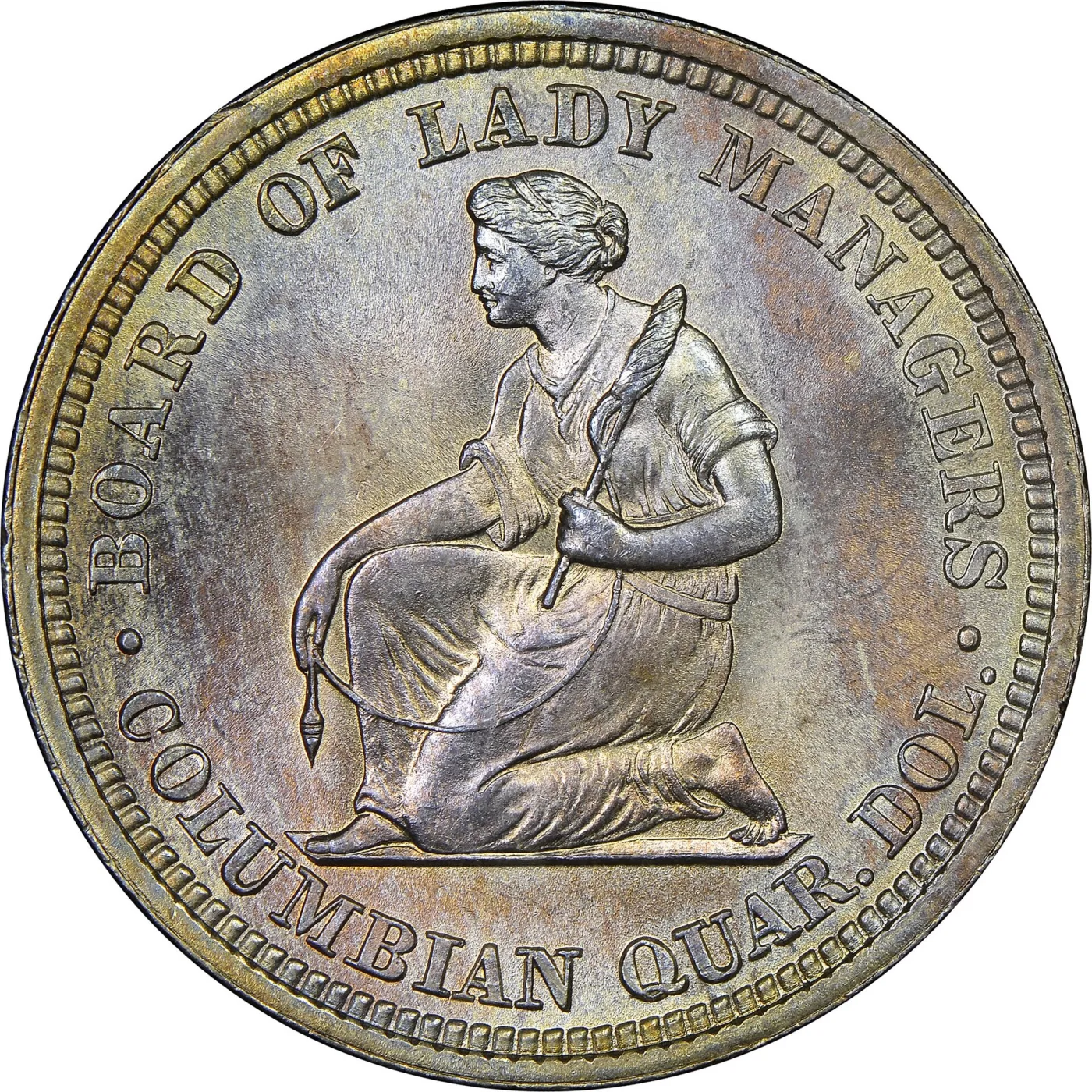
The Isabella quarter, struck for the Board of Lady Managers of the Columbian Exposition, is the only commemorative quarter and shows Queen Isabella of Spain. The Lafayette dollar of 1900, honoring the Marquis de Lafayette and funding a monument in Paris, is the only classic commemorative silver dollar; it carries a date of 1900 even though it was struck in late 1899. Both are perennial favorites precisely because they are one-of-a-kind denominations in the series.
The 1915 Panama-Pacific Silver Half Dollar
Part of the landmark Panama-Pacific Exposition group in San Francisco, the silver half dollar shows Columbia scattering flowers with the Golden Gate in the background. It is the silver companion to the gold issues discussed below and a beautiful type in its own right.
1920s Highlights: Pilgrim, Alabama, Missouri, Grant, Stone Mountain
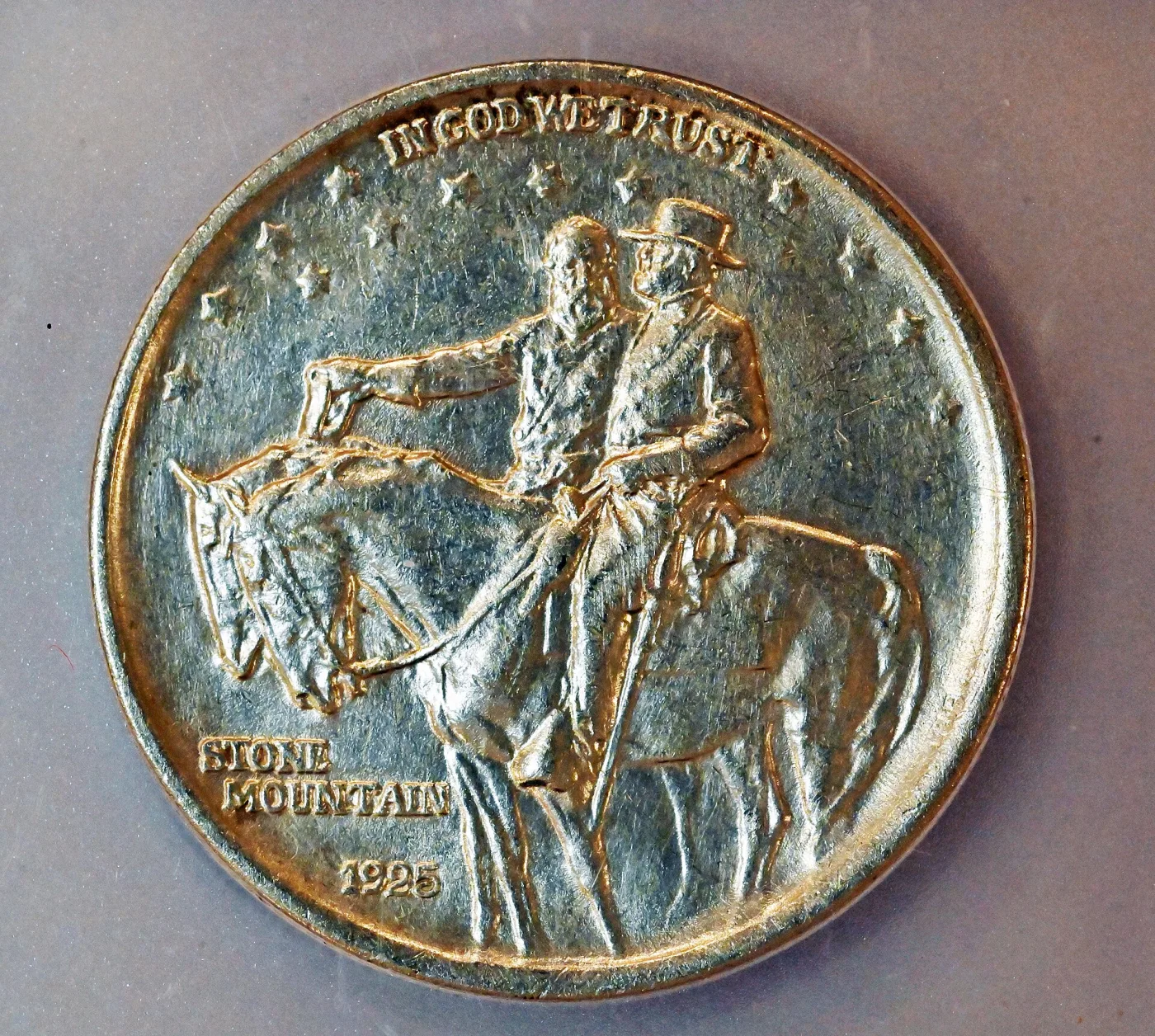
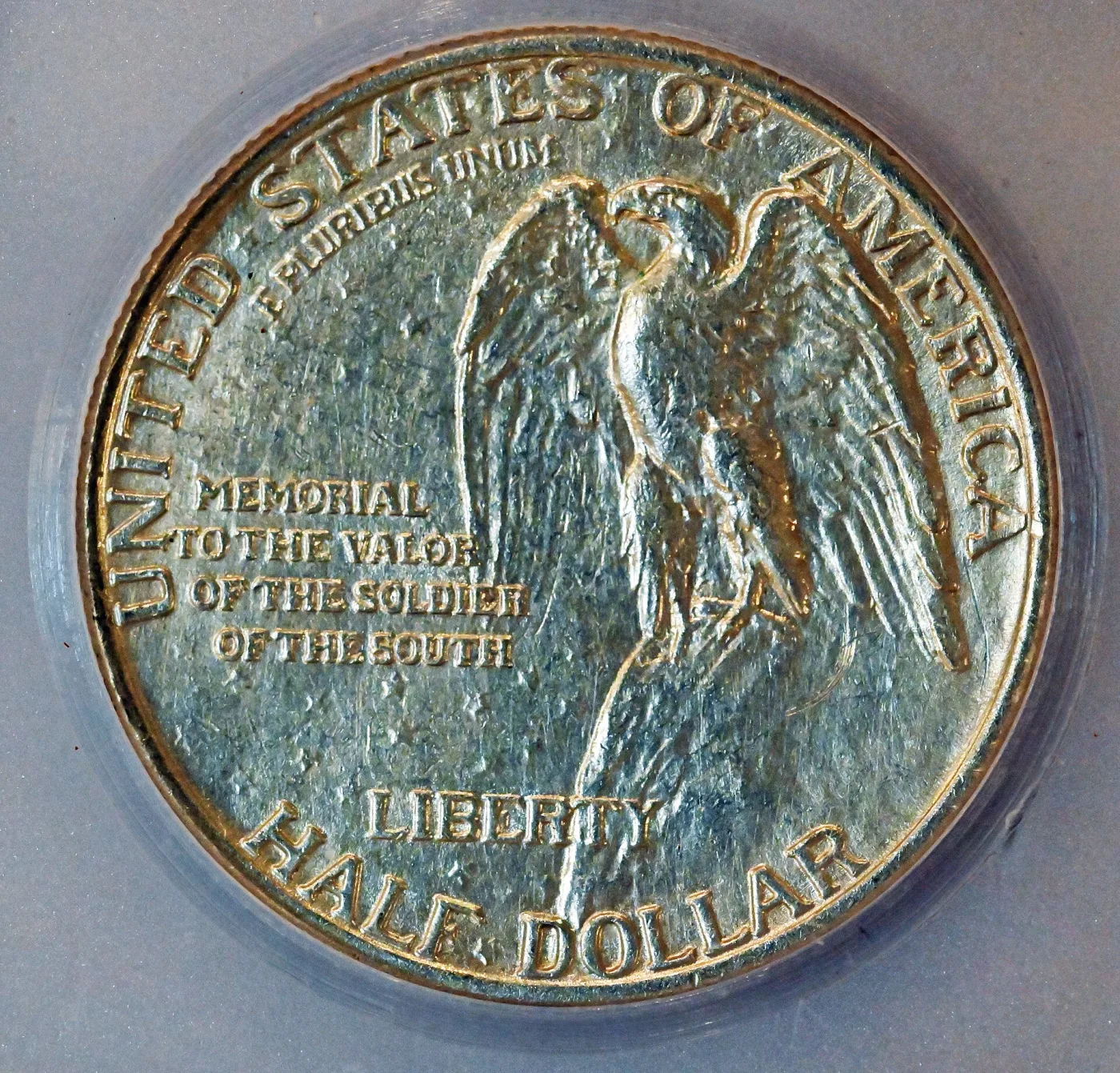
The 1920 Pilgrim, 1921 Alabama (with its “2X2” variety), 1921 Missouri (with a “2★4” variety), and 1922 Grant (with a rare “star” variety) introduced the practice of small added varieties that command big premiums. The 1925 Stone Mountain Memorial, designed by Gutzon Borglum, was struck in enormous numbers to raise money for the Confederate Memorial carving and remains the single most common classic commemorative — often the cheapest way to own a piece of the series.
Other Mid-1920s Issues
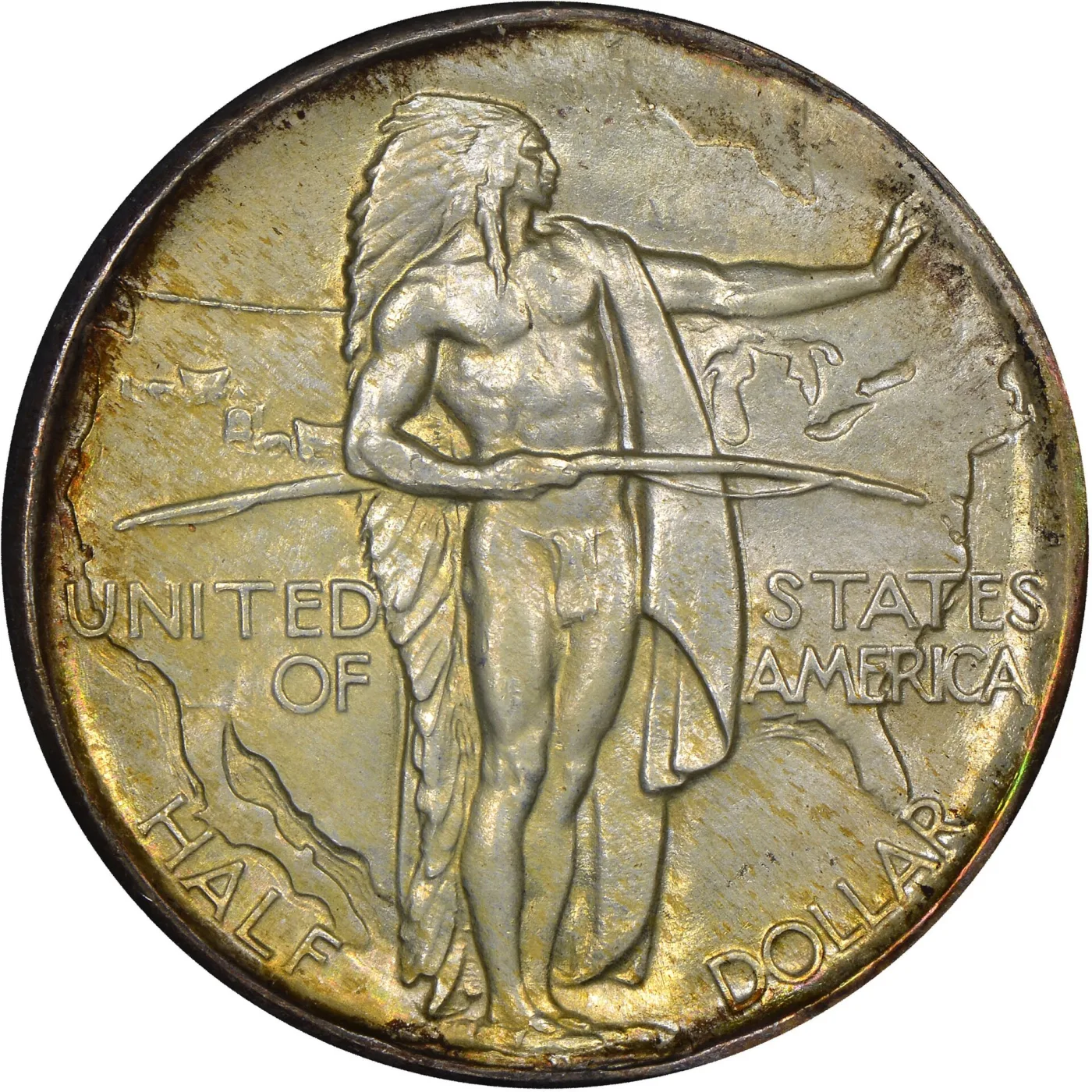
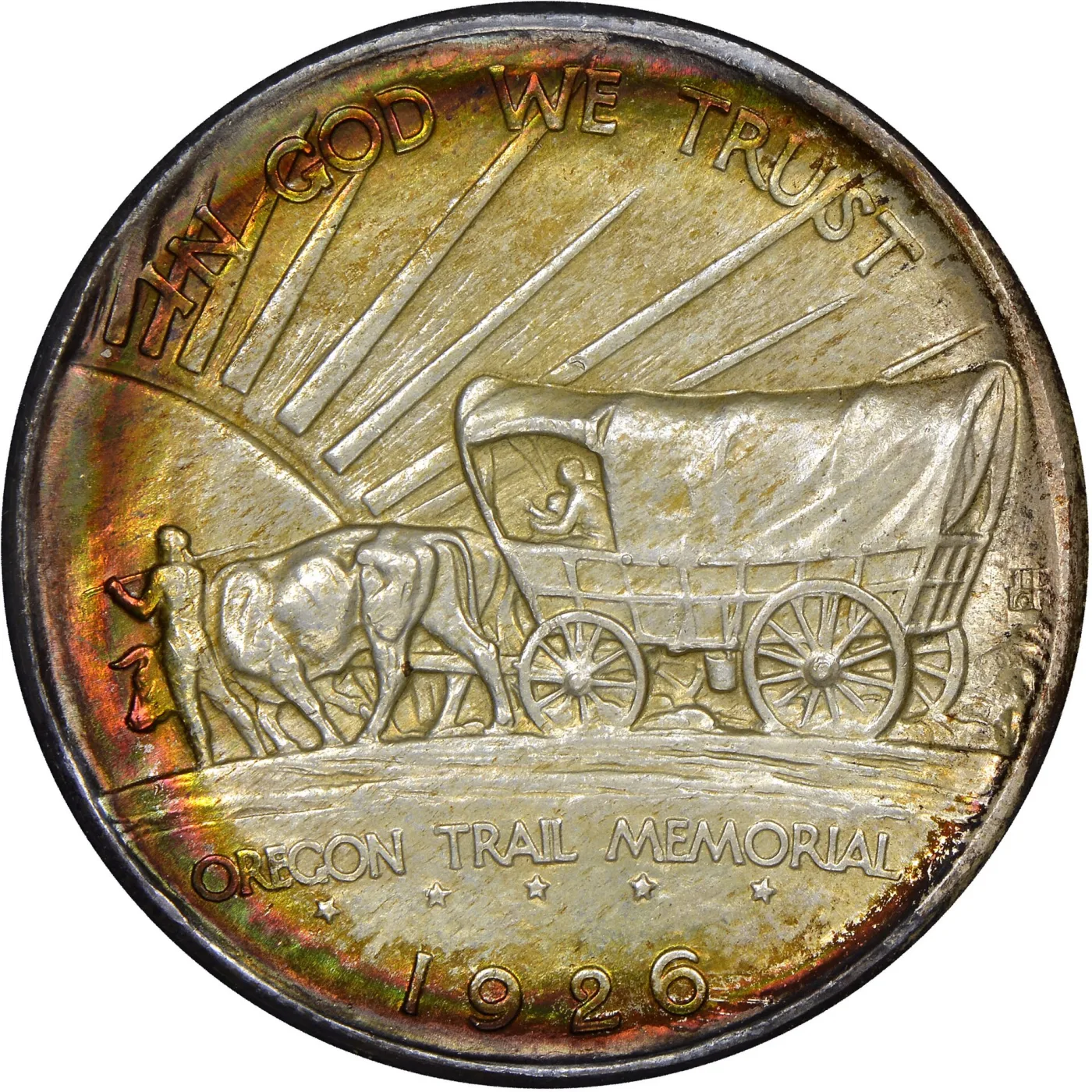
The 1923 Monroe Doctrine, 1924 Huguenot-Walloon, 1925 Lexington-Concord, 1925 California Diamond Jubilee, 1925 Fort Vancouver, and 1926 Sesquicentennial and Oregon Trail round out the pre-deluge group. Each is a distinct type, and most are affordable in high grade.

The Deluge: 1934-1939 Half Dollars
The heart of the series — and the source of most of its varieties and most of its controversy — is the wave of half dollars authorized between 1934 and 1939.
The Long-Running PDS Series
Four designs in particular were struck across many years and mints and assembled into PDS sets, which is why they account for so many of the 144 varieties:
Oregon Trail Memorial (1926-1939): Often called the most beautiful commemorative, with a Conestoga wagon and a striding Native American. Its long, multi-mint run produced numerous date/mint varieties, the later low-mintage issues being the keys.
Texas Centennial (1934-1938): An eagle over the Alamo with kneeling figures of Sam Houston and Stephen Austin. Issued as PDS sets in several years.
Daniel Boone Bicentennial (1934-1938): Notorious for the 1935 issue, where a tiny “1934” was added beneath the date on some 1935 coins, creating a scarce and confusing sub-variety that catches the unwary.
Arkansas Centennial (1935-1939): Another multi-year PDS series; the later dates have low mintages and are the valuable ones.
The Single-Year City and State Issues
Most of the 1936 deluge consisted of one-time local commemoratives — Cincinnati, Cleveland, Long Island, York County, Bridgeport, Lynchburg, Elgin, Albany, Columbia (S.C.), Delaware, Gettysburg, Norfolk, Roanoke, Wisconsin, and many more. Each is a single type, frequently with low original mintages, and together they make a fascinating geographic survey of 1930s America.
Why So Many Are Affordable Anyway
Even with low mintages, most of these issues are inexpensive today because they were saved in high grade and demand is spread across so many types. Gem Mint State examples of common issues frequently trade for $100-$250. The expensive coins are the genuinely low-mintage types and the late PDS date/mint keys, not the average 1936 issue.
The Final Issues (1946-1954)
After the 1939 halt and the wartime pause, two related programs closed out the classic era.
Booker T. Washington Memorial (1946-1951)
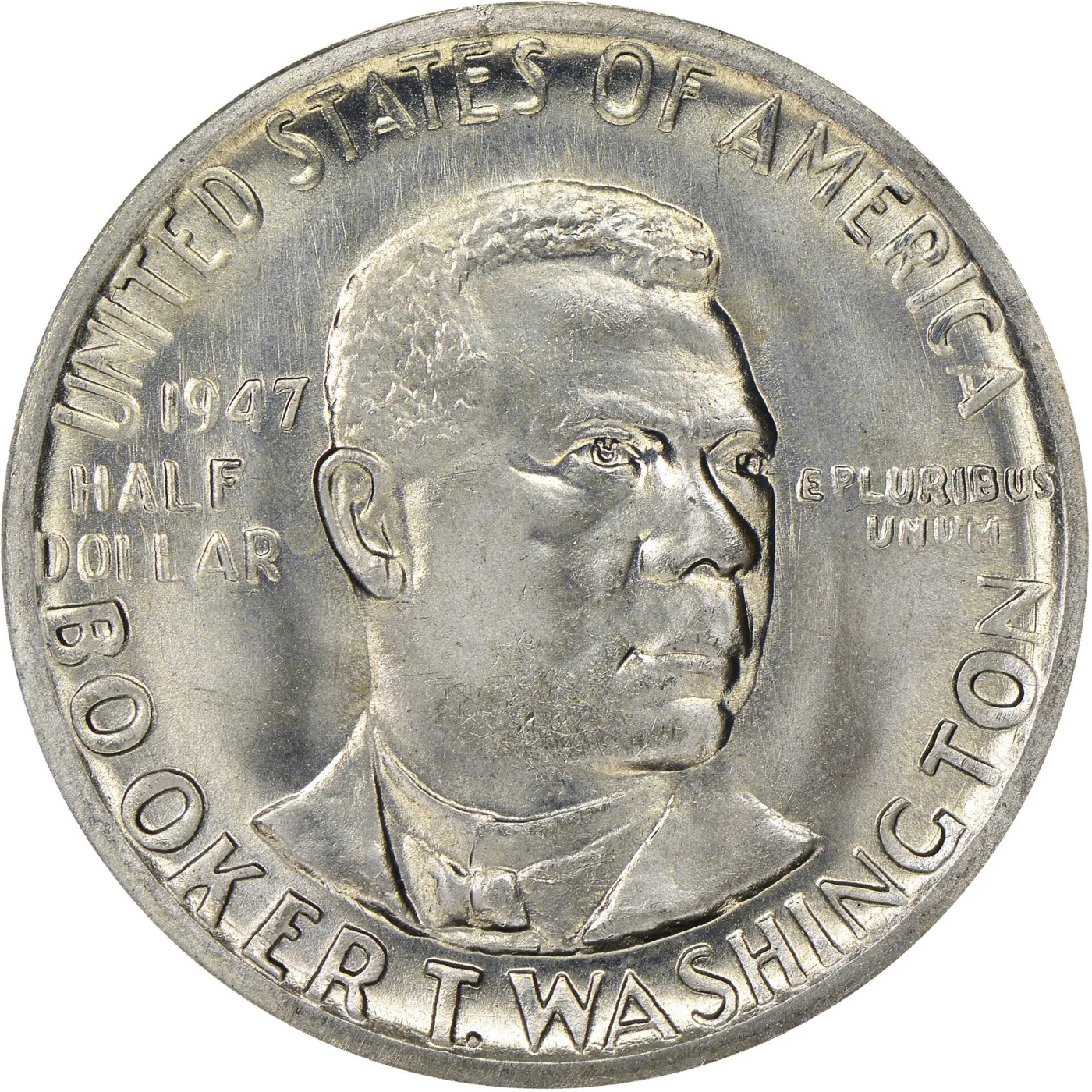
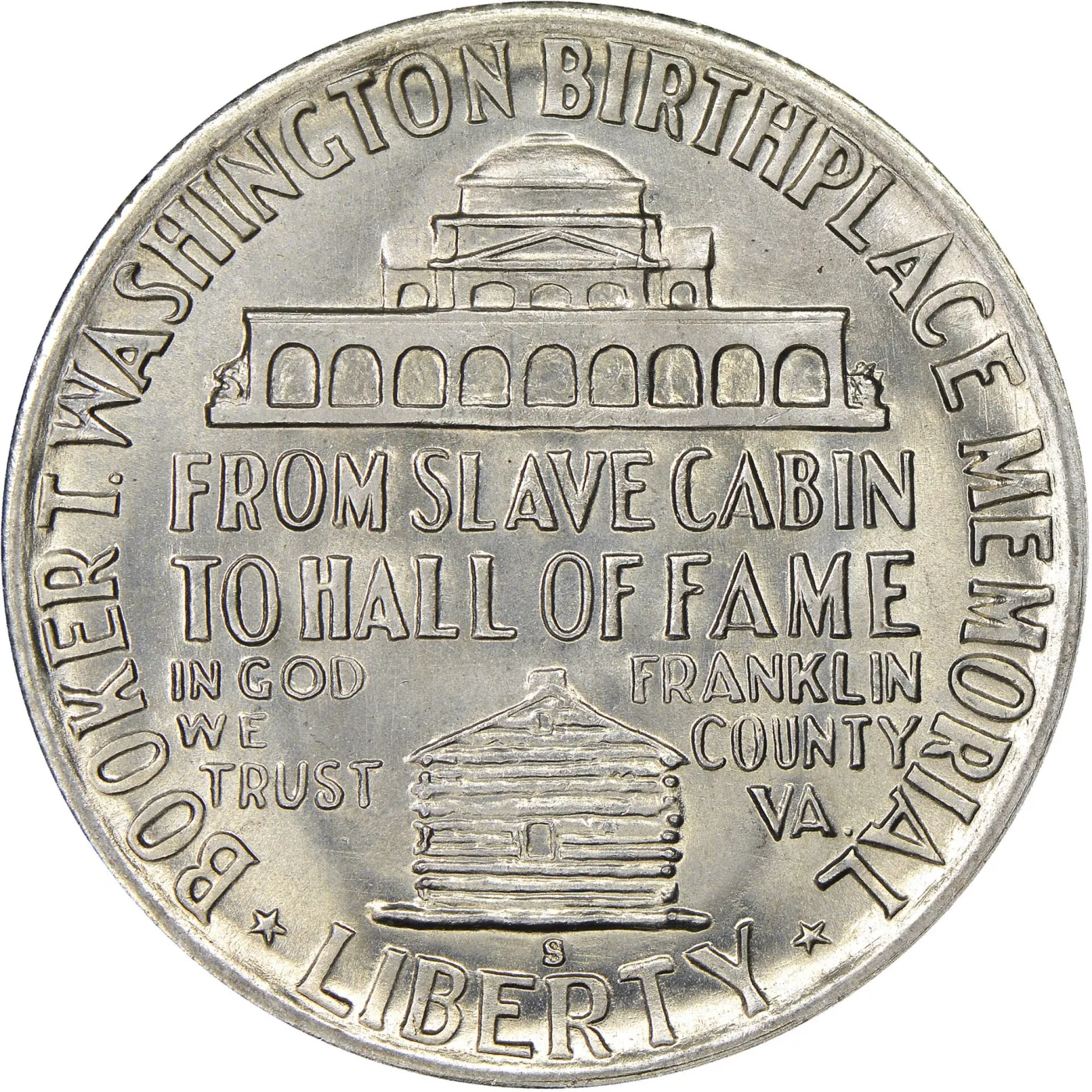
The first U.S. coin to depict an African American, the Booker T. Washington half dollar was struck across six years at all three mints, producing a long run of PDS sets. Many were poorly sold, and although several dates have low net distributions, the type as a whole is common and affordable.
Washington-Carver (1951-1954)
The combined Booker T. Washington and George Washington Carver design ran from 1951 to 1954, again as PDS sets, and the 1954 issue was the final classic commemorative ever struck. Like the BTW series, the common dates are inexpensive, though a few low-distribution date/mints carry premiums.
Identifying the Two Late Series
The two are easy to tell apart by their inscriptions and portraits: the BTW type shows Washington alone, while the Washington-Carver type shows both men’s busts. Both are abundant and make a budget-friendly entry point into owning original classic commemoratives.
The Commemorative Quarter and Silver Dollars
Two issues stand apart from the half-dollar mainstream and are essential to a complete classic set.
1893 Isabella Quarter
The only commemorative quarter in the classic series, struck for the World’s Columbian Exposition’s Board of Lady Managers. The obverse shows the crowned bust of Queen Isabella I of Castile; the reverse depicts a kneeling woman with a distaff and spindle, symbolizing women’s industry. With a net distribution in the low tens of thousands, it is scarcer than most half dollars and is a coin every type collector must seek out individually.
1900 Lafayette Dollar
The only classic commemorative struck as a silver dollar, and the first U.S. coin to portray an American president (George Washington, jugate with Lafayette on the obverse). The reverse shows an equestrian statue of Lafayette. It was sold to fund the Lafayette Monument in Paris, presented to the French in 1900. Survivors are often found cleaned or impaired, so an original, problem-free example commands a strong premium.
Why They Anchor a Collection
Because each is a unique denomination within the classic series, the Isabella quarter and Lafayette dollar are disproportionately important to type collectors and tend to hold value well. They bridge the commemorative field and the regular silver series, sharing standards with the circulating Barber quarter and the Morgan dollar respectively.
The Gold Commemoratives (1903-1926)
The gold commemoratives are the aristocrats of the series — fewer in number, higher in value, and crowned by the two most spectacular coins the U.S. Mint has ever made.
The Gold Dollars (1903-1922)
The first U.S. gold commemoratives were the two 1903 Louisiana Purchase Exposition gold dollars, one bearing a bust of Thomas Jefferson and the other of William McKinley. They were followed by the 1904-1905 Lewis and Clark Exposition gold dollar (the only U.S. coin with a portrait on each side), the 1915 and 1916-1917 Panama-Pacific and McKinley Memorial gold dollars, and the 1922 Grant Memorial gold dollar (with and without a star). These small gold pieces share the metal standard of the regular gold dollar and are scarcer and pricier than the silver half dollars.
The Panama-Pacific Quarter Eagle and the $50 Giants (1915)
The 1915 Panama-Pacific Exposition produced a full set: a silver half dollar, a gold dollar, a gold quarter eagle, and two fifty-dollar gold pieces — one round and one octagonal — designed by Robert Aitken. At 83.59 grams of gold each, the fifty-dollar pieces are the largest and heaviest coins in U.S. history and the only U.S. coins ever struck in the eight-sided octagonal format. Both are extreme rarities: only a few hundred of each were distributed (roughly 645 of the octagonal and 483 of the round), the unsold remainder melted. A complete five-piece Pan-Pac set in its original frame is one of the great trophies in American numismatics.
The 1926 Sesquicentennial Quarter Eagle
The last classic gold commemorative was the 1926 Sesquicentennial of American Independence quarter eagle, showing a standing figure of Liberty holding a torch and the Declaration of Independence. It is the most affordable classic gold commemorative and the logical type representative of the gold quarter eagle for the series, alongside its sibling the regular Indian Head quarter eagle.
Authentication Stakes Are High
Because the gold issues — especially the Pan-Pac fifties — are so valuable, they are prime counterfeiting targets and should only ever be bought certified by PCGS or NGC. The same caution applies to all high-value early gold, from these commemoratives to the Saint-Gaudens double eagle.
Key Dates and Rarities
While many commemoratives are common, a handful of issues are the keys that define the difficulty (and cost) of a complete collection.
1928 Hawaiian Half Dollar — The King of the Half Dollars
The 1928 Hawaii Sesquicentennial half dollar is the most valuable and sought-after classic commemorative half dollar. Only 10,008 were struck (the eight extras reserved for the Assay Commission), and the original $2 issue price was the highest of any commemorative half dollar to that point. It shows Captain James Cook on the obverse and a Hawaiian chief on the reverse. Even in circulated grades it is a four-figure coin, and gem examples climb well into five figures.
The Panama-Pacific Fifty-Dollar Pieces
The round and octagonal 1915 Pan-Pac $50 gold pieces are the ultimate classic commemorative rarities, each with only a few hundred distributed. They routinely bring well into six figures, and a matched pair or a complete framed set is a landmark auction event.
Low-Mintage Late PDS Keys
Within the long PDS series, the late, low-mintage date/mint issues are the keys: certain late Oregon Trail, Arkansas, and Texas date/mints had tiny net distributions and are the coins that stop collectors from completing the 144-variety set affordably.
The Famous Sub-Varieties
Small added varieties carry large premiums: the 1921 Alabama “2X2,” the 1921 Missouri “2★4,” the 1922 Grant “Star,” and the 1935 “Boone 1934” small-date addition are the classic examples. Identifying these tiny diagnostics correctly can multiply a coin’s value, so they reward careful examination under magnification.
Grading Classic Commemoratives
Because commemoratives were saved rather than spent, grading focuses overwhelmingly on the Mint State range, where small differences in marks, luster, and strike drive large differences in price.
Mint State Is the Norm
Most surviving commemoratives grade MS-60 to MS-66. The practical collecting grades are MS-64, MS-65, and MS-66; gem MS-65 is the sweet spot where eye appeal is high and prices are still reasonable for common types. Coins below MS-60 (showing actual wear) are less common and usually only relevant for the scarcer issues. For a full explanation of the numerical grades, see our coin grading guide.
What Graders Look At
On these high-relief designs, wear and contact marks show first on the highest points — a pioneer’s cheek and knee, an eagle’s breast, a portrait’s high cheekbone. Because the relief is often bold, even a slide or a single bag mark on a focal high point can cap the grade. Luster quality and the absence of distracting marks separate a premium gem from an ordinary one.
The Cleaning Problem
A large share of surviving commemoratives have been cleaned at some point in the last century, and cleaning is the single biggest value-killer in this series. Graders detect hairlines and unnatural brightness immediately and assign a “details” grade, which sells at a steep discount to an equivalent original coin. Original surfaces — even with natural toning — are always worth more than a shiny cleaned piece.
Toning as a Plus
Attractive, original album or envelope toning can add a significant premium on commemoratives, as it does on the Peace dollar and other classic silver. Garish or artificial toning, by contrast, is a red flag and is often used to hide cleaning or problems.
Counterfeit Detection and Authentication
Counterfeiting in this series concentrates on the high-value keys, but altered mint marks and added varieties threaten even mid-range coins.
Counterfeit Keys
The expensive issues — the 1928 Hawaiian, the Pan-Pac gold, the scarce types — are the ones faked, by both cast and struck methods. Cast counterfeits betray soft detail, a grainy surface, wrong weight, and sometimes an edge seam. Deceptive struck fakes from false dies can be harder to spot but usually contain subtle errors in lettering, relief, or fields that do not match a genuine die. Wrong weight or diameter exposes many fakes immediately.
Altered Mint Marks and Added Varieties
Because date/mint varieties and tiny sub-varieties carry premiums, a common deception is adding or altering a mint mark, or fabricating an added-variety feature like the Grant “star” or the “Boone 1934” date. Examine any premium variety under 10x-20x magnification for tooling, an added device, or surface disturbance, and compare against authenticated photographs of the genuine feature.
Cleaned and “Improved” Coins
More common than outright fakes are genuine coins that have been cleaned, dipped, retoned, or had marks smoothed to pass for a higher grade. This is why originality matters so much and why professional grading is valuable: it screens for both authenticity and surface problems.
Professional Authentication Is Essential
For any key date, any gold commemorative, or any premium variety, buy only coins certified by PCGS or NGC. Certified encapsulation provides authentication, an objective grade, variety attribution, and tamper-evident protection, and the price gap between a genuine key and a clever fake or a cleaned coin can be enormous.
Current Market Values
Values span from under $25 for the most common type to deep into six figures for the great gold rarities. The figures below are approximate 2026 retail ranges for certified, problem-free coins; cleaned or “details”-graded pieces sell at steep discounts.
Common Silver Half Dollar Types
The most common issues — the 1925 Stone Mountain, the 1892-1893 Columbian, the 1946-1954 BTW and Washington-Carver, and many single-year 1936 types — typically run roughly $20-$60 in circulated to low Mint State, $90-$200 in gem MS-65, and a few hundred dollars in MS-66. These are the affordable backbone of a type set.
Scarcer Types and Date/Mint Varieties
Lower-mintage single-year types and the late PDS date/mint keys run from a few hundred dollars into the low thousands in gem grades, depending on the specific issue and its net distribution. The scarcer the net mintage and the higher the grade, the steeper the climb.
The Quarter, Dollar, and Gold
The 1893 Isabella quarter typically runs several hundred dollars in circulated grades into the low thousands in gem. The 1900 Lafayette dollar runs roughly $700-$1,500 in mid grades and into five figures in high gem. The gold dollars and quarter eagles range from about $500-$1,500 for the common 1926 Sesquicentennial quarter eagle up to several thousand for the scarcer gold dollars, while the Pan-Pac $50 pieces are six-figure trophies.
Market Trends
The classic commemorative market is driven by a knowledgeable, design-focused collector base and has been stable for years. Original, never-cleaned coins with great eye appeal — especially with attractive toning — bring strong premiums over ordinary examples, while the abundant common types track silver value with a numismatic premium. The keys and the gold rarities remain firmly in demand whenever fresh examples reach the market.
Collecting Strategies and Tips
Few fields offer as many sensible entry points at as many budget levels as the classic commemoratives.
Start With a Type Set
The most popular and rewarding goal is the 50-piece silver type set: one example of each design, choosing the cheapest date/mint for each. It can be assembled gradually, looks magnificent, and lets you enjoy the full range of the art without chasing every date/mint variety. Most type collectors aim for matched MS-65 gems for consistency.
Or Collect by Theme
Many collectors pursue a sub-theme instead: all the exposition issues, all the issues from their home state or city, the long-running Oregon Trail or Texas series on their own, or just the gold commemoratives. Thematic collecting keeps the project focused and affordable.
Buy the Coin, Not the Holder
On commemoratives, eye appeal varies enormously within a grade. Prioritize original surfaces, booming luster, and clean focal points over a marginal example in a higher-numbered holder. A premium-quality MS-65 with great eye appeal is a better long-term holding than a low-end MS-66 with a distracting mark or a dull, dipped look.
Prioritize Originality and Certification
Given how many of these coins have been cleaned, insist on original, problem-free coins certified by PCGS or NGC, and learn to recognize honest toning versus artificial color. Study population reports to understand true condition rarity, and be patient — the supply of nice original commemoratives is steady, so there is no need to overpay for a problem coin.
Proper Storage and Preservation
Commemoratives are silver and gold coins prized for their surfaces, so storage that protects originality directly protects value.
Avoid PVC and Stay Inert
Never store these coins in PVC-containing flips, which can leave a corrosive green residue over time. Use inert Mylar flips, hard plastic capsules, or certified-grading-service holders, all of which protect the surfaces from contact and contaminants.
Control the Environment
Silver tones and can spot in humid or sulfur-rich conditions. Store in a cool, dry, stable environment, ideally with silica gel and anti-tarnish materials in the storage container. Stable conditions encourage the slow, attractive toning collectors prize and discourage the ugly spotting that hurts value.
Handle by the Edges and Never Clean
Always hold coins by their edges over a soft surface, and wear clean cotton or nitrile gloves for uncertified pieces. Above all, never clean a commemorative: cleaning leaves hairlines and an unnatural brightness that graders detect instantly, resulting in a “details” grade and a large loss in value. Even a dull or lightly toned coin is worth far more left untouched. Leave any conservation to professional services.
Security and Insurance
For a set that includes keys or gold, use a quality safe or a bank safe-deposit box, and maintain an inventory with photographs and certification numbers for insurance. A dedicated numismatic insurance policy is worth considering for any collection that contains the scarcer issues.
Frequently Asked Questions
What is a classic commemorative coin?
It is a legal-tender U.S. coin struck between 1892 and 1954 to honor a specific person, place, or event, authorized by an individual act of Congress and sold above face value to raise funds. Classic commemoratives were made only in silver and gold — almost all are half dollars, plus one quarter, one silver dollar, and a group of gold issues — and they were bought as keepsakes rather than spent.
What was the first U.S. commemorative coin?
The 1892 Columbian half dollar, struck for the World's Columbian Exposition in Chicago to mark the 400th anniversary of Columbus's voyage. It was the first traditional U.S. commemorative and the first American coin to depict a real historical person. It remains one of the most common and affordable issues in the series.
How many classic commemorative coins are there?
The silver commemoratives comprise 50 distinct types (basic designs) and 144 varieties (counting every date and mint-mark combination). A "type set" of one of each design has 50 coins; a "complete set" of every date/mint has 144. Separately there are the gold commemoratives — gold dollars, quarter eagles, and the two Panama-Pacific fifty-dollar pieces.
What is the most valuable classic commemorative half dollar?
The 1928 Hawaiian (Hawaii Sesquicentennial) half dollar, with only 10,008 struck. It is a four-figure coin even in circulated grades and climbs well into five figures in gem condition. Among all classic commemoratives, the 1915 Panama-Pacific round and octagonal fifty-dollar gold pieces are the supreme rarities, worth six figures each.
What is the difference between a "type" and a "variety"?
A type is a basic design (for example, the Oregon Trail half dollar), regardless of how many years or mints produced it. A variety is a specific date-and-mint-mark issue of that type. The 50 types make up a type set; counting all the date/mint varieties gives the 144 coins of a complete set. Value can differ greatly between a common date and a scarce date/mint of the same design.
Why were so many commemoratives made in 1936?
Promoters discovered that low-mintage commemoratives could be sold to collectors at a profit, and Congress authorized a record flood of new types in 1936, mostly for local city and state anniversaries. The resulting glut — and the practice of selling multi-mint PDS sets — became a scandal, leading Congress to stop authorizing new commemorative programs in 1939.
Are classic commemoratives a good way to start collecting?
Yes. Because most issues survive in high grade and many common types cost only $20-$200, the series is one of the most accessible in numismatics, and the beautiful, varied designs make it especially enjoyable. A 50-piece type set is a popular, achievable goal. Just learn to avoid cleaned coins and buy the keys certified.
Should I clean a toned or dull commemorative?
Never. Cleaning leaves hairlines and an unnatural surface that graders detect immediately, resulting in a "details" grade and a 30%-60% loss in value. Original surfaces — even dull or toned — are always worth more than a cleaned coin, and attractive original toning can actually add a premium. Leave any conservation to professional services.
Where is the mint mark on a commemorative?
It varies by design — commemoratives place the mint mark in different spots, such as near the rim, beneath a figure, or beside a device — so examine the whole coin. No mint mark means Philadelphia; "D" is Denver and "S" is San Francisco. The mint mark, together with the date, determines which variety you have and therefore the value.
Can I still find classic commemoratives in circulation?
Essentially no. Because they cost more than face value and were saved as souvenirs, they almost never entered circulation, and any that did left it long ago. Surviving examples are in collections, dealer inventories, and estates, and are acquired through coin dealers and auctions rather than from pocket change.