Canadian Coins Identification Guide: How to Read, Date, and Value Canada's Coins
For American collectors, Canadian coins are the most familiar foreign coins in the world and, paradoxically, some of the most confusing. They turn up constantly — a Canadian quarter jams a vending machine, a “big penny” surfaces in a coin jar, a jar of silver-looking dimes turns out to be pre-1968 Canadian silver worth far more than face. Canada shares the dollar-and-cent decimal system with the United States, uses the same denomination names (cent, nickel, dime, quarter, half dollar, dollar), and mints coins of similar size, so a Canadian coin slips into American change almost unnoticed. Yet underneath that familiarity sits a completely different coinage tradition: a British-style obverse showing the reigning monarch, a set of silver-content rules that differ from the American ones, and a cast of designs — the caribou, the Bluenose schooner, the voyageur canoe, the maple leaf, the loon — that have no US equivalent.
That combination makes Canadian coins unusually rewarding to learn. Because they are dated in plain Arabic numerals and almost always name the monarch, you can place virtually any Canadian coin within a reign and often to the exact year in seconds. Because Canada, like Britain, moved its silver coinage to base metal in stages, a handful of dividing dates tells you whether a coin is precious metal or pocket change. And because the Royal Canadian Mint has produced everything from the humble 1858 large cent to the world-leading Gold and Silver Maple Leaf bullion coins, the field spans affordable circulation finds and serious investment pieces alike.
This guide walks through the anatomy of a Canadian coin and how the monarch dates it, the full run of denominations from the vanished large cent and half cent to the modern loonie and toonie, the crucial silver-content dividing lines of 1919, 1967, and 1968, the famous rarities every collector hunts — the 1911 dot cent, the 1936 “dot” coins, the 1948 dollar, the 2000P varieties — the Maple Leaf bullion series, grading, realistic 2026 values, how to spot fakes, and the reference tools that resolve any coin you cannot place. Whether you have inherited an album or just pulled a strange quarter from your change, you will finish able to read, date, and value Canada’s coins with confidence.
Why Canadian Coins Confuse American Collectors
Canadian coins occupy a strange middle ground for US collectors: familiar enough to feel like American coins, different enough to trip up anyone who assumes they follow US rules. Understanding where the two coinages agree and where they diverge is the key to reading them quickly.
Same System, Different Tradition
Canada decimalised early. The Province of Canada adopted the dollar-and-cent system in 1858, and the Dominion of Canada continued it after Confederation in 1867, so Canadian coins have always counted in cents and dollars just like American ones — no pounds, shillings, and pence to unravel as with the British coins Canada’s coinage otherwise resembles. The denominations even share their names with US coins. But the resemblance stops at the design tradition: where a US coin shows Liberty, an eagle, or a president, a Canadian coin shows the reigning British monarch on the obverse, exactly as a British coin or an Australian coin does, because Canada was and remains a Commonwealth realm — unlike a continental coinage such as German coins, whose designs and denominations follow an entirely separate tradition.
The “Big Penny” and Other Surprises
The single most common surprise is the Canadian large cent, a copper coin substantially bigger than a US cent that Canada struck until 1920. Americans who find one often assume it is a US large cent or a token, but it is simply Canada’s one-cent piece from an era when the cent was a big coin. Similarly, Canadian coins circulated at par with US coins for generations, so American change routinely picked up Canadian dimes and quarters of nearly identical size — which is why a jar of “US silver” so often contains Canadian pieces that must be sorted by their own, different silver-content rules.
Why It Pays to Learn Them
Because the two currencies mingled for so long and because Canada is right next door, US collectors accumulate Canadian coins whether they mean to or not. Learning to read them turns an annoying handful of “wrong country” coins into an ordered collection — and, crucially, flags the pre-1968 silver and the handful of famous rarities that can be worth far more than their face value or even their metal.
Anatomy of a Canadian Coin
Canadian coins follow a consistent layout that, once learned, yields the monarch, the date, and the denomination almost instantly. The vocabulary overlaps with the general coin anatomy used for US coins, with a distinctly British-Canadian twist on the obverse.
Obverse: Always the Monarch
By tradition inherited from Britain, the obverse (“heads”) of a Canadian coin bears the reigning monarch’s portrait encircled by a legend. For most of Canadian coinage that legend is in Latin or English and names the sovereign: VICTORIA DEI GRATIA REGINA, GEORGIVS V, ELIZABETH II D·G·REGINA, and so on. Because each monarch reigned for a defined span, the portrait alone brackets a coin within a range of years — and because the effigy was periodically redesigned, the specific portrait narrows it further, exactly as it does on British coins.
Reverse: The Canadian Design
The reverse (“tails”) carries the design that makes a Canadian coin unmistakably Canadian: the caribou on the 25-cent piece, the Bluenose schooner on the dime, the beaver on the nickel, the voyageur canoe or the loon on the dollar, and a maple leaf, wreath, or Coat of Arms on the cent and larger pieces. The word CANADA and the denomination (in cents, or “DOLLAR”/“DOLLARS”) appear here, along with the date on most issues. This is the fastest confirmation you are holding a Canadian coin rather than a same-size American one.
Date, Legends, and Edge
The date appears in ordinary Arabic numerals, usually on the reverse — a great convenience compared with ancient coinage. Legends abbreviate the same Latin royal titles seen on British coins: D·G· for Dei Gratia (“by the Grace of God”), REGINA/REX for Queen/King, and, on older coins, imperial titles that were later dropped. Edges are plain on the cent and nickel and reeded on the silver-sized coins; the modern one- and two-dollar coins have distinctive shapes and, on the toonie, a bimetallic construction.
The Monarchs and How Their Portraits Date a Coin
Because the obverse always pictures and names the monarch, identifying the ruler immediately places a Canadian coin within a defined span of years. Canada’s coins run through the same sequence of British sovereigns as the mother country, so the portraits double as a dating tool.
Victoria (1858–1901)
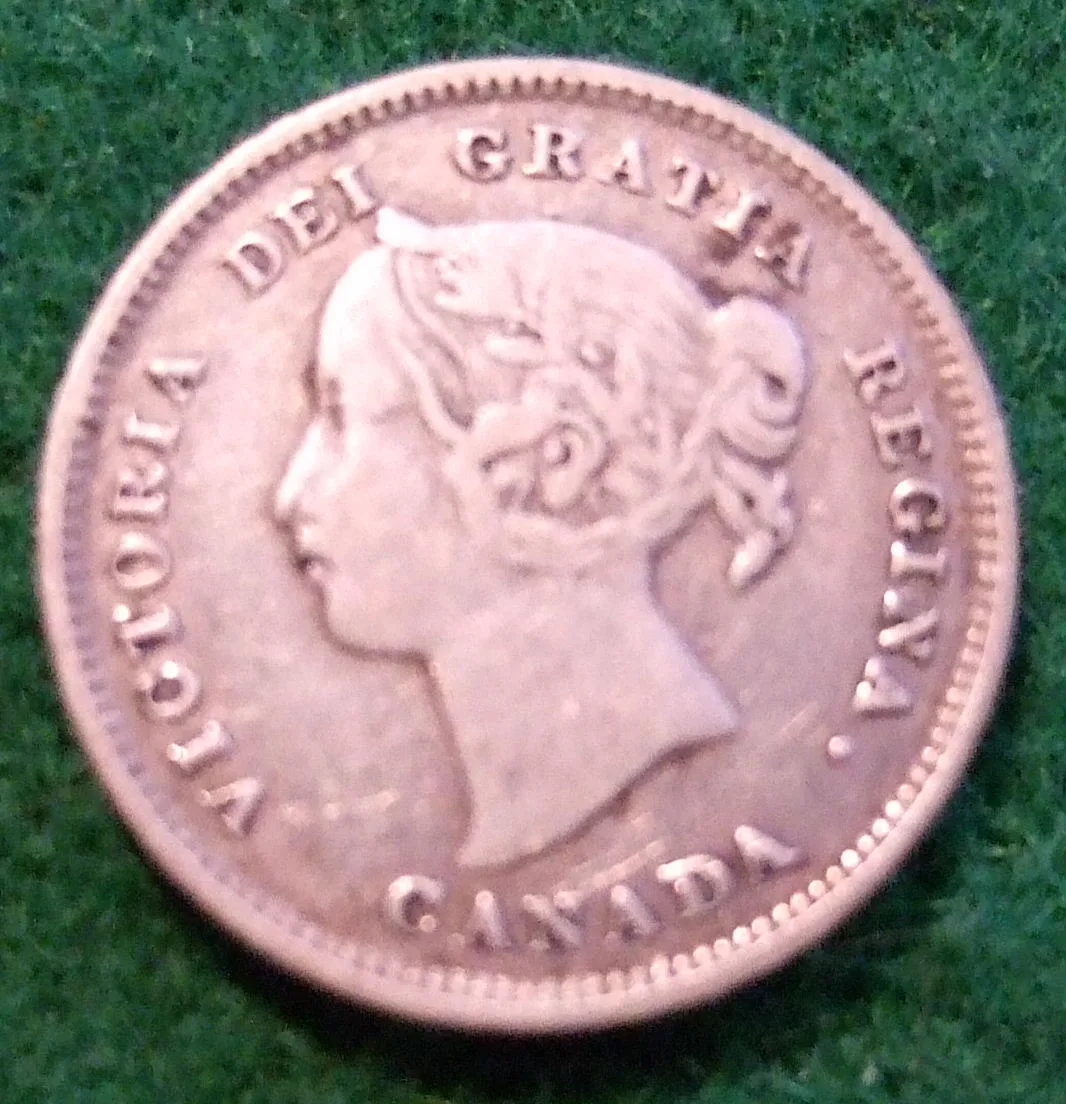
Canada’s earliest federal and provincial coins bear Queen Victoria, shown as a mature crowned or diademed bust facing left, with the legend VICTORIA DEI GRATIA REGINA CANADA. These are the large cents and the small silver of the nineteenth century. A Victorian date on a Canadian coin marks it as among the oldest you are likely to find, and condition matters enormously to value.
Edward VII (1902–1910) and George V (1911–1936)
Edward VII, a bearded king facing right, appears on a tidy decade of Canadian coins. George V (bearded, facing left) reigned through the First World War and into the 1930s and is one of the most commonly encountered portraits; his coins straddle the crucial 1919–1920 silver change and include several of the great Canadian rarities. Note that Canada’s first coins bearing George V are dated 1911 — and the famous 1911 “no legend” / dot cent saga belongs to his very first year.
George VI (1937–1952)
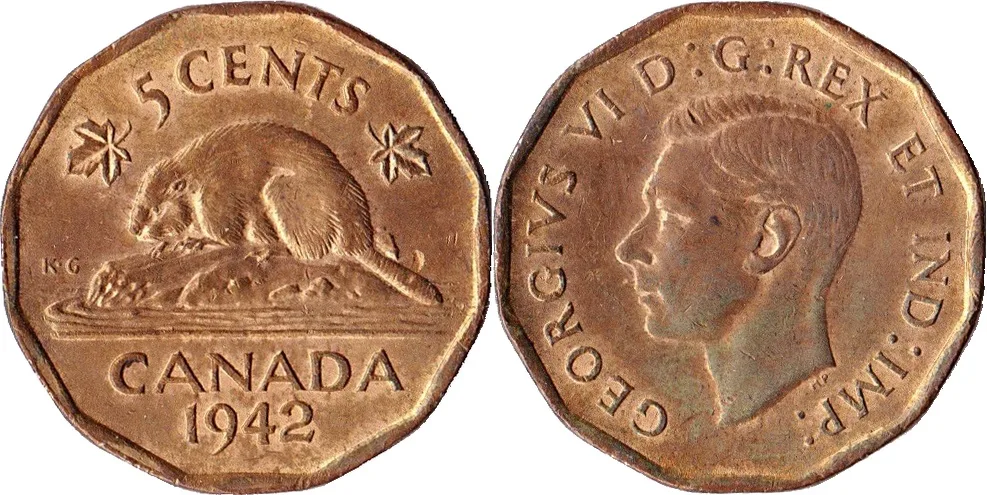
George VI (clean-shaven, facing left) covers the Second World War and the immediate post-war years. His reign includes the wartime “tombac” and steel five-cent pieces struck to conserve nickel, the scarce 1948 dollar, and, at the very start, the 1936 “dot” coins struck early in 1937 but dated 1936 while dies bearing the new king were prepared. Because Edward VIII abdicated before Canadian coins were issued in his name, there is no Edward VIII Canadian coinage — the sequence runs George V straight to George VI, with the 1936-dated dot pieces bridging the gap.
Elizabeth II (1953–2022) and Charles III (2023–)
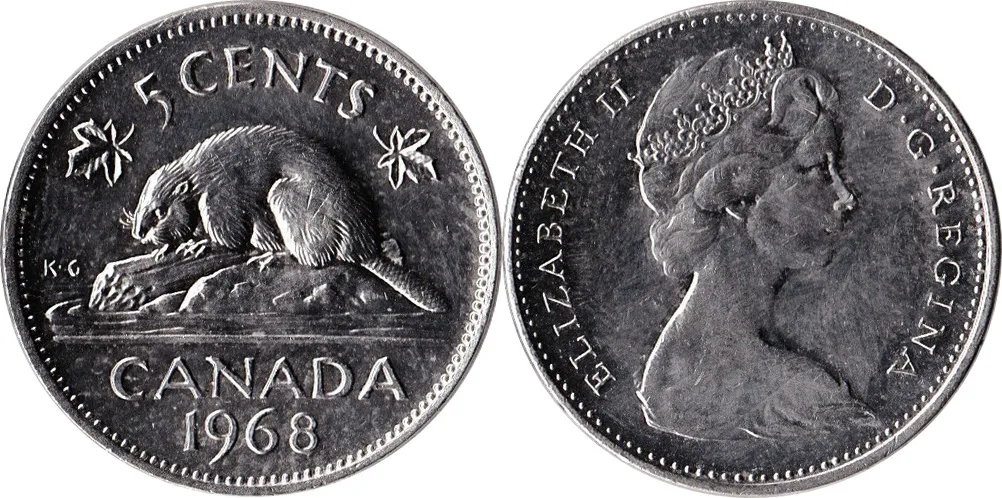
Elizabeth II reigned for seven decades and appears on the overwhelming majority of Canadian coins you will handle. Her effigy was updated several times — a youthful 1953 laureate bust, a 1965 “tiara” portrait, a 1990 mature bust, a 2003 uncrowned portrait, and so on — and Canadian numismatists date her coins in part by which effigy they carry. The most recent Canadian coins bear King Charles III, introduced from 2023 and, following the British alternation custom, facing left (opposite to Elizabeth II, who faced right). Spotting the switch from a right-facing queen to a left-facing king instantly separates the newest coins from the vast Elizabeth-era run.
Canadian Denominations, Small to Large
Canada’s circulating denominations mostly share their names with US coins, which is why they blend into American change so easily. Here is the full set, from smallest to largest, with the features that identify each.
The Small Coins
- Half cent — struck only for the Province of Canada in 1861; a rare early oddity rather than a coin you will find in change.
- Cent (1¢) — the “penny.” A big copper large cent until 1920, then a small cent close to the US size. Discontinued in 2012. Reverses show maple leaves (the classic “two maple leaves on a twig”) or, earlier, a wreath.
- Five cents (5¢) — the “nickel.” Confusingly, early five-cent pieces were tiny silver coins (the “fish-scale”), not nickel at all, until 1922, when the modern larger nickel-metal coin with the beaver reverse appeared. Wartime issues were struck in tombac (a brass alloy) and chromium-plated steel.
- Ten cents (10¢) — the “dime,” long carrying the Bluenose schooner reverse, one of the most beloved Canadian designs. Silver until 1968.
The Mid-Size Coins
- Twenty cents (20¢) — struck only in 1858 for the Province of Canada; abandoned because it was too close in size to the US and Canadian quarter. A scarce one-year type.
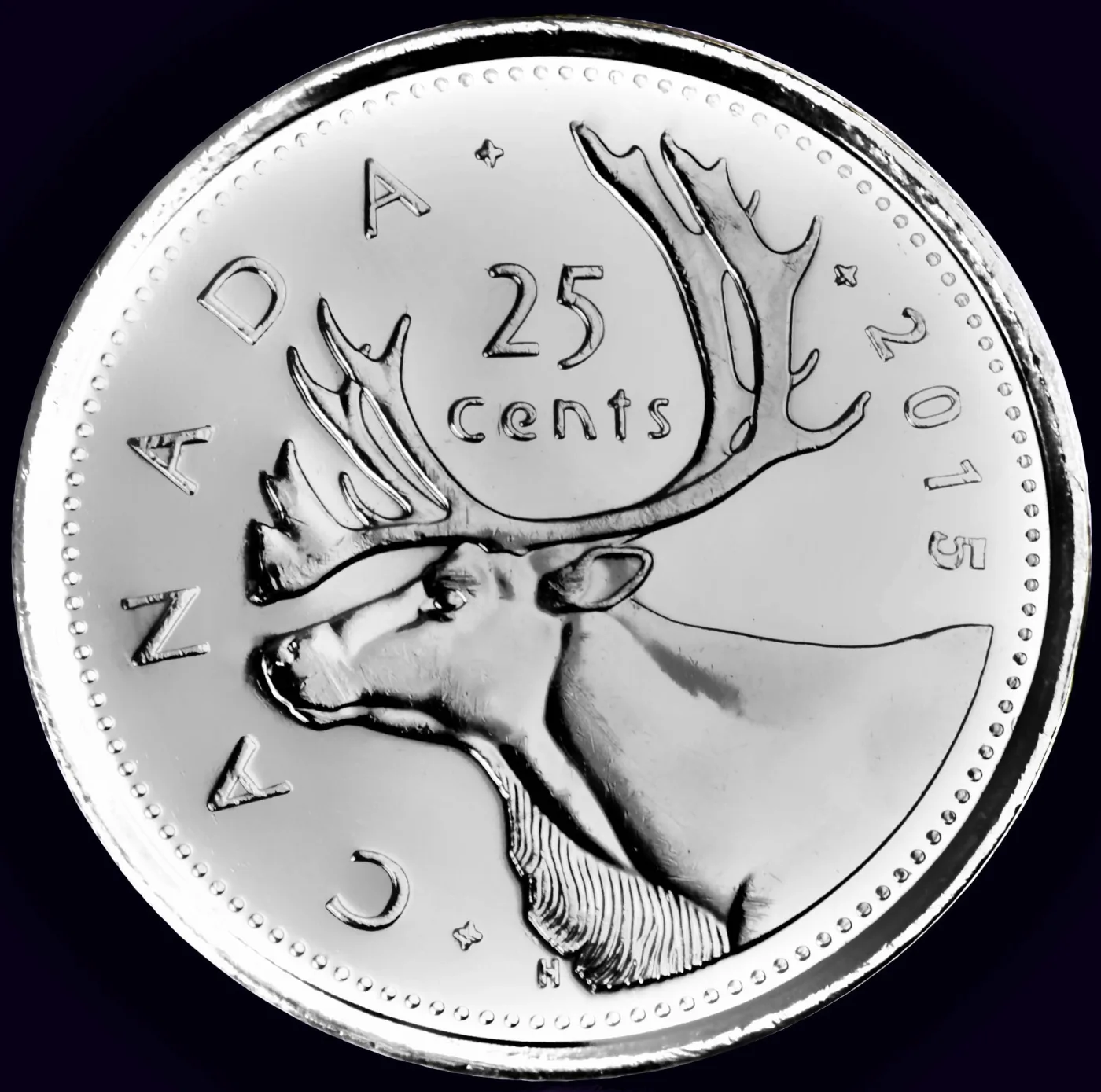
- Twenty-five cents (25¢) — the “quarter,” carrying the famous caribou reverse since 1937. Silver until 1968; the coin most likely to turn up in US change.
- Fifty cents (50¢) — the half dollar, usually showing the Canadian Coat of Arms. Still struck but rarely seen in circulation, much like the US Kennedy half dollar.
The Dollars
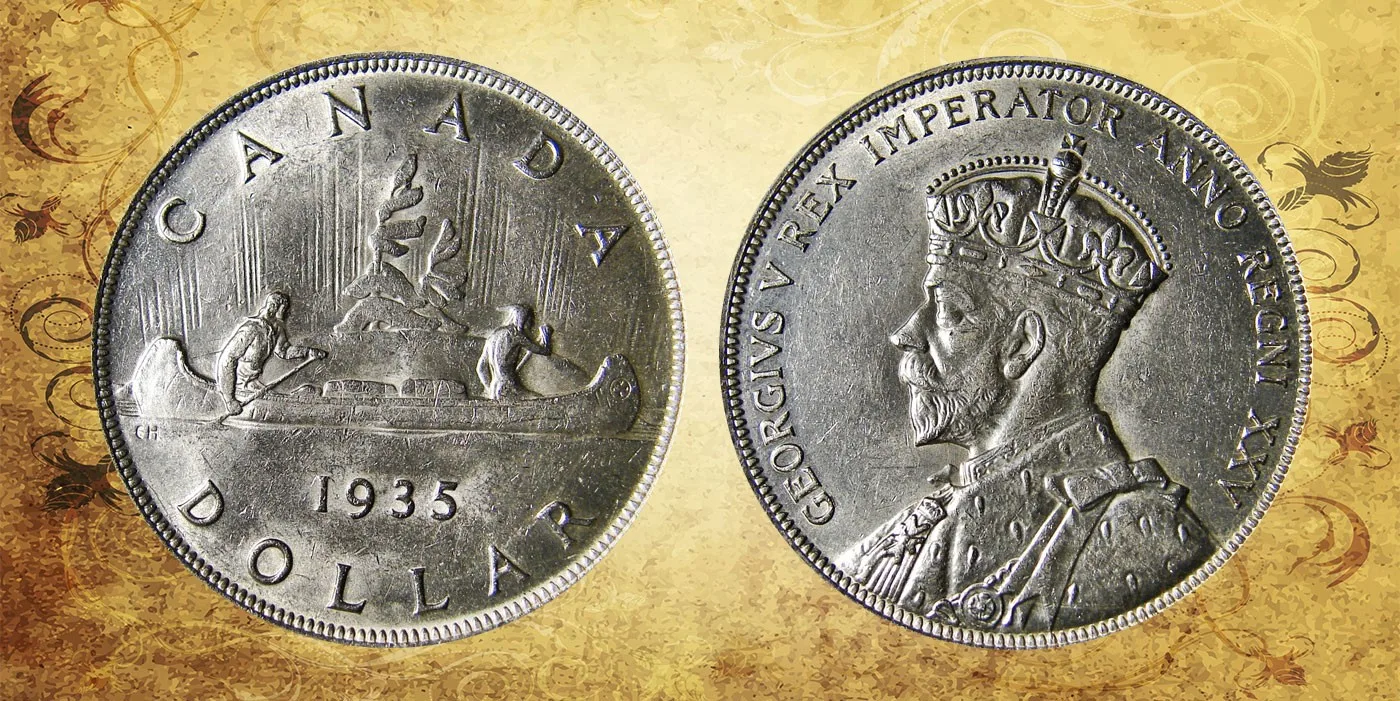
- Silver dollar — the large voyageur dollar (a canoe paddled by a voyageur and an Indigenous guide) introduced in 1935, plus commemorative dollars. Silver, in varying finenesses, through 1967, then nickel.
- Loonie (1 dollar) — the gold-coloured loon dollar introduced in 1987, which replaced the dollar bill and gave the coin its nickname.
- Toonie (2 dollars) — the bimetallic two-dollar coin introduced in 1996, with a polar bear reverse; its nickname puns on “two” plus “loonie.”
The Large Cent and the Small Cent
No Canadian coin surprises Americans more than the cent, because Canada struck two completely different sizes of one-cent piece. Recognising which is which is a common first identification task.
The Large Cent (1858–1920)
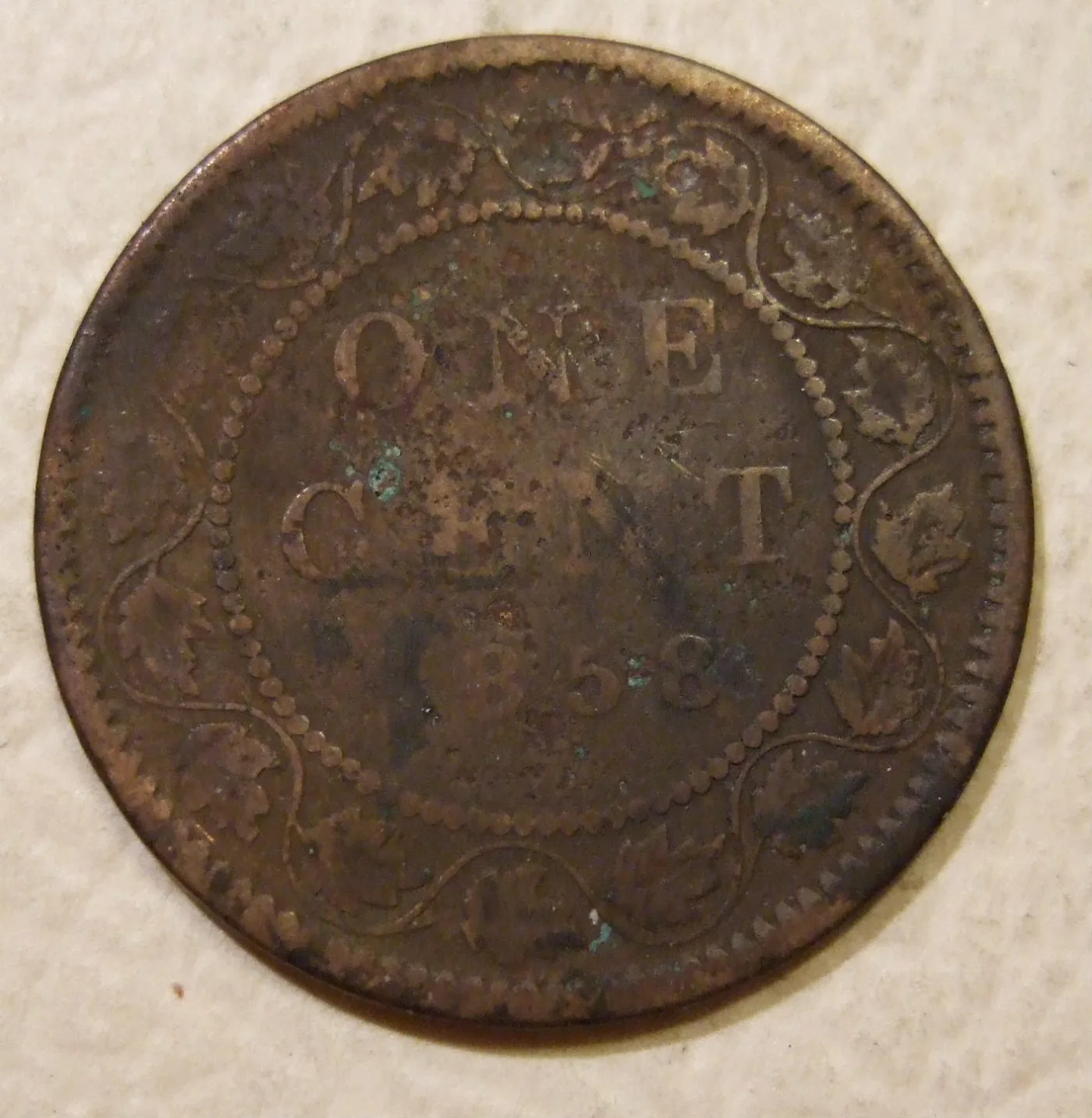
Canada’s original cent was a big copper coin — roughly 25.4 mm, close to a US quarter in diameter — bearing the monarch on the obverse and a wreath or maple design on the reverse. Provincial and early Dominion large cents run from 1858 through 1920. To an American eye they look like a foreign large cent or a token, but they are simply the everyday penny of their day. Because they circulated hard, most are heavily worn and common; a few early dates and high grades carry real value.
The Small Cent (1920–2012)
In 1920 Canada reduced the cent to a small coin comparable in size to the US cent, and this is the “Canadian penny” most people picture: a bronze coin with the classic two maple leaves on a twig reverse (from 1937). Composition shifted over the decades from bronze to copper-plated steel and zinc, and the coin was finally discontinued in 2012, with cash transactions rounded to the nearest five cents thereafter. Small cents are the most abundant Canadian coins in American jars and are almost all common, but the series hides one legendary rarity — the 1936 dot cent — discussed below.
Telling Them Apart Fast
Size settles it instantly: a cent the size of a US quarter is a large cent (1858–1920); a cent the size of a US penny is a small cent (1920–2012). The reverse design confirms it — a wreath or single-leaf design on a big coin versus the paired maple leaves on the small one. This same “measure the diameter” discipline underlies identifying US large cents, and it is the quickest way to slot a mystery Canadian cent into the right era.

Silver Content: The 1919, 1967, and 1968 Dividing Lines
For collectors and anyone weighing melt value, the single most valuable fact about Canadian silver coins is when they were struck, because the silver fineness dropped in stages during the twentieth century. Canada’s dividing dates are different from the American ones, so a jar of mixed coins must be sorted by country before the rules apply. This is the Canadian analogue of US pre-1965 junk silver.
Before 1920: Sterling Silver (.925)
Canadian silver coins struck through 1919 are 92.5% silver (sterling), the same fineness as pre-1920 British silver. Any Victorian, Edward VII, or early George V dime, quarter, fifty-cent piece, or the tiny five-cent silver dated 1919 or earlier carries substantial precious metal and is worth well above face value for its silver alone.
1920–1966: 80% Silver
From 1920 the fineness was reduced to 80% silver (.800), the standard for Canadian dimes, quarters, fifty-cent pieces, and silver dollars for nearly half a century. This is the great bulk of collectable Canadian silver: a dime, quarter, half, or voyageur dollar dated 1920 through 1966 is 80% silver and stacked and traded for that content. Note this differs from the US 90% standard, so Canadian 80% silver contains somewhat less pure silver per same-size coin.
1967: The Transition Year
1967, Canada’s centennial, is a split year. Early 1967 dimes and quarters (with the famous Centennial animal designs — the mackerel dime, the bobcat quarter) were struck in 80% silver; later in the year the fineness was quietly cut to 50% silver for some dimes and quarters as the silver price rose. Because you cannot tell 80% from 50% by eye, 1967 dimes and quarters are treated cautiously and, for high-value purposes, tested by specific gravity.
1968: Silver Ends Mid-Year
1968 is the crucial cutoff. Early 1968 dimes and quarters were struck in 50% silver; then, partway through the year, Canada switched entirely to pure nickel, which contains no silver at all. So 1968 is another split year, and every circulating Canadian dime and quarter dated 1969 or later is base metal with no silver value. The rule to memorise: 1919 and before = sterling; 1920–1966 = 80% silver; 1967–1968 = transitional (80%, then 50%, then nickel); 1969 on = no silver. A magnet helps at the margins — pure nickel 1968-and-later coins are attracted to a magnet, while the silver ones are not.
The Great Canadian Designs and Who Made Them
Canadian reverses are a gallery of national imagery, and recognising the recurring designs both identifies denominations and dates coins to particular periods. A handful of images dominate the circulating coinage.
The Caribou, the Beaver, and the Bluenose
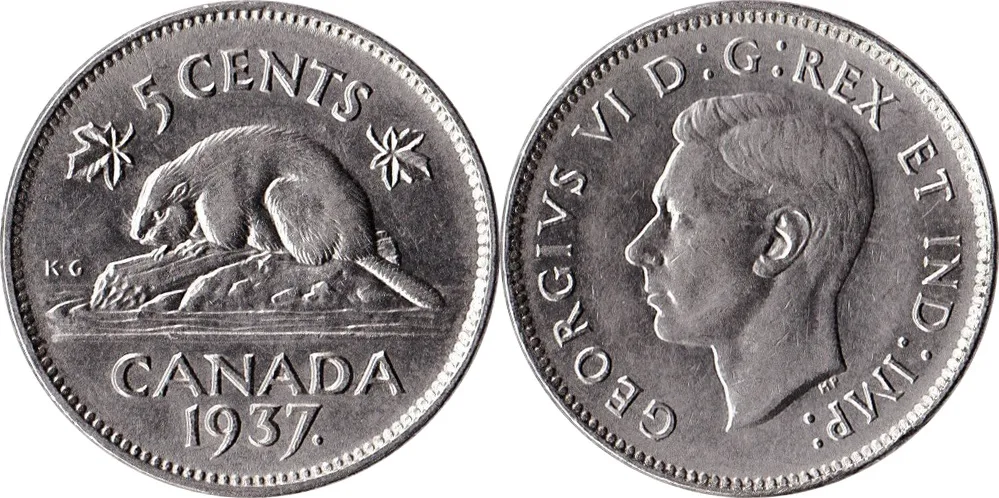
The caribou quarter, the beaver nickel, and the Bluenose dime were all introduced in 1937 as part of a redesign under George VI, and they defined Canadian coinage for generations. The Bluenose in particular — a famous Nova Scotia racing and fishing schooner — is one of the most recognisable coin designs in the world. Seeing any of these tells you both the denomination and that the coin is 1937 or later.
The Voyageur and the Loon
The silver dollar’s voyageur design (a fur-trade canoe) ran from 1935 until the loon replaced it. The loon gave the loonie its name in 1987, and the polar bear defines the toonie. These animal designs are quintessentially Canadian and instantly separate Canadian dollars from American ones.
Commemoratives and Circulating Coloured Coins
Canada has embraced circulating commemoratives more enthusiastically than most nations, issuing quarters and loonies for anniversaries, the Olympics, remembrance poppies (including the world’s first coloured circulation coin, the 2004 poppy quarter), and countless other themes. These are close in spirit to the US 50 State Quarters program — struck in the millions, sorted from change, and occasionally scarce enough to carry a premium. The Royal Canadian Mint also produces an enormous range of non-circulating collector coins whose designs never appear in your change.
The Loonie, the Toonie, and the End of the Penny
Canada’s modern circulating coinage looks quite different from the American set, and three changes in particular catch out anyone used to US coins.
The Loonie (1987)
In 1987 Canada replaced the one-dollar bill with an eleven-sided, gold-coloured coin bearing a common loon, promptly nicknamed the “loonie.” The name stuck so thoroughly that it became informal shorthand for the Canadian dollar itself. If you find a small gold-coloured Canadian dollar with a swimming loon, it dates from 1987 or later.
The Toonie (1996)
In 1996 the two-dollar bill gave way to a bimetallic two-dollar coin — a nickel-alloy outer ring around an aluminium-bronze centre — showing a polar bear. Its nickname, “toonie” (sometimes “twoonie”), puns on the loonie. The bimetallic construction occasionally produces striking errors, and very early examples where the centre plug can be pushed out are a known curiosity.
The End of the Penny (2012)
Canada stopped minting the one-cent coin in 2012 and withdrew it from circulation, rounding cash transactions to the nearest five cents. The penny remains legal tender and is still found by the billions, so it is not rare — but its discontinuation means the very newest Canadian coinage has no cent at all, a structural difference from the still-circulating US Lincoln cent.
Mint Marks, Logos, and Where Canadian Coins Are Struck
Canadian coins handle mint identification very differently from US coins, and knowing the conventions prevents confusion when you look for a mint mark that mostly is not there.
Mostly No Mint Mark
Canada’s circulating coins have historically carried no mint mark, because they were struck at a single national facility (Ottawa, and later the high-volume plant in Winnipeg). Unlike the US, where a D or S mint mark is central to identification, a Canadian coin’s origin usually is not marked at all, so do not expect to find one.
The “H” and Early Strikings
The main historical exception is the “H” mint mark of the Heaton Mint in Birmingham, England, which struck some early Canadian coins under contract. An “H” beside the date on a nineteenth- or early-twentieth-century Canadian coin identifies a Heaton striking and matters for certain scarce dates. Some very early coins were also struck at the Royal Mint in London.
The RCM Logo and the “P” Composition Mark
Modern coins carry the Royal Canadian Mint logo (an “M” within a stylised maple leaf) rather than a traditional mint mark. From 1999 to 2006, a small “P” below the effigy indicated the new plated-steel composition, and the 2000P test-token varieties made with that mark are collectable rarities. Recognising the logo and the “P” distinguishes composition and era on recent coins, even though neither functions like a US mint mark.
Step-by-Step Identification Workflow
With the background in place, here is a repeatable process for identifying any Canadian coin from hand.
1. Confirm It Is Canadian
Look for the word CANADA and a Canadian design (caribou, beaver, Bluenose, voyageur, loon, maple leaves). This separates a Canadian coin from a same-size American one, which is the first thing to establish when sorting a mixed jar.
2. Read the Monarch and Date
Identify the sovereign from the obverse portrait and legend (VICTORIA, EDWARDVS/EDWARD, GEORGIVS/GEORGE, ELIZABETH, CHARLES) and read the Arabic date on the reverse. The monarch brackets the coin within a reign; the date pins it exactly. A right-facing queen is Elizabeth II; a left-facing king on a very recent coin is Charles III.
3. Determine the Denomination
Use size, colour, reverse design, and the stated value. Caribou = 25 cents; Bluenose = 10 cents; beaver = 5 cents; Coat of Arms on a large coin = 50 cents; voyageur or loon on a dollar-size coin = one dollar; polar bear bimetallic = two dollars; big copper coin = large cent; small coin with paired maple leaves = small cent.
4. Assess Metal and Silver Content
For silver-coloured coins dated 1968 or earlier, apply the 1919/1920 and 1967/1968 rules to know whether you hold sterling, 80% silver, 50% silver, or nickel. A magnet is a quick screen: pure-nickel 1968-and-later coins stick; silver coins do not. For borderline 1967–1968 pieces, specific-gravity testing settles the fineness.
5. Check for Key Dates and Varieties
Finally, compare the year and type against the key-date and variety lists below. Most Canadian coins are common, but a small number of dates and varieties — the 1911 dot cent, the 1936 dot coins, the 1948 dollar, the 2000P pieces — are worth many multiples of the ordinary price, so this last check is where value is found.
Key Dates and Famous Rarities
The overwhelming majority of Canadian coins are common and trade for modest sums, but the field turns on a well-known set of scarce dates and varieties. Just as US collectors hunt key dates, Canadian collectors watch for these.
The 1911 “Godless” Dollar and the Dot Cent Saga
1911 is a landmark year. The pattern 1911 silver dollar — of which only a couple are known — is among the most valuable Canadian coins in existence, a seven-figure rarity. Separately, 1911 obverses briefly omitted the Dei Gratia (“by the Grace of God”) legend, producing the so-called “Godless” coins before the titles were restored. These first-year-of-George-V oddities are a cornerstone of Canadian numismatics.
The 1936 “Dot” Coins
When George V died in early 1936 and Edward VIII’s brief reign ended in abdication, Canada needed to strike coins in early 1937 before dies for the new king George VI were ready. It used 1936-dated dies with a small raised dot added to mark the emergency issue. The 1936 dot cent and 1936 dot 10-cent are legendary rarities — the dot cent is one of the most valuable Canadian coins ever sold, with only a handful known.
The 1948 Silver Dollar
The 1948 voyageur dollar is the key date of the silver dollar series. When India gained independence in 1947, the royal title “ET IND:IMP:” (and Emperor of India) had to be removed, delaying 1948 production until new dies were ready — so very few 1948 dollars were struck. It is the coin every Canadian silver-dollar collector needs and the hardest to find.
Other Scarce Dates and the 2000P Varieties
- 1921 five-cent and fifty-cent — the “Prince of Canadian coins” (the 1921 fifty-cent) and the scarce 1921 silver five-cent, both rare after most were melted.
- 1925 and 1926 “near 6” / “far 6” five-cent — low-mintage nickels with a collectable date variety.
- 2000P test tokens and mule varieties — scarce modern pieces tied to the change to plated compositions.
Canadian Error Coins and Varieties
Canadian mint errors follow the same categories as US error coins, and the same caution applies: genuine errors are collectable, but ordinary wear, damage, and post-mint alteration are not.
Die Varieties and Doubled Dies
Collectors chase minor die differences — date-position varieties like the 1936 “dot,” the 1953 “shoulder fold” (SF) versus “no shoulder fold” (NSF) obverse on Elizabeth II coins, and genuine doubled dies where the design shows a doubled image. These are the Canadian equivalent of the die-variety hunting behind US doubled dies, and specialist references catalogue them in detail.
Bimetallic Toonie Errors
The two-dollar coin’s bimetallic construction produces distinctive errors: coins where the centre and ring are misaligned, and famously the very early 1996 toonies whose centre plug could be pushed out. Because these errors are unmistakable and specific to the toonie, they are a popular modern collecting niche — but weigh and examine any suspected error, since damaged coins are frequently passed off as mint errors.
Off-Metal, Off-Centre, and Clipped Planchets
Coins struck off-centre, on the wrong (or clipped) blank, or on a planchet meant for another denomination show the same dramatic errors seen worldwide. Wartime five-cent pieces struck in tombac and steel occasionally show composition-related oddities. As always, measure and weigh suspected error coins, since altered and damaged pieces are the most common thing mistaken for a valuable error.
The Maple Leaf Bullion Coins
Beyond circulating coinage, the Royal Canadian Mint produces some of the world’s most respected bullion coins — the Maple Leaf series — which US precious-metal buyers encounter constantly alongside American issues.
Gold and Silver Maple Leaf
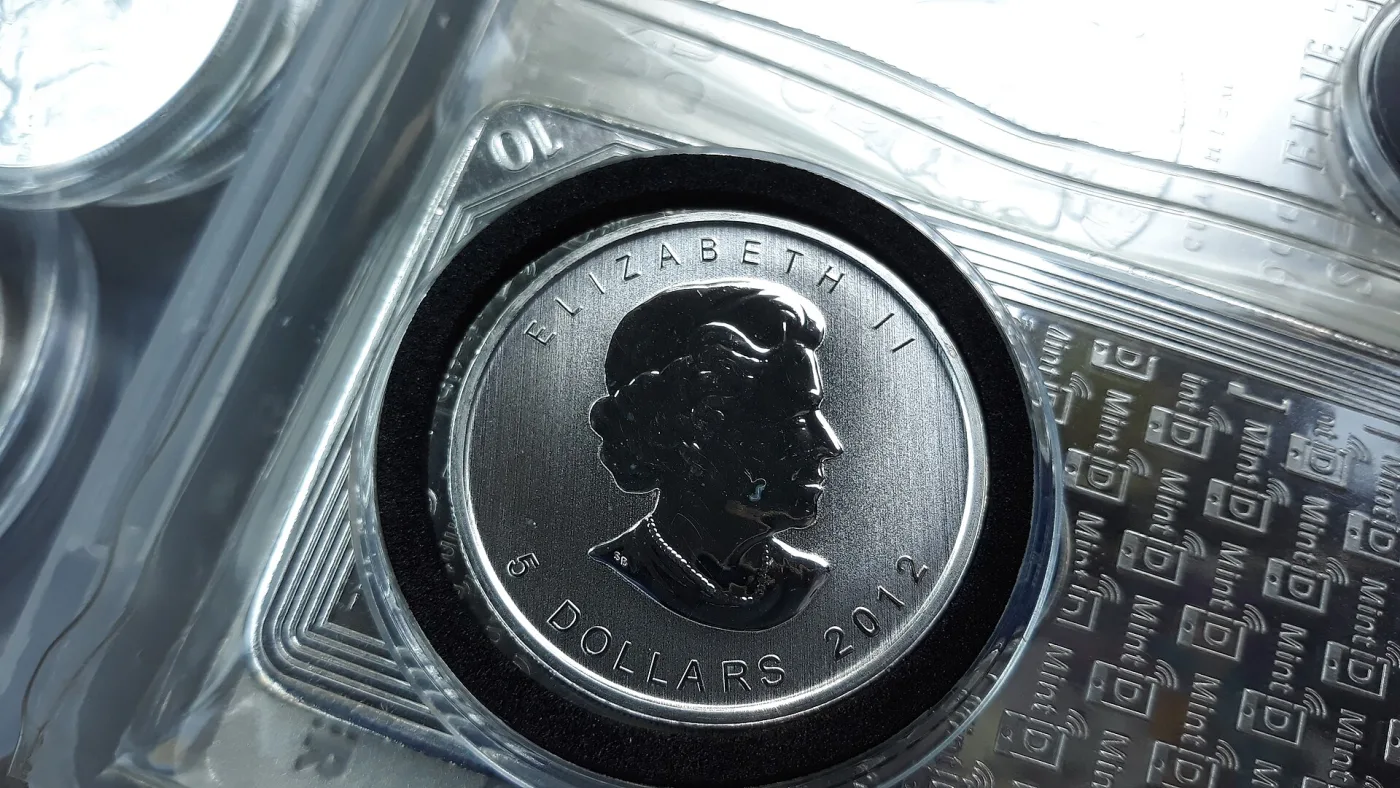
The Gold Maple Leaf, launched in 1979, was one of the first pure-gold bullion coins and is struck in .9999 fine (“four nines”) gold — purer than the 22-karat American Gold Eagle. The Silver Maple Leaf, introduced in 1988, is .9999 fine silver and a direct competitor to the American Silver Eagle. Both carry a single stylised maple leaf on the reverse and the reigning monarch on the obverse, with a face value that is purely nominal — their worth tracks the metal price.
Platinum, Palladium, and Security Features
The Mint also strikes Platinum and Palladium Maple Leafs, rounding out a full bullion range comparable to the US Platinum Eagle series. Modern Maple Leafs incorporate advanced anti-counterfeiting features — radial lines machined into the field and a micro-engraved privy mark (a tiny maple leaf with the last two digits of the year) — that help authenticate them at a glance.
Collecting Versus Stacking
Most Maple Leafs are bought for their metal and valued as bullion, but certain low-mintage dates, special finishes, and privy-mark issues carry numismatic premiums. For everyday purposes, a common-date Maple Leaf is worth its gold or silver content plus a small premium, the same way a common bullion coin trades — buy from reputable dealers and, for high-value pieces, prefer sealed assay cards or graded holders.
Grading Canadian Coins
Canadian coins are graded on the same 70-point Sheldon scale used for US coins, and the leading third-party services grade Canadian issues routinely, so the grading vocabulary will be familiar.
The Grading Scale
- Good / Very Good (G/VG) — heavily worn, major detail gone but the type clear.
- Fine / Very Fine (F/VF) — moderate wear, most design elements sharp.
- Extremely Fine (EF/XF) — light wear on the high points only.
- About Uncirculated (AU) — a trace of wear on the highest points.
- Mint State (MS-60 to MS-70) — no wear, as struck, graded by the quality of surfaces and strike.
Grade Drives Value Enormously
As with all coins, condition is decisive: a common date worth little in circulated grades can be worth many multiples in Mint State, and for scarce dates the gap is even wider. The general principles in our coin grading guide apply directly to Canadian coins — judge wear on the highest points of the portrait and the reverse design, and weigh eye appeal, luster, and originality. Beware of coins that have been cleaned, which lose much of their value.
Slabbing and Third-Party Grading
High-value Canadian coins are commonly sent to third-party grading services, which encapsulate them in sealed holders with a numeric grade and an authenticity guarantee. For a scarce date, a valuable variety, a silver dollar, or any coin whose authenticity you want assured, professional grading protects both value and buyer confidence, though it is rarely worth the cost for common circulated pieces.
What Canadian Coins Are Worth in 2026
Canadian coin values span an enormous range, from a few cents for a worn modern coin to seven figures for the great rarities. Here is a realistic picture for the coins most Americans actually hold.
Common Circulated Coins
Most modern Canadian cents, nickels, dimes, and quarters dated 1969 or later in circulated grades are worth little more than face value (and, in the US, not even that, since Canadian coins do not spend). Their appeal is as affordable, interesting foreign coins. The large cents and small cents, though old-looking, are mostly common and modestly valued unless in high grade or a key date.
Silver Coins for Their Metal
Pre-1968 silver coins carry real precious-metal value. Sterling (pre-1920) pieces are worth the most per coin; 1920–1966 coins are 80% silver; 1967–1968 are transitional. A jar of pre-1968 Canadian silver dimes, quarters, halves, and voyageur dollars has genuine stacking value that rises and falls with the silver price, independent of any collector premium — remember it is 80% silver, slightly less pure than US 90% coins.
Maple Leaf Bullion
A common-date Gold or Silver Maple Leaf is worth its metal content (one troy ounce of .9999 gold or silver in the standard sizes) plus a small premium, so its price moves with the market. Special finishes, privy marks, and low-mintage dates add premiums on top.
Key Dates and Rarities
The scarce dates and famous rarities are where four-, five-, six-, and even seven-figure values live: the 1911 pattern dollar, the 1936 dot cent and dot 10-cent, the 1948 dollar, the 1921 fifty-cent. These are exceptional. For everyday identification, assume any given coin is common until a key-date check proves otherwise — and get a professional opinion before celebrating a supposed rarity, since fakes and altered dates cluster around exactly these coins.
Counterfeits and How to Avoid Them
Because a few Canadian coins are enormously valuable and because gold and silver Maple Leafs are traded worldwide, counterfeits are a real concern. The same discipline used for counterfeit detection on US coins applies here.
Altered Dates on Rarities
The fame of the 1936 dot coins and the 1948 dollar makes them targets for alteration — a common coin’s date or a dot added or changed to imitate the rarity. Any “1936 dot” cent or 10-cent, or a “1948” dollar, demands expert authentication before you believe it, because genuine examples are so few and the incentive to fake them so high.
Fake Bullion Maple Leafs
Gold and silver Maple Leafs are among the most-counterfeited bullion coins because of their value and recognisability. Genuine coins have precise specifications and, on modern issues, radial-line machining and a micro-engraved privy mark that are extremely hard to fake. Weight and diameter that are even slightly off, a soft or “greasy” look, or missing security features are red flags. Buy bullion from reputable dealers, and prefer sealed assay cards or graded holders for larger purchases.
Cast and Cleaned Coins
Cast forgeries show a slightly soft, grainy surface and sometimes a seam on the edge; genuine coins are sharply struck. Separately, avoid cleaning any Canadian coin: as with all numismatics, harsh cleaning strips the original surface and slashes value. An honestly toned old coin is worth more than a shiny scrubbed one, a principle covered in our guide to coin toning.
References and Online Tools
When a coin resists identification, the right reference resolves it quickly. Canadian numismatics is exceptionally well documented.
The Standard Catalogue
The essential printed reference is the Charlton Standard Catalogue of Canadian Coins, updated annually, which lists every Canadian type and date with mintages, varieties, and a value guide. Specialist references cover the die varieties, the tokens, and the Maple Leaf and collector-coin issues in greater depth.
Free Online Resources
Several free databases let you match a coin by image and description without any purchase — searchable type catalogues, auction-archive sites showing realised prices, the Royal Canadian Mint’s own coin information, and active collector forums where experts identify coins from photographs. Matching your coin’s monarch, denomination, date, and reverse against these sources resolves the great majority of pieces, and comparing sold prices gives a realistic value.
When to Get Expert Help
For a suspected key date, a possible error, a gold or silver bullion coin, or anything you cannot confidently place, consult a reputable dealer or a grading service. Professional authentication is cheap insurance against buying a fake or misjudging a rarity, and it is indispensable before paying a premium for any high-value Canadian coin.
Frequently Asked Questions
How do I tell if my Canadian coin is silver?
Use the date. Silver-coloured Canadian dimes, quarters, halves, and dollars dated 1919 or earlier are 92.5% sterling silver; 1920 through 1966 are 80% silver; 1967 and 1968 are transitional (80%, then 50%, then nickel); 1969 and later are pure nickel with no silver. A magnet helps at the margin — pure-nickel coins from 1968 on are magnetic, while the silver ones are not.
Why is my Canadian penny so big?
Because Canada struck a large cent — a copper coin about the size of a US quarter — from 1858 until 1920. In 1920 it switched to a small cent close to the US size. A cent the size of a quarter is a large cent (1858–1920); a small one with two maple leaves is a small cent (1920–2012).
Are Canadian coins worth anything in the US?
Canadian coins are not legal tender in the United States and generally do not spend, so their face value does not apply. However, pre-1968 Canadian silver has real melt value, and key dates and varieties can be worth a great deal to collectors. Sort out the silver and check the dates before spending or discarding them.
What is the loonie and the toonie?
The loonie is Canada's one-dollar coin, introduced in 1987 with a common loon on the reverse. The toonie is the two-dollar coin, introduced in 1996, a bimetallic coin with a polar bear. The nicknames are informal but universal, and "loonie" is even used to mean the Canadian dollar itself.
Is my old Canadian coin a valuable rarity?
Almost always no — most Canadian coins are common. The famous exceptions are the 1911 pattern dollar, the 1936 dot cent and 10-cent, the 1948 silver dollar, and the 1921 fifty-cent, all of which are rare and valuable. Check the date against key-date lists, and treat any apparent rarity with caution, since altered dates and fakes exist.
Where are Canadian coins minted, and why is there usually no mint mark?
Canadian circulating coins are struck by the Royal Canadian Mint (Ottawa and Winnipeg) and historically carry no mint mark, unlike US coins. The main exception is the "H" of the Heaton Mint on some early coins. Modern coins may show the RCM logo and, from 1999–2006, a small "P" indicating plated-steel composition.