British Coins Identification Guide: How to Read, Date, and Value UK Coins
Few coinages carry as much history in the palm of your hand as the coins of Britain. A single British penny can trace a line back more than twelve hundred years to the silver pennies of Anglo-Saxon kings, and the pound sterling is the oldest currency still in use anywhere on Earth. For collectors in the United States, British coins turn up constantly — in a grandparent’s cigar box, a holiday-money jar, an inherited album, or a bulk lot bought sight-unseen — and they are among the most rewarding foreign coins to learn, alongside continental European series such as German coins and French coins, because almost every one tells you exactly who reigned and, on the modern issues, precisely when it was struck.
But British coins also confront a newcomer with two puzzles. The first is the old money itself: for centuries Britain counted in pounds, shillings, and pence — a system with twelve pence to the shilling and twenty shillings to the pound — and used a parade of denominations with names like florin, half crown, groat, and sovereign that have no American equivalent. The second is the sheer span of monarchs: six King Georges, two Elizabeths, a handful of Williams and Edwards, and a Victoria who reigned for sixty-three years, each with portraits that changed across their reign. Learn to read the monarch and the denomination, and a jumble of unfamiliar coins snaps into a clear, datable order.
This guide walks through the pre-decimal pounds-shillings-pence system and the decimal coinage that replaced it in 1971, the anatomy of a British coin and how to read its Latin legends, the sequence of monarchs and how their portraits date a coin, the silver-content rules that make pre-1947 coins worth melting or keeping, the gold sovereign, and the famous key dates and error coins that every British collector hunts. We finish with grading, realistic 2026 values, how to spot fakes, and the reference tools that resolve any coin you cannot place.
Why British Coins Are a World unto Themselves
British coinage is not a foreign version of American coinage; it is an older and structurally different tradition that American money actually descends from. The colonies used British money before the Revolution, and the very word “dollar” and the habit of a decimal currency were deliberate breaks from the British pound. Understanding British coins therefore means setting aside the tidy US pattern of cents, nickels, dimes, quarters, and dollars, and learning a system that grew organically over a thousand years and only rationalised itself in living memory.
A Continuous Thousand-Year Story
The silver penny struck under kings like Offa of Mercia and Alfred the Great in the eighth and ninth centuries is the direct ancestor of the coin still called a penny today. For most of that span the penny was actual silver, and larger sums were simply counted in pennies or in the money-of-account units — the shilling and the pound — that organised them. This deep continuity is why British denominations feel strange to Americans: they were never designed as a set, but accreted one at a time, each surviving because it was useful, until decimalisation finally swept the old structure away in 1971.
Why Americans Encounter So Many
Britain minted staggering quantities of coins for domestic use and for a global empire, and hundreds of millions of them have crossed the Atlantic through immigration, travel, wartime service, and the coin trade. A US collector sorting an inherited accumulation will very often find a handful of British pennies, a sixpence or two, a shilling, perhaps a Victorian “bun head” penny gone chocolate-brown with age. Knowing how to read them turns an intimidating pile into an ordered, datable collection — and occasionally flags something genuinely valuable hiding among the common pieces.
The Pre-Decimal System: Pounds, Shillings, and Pence
Everything about older British coins makes sense once you understand the counting system behind them, known by its Latin-derived shorthand £sd — librae, solidi, denarii, or pounds, shillings, and pence. This is the single most important concept for reading pre-1971 British money, and it is not hard once the ratios are clear.
The Ratios: 12 and 20
The pre-decimal pound broke down like this:
- 1 pound (£) = 20 shillings
- 1 shilling (s or /-) = 12 pence
- 1 pound = 240 pence (d) in total
The abbreviations trip up newcomers because they come from Latin, not English: £ for pound (from libra), s for shilling (from solidus), and — most confusingly — d for penny (from denarius, the Roman coin covered in our ancient Roman coins guide). So a coin marked “6d” is sixpence, and “2/6” means two shillings and sixpence, a sum also written 2s 6d and spoken “two and six.”
Reading Price Notation
You will see old prices and denominations written with a slash: the shilling mark. “5/-” is five shillings; “3/6” is three shillings and sixpence; “10/-” is ten shillings. A sum under a shilling was written with a “d” — “9d” is ninepence. When you find a coin, you are usually identifying which of the fixed denominations it is, not a price, but the notation is everywhere in old catalogues and helps you talk about the coins correctly.
Why It Mattered for Coins
Because the system used base twelve and twenty rather than base ten, it supported denominations that seem odd to decimal eyes: a coin worth two shillings (a florin), a coin worth two shillings and sixpence (a half crown), a coin worth three pence, a coin worth four pence (a groat). Each fit neatly into the £sd arithmetic even though none maps cleanly onto dollars and cents. Identifying these coins is largely a matter of learning the fixed list, which the next section lays out.
Pre-Decimal Denominations You Will Encounter
Here are the coins that circulated in the £sd era, roughly smallest to largest. Most British coins an American finds will be from this list, struck between the Victorian era and 1970. Learning the names, values, and rough sizes lets you sort a pile quickly.
The Copper and Bronze Coins
- Farthing (¼d) — the smallest coin, one quarter of a penny; often shows a wren on the reverse in the twentieth century. Discontinued in 1960.
- Halfpenny (½d, “ha’penny”) — half a penny; twentieth-century versions show the Golden Hind ship.
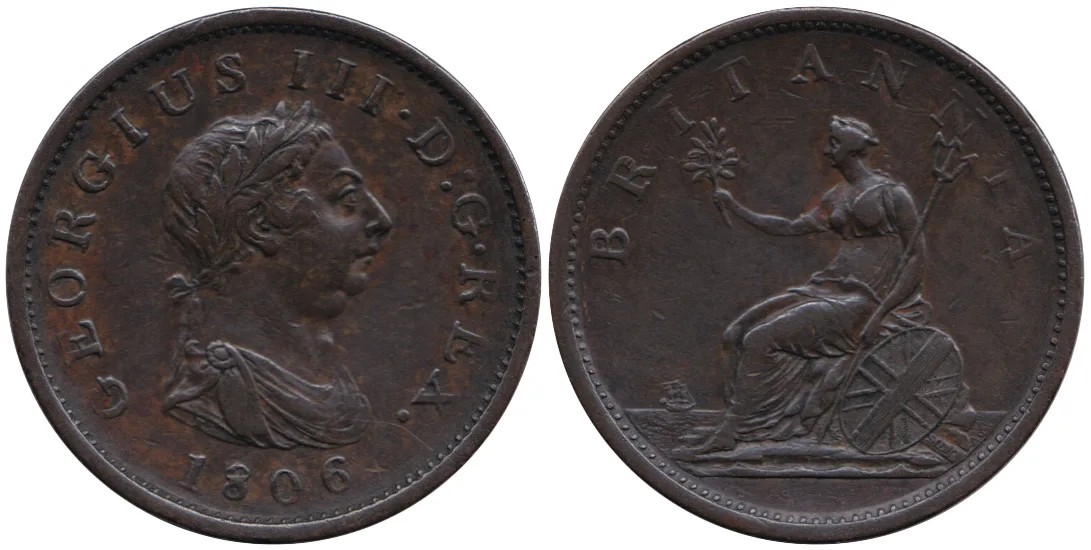
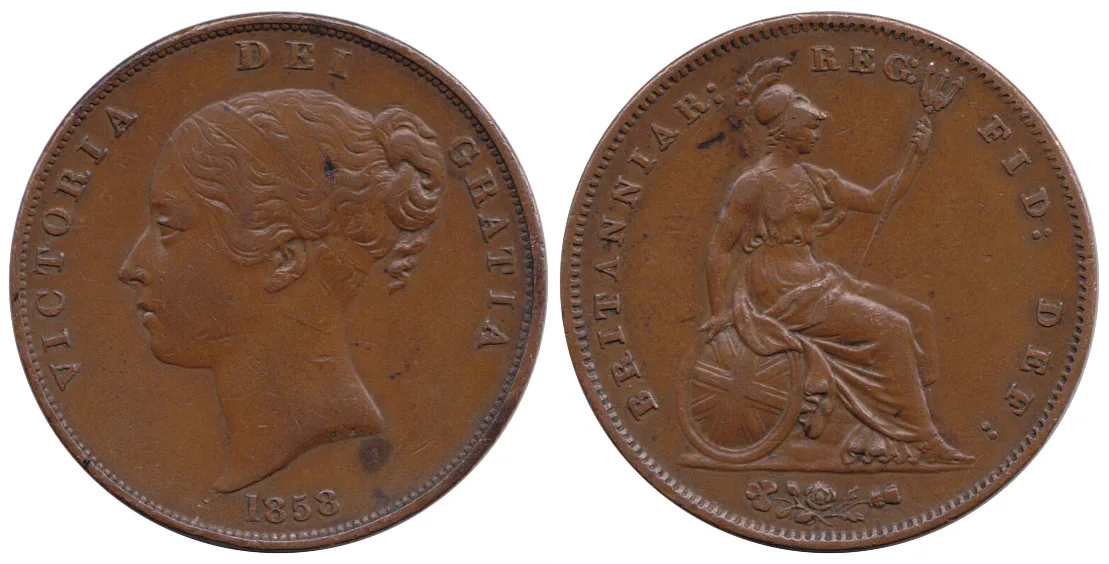
- Penny (1d) — the big brown workhorse coin, larger than a US quarter, with Britannia seated on the reverse for most of its history. The pre-decimal penny is the coin most Americans picture when they think “old English penny.”
The Small Silver Coins
- Threepence (3d, “thruppence”) — came in two very different forms: a tiny silver coin, and from 1937 a distinctive twelve-sided brass coin showing a thrift plant, later a portcullis.
- Sixpence (6d, the “tanner”) — a small silver coin, the “lucky sixpence” of tradition, about the size of a US dime.
- Groat (4d) — a fourpenny silver coin, mostly earlier; scarce in circulation by the twentieth century.
The Larger Silver Coins
- Shilling (1s, the “bob”) — a workhorse silver coin roughly the size of a US quarter; carried English and Scottish reverse variants in the twentieth century.
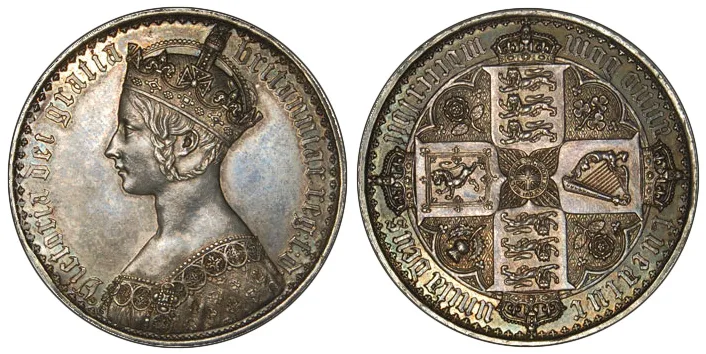
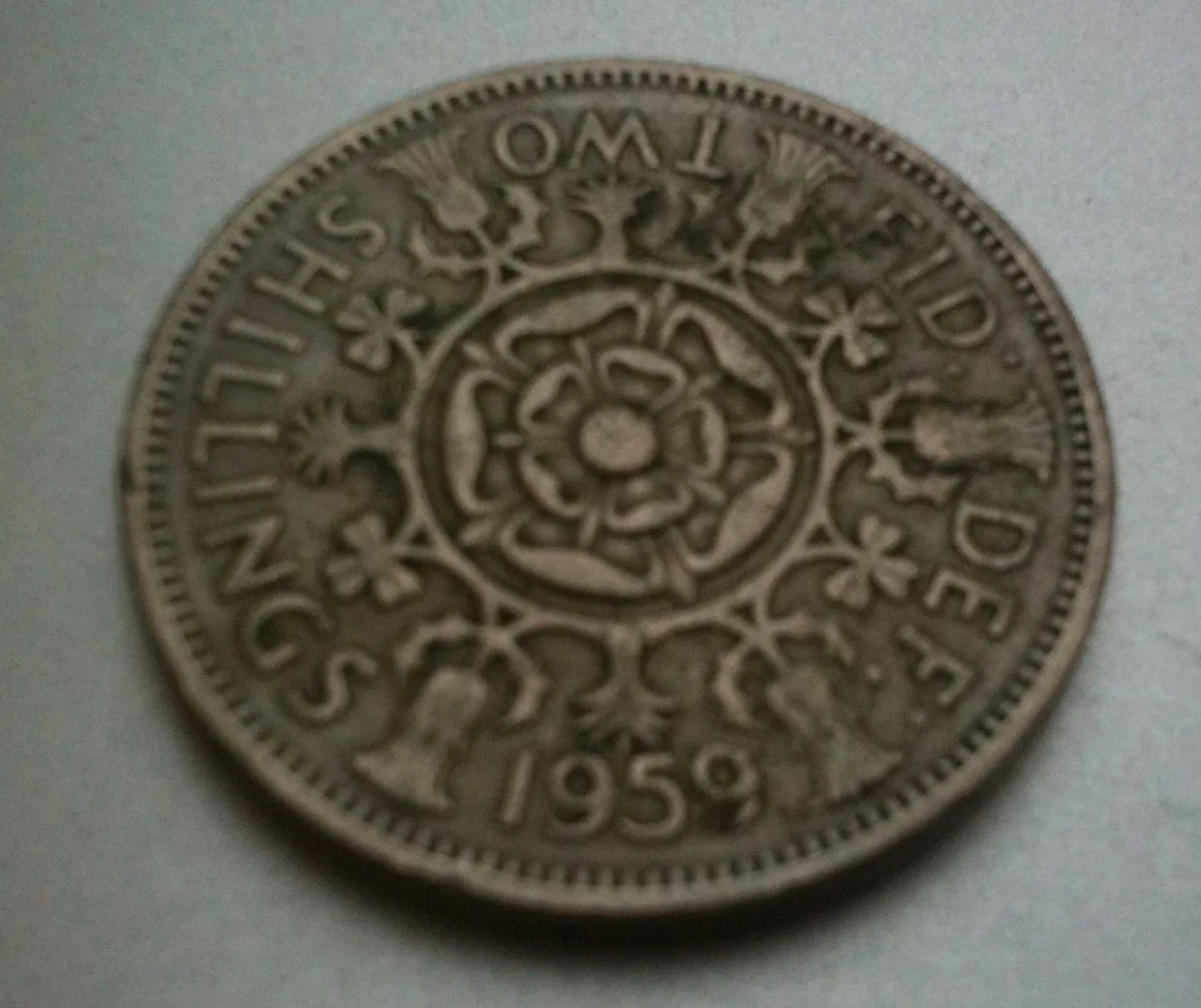
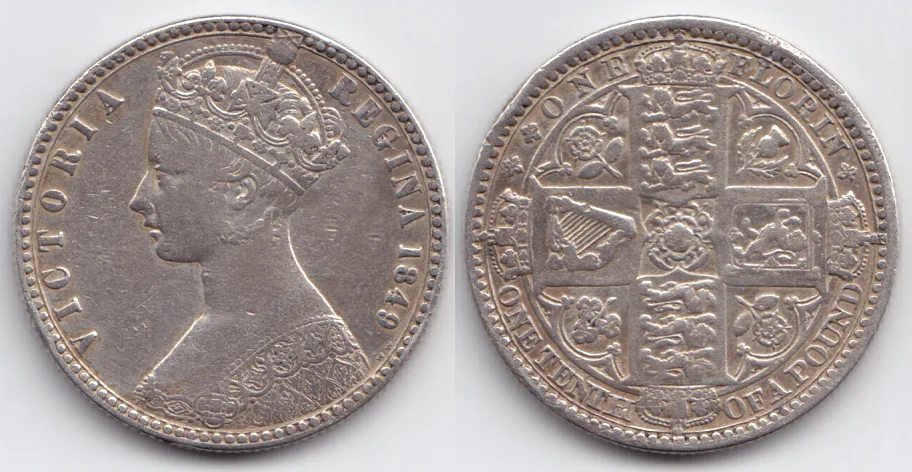
- Florin (2s, two shillings) — introduced in 1849 as a first cautious step toward decimal money (one-tenth of a pound). Larger than a shilling.
- Half crown (2s 6d, written 2/6) — a large, satisfying silver coin worth two shillings and sixpence, one of the most collected pre-decimal denominations.
- Crown (5s, five shillings) — the largest silver coin, struck mostly as a commemorative rather than for daily use; the big “5 shilling” pieces marking coronations and jubilees are crowns.
The Gold Coins
- Half sovereign (10s) — a small gold coin worth ten shillings, half a pound.
- Sovereign (£1) — the famous gold pound coin, covered in detail below.
- Guinea (21s) — an older gold coin worth twenty-one shillings; long obsolete as a coin by the modern era but surviving as a unit for luxury pricing.
Decimal Day and the Modern Coinage
On 15 February 1971 — “Decimal Day” — Britain abolished the £sd system and made the pound worth 100 new pence. Overnight, the ancient arithmetic of twelves and twenties gave way to the same base-ten logic Americans use, and a new set of coins appeared. If your British coin says “NEW PENCE” or “PENNY”/“PENCE” with a value like 1, 2, 5, 10, 20, or 50, it is a decimal coin struck in 1971 or later.
Telling Decimal from Pre-Decimal at a Glance
The fastest test is the wording and date. Decimal coins from 1971 to 1981 are inscribed “NEW PENNY” or “NEW PENCE”; from 1982 onward the word “new” was dropped and they read “PENNY” or “PENCE.” Any coin using shillings, a florin, a half crown, or the £sd names is pre-decimal. A seven-sided 50 pence or 20 pence coin, or a small copper-coloured “1 NEW PENNY,” is unmistakably modern.
The Decimal Coins
- Half penny (½p) — a tiny decimal coin, withdrawn in 1984.
- Penny and two pence (1p, 2p) — copper-plated coins; pre-1992 versions are solid bronze and slightly heavier.
- Five and ten pence (5p, 10p) — silver-coloured; the early versions were larger and were reduced in size in the early 1990s.
- Twenty and fifty pence (20p, 50p) — distinctive seven-sided coins; the 50p in particular carries a huge range of commemorative designs collectors chase.
- One and two pounds (£1, £2) — the modern circulating pound coin (round until 2017, then a twelve-sided bimetallic design) and the bimetallic £2.
Modern commemorative 50p and £2 coins are a whole collecting field of their own, closer in spirit to the US 50 State Quarters program than to old circulating money — struck in the millions, sorted from change, and traded for small premiums when a design proves scarce.
Anatomy of a British Coin
British coins share a consistent layout that, once learned, lets you extract the monarch, the date, and the denomination in seconds. The vocabulary overlaps with the general coin anatomy used for US coins, with a few British specifics.
Obverse: Always the Monarch
By long tradition the obverse (“heads”) of a British coin bears the reigning monarch’s portrait, encircled by an abbreviated Latin legend giving their name and titles. A crucial and charming rule governs which way the monarch faces: each new monarch faces the opposite direction to their predecessor. George V faced left, so Edward VIII should have faced right — but vanity intervened and Edward insisted on facing left too; since almost no Edward VIII coins circulated, George VI then faced left as if to correct the sequence, and Elizabeth II faced right. This alternation is a quick sanity check when you think you have identified a monarch.
Reverse: Denomination and Design
The reverse (“tails”) carries the coin’s design and, on decimal coins, its value. Pre-decimal reverses often do not state the denomination in numbers — you are expected to know that the big brown coin with seated Britannia is a penny. Instead they carry heraldic and national imagery: Britannia, royal shields, the crowned rose, thistle, and shamrock, or a specific emblem tied to the denomination.
Date, Mint, and Edge
The date almost always appears on the reverse (occasionally the obverse), in ordinary Arabic numerals — a great advantage over ancient coins. Britain’s coins were struck chiefly at the Royal Mint in London (and later Llantrisant, Wales), so, unlike US coins, most carry no mint mark; certain issues struck at branch mints in Australia, India, South Africa, or Canada do carry a small letter, which matters for sovereigns. The edge may be plain, reeded (grooved), or lettered on the largest coins.

Reading the Legend: Latin Titles and Abbreviations
The Latin ring of text around the monarch’s head looks forbidding but is highly formulaic. British legends abbreviate the same handful of titles over and over, so learning a dozen abbreviations lets you read almost any coin from the last few centuries.
The Standard Abbreviations
- D·G· or DEI GRA = Dei Gratia, “by the Grace of God”
- REX = King; REGINA = Queen (so the monarch’s sex is stated outright)
- F·D· or FID·DEF· = Fidei Defensor, “Defender of the Faith”
- BRITT·OMN· or BRIT·OMN· = Britanniarum Omnium, “of all the Britains” (the empire)
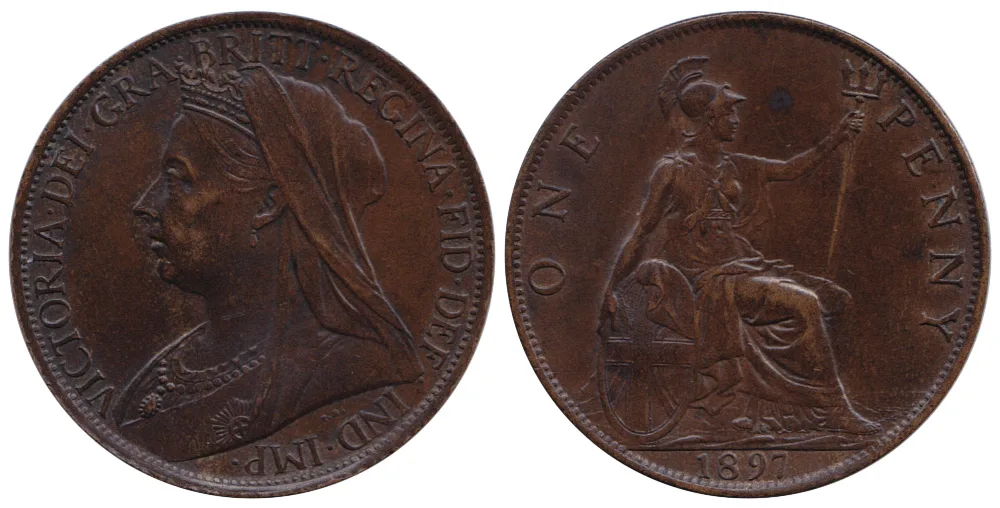
- IND·IMP· = Indiae Imperator, “Emperor of India” — present only up to 1948, a useful dating clue
- REX IMP = King and Emperor
Worked Example
A typical George V penny reads GEORGIVS V DEI GRA:BRITT:OMN:REX FID:DEF:IND:IMP: — “George the Fifth, by the Grace of God King of all the Britains, Defender of the Faith, Emperor of India.” From that single line you know the monarch (George V), that he ruled an empire including India (so the coin predates 1948), and, with the reverse date, exactly when it was struck. Elizabeth II legends drop the imperial titles and the “V”-style numeral, reading simply ELIZABETH II DEI GRATIA REGINA F:D: on modern issues.
A Dating Shortcut Hidden in the Titles
Because the titles changed with political events, they date coins even when a date is worn away. “IND:IMP:” (Emperor of India) vanished after 1948 when India gained independence — the same event that closed out the British India coinage struck at Calcutta, Bombay and Lahore — so any coin bearing it is from 1948 or earlier. The style of numeral and the exact title wording similarly pin coins to particular reigns, which is why reading the legend is often faster than squinting at a worn date.
The Monarchs and How Their Portraits Date a Coin
Because the obverse always names and pictures the monarch, identifying the ruler places a British coin within a defined span of years immediately. Here are the monarchs an American collector meets most often, from Victoria forward, with the features that distinguish them.
Victoria (1837–1901)
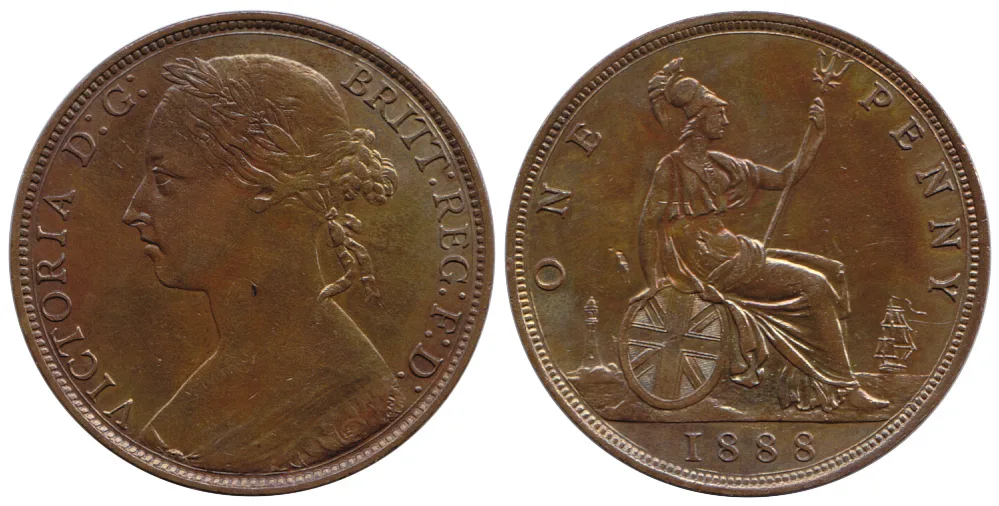
Victoria’s long reign produced three main portrait types collectors name by sight: the “Young Head” (a girlish profile, early reign), the “Jubilee Head” (1887–1893, wearing a small crown), and the “Old Head” or “Veiled Head” (1893–1901, a mature veiled profile). The beloved Victorian bronze penny is often called the “Bun Head” for the coiled hairstyle of its portrait. Victoria always faces left.
Edward VII (1901–1910) and George V (1910–1936)
Edward VII, a bearded king facing right, had a short reign, so his coins are a tidy decade. George V (bearded, facing left) reigned through the First World War and into the 1930s; his is one of the most commonly encountered portraits, and his silver coins straddle the crucial 1920 silver-fineness change discussed below.
Edward VIII (1936) — the King Who Barely Coined
Edward VIII abdicated before any coins were officially released for circulation, making genuine Edward VIII coins immense rarities. A famous exception is that some 1937 brass threepences and a handful of pattern pieces exist; the 1937 Edward VIII sovereign is one of the most valuable British coins in existence. Beware: novelty “Edward VIII” pieces and fantasy issues are common and are not official coins.
George VI (1936–1952) and Elizabeth II (1952–2022)
George VI (clean-shaven, facing left) covers the Second World War and the immediate post-war years, including the 1947 switch of silver coins to base metal. Elizabeth II (facing right) reigned for seventy years across both the pre-decimal and decimal eras, so her portrait appears on coins as different as a 1953 silver-coloured shilling and a 2015 pound coin. Her effigy was updated five times, and numismatists date her coins in part by which portrait (“first” through “fifth” head) they carry. The most recent British coins bear King Charles III, who — following the alternation rule — faces left.
Silver Content: The 1920 and 1947 Dividing Lines
For collectors and anyone weighing melt value, the single most valuable fact about British silver coins is when they were struck, because the silver fineness dropped twice in the twentieth century. This mirrors the way US collectors treat pre-1965 junk silver, and the two dividing dates are easy to remember.
Before 1920: Sterling Silver (.925)
British silver coins struck up to and including 1919 are 92.5% silver (sterling). Any shilling, florin, half crown, sixpence, or threepence dated 1919 or earlier carries substantial precious metal and is worth well above face value for its silver alone, before any collector premium.
1920–1946: Debased Silver (.500)
From 1920 the silver was reduced to 50% silver, the rest base metal, largely to pay for the costs of the First World War. These coins still contain real silver — half their weight — and are collected and stacked for that content, but they are worth roughly half as much metal as a same-size pre-1920 coin.
1947 Onward: No Silver
Beginning in 1947, circulating “silver” coins contained no silver at all and were struck in cupro-nickel, a copper-nickel alloy that merely looks silvery. So a shilling, florin, or half crown dated 1947 or later has no melt value as silver. The rule to memorise: 1919 and before = sterling; 1920–1946 = half silver; 1947 and after = no silver. Proof and collector issues can differ, but for ordinary circulation coins these lines hold.
A Quick Field Test
Silver coins ring differently and tone differently from cupro-nickel, but the reliable method is simply the date. Sort your British silver-coloured coins by date against the two thresholds and you have separated the precious-metal pieces from the base-metal ones without any equipment. For borderline or high-value pieces, weight and specific-gravity testing confirm the metal.
The Gold Sovereign and Britain’s Gold Coins
The gold sovereign is Britain’s most iconic coin and one of the most traded gold coins in the world. A modern sovereign is a £1 face-value coin containing about 0.2354 troy ounces of gold (22-carat, .9167 fine), so its value tracks the gold price far above its nominal pound. Sovereigns are a natural companion to bullion pieces like the American Gold Eagle and are collected both as bullion and as dated numismatic coins.
The Classic Design
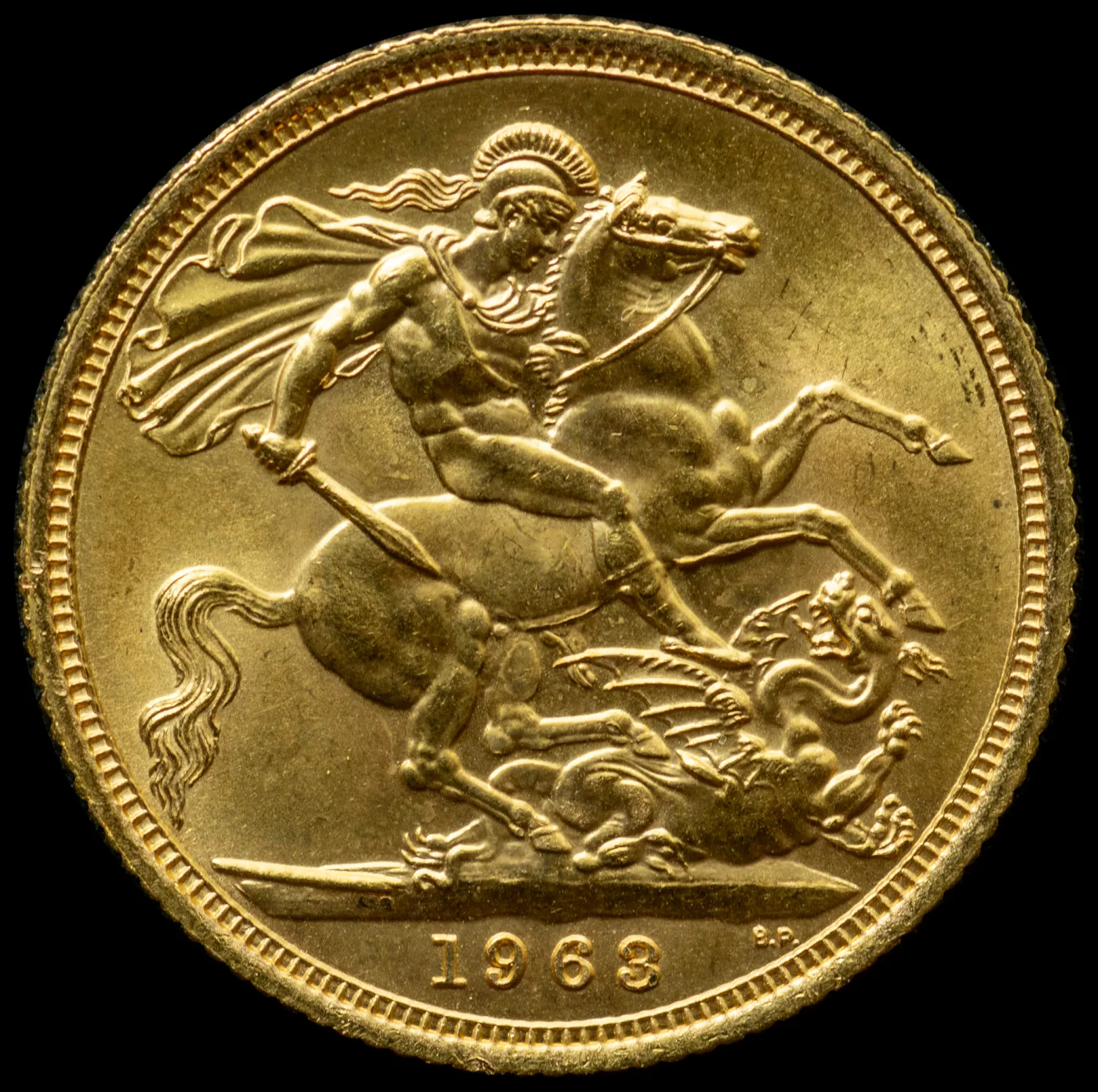
The definitive sovereign reverse is Benedetto Pistrucci’s St. George slaying the dragon, first used in 1817 and revived repeatedly since — a nude, helmeted St. George on horseback driving a broken spear into a dragon, with the date in the exergue below. Some reigns instead used a royal shield reverse. The obverse carries the reigning monarch, so sovereigns are dated and attributed exactly like other British coins.
Mint Marks Matter Here
Unlike most British coins, sovereigns were struck at branch mints across the empire, and these carry a small mint mark above the date in the St. George design: S for Sydney, M for Melbourne, P for Perth (the three Australian branch mints), I for Bombay/India, C for Ottawa/Canada (the same Ottawa mint that struck the Canadian coins in this guide’s sister article), and SA for Pretoria/South Africa. A London sovereign has no mint mark. Branch-mint sovereigns can be scarcer and command premiums, so the mint mark is worth checking on every sovereign, much as US collectors scrutinise mint marks.
Half Sovereigns and Larger Gold
The half sovereign (ten shillings face) is a smaller version of the same coin. Britain also struck occasional larger gold — two-pound (double sovereign) and five-pound pieces — mostly as prestige and commemorative issues. All follow the same monarch-obverse, dated pattern, so the identification method is identical; only the size and gold content change.
Britannia, Shields, and the Great Reverse Designs
British reverses are a gallery of national symbolism, and recognising the recurring designs both identifies denominations and dates coins to particular periods. A few images dominate.
Britannia
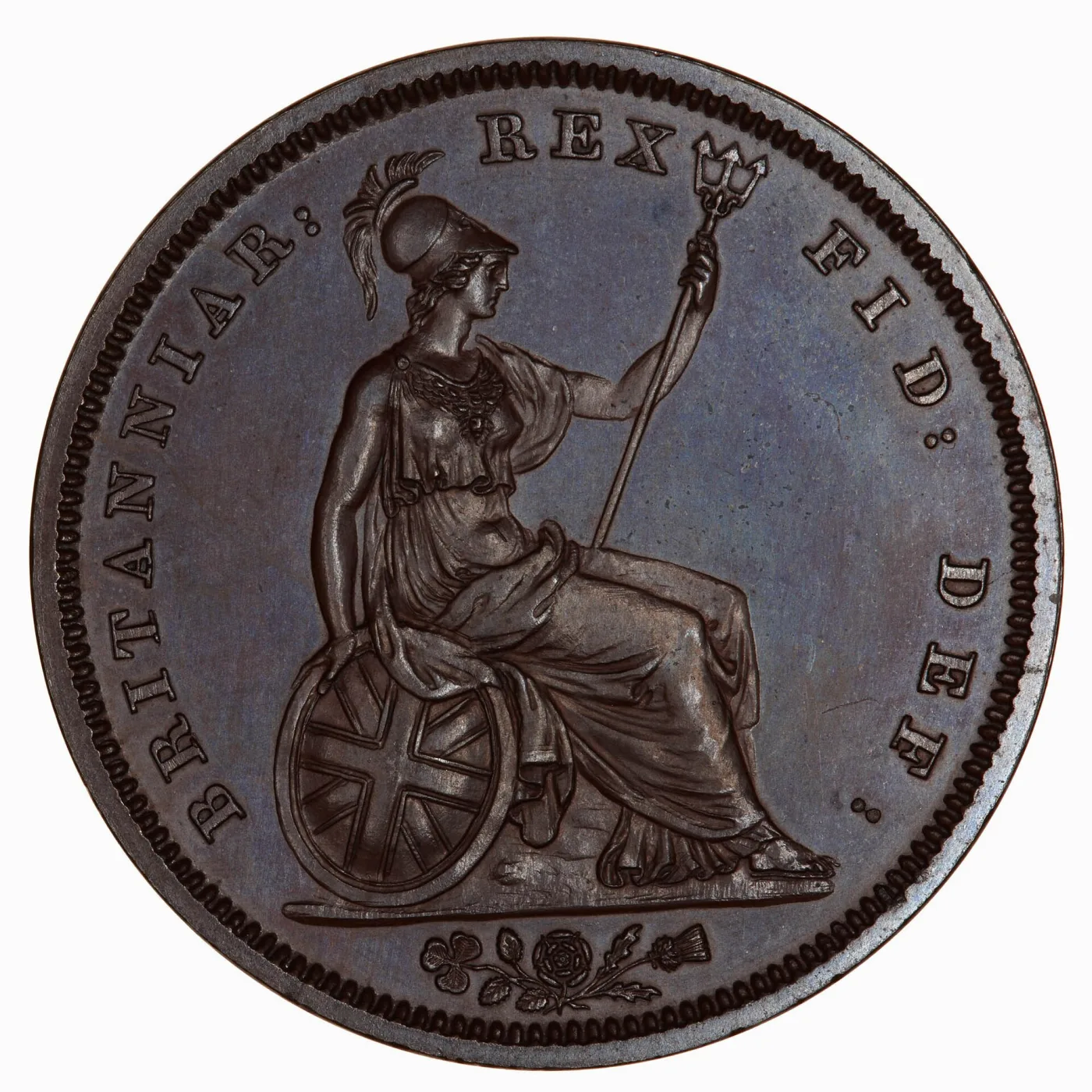
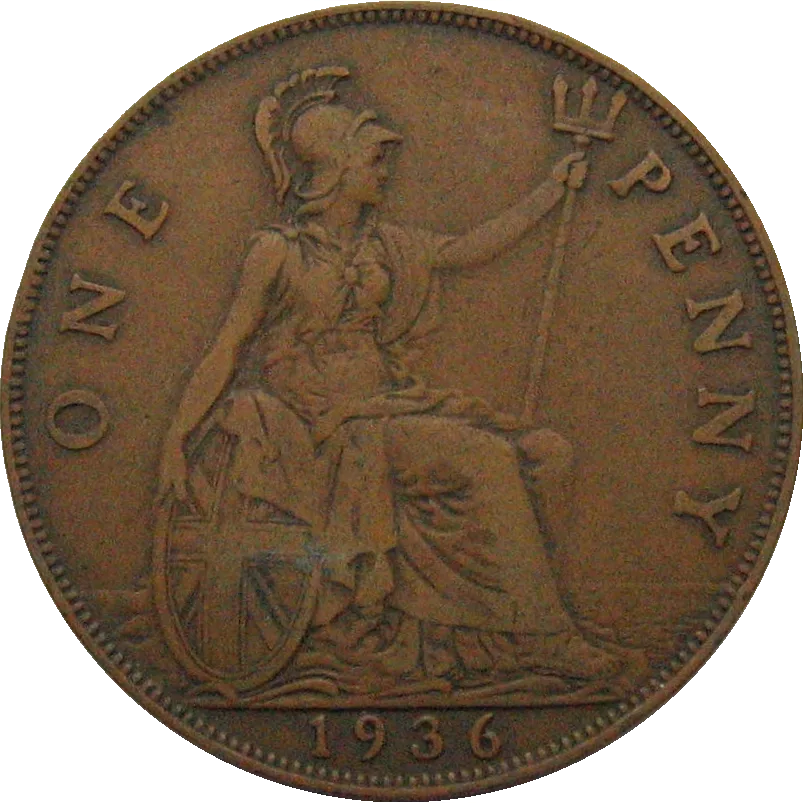
The seated female figure of Britannia — helmeted, holding a trident and shield, sometimes with a lighthouse or ship — is the personification of Britain and has appeared on British coins since the seventeenth century. She dominates the reverse of the pre-decimal copper and bronze penny and later returned on the fifty pence and on bullion coins. A big brown coin with a seated Britannia is almost always a penny; her presence is one of the most reliable British reverse cues.
Royal Shields and National Emblems
Many silver reverses carry the royal arms as a crowned shield, or break the shield into its national quarters. The rose (England), thistle (Scotland), shamrock (Ireland), and leek or daffodil (Wales) recur as a set, sometimes crowned. The 1937–1970 shilling famously came in two versions — an English lion atop a crown and a Scottish lion holding a sword and sceptre — a detail collectors sort by.
St. George and Special Reverses
Pistrucci’s St. George appears not only on sovereigns but on crowns and some other silver. Commemorative crowns carry unique designs for coronations, jubilees, and royal deaths. On decimal coins, the reverses became a rotating showcase: the 50p in particular has hosted hundreds of commemorative designs, making modern British reverses a collecting field closer to the modern commemoratives Americans collect than to fixed circulating types.
Step-by-Step Identification Workflow
With the background in place, here is a repeatable process for identifying any British coin from hand.
1. Decimal or Pre-Decimal?
Check the wording. “NEW PENNY,” “NEW PENCE,” a seven-sided shape, or a value like 20p/50p/£1/£2 means a decimal coin (1971 or later). Shillings, a florin, a half crown, or the £sd names means pre-decimal. This split immediately halves the field.
2. Read the Monarch on the Obverse
Identify the ruler from the portrait and the Latin name (GEORGIVS, EDWARDVS, VICTORIA, ELIZABETH, CHARLES). The monarch alone brackets the coin within a reign. Confirm with the facing-direction alternation as a sanity check.
3. Find the Date and Any Mint Mark
Locate the Arabic date, usually on the reverse. On a sovereign, check above the date for a branch-mint letter (S, M, P, I, C, SA). On ordinary coins, expect no mint mark. Note titles like “IND:IMP:” that further constrain the date.
4. Determine the Denomination
Use size, metal colour, reverse design, and any stated value. Seated Britannia on a big brown coin = penny; a small silver coin the size of a dime = sixpence; a large silver coin marked 2/6 or with a shield = half crown; a twelve-sided brass coin = threepence. When unsure, measure the diameter and weight and compare against a reference table.
5. Assess Metal and Silver Content
For silver-coloured pre-decimal coins, apply the 1920 and 1947 rules to know whether you hold sterling, half silver, or cupro-nickel. For a yellow coin, determine whether it is a genuine gold sovereign (check weight, diameter, and design) or a gilded token.
6. Check for Key Dates and Errors
Finally, compare the year and type against the key-date and error lists below. Most British coins are common, but a small number of dates and varieties are worth many multiples of the ordinary price, so this last check is where value is found.
Key Dates and Rarities to Watch For
The overwhelming majority of British coins are common and trade for modest sums, but numismatics turns on the exceptions. Just as US collectors hunt key dates, British collectors watch for a well-known set of scarce dates and issues.
The 1933 Penny
The most famous modern British rarity is the 1933 penny. So many pennies were already in circulation that year that the Mint struck only a tiny number, chiefly as presentation pieces to be placed under foundation stones. Fewer than ten are believed to survive, and examples have sold for six figures. Genuine 1933 pennies are almost unheard of in ordinary finds — and because of the coin’s fame, contemporary forgeries and altered dates exist, so any “1933 penny” demands expert authentication.
Scarce Twentieth-Century Dates
- 1905 half crown — a notoriously scarce Edward VII date, valuable in any grade.
- 1934 wreath crown — a low-mintage crown from the George V series.
- 1950 and 1951 pennies — struck in tiny numbers for colonial use and collector sets, scarce compared to other years.
- 1952 threepence and certain 1952 pieces — scarce in the transition around the change of monarch.
The Great Gold Rarities
At the top of the market sit coins few collectors ever handle: the 1937 Edward VIII sovereign (a seven-figure coin), the 1819 George III sovereign (mintage of only a few thousand, a handful known today), and the Victorian “Una and the Lion” five-pound piece, widely called the most beautiful British coin ever struck. These are auction-house pieces rather than pocket finds, but they define the ceiling of the field and are worth knowing by name.
Decimal Scarcities
Even modern coins have chase pieces. The 1983 “New Pence” two-pence error — struck with the old “NEW PENCE” reverse in a year that should read “TWO PENCE” — is a valuable modern mule, and certain low-mintage commemorative 50p coins (the 2009 Kew Gardens 50p above all) trade for many times face value. These prove that key-date checking is worthwhile even for coins straight out of change.
British Error Coins and Varieties
British mint errors follow the same categories as US error coins, and the same caution applies: genuine errors are collectable, but ordinary wear, damage, and post-mint alteration are not.
Mules and Wrong Designs
A mule pairs two dies never meant to go together. The 1983 “NEW PENCE” 2p is the celebrated British example; other mules pair the wrong reverse or an out-of-date legend with a coin. Because mules are unmistakable when you know the correct type, they reward collectors who have learned what each year’s coin should say.
Off-Centre, Clipped, and Double Strikes
Coins struck off-centre, on clipped or wrong blanks, or struck twice show the same dramatic errors seen worldwide. British bimetallic £1 and £2 coins occasionally appear with the centre and ring misaligned or with the wrong metal pairing, which can be valuable. As always, weigh and measure suspected error coins, since altered and damaged pieces are frequently passed off as errors.
Date and Legend Varieties
Collectors also chase minor die varieties: differences in the spacing of the date, the exact form of a portrait, or small legend changes between the two shilling reverses. These are the British equivalent of the die-variety hunting behind US doubled dies, and specialist references catalogue them in detail.
Grading British Coins
British grading uses a traditional adjectival scale rather than the numeric 1–70 scale familiar from US coins, though the numeric system is increasingly used by international grading services.
The Traditional British Grades
- Fair / Poor — heavily worn, major detail gone.
- Fine (F) — considerable wear but main design clear.
- Very Fine (VF) — moderate wear on the high points, most detail sharp.
- Extremely Fine (EF or GEF) — slight wear only, nearly all detail crisp.
- Uncirculated (UNC / BU) — no wear, as struck, though possibly with bag marks.
- FDC (Fleur de Coin) — a term reserved for flawless proof and top-tier pieces.
Grade Drives Value Enormously
As with all coins, condition is decisive: a common date worth little in Fine can be worth many multiples in Uncirculated, and for scarce dates the gap is even wider. The general principles in our coin grading guide apply directly to British coins — judge wear on the highest points of the portrait and reverse, and weigh eye appeal and originality.
Slabbing and Third-Party Grading
High-value British coins are increasingly sent to third-party grading services, which encapsulate them in sealed holders with a numeric grade. For a valuable sovereign, a scarce date, or any coin whose authenticity you want guaranteed, professional grading protects both value and buyer confidence, though it is rarely worth the cost for common circulated pieces.
What British Coins Are Worth in 2026
British coin values span an enormous range, from a few cents for a worn modern penny to seven figures for the great rarities. Here is a realistic picture for the coins most Americans actually hold.
Common Circulated Coins
Most twentieth-century pennies, sixpences, shillings, and cupro-nickel (post-1947) coins in circulated grades are worth modest sums — often little more than a small premium over their novelty value as old foreign coins. Their appeal is historical and educational; you collect them because they are affordable and fascinating, not because each is individually valuable.
Silver Coins for Their Metal
Pre-1947 silver coins carry real precious-metal value. Sterling (pre-1920) pieces are worth the most per coin; 1920–1946 half-silver coins are worth roughly half as much metal. A jar of pre-1947 British silver has genuine stacking value that rises and falls with the silver price, independent of any collector premium.
Gold Sovereigns
A common-date gold sovereign is worth its gold content — roughly 0.2354 troy ounces — plus a small numismatic premium, so its price moves with the gold market and typically runs to several hundred dollars. Scarce dates, branch-mint issues, and high grades add substantial premiums on top.
Key Dates and Rarities
The scarce dates and famous rarities are where four-, five-, and six-figure values live: a genuine 1933 penny, an Edward VIII sovereign, a Una and the Lion five-pound. These are exceptional. For everyday identification, assume any given coin is common until a key-date check proves otherwise — and get a professional opinion before celebrating a supposed rarity, since fakes and altered dates cluster around exactly these coins.
Counterfeits and How to Avoid Them
Because sovereigns are gold and because a few British coins are hugely valuable, counterfeits are a real concern. The same discipline used for counterfeit detection on US coins applies here.
Fake Sovereigns
Gold sovereigns are among the most-forged coins in the world, both as counterfeits made to deceive and as gold “sovereigns” of the wrong weight or fineness. A genuine sovereign has precise specifications: about 7.98 grams, 22.05 mm diameter, and 22-carat gold. Weight and diameter that are even slightly off, a design that looks soft or “greasy,” or a mint mark in the wrong place are red flags. Buy sovereigns from reputable dealers or in graded holders.
Altered and Fantasy Coins
The 1933 penny’s fame makes it a target for altered dates — a common penny’s date changed to read 1933. Likewise, “Edward VIII” coins and medallions are produced as novelties and fantasies, none of them official currency. Treat any offered great rarity with deep skepticism and insist on expert authentication.
Cast and Cleaned Coins
Cast forgeries show a slightly soft, grainy surface and sometimes a seam on the edge; genuine coins are sharply struck. Separately, avoid cleaning any British coin: as with all numismatics, harsh cleaning strips the original surface and slashes value. An honestly toned old coin is worth more than a shiny scrubbed one, a principle covered in our coin cleaning and preservation guide.
References and Online Tools
When a coin resists identification, the right reference resolves it quickly. British numismatics is exceptionally well documented.
The Standard Catalogue
The essential printed reference is Spink’s Coins of England & the United Kingdom, updated annually, which catalogues every British type with a standard reference number and value guide. For decimal and modern issues, specialist checklists cover the commemorative 50p and £2 designs collectors chase.
Free Online Resources
Several free databases let you match a coin by image and description without any purchase — searchable type catalogues, auction-archive sites showing realised prices, and active collector forums where experts identify coins from photographs. Matching your coin’s monarch, denomination, date, and reverse against these sources will resolve the great majority of pieces, and comparing sold prices gives a realistic value.
When to Get Expert Help
For a suspected key date, a possible error, a gold coin, or anything you cannot confidently place, consult a reputable dealer or a grading service. Professional authentication is cheap insurance against buying a fake or misjudging a rarity, and it is indispensable before paying a premium for any high-value British coin.
Frequently Asked Questions
How do I tell if my British coin is silver?
Use the date. Silver-coloured British coins dated 1919 or earlier are 92.5% sterling silver; those dated 1920 to 1946 are 50% silver; those dated 1947 and later are cupro-nickel and contain no silver. The date alone separates the precious-metal coins from the base-metal ones.
What does "2/6" mean on a British coin or price?
It means two shillings and sixpence, a sum spoken "two and six." In the pre-decimal system there were 12 pence in a shilling and 20 shillings in a pound. A coin worth 2/6 is a half crown.
How do I know when my British coin was made?
Modern and most older British coins carry an ordinary Arabic date, usually on the reverse. If the date is worn, the monarch's portrait and the Latin titles narrow the period: for instance, "IND:IMP:" (Emperor of India) appears only up to 1948.
Is my old British penny worth a lot of money?
Almost always no — most old pennies are common and worth a small premium. The famous exception is the 1933 penny, of which fewer than ten exist and which sells for six figures. Check the date against key-date lists, and treat any apparent rarity with caution, since altered dates and fakes exist.
What is a gold sovereign worth?
A common-date sovereign is worth its gold content (about 0.2354 troy ounces) plus a modest premium, so its value tracks the gold price. Scarce dates, branch-mint issues, and high grades command higher premiums.
What happened in 1971 to British money?
On 15 February 1971, Britain decimalised: the pound became 100 new pence, and the old shillings, florins, and half crowns were phased out. Coins reading "NEW PENNY" or "NEW PENCE" date from 1971 or later; anything using the £sd denominations is pre-decimal.