50 State Quarters Identification Guide: Release Order, Mint Marks, Errors, and Values
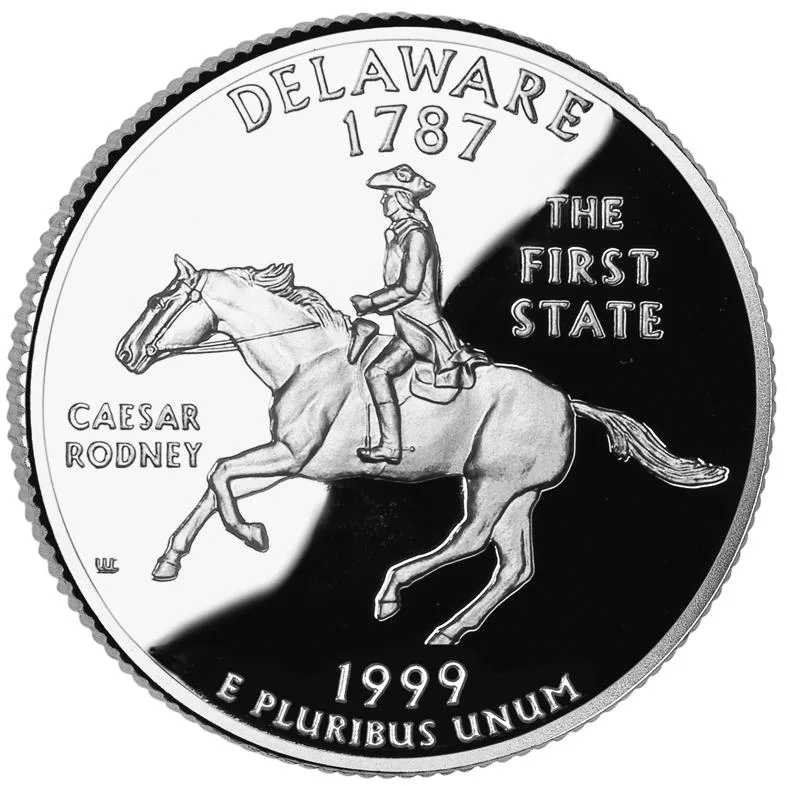
The 50 State Quarters Program ran from 1999 through 2008 and is, by almost any measure, the most successful coin series in United States history. The U.S. Mint released a new quarter with a unique reverse design for each of the fifty states — five per year over ten years, in the order the states ratified the Constitution or joined the Union. An estimated 140 million Americans saved them from pocket change, most of them people who had never collected a coin before. If you have a jar of quarters with pictures of horses, peaches, lighthouses, and covered wagons on the back, you are holding this program.
Because these coins are so common, the first question everybody asks is the same: are they worth anything? The honest answer for the vast majority is “face value” — a state quarter you pull from change is worth 25 cents. But that is not the whole story. A handful of the coins carry famous, genuinely valuable die errors, the San Francisco silver proof versions carry a real premium, and pristine uncirculated examples in the top grades can bring surprising money. Knowing which is which is the entire point of identifying a state quarter properly.
This guide walks through everything you need to identify a 50 State Quarter with confidence: how to read the design and figure out which state you have, the complete release order year by year, where the mint mark is and what each letter means, how to tell a common clad coin from a silver proof, the complete catalog of collectible errors (the Wisconsin extra leaf, the Kansas “In God We Rust,” the Minnesota extra trees, and more), how to grade and value them, and how to build a complete set. Because every state quarter is technically a Washington quarter, you may also want the broader Washington Quarter identification guide for the full history of the denomination and its silver key dates.
What the 50 State Quarters Program Was
The 50 State Quarters Program was created by the 50 States Commemorative Coin Program Act, signed into law in 1997. The concept was simple and brilliant: instead of the single heraldic-eagle reverse the quarter had carried since 1932, the Mint would honor each state with its own design, releasing them at a rate of five new states per year for a decade. The states appeared in the order they ratified the U.S. Constitution or were admitted to the Union — so Delaware, “The First State,” led off in 1999, and Hawaii, the last state admitted, closed the program in 2008.
Why It Worked
The rotating-design formula turned an ordinary transaction into a treasure hunt. People began checking their change to see which state they had received and whether they still needed it for their folder. The U.S. Mint estimates that roughly half of the U.S. population saved state quarters to some degree, and the program generated billions of dollars in seigniorage (the profit the government makes because the coins circulate at face value rather than being redeemed). It was so successful that it directly inspired the Presidential Dollar series and the later America the Beautiful and American Women quarter programs.
How Many Coins Exist
Each state’s design was struck at two mints for circulation (Philadelphia and Denver) plus San Francisco for collector proofs, so every state has at minimum a P, a D, an S clad proof, and an S silver proof. Circulation mintages were enormous — individual state designs range from roughly 400 million to over 1.6 billion coins. This is the single most important fact for valuation: with billions of coins struck, ordinary circulated state quarters will never be rare, no matter how old they eventually get. Their collectibility rests entirely on condition, proof status, and error varieties.
How to Identify a State Quarter
Identifying a 50 State Quarter is a three-step process: confirm it is a state quarter at all, read the state name, and note the mint mark. The design tells you almost everything.
Step 1: Confirm It Is a State Quarter
Turn the coin so George Washington’s profile faces you (the obverse). If the reverse — the other side — shows a scene, symbol, or map representing a U.S. state, with the state’s name arced across the top and a date of statehood or ratification, it is a 50 State Quarter. The classic pre-1999 quarter shows a heraldic eagle on the reverse; the 1976 Bicentennial quarter shows a Colonial drummer. Anything with a state scene dated 1999 through 2008 is a state quarter.
Step 2: Read the State and Year
Every state quarter reverse carries the state name at the top and the year of the program release at the bottom, along with the year the state entered the Union and the motto “E PLURIBUS UNUM.” Both dates are on the reverse, and the obverse carries no date at all — this is the change that catches people out, because every Washington quarter struck before 1999 had its date under Washington’s chin. Read the lower one, next to E PLURIBUS UNUM: that is the year of striking, and because five states were released each year it narrows the coin to one of five. The state name above the design confirms exactly which one.
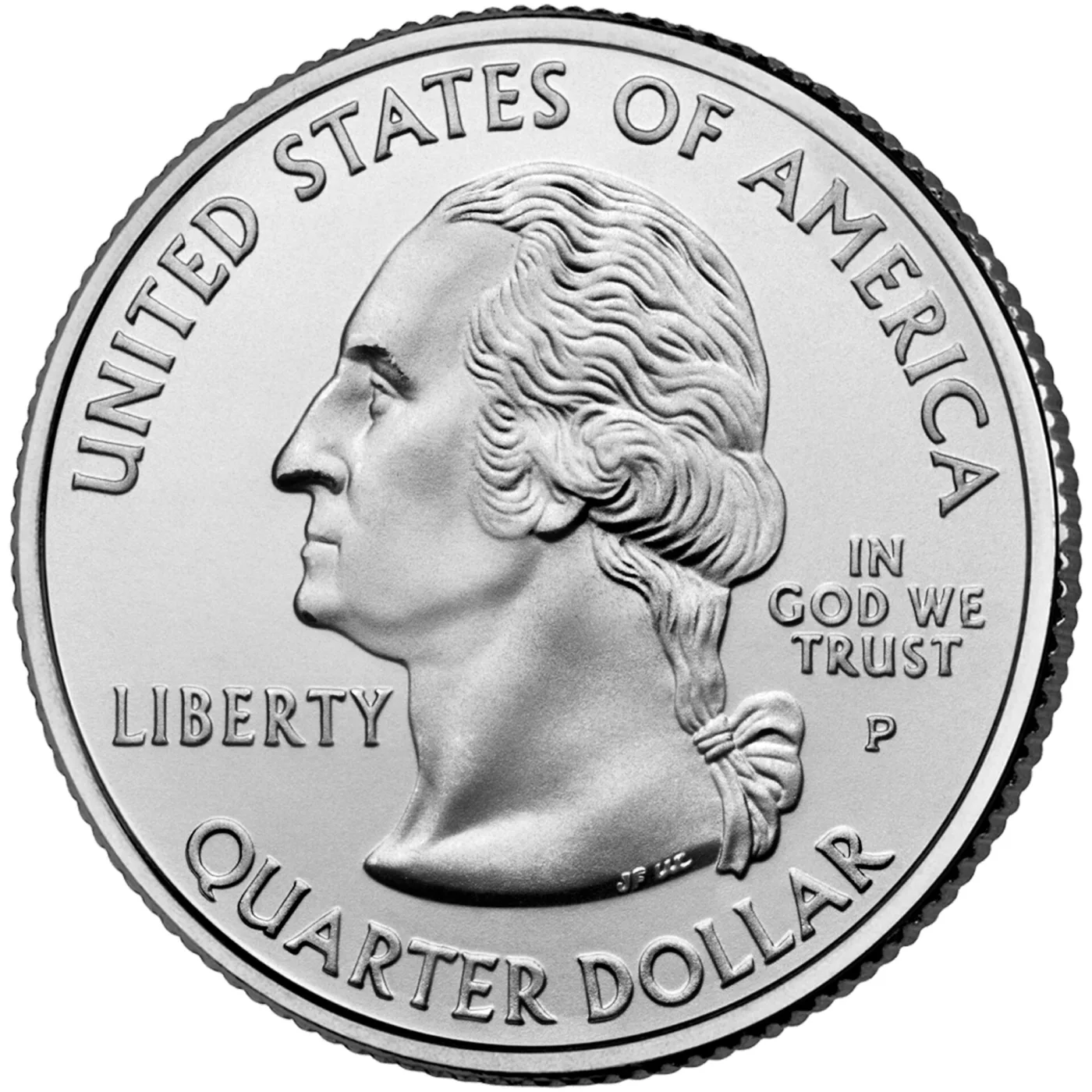
Step 3: Locate the Mint Mark
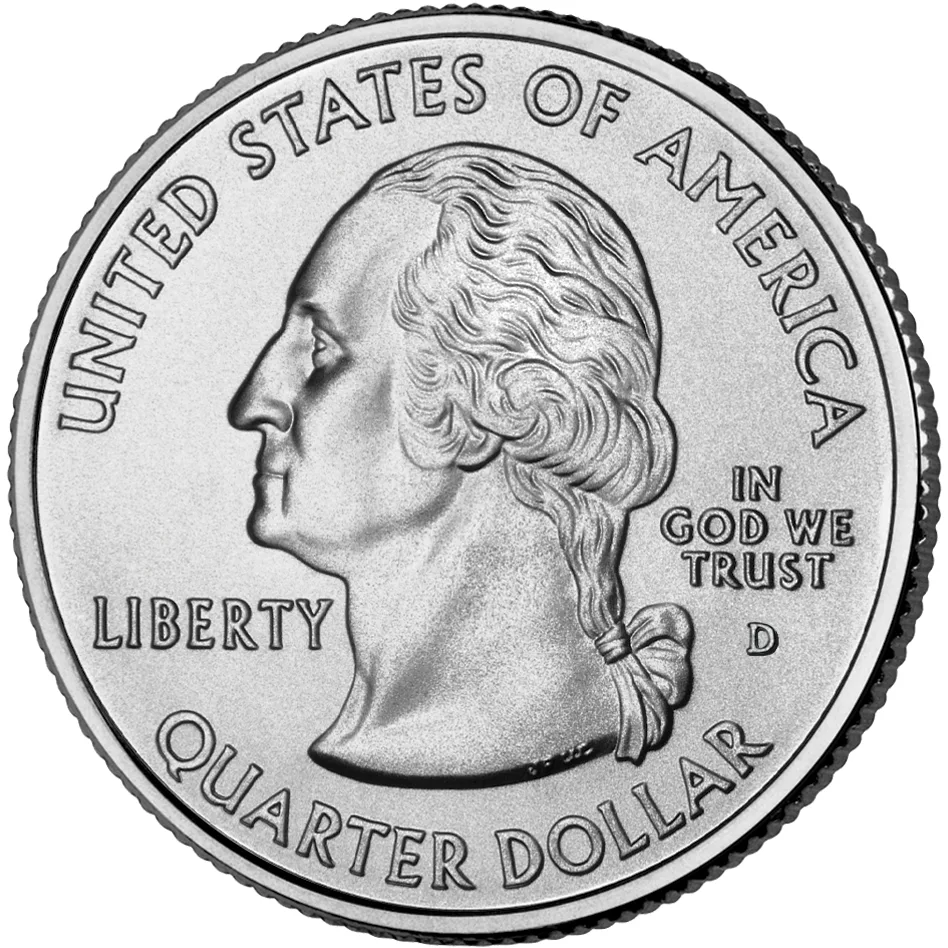
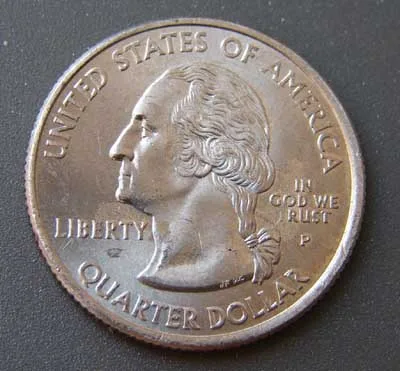
The mint mark is a small letter (P, D, or S) on the obverse, just to the right of the ribbon tying Washington’s hair, at roughly the 4 o’clock position below the “TRUST” of “IN GOD WE TRUST.” A “P” means Philadelphia, “D” means Denver, and “S” means San Francisco (proof only). We cover mint mark details fully in the section below.
A Note on the Reverse Scenes
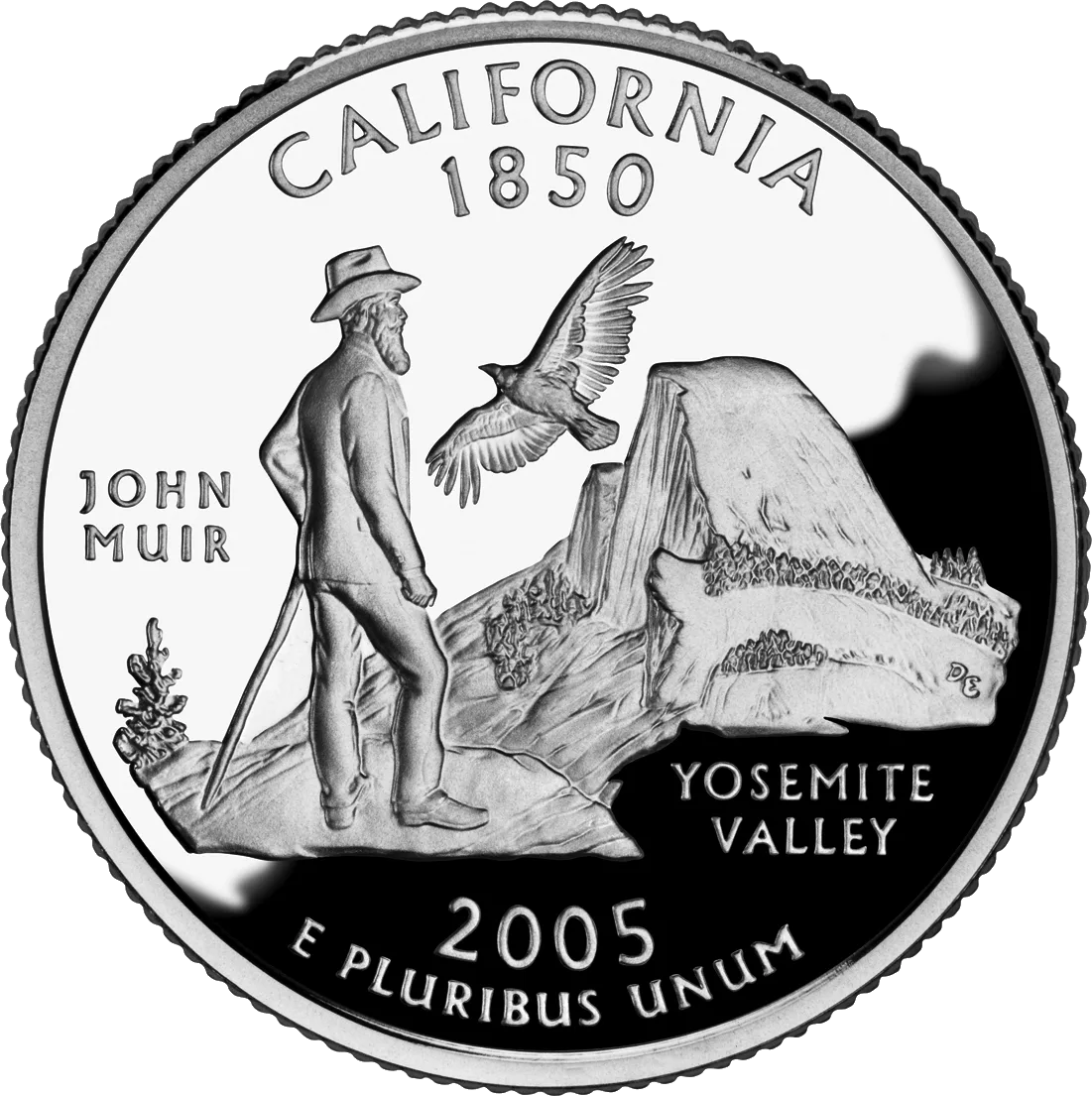
State quarter reverses are wonderfully varied, and part of the fun is recognizing them. A few examples: Delaware shows Caesar Rodney on horseback; Pennsylvania shows the “Commonwealth” statue and keystone; New Jersey shows Washington crossing the Delaware; Virginia shows the ships that landed at Jamestown; North Carolina shows the Wright Brothers’ first flight; California shows John Muir and Yosemite; Texas shows the state outline with a lone star; and Alaska shows a grizzly bear with a salmon. If you cannot immediately place a design, the state name at the top of the reverse removes all doubt.
Obverse and Reverse Design Changes
To make room for fifty different reverse designs, the Mint reworked the traditional Washington quarter layout in 1999. Understanding these changes helps you distinguish a state quarter from an ordinary Washington quarter at a glance.
The Modified Obverse
On the classic 1932-1998 Washington quarter, the obverse carried only “LIBERTY,” “IN GOD WE TRUST,” and the date, while “UNITED STATES OF AMERICA” and “QUARTER DOLLAR” appeared on the eagle reverse. For the state quarters, engraver William Cousins modified John Flanagan’s original portrait and moved “UNITED STATES OF AMERICA” and “QUARTER DOLLAR” to the obverse to free the reverse entirely for the state design. Cousins added his initials “WC” next to Flanagan’s “JF” at the base of Washington’s neck — a small detail variety collectors look for.
The State Reverses
Each state chose its own reverse design through a process that involved the governor, state officials, and often public input, with the Mint’s engravers producing the final rendering. The designs had to avoid state flags, state seals, living persons, and head-and-shoulders portraits (busts of deceased notable figures were allowed). The result is fifty small works of art depicting landscapes, wildlife, historical scenes, agricultural symbols, and state icons. The lettering on every reverse follows the same template: state name at top, statehood year and program release year, “E PLURIBUS UNUM,” and the design in the field.
Consistent Physical Specifications
Every circulating 50 State Quarter is copper-nickel clad: outer layers of 75% copper and 25% nickel bonded to a pure copper core, weighing 5.67 grams, 24.3 millimeters in diameter, with a reeded edge of 119 reeds. The silver proof versions from San Francisco are 90% silver (through the end of the program) and weigh 6.25 grams. The weight difference is the fastest way to tell a silver proof from a clad coin without reading the packaging.
Complete Release Order (1999-2008)
States were released in the order they ratified the Constitution (the original thirteen) or were admitted to the Union (the remaining thirty-seven), five per calendar year. Here is the complete schedule.
1999
- Delaware — Caesar Rodney on horseback (“The First State”)
- Pennsylvania — Commonwealth statue, keystone, state outline
- New Jersey — Washington Crossing the Delaware
- Georgia — state outline with peach and live oak sprigs
- Connecticut — the Charter Oak
2000
- Massachusetts — “The Minute Man” statue and state outline
- Maryland — the Maryland State House dome
- South Carolina — state outline, palmetto tree, Carolina wren, yellow jessamine
- New Hampshire — the “Old Man of the Mountain”
- Virginia — the ships Susan Constant, Godspeed, and Discovery (Jamestown)
2001
- New York — the Statue of Liberty over the state outline
- North Carolina — the Wright Brothers’ first flight at Kitty Hawk
- Rhode Island — a sailboat on Narragansett Bay
- Vermont — maple trees with sap buckets and Camel’s Hump mountain
- Kentucky — a thoroughbred behind a fence at a mansion (Federal Hill)
2002
- Tennessee — musical instruments and a score (“Musical Heritage”)
- Ohio — an early aircraft and an astronaut (“Birthplace of Aviation Pioneers”)
- Louisiana — a pelican, a trumpet, and the Louisiana Purchase outline
- Indiana — a race car over the state outline with 19 stars
- Mississippi — magnolia blossoms
2003
- Illinois — a young Lincoln, farm and city skyline, “Land of Lincoln”
- Alabama — Helen Keller seated, in Braille and English
- Maine — the Pemaquid Point Lighthouse and a schooner
- Missouri — the Gateway Arch and explorers on the river
- Arkansas — a diamond, rice stalks, and a mallard over a lake
2004
- Michigan — the Great Lakes and state outline
- Florida — a Spanish galleon, a space shuttle, and a sabal palm (“Gateway to Discovery”)
- Texas — the state outline with a lone star and lariat
- Iowa — a one-room schoolhouse (“Foundation in Education”)
- Wisconsin — a cow, a wheel of cheese, and an ear of corn (home of the famous “Extra Leaf” errors)
2005
- California — John Muir and a California condor at Yosemite’s Half Dome
- Minnesota — anglers in a boat, loon, and trees (“Land of 10,000 Lakes,” home of the “Extra Tree” errors)
- Oregon — Crater Lake
- Kansas — a buffalo and sunflowers (home of the “In God We Rust” and “Humpback Bison” errors)
- West Virginia — the New River Gorge Bridge
2006
- Nevada — wild mustangs, mountains, and sagebrush (“The Silver State”)
- Nebraska — Chimney Rock and a covered wagon
- Colorado — a mountain landscape (“Colorful Colorado”)
- North Dakota — grazing bison and Badlands buttes
- South Dakota — Mount Rushmore framed by wheat and a pheasant
2007
- Montana — a bison skull over a landscape (“Big Sky Country”)
- Washington — a salmon leaping before Mount Rainier
- Idaho — a peregrine falcon over the state outline (“Esto Perpetua”)
- Wyoming — the bucking horse and rider silhouette
- Utah — the golden spike joining the transcontinental railroad
2008
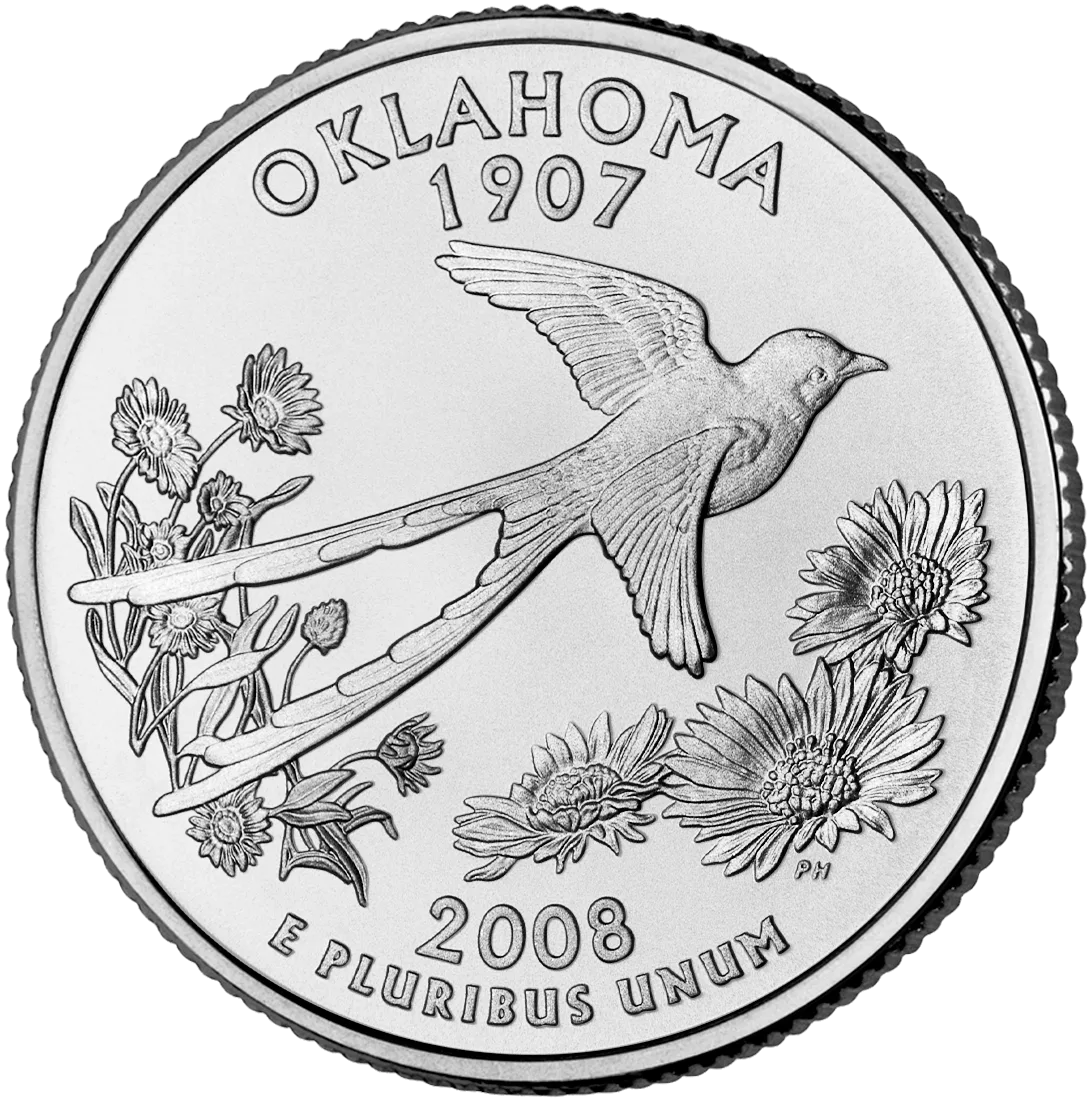
- Oklahoma — a scissor-tailed flycatcher and Indian blanket wildflowers
- New Mexico — the Zia sun symbol over the state outline
- Arizona — the Grand Canyon and a saguaro cactus
- Alaska — a grizzly bear with a salmon (“The Great Land”)
- Hawaii — King Kamehameha I and the island chain (the final coin of the program)
DC and U.S. Territories Quarters (2009)
The 50 State Quarters Program officially covered only the fifty states, but the enormous popularity of the series led Congress to authorize a six-coin continuation in 2009 honoring the District of Columbia and the five inhabited U.S. territories. Collectors almost always include these with a state quarter collection, and complete “50 states plus DC and territories” folders are the standard format.
The Six 2009 Designs
- District of Columbia — Duke Ellington at a piano (the first African American on a circulating U.S. coin design)
- Puerto Rico — a sentry box (garita) at San Juan and a hibiscus flower
- Guam — the island outline, a latte stone, and a flying proa
- American Samoa — a kava bowl, whisk, and staff
- U.S. Virgin Islands — a tyre bird, yellow trumpetbush, and the island outline
- Northern Mariana Islands — a canoe, latte stone, and native birds
These six coins were struck in the same clad composition for circulation (P and D) and as clad and silver proofs (S). Values parallel the state quarters — face value for circulated coins, small premiums for uncirculated and proof examples. They mark the transition point between the state quarters and the America the Beautiful national park quarters that began the following year.

Mint Marks and Where to Find Them
The mint mark is the single most important thing to check after identifying the state, because it determines which mints struck your coin and whether it could be a proof. On every 50 State Quarter, the mint mark sits on the obverse, to the right of Washington’s queue (the ribbon tying his hair at the back), at roughly the 4 o’clock position. For a full treatment of every U.S. mint mark, see our coin mint marks guide.
The Three Mint Marks
- P (Philadelphia): Struck circulating state quarters for every state. Philadelphia coins circulate freely and are the “P” half of a standard two-coin-per-state collection.
- D (Denver): Struck circulating state quarters for every state. Denver coins circulate freely and are the “D” half of a standard collection. Several of the famous errors (the Wisconsin Extra Leaf coins) are Denver issues.
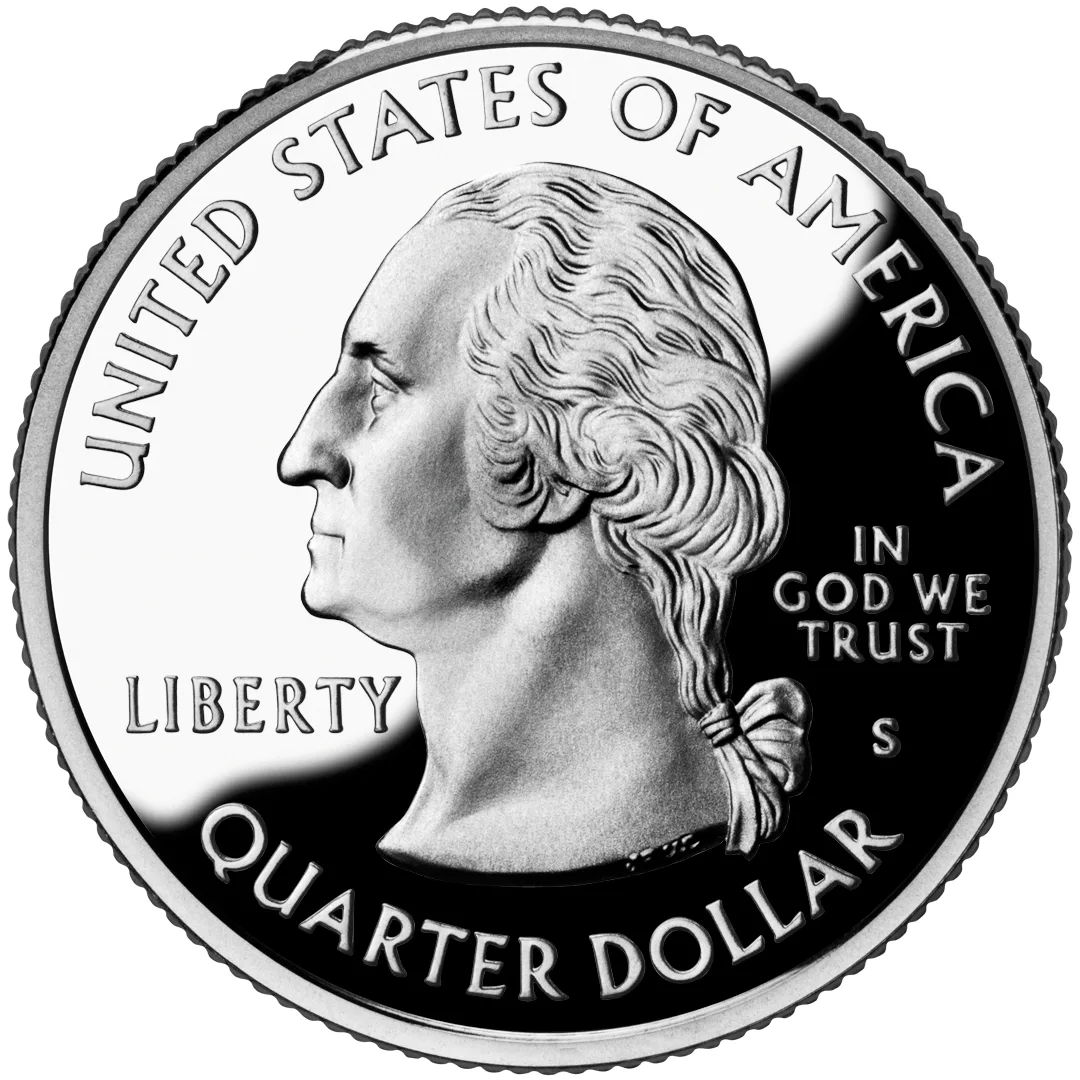
- S (San Francisco): Struck proof coins only — never released into circulation. If you find an “S” state quarter in your change, it almost certainly came out of a broken-up proof set, and it is worth more than face value.
Why “S” Coins Are Special
San Francisco produced two kinds of proofs for each state: a copper-nickel clad proof and a 90% silver proof. Both were sold only in collector sets and were never intended to circulate. An “S” mint mark on a state quarter therefore always signals a proof coin. If a friend or relative broke up an old proof set and spent the coins, you might encounter one — check the mirror-like fields and frosted design, which we discuss in the clad-vs-silver section below.
What About “W” Quarters?
The West Point Mint (“W”) did not strike any 50 State Quarters. West Point quarters did not appear until 2019, during the America the Beautiful program, when a small number were released into circulation as a deliberate treasure hunt. Any state quarter (1999-2008) will bear only a P, D, or S — never a W.
Clad vs Silver Proof Quarters
Three finishes exist for state quarters: circulating clad, clad proof, and silver proof. Telling them apart determines value more than almost anything except errors.
Circulating Clad (the coins in your change)
These are the P and D coins struck for commerce. They have a satiny business-strike finish, a copper-colored stripe visible on the edge (the “sandwich” that reveals the copper core between the copper-nickel layers), and they weigh 5.67 grams. The overwhelming majority of state quarters in existence are circulating clad coins worth face value.
Clad Proof (S mint mark)
Clad proofs were struck at San Francisco on the same copper-nickel clad planchets but with polished dies and multiple strikes, giving them mirror-like fields and sharp, frosted design elements. They show the same copper edge stripe as circulating clad coins and weigh 5.67 grams. They came only in proof sets and are worth a few dollars each. A proof coin is a method of manufacture, not a grade — for the full explanation, see our proof coins guide.
Silver Proof (S mint mark, 90% silver)
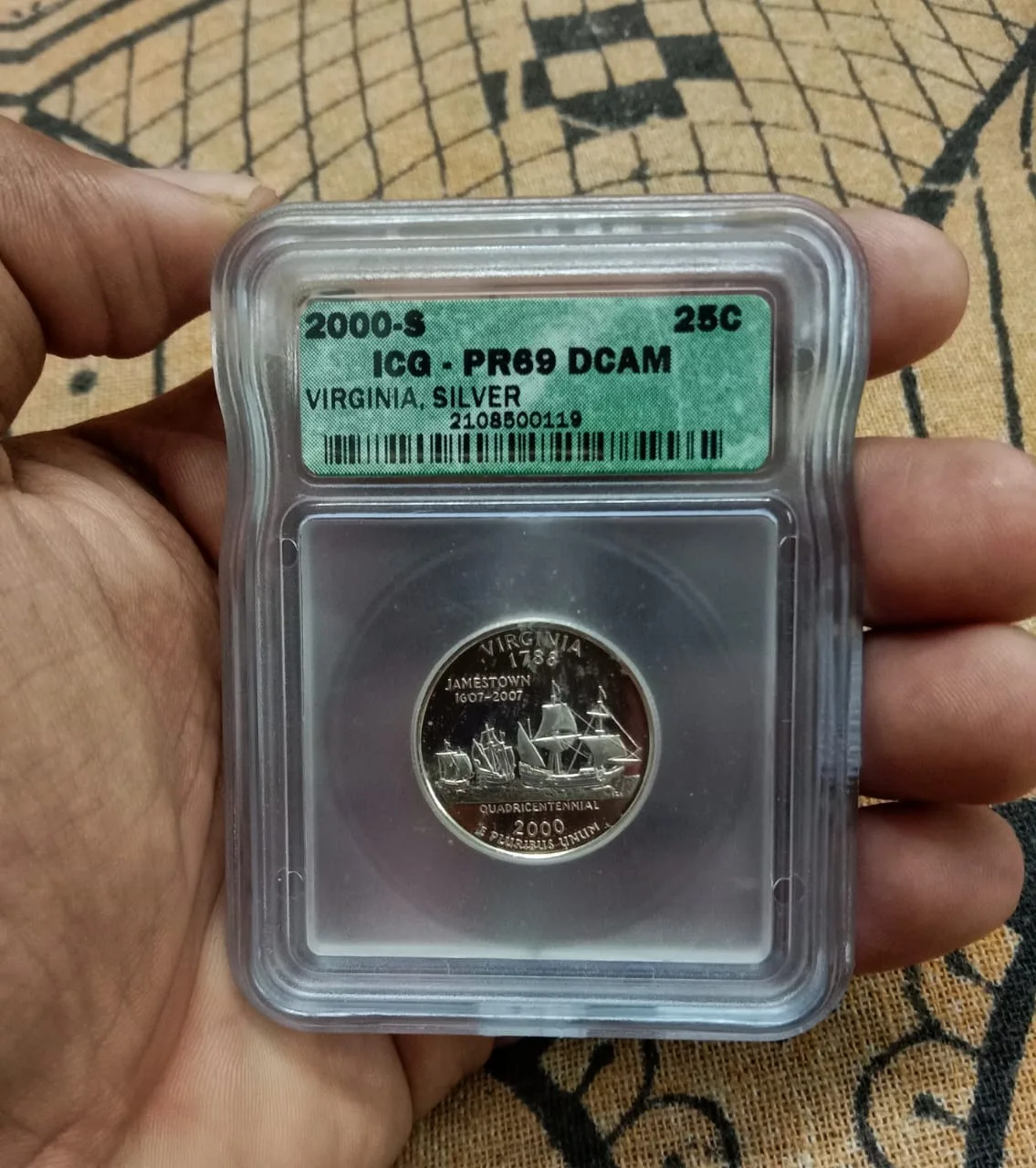
Silver proofs are the premium version: struck at San Francisco in 90% silver, sold in special silver proof sets. They show the same brilliant mirror fields and frosted devices as clad proofs, but they have a solid silver-white edge with no copper stripe, and they weigh 6.25 grams instead of 5.67 grams. The edge test and the weight test are the two reliable ways to distinguish a silver proof from a clad proof — they look identical face-on.
Quick Comparison
- Copper stripe on edge + 5.67 g + satin finish = circulating clad (face value)
- Copper stripe on edge + 5.67 g + mirror finish + “S” = clad proof ($2-$5)
- Solid silver edge + 6.25 g + mirror finish + “S” = silver proof ($6-$15+)
Collectible Errors and Varieties
This is where the real money in state quarters lives. Because billions of coins were struck at high speed, the program produced a memorable set of die varieties and mint errors — some of which became famous enough to have nicknames. Learning to spot these is the difference between a jar of face-value quarters and a genuine find. For a broader treatment of how mint errors happen, see our error coins guide.
2004-D Wisconsin “Extra Leaf” (High and Low)
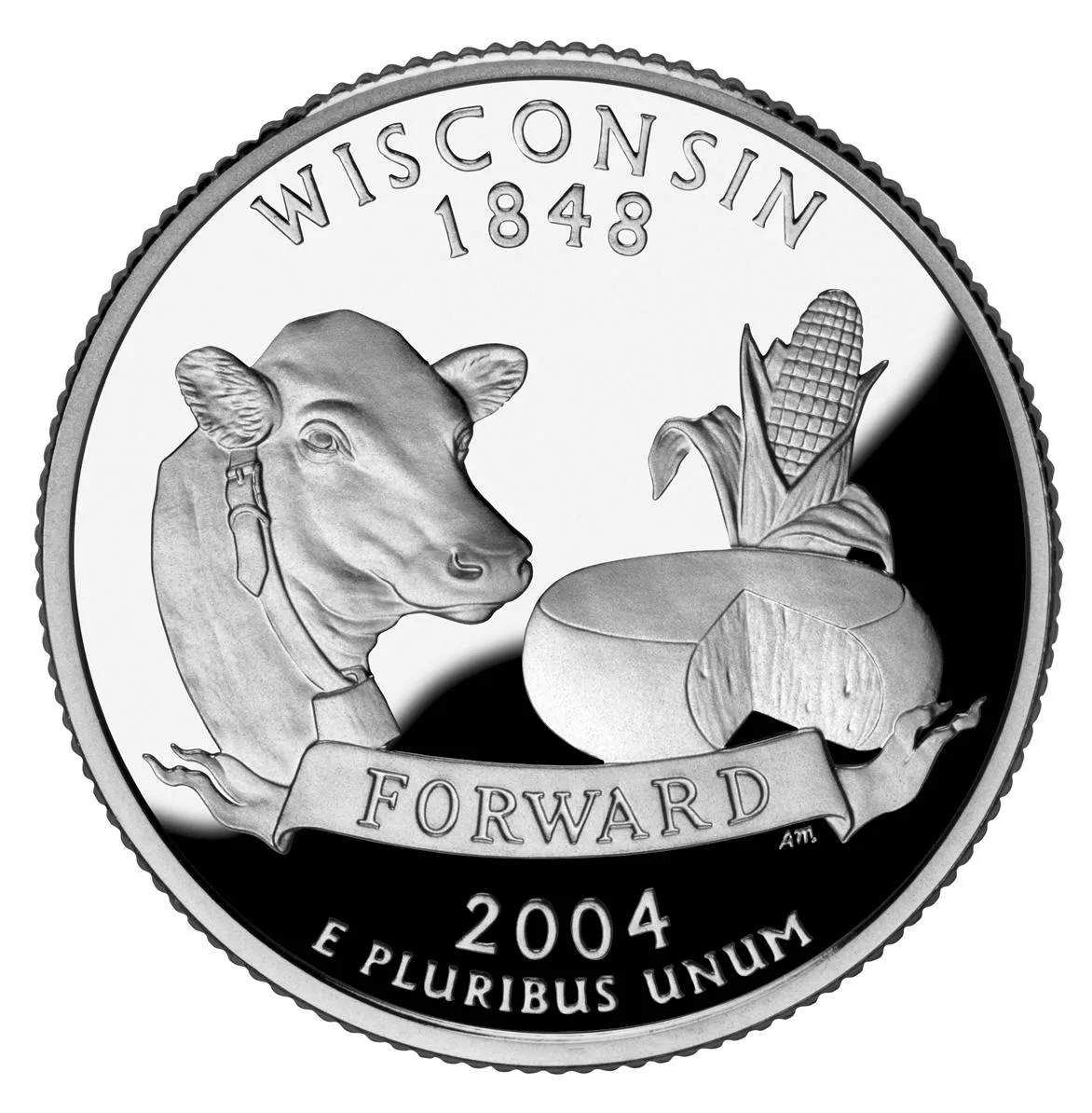
The most famous state quarter error. The Wisconsin reverse shows a cow, a wheel of cheese, and an ear of corn. On a small number of 2004-D coins, an extra leaf appears on the lower-left of the corn husk — in two distinct versions, “High Leaf” (angled upward) and “Low Leaf” (angled downward). These are die varieties (extra metal on the die itself, whether from an intentional or accidental die gouge is still debated). Genuine examples in uncirculated grades bring roughly $100-$300 (Low Leaf) and $150-$350 (High Leaf), with premium MS-65+ coins going higher. This variety is heavily faked, so authentication matters.
2005-P Kansas “In God We Rust”
A grease-filled die on some 2005-P Kansas quarters obscured the “T” in “TRUST,” making the motto read “IN GOD WE RUST.” This is a filled-die error rather than a true die variety, so the strength of the effect varies from coin to coin. Clear, full “RUST” examples bring $25-$100 depending on grade and how completely the “T” is missing.
2005-P Minnesota “Extra Tree” (Doubled Die Reverse)
The Minnesota reverse shows a lakeside forest, and a doubled die reverse produced extra small trees among the treeline on numerous die states. Dozens of distinct varieties have been cataloged. Values range widely — $10 to $100+ — depending on how obvious and well-documented the specific extra-tree variety is. This is a rich area for specialist variety collectors.
2005 Kansas and Minnesota “Humpback Bison” / Die Breaks
Die deterioration and die chips produced several minor named oddities, including a “humpback” appearance on the Kansas bison from a die break. These carry modest premiums and appeal mainly to error specialists.
Doubled Dies
Beyond the Minnesota extra trees, various state quarters show doubled die obverses and reverses of differing strength. A strong, genuine doubled die on a scarce-enough die can bring meaningful premiums, but most “doubling” people find is worthless machine doubling (also called strike doubling) — flat, shelf-like doubling caused by die chatter rather than a misaligned hub. Learning to tell a true doubled die from machine doubling is essential before paying any premium.
Off-Center Strikes, Broadstrikes, and Clipped Planchets
Standard striking and planchet errors occur on state quarters as on any modern coin. An off-center strike (where the design is struck off-center, leaving a blank crescent) is worth more the more dramatic it is while still showing the date and state — typically $20 to a few hundred dollars. Broadstrikes (struck without the retaining collar, so the coin spreads out and has no reeding) and clipped planchets (a curved or straight piece missing from the edge) bring similar modest-to-moderate premiums.
Wrong-Planchet and Off-Metal Errors
Occasionally a state quarter was struck on a planchet intended for another denomination — for example, on a nickel or cent planchet, or on a foreign planchet the Mint was producing under contract. These dramatic errors can bring hundreds to thousands of dollars depending on the host planchet and eye appeal.
The 2000 Sacagawea / State Quarter Mule
The most valuable modern U.S. error connected to the program is the 2000 “mule” — a coin struck with a Washington state-quarter obverse die paired with a Sacagawea Dollar reverse die, on a golden dollar planchet. Only a small number are known, and authenticated examples have sold for tens of thousands of dollars. It is not a state quarter per se, but it exists because a state-quarter die was mounted in a dollar press — a reminder of how the program’s massive production created error opportunities.
How to Grade State Quarters
Since circulated state quarters are worth face value, grading only matters at the uncirculated end of the scale. The value in ordinary (non-error) state quarters is almost entirely a condition-rarity game: how close to perfect is the coin?
The Grades That Matter
- Circulated (any grade below MS-60): Face value. A worn state quarter has no numismatic premium regardless of state.
- MS-63 to MS-64: Uncirculated with noticeable contact marks. Pulled from rolls; small premium at best.
- MS-65 to MS-66: Gem uncirculated with strong luster and minimal marks. Modest premiums, higher for tougher states.
- MS-67: Superb gem. This is where meaningful money appears for many states — often $20-$100.
- MS-68 and above: Condition rarities. Top-population coins can bring several hundred dollars or more, especially for states that are hard to find well struck.
What Graders Look At
On uncirculated state quarters, grade comes down to contact marks (nicks from other coins in the bin), luster (the frosty cartwheel sheen of an original surface), and strike quality (how fully the design details came up). Washington’s cheek and the high points of the state design are the first places to show contact marks. Because these are modern coins with no wear-based grade to assign, the numbers cluster tightly at the top — the difference between an MS-66 and an MS-68 can be a single small mark visible only under magnification.
Proof Grading
Proof state quarters grade on the PR (or PF) scale and almost always come back PR-69 Deep Cameo or PR-70 Deep Cameo because they were carefully made and packaged. “Deep Cameo” (DCAM) refers to the strong contrast between the mirror fields and the heavily frosted design. Impaired proofs — those with hairlines, spots, or fingerprints — grade lower. For the full grading picture across all U.S. coins, see our coin grading guide.
Current Market Values
The values below are approximate 2026 retail figures. They swing with metal prices (for silver proofs) and collector demand, but the tiers are stable.
Circulating Clad (P and D, any state)
Face value in circulated condition. From bank rolls, uncirculated singles run $1-$2. In MS-65 they bring $2-$10, in MS-67 typically $20-$100, and in MS-68 they become condition rarities worth hundreds. No non-error state quarter is rare in absolute terms — the premiums are entirely about grade.
Clad Proofs (S)
Individual clad proof state quarters run $2-$5 each. A complete 50-coin clad proof set (in original packaging or assembled) runs $30-$80 depending on completeness and condition.
Silver Proofs (S, 90% silver)
Individual silver proof state quarters run $6-$15+, tracking silver spot prices plus a collector premium. A complete 50-coin silver proof set runs $250-$500, with premium condition sets higher. These are the most valuable “normal” version of the state quarters.
Complete Circulation Sets
A complete 50-state P-and-D set (100 coins) in uncirculated condition from rolls runs $40-$80. In a nice album in MS-65, $150-$250. Add the 2009 DC and Territories coins (12 more for P and D) for another $20-$50.
Error Coins (the real upside)
This is where individual coins get valuable: the 2004-D Wisconsin Extra Leaf varieties ($100-$350), the 2005-P Kansas “In God We Rust” ($25-$100), the 2005-P Minnesota Extra Tree varieties ($10-$100+), off-center and wrong-planchet errors ($20-$2,000+), and the legendary 2000 Sacagawea/quarter mule (tens of thousands). Always authenticate high-value errors before buying or selling.
What Drives Value
For state quarters specifically, value is driven by (1) error status first and foremost, (2) proof and silver-proof status, and (3) top-tier uncirculated grade. Date and state matter far less than they do for older series because mintages are so uniformly high. A common-date silver dollar like the Morgan Silver Dollar derives value from age and silver content; a state quarter, being modern and base-metal, derives it almost entirely from condition and errors.
Authentication and Fake Errors
State quarters themselves are not counterfeited — they are worth 25 cents, so there is nothing to gain. The authentication problem is entirely about fake errors: altering common coins to imitate the valuable varieties.
Fake Wisconsin Extra Leaves
Because the 2004-D Wisconsin Extra Leaf coins are the most valuable common-program error, they are the most faked. Counterfeiters engrave or glue an extra leaf onto an ordinary Wisconsin quarter. Under 10x magnification, a genuine extra leaf is raised, smooth, and integral to the coin’s surface (because it was struck up from a recess in the die), with the same luster as the rest of the design. A fake leaf shows tooling marks, disturbed or scratched metal at its base, dull surfaces where the original luster was destroyed, or a slightly wrong leaf profile. Compare any suspected coin to published photographs of the genuine High and Low Leaf varieties before paying a premium.
Fake Doubling
Many coins offered as “doubled die” errors show only machine doubling — a flat, shelf-like, often-slanted doubling caused by the die bouncing during striking. True doubled dies show rounded, separated design elements with notching, because the doubling was hubbed into the die itself. When in doubt, machine doubling adds no value.
“Added” Mint Marks and Altered Coins
Unlike the silver-era key dates where a “D” or “S” was added to a common coin, state quarters have no rare date-and-mint-mark combinations worth faking that way. The alteration risk is entirely on the error side. Any state quarter error worth more than $50-$100 is worth submitting to PCGS, NGC, ANACS, or ICG for authentication and encapsulation.
Cleaned and Damaged Coins
Cleaning destroys the original luster that uncirculated state quarters depend on for their grade and value. A cleaned uncirculated state quarter will grade “Details” at the major services and sell at a steep discount. Environmental damage, spots, and PVC residue from cheap flips likewise ruin a coin’s grade. Never clean a state quarter.
Building a Complete Set
State quarters are the ideal beginner collection — affordable, endlessly available, and historically significant. Several collecting paths suit different goals and budgets.
The Circulation Set from Change and Rolls
The classic approach and the one the program was designed for: fill a folder with one coin of each state pulled from pocket change or bank rolls. A “P and D” set (100 coins) can be assembled for little more than face value plus the cost of a folder. This is the perfect first collection for a child or a new collector, and it teaches mint-mark identification naturally.
The Uncirculated (Mint Set) Set
For collectors who want bright, unworn coins, the U.S. Mint sold annual uncirculated sets containing the P and D coins for each year’s five states. Assembling all ten years gives you a complete uncirculated P-and-D set in original Mint packaging. Budget $60-$150 depending on packaging condition.
The Proof Set
The San Francisco clad proof sets (five quarters per year, ten years) give a complete 50-coin clad proof collection with brilliant mirror finishes. Budget $30-$80 for the full run.
The Silver Proof Set
The premium goal: the annual silver proof sets contain the five state quarters in 90% silver. A complete ten-year run is the most valuable “normal” way to own the series, at $250-$500. These combine collector appeal with a modest silver bullion floor.
The Graded Registry Set
Advanced collectors chase the finest-known examples of each state, submitting coins to PCGS or NGC and competing in registry sets. Assembling a complete MS-67+ set can cost hundreds to low thousands of dollars, with the toughest condition-rarity states driving most of the cost.
The Error and Variety Set
A targeted set of the named errors — the Wisconsin Extra Leaf (High and Low), the Kansas “In God We Rust,” a selection of Minnesota Extra Trees, and a few off-center or broadstruck examples — makes an exciting, story-rich collection. Budget $500-$2,000 depending on grades and how many varieties you pursue, and buy the expensive pieces certified.
Budget Tips
Start free by pulling coins from change and bank rolls. Buy a good folder or Dansco album to protect and display the set. Prioritize original, uncleaned surfaces over raw grade. If you want top-grade coins, buy them already certified rather than gambling on raw coins. And treat the errors as the “chase” — most of your set will be nearly free, with the fun concentrated in hunting the valuable varieties.
Storage and Handling
Even though most state quarters are worth face value, the uncirculated and proof coins that carry premiums are vulnerable to the same damage that affects any modern coin. Good habits protect the coins worth protecting.
Handling
Hold coins by the edges, never touching the faces. Fingerprints etch permanently into proof surfaces and lower the grade. Work over a soft cloth so a dropped coin is not dented. For proofs and high-grade uncirculated coins, cotton or nitrile gloves are worth the trouble.
Holders and Albums
Use inert, coin-safe holders. Air-Tite capsules and Mylar 2x2 flips are safe. Dansco and Whitman state-quarter albums are purpose-made for the series and are the classic display format. The one rule to never break: avoid soft PVC flips, the flexible clear ones that smell like a beach ball. PVC plasticizer migrates onto coins and leaves a green, sticky residue that permanently damages the surface within a few years.
Environment
Store coins cool, dry, and stable. Humidity causes spotting on clad and toning on silver proofs; silica gel packets help, and should be refreshed periodically. Keep coins away from sulfur sources (newsprint, rubber bands, some cardboard and adhesives) that accelerate tarnish. These are the same preservation principles that protect any 20th- and 21st-century coin, from a Roosevelt Dime to a silver proof set.
Cleaning: Don’t
Never clean a state quarter. On an uncirculated or proof coin, cleaning strips the luster and hairlines the surface, turning a gradeable coin into a “Details” coin worth a fraction as much. On a circulated coin it accomplishes nothing except potential damage. If a valuable error coin has a real problem (active corrosion, PVC residue), consult a professional conservation service rather than attempting a home remedy.
Frequently Asked Questions
Are 50 State Quarters worth anything?
Most are worth face value. State quarters were struck in the billions, so ordinary circulated examples will never be rare. The exceptions that carry real value are the famous error coins (like the 2004-D Wisconsin Extra Leaf), the San Francisco silver proofs, and top-tier uncirculated coins graded MS-67 and above. Knowing which category your coin falls into is the whole point of identifying it carefully.
Which state quarter is the most valuable?
Among normal circulation coins, no single state is significantly more valuable than another because mintages are so uniformly high; value comes from grade. Among errors, the 2004-D Wisconsin "Extra Leaf" varieties are the best-known valuable state quarter error ($100-$350 in uncirculated grades). The 2000 Sacagawea/state-quarter mule — technically a dollar-coin error struck with a quarter die — is worth tens of thousands, but it is not a circulating state quarter.
How do I know which state my quarter is?
Read the top of the reverse (the side without Washington's head). Every state quarter has the state name arced across the top, along with the year it entered the Union and the program release year. The design in the field — a scene, animal, landmark, or map — confirms it. Both years are on that same side; the obverse of a state quarter carries no date at all. The lower of the two (1999-2008) tells you which release group of five the coin belongs to.
What does the letter on my state quarter mean?
The small letter to the right of Washington's hair ribbon is the mint mark. "P" means Philadelphia and "D" means Denver — both circulate freely. "S" means San Francisco and always indicates a proof coin (either clad or silver) that came from a collector set, not from circulation. State quarters never carry a "W" mint mark.
How can I tell a silver state quarter from a regular one?
Only San Francisco silver proofs (mint mark "S") are silver, and they were never released into circulation. Look at the edge: a silver proof has a solid silver-white edge, while a clad coin (circulating or clad proof) shows a copper-colored stripe. A silver quarter also weighs 6.25 grams versus 5.67 grams for clad. If your coin came from pocket change, it is clad — silver proofs only exist in original proof sets.
What is the Wisconsin Extra Leaf quarter?
It is a 2004-D Wisconsin state quarter with an extra corn leaf appearing on the lower-left of the design — in two versions, "High Leaf" and "Low Leaf." It is a die variety that occurred on a small number of Denver coins. Genuine examples in uncirculated grades sell for roughly $100-$350. Because it is heavily faked, examine any candidate under magnification and compare it to published photographs; genuine leaves are struck up smoothly from the die, while fakes show tooling marks and disturbed metal.
Should I clean my state quarters?
No. Cleaning removes the original luster on uncirculated and proof coins, leaves hairline scratches, and lowers both grade and value — a cleaned uncirculated coin grades "Details" and sells at a steep discount. On circulated coins cleaning does nothing useful. Store them properly instead, and leave conservation of any valuable error coin to a professional service.
Do state quarters still circulate?
Yes. The 50 State Quarters (1999-2008) are legal tender and still turn up regularly in change and bank rolls alongside the later America the Beautiful and American Women quarters. Because so many were saved, worn examples remain extremely common, which is exactly why circulated ones stay at face value.
How many coins are in a complete state quarters set?
A basic complete set is 50 coins (one design per state). A standard "P and D" set is 100 coins. Adding the 2009 District of Columbia and five territories brings the totals to 56 designs, or 112 coins for a full P-and-D set. Proof and silver-proof sets add another 50 (or 56) coins each depending on how completely you collect the program.
Why were the states released in that particular order?
The states appeared in the order they ratified the U.S. Constitution (for the original thirteen) or were admitted to the Union (for the remaining thirty-seven). That is why Delaware — the first state to ratify — led off in 1999 and Hawaii — the last state admitted — closed the program in 2008. Five states were released each year over the ten-year run.