German Coins Identification Guide: How to Read, Date, and Value Germany's Coins
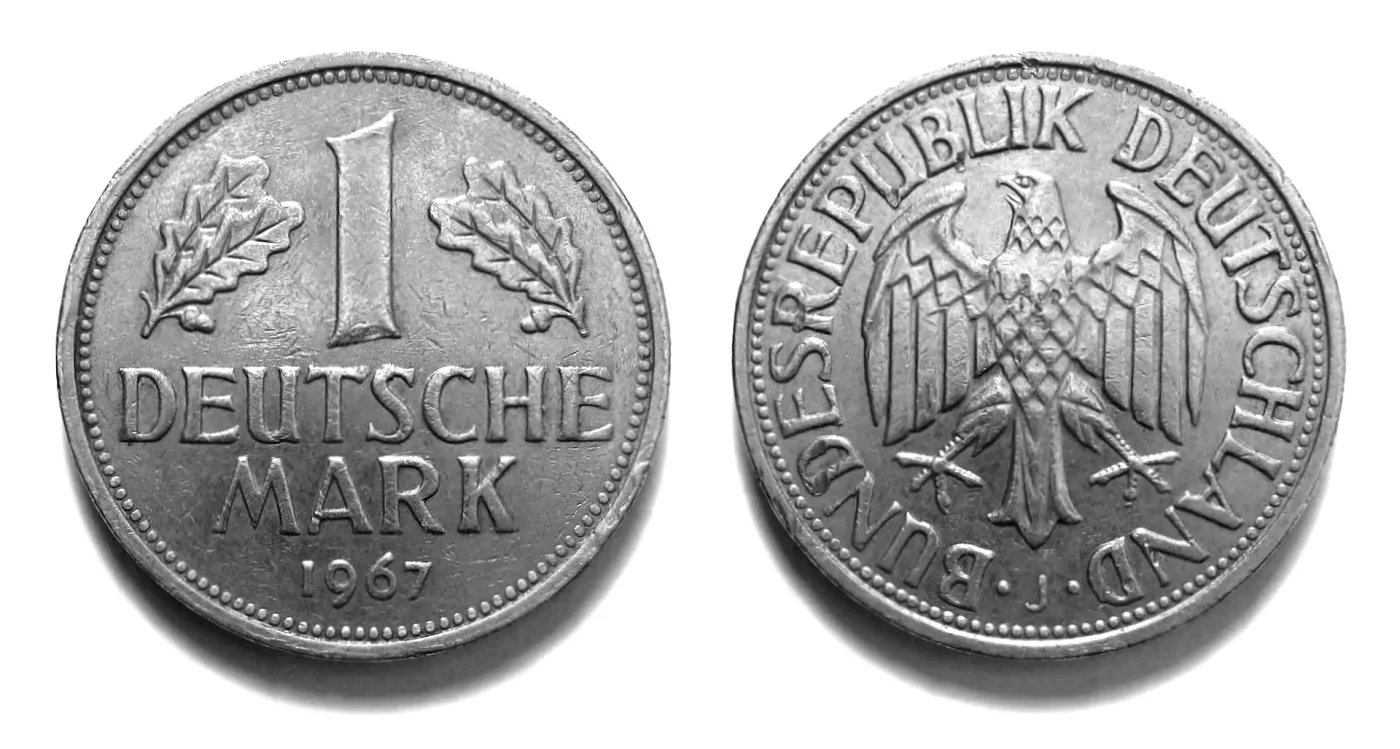
Few countries pack as much numismatic variety into one drawer as Germany. Because “Germany” was not a single nation until 1871, a typical inherited accumulation might hold a silver thaler struck by the Kingdom of Prussia, a Bavarian gulden, a shiny gold mark of the German Empire, a worthless-looking billion-mark note-coin from the great inflation, a swastika-bearing Reichsmark, an Allied-occupation pfennig, separate coins from West and East Germany, and a modern euro minted in Germany — every one following different rules for who issued it, what it was worth, where it was struck, and how much precious metal it holds. That depth is exactly why German coins are so rewarding to collect and, at first, so confusing to sort.
The good news is that German coins are highly systematic once you learn the framework. Nearly every one names its issuing authority, carries a plain Arabic date, and — for imperial and modern coins — shows a single mint letter (A, B, D, E, F, G, J, and a few others) that tells you exactly which German mint struck it. The German eagle, the denomination in marks or pfennigs, and the legend around the rim place a coin in its era before you even reach for a catalog. And because German states and the Empire struck vast quantities of silver and gold, a large share of these coins carry genuine precious-metal value that any collector can calculate.
This guide walks the whole arc of German coinage: the bewildering but logical world of the pre-1871 German States, the unified Empire and its mark system, the Weimar Republic and the emergency Notgeld of the inflation years, the coins of the Third Reich, the divided coinages of the Federal Republic (West) and the Democratic Republic (East), and today’s euro. Along the way you will learn to read mint letters, decode the silver-content dividing lines that set melt value, recognize the great types and famous rarities, spot fakes, grade what you have, and estimate realistic 2026 values. Whether you inherited a cigar box of “old German money” or pulled a strange eagle coin from a dealer’s junk tray, you will finish able to read, date, and value Germany’s coins with confidence.
Why German Coins Matter to Collectors
German coinage is one of the deepest and most historically layered fields in all of numismatics. Understanding why explains both its appeal and why so much of it circulates among American collectors.
Centuries of History in a Handful of Coins
German coins trace the story of central Europe more vividly than almost any other series: the fragmented patchwork of kingdoms, duchies, principalities, and free cities that made up the old Holy Roman Empire; the drive to unification under Prussia; two world wars; the catastrophic hyperinflation of 1923; the Cold War division into two states; and reunification and the euro. A drawer of German coins is a physical timeline of modern European history, which is a large part of why the field is so absorbing.
Why German Coins Turn Up in the U.S.
German immigration to the United States was enormous, and returning soldiers from both world wars brought home coins by the pocketful, so German pieces are among the most common “foreign coins” in American estates, jars, and inherited collections. A grandparent’s keepsakes might mix a pre-war Empire coin, a Weimar piece, a Third Reich coin kept as a war souvenir, and post-war change — a natural companion to the U.S. and world coins Americans already know, from the Morgan Silver Dollar to British coins and the neighboring French coins.
A Field for Every Budget and Interest
German numismatics offers something at every level: common circulated pfennigs and Weimar minors by the handful, affordable Empire silver traded for its metal, beautiful state thalers and commemorative pieces, gold marks and modern bullion, and world-class rarities that bring five and six figures. Few areas reward a beginner as quickly or hold a specialist as long.
The Six Eras of German Coinage
Every German coin belongs to one of six broad periods, and placing a coin in its era is the first and most powerful identification step, because each era looks different and follows different rules.
The German States (before 1871)
Before unification, dozens of separate German states struck their own coins: kingdoms (Prussia, Bavaria, Saxony, Württemberg, Hanover), grand duchies, duchies, principalities, and free cities (Hamburg, Bremen, Frankfurt). Denominations varied by region — thaler, gulden, kreuzer, groschen, pfennig — and each coin names its ruler or city. This is the most complex era and the richest.
The German Empire (1871–1918)
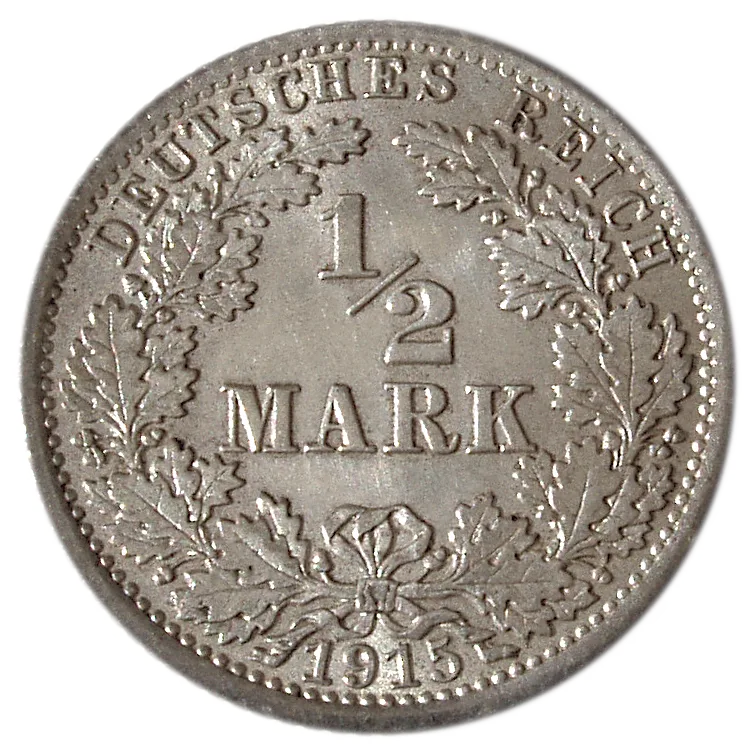
Unification under the Kaiser created a single national currency, the gold mark divided into 100 pfennigs. Small coins (1 pfennig to 1 mark) were struck uniformly for the whole Empire, while the larger silver and gold coins (2, 3, and 5 mark; 5, 10, and 20 mark gold) still carried the portrait or arms of each constituent state. Coins read DEUTSCHES REICH (“German Empire”).
The Weimar Republic (1919–1933)
After World War I, the republic struck coins still marked DEUTSCHES REICH but without a monarch. This era spans the emergency Notgeld and astronomical-denomination coins of the 1923 hyperinflation, the stabilized Rentenmark/Reichsmark coinage that followed, and a celebrated run of commemorative silver pieces.
The Third Reich (1933–1945)
Coins of Nazi Germany continued the Reichsmark system; many carry the eagle-and-swastika national emblem, while wartime issues shifted to cheap zinc and aluminum as metals were diverted to the war effort. This is a small, historically charged era that is heavily collected and heavily faked.
Divided Germany (1948–1990)
After the war, two states issued separate coins: the Federal Republic (West Germany) struck the Deutsche Mark (“BUNDESREPUBLIK DEUTSCHLAND”), and the Democratic Republic (East Germany) struck the Mark der DDR (“DEUTSCHE DEMOKRATISCHE REPUBLIK”). Their coins look distinctly different and are easy to tell apart.
Reunified Germany and the Euro (1990–present)
Reunification in 1990 extended the Deutsche Mark to the whole country until the euro replaced it in 2002. German euro coins carry Germany’s own national designs (the eagle, the Brandenburg Gate, the oak twig) on one side and the shared European design on the other, and — like all German coins since the Empire — a mint letter.
The German States Before 1871
The pre-unification coinage is the largest and most daunting corner of the field, but a few organizing ideas make it navigable, and it is where much of the beauty and value lives.
A Patchwork of Issuers
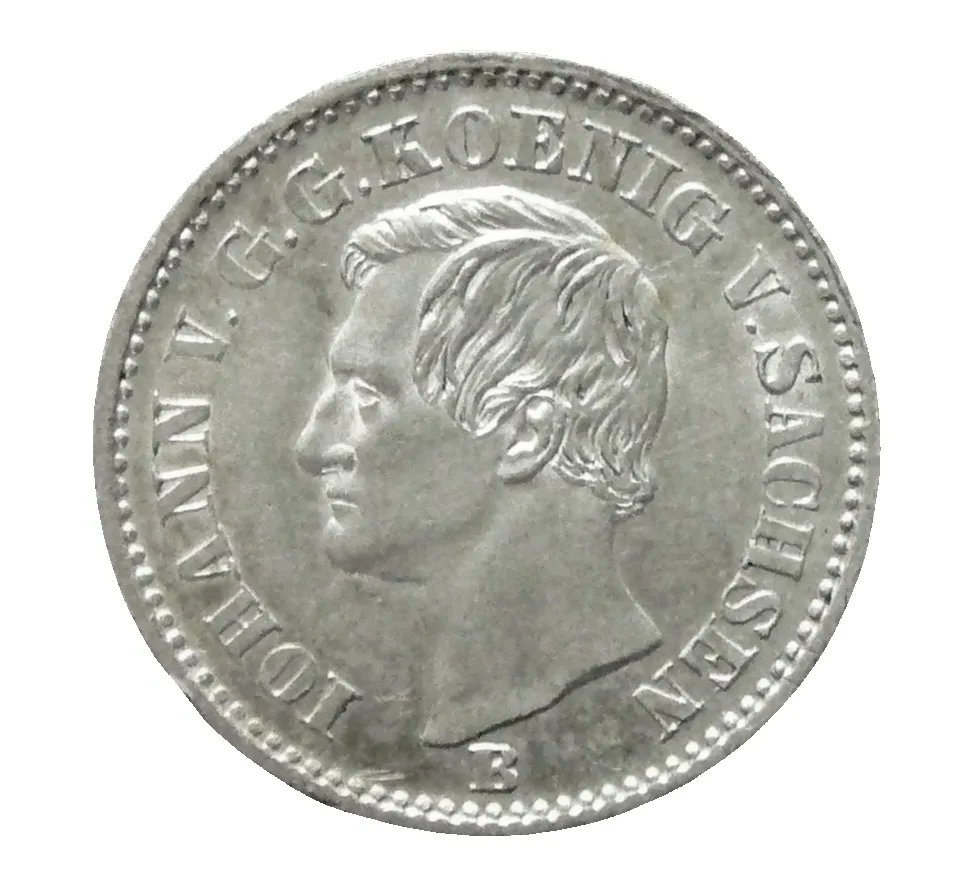
Until 1871, “Germany” was a loose collection of sovereign states, each striking its own money. The heavyweights — the Kingdom of Prussia, the Kingdom of Bavaria, the Kingdom of Saxony, the Kingdom of Württemberg, and the free cities of Hamburg, Bremen, Frankfurt, and Lübeck — produced the bulk of surviving coins, but scores of smaller duchies and principalities issued them too. Each coin’s legend names the state and usually its ruler, which is the anchor for attribution.
The Denomination Systems
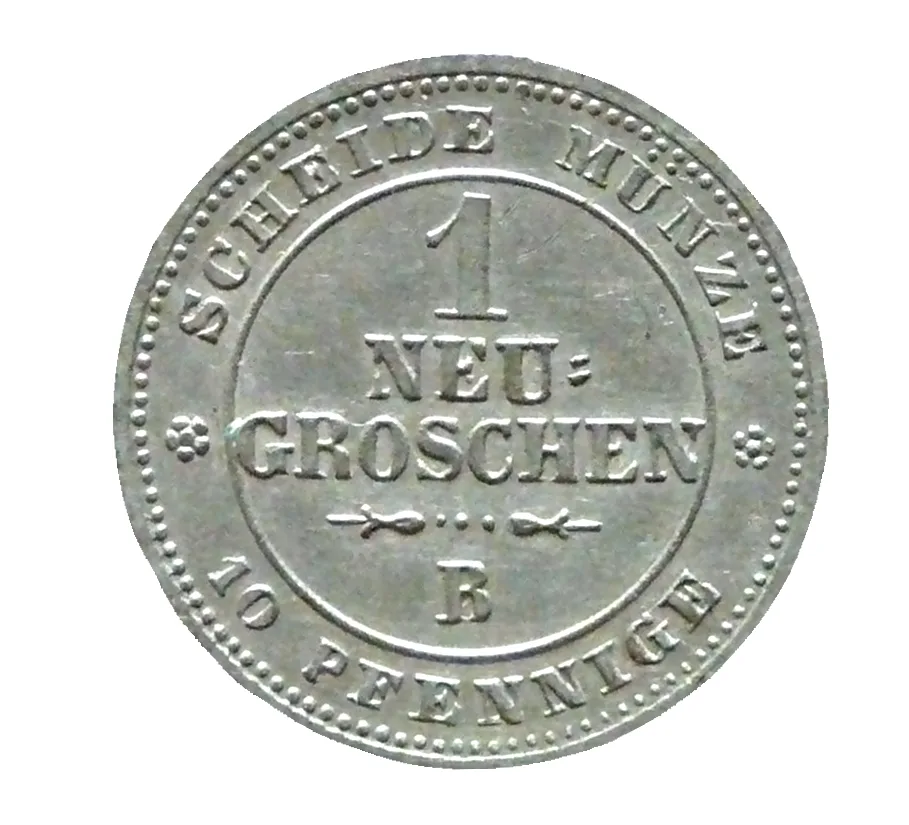
Northern states generally used the thaler (a large silver crown) divided into groschen and pfennigs, while southern states used the gulden divided into kreuzer. Various nineteenth-century monetary unions (the Prussian thaler standard, the Vereinsthaler of 1857) standardized weights across states so their big silver coins could circulate together — which is why so many different states’ thalers share the same size and fineness.
The Thaler and Its Cousins
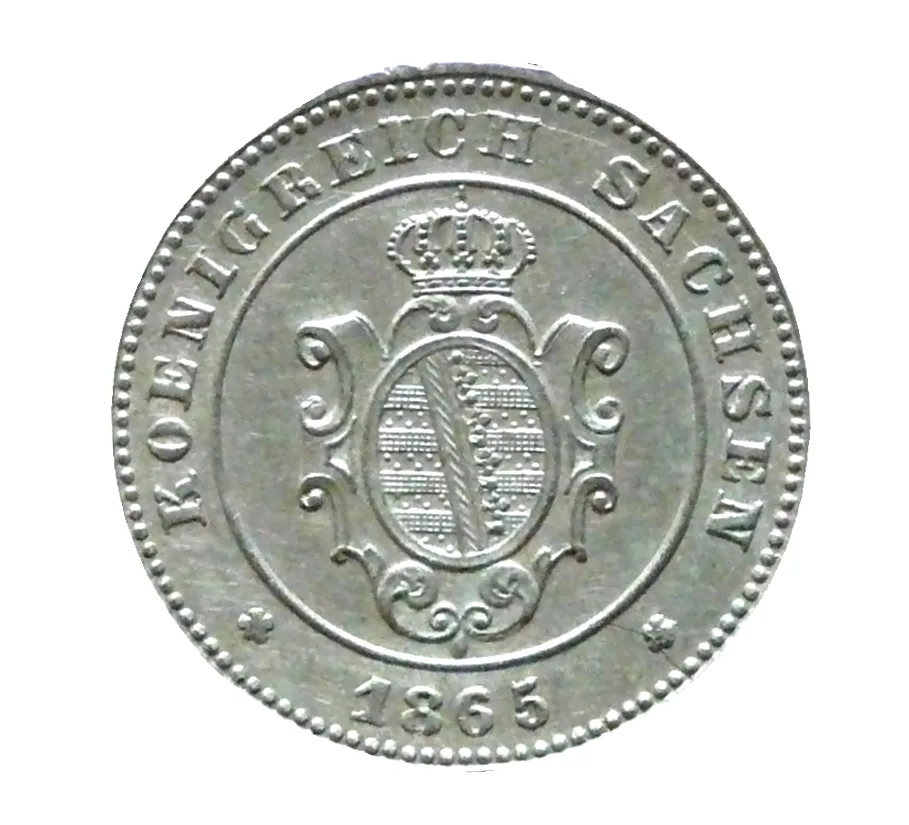
The silver thaler is the signature coin of the era — a large, handsome piece (the ancestor, by name, of the “dollar”) bearing a ruler’s portrait or a state’s arms. Related large silver coins include the Vereinsthaler, the Konventionsthaler, and the double thaler. Many carry specific commemorative reverses (mining, victories, royal events) that add collector interest, and their high silver content gives them solid intrinsic value much like an American Trade Dollar or other world crown.
How to Attribute a State Coin
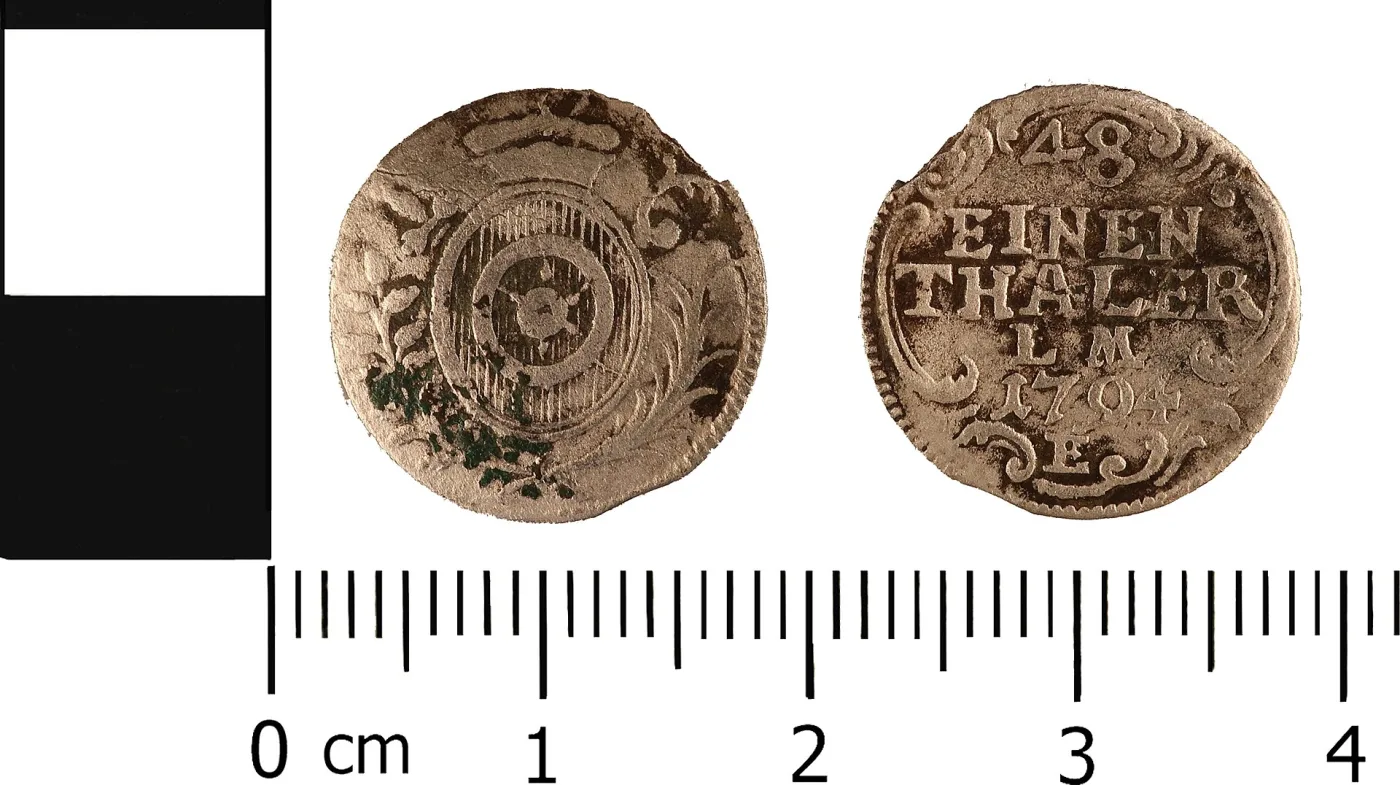
Read the legend for the state name (BORUSSIA/PREUSSEN for Prussia, BAVARIA/BAYERN for Bavaria, SAXONIA/SACHSEN for Saxony) and the ruler, note the denomination and date, and match the arms or portrait against a catalog. Because there are so many issuers, a good reference or a photo-matching database (discussed below) is essential for the states — but the payoff is a field of extraordinary depth and artistry.
The German Empire and the Mark System
Unification in 1871 imposed order on the chaos, and the imperial mark system is the easiest German coinage to identify — a great place for a beginner to start.
One Currency, Many States
The Empire adopted a single decimal currency: the gold mark of 100 pfennigs. Crucially, though, the larger coins were still issued in the name of the individual states. The small coins (1, 2, 5, 10, 20, 25, and 50 pfennig; ½ and 1 mark) were uniform “imperial” types struck for the whole nation with the imperial eagle. The larger silver and gold coins (2, 3, 5 mark silver; 5, 10, 20 mark gold) carried the portrait of the reigning king, grand duke, or prince — or, for the free cities, their civic arms.
Reading an Imperial Coin
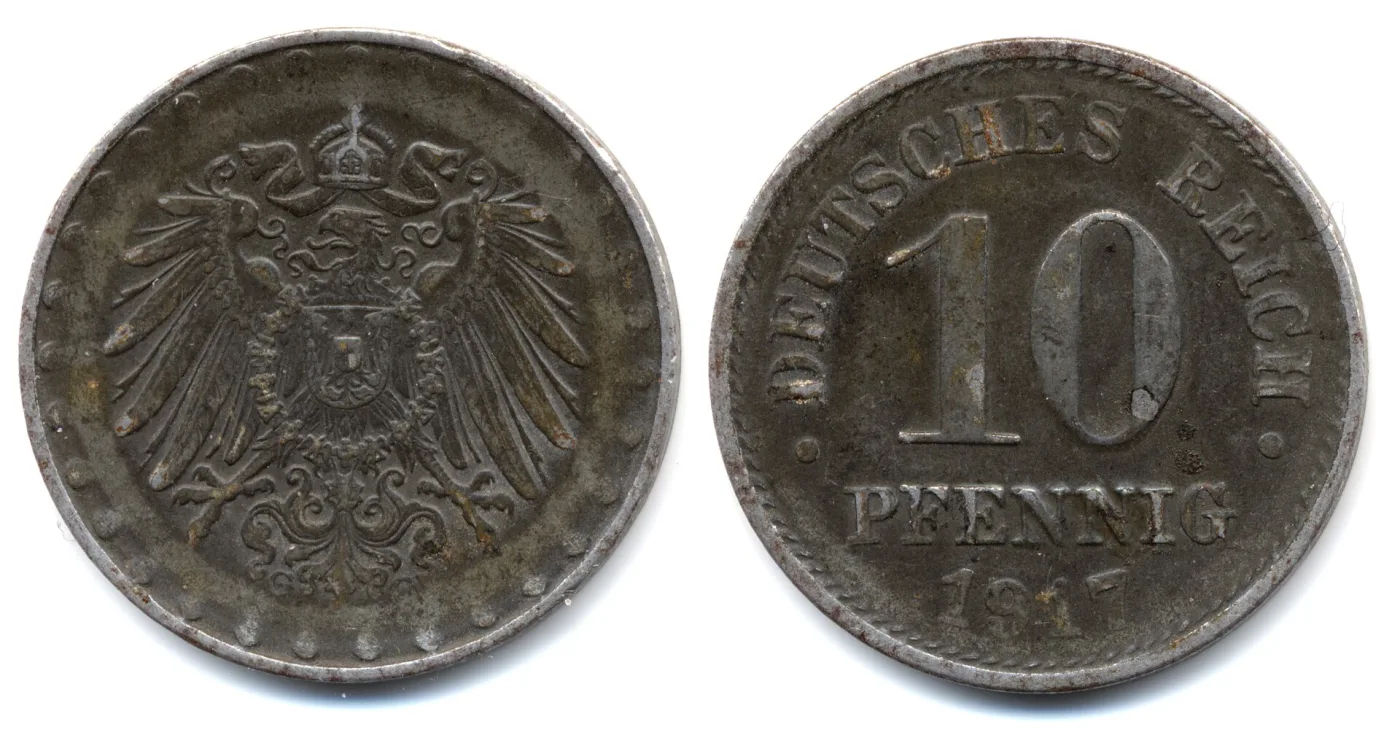
An Empire coin shows the imperial eagle and DEUTSCHES REICH with the denomination and date on one side; the other side shows either the same national design (on the small coins) or a state ruler’s bust with that state’s Latin/German legend (on the big silver and gold). So a “5 mark” might be from Prussia, Bavaria, Saxony, Baden, Württemberg, Hamburg, and so on — the state is read from the portrait side, the denomination and nationality from the eagle side.
The Silver and Gold Denominations
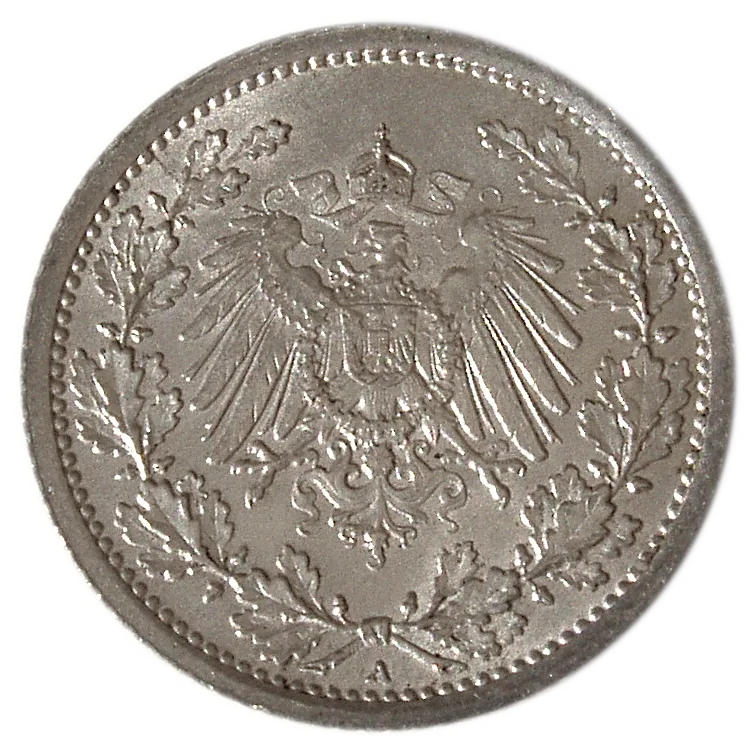
The circulating silver crowns were the 2, 3, and 5 mark pieces (the 3 mark replaced the thaler-sized coin from 1908), struck in .900 fine silver. Gold came as the 5, 10, and 20 mark, in .900 fine gold, the 20 mark being the standard gold coin of pre-war Germany, comparable in role to a U.S. gold piece of the same era. Countless commemorative 2, 3, and 5 mark coins mark jubilees, deaths, and anniversaries and are a popular way to collect the period.
The German Eagle and How It Dates a Coin
One of the most useful identifiers on a German coin is the national eagle (Reichsadler / Bundesadler), because its style changed markedly from era to era and doubles as a dating clue.
The Eagle as a National Emblem
The eagle has symbolized German states and empires for a thousand years and appears on the great majority of national coins since 1871. Its presence, combined with a German legend, is the clearest sign a coin is German rather than from another European country — much as the eagle-and-cactus marks a Mexican coin or Britannia marks a British one.
The Eagle Styles as a Timeline
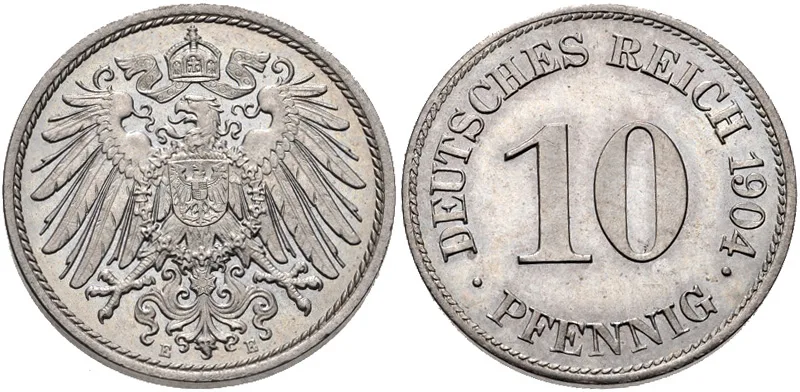
- Imperial eagle (1871–1918) — a large, heraldic, often crowned eagle with a shield on its breast, on coins reading DEUTSCHES REICH.
- Weimar eagle (1919–1933) — a simpler, uncrowned republican eagle, still with DEUTSCHES REICH but no monarch.
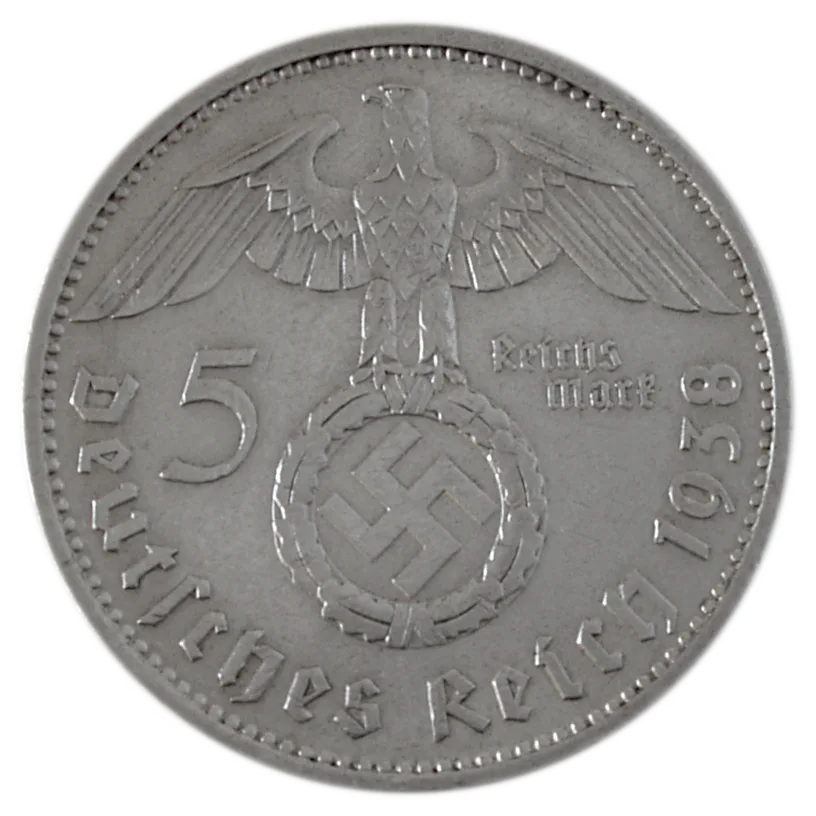
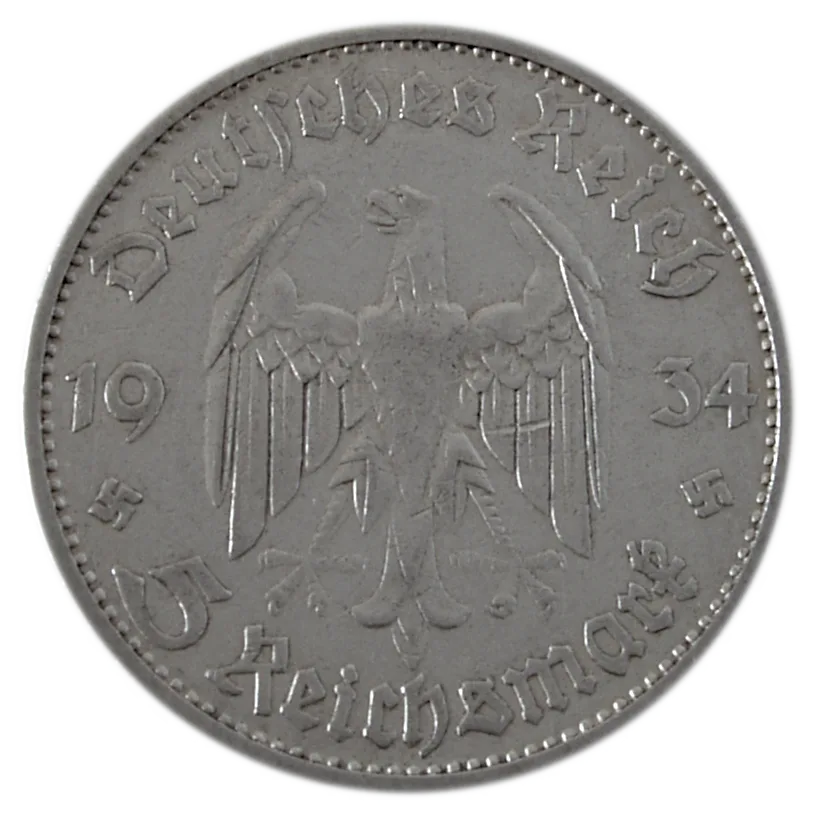
- Third Reich eagle (1933–1945) — a stylized eagle clutching a wreath enclosing a swastika on many issues.
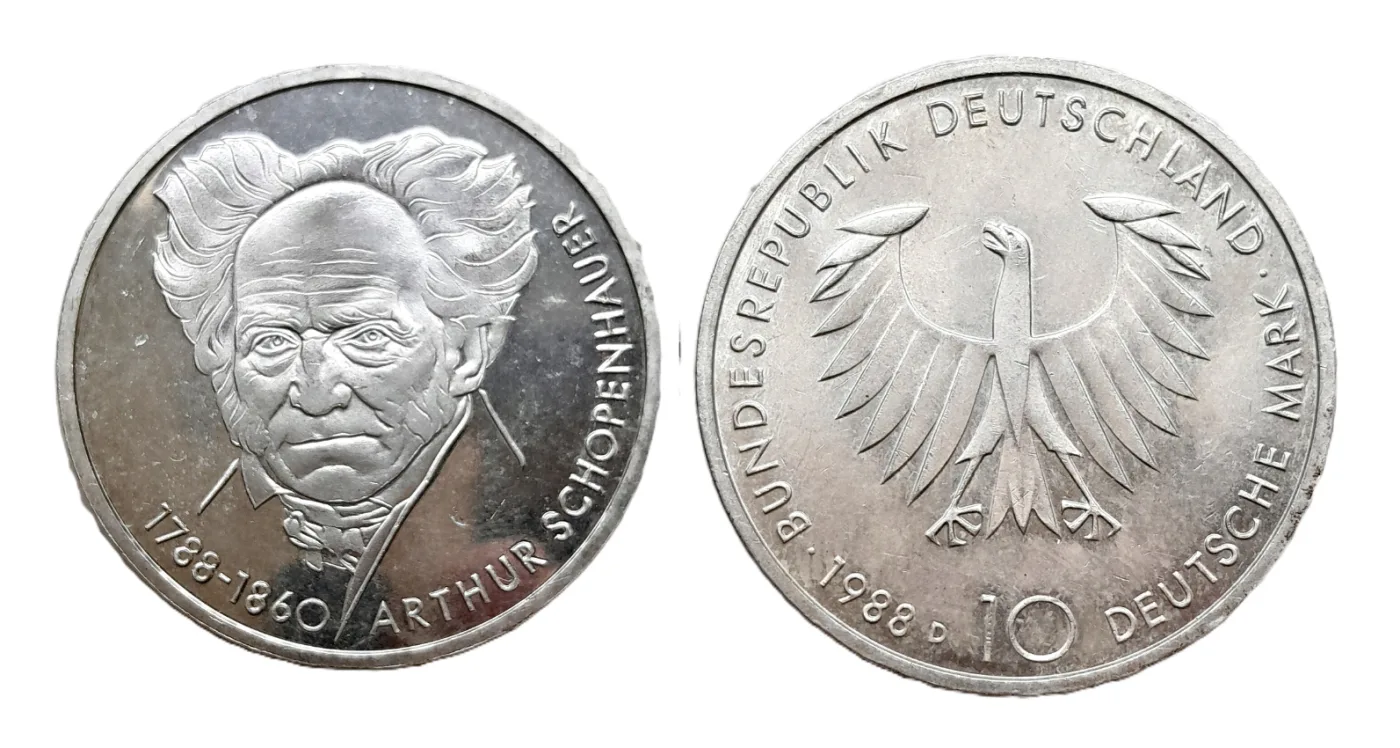
- Federal eagle (1949–present) — the modern Bundesadler, a clean single-headed eagle, on West German and reunified coins and on German euros.
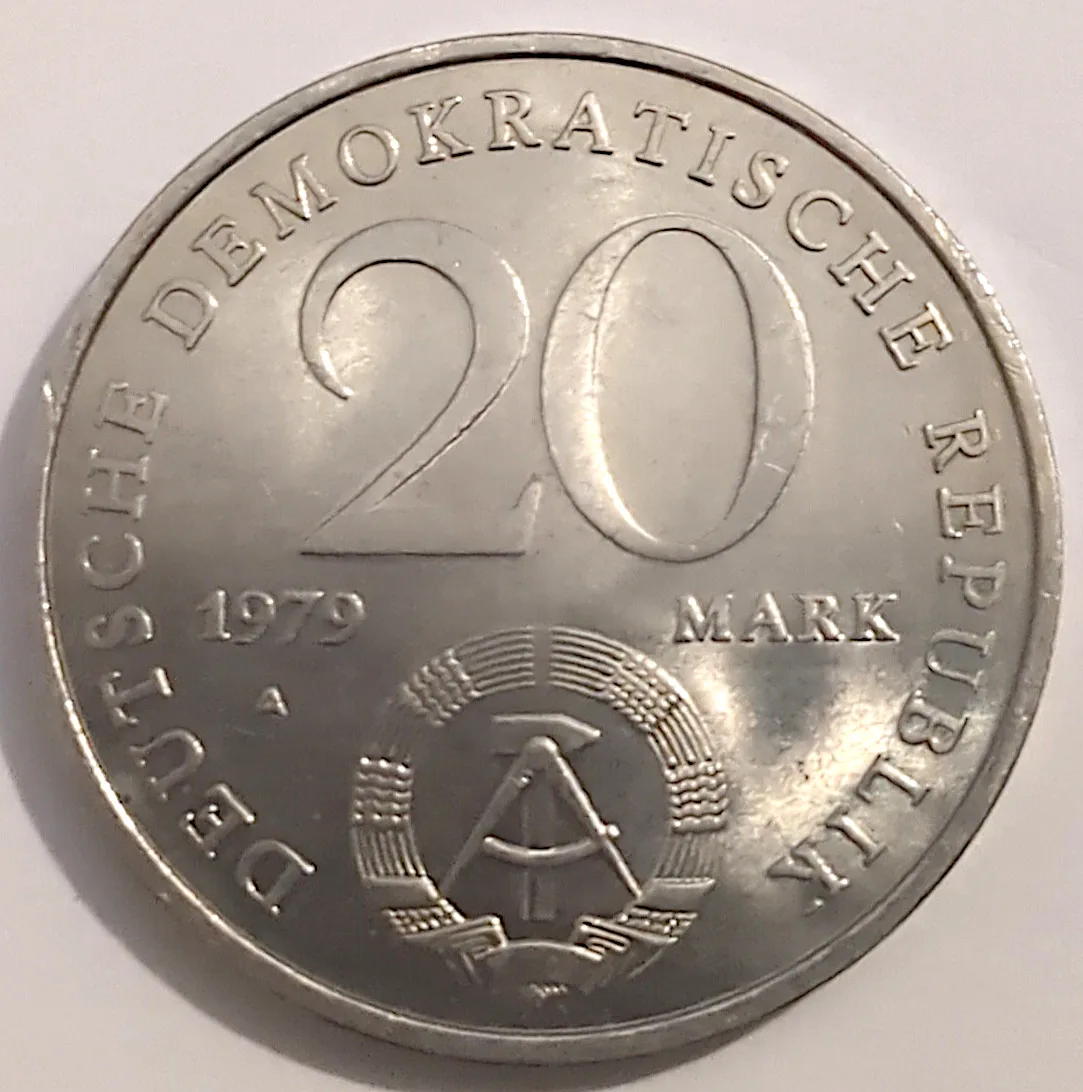
- East German emblem (1949–1990) — not an eagle at all, but a hammer-and-compass within a wheat wreath, on coins reading DEUTSCHE DEMOKRATISCHE REPUBLIK.
The Legend Around It
Reading the legend brackets a coin instantly: DEUTSCHES REICH (Empire and Weimar/Reich, 1871–1945), BUNDESREPUBLIK DEUTSCHLAND (West and reunified), and DEUTSCHE DEMOKRATISCHE REPUBLIK (East). Combining the legend with the eagle style narrows the era before you check the date, the same legend-first logic used to read the ruler on an ancient Roman coin.
Anatomy of a German Coin
German coins follow consistent layouts within each era, and learning the vocabulary lets you extract the date, denomination, issuer, and mint quickly. The general terms overlap with the basic coin anatomy used everywhere, with a few German specialties.
Imperial and Modern Layout
A typical Empire or modern coin shows the eagle (or state ruler’s bust) with the national legend on one side, and the denomination, date, and mint letter on the other. The denomination is stated plainly — 5 MARK, 10 PFENNIG, 2 DEUTSCHE MARK — so once you know the era’s currency, the value is explicit. The all-important mint letter sits in the field, often below the eagle or the date.
State-Coin Layout
A pre-1871 state coin, or the portrait side of an imperial silver or gold piece, shows the ruler’s bust and a Latin or German legend naming the ruler and state, with the denomination and date on the reverse alongside the state arms or a commemorative device. Edge inscriptions are common on the large silver and gold — thalers and 5 mark pieces frequently carry a lettered edge motto (for the Empire, GOTT MIT UNS, “God with us”) that also helps authenticate them.
Reading the Date and Denomination
Dates are ordinary Arabic numerals — a great convenience compared with coins that must be dated by ruler and style. Watch for the currency word: MARK and PFENNIG (Empire through Weimar and Reich), DEUTSCHE MARK or PFENNIG (West), MARK and PFENNIG (East), and EURO/CENT (from 2002). The word, the eagle, and the legend together fix the era; the mint letter fixes the mint.
Mint Letters: Germany’s Key to Attribution
From the founding of the Empire, Germany struck coins at several mints simultaneously, each identified by a single letter, and reading that letter is central to German identification in a way it never is for a single-mint coinage. This is Germany’s counterpart to the U.S. mint mark system.
The Standard Mint Letters
The letters used across the imperial and modern eras include:
- A — Berlin · B — Vienna (WWI occupation) / earlier Hannover / Bavaria (varies by period) · D — Munich
- E — Muldenhütten (Dresden) · F — Stuttgart · G — Karlsruhe
- J — Hamburg · and historically C (Frankfurt), H (Darmstadt), and others that closed early
In the modern Federal Republic the active mints narrowed to five — A (Berlin), D (Munich), F (Stuttgart), G (Karlsruhe), and J (Hamburg) — and these same five letters appear on German euro coins today.
Why the Letter Matters
The mint letter is not decoration — it can dramatically affect scarcity and value. For a given type and date, coins from one mint may be common while the identical date from another mint is rare, because mintages differed sharply between facilities. Collectors of the mark and Deutsche Mark series routinely assemble sets “by date and mint letter,” and a low-mintage date-and-mint combination is where much of the value hides.
East German Mint Marks
East German coins used the letter A (Berlin) and, for some commemoratives, E (Muldenhütten). Because the East minted at fewer sites, its coins show less mint-letter variety than the West’s, but the principle of recording the letter still applies to every German coin you identify.

Silver and Gold Content: The Melt-Value Lines
For anyone weighing melt value, the vital facts about a German coin are its metal and its fineness, which changed sharply over time. Because the states and the Empire struck enormous quantities of silver, a great many German coins carry real precious metal — the German counterpart to U.S. pre-1965 junk silver.
State and Imperial Silver: .900 Fine
Nineteenth-century thalers and the Empire’s 2, 3, and 5 mark coins were struck in .900 fine silver. A thaler or a 5 mark piece is a substantial chunk of high-grade silver, quite apart from its collector value; the smaller ½ and 1 mark coins were .900 as well and are common “junk silver” of the period. Imperial gold (5, 10, 20 mark) was .900 fine gold.
Weimar Silver: .500 and .625
The stabilized Weimar coinage reduced the silver standard: the 1, 2, 3, and 5 Reichsmark commemoratives and circulation pieces of the 1920s–early 1930s were generally .500 fine (and some at .625), so a Weimar silver coin contains proportionally less metal than an Empire piece of the same size.
Third Reich and War: From .900 Down to Base Metal
The early Third Reich 2 and 5 Reichsmark coins returned to relatively high silver (.625 for the 2 and 5 mark Hindenburg and Potsdam types, up to .900 on some issues), but as war approached and metals were requisitioned, coinage moved to nickel, aluminum-bronze, aluminum, and zinc. Wartime small coins in zinc and aluminum contain no precious metal at all.
Post-War: Mostly Base Metal, With Silver Commemoratives
West and East German circulation coins are almost all base metal (copper-nickel, brass, aluminum), except for the West German 5 DM circulating commemoratives of 1951–1974 (.625 silver) and many silver 10 DM commemoratives, plus East German silver commemoratives. Modern German gold and silver bullion and collector euros are struck in fine metal. The rule to remember: pre-1918 German silver is .900; Weimar and Reich silver is usually .500–.625; post-war circulation is base metal unless it is a silver commemorative.
How to Test Quickly
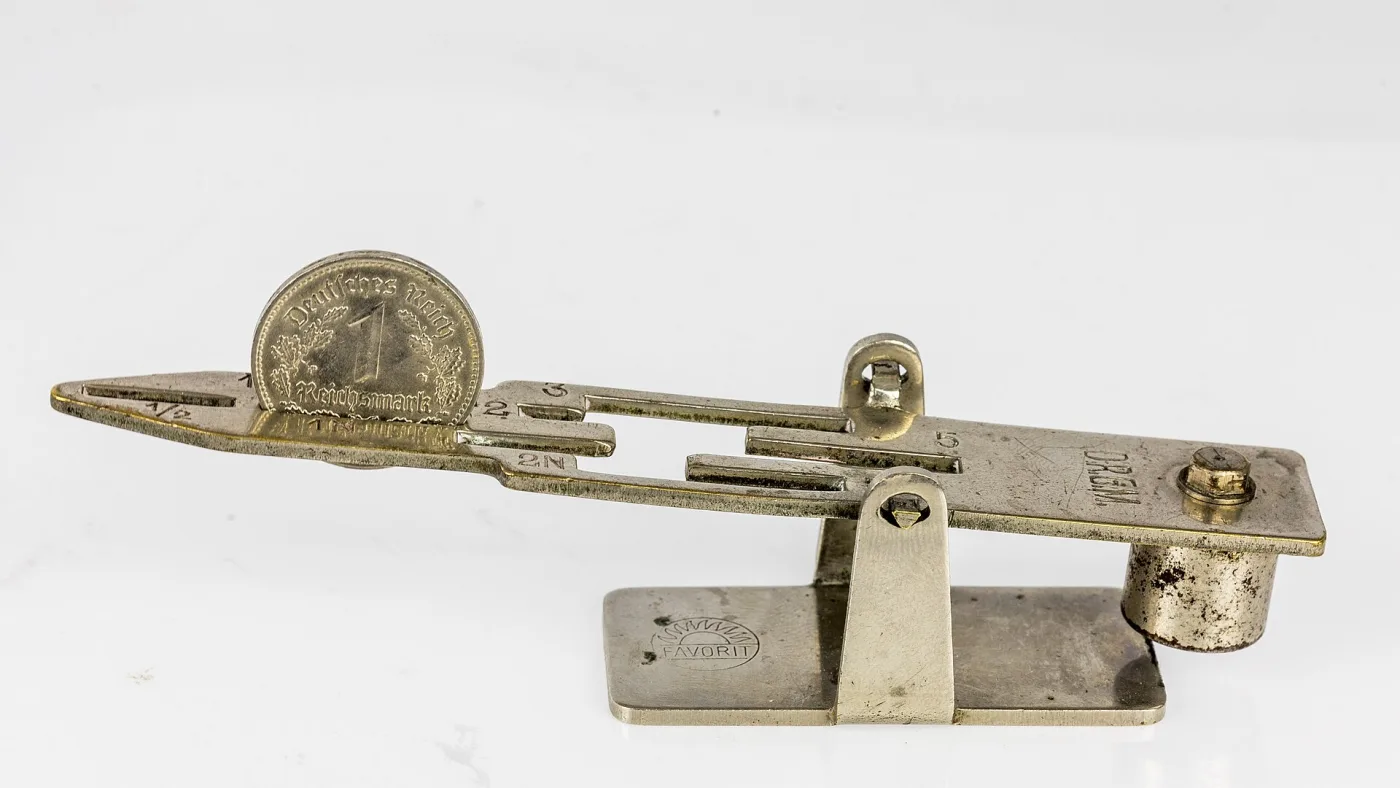
Date and denomination usually settle metal by reference to a catalog, but field checks help: genuine silver coins are non-magnetic and ring clearly, whereas wartime zinc and steel issues may be magnetic and look dull gray. For valuable pieces, specific-gravity testing confirms silver or gold content without damage — the same non-destructive discipline used across counterfeit detection.
The Weimar Republic and Notgeld
No era of German coinage is more dramatic than the Weimar years, when a currency collapse produced some of the strangest “coins” ever made and, after stabilization, some of the most beautiful.
The Hyperinflation and Astronomical Denominations
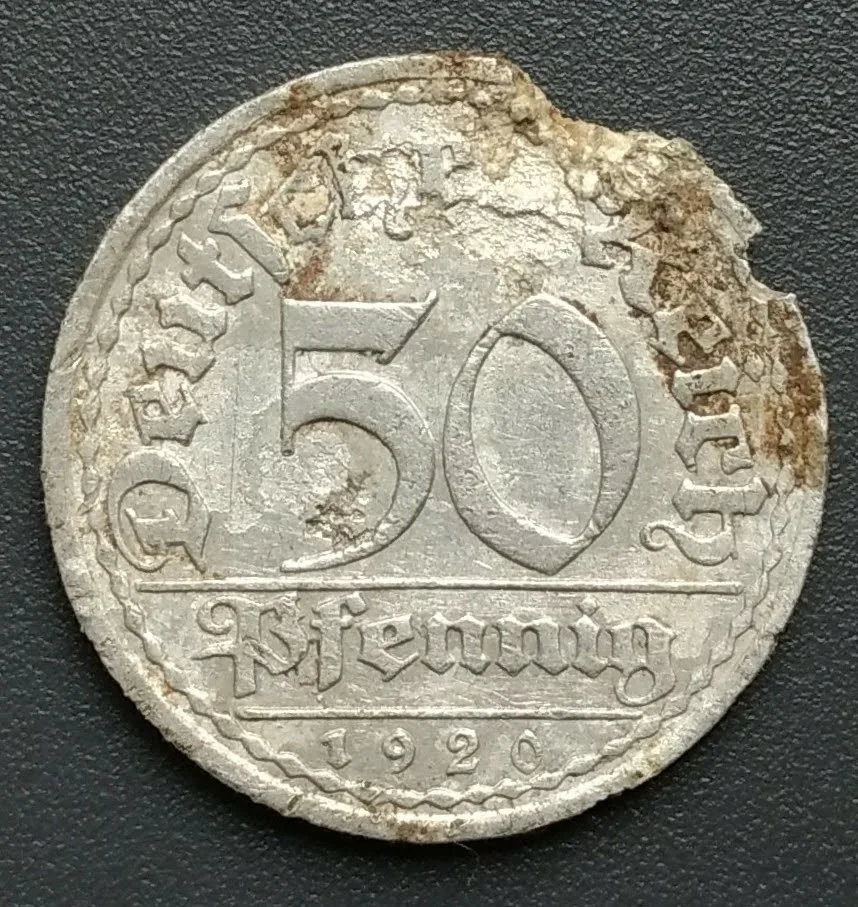
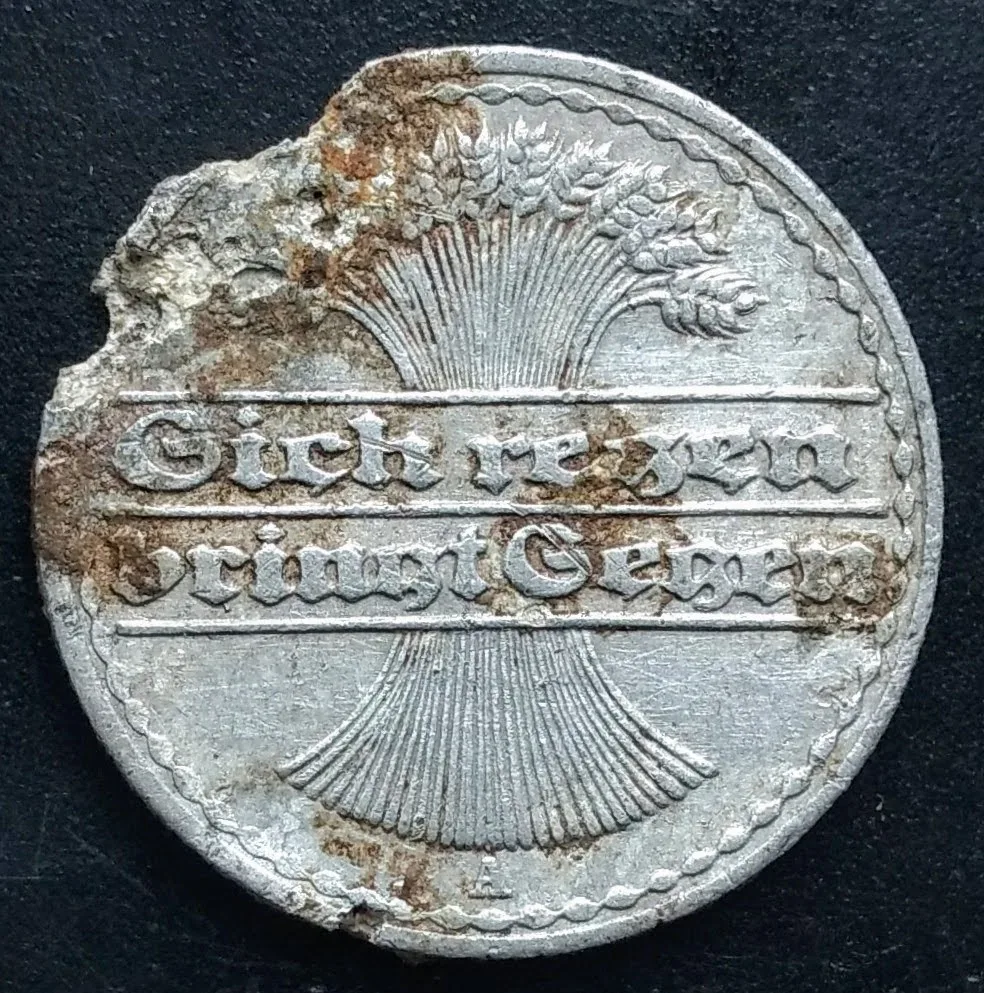
The runaway inflation of 1922–1923 pushed prices into the trillions. Coins and note-like tokens appeared in denominations that read like typographical errors — hundreds of thousands, millions, even billions of marks — struck hastily in aluminum and other cheap metals. These inflation pieces are historically fascinating and, in worn common grades, inexpensive, though high-grade or scarce local issues carry premiums.
Notgeld: Emergency Money
Notgeld (“emergency money”) was issued not by the national government but by towns, cities, states, companies, and other bodies to fill the gap when official coinage was scarce or worthless. Most Notgeld is paper (often gorgeously illustrated and avidly collected), but there is also coin (metal) Notgeld and even porcelain tokens. Notgeld is a huge collecting field of its own; a piece is identified by its issuing town, denomination, date, and series rather than by a national mint letter.
The Stabilized Reichsmark and Weimar Commemoratives
Currency reform introduced the Rentenmark and then the Reichsmark, restoring normal small change (pfennig coins) and silver 1–5 mark pieces. The Weimar era is especially loved for its silver commemorative 3 and 5 Reichsmark coins marking universities, cities, and historical anniversaries — many with low mintages, making them keys and semi-keys prized by collectors. These commemoratives are where the serious Weimar value lives.
Coins of the Third Reich
The coins of Nazi Germany (1933–1945) are a small, historically weighty, and heavily collected era — and one where authentication matters greatly, because fakes and fantasy pieces abound.
The Reichsmark Coinage
Third Reich coins continued the Reichsmark and pfennig. The most familiar collector pieces are the silver 2 and 5 Reichsmark coins: the Hindenburg types (portrait of President von Hindenburg) and the 1934–1935 Potsdam Garrison Church commemoratives. Many carry the national emblem — an eagle clutching a wreath that encloses a swastika — on one side, with the denomination and mint letter on the other.
Wartime Base-Metal Issues
As the war consumed strategic metals, the smaller coins shifted to aluminum and zinc (1, 5, 10 pfennig), which are common, cheap, and often heavily corroded because zinc degrades. These humble coins are frequently the “German war coins” found in veterans’ keepsakes.
Collecting Considerations and Fakes
Because of their historical association, some Third Reich coins attract strong demand and, consequently, extensive counterfeiting — both fakes of genuine types and entirely invented “fantasy” pieces (coins that were never actually issued) aimed at unwary buyers. Treat any Third Reich rarity, and especially any unusual or “special” piece, with heavy skepticism, and authenticate through a reputable dealer or grading service before paying a premium. The metals and mint letters of genuine issues are well documented, which is the collector’s best defense.
Divided Germany: West, East, and the Euro
The post-war coinage splits cleanly into three easily distinguished groups, so once you read the legend you know immediately which Germany you are holding.
West Germany (Federal Republic)
West German coins read BUNDESREPUBLIK DEUTSCHLAND and are denominated in Deutsche Mark and pfennig. Circulation coins (1 pfennig to 5 DM) are mostly base metal, but the 5 DM commemoratives of 1951–1974 are .625 silver, and a long series of 10 DM (and later euro) commemoratives are silver. Every coin carries one of the five mint letters (A, D, F, G, J), and collecting “by date and mint” is standard.
East Germany (Democratic Republic)
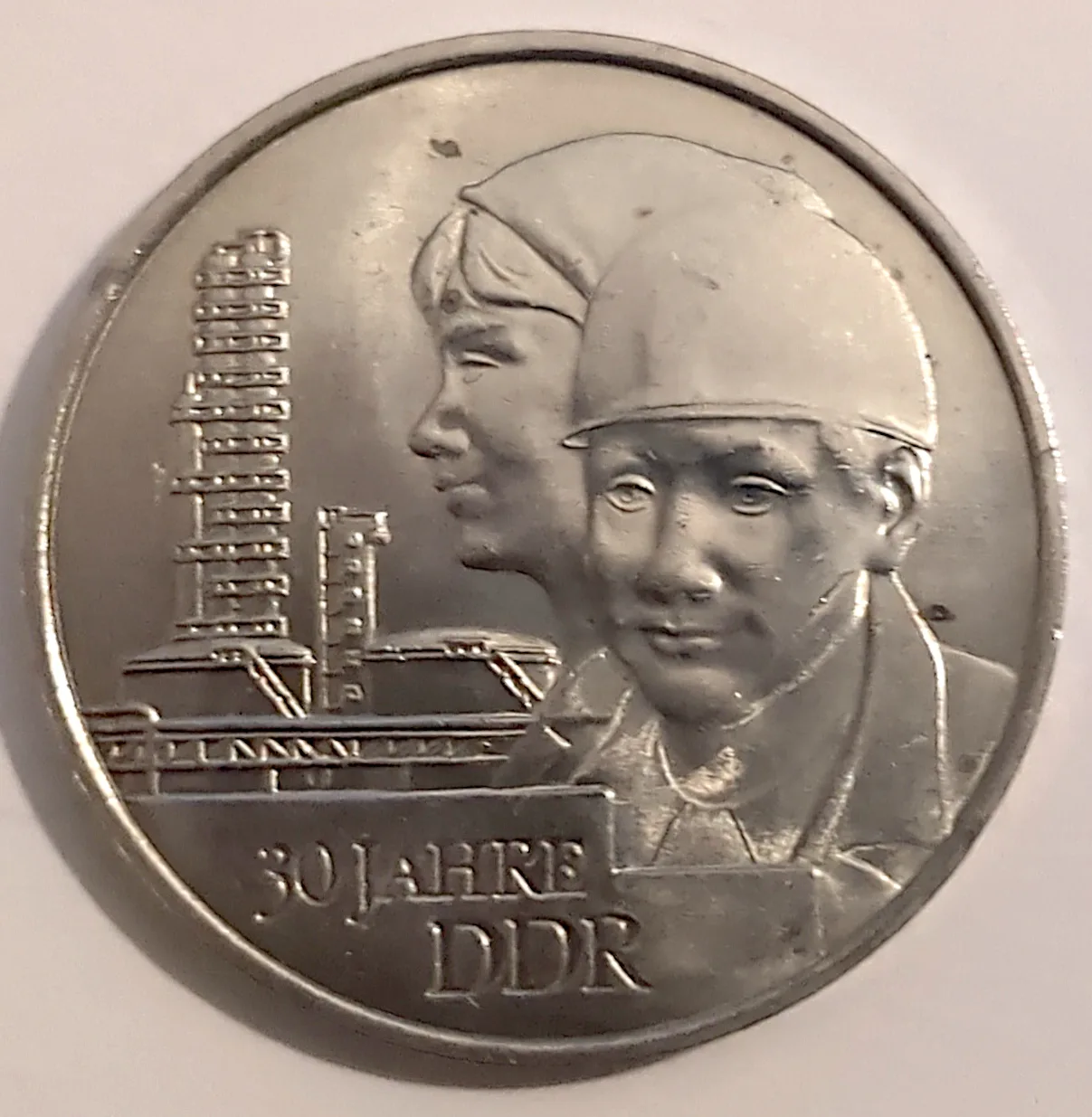
East German coins read DEUTSCHE DEMOKRATISCHE REPUBLIK (or early on, DEUTSCHLAND), are denominated in Mark and Pfennig, and show the state emblem of hammer and compass within a wheat wreath rather than an eagle. Most are lightweight aluminum. The DDR also struck many commemorative 5, 10, and 20 Mark coins (some silver) honoring historical figures and anniversaries, which are the most collectible East German pieces.
Reunification and the Euro
After reunification in 1990 the Deutsche Mark served the whole country until the euro arrived in 2002. German euro coins pair the shared European reverse with a German national side — the oak twig (1, 2, 5 cent), the Brandenburg Gate (10, 20, 50 cent), and the Bundesadler eagle (1 and 2 euro) — and still carry a mint letter (A, D, F, G, J). First-year 2002 coins and low-mintage commemorative 2-euro issues are collected, and modern silver and gold collector euros continue Germany’s tradition of fine-metal commemoratives.
Step-by-Step Identification Workflow
With the framework in place, here is a repeatable process for identifying any German coin in hand.
1. Read the Legend and Place the Era
Look for the key words: DEUTSCHES REICH (1871–1945), BUNDESREPUBLIK DEUTSCHLAND (West/reunified), DEUTSCHE DEMOKRATISCHE REPUBLIK (East), or EURO (from 2002); a state or ruler’s name and a thaler/gulden denomination signals a pre-1871 state coin. The legend plus the eagle style fixes the era.
2. Read the Date, Denomination, and Currency Word
Note the Arabic date and the stated value with its unit — MARK, PFENNIG, THALER, GULDEN, KREUZER, DEUTSCHE MARK, EURO, CENT. The currency word confirms the era and, for the states, the regional system.
3. Find the Mint Letter
Locate the single mint letter (A, D, E, F, G, J, and historically B, C, H) in the field, usually near the eagle or the date. Record it — date + mint letter is what uniquely places an imperial or modern coin in a catalog and is where scarce combinations hide.
4. Identify the Issuing State (if applicable)
On a state coin or the portrait side of an imperial silver/gold piece, read the ruler and state from the legend and match the arms or bust to a catalog. This step is skipped for the uniform imperial small coins and all post-war coins, which are national.
5. Determine Metal and Content, Then Check Keys
Use era and date to set fineness (pre-1918 silver .900; Weimar/Reich silver .500–.625; post-war circulation base metal unless a silver commemorative), confirm with a magnet and ring test, and finally match the type, date, and mint letter against key-date and variety lists. Most German coins are common — but a scarce mint, a low-mintage Weimar commemorative, or a genuine rarity can be worth many multiples of the ordinary price.
Key Dates and Famous Rarities
The great majority of German coins are common and trade modestly, but the field turns on a well-known set of scarce types, mints, and dates. As with U.S. key dates, these are what collectors hunt.
German States Rarities
Among the states, low-mintage thalers, short-lived issues from tiny principalities, mining thalers, and coins of rulers who reigned only briefly command strong prices, as do the finest-known examples of common types. Gold coins of the states are scarce and valuable across the board.
Empire Keys by Date and Mint
In the mark series, certain date-and-mint combinations of the 2, 3, and 5 mark silver and the gold coins have very low mintages and are the keys — for example, scarce years from smaller mints, and the coins of minor states that struck few pieces. The many one-year commemorative types (jubilees, royal deaths) range from common to genuinely rare depending on mintage.
Weimar Commemorative Keys
The Weimar silver 3 and 5 Reichsmark commemoratives include several famous low-mintage keys prized by collectors; a full set is a serious undertaking, and the scarcest dates bring high prices in top grade. These are the blue-chip coins of the interwar period.
Rarities to Authenticate
- Scarce Empire date-and-mint 20 mark gold and low-mintage state gold — keys within the gold series.
- Low-mintage Weimar commemorative 3/5 mark — the interwar keys.
- Genuine scarce Third Reich issues — heavily faked, so verify before celebrating.
As always, treat any apparent rarity with caution: the fame of these coins makes them targets for fakes, altered dates, and altered mint letters, so authenticate before you pay a premium.
German Error Coins and Varieties
German mint errors follow the same categories as U.S. error coins, and the same caution applies: genuine errors are collectable, but ordinary damage, wear, and post-mint alteration are not.
Die Varieties and Overdates
Repunched or altered mint letters, small design differences between dies, and occasional overdates are the German equivalent of the variety hunting behind U.S. doubled dies. Specialist catalogs of the mark and Deutsche Mark series list recognized varieties, and the mint-letter system means “wrong letter” and “missing letter” varieties occasionally turn up.
Struck Errors
Off-center strikes, clipped planchets, wrong-planchet strikes, and die cracks appear on German coins as they do worldwide. The high-volume modern pfennig, Deutsche Mark, and euro coinages are the most fertile ground for such errors, and the bimetallic 2 euro coin produces distinctive ring-and-center misalignments and even mismatched national/European pairings.
Zinc-Coin Damage vs. Genuine Errors
A special caution for German coins: wartime zinc issues corrode and bubble as the metal degrades, and this damage is often mistaken for a mint error. Genuine planchet and striking errors are original to the minting process; corrosion, bubbling, and post-mint dents and scratches are not, and they reduce rather than add value. When in doubt, compare against documented error examples before assuming a premium.
Grading German Coins
German coins are graded on the same 70-point Sheldon scale used for U.S. coins, and the leading third-party services grade German issues routinely, so the vocabulary will be familiar. German collectors also use their own adjectival scale, which maps onto the numbers.
The Grading Scale
- Good / Very Good (G/VG) — heavily worn, major detail gone but the type and legends clear.
- Fine / Very Fine (F/VF) — moderate wear, most design elements sharp (German: schön / sehr schön).
- Extremely Fine (EF/XF) — light wear on the high points only (German: vorzüglich).
- About Uncirculated (AU) — a trace of wear on the highest points.
- Mint State (MS-60 to MS-70) — no wear, as struck, graded by surfaces and strike (German: stempelglanz).
Special Considerations for German Coins
Judge wear on the high points of the eagle, the ruler’s portrait, or the state arms, and weigh eye appeal, luster, and originality. Weimar and Reich silver commemoratives are collected in high grade, where small differences in preservation mean large differences in price. Avoid cleaned coins, which lose much of their value; the general principles in our coin grading guide apply directly.
Slabbing and Third-Party Grading
High-value German coins — scarce state thalers, key Empire date-and-mint pieces, gold, and low-mintage Weimar commemoratives — are commonly sent to third-party grading services, which encapsulate them with a numeric grade and an authenticity guarantee. Given the prevalence of Third Reich and rarity fakes, professional authentication is especially valuable here, though it is rarely worth the cost for common circulated pfennigs and base-metal minors.
What German Coins Are Worth in 2026
German coin values span an enormous range, from a few cents for a worn zinc pfennig to five and six figures for the great state and rarity pieces. Here is a realistic picture for the coins most people actually hold.
Common Circulated Coins
Base-metal Empire, Weimar, Reich, West, and East minors in circulated grades, and modern euros, are worth little more than face or a small collector premium. Wartime zinc and aluminum coins are abundant and modestly valued, and corroded examples less still. Their appeal is as inexpensive, historically interesting foreign coins rather than as bullion or rarities.
Silver Coins for Their Metal
State thalers, Empire 2/3/5 mark and ½/1 mark silver (.900), Weimar and Reich silver (.500–.625), and West German 5 DM and silver 10 DM commemoratives all carry precious-metal value that rises and falls with the silver price, independent of any collector premium. A thaler or a 5 mark piece has genuine melt value; remember that Weimar/Reich silver is lower fineness than Empire silver and contains proportionally less metal.
Bullion and Modern Gold
Empire gold (5, 10, 20 mark, .900) trades close to its metal content plus a premium, much like other classic European gold, and modern German gold and silver collector coins track the market for their metal. Original low-mintage dates and high grades add numismatic premiums on top.
Key Types and Rarities
Four-, five-, and six-figure values live among the great rarities: finest-known and scarce state thalers, low-mintage Empire date-and-mint silver and gold, key Weimar commemoratives, and genuine scarce Third Reich issues. These are exceptional. For everyday identification, assume any given coin is common until a type-, date-, and mint-check proves otherwise — and get a professional opinion before paying a premium, since fakes cluster around exactly these coins.
Counterfeits and How to Avoid Them
Because German silver, gold, and historically charged coins are valuable and widely recognized, counterfeits are a serious concern — from period forgeries to modern cast and struck fakes and outright fantasy pieces. The same discipline used for counterfeit detection on U.S. coins applies here.
Fake Silver Crowns and Gold
Thalers, Empire 5 mark, and 20 mark gold are all reproduced, from tourist souvenirs to deceptive struck copies. Genuine coins have precise weight and diameter, sharp detail, and correct edge devices (the Empire’s lettered GOTT MIT UNS edge, for instance). A coin that is underweight, has a soft cast surface, shows a seam on the edge, or has mushy legends is a red flag. This parallels the caution needed with any heavily counterfeited world crown.
Third Reich Fakes and Fantasy Pieces
Nazi-era coins are among the most faked in the world. Beware not only copies of genuine coins but fantasy pieces — invented “coins” bearing eagles, swastikas, and portraits that were never actually issued as currency, produced purely to sell to collectors and tourists. If a “rare” Third Reich coin does not match a documented genuine type in a standard catalog, assume it is not real.
Altered Dates and Mint Letters
The value gap between common and scarce date-and-mint combinations tempts forgers to alter a common coin’s date or mint letter to imitate a key. Any high-value Empire, Weimar, or state rarity demands expert authentication, because the incentive to fake it is high and the alterations can be skillful. Weigh and measure any silver or gold coin, prefer graded holders for high-value pieces, and buy only from reputable dealers. As always, never clean a coin — harsh cleaning strips original surfaces and slashes value, a principle covered in our guide to coin toning.
References and Online Tools
When a coin resists identification, the right reference resolves it quickly. German numismatics is exceptionally well documented in both English and German.
The Standard Catalogs
The essential English-language references are the Standard Catalog of World Coins (Krause) volumes, which list every German type, state, mint letter, and date with mintages and values. German-language standards include the Jaeger catalog (the definitive reference for coins from 1871 onward, whose “J-numbers” collectors cite constantly) and specialist works on the states, the Weimar commemoratives, and Notgeld. For the pre-1871 states, references keyed to state and ruler are indispensable.
Free Online Resources
Several free databases let you match a coin by image and description without any purchase — searchable world-coin catalogs, auction-archive sites showing realized prices, the Deutsche Bundesbank and mint information pages, and active collector forums (in English and German) where experts identify coins from photographs. Matching your coin’s era, legend, denomination, date, and mint letter against these sources resolves the great majority of pieces, and comparing sold prices gives a realistic value.
When to Get Expert Help
For a suspected key date or scarce mint, a state thaler, a possible error, a gold coin, any Third Reich piece, or anything you cannot confidently place, consult a reputable dealer or a grading service. Professional authentication is cheap insurance against buying a fake or misjudging a rarity, and it is indispensable before paying a premium for any high-value German coin.
Frequently Asked Questions
How do I know if my German coin is silver?
Use the era and date. Pre-1918 thalers and Empire 2/3/5 mark and ½/1 mark coins are .900 silver; Weimar and Third Reich silver 1–5 mark coins are usually .500 to .625 fine; post-war West and East circulation coins are base metal except the West German 5 DM commemoratives (.625) and various silver 10 DM commemoratives. Silver coins are non-magnetic and ring clearly; wartime zinc and steel coins can be magnetic and look dull. For valuable pieces, specific-gravity testing confirms the content without damage.
What do the letters A, D, F, G, and J on German coins mean?
They are mint letters identifying which mint struck the coin: A = Berlin, D = Munich, E = Muldenhütten (Dresden), F = Stuttgart, G = Karlsruhe, and J = Hamburg (with historic letters like B, C, and H on older coins). The same five letters (A, D, F, G, J) appear on modern German euro coins. The mint letter strongly affects value, because mintages differed sharply between mints for the same date.
Why do different German states appear on coins that all say "mark"?
From 1871 the German Empire shared one currency (the mark), but the larger silver and gold coins were still issued in the name of each constituent state. So a "5 mark" can be from Prussia, Bavaria, Saxony, Baden, Württemberg, Hamburg, and others — the state is read from the ruler's portrait side, while the eagle side shows the denomination and DEUTSCHES REICH. The small pfennig and mark coins were uniform national types.
Is my hyperinflation "billion mark" coin worth a fortune?
Almost never in monetary terms — the enormous denominations reflect the 1923 currency collapse, not value, and most inflation coins and Notgeld are inexpensive today in worn common grades. Their worth is historical and, for scarce local issues or high grades, modestly collectible. The value in the Weimar era lies mainly in the low-mintage silver 3 and 5 Reichsmark commemoratives, not the inflation pieces.
Are Third Reich coins legal and valuable to collect?
Genuine Third Reich coins are collected worldwide as historical artifacts, and common wartime zinc and aluminum pfennigs are abundant and inexpensive. The silver 2 and 5 Reichsmark types have real collector and silver value. Beware, though: this era is among the most heavily counterfeited in numismatics, including invented "fantasy" pieces that were never real coins, so authenticate any unusual or "rare" Third Reich item against a standard catalog before paying a premium.
Is my old German coin a valuable rarity?
Usually no — most German coins are common, especially base-metal minors, wartime zinc, and common-date silver traded for metal. The valuable exceptions are finest-known and scarce state thalers, low-mintage Empire date-and-mint silver and gold, key Weimar silver commemoratives, and genuine scarce Third Reich issues. Check the type, date, and mint letter against key-date lists, and treat any apparent rarity with caution, since altered dates, altered mint letters, and fakes exist.