Ancient Roman Coins Identification Guide: How to Read, Date, and Value Roman Coins
Few objects put history in your hand like an ancient Roman coin. The little bronze disc in your palm may have been struck while the Colosseum was still new, carried in a legionary’s purse, spent in a market on the edge of the known world, and buried for safekeeping seventeen centuries before you were born. And here is the part that surprises almost everyone: coins like that are not locked away in museums. They survive in the millions, they are traded openly, and many cost less than a modern proof set.
The catch is that Roman coins do not explain themselves. There is no date, no denomination printed on the face, no English anywhere — just a stern portrait, a string of abbreviated Latin running around the rim, and a mysterious figure on the back. To a newcomer it looks like a code. It is a code, and this guide teaches you to break it. Roman coinage was produced by a highly organized state that followed consistent rules for portraits, titles, inscriptions, and mint marks, which means that once you learn the system, you can identify most Roman coins yourself.
This guide walks through the three great eras of Roman coinage and the denominations each used, the anatomy of a Roman coin, and how to read the legends and abbreviations. You will learn how to put a name to the emperor on the front, how to date a coin from its titles, what the gods and personifications on the reverse mean, and how to decode late Roman mint marks. We also cover the famous types every collector should know, uncleaned coin lots, how ancients are graded, what Roman coins are actually worth in 2026, and how to steer clear of the fakes that plague online marketplaces.
Why Roman Coins Are More Attainable Than You Think
Most people assume that anything two thousand years old must be rare and expensive. With Roman coins, both assumptions are wrong. Rome ran a monetized economy across three continents for roughly five centuries, striking coins by hand in staggering quantities to pay legions, fund public works, and grease everyday commerce from Britain to Syria. Because there were no banks in the modern sense, Romans routinely buried their savings in pots — and when the owner died or fled and never returned, the pot waited. Farmers, construction crews, and metal detectorists have been finding these hoards for centuries, sometimes tens of thousands of coins at a time.
The Numbers Game: Hoards and Supply
The result is a supply of ancient coins that dwarfs what survives from many far younger series. A common bronze coin of Constantine the Great, struck around 330 CE, can be bought in identifiable condition for the price of a sandwich. Meanwhile colonial and early American coins barely three centuries old often cost hundreds of dollars, simply because far fewer exist and far more collectors chase them. Rarity, not age, drives price — a lesson Roman coins teach better than anything else in numismatics.
Old Does Not Mean Unknowable
The other barrier is psychological: the coins look indecipherable. But Roman mints were disciplined. Portraits follow conventions, titles appear in predictable order, and reverse designs repeat across reigns. Scholars have cataloged virtually every known type in standard references, and free online databases let you match your coin against museum collections. Identification is a learnable skill — a puzzle with rules — and solving your first one is one of the great small pleasures of the hobby.
The Three Eras of Roman Coinage
Placing a coin in the right era is the first identification step, because each era used different denominations, portrait styles, and inscriptions. Roman coinage divides naturally into three broad periods spanning nearly eight hundred years.
The Republic (c. 300–27 BCE)
Rome’s earliest money was heavy cast bronze, soon joined by struck silver influenced by its ancient Greek neighbors. In about 211 BCE, during the war against Hannibal, Rome introduced the denarius, the small silver coin that would anchor the system for four centuries. Republican coins do not show living rulers; instead they carry gods, goddesses, the helmeted head of Roma, the galloping Dioscuri twins, and designs chosen by the annually appointed mint magistrates — the moneyers — whose names appear on the coins. Only at the very end, in 44 BCE, did Julius Caesar put his own portrait on a denarius, an act of monumental arrogance that helped get him assassinated weeks later.
The Empire (27 BCE–284 CE)
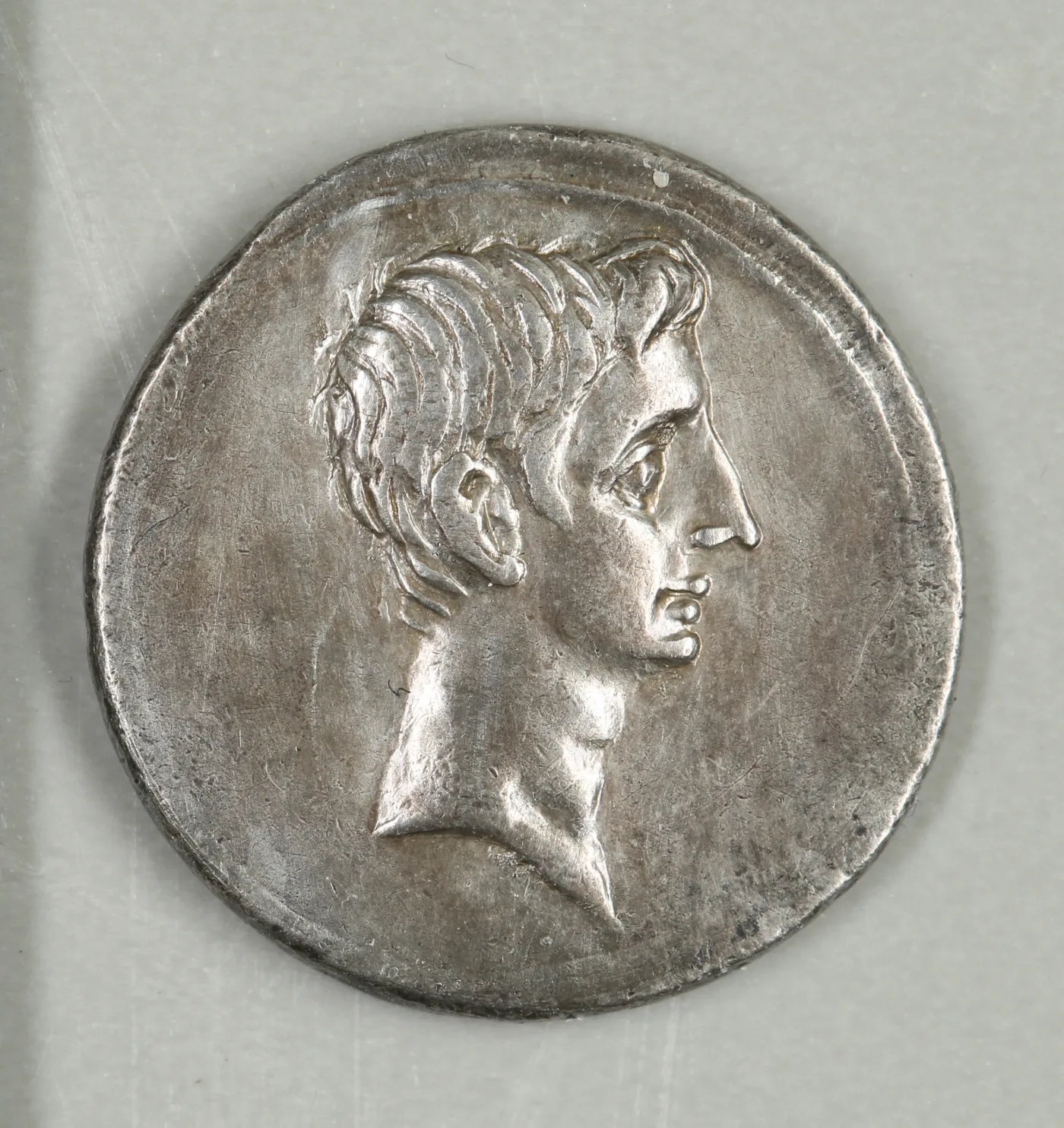
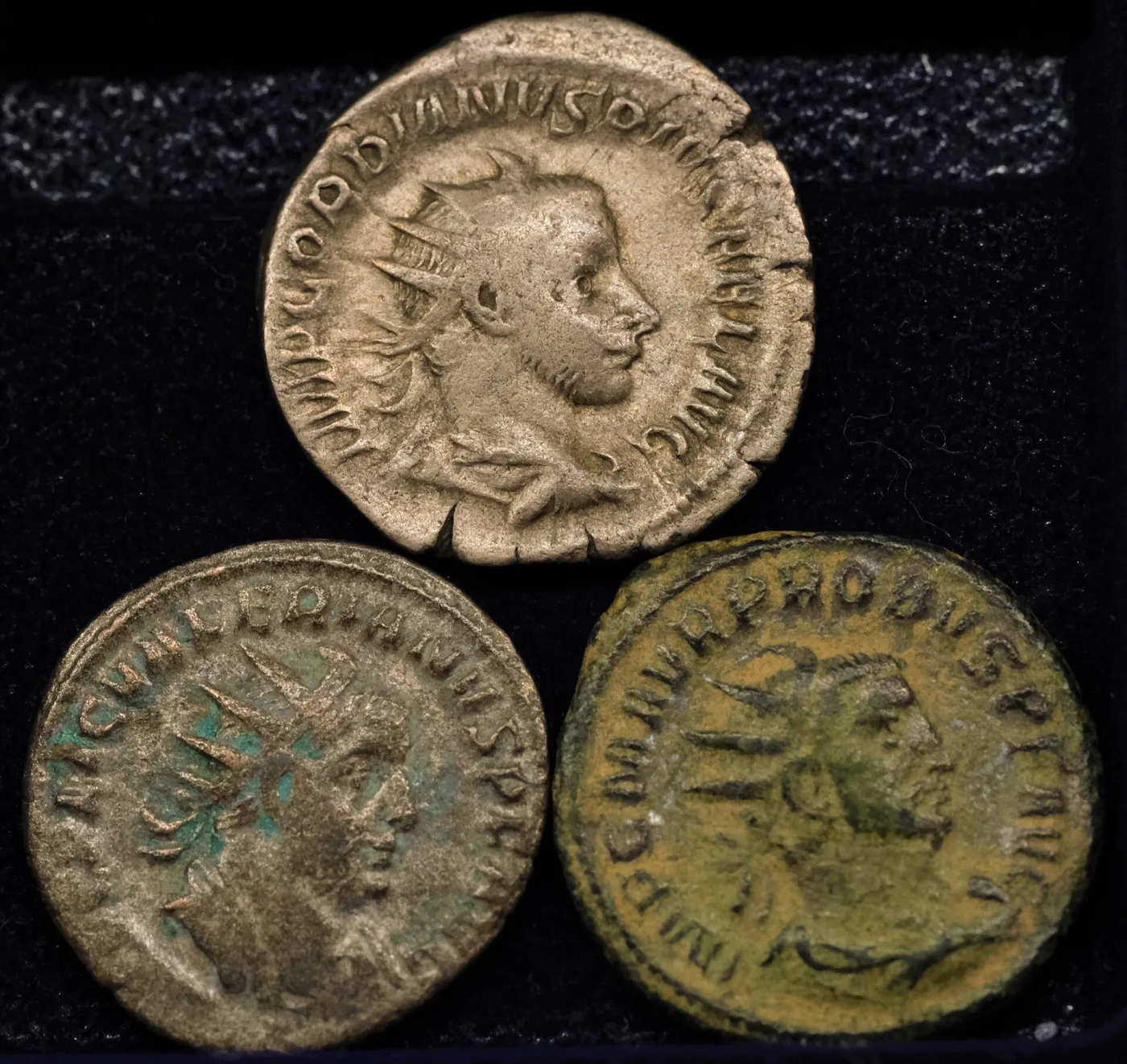
From Augustus onward, the emperor’s portrait owns the obverse, making imperial coins wonderfully identifiable: the face and name of the issuer are right there. Silver denarii and majestic brass sestertii dominate the first two centuries. The third century brought crisis — plague, civil war, invasion — and the coinage tells the story vividly. The silver antoninianus, introduced in 215 CE and marked by the emperor’s spiky radiate crown, was progressively debased until by the 270s it was a small bronze coin with a ghost of silver wash. Debasement makes third-century coins abundant and cheap today: emperors minted torrents of bad money, and hoarders buried it.
The Late Empire (284–476 CE and beyond)
Diocletian and Constantine rebuilt the system. Diocletian’s reform around 294 CE introduced the large silvered-bronze follis, and Constantine added the gold solidus, so reliable it circulated for seven hundred years and became the anchor of the Byzantine coinage that continued the Roman series in the East. Late Roman coins look different: emperors wear pearl diadems instead of laurel wreaths, legends begin with D N (Dominus Noster, “Our Lord”), Christian symbols like the chi-rho appear, and virtually every coin carries a mint mark in the exergue. The small bronzes of this era — struck by the hundreds of millions — are the classic “starter ancients” found in every uncleaned lot.
Roman Denominations: From the Aureus to the Follis
Roman coins never state their denomination. You determine it from metal, size, weight, and — in two clever cases — the emperor’s crown. These are the denominations you will actually encounter:
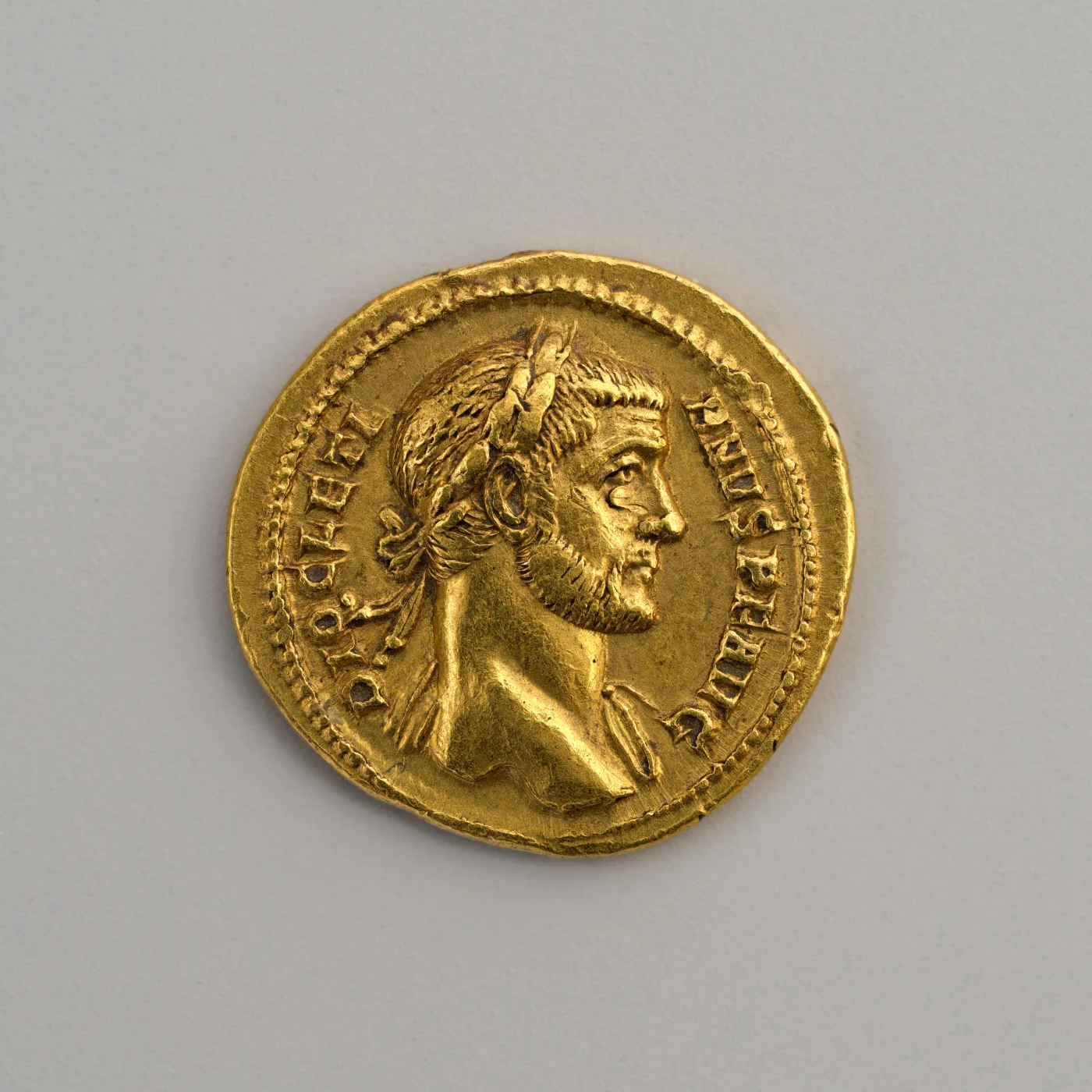
- Aureus: The standard gold coin of the Republic and early Empire, about 19–20 mm and 7–8 grams. Always scarce and always valuable.
- Solidus: Constantine’s thinner, broader gold replacement, about 4.5 grams, struck from the fourth century onward.
- Denarius: The silver workhorse, roughly 18–19 mm and 3–4 grams, struck from 211 BCE into the third century CE. The most collected Roman coin.
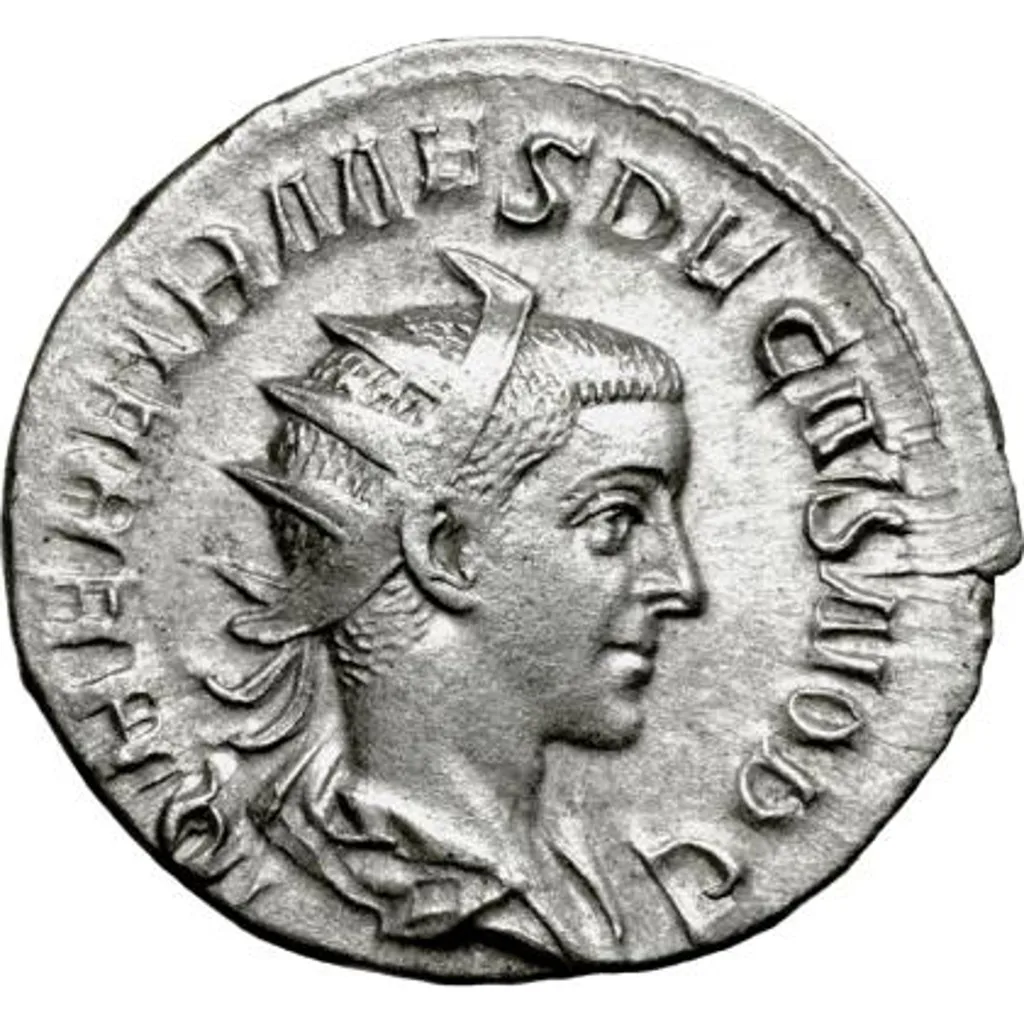
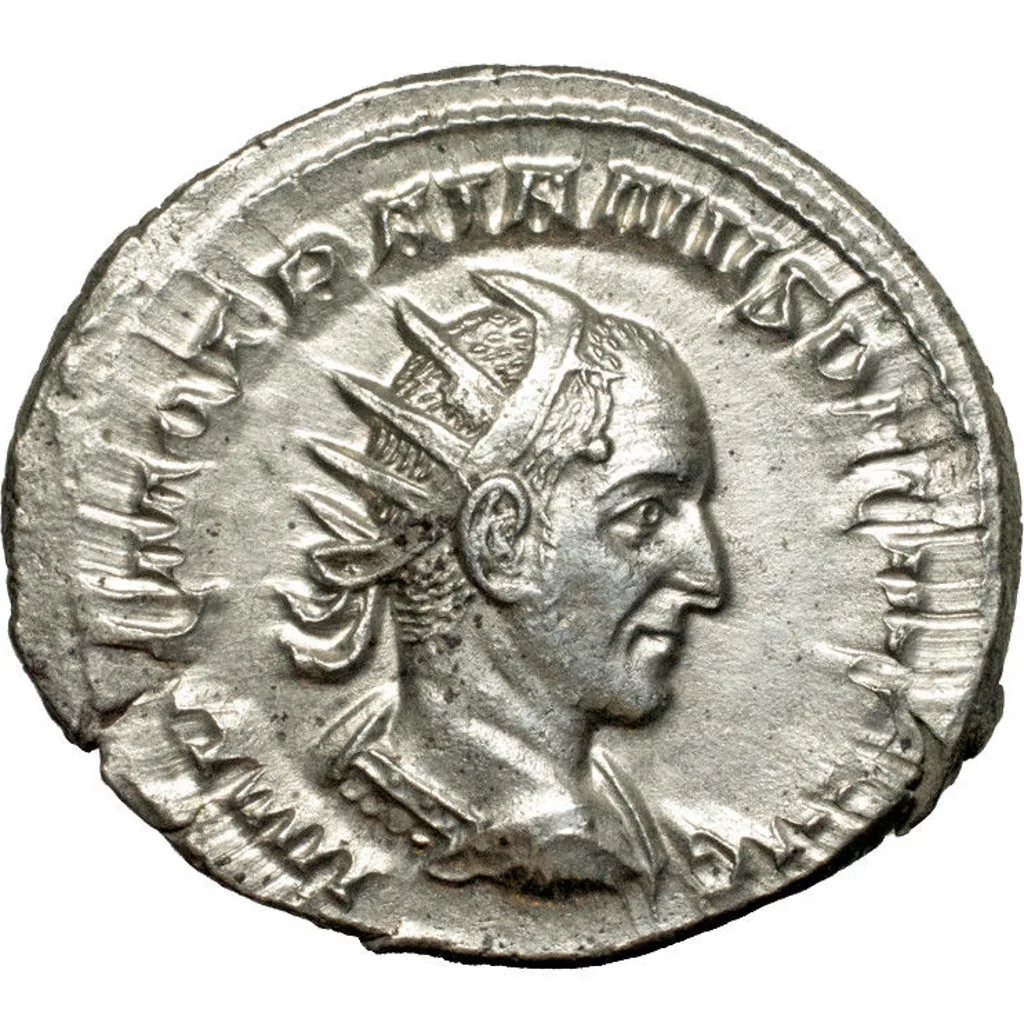
- Antoninianus: The “double denarius” of 215 CE onward, recognizable by the radiate crown on the emperor (or a crescent under an empress’s bust). Starts as good silver, ends as silver-washed bronze.
- Sestertius: A magnificent brass coin, 30–35 mm and 25+ grams, the canvas for Rome’s finest engraving. Worth a quarter of a denarius.
- Dupondius: Brass, mid-sized; the emperor wears a radiate crown here too, distinguishing it from the similar-sized copper as.
- As: The basic copper coin of daily life, about 25–28 mm, with a laureate (not radiate) portrait.
- Follis: Diocletian’s large silvered bronze, around 25–28 mm at introduction, shrinking steadily over the following decades.
- AE1–AE4: Because official names for many late bronzes are lost, collectors classify them by diameter: AE1 (over 25 mm), AE2 (21–25 mm), AE3 (17–21 mm), and AE4 (under 17 mm). Most uncleaned-lot coins are AE3s and AE4s.
Note the elegant trick: a radiate crown doubles the denomination. A radiate silver coin is an antoninianus (two denarii); a radiate brass coin is a dupondius (two asses).
Also be aware that Greek-speaking eastern cities struck their own “Roman provincial” bronzes with Greek legends under imperial authority — if your coin shows a Roman emperor but Greek letters, it is a provincial issue.
Anatomy of a Roman Coin
Numismatists describe every Roman coin using the same handful of terms, and learning them makes references and auction listings instantly readable.
The Obverse: Bust and Legend
The front carries the portrait — the bust — and the emperor’s name and titles running clockwise around it, usually starting at the lower left. A minority of types instead use a divided legend, split by the portrait and read downward on each side, so a legend that refuses to make sense read clockwise is worth trying as two halves. Bust descriptions note the headgear (laureate = laurel wreath, radiate = spiked crown, diademed = pearl or rosette band, or bare-headed) and the dress (draped = wearing a cloak, cuirassed = wearing armor). “Laureate, draped and cuirassed bust right” is the most common description in all of Roman numismatics.
The Reverse: Type, Legend, and Fields
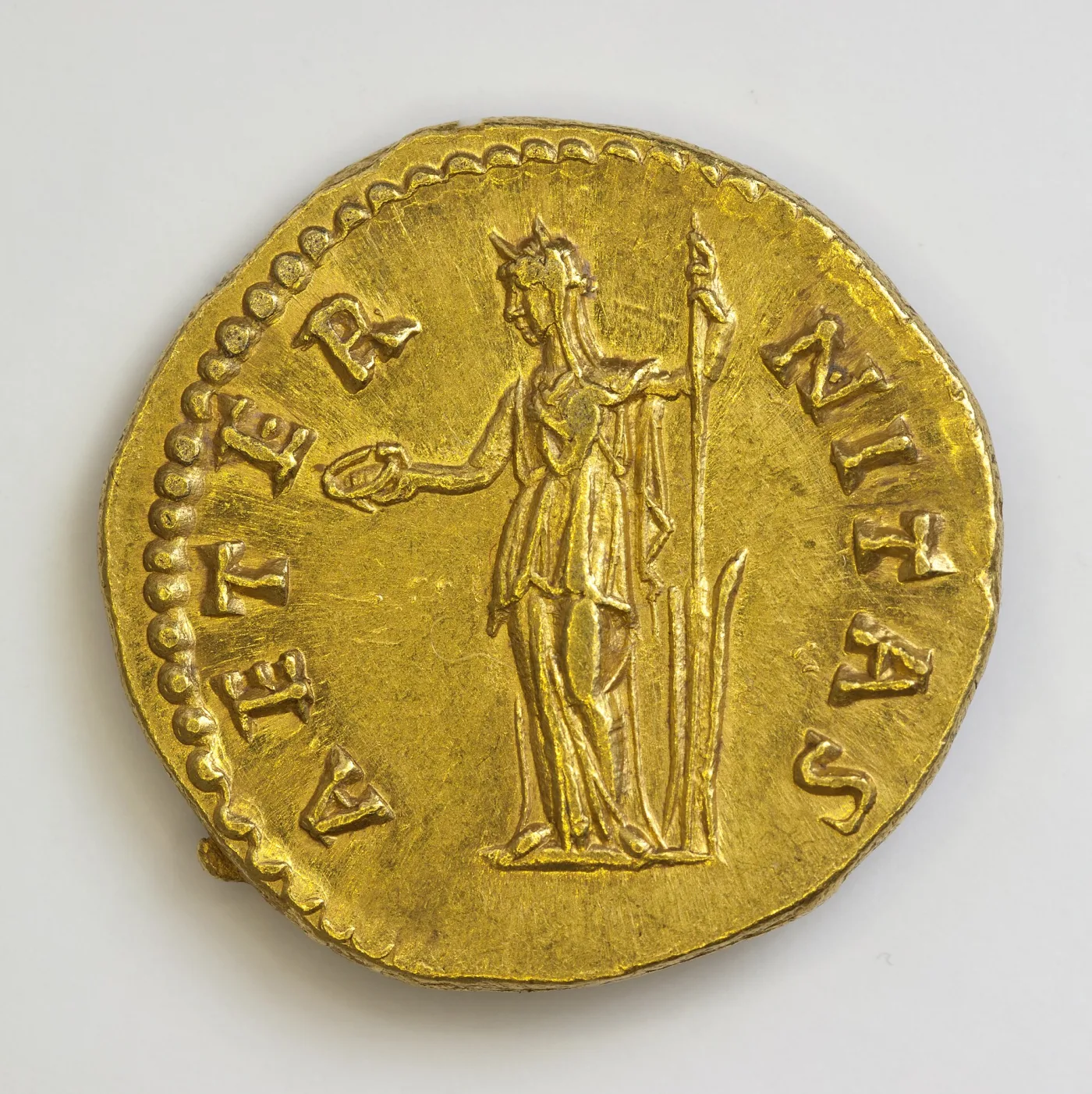
The back shows the type — a deity, personification, emperor at work, building, or scene — with its own legend around it. The flat background areas are the fields, which on later coins often hold control letters, stars, or symbols that identify a specific issue.
The Exergue
Below the reverse design, separated by a ground line, is a small segment called the exergue. On late Roman coins this is where the mint mark lives — the single most useful feature for precise attribution, covered in detail below.
Hand-Struck Character
Every Roman coin was struck by hand: a blank (flan) heated and hammered between two engraved dies. Expect off-center strikes, flat spots, irregular flan shapes, and small cracks at the edge. These are not defects in the modern sense — they are the fingerprint of ancient manufacture, and their presence is actually reassuring when judging authenticity.
How to Read Roman Legends and Abbreviations
Roman legends look impenetrable because they are aggressively abbreviated — space on a coin is tight, and every Roman knew what the abbreviations meant. Two alphabet notes first: Latin used V for U (AVGVSTVS = Augustus) and had no J (IVLIVS = Julius). Words usually run together without spaces.
The Core Abbreviations
- IMP — Imperator, “commander,” the title that became the word emperor
- CAES / C — Caesar; under the Empire, a title rather than a family name
- AVG — Augustus, the senior imperial title (AVGG means two co-emperors; AVGGG, three)
- P M / PONT MAX — Pontifex Maximus, chief priest
- TR P — Tribunicia Potestate, tribunician power, renewed annually — the key to dating
- COS — Consul, with a numeral counting the emperor’s consulships
- P P — Pater Patriae, “father of the fatherland”
- P F — Pius Felix, “dutiful and fortunate”
- D N — Dominus Noster, “Our Lord,” standard from the fourth century
- NOB CAES / NC — Nobilissimus Caesar, a designated heir
- GERM, DAC, PARTH, BRIT — victory titles: conqueror of Germany, Dacia, Parthia, Britain
- DIVVS — “the deified,” marking a commemorative for a dead, deified emperor
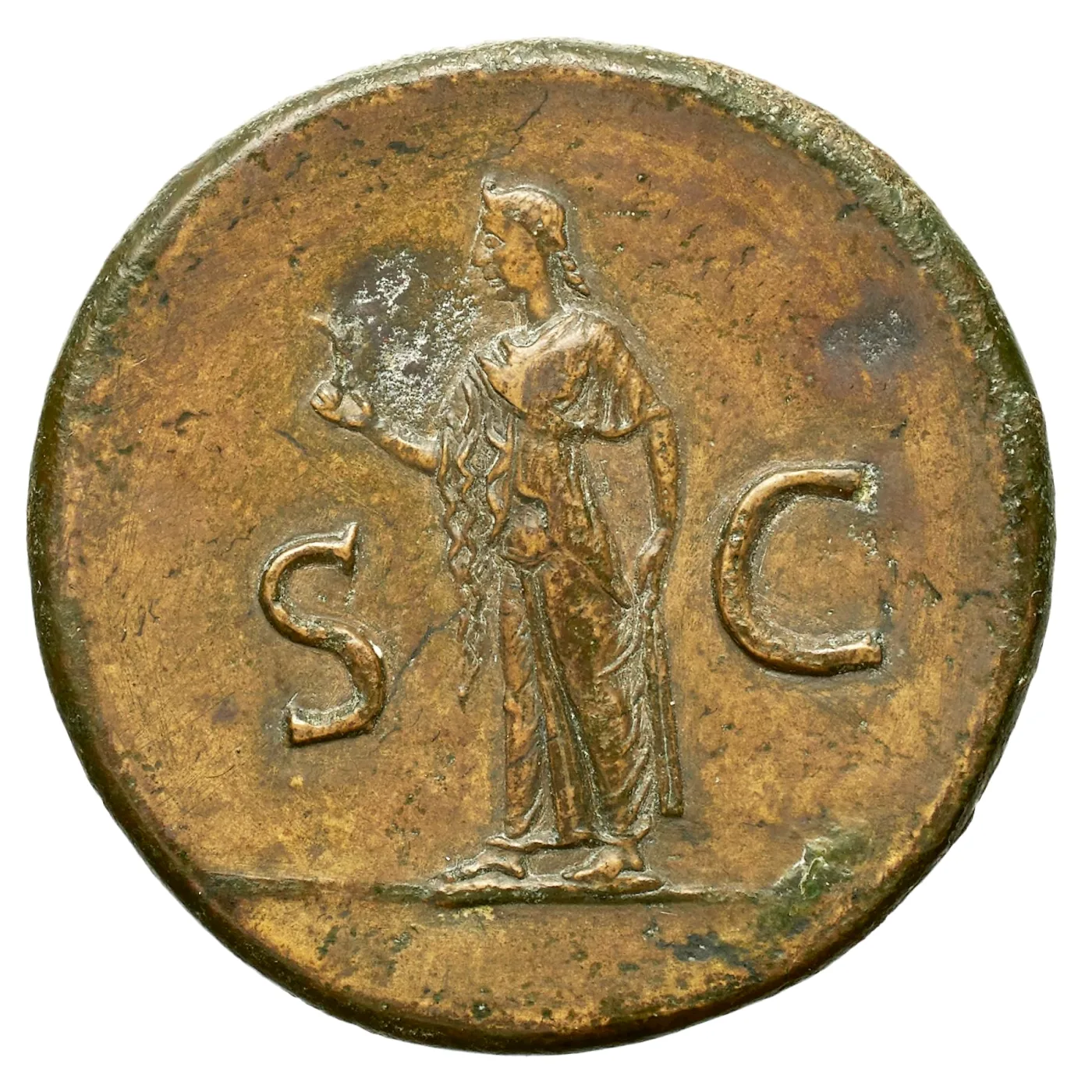
- S C — Senatus Consulto, “by decree of the Senate,” on most early imperial bronzes
A Worked Example
Take the legend IMP C M AVR PROBVS AVG. Expanded: Imperator Caesar Marcus Aurelius Probus Augustus — the emperor Probus (276–282 CE). Or the famous TI CAESAR DIVI AVG F AVGVSTVS: Tiberius Caesar, son of the deified Augustus, Augustus — the emperor Tiberius. Once you know that the actual name hides between the stock titles, you can pull it out of almost any legend: skip IMP, C, and D N at the start, and AVG or P F AVG at the end, and what remains is the man himself.
Identifying the Emperor
Putting a name to the portrait is the heart of Roman coin identification, and the legend is your primary tool. But legends wear away, and several emperors share names, so portrait and style skills matter too.
Start With the Name — Carefully
Read every legible letter of the obverse legend and write it down, using dashes for gaps. Even a fragment like “…RBVS AV…” is enough to suggest Probus.
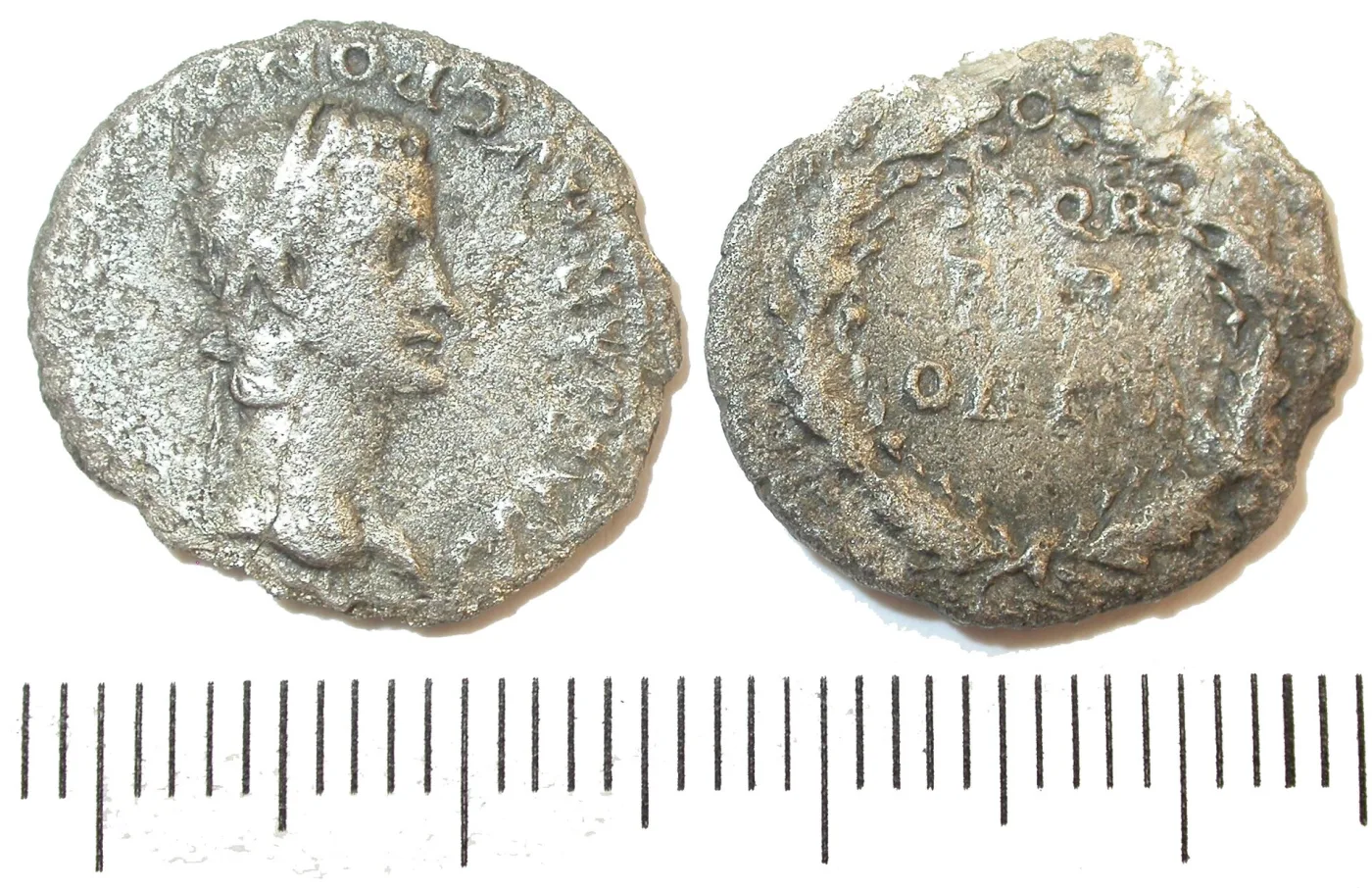
Beware the famous trap: ANTONINVS appears on coins of Antoninus Pius, the young Marcus Aurelius, Caracalla, and Elagabalus — four different men across eighty years. Secondary titles and the portrait break the tie: Antoninus Pius is a mature bearded man, Caracalla a scowling soldier, Elagabalus a teenager.
Portrait Fashions as a Timeline
Roman portraiture followed fashion, and fashion dates coins. Emperors from Augustus through Trajan (27 BCE–117 CE) are clean-shaven. Hadrian (117–138 CE) introduced the beard, which every emperor wore for nearly two centuries. The soldier-emperors of the third century favor close-cropped military stubble and hard faces. From Constantine onward, faces are clean-shaven, idealized, and increasingly abstract, crowned with diadems rather than wreaths. A bearded radiate portrait is almost certainly third century; a diademed, front-facing gaze belongs to the late empire.
Empresses and Heirs
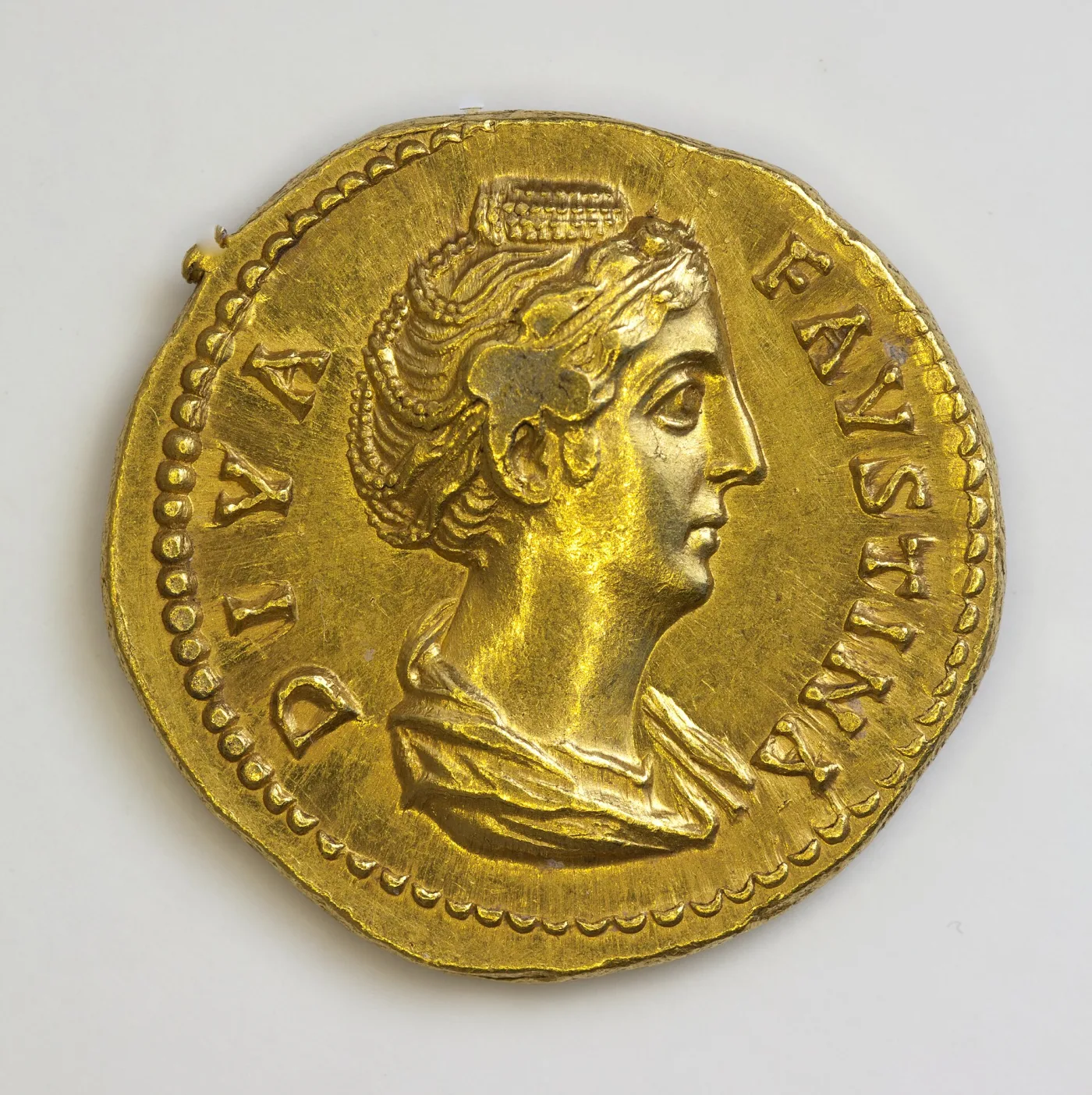
Coins honoring imperial women show a draped bust with an elaborate hairstyle — and hairstyles are datable: Julia Domna’s massive waved coiffure, Faustina’s braided bun, Helena’s ridged waves. Junior heirs (Caesars) appear bare-headed or with modest titles like NOB CAES. Coins of empresses and Caesars are often cheaper than those of the emperors themselves and make fascinating subcollections.

How to Date a Roman Coin
Roman coins carry no calendar dates — the concepts of BCE and CE did not exist. Instead, Romans dated by office-holding, and the titles on the coin encode the year with surprising precision.
Tribunician Power: The Annual Clock
The most useful marker is TR P followed by a numeral. Emperors held tribunician power continuously but renewed it every year, so TR P XVII means “in his seventeenth year of tribunician power.” Reference tables translate these numbers into calendar years for each emperor. A denarius of Marcus Aurelius reading TR P XVII COS III, for example, pins the coin to 162–163 CE — dating accuracy most medieval coins cannot match.
Consulships and Acclamations
COS numerals help too, though emperors took consulships irregularly — COS III simply means “consul for the third time, or later.” IMP followed by a numeral counts victory acclamations, another irregular but usable clock. Combining TR P, COS, and IMP numbers often narrows a coin to a single year; even one of them usually brackets it within a few.
Dating Without Numbers
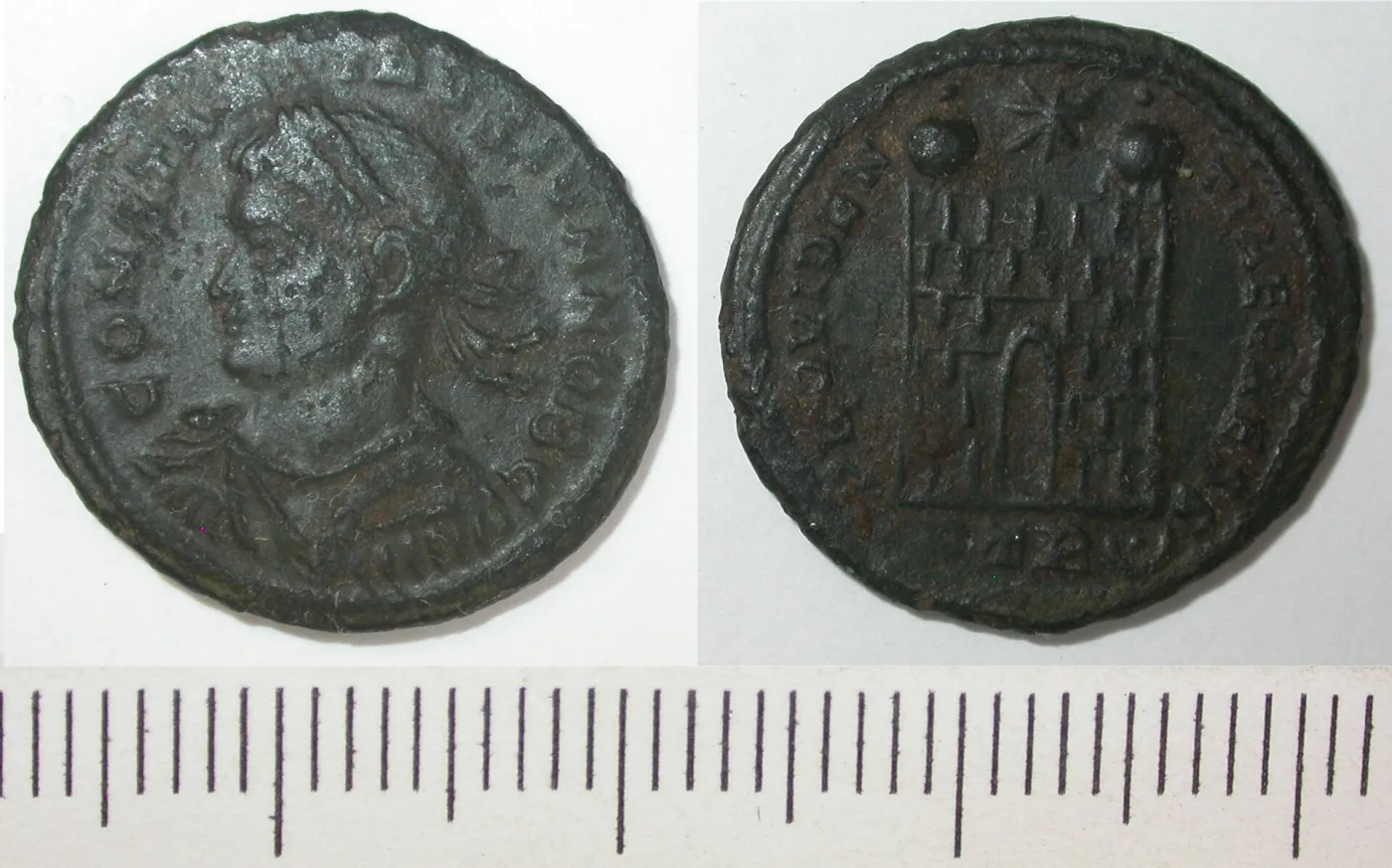
Late Roman coins drop the numbered titles, so dating relies on the combination of ruler, reverse type, and mint mark — each type was struck at specific mints during specific, well-documented windows. A GLORIA EXERCITVS bronze of Constantine with two standards, for instance, belongs to 330–335 CE; the one-standard version to 335–341. The standard references list these windows, which is why reading the mint mark matters so much.
Reverse Types: Gods, Personifications, and Propaganda
The reverse was the Roman government’s newspaper — the fastest medium it had for telling millions of subjects what to believe. Victories were announced, heirs promoted, gods thanked, and anxieties soothed, all in miniature. Learning the recurring cast of characters makes reverses readable at a glance.
The Pantheon
Major gods appear constantly: Jupiter with thunderbolt and scepter (IOVI CONSERVATORI, “to Jupiter the protector”), Mars striding with spear and trophy, Sol the sun god with radiate crown and raised hand (SOLI INVICTO COMITI, favored by Constantine before his conversion), Venus, Mercury with his winged cap, and helmeted Roma herself. The god named in the legend nearly always matches the figure shown, giving you a free vocabulary lesson.
The Personifications
Rome’s most distinctive contribution is the army of virtues personified as standing women, each identified by her props: Pax (peace) holds an olive branch, Victoria is winged with a wreath, Fortuna holds a rudder and cornucopia, Annona (the grain supply) stands with grain ears beside a ship’s prow, Salus (health) feeds a snake, Spes (hope) lifts a flower, Aequitas (fairness) holds scales, and Libertas (liberty) raises the soft cap that, two millennia later, would reappear on early American coinage. Identify the props and you have identified the type.
Military Scenes, Buildings, and Slogans
Other staples include the emperor addressing troops or riding down an enemy, captives seated beneath a trophy, military standards between soldiers (GLORIA EXERCITVS, “glory of the army”), and architectural types — temples, arches, even the Colosseum — that are treasures for historians. Late Roman coins favor bold slogans: FEL TEMP REPARATIO (“the restoration of happy times,” with its famous fallen-horseman scene), and vows like VOT XX MVLT XXX inside a wreath, recording prayers for the emperor’s next decades of rule. The she-wolf suckling Romulus and Remus (VRBS ROMA) and Victory on a prow (CONSTANTINOPOLIS) celebrate the empire’s two capitals and are among the most beloved starter coins.
Late Roman Mint Marks and Officina Letters
From the late third century, the empire ran more than a dozen mints and marked every coin with its origin — a system far older and more elaborate than the mint marks on US coins. The mark sits in the exergue, the segment below the reverse design, and reading it is essential for full attribution.
The Structure of a Mint Mark
A late Roman mint mark typically has three parts: an optional prefix such as SM (Sacra Moneta, “sacred money”) or P (Pecunia), the mint city’s abbreviation, and a workshop letter. The mark SMANTΓ, for instance, means Sacra Moneta, Antioch, third workshop.
The Major Mints
- LON — London (Londinium)
- TR / TRE — Trier (Treveri)
- LVG / LG — Lyon (Lugdunum)
- ARL — Arles (Arelate)
- R / ROMA — Rome
- AQ — Aquileia
- SIS — Siscia (modern Croatia)
- SIRM — Sirmium (modern Serbia)
- TES / THES — Thessalonica
- HER — Heraclea
- CONS — Constantinople
- NIC / NIK — Nicomedia
- CYZ / K — Cyzicus
- ANT — Antioch
- ALE — Alexandria
Officina Letters
Large mints were divided into workshops (officinae), each marked so bad batches could be traced. Western mints numbered workshops with Latin initials — P, S, T, Q for prima, secunda, tertia, quarta — while eastern mints used Greek letters: A, B, Γ, Δ, and so on. Stars, crescents, palm branches, and letters in the reverse fields further distinguish issues. To a specialist, an exergue like •TRP• is as informative as a modern date-and-mint-mark combination.
Famous Roman Coins Every Collector Should Know
A handful of types dominate collector demand, either for their history or their availability, and they make excellent orientation points for a new collector.
Coins of Story and Legend
The Tribute Penny — a denarius of Tiberius with the legend TI CAESAR DIVI AVG F AVGVSTVS — is traditionally identified as the coin in the Gospel passage “render unto Caesar,” making it perhaps the most requested ancient coin of all. Julius Caesar’s elephant denarius and his portrait denarii of 44 BCE carry the drama of the Republic’s final days. The Colosseum sestertius of Titus, showing the amphitheater in bird’s-eye detail, is a six-figure trophy. The EID MAR denarius of Brutus, celebrating Caesar’s assassination with two daggers and a liberty cap, is the most famous ancient coin in existence — museum material worth millions.
Coins of Availability
At the other end, some wonderful coins are so plentiful they anchor every beginner collection. Gordian III antoniniani (238–244 CE) survive in enormous numbers as attractive, honest silver. Denarii of Septimius Severus and his dynasty are the cheapest good silver of the high empire. The fallen horseman bronzes of Constantius II may be the most common ancient coin of all, and Constantine-era commemoratives — VRBS ROMA with the she-wolf, CONSTANTINOPOLIS with Victory — pack a remarkable amount of history into ten-dollar coins. Marcus Aurelius, the philosopher-emperor of the Meditations, remains the sentimental favorite: a solid denarius of his reign costs less than most Morgan dollars in mid grades.
The Twelve Caesars
The classic advanced pursuit is a portrait set of the Twelve Caesars chronicled by Suetonius — Julius Caesar through Domitian. Eleven are achievable with patience; Otho, who reigned three months in 69 CE, is the famous stopper. It is the ancient-coin equivalent of chasing a series’ key dates, and completing it is a lifetime achievement.
Step-by-Step Identification Workflow
Here is the systematic process specialists actually use, condensed into eight steps. Work with a gram scale, calipers (or a mm ruler), a 10x loupe, and good raking light from a single lamp.
- 1. Measure and weigh. Diameter in millimeters and weight in grams immediately suggest the denomination — an 18 mm, 3.4 g silver coin is a denarius; a 17 mm late bronze is an AE3.
- 2. Identify the metal. Gold, silver, billon (silver-washed bronze), brass, or copper. Traces of silvering on a bronze coin point to the late third or fourth century.
- 3. Study the bust. Laureate, radiate, or diademed? Bearded or clean-shaven? Male or female? Each answer narrows the era sharply.
- 4. Transcribe the obverse legend. Every letter you can see, in order, with gaps marked. Remember V = U and there are no spaces. Extract the name hiding between the stock titles.
- 5. Describe the reverse. Identify the figure by its props (wreath, branch, scales, rudder, snake) and transcribe the reverse legend.
- 6. Read the exergue. On late coins, decode the mint mark and officina letter; note any field letters or symbols.
- 7. Search the databases. Enter legend fragments and type descriptions into OCRE or Wildwinds (see the references section). For late Roman bronzes, the Tesorillo visual guide identifies types by reverse design alone.
- 8. Record the attribution. Note the emperor, denomination, mint, date range, and catalog number (such as RIC VII Trier 209) on the coin’s holder or in your log.
With practice this loop takes minutes. A photograph-based AI identifier can shortcut the search dramatically — snap both sides in good light and let the model propose candidates — but the knowledge above is what lets you verify the answer like a numismatist rather than accept it on faith.
Uncleaned Roman Coins: What to Expect
A unique corner of this hobby: you can buy Roman coins uncleaned — crusty, dirt-encrusted discs sold by the lot, mostly late Roman bronzes recovered in the Balkans and eastern Mediterranean. For a few dollars per coin you get the genuine experience of revealing a seventeen-century-old artifact with your own hands.
Realistic Expectations
Honesty first: dealers pick obvious treasures out of these lots before sale. Expect mostly AE3 and AE4 bronzes of the fourth century — Constantine’s family, fallen horsemen, GLORIA EXERCITVS types — with a percentage of unidentifiable slugs. The lottery-ticket thrill of a silver coin or a scarce emperor is real but rare. Buy uncleaned lots for the experience and the education, never as an investment.
Cleaning Without Destroying
The cardinal rule of coin cleaning and preservation — never clean a collectible coin — has a carve-out for uncleaned ancients, whose surfaces are already buried under soil, but the gentle-methods rule still applies. Start with long soaks in distilled water (days to weeks, changing the water), then work under magnification with a soft brush and wooden toothpicks. Escalate slowly and stop often. Never use wire brushes, acids, or abrasive pastes: they strip the patina — the stable green or brown mineral skin the centuries built — and a stripped ancient coin is as damaged as a scrubbed Morgan dollar. The same chemistry that creates prized natural toning and patina on modern coins is, on ancients, the literal surface of the coin; respect it.
Bronze Disease
One hazard deserves its name in bold: bronze disease, an active chloride corrosion that shows as soft, powdery, bright-green spots that return after removal. It is contagious to other bronzes in the same tray. Isolate any affected coin immediately, and treat it with prolonged distilled-water soaks or a sodium sesquicarbonate solution; stubborn cases need professional conservation. Stable dark patina is your friend; powdery green is an emergency.
Grading Ancient Coins: A Different Language
If you come from US coins, put the 70-point scale aside. The Sheldon numeric system explained in our coin grading guide assumes machine-made coins that all started identical, so wear alone tells the story. Hand-struck ancients start unique, so ancient grading weighs several independent factors.
The Four Factors
Ancients are graded adjectivally — Good, Fine, Very Fine, Extremely Fine, and up to Mint State or FDC (fleur de coin) — but the adjective is only the beginning. Equal attention goes to strike (how well-centered and fully impressed the design is), surface (corrosion, pitting, deposits, flan cracks, smoothing), and style — the artistic quality of the individual die, since every die was hand-engraved and some engravers were masters while others were apprentices. A Very Fine coin from beautiful dies, well-centered on a clean flan, is worth several times a technically sharper coin that is off-center, rough, or crude. NGC’s ancient-coin service acknowledges this by grading strike and surface separately on a 1–5 scale alongside the wear grade, and adding a coveted “Fine Style” designation for exceptional artistry.
Tooling and Smoothing
The ancient market’s version of coin doctoring is tooling — re-engraving worn details into the metal — and smoothing, shaving down rough fields to look cleaner. Both are widespread on high-end bronzes, especially sestertii, and both slash value when disclosed (and destroy trust when not). Examine expensive bronzes for suspiciously sharp details rising from suspiciously flat fields.
Slabs Are Optional Here
Unlike the modern US market, most ancient coins trade raw, and many specialists prefer them that way — handling a coin Marcus Aurelius may have handled is the point. Third-party grading through NGC Ancients adds liquidity and comfort for expensive purchases and crossover collectors, but note that ancient-coin encapsulation carries an authenticity opinion, not the same guarantee structure as modern services. Buying from established ancient-coin dealers matters more than plastic.
What Roman Coins Are Worth in 2026
Roman coin prices span six orders of magnitude, but they are far from random. As of 2026, these retail ranges hold for typical identifiable coins:
- Common late Roman bronzes (AE3/AE4): $5–25 identifiable; $30–80 with sharp detail and pleasing patina
- Silvered folles of the Tetrarchy: $30–100 with substantial silvering intact
- Third-century antoniniani (Gordian III, Philip, Probus): $20–75 in collectible grades
- Common denarii (Severan dynasty): $40–150; earlier and better emperors $100–400
- Sestertii: $75–300 worn but attractive; $500 to five figures for sharp examples with fine portraits
- Tribute Penny denarii: $400–1,000+ on their biblical association
- Gold solidi: roughly $800–1,500 for common late types; aurei start around $3,000 and climb fast
- Rarities: portrait coins of three-month emperors, Caesar portraits, and great sestertii reach five, six, and seven figures
What Actually Drives Price
Four factors dominate. The ruler: Constantine is everywhere; Pertinax (86 days in 193 CE) and Gordian I (21 days) are the ancient world’s equivalent of key dates, priced accordingly. Condition and eye appeal: centering, surface, and style often matter more than pure wear. The type: a common emperor with a rare or historically vivid reverse commands multiples of his ordinary types. Provenance: documented old-collection pedigrees add value and, increasingly, legal comfort — auction records from before 1970 are gold. Hoard discoveries can also reshape prices overnight, flooding the market with a type that was scarce the year before, much as Treasury releases once did to Morgan dollar rarities.
Counterfeits, Copies, and How to Avoid Them
Fakes are the serious risk in this field, and online marketplaces crawl with them. The good news: most fakes are lazy, and a collector armed with a scale, calipers, and the standard counterfeit detection tests catches the majority.
Modern Fakes
Cast copies betray themselves with edge seams, casting pimples, uniform graininess, and weights that miss the standard. Pressed and struck fakes — including the notorious high-quality “Bulgarian school” products — are more dangerous and have fooled experts; they are why rare coins need trusted sources. Tourist replicas from museum shops and Mediterranean souvenir stalls surface constantly in inherited collections; most are crude, oversized, or stamped COPY (required for US-made replicas under the Hobby Protection Act). Red flags that should end a purchase instantly: a “hoard” of matching rare denarii, uncleaned lots salted with silver, gold coins priced under melt, and any eBay seller with private feedback shipping from known fake-production regions.
Ancient Imitations Are Not Fakes
Delightfully, some “fakes” are themselves ancient and collectible. A fourrée is an ancient counterfeit — a base-metal core wrapped in silver foil and struck, often from stolen official dies; where the plating breaks, the copper core peeks through. Barbarous radiates and other unofficial imitations were struck outside the empire’s mints during coin shortages, with charmingly crude portraits and garbled legends. Renaissance Paduan medallic copies of sestertii are collectible works of art in their own right. All are legitimate collectibles when sold as what they are.
Buy the Seller
The single best protection is provenance: established ancient-coin dealers, the major numismatic marketplaces with dealer vetting, and auction houses that guarantee authenticity for life. Community fake databases — notably the Forum Ancient Coins fake reports — let you search a suspicious coin against known forgeries. When serious money is involved, an authentication opinion from NGC Ancients or a specialist dealer is cheap insurance.
Attribution and References: RIC, Sear, and Online Tools
A Roman coin is fully identified when you can cite it: emperor, denomination, mint, date range, and a catalog number. The cataloging universe is mature and, increasingly, free.
The Standard References
The monumental Roman Imperial Coinage (RIC), in ten volumes, assigns the numbers used across the market — “RIC VII Trier 209” identifies one specific issue of one mint in one span of years. Republican coins use Crawford numbers from Roman Republican Coinage. For a single-shelf library, David Sear’s Roman Coins and Their Values (five volumes) pairs attributions with market prices, and provincial issues have the Roman Provincial Coinage (RPC) series.
Free Online Databases
OCRE (Online Coins of the Roman Empire) puts nearly the whole of RIC online, searchable by legend fragment, with photographs from museum collections — it is the single most useful identification tool on the internet. Wildwinds organizes thousands of photographed types by emperor. The Tesorillo visual guide identifies late Roman bronzes from reverse designs alone, ideal for uncleaned-lot coins. Auction archives such as acsearch show real transaction prices for comparable coins. Between these tools, a patient beginner can attribute almost anything with legible detail.
Join the Conversation
Ancient numismatics has an unusually generous community. Specialist forums and collector groups routinely identify mystery coins from photographs within hours, and study groups exist for every niche from Republican moneyers to fourth-century mints. Post clear photos of both sides with the weight and diameter, and you will rarely wait long for an answer — or learn less than you expected.
Frequently Asked Questions
Are ancient Roman coins rare?
As a class, no — they survive in the millions thanks to hoarding and centuries of discovery, which is why common types cost $10–50. Individual issues absolutely can be rare: coins of short-reigned emperors, specific mint-and-type combinations, and high-grade survivors are genuinely scarce and priced like it. Rarity in ancients attaches to the specific issue and condition, not to "Roman coin" in general.
Is it legal to own Roman coins?
In the United States and most of Europe, yes — buying, owning, and selling ancient coins is a lawful, centuries-old trade. The legal complexity sits at the source: many Mediterranean countries claim newly found antiquities as state property, and US import restrictions cover coins from several of them. Practical guidance: buy from reputable dealers who stand behind the legality of their stock, keep invoices, and prize documented provenance — it protects both your investment and the hobby.
How can I tell if my Roman coin is genuine?
Weigh it and measure it against the standards for its type, examine the edge for casting seams, and study surfaces under magnification — honest wear, flow lines from striking, and stable patina are good signs; graininess, pimples, and greasy uniform toning are not. Compare it against photographed examples in OCRE or auction archives, and search fake databases. For valuable pieces, buy from dealers who guarantee authenticity or seek a professional opinion.
Should I clean an ancient coin?
If it has collectible surfaces already — no, never; the patina is the coin's skin and stripping it destroys value. Crusty uncleaned-lot coins are the exception, and even there use only patient, gentle methods: distilled water, soft brushes, toothpicks, and magnification. Watch for powdery green bronze disease, which needs isolation and treatment, and leave anything rare or valuable to a professional conservator.
What is the cheapest way to start collecting Roman coins?
Buy one identified, decent-grade late Roman bronze from a reputable dealer for $15–40 — a Constantine commemorative or fallen horseman — and learn to read it using the steps in this guide. An uncleaned lot makes a fun second purchase once you know what the coins should look like. Add a Gordian III antoninianus for your first ancient silver, then let your interests (an emperor, a reverse theme, a mint) choose the path from there.
What do the letters SC on my Roman coin mean?
SC stands for Senatus Consulto, "by decree of the Senate." It appears large on the reverse of most brass and copper coins of the first three centuries — sestertii, dupondii, and asses — reflecting the tradition that the Senate authorized the base-metal coinage while the emperor controlled gold and silver. Finding SC on a big brass coin is itself an identification clue: you are holding an imperial bronze of the Principate.