Modern Commemorative Coins Identification Guide: 1982-Present Silver Dollars, Clad Half Dollars, $5 and $10 Gold, Mintages, Grading, and Values
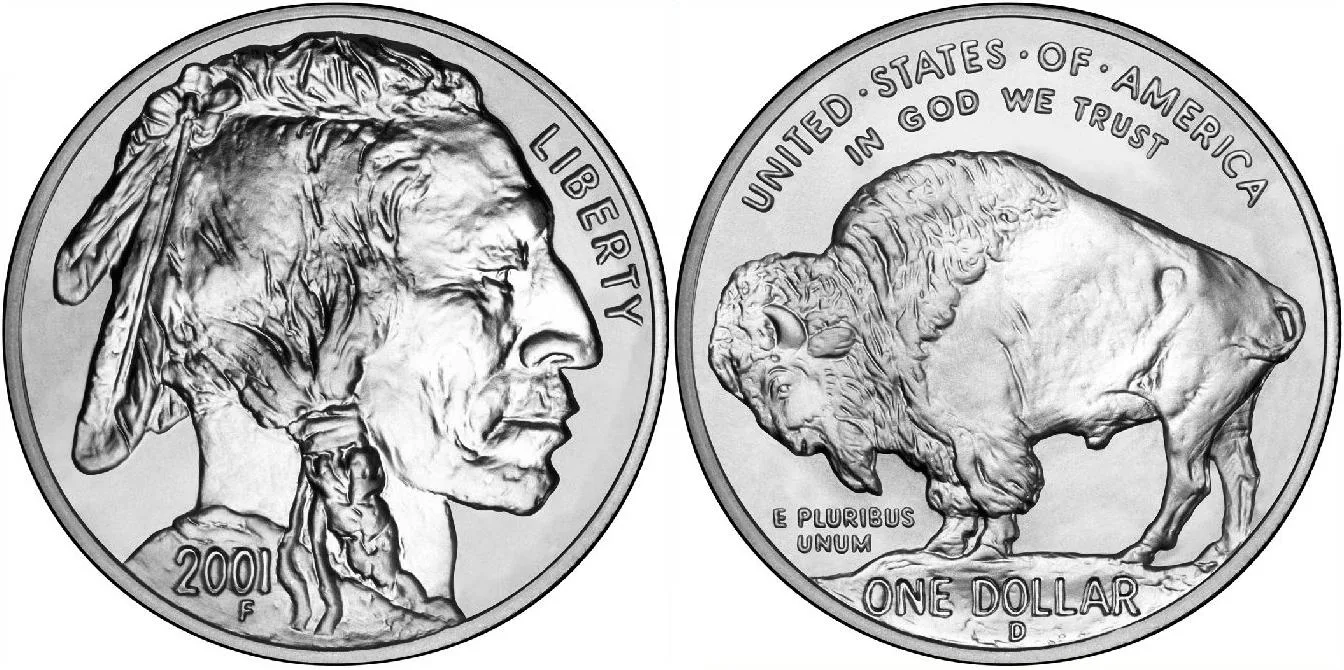
Modern commemorative coins are the United States Mint’s ongoing series of special, non-circulating coins struck since 1982 to honor people, places, events, and institutions of national importance. Unlike the classic commemoratives of 1892-1954, which were sold mostly through private sponsors at coin shows and post offices, modern commemoratives are sold directly by the Mint to the public, struck to exacting modern standards in proof and uncirculated finishes, and almost always include a built-in surcharge that funds a designated cause. They are the coins most American households actually own as “collector coins” — the boxed Statue of Liberty dollar in a drawer, the Olympic half dollar inherited from a parent, the gleaming proof silver dollar bought to mark a wedding or a bicentennial.
The modern commemorative program began with the 1982 George Washington half dollar, the first U.S. commemorative in 28 years, and has since grown to well over 150 distinct coins across three main denominations: clad half dollars, 90% (and later 99.9%) silver dollars, and gold $5 half eagles (with occasional $10 eagles and even a handful of platinum and palladium pieces). Most are common and trade close to their melt or issue price, but a meaningful number are genuine low-mintage rarities worth many times their face or bullion value, and telling the two apart is the single most useful skill a collector of this series can develop.
This guide is the comprehensive 2026 reference for identifying, attributing, grading, and valuing U.S. modern commemorative coins. You will learn how the program is structured, how to read the date, mint mark, finish, and denomination on any modern commemorative, which issues are the famous low-mintage keys, how proof and uncirculated versions differ in value, how surcharges and original packaging affect desirability, and how to avoid the common trap of overpaying for a coin that is worth little more than its silver content. Whether you have inherited a box of Mint-issued dollars, you are building a type set of the program, or you simply want to know what that 1995 Olympic coin in the closet is actually worth, this guide will give you a confident working command of the modern commemorative series.
What Are Modern Commemorative Coins?
A commemorative coin is a legal-tender coin authorized by a specific act of Congress to honor a particular subject — a person, an anniversary, an event, a place, or an organization — and struck for collectors rather than for everyday commerce. “Modern” commemoratives are the issues produced from 1982 onward, distinguishing them from the “classic” series that ran from 1892 to 1954 and then stopped for nearly three decades.
Several features define a modern commemorative and separate it from ordinary circulating coinage and from bullion:
- Authorized individually by Congress. Each commemorative coin (or program) requires its own enabling legislation that specifies the theme, the denominations, the maximum mintage, and the surcharge recipient. This is why the lineup changes every year and why mintage limits exist.
- Non-circulating. Although they carry a face value (50 cents, one dollar, five dollars, ten dollars), modern commemoratives are sold at a premium far above face and are not released into circulation. You will never receive one in pocket change.
- Sold directly by the Mint. The U.S. Mint markets them by mail and online, in proof and uncirculated versions, often in attractive boxes with certificates of authenticity.
- Carry a surcharge. A fixed dollar amount from each coin sold (commonly $10 per silver dollar, $35 per gold coin) is paid to a designated organization or project, such as a museum, memorial, or scholarship fund.
- Struck to collector quality. Modern commemoratives are made from specially prepared planchets and dies, with sharp strikes and either brilliant or frosted-and-mirrored surfaces, not the workmanlike quality of circulation coins.
Commemoratives vs. Bullion vs. Circulating Commemoratives
It is easy to confuse three modern Mint categories. Commemoratives are theme-based, congressionally authorized collector coins with surcharges. Bullion coins such as the American Silver Eagle and American Gold Eagle are produced primarily as investment vehicles priced off metal content and carry no surcharge or single-event theme. Circulating commemoratives — such as the 1999-2008 50 State Quarters, the America the Beautiful quarters, the 2022-2025 American Women quarters, and the 1976 Bicentennial coins — are regular-issue coins released into circulation with special reverse designs; those are covered in our denomination guides like the Washington quarter guide. This article focuses specifically on the non-circulating, premium-priced commemorative program of 1982 to the present.
History: The 1982 Revival and the Boom Years
The classic commemorative era ended in 1954 amid widespread abuse — too many issues, profiteering by sponsors, and price manipulation — and Congress refused to authorize new commemoratives for a generation. The modern program was born out of a single high-profile anniversary.
The 1982 Washington Half Dollar
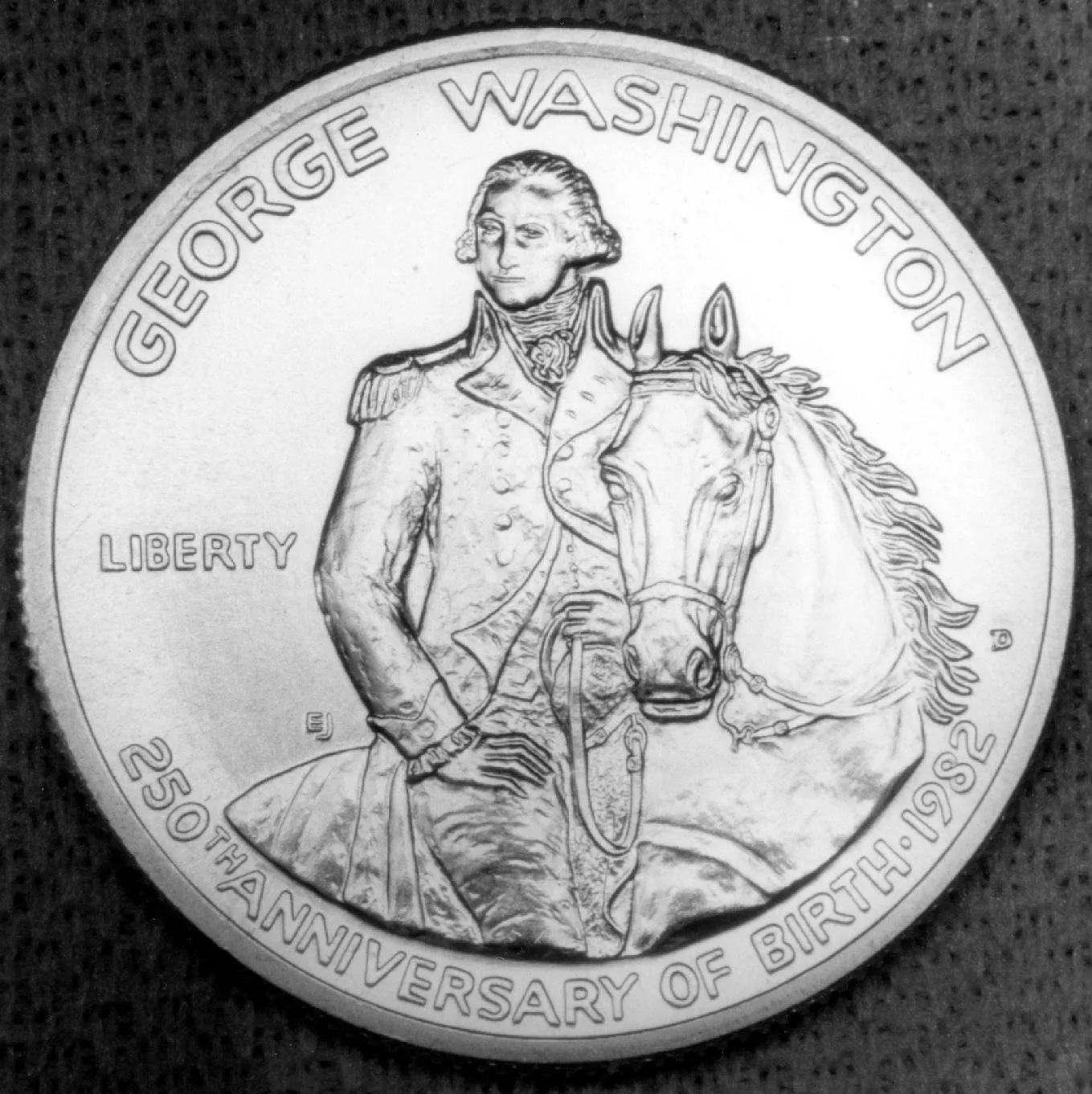
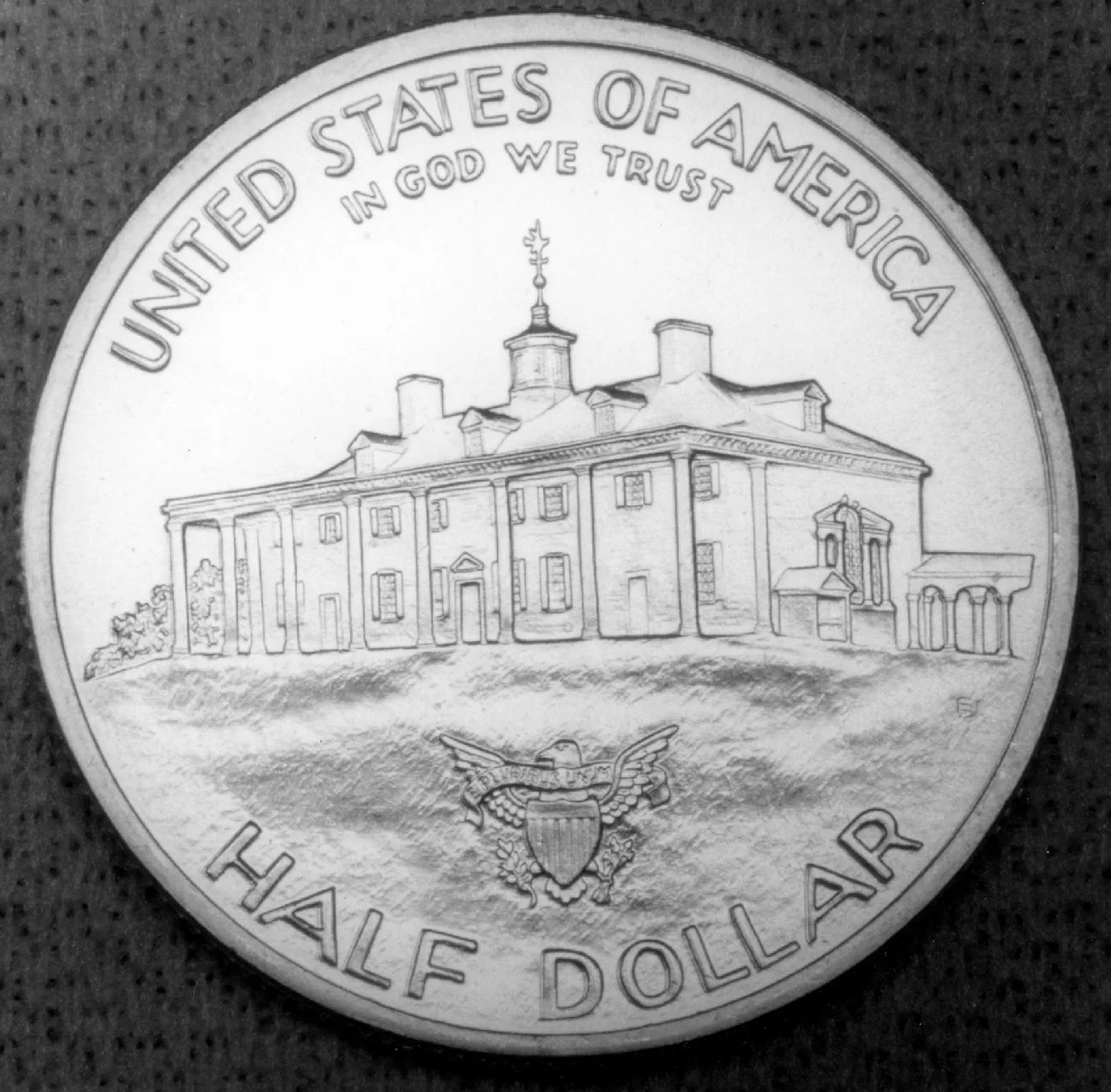
To mark the 250th anniversary of George Washington’s birth, Congress authorized a 90% silver half dollar dated 1982, struck in proof (San Francisco, “S”) and uncirculated (Denver, “D”) versions. It was the first U.S. commemorative coin in 28 years and the first commemorative half dollar ever struck in silver to the .900 fineness familiar from older silver coinage. Its success — millions sold — proved there was a strong modern market and reopened the door to the program that continues today.
The 1984 Olympics and the First Modern Gold
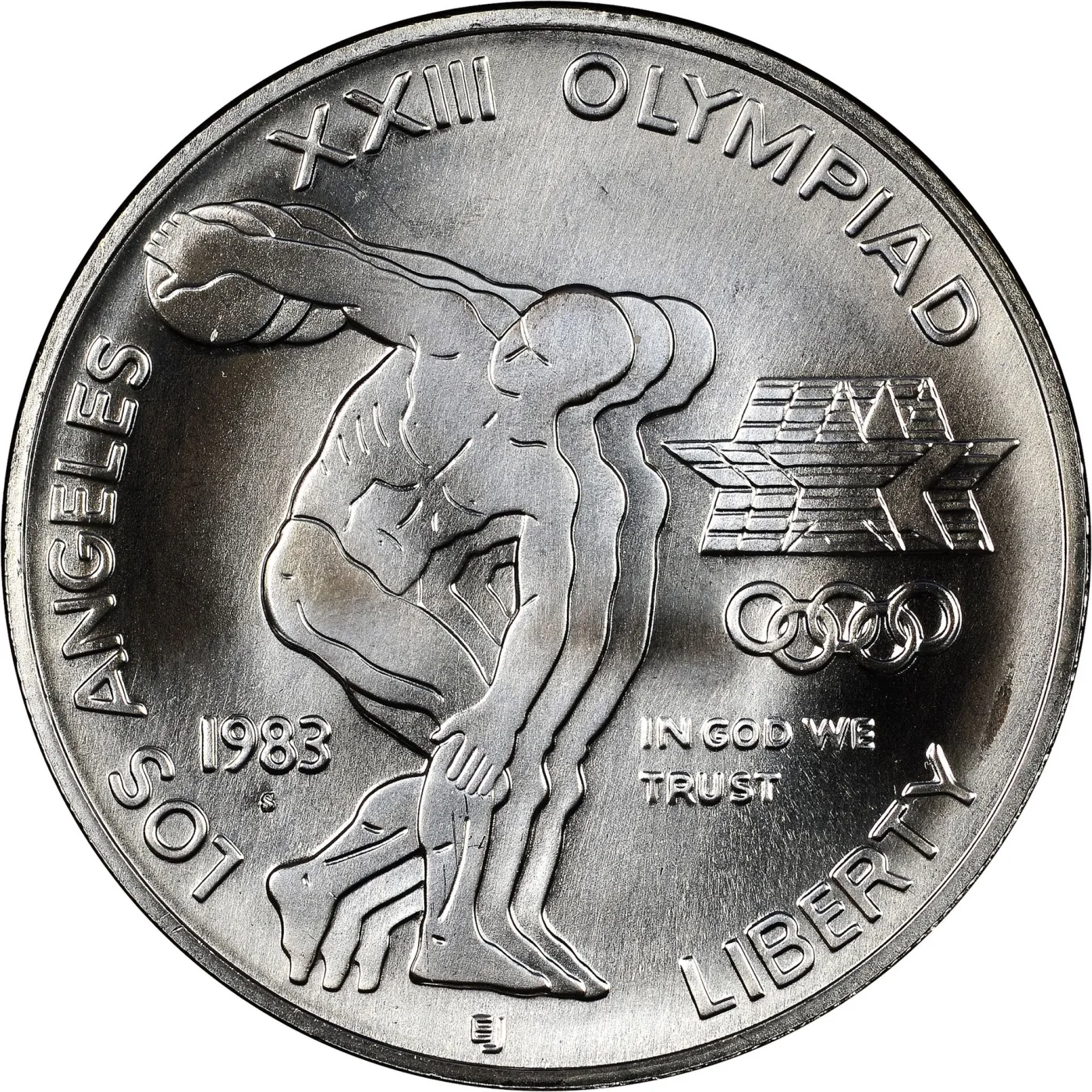
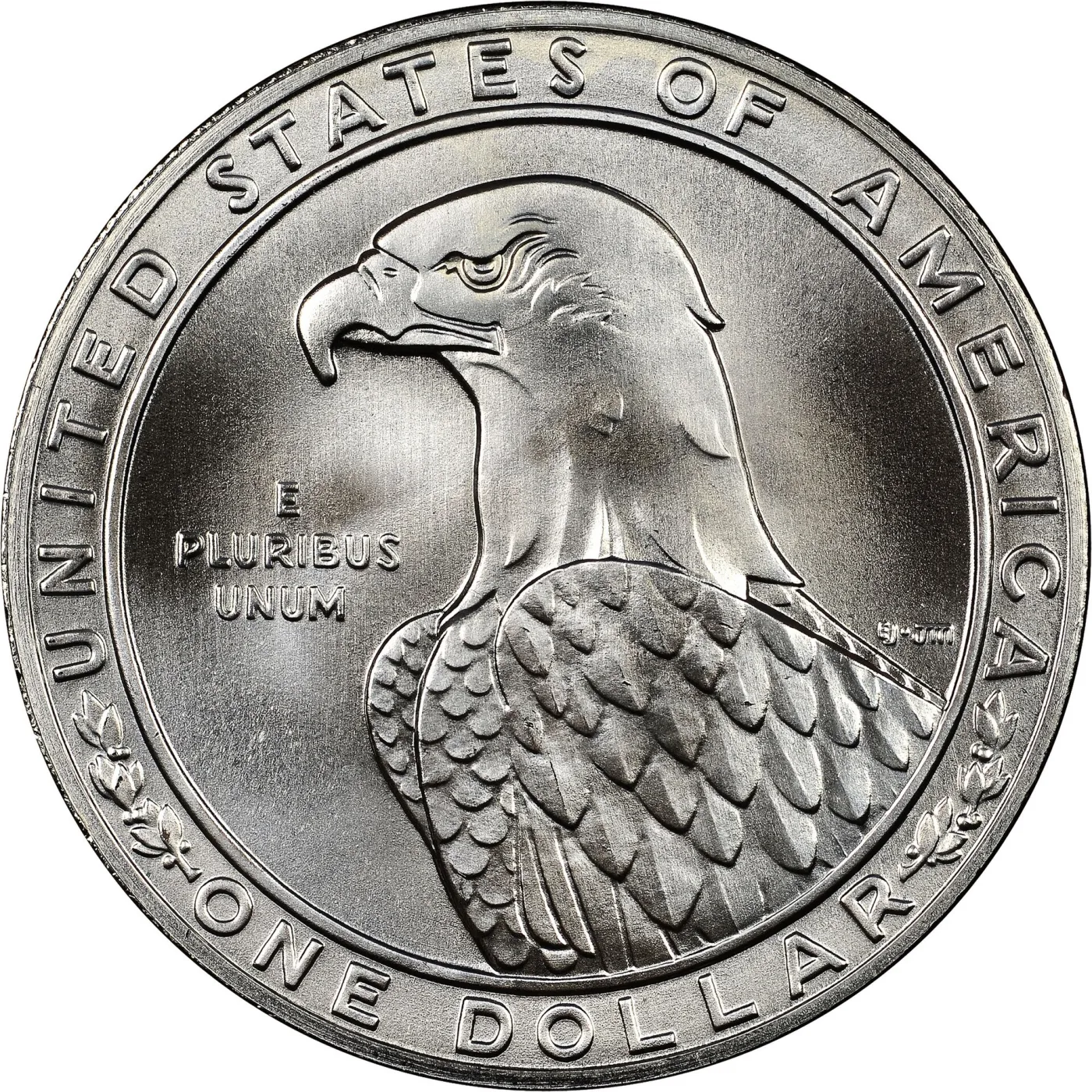
The 1983-1984 Los Angeles Olympic program expanded the format dramatically, adding 90% silver dollars and, for the first time since 1929, U.S. gold commemoratives — the 1984 Olympic $10 eagle, the first American gold coin struck since the early 1930s and the first ever to bear a mint mark on a U.S. gold coin from multiple facilities. This program established the now-standard three-tier structure of clad half, silver dollar, and gold coin.
The 1986 Statue of Liberty Centennial
The 1986 Statue of Liberty program was the commercial high-water mark of the series. Its clad half dollar, silver dollar, and $5 gold half eagle sold in enormous numbers — the silver dollar alone exceeded 6.4 million pieces across proof and uncirculated — funding the restoration of the statue and Ellis Island. Because so many were made and saved, the common Statue of Liberty issues remain among the most affordable and recognizable modern commemoratives.
From Boom to Overproduction and Reform
Through the late 1980s and 1990s the Mint issued commemoratives at a rapid pace, and the market eventually grew saturated. Buyers who had purchased every issue at premium prices found that many coins fell to little more than melt value. Crucially, as fewer collectors bought each new program, mintages plummeted — and it is precisely these low-mintage issues of the mid-to-late 1990s that became the keys of the series. Reforms tightened the number of programs per year and improved oversight, and the modern format settled into the disciplined, lower-volume series collectors know in the 2020s, including marquee issues like the 2014 Baseball Hall of Fame curved coins and the 2019 Apollo 11 50th Anniversary curved set.
The Three Denominations
Almost every modern commemorative falls into one of three denominations. Recognizing the denomination is the first step in identification and immediately narrows the size, metal, and likely value of a coin.
Clad Half Dollar (50 Cents)
The entry-level denomination, struck in copper-nickel clad (the same composition as circulating Kennedy half dollars) at 30.6 mm. A few early commemorative halves (1982 Washington) were silver, but most modern commemorative halves are base-metal clad and are the most affordable tier, typically issued at $8-$25 and often trading near issue price. The clad half is usually the most common and least valuable coin in any three-coin program.
Silver Dollar ($1)
The heart of the program and the denomination most collectors pursue. Modern commemorative silver dollars are 38.1 mm and contain just under an ounce of silver. From 1982 through 2018 they were struck in 90% silver (.7734 oz actual silver weight); beginning in 2019 the Mint switched to 99.9% fine silver (.858 oz). The silver dollar tier includes the great majority of the famous low-mintage keys and is where the most rewarding collecting happens.
Gold $5 Half Eagle (and $10 Eagle)
The premium denomination, struck in 90% gold at 21.6 mm and containing 0.2418 oz of gold — the same specification as the classic $5 half eagle gold pieces. The $5 commemorative is the standard gold tier in most programs. A small number of programs (notably the 1984 Olympics, the 2003 First Flight Centennial, and certain others) issued a $10 gold eagle instead of or alongside the $5. Because they contain real gold, these coins always carry significant intrinsic value and the low-mintage gold issues are among the most valuable modern commemoratives of all.
How to Identify a Modern Commemorative
Identifying a modern commemorative is far easier than attributing an early coin, because these pieces are modern, well-struck, and fully legended. Work through the following observable features and you can name almost any modern commemorative precisely.
Step 1: Read the Denomination
The face value is spelled out on the reverse: “HALF DOLLAR,” “ONE DOLLAR,” “FIVE DOLLARS,” or “TEN DOLLARS.” This tells you the tier (clad half, silver dollar, or gold) and, combined with size and color, the metal.
Step 2: Read the Theme and Date
Modern commemoratives are explicitly labeled with their subject. The obverse or reverse will name or depict the honoree or event — “STATUE OF LIBERTY,” “OLYMPIAD,” “WORLD CUP USA 94,” “U.S. BOTANIC GARDEN,” “LEWIS & CLARK,” and so on — alongside the year of issue. The date plus the theme uniquely identifies the program.
Step 3: Find the Mint Mark
A small letter — P (Philadelphia), D (Denver), S (San Francisco), or W (West Point) — appears on the obverse, usually near the date or design margin. The mint mark, together with the finish, tells you which version of the coin you hold; many programs struck the proof at one facility and the uncirculated at another. (For a full overview of how these letters work across U.S. coinage, see our mint marks identification guide.)
Step 4: Determine the Finish
Decide whether the coin is a proof (mirror-like fields with frosted devices, struck on specially polished planchets) or an uncirculated/“business strike” commemorative (a satin or brilliant non-mirrored finish). The finish materially affects which mintage figure and value applies. See the next section for how to tell them apart.
Step 5: Confirm Metal by Color and Size
Gold coins are unmistakably golden and small (21.6 mm). Silver dollars are large (38.1 mm) and bright white. Clad halves are smaller (30.6 mm) and show the copper-colored core edge of clad coinage. A quick look at edge and color confirms the metal and prevents you from mistaking a clad half for a silver issue.
Proof vs. Uncirculated Finishes
Nearly every modern commemorative was issued in two finishes, and the distinction is fundamental to both identification and value. The two versions are separate collectibles with separate mintages and prices.
Proof
Proof commemoratives are struck on highly polished planchets with specially prepared dies, often more than once, producing deeply mirrored fields and frosted, cameo devices. Held to the light, a proof shows a glassy black-mirror background behind crisp white raised design. Proofs were generally the more popular and higher-mintage of the two versions in most programs, and they were sold in elegant lined boxes with certificates.
Uncirculated (Business Strike)
Uncirculated commemoratives — sometimes called the “BU” or “business strike” version — have a uniform satin or brilliant luster with no mirrored field. They look like a pristine circulation coin that never entered circulation. In many programs the uncirculated version had the lower mintage of the two finishes and is therefore the scarcer, more valuable variant; this is a key reason to identify the finish correctly before valuing a coin.
Why the Distinction Matters
Because proof and uncirculated coins carry different mint marks and different mintages, the same “1995 Olympic silver dollar” can be a common coin or a four-figure rarity depending entirely on which version it is. Always determine the finish first; a great many overpayments and underestimations in this series come from quoting the wrong version’s value. Reverse-proof and “enhanced uncirculated” finishes also appear on a few special 21st-century issues and command their own premiums.
Composition and Physical Specifications
Modern commemoratives use standardized specifications that have shifted only once for silver. Knowing the specs lets you verify a coin’s metal and intrinsic value quickly.
Clad Half Dollar
- Composition: outer layers 75% copper / 25% nickel bonded to a pure copper core (copper-nickel clad)
- Weight: 11.34 grams
- Diameter: 30.6 mm
- Edge: reeded
- Note: the 1982 Washington half is an exception, struck in 90% silver
Silver Dollar
- Composition (1982-2018): 90% silver / 10% copper; 0.7734 oz actual silver weight
- Composition (2019-present): 99.9% fine silver; 0.858 oz actual silver weight
- Weight: 26.73 grams
- Diameter: 38.1 mm
- Edge: reeded
Gold $5 Half Eagle
- Composition: 90% gold / 10% alloy (copper and silver); 0.2418 oz actual gold weight
- Weight: 8.359 grams
- Diameter: 21.6 mm
- Edge: reeded
Gold $10 Eagle
- Composition: 90% gold / 10% alloy; 0.4837 oz actual gold weight
- Weight: 16.718 grams
- Diameter: 27 mm
- Edge: reeded
Curved (concave/convex) commemoratives such as the 2014 Baseball Hall of Fame and 2019 Apollo 11 coins share these metal specs but are domed rather than flat — an intentional design feature, not a striking error. A handful of modern programs have also used .9995 platinum and .9995 palladium for special issues, but silver, gold, and clad account for the overwhelming majority of the series.

Mint Marks and Where They Were Struck
Modern commemoratives were produced at four mints, and the mint mark is part of each coin’s identity. Unlike circulating coins, where the mint mark mostly affects variety, on commemoratives the mint mark is tied directly to the finish and the program.
The Four Mint Marks
- P — Philadelphia: Commonly used on uncirculated silver dollars and some halves.
- D — Denver: Used on several uncirculated issues, including the 1982 Washington half (uncirculated).
- S — San Francisco: The traditional proof mint; many proof commemoratives and clad halves bear the “S.”
- W — West Point: The fortress mint, used heavily for proof and uncirculated gold commemoratives and some prestige silver issues.
How Mint Mark and Finish Pair Up
In a typical program, the proof and uncirculated versions of each denomination were struck at different facilities, so the mint mark effectively tells you the finish at a glance once you learn a program’s pattern. For example, a gold $5 might exist as a “W” proof and a “W” uncirculated, while a silver dollar exists as an “S” proof and a “P” or “D” uncirculated. Recording the exact date-mintmark-finish combination is essential, because the price guides list each combination separately.
No Mint Mark Errors
As with circulating coinage, a few modern commemoratives are known with the mint mark accidentally omitted, and such errors can carry substantial premiums. If you believe you have a missing-mint-mark commemorative, it should be authenticated by a major grading service, since the absence must be confirmed as a genuine die error rather than a removed or never-applied mark. Our error coins guide explains how die and mint-mark errors are evaluated.
Surcharges, Packaging, and Sets
Two features unique to the modern program — built-in surcharges and elaborate original packaging — strongly influence both why these coins exist and what they are worth today.
Surcharges
Every modern commemorative includes a surcharge added to the purchase price and paid to a designated recipient — a museum, memorial, sports organization, scholarship fund, or similar cause. Common surcharges are $10 per silver dollar, $35 per gold coin, and $5-$10 per clad half. These surcharges have raised hundreds of millions of dollars for public projects and are the policy rationale for the entire program. For collectors, the surcharge explains why issue prices sit well above metal value and why the secondary market for common issues often falls below the original price once the surcharge is stripped away.
Original Government Packaging (OGP)
Modern commemoratives were sold in custom presentation cases — lined boxes, capsules, and a numbered or signed Certificate of Authenticity (COA). Collectors call the complete original presentation “OGP.” For common coins, intact OGP with the COA adds meaningfully to value and salability; a loose coin without its box and certificate is worth less than the same coin complete. Always keep, or seek, the original packaging.
Multi-Coin Sets and Special Packaging
Many programs were also sold as multi-coin sets — a two-coin (half and dollar) set, a three-coin (half, dollar, gold) set, or special “Prestige Sets” that combined a commemorative with the year’s regular proof set. Certain bundles, such as the 1995-1996 Olympic sets, the 1997 “Jackie Robinson” matte-finish set, and various young-collector or “coin and currency” sets, were issued in small numbers and can be worth far more intact than the sum of the loose coins. Identifying whether a coin came from a special set can change its value substantially.
Key Dates, Low Mintages, and Rarities
The defining feature of modern commemorative collecting is the enormous spread between common issues and low-mintage keys. The keys are almost always the coins that sold poorly when issued — typically from the saturated mid-to-late 1990s — and survive in small numbers.
What Makes a Modern Commemorative Valuable
Three factors drive value above metal content: low mintage (the dominant factor), metal (gold issues carry a high intrinsic floor), and finish scarcity (often the uncirculated version is rarer than the proof). A coin that combines all three — a low-mintage uncirculated gold issue — sits at the top of the series.
Famous Low-Mintage Keys
- 1995-W Uncirculated Olympic $5 Gold (Torch Runner): One of the lowest mintages in the entire program and a premier key, with a tiny uncirculated production. Worth many multiples of its gold content.
- 1996 Olympic silver dollars (uncirculated): Several 1996 Atlanta Olympic dollars — including the Paralympics (Wheelchair), Tennis, Rowing, and High Jump types — have very low uncirculated mintages and are among the most sought-after modern silver dollar keys.
- 1997-W Jackie Robinson $5 Gold: A celebrated low-mintage gold key, especially the uncirculated version sold in a special set.
- 2000-W Library of Congress $10 Bimetallic (gold and platinum): The only U.S. bimetallic coin, struck in gold with a platinum center; a distinctive and valuable modern issue.
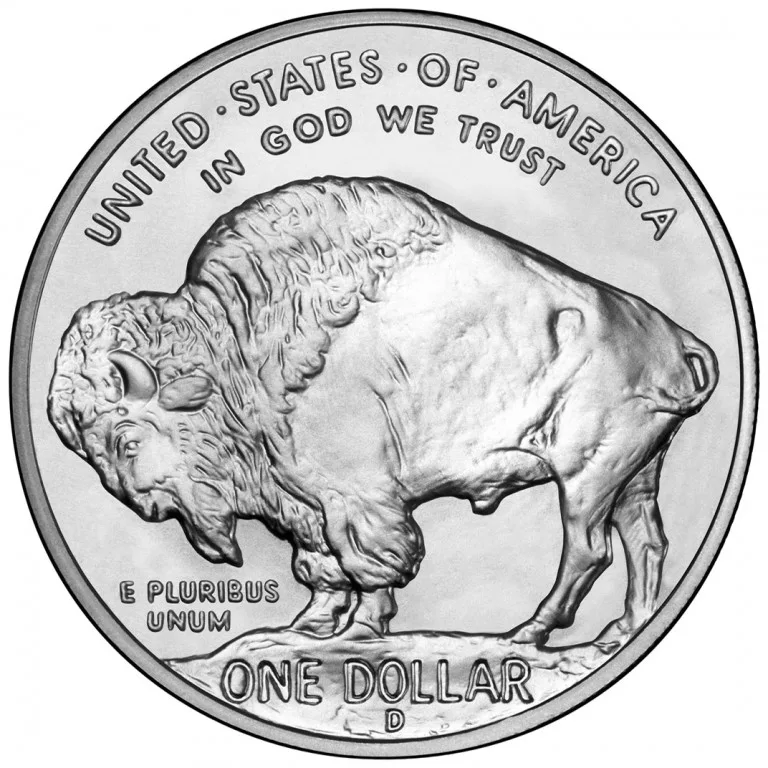
- 2001 American Buffalo silver dollar: A hugely popular issue (reviving the classic Buffalo nickel design) that sold out quickly and trades at a strong premium to common dollars.
- 2014 Baseball Hall of Fame: The first U.S. curved coins; the gold $5 and the special gem sets are keys of the modern curved series.
Common Issues to Recognize
By contrast, the high-mintage issues — the 1986 Statue of Liberty half and dollar, the 1986-1987 Constitution dollar, the 1991-1995 World War II coins in common finishes, and most modern silver dollars issued after the reforms — are abundant. The silver dollars trade close to their silver value plus a modest collector premium, and the clad halves often sell for only a few dollars over issue price. Recognizing that the great majority of modern commemoratives are common is the antidote to overpaying.
Why Mintage Beats Beauty Here
Unlike older series where condition rarity rules, modern commemoratives almost always survive in pristine condition (they never circulated), so grade is rarely the value driver. Instead, the number struck dominates. Two equally flawless coins can differ in value a hundredfold purely because one had a mintage of a few thousand and the other a few million. This makes the published mintage tables, not the coin’s eye appeal, the collector’s most important reference.
Grading Modern Commemoratives
Grading modern commemoratives differs sharply from grading older coins. Because these pieces were struck to collector standards and never circulated, nearly all genuine examples grade at the top of the scale, and grading focuses on tiny imperfections rather than wear.
The Mint State and Proof Scales
Uncirculated commemoratives are graded MS-60 through MS-70, and proofs PR-60 (or PF-60) through PR-70, on the standard 70-point Sheldon scale. In practice, almost all modern commemoratives grade MS/PR-67 or higher; the meaningful distinctions are at the very top, between 68, 69, and the “perfect” 70. A flawless coin with no detectable imperfections under magnification earns the coveted MS-70 or PR-70 grade. (For the full grading framework, see our coin grading guide.)
What Graders Look For
Since wear is not a factor, graders examine for: tiny contact marks or “hairlines,” milk spots and toning on silver, haze or fingerprints, weakness in the frost or mirror on proofs, and any handling marks on the high points. The difference between a 69 and a 70 is often a single microscopic mark visible only under a loupe. This is why two seemingly identical coins can carry very different prices.
Cameo and Deep Cameo Designations
Proof commemoratives may receive Cameo (CAM) or Deep Cameo / Ultra Cameo (DCAM/UCAM) designations describing the contrast between frosted devices and mirrored fields. Most modern proofs are deep cameo by default and the designation adds little premium, but on early or unusual issues it can matter.
Is Grading Worth It?
For common modern commemoratives, third-party grading usually costs more than it adds — a raw common silver dollar in OGP is fine as-is. Grading pays off mainly for the low-mintage keys, the gold issues, and any coin you believe is a perfect 70, where certification confirms the grade and unlocks the premium. For most of the series, the original Mint packaging and certificate provide sufficient assurance of quality.
Authentication and Avoiding Overpayment
Modern commemoratives are rarely counterfeited compared to older rarities, but the series has its own pitfalls — chiefly overpayment and a handful of fakes of the high-value gold keys.
The Real Risk: Paying Too Much
The most common mistake is paying a “collector” price for a common coin worth little more than its metal. A common 90% silver commemorative dollar contains about three-quarters of an ounce of silver; its sensible value is that silver content plus a small premium, regardless of the impressive box and certificate. Before buying or valuing any modern commemorative, look up its specific date-mintmark-finish mintage. If the mintage is in the hundreds of thousands or millions, treat it as a common coin near melt or issue price; reserve real premiums for the genuinely low-mintage keys.
Counterfeits of the Gold Keys
Because the low-mintage gold commemoratives are valuable, counterfeit examples — typically of the 1995-1996 Olympic gold and other keys — do circulate. Counterfeit gold may be underweight, the wrong diameter, or non-magnetic base metal plated to imitate gold. Verify the precise weight (8.359 g for a $5, 16.718 g for a $10) and diameter, and for any expensive gold key, buy only certified examples in PCGS or NGC holders. Our gold coin authentication tips apply equally to commemorative gold.
Cleaned and Impaired Coins
Some modern commemoratives have been wiped or dipped, leaving hairlines or unnatural brightness that drop a perfect coin to a details grade. Milk spots (cloudy white spots on silver) are a common, value-reducing flaw that cannot be safely removed. Inspect proof surfaces for hairlines and silver for spotting before paying a premium grade’s price.
Mismatched or Missing Packaging
Watch for coins paired with the wrong box or a photocopied certificate, and for “sets” assembled from loose coins to imitate a scarce original set. For set-dependent keys, the integrity and originality of the packaging is part of authentication.
Current Market Values
The figures below are 2026 retail estimates and move with precious-metal prices for the common issues. Common silver dollars track the silver market; common gold coins track the gold market; the keys trade on numismatic demand well above metal. Always price by the exact date, mint mark, and finish.
Common Clad Half Dollars
- Proof or uncirculated, common issues: $8-$25
- Most trade at or modestly above original issue price; OGP helps salability
Common 90% Silver Dollars
- Common proof or uncirculated issues: roughly silver melt + $5-$20
- Typical range in 2026: about $30-$60 depending on the silver price and the issue
- Better but still available dates (e.g., 2001 Buffalo): $150-$350
Common Gold $5 Half Eagles
- Common proof or uncirculated issues: gold melt + a modest premium
- Typical range in 2026: roughly $550-$800 depending on the gold price
- Most common gold commemoratives trade close to their 0.2418 oz gold value
Low-Mintage Keys (examples)
- 1995-W Uncirculated Olympic $5 Gold (Torch Runner): several thousand dollars
- 1996 Atlanta Olympic uncirculated silver dollars (Paralympic, Tennis, Rowing, High Jump): hundreds to low four figures each
- 1997-W Jackie Robinson $5 Gold (uncirculated): strong four figures
- 2000-W Library of Congress $10 bimetallic: four figures
- Perfect MS-70 / PR-70 examples of scarce issues: significant premiums over 69
These ranges are guides, not guarantees. Confirm any valuation against current dealer buy/sell prices and recent certified-coin auction results, and remember that for common issues the metal price is the dominant variable.
Collecting Strategies
The modern commemorative series rewards a clear strategy, because acquiring every issue is expensive and many coins add little beyond metal. Choose an approach that matches your budget and interests.
Type Set
A popular and affordable goal is one example of each denomination — a clad half, a silver dollar, and a $5 gold — representing the three tiers of the program in a single display. This can be assembled from common, attractive issues for a few hundred dollars plus the cost of the gold piece, and it captures the essence of the series without chasing rarities.
Silver Dollar Set
Many collectors focus on the silver dollar denomination, the richest and most varied tier. Building a run of the common silver dollars is inexpensive (near melt) and visually rewarding, and the set can be upgraded over time by adding the low-mintage keys as budget allows. This is the most common serious approach to the program.
Theme Collecting
Because each commemorative honors a subject, theme collecting is natural and personal: Olympic coins, military and veterans coins, the sports issues, the science-and-exploration coins (Apollo 11, Lewis & Clark), or coins tied to a collector’s home state or interest. A focused theme keeps a collection meaningful and bounded.
Key-Date Investment Collecting
Advanced collectors target only the low-mintage keys — the 1995-1996 Olympic gold and silver rarities, the Jackie Robinson gold, the bimetallic Library of Congress — where numismatic demand, not metal, drives value. This requires careful research, a focus on certified examples, and patience, but it concentrates capital in the issues most likely to hold and grow in value.
Registry and Perfect-70 Collecting
Some collectors pursue certified MS-70/PR-70 examples and compete in third-party “registry” sets. This is the high-end, condition-focused path; it rewards buying the finest certified coins and is most rewarding when concentrated on the scarcer issues, where a perfect grade commands a meaningful premium.
How Modern Commemoratives Fit a Broader Collection
Modern commemoratives pair naturally with the classic commemorative series for a complete “U.S. commemorative” collection spanning 1892 to the present, and with modern Mint products like the Silver Eagle bullion series and the 2021 revival of the Morgan and Peace dollars. Together they tell the story of how the U.S. Mint markets coins to collectors in the modern era.
Storage and Preservation
Modern commemoratives are typically pristine when acquired, so the goal of storage is simply to keep them that way — preventing spotting, hairlines, and toning that would drop a perfect coin to an impaired grade.
Keep Coins in Original Packaging
Whenever possible, leave a commemorative in its original Mint capsule and box with the certificate. The Mint’s packaging is inert and protective, and intact OGP preserves both the coin and its resale value. Never pry a coin out of its capsule unnecessarily.
Handle Only by the Edges
If you must handle a raw coin, hold it by the edges over a soft surface and never touch the faces — fingerprints etch permanently into proof surfaces and silver. Wear cotton or nitrile gloves for valuable pieces. A single fingerprint can turn a 70 into a details coin.
Guard Against Milk Spots and Toning on Silver
Silver commemoratives are prone to milk spots and toning in poor conditions. Store them below 50% relative humidity, away from PVC flips (which leach corrosive plasticizers), and avoid contact with sulfur-bearing materials such as rubber bands, cardboard with high sulfur content, and certain adhesives. Inert capsules and Intercept-type anti-tarnish materials help.
Protect Gold from Contact Marks
Gold commemoratives are soft and mark easily. Keep each in its capsule, avoid stacking loose coins, and do not clean them — even a soft cloth leaves hairlines that lower the grade. For valuable gold keys, certified holders provide the best long-term protection.
Long-Term Storage
Store coins in a cool, dry, stable environment with silica gel to control humidity, away from temperature swings. For the keys and any certified coins, the sealed grading holder is ideal; for raw common coins, the original capsule inside the OGP box is more than adequate. Inspect silver periodically for new spotting and address storage problems promptly.
Frequently Asked Questions
What is the difference between modern and classic commemorative coins?
Classic commemoratives were struck from 1892 to 1954 and sold mostly through private sponsors, almost always as half dollars in business-strike (uncirculated) format. Modern commemoratives have been struck since 1982, are sold directly by the U.S. Mint in proof and uncirculated finishes, come in clad half, silver dollar, and gold denominations, and carry a surcharge that funds a designated cause. The 1982 Washington half dollar began the modern era. For the earlier series, see our classic commemorative guide.
Are modern commemorative coins worth more than face value?
Yes, always — they are sold at a premium and never circulate at face value. A clad half is worth several dollars at minimum, a 90% silver dollar is worth its silver content (about three-quarters of an ounce) plus a premium, and a gold $5 is worth roughly a quarter ounce of gold plus a premium. The low-mintage keys are worth many times their metal value.
How do I tell a proof from an uncirculated commemorative?
A proof has deeply mirrored, glassy fields with frosted, cameo-white raised designs — tilt it and the background looks like a black mirror. An uncirculated coin has a uniform satin or brilliant luster with no mirror. The two versions usually carry different mint marks and have separate mintages and values, so identifying the finish is essential before pricing a coin.
Which modern commemoratives are the most valuable?
The low-mintage keys, mostly from the mid-to-late 1990s. The 1995-W uncirculated Olympic $5 gold (Torch Runner), the scarce 1996 Atlanta Olympic uncirculated silver dollars, the 1997-W Jackie Robinson $5 gold, and the 2000-W Library of Congress $10 bimetallic coin are among the most valuable. Perfect MS-70/PR-70 examples of scarce issues also command premiums.
Why are some modern commemoratives so cheap and others so expensive?
Because mintage, not condition, drives value in this series. Nearly all modern commemoratives survive in pristine condition, so the number struck dominates. Common issues with mintages in the hundreds of thousands or millions trade near melt or issue price, while keys with mintages of only a few thousand can be worth a hundred times as much despite looking identical.
What is a surcharge on a commemorative coin?
A surcharge is a fixed amount — commonly $10 per silver dollar or $35 per gold coin — added to the issue price and paid to a designated organization or project, such as a museum, memorial, or scholarship fund. Surcharges are why commemoratives are priced above metal value and have raised hundreds of millions of dollars for public causes.
Do I need the original box and certificate?
It helps. The original government packaging (OGP) and Certificate of Authenticity add to value and salability for common coins and are part of the appeal of the series. For certified coins in grading holders, the OGP matters less because the holder authenticates and protects the coin, but keeping the original packaging is always best.
Should I get my modern commemorative graded?
Usually only if it is a low-mintage key, a gold issue, or a coin you believe is a perfect 70, where certification confirms the grade and unlocks a premium. For common issues, grading typically costs more than it adds, and the coin is fine in its original Mint capsule and box.
Can I find modern commemoratives in circulation?
No. Modern commemoratives are non-circulating coins sold only by the Mint and on the secondary market. You will never receive one in change. (Special circulating commemoratives like the 50 State Quarters and Bicentennial coins are different and do appear in pocket change; those are covered in our denomination guides.)
Are modern commemorative silver dollars real silver?
Yes. From 1982 through 2018 they were struck in 90% silver (0.7734 oz of silver each), and from 2019 onward in 99.9% fine silver (0.858 oz each). Either way the coin contains close to three-quarters of an ounce of pure silver, which sets a firm floor under its value.