American Women Quarters Identification Guide: All 20 Honorees, Mint Marks, Silver Proofs, Errors, and Values
The American Women Quarters Program ran from 2022 through 2025 and was the direct successor to the America the Beautiful series. Instead of national parks, this four-year program honored twenty trailblazing American women — writers, scientists, athletes, activists, astronauts, and artists — chosen to commemorate the centennial of the Nineteenth Amendment, which secured many women the right to vote. The U.S. Mint released five new reverse designs each year, so a jar of quarters dated 2022 to 2025 can hold as many as twenty different women on the tails side, from Maya Angelou and Sally Ride to Ida B. Wells and Althea Gibson.
If you have flipped over a recent quarter and found a woman’s portrait instead of George Washington’s familiar profile or a national-park scene, you are holding an American Women quarter. And like every modern circulating series, the first question is always the same: is it worth anything? For the overwhelming majority pulled from change, the answer is twenty-five cents — these coins were struck by the hundreds of millions. But this program hides a few things worth knowing: a brand-new obverse (a right-facing Washington by Laura Gardin Fraser that had waited ninety years to be used), San Francisco silver proofs struck in .999 fine silver, and a growing list of genuine mint errors — the Bessie Coleman doubled die, the Edith Kanakaʻole die clash, and the elusive missing-clad-layer coins among them. Telling an ordinary coin from one of these is the whole point of identifying them properly.
This guide covers everything you need to identify an American Women quarter with confidence: how to read the reverse and figure out which woman you have, the complete list of all twenty honorees year by year, the new Laura Gardin Fraser obverse and how it differs from every other Washington quarter, where the mint mark is and what P, D, and S mean (and why there is no “W” this time), how to tell a common clad coin from a silver proof, the collectible errors and varieties that carry real premiums, grading, current 2026 values, and how to build a complete set. Because every one of these coins is technically a Washington quarter, you may also want the broader Washington Quarter identification guide for the full history of the denomination, the America the Beautiful Quarters guide for the series that came just before, and the 50 State Quarters guide for the program that started the modern quarter craze.
What the American Women Program Was
The American Women Quarters Program was created by the Circulating Collectible Coin Redesign Act of 2020. The idea followed the proven modern-quarter formula that the 50 State Quarters pioneered and the America the Beautiful series continued: rotate the reverse design continuously so collectors keep checking their change, and give each design a theme worth celebrating. This time the theme was the accomplishments and contributions of American women — deliberately timed to mark the centennial of the ratification of the Nineteenth Amendment in 1920. The Mint released five new designs per year for four years, 2022 through 2025, for a total of twenty coins.
How the Women Were Chosen
Unlike the state and park quarters, which were tied to geography, the American Women honorees were selected for their contributions across a wide range of fields — suffrage, civil rights, science, space, the arts, athletics, government, and humanities. The Mint worked with the Smithsonian American Women’s History Museum and the National Women’s History Museum, and it invited public input, before the Secretary of the Treasury made the final selections. The women span the full sweep of American history and its diverse communities, and the program was explicitly designed to reflect that breadth rather than to rank or rate the honorees.
Why It Followed the Park Quarters
The America the Beautiful Quarters program ended with the 2021 Tuskegee Airmen coin, and Congress wanted to keep the rotating-reverse momentum going. The American Women series did exactly that, extending the treasure-hunt appeal for another four years while honoring women whose stories are woven through the nation’s history. It was so ingrained in the Mint’s playbook that a further rotating series — youth sports — is already authorized to follow later in the decade.
How Many Coins Exist
Each of the twenty designs was struck at Philadelphia (P) and Denver (D) for circulation and at San Francisco (S) for collector proofs, both clad and silver. There were no West Point (W) circulating quarters in this program — a key difference from the 2019 and 2020 park quarters. Combined circulation mintages were large, on the order of hundreds of millions per design, though the 2025 issues came in noticeably lower as the Mint reduced quarter production. This matters for valuation: no ordinary circulated American Women quarter is rare, but the low-mintage late dates and the top-grade uncirculated coins carry the premiums.
How to Identify an American Women Quarter
Identifying an American Women quarter is a three-step process, just like the state and park quarters: confirm it is an American Women quarter, read the honoree’s name, and note the mint mark. But there is a helpful shortcut unique to this series — the obverse itself is different, so you can often recognize one of these coins before you even turn it over.
Step 1: Confirm It Is an American Women Quarter
Look at the obverse (heads). If George Washington faces to the right rather than to the left, and the coin is dated 2022 through 2025, it is an American Women quarter — no other circulating Washington quarter uses a right-facing portrait. Then turn the coin over: the reverse shows a woman’s portrait or a scene representing her, along with her name, “UNITED STATES OF AMERICA,” “QUARTER DOLLAR,” and “E PLURIBUS UNUM.” A pre-1999 quarter shows a heraldic eagle; a 1999-2008 coin shows a state; a 2010-2021 coin shows a national park; a 2022-2025 coin shows an American woman.
Step 2: Read the Honoree’s Name
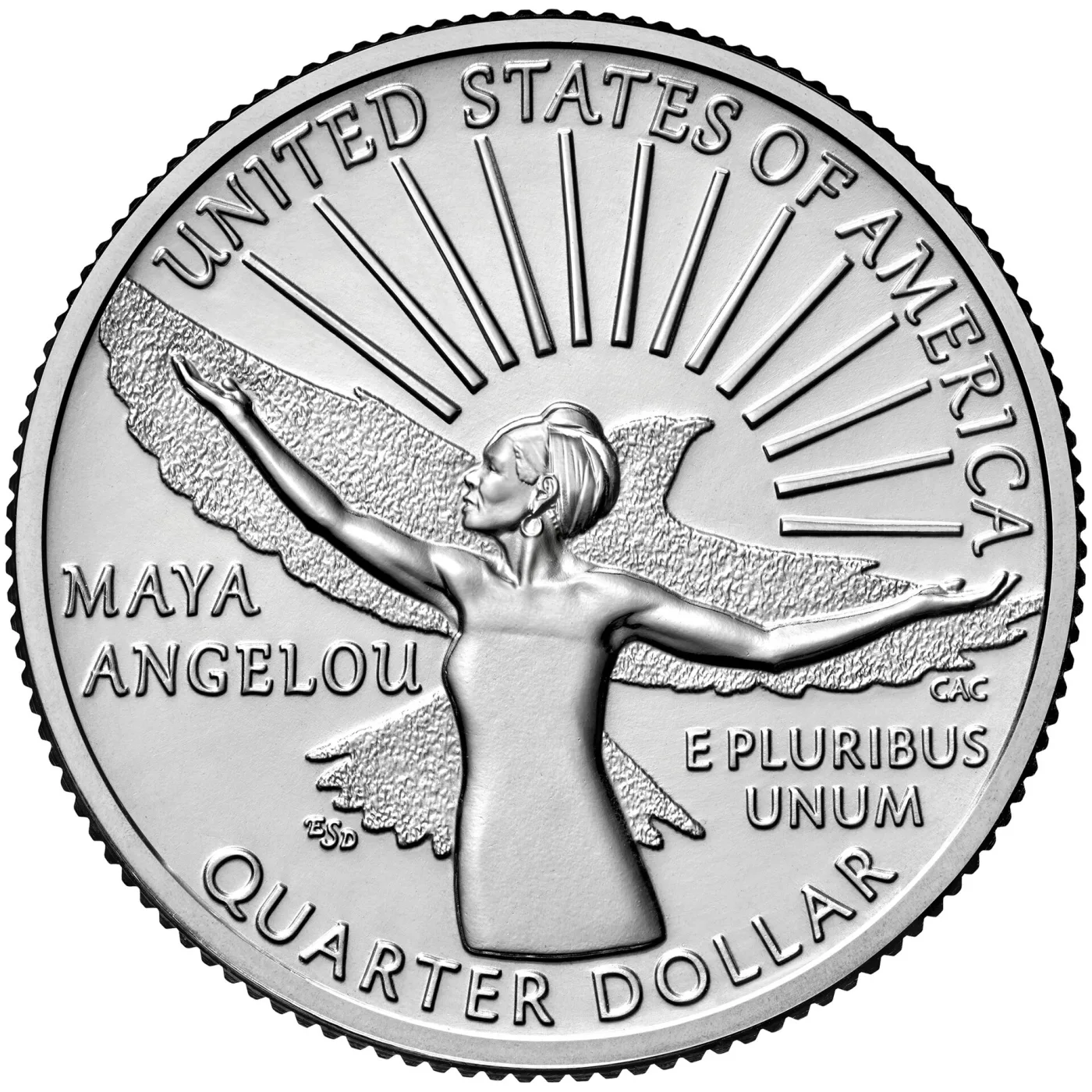
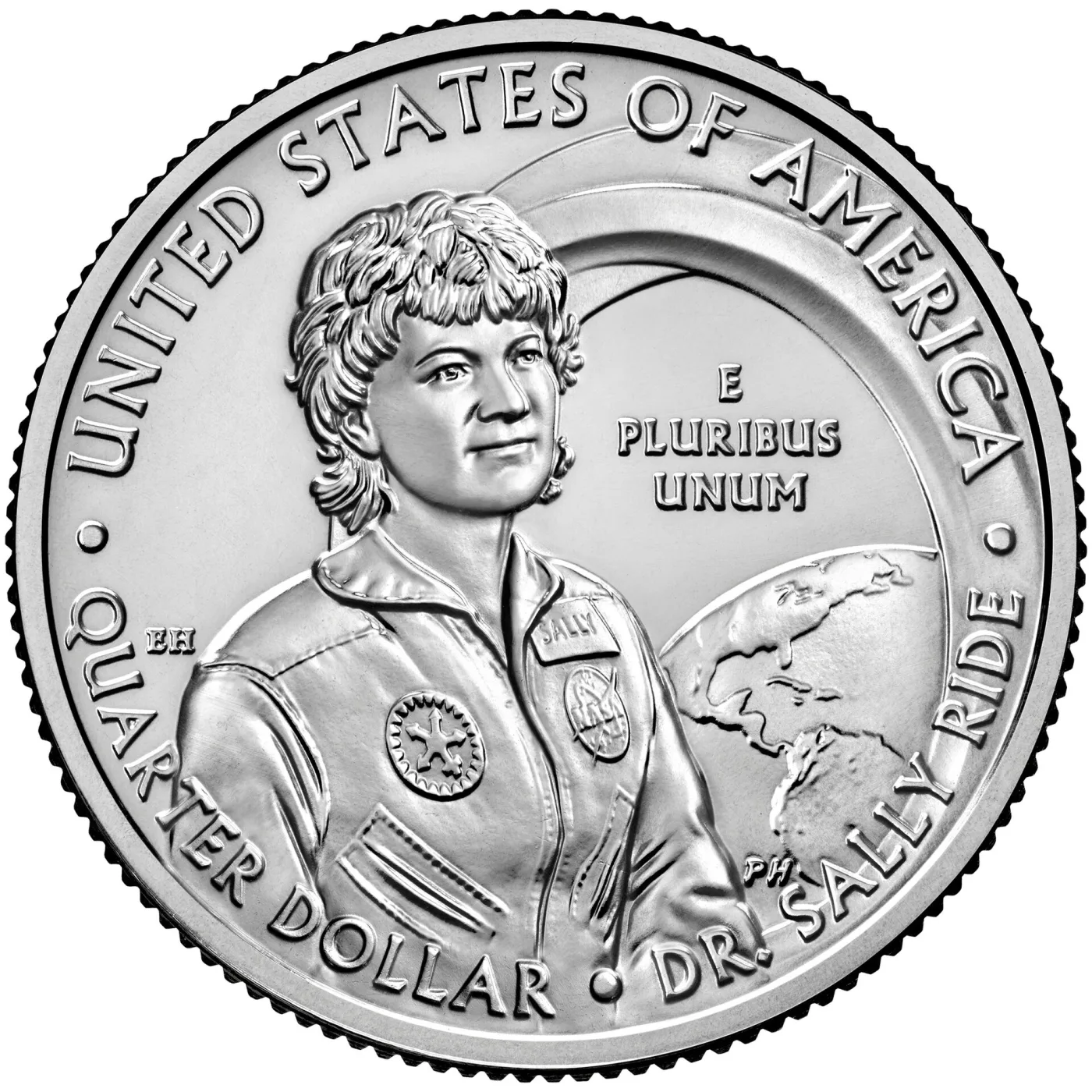
Every American Women reverse carries the honoree’s name, so there is never any ambiguity once you read the lettering. For example, a coin reading “MAYA ANGELOU” with a figure whose arms are outstretched before a rising sun and a bird is the 2022 Maya Angelou quarter; one reading “DR. SALLY RIDE” with an astronaut at a shuttle window is the 2022 Sally Ride quarter. The obverse carries the calendar year (2022-2025). Because five women were honored each year, the year alone narrows it to one of five; the reverse name confirms exactly which.
Step 3: Locate the Mint Mark
The mint mark is a small letter (P, D, or S) on the obverse, to the right of Washington’s neck, near the rim below “IN GOD WE TRUST.” A “P” means Philadelphia, “D” means Denver, and “S” means San Francisco (proof coins only — never released into circulation). There is no “W” in this series. Unlike the park quarters, where the mint mark could turn a common coin into a valuable West Point find, on American Women quarters the mint mark mostly tells you which mint struck the coin; an “S” simply flags that it came from a collector proof set rather than pocket change. We cover the details in the mint-mark section below.
A Note on the Reverse Scenes
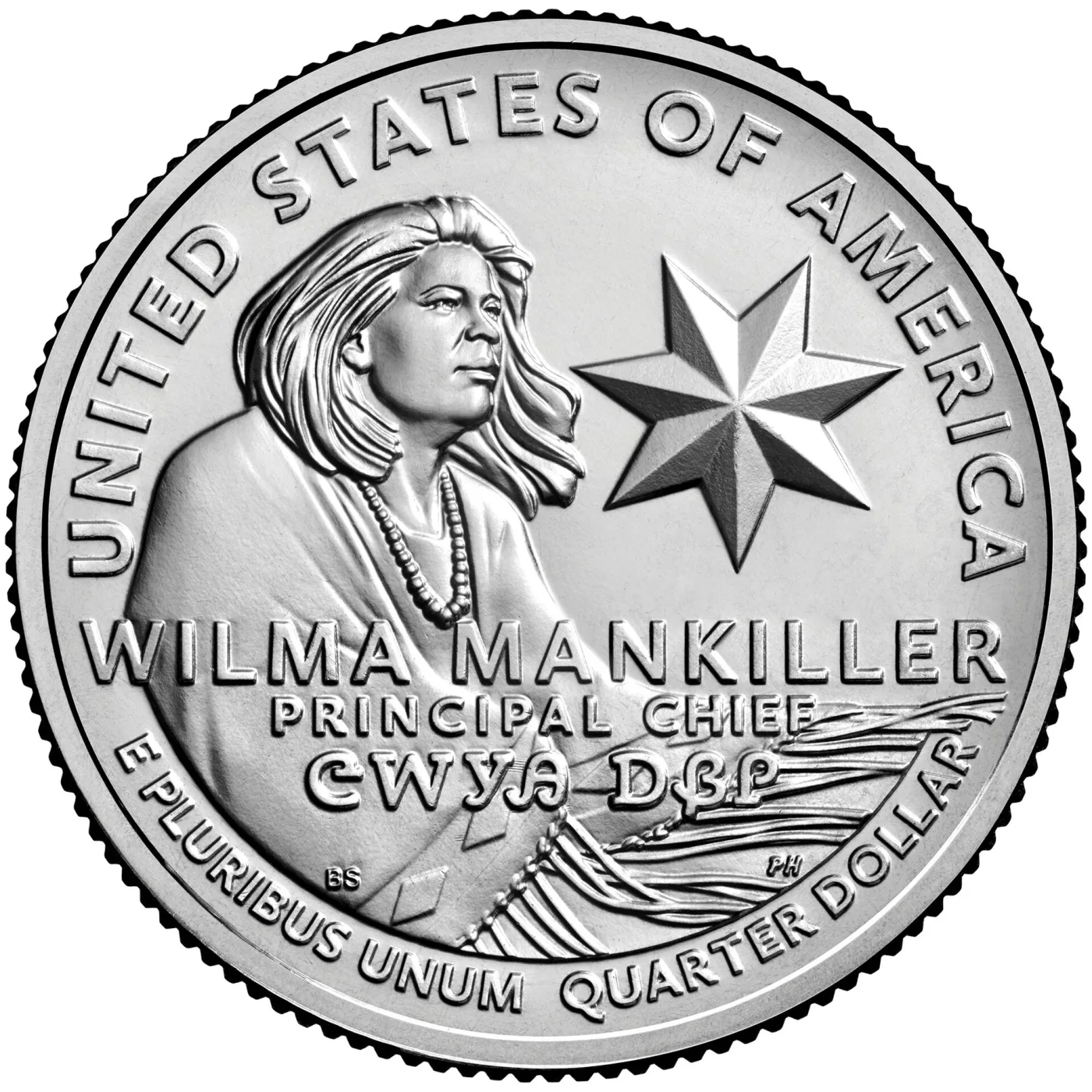
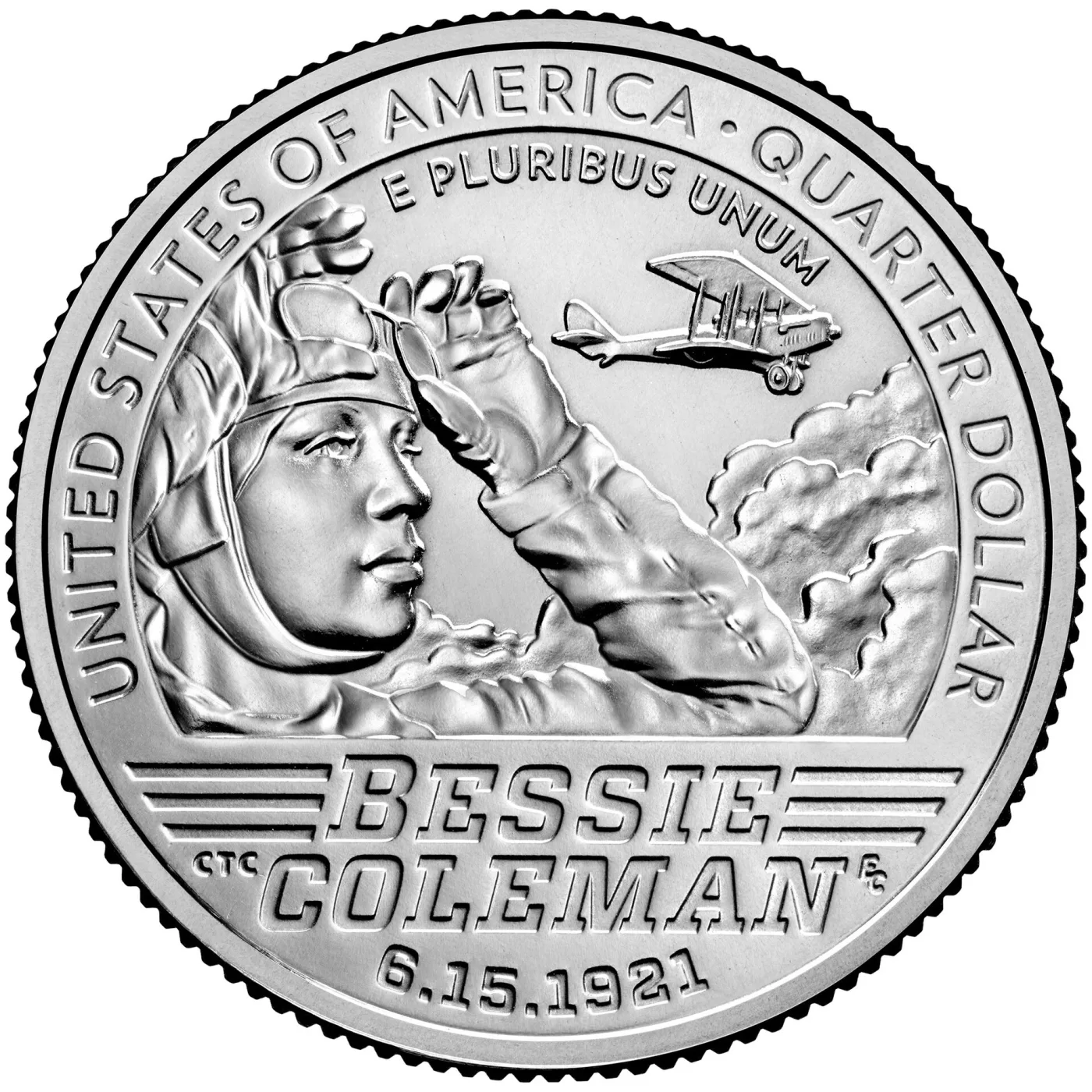
American Women reverses are portrait-driven and immediately personal. A few examples: Maya Angelou stands with arms outstretched before a rising sun; Sally Ride looks out a Space Shuttle window at Earth; Wilma Mankiller wears a shawl beside the seven-pointed Cherokee Nation star; Bessie Coleman gazes up in a leather flying helmet beside her biplane; Celia Cruz performs with a microphone and her catchphrase “¡AZÚCAR!”; and Ida B. Wells is surrounded by the words describing her life’s work. If you cannot immediately place a scene, the honoree’s name on the reverse removes all doubt.
Obverse and Reverse Design
The American Women quarters introduced a genuinely new obverse — the first redesigned Washington portrait since 1999 — and devoted the reverse entirely to the rotating honoree designs. Understanding the layout helps you distinguish an American Women quarter from every other Washington quarter at a glance.
The New Laura Gardin Fraser Obverse
The single most useful identification feature of this series is its obverse. It uses a right-facing bust of George Washington sculpted by Laura Gardin Fraser — a design she originally submitted in 1931 for the quarter’s bicentennial competition. Her portrait was passed over in 1932 in favor of John Flanagan’s left-facing design, which went on to serve for ninety years. The Mint finally used Fraser’s long-overlooked work here (it had appeared once before, on a 1999 commemorative gold half eagle). Because it is the only right-facing Washington on any circulating quarter, spotting the direction of the portrait tells you instantly that you are holding a 2022-2025 American Women coin. “UNITED STATES OF AMERICA,” “LIBERTY,” “IN GOD WE TRUST,” and the mint mark all appear on this obverse, leaving the reverse free for the honoree.
The Honoree Reverses
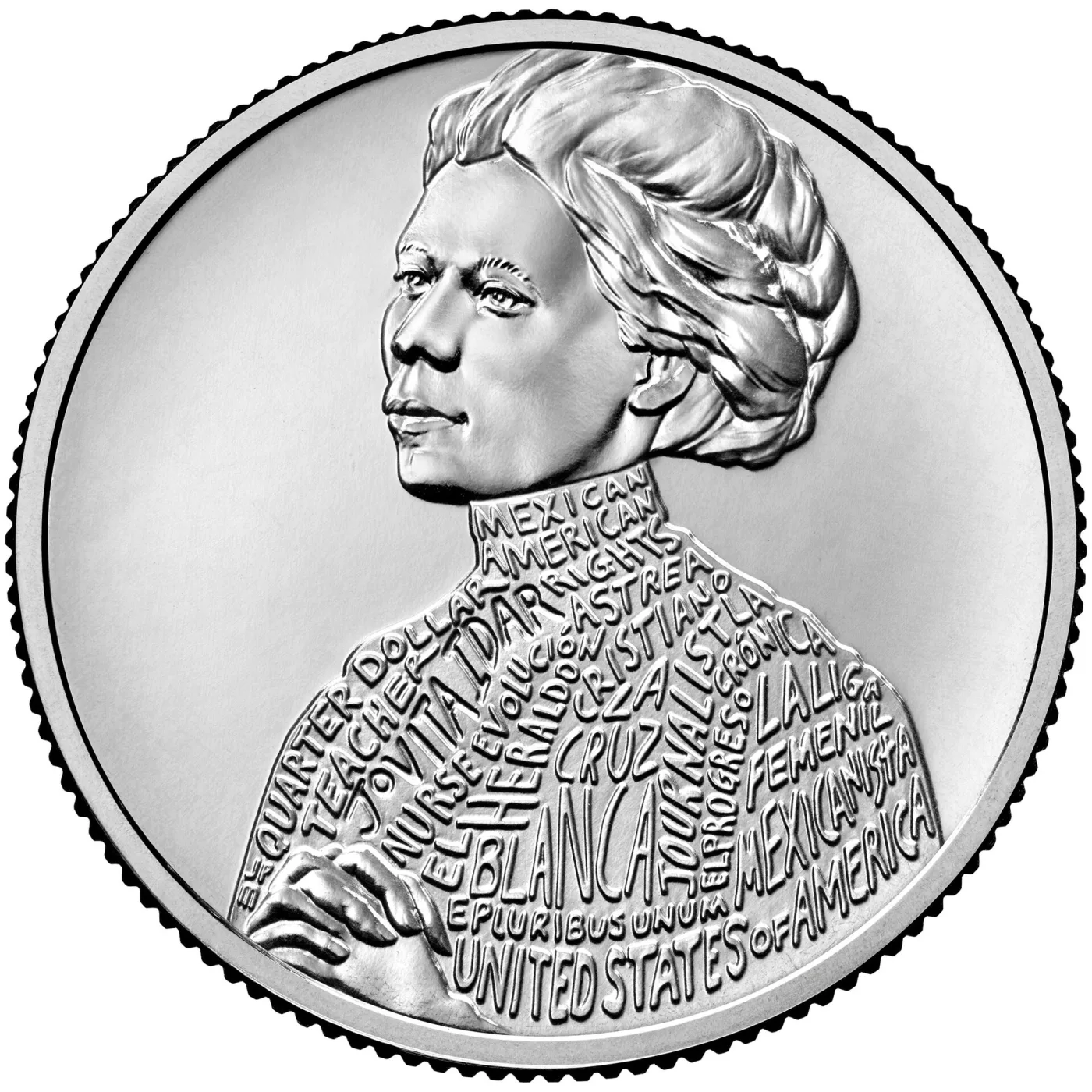
Each reverse was designed to capture the essence of the woman it honors, rendered by the Mint’s artists and medallic sculptors. The lettering template is consistent: the honoree’s name, “UNITED STATES OF AMERICA,” “QUARTER DOLLAR,” and “E PLURIBUS UNUM.” The results range from literal portraits to symbolic scenes — Jovita Idar’s figure is built from the words of the newspapers she published; Pauli Murray’s portrait sits inside the word “HOPE”; Vera Rubin appears in profile against a field of galaxies representing the dark matter she helped reveal. It is one of the most varied and expressive reverse runs the U.S. Mint has produced.
Physical Specifications (Circulating Coins)
Every circulating American Women quarter is copper-nickel clad: outer layers of copper and nickel bonded to a pure copper core, for an overall composition of 91.67% copper and 8.33% nickel, weighing 5.67 grams, 24.26 millimeters in diameter, 1.75 millimeters thick, with a reeded edge of 119 reeds. This is the same clad “sandwich” used for the state and park quarters. The silver proof versions differ in composition and weight (see below), and the weight test is the fastest way to separate a silver coin from a clad one without reading the packaging.
No 5-Ounce Silver Coins This Time
Collectors of the park quarters will remember the giant 5-ounce, 3-inch silver “hockey puck” bullion coins struck for each ATB design. The American Women program did not include a 5-ounce bullion series. The only silver American Women quarters are the standard-size San Francisco silver proofs. This is another point of contrast with the ATB series and a common source of confusion.
Complete List of All 20 Honorees (2022-2025)
Five women were honored each year for four years, in no geographic order — simply grouped by release year. Here is the complete twenty-coin roster, with each honoree and a short note on her reverse design and why she was chosen.
2022 (the first five)
- Maya Angelou — Poet and civil-rights author; shown with arms outstretched before a rising sun and a flying bird. The first coin in the series and the first U.S. quarter to feature a Black woman.
- Dr. Sally Ride — The first American woman in space; shown at a Space Shuttle window looking out at Earth.
- Wilma Mankiller — The first female Principal Chief of the Cherokee Nation; shown wearing a shawl beside the seven-pointed Cherokee Nation star.
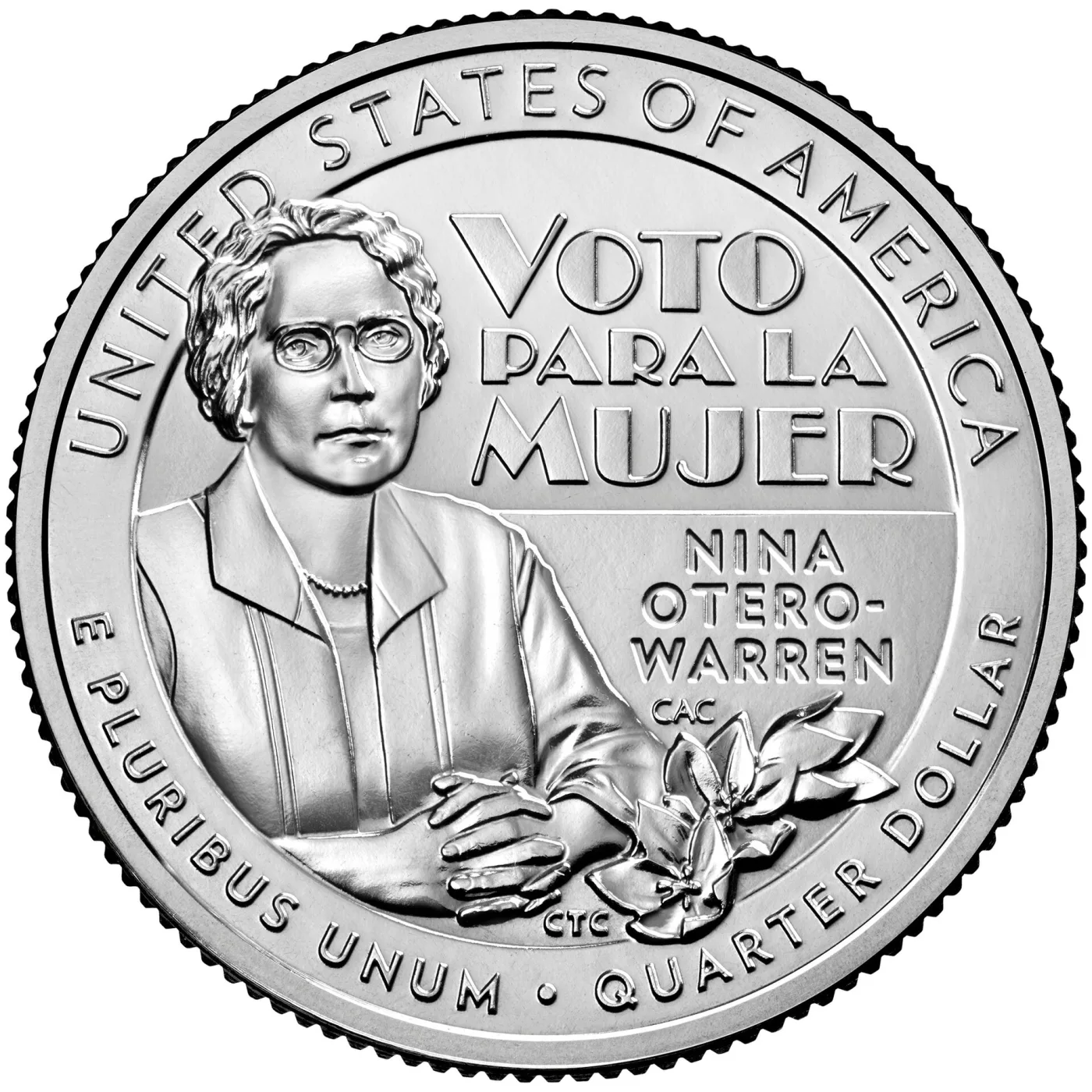
- Nina Otero-Warren — A New Mexico suffrage leader and educator; shown with three yucca flowers and the Spanish inscription “Voto para la mujer” (votes for women).
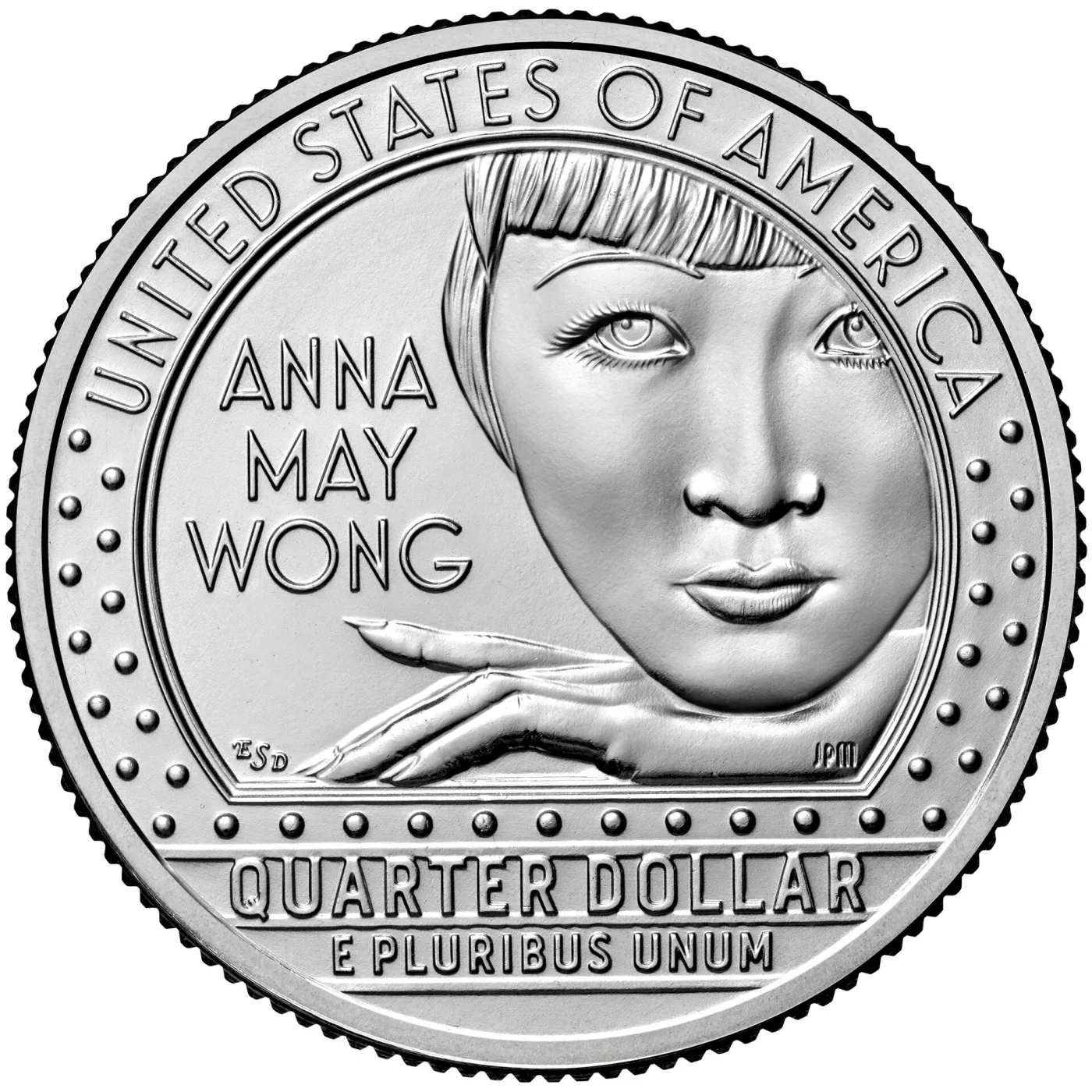
- Anna May Wong — The first Chinese American Hollywood film star; shown resting her head on her hand, framed by marquee lights.
2023 (the second five)
- Bessie Coleman — The first African American and first Native American woman to earn a pilot’s license; shown in a leather flying helmet beside her biplane. Home of the well-known doubled-die variety.
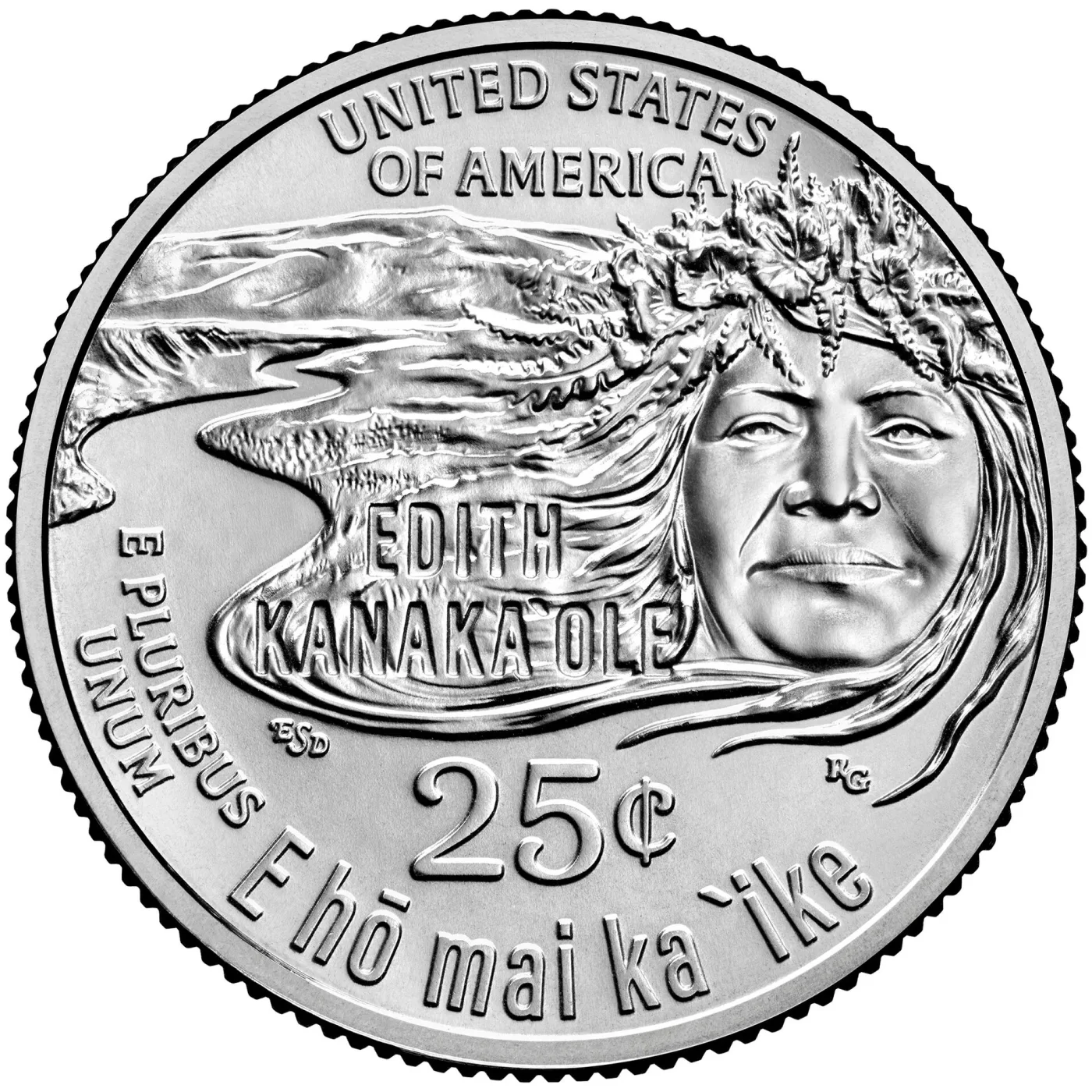
- Edith Kanakaʻole — An Indigenous Hawaiian composer, chanter, and educator; shown with her hair and lei poʻo blending into a Hawaiian landscape. Home of a famous die-clash error.
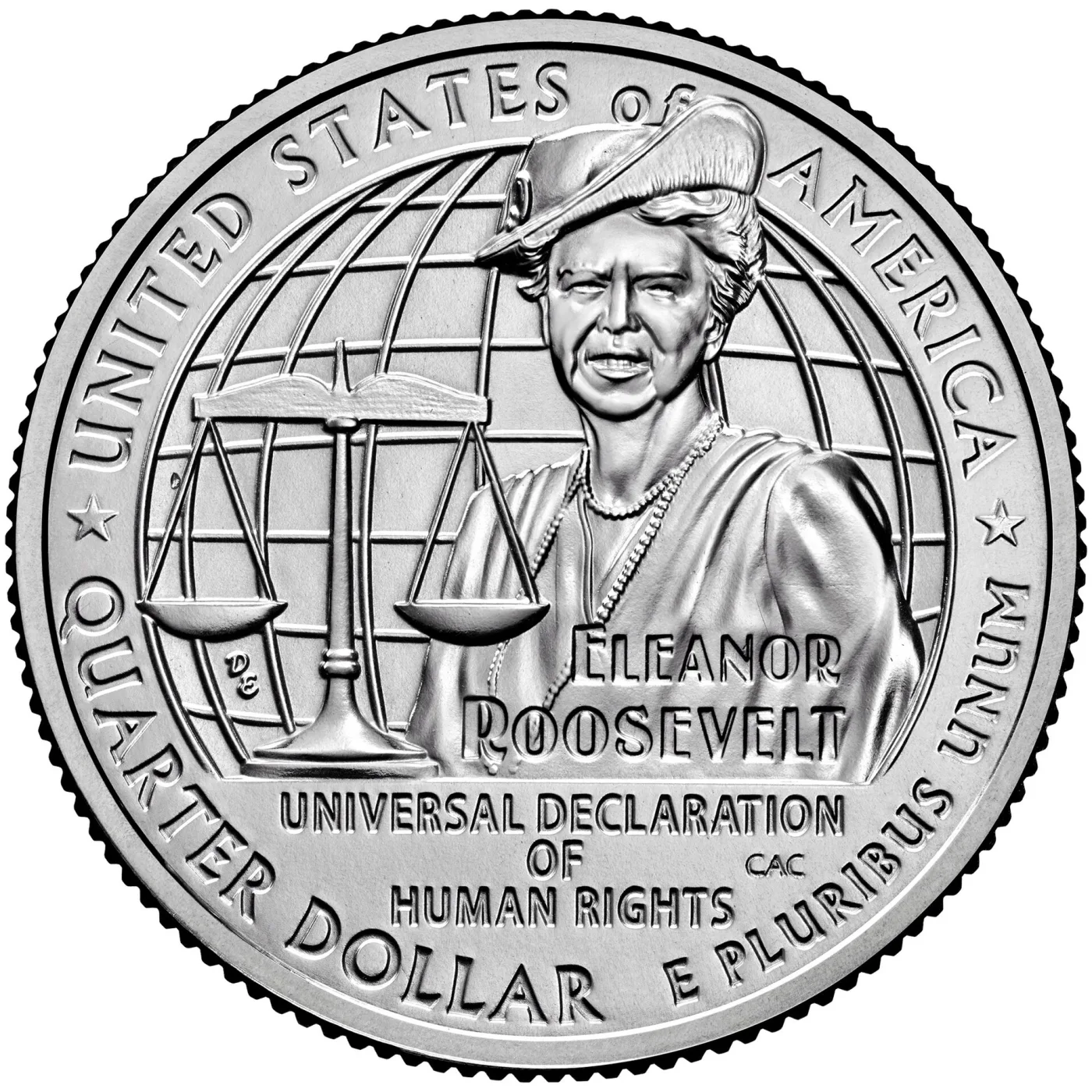
- Eleanor Roosevelt — First Lady, diplomat, and human-rights advocate; shown standing with imagery evoking her global humanitarian work.
- Jovita Idar — A Mexican American journalist, suffragist, and civil-rights activist; her figure is composed of the words of the newspapers she published.
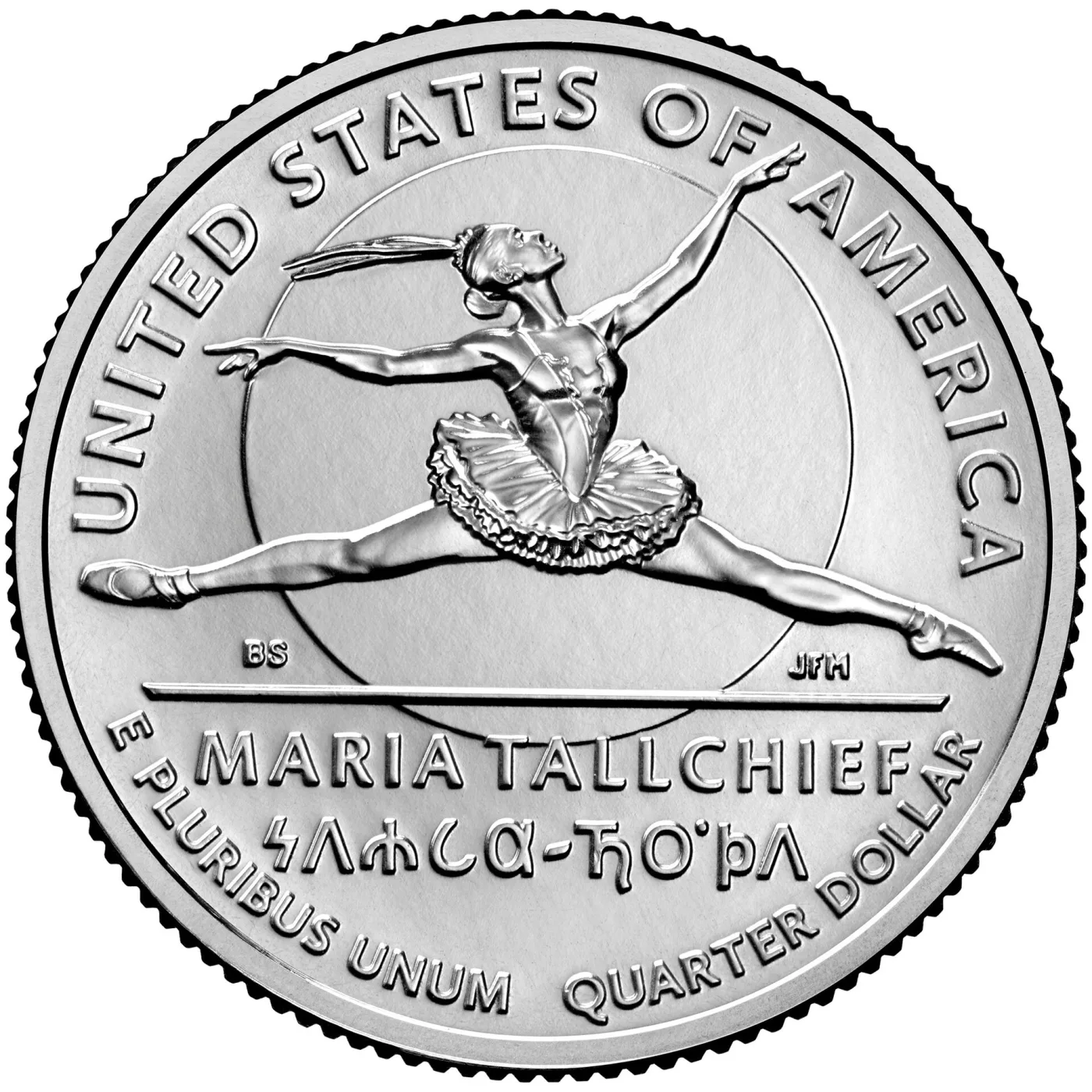
- Maria Tallchief — America’s first major prima ballerina; shown spotlit in a balletic pose.
2024 (the third five)
- Rev. Dr. Pauli Murray — A poet, lawyer, activist, and Episcopal priest; her portrait sits inside the word “HOPE” with a line of her poetry.
- Patsy Takemoto Mink — The first woman of color in Congress and a driving force behind Title IX; shown outside the Capitol holding the Title IX document.
- Dr. Mary Edwards Walker — A Civil War surgeon and the only woman to receive the Medal of Honor; shown wearing her Medal of Honor.
- Celia Cruz — The Cuban American “Queen of Salsa”; shown performing with a microphone and her signature exclamation “¡AZÚCAR!”
- Zitkala-Ša — A Yankton Dakota Sioux writer, composer, and activist; shown in traditional dress holding a book.
2025 (the final five)
- Ida B. Wells — A pioneering investigative journalist, suffragist, and civil-rights leader; her design names the roles that defined her life’s work.
- Juliette Gordon Low — The founder of the Girl Scouts of the USA; shown next to the original Girl Scout trefoil emblem she designed.
- Dr. Vera Rubin — The astronomer whose work confirmed the existence of dark matter; shown in profile against a starry, galaxy-filled background.
- Stacey Park Milbern — A disability-justice activist and organizer; shown in her wheelchair with a “Disability Justice” inscription.
- Althea Gibson — The first Black tennis champion to win at Wimbledon and Forest Hills; shown holding a racket with a “Trailblazing Champion” legend.

Mint Marks and Where to Find Them
The mint mark tells you which of the U.S. Mint’s facilities struck your coin. On every American Women quarter, the mint mark sits on the obverse, to the lower right of Washington’s neck, near the rim beneath “IN GOD WE TRUST.” Unlike the park quarters, where a “W” could mean a valuable West Point coin, the American Women series used only three mint marks — and none of them turns an ordinary coin into a treasure by itself. For a full treatment of every U.S. mint mark, see our coin mint marks guide.
The Three Mint Marks
- P (Philadelphia): Struck circulating American Women quarters for every design, all four years. Philadelphia coins circulate freely and are the “P” half of a standard two-coin-per-design collection.
- D (Denver): Struck circulating American Women quarters for every design. Denver coins circulate freely and are the “D” half of a standard collection.
- S (San Francisco): Struck proof coins only — both clad proofs and .999 silver proofs — sold exclusively in collector sets. An “S” American Women quarter never came from ordinary change; it came out of a proof set. There was no special “S” business-strike issue in this program as there had been for the later park quarters.
Why There Is No “W”
The West Point circulating-quarter experiment was strictly limited to 2019 and 2020 park quarters. The American Women program returned to the standard three-mint pattern: P and D for circulation, S for proofs. If someone offers you a “rare W” American Women quarter, it does not exist as a genuine issue — treat it as a red flag. The only way a “W” could appear on one of these coins is through alteration.
P and D Are Equally Common
For collecting purposes, neither the P nor the D coin of a given design is meaningfully scarcer than the other. A standard set therefore includes one P and one D for each of the twenty designs (forty coins), plus optionally the S proofs. The interesting scarcity in this series is by date — the 2025 coins had lower mintages — and by grade, not by mint.
Clad vs Silver Proof Quarters
As with the state and park quarters, three finishes exist for American Women quarters — circulating clad, clad proof, and silver proof. Telling them apart drives value more than almost anything else in this series. The good news: the tests are simple and definitive.
Circulating Clad (the coins in your change)
These are the P and D coins struck for commerce. They have a satiny business-strike finish, a copper-colored stripe visible on the edge (the “sandwich” revealing the pure copper core), and weigh 5.67 grams. The overwhelming majority of American Women quarters are circulating clad coins worth face value — there is no circulating rarity in this program comparable to the park quarters’ West Point coins.
Clad Proof (S mint mark)
Clad proofs were struck at San Francisco on copper-nickel clad planchets with polished dies and multiple strikes, giving mirror-like fields and frosted design elements. They still show the copper edge stripe and weigh 5.67 grams. They came only in proof sets and are worth a few dollars each. Remember that “proof” is a method of manufacture, not a grade — for the full explanation, see our proof coins guide.
Silver Proof (S mint mark, .999 fine silver)
Silver proofs are the premium version, struck at San Francisco and sold in special silver proof sets. Throughout the American Women program the silver proofs were struck in .999 fine silver, weighing about 6.34 grams. A silver proof shows a solid silver-white edge with no copper stripe — the edge test instantly separates a silver proof from a clad proof, which look identical face-on. The silver content gives these coins a bullion floor plus a collector premium.
Quick Comparison
- Copper stripe on edge + 5.67 g + satin finish = circulating clad (face value)
- Copper stripe on edge + 5.67 g + mirror finish + “S” = clad proof ($2-$6)
- Solid silver edge + ~6.34 g + mirror finish + “S” = .999 silver proof ($10-$25+)
Collectible Errors and Varieties
For such a young series, the American Women quarters have already produced a surprisingly rich list of collectible errors and named varieties — more, arguably, than the park quarters managed in a decade. As always, the value in a modern series is concentrated in genuine mint errors and top-grade condition rarities, and the field is riddled with worthless machine doubling masquerading as something valuable. For a broader treatment of how mint errors happen, see our error coins guide.
The Bessie Coleman Doubled Die (2023)
The best-known variety of the series is the 2023 Bessie Coleman doubled-die obverse, which shows genuine, notched, separated doubling on design elements such as the “EC” designer initials and parts of the biplane wing. A true, strong example carries a real premium — commonly in the $35 to $200-plus range depending on strength, grade, and certification. As with any doubled die, the key is separating true hubbed doubling (rounded, notched, with clear separation) from machine doubling (flat and shelf-like), which is worthless.
The Edith Kanakaʻole Die Clash (2023)
The 2023 Edith Kanakaʻole coins are famous for a dramatic die clash, in which the obverse and reverse dies struck each other without a planchet between them and transferred design details. The most striking examples show the letters of “EDITH” (in mirror image) impressed onto Washington’s neck on the obverse. Clear die-clash examples typically bring roughly $20 to $150 or more, with the strongest and best-certified pieces at the top of that range.
The Jovita Idar Strike-Through (2023)
The 2023 Jovita Idar design has produced notable strike-through errors, where grease, debris, or another foreign object lay between the die and the planchet and left a soft, blurred void in the struck design — often in Idar’s blouse on the reverse and in Washington’s hair on the obverse. Genuine, well-defined strike-through coins can bring premiums ranging from tens of dollars for circulated examples to roughly $190 for sharp uncirculated pieces.
Missing Clad Layer
One of the most valuable American Women error types is a coin struck missing one of its outer copper-nickel clad layers, exposing the pure copper core on one side and reducing the coin’s weight by roughly 20%. These are genuinely scarce across the series — only a small number of confirmed examples are known — and command strong premiums, with pieces changing hands in the low hundreds of dollars. Any suspected missing-clad-layer coin should be weighed (a genuine one is noticeably light) and authenticated.
Off-Center Strikes, Broadstrikes, Die Chips, and Cuds
Standard striking and die errors occur across all twenty designs as on any modern coin. Off-center strikes (design struck off-center, leaving a blank crescent) are worth more the more dramatic the shift is while the date and honoree name remain visible. Broadstrikes (struck without the retaining collar, so the coin spreads and loses its reeding) and die chips or cuds (raised blobs where a piece of die metal broke away) bring modest premiums, typically from a few dollars for small chips to $20-$100-plus for large, dramatic breaks.
A Caution on “Doubling”
The overwhelming majority of “doubled die” American Women quarters people find is worthless machine doubling — flat, shelf-like, often slightly slanted doubling caused by the die shifting at the moment of striking. True doubled dies (like the Bessie Coleman variety above) show rounded, separated, notched design elements because the doubling was hubbed into the die itself. Learn to tell the two apart before paying anything extra, and buy high-value varieties already certified.
How to Grade American Women Quarters
Since circulated American Women quarters are worth face value, grading mainly matters at the uncirculated end of the scale and for certified error and variety coins. Value in ordinary examples is a condition-rarity game: how close to perfect is the coin?
The Grades That Matter
- Circulated (below MS-60): Face value. There is no circulating key date in this series that carries a premium in worn condition, unlike the park quarters’ West Point coins.
- MS-63 to MS-64: Uncirculated with noticeable contact marks. Small premium at best.
- MS-65 to MS-66: Gem uncirculated with strong luster and minimal marks. Modest premiums, a bit higher for the low-mintage 2025 designs.
- MS-67: Superb gem. Meaningful money can appear here for tougher designs and the scarcer 2025 dates.
- MS-68 and above: Condition rarities. Top-population coins can bring strong premiums, driven entirely by how few grade that high.
What Graders Look At
On uncirculated American Women quarters, grade comes down to contact marks (nicks from other coins in the bin), luster (the frosty cartwheel sheen of an original surface), and strike quality. Washington’s cheek on the obverse and the high points of each honoree’s portrait are the first places to show contact marks. Because these are modern coins with no wear-based grade, the numbers cluster tightly at the top — the difference between MS-66 and MS-68 can be a single small mark visible only under magnification.
Proof Grading
Proof American Women quarters grade on the PR (or PF) scale and almost always come back PR-69 Deep Cameo or PR-70 Deep Cameo because they were carefully made and packaged. “Deep Cameo” (DCAM) refers to the strong contrast between mirror fields and frosted design. Impaired proofs — with hairlines, spots, or fingerprints — grade lower. For the full grading picture across all U.S. coins, see our coin grading guide.
Current Market Values
The values below are approximate 2026 retail figures. They swing with silver prices (for silver proofs) and collector demand, but the tiers are stable.
Circulating Clad (P and D, any design)
Face value in circulated condition. From bank rolls, uncirculated singles run $1-$2. In MS-65 they bring $2-$8, in MS-67 typically $10-$40, and in MS-68 they become condition rarities worth more. No non-error American Women quarter is rare in absolute terms — the premiums are about grade, and slightly about the lower-mintage 2025 dates.
Clad and Silver Proofs (S)
Individual clad proof American Women quarters run $2-$6 each; a complete 20-coin clad proof run assembles for $30-$70. Silver proofs run $10-$25-plus each, tracking silver spot plus a collector premium; a complete 20-coin silver proof run assembles for roughly $150-$350 depending on silver prices. Because the whole series is .999 fine silver, the silver proofs have a solid bullion floor.
Errors and Varieties (the real upside)
This is where the meaningful money is in the American Women series. The Bessie Coleman doubled die ($35-$200+), the Edith Kanakaʻole die clash ($20-$150+), the Jovita Idar strike-through (up to about $190 for sharp uncirculated), and the scarce missing-clad-layer coins (low hundreds of dollars) are the standouts. Dramatic off-center strikes and large cuds add moderate premiums. Certified examples command the top of each range.
Complete Circulation Sets
A complete 20-design P-and-D set (40 coins) in uncirculated condition from rolls runs $40-$100. In a nice album in MS-65, $80-$200. Adding the clad and silver proof sets pushes a “complete everything” American Women collection into the low-to-mid hundreds of dollars, with certified gems and errors on top of that.
What Drives Value
For American Women quarters specifically, value is driven by (1) genuine mint errors and named varieties above all, (2) silver-proof content, (3) top-tier uncirculated grade, and (4) the lower-mintage 2025 dates at the margin. As with any modern base-metal coin, most examples derive value from grade and silver rather than from age. A common-date Morgan Silver Dollar derives value from age and silver content; an American Women quarter derives it almost entirely from errors, silver proofs, and condition.
Authentication and Fakes
Ordinary American Women quarters are not counterfeited — they are worth 25 cents. The authentication problem is entirely about faked errors and altered coins: doctoring common pieces to imitate the valuable varieties.
Fake Doubling
Because the Bessie Coleman doubled die is well known and valuable, common Bessie Coleman coins showing ordinary machine doubling are frequently listed as the variety at inflated prices. Machine doubling is flat, shelf-like, and often slanted; a true doubled die shows rounded, notched, separated design elements. When in doubt, machine doubling adds no value. Buy any doubled die worth more than a token amount already certified by PCGS, NGC, ANACS, or ICG.
Altered and Added Mint Marks
Since there is no genuine “W” American Women quarter, any coin bearing a “W” mint mark has been altered — reject it. More subtly, coins are sometimes tooled to fake a die clash or to enhance a weak strike-through. Under 10x magnification, genuine mint errors are smoothly integral to the struck surface; added or tooled “errors” show scratches, disturbed metal, and tooling marks. Weigh suspected missing-clad-layer coins, and treat any dramatic listed error as something to authenticate before paying a premium.
Environmental Damage vs Genuine Errors
A coin that has been acid-treated, corroded, or post-mint damaged can superficially resemble a missing-clad-layer or strike-through error but carries no premium. A genuine missing-clad-layer coin is copper-colored on an entire face and weighs light; damage is irregular and does not change the weight the same way. Any American Women error worth more than $50-$100 is worth submitting for authentication.
Cleaned and Damaged Coins
Cleaning destroys the original luster that uncirculated and proof coins depend on for grade and value. A cleaned coin grades “Details” at the major services and sells at a steep discount. Environmental damage, spots, and PVC residue from cheap flips likewise ruin a coin’s grade. Never clean an American Women quarter — especially not a proof or a certified-grade candidate.
Building a Complete Set
American Women quarters are an ideal collection — affordable, still findable in change, and the natural continuation of a state- and park-quarters folder. Several collecting paths suit different goals and budgets.
The Circulation Set from Change and Rolls
The classic approach: fill a folder with one coin of each of the twenty designs pulled from pocket change or bank rolls. A “P and D” set (40 coins) can be assembled for little more than face value plus a folder — though the 2025 designs are somewhat harder to find in change because fewer were struck. This is a perfect first collection and teaches obverse and mint-mark identification naturally.
The Uncirculated (Mint Set) Set
The Mint sold annual uncirculated sets containing the P and D coins for each year’s five designs. Assembling all four years gives a complete uncirculated P-and-D set in original packaging. Budget $40-$120 depending on packaging condition.
The Proof and Silver Proof Sets
The San Francisco clad proof sets give a complete 20-coin clad proof collection ($30-$70). The silver proof sets — all struck in .999 fine silver — give the premium version at roughly $150-$350 for the full run and add a silver bullion floor.
The Error and Variety Set
The most interesting advanced pursuit in this series is a set of its named errors and varieties: the Bessie Coleman doubled die, the Edith Kanakaʻole die clash, the Jovita Idar strike-through, and — if budget and luck allow — a missing-clad-layer coin. Certified examples make an eye-catching, historically specific display and represent most of the money in the series.
The Graded Registry Set
Advanced collectors chase the finest-known examples of each design, submitting coins to PCGS or NGC and competing in registry sets. A complete MS-67+ set can cost from the low hundreds of dollars upward, with the toughest condition rarities and the scarcer 2025 dates driving most of the cost.
Budget Tips
Start free by pulling P and D coins from change and rolls, and check every 2023 Bessie Coleman, Edith Kanakaʻole, and Jovita Idar for the known varieties as your chase. Buy a good folder or Dansco/Whitman album to protect and display the set. Prioritize original, uncleaned surfaces over raw grade, and buy expensive errors already certified rather than gambling on raw examples.
Storage and Handling
Even though most American Women quarters are worth face value, the uncirculated coins, proofs, silver pieces, and certified errors that carry premiums are vulnerable to the same damage that affects any modern coin. Good habits protect the coins worth protecting.
Handling
Hold coins by the edges, never touching the faces. Fingerprints etch permanently into proof surfaces and lower the grade. Work over a soft cloth so a dropped coin is not dented. For proofs, high-grade uncirculated coins, and error coins, cotton or nitrile gloves are worth the trouble.
Holders and Albums
Use inert, coin-safe holders. Air-Tite capsules and Mylar 2x2 flips are safe. Dansco and Whitman albums are made for the modern quarter series and are the classic display format. The one rule never to break: avoid soft PVC flips, the flexible clear ones that smell like a beach ball. PVC plasticizer migrates onto coins and leaves a green, sticky residue that permanently damages the surface within a few years.
Environment
Store coins cool, dry, and stable. Humidity causes spotting on clad and toning on silver proofs; silica-gel packets help and should be refreshed periodically. Keep coins away from sulfur sources (newsprint, rubber bands, some cardboard and adhesives) that accelerate tarnish. These are the same preservation principles that protect any 21st-century coin, from a Roosevelt Dime to a modern silver proof set.
Cleaning: Don’t
Never clean an American Women quarter. On an uncirculated, proof, or error coin, cleaning strips the luster and hairlines the surface, turning a gradeable coin into a “Details” coin worth a fraction as much. On a circulated coin it accomplishes nothing except potential damage. If a valuable error coin has a real problem (active corrosion, PVC residue), consult a professional conservation service rather than attempting a home remedy.
What Came After: 2026 and Beyond
The American Women Quarters Program concluded with the final five designs in 2025. Knowing what follows helps you place the series in context and avoid confusing it with the coins now entering circulation.
The 2026 Semiquincentennial Quarters
For 2026, the Mint turned to the nation’s 250th anniversary (the Semiquincentennial), issuing a special group of circulating commemorative quarters marking 250 years of American independence. These 2026 coins are a distinct, one-year program — they are not part of the American Women series, even though they share the quarter denomination and continue the rotating-reverse tradition. Our 2026 Semiquincentennial coins guide covers all five designs and the dual-dated dime, half dollar, nickel and cent.
The Youth Sports Quarters (Later in the Decade)
After the 2026 anniversary coins, the Mint is authorized to issue another multi-year rotating series celebrating youth sports. Like the American Women coins, these will feature five new reverse designs per year. When you sort your change in the coming years, the obverse portrait direction and the reverse theme will again be your quickest clues to which program a given quarter belongs to.
Why This Matters for Identification
The American Women quarters occupy a clean, well-defined window: 2022 through 2025, right-facing Washington obverse, a woman on the reverse. If your coin is dated in that range and matches those features, it belongs to this series; if it is dated 2026 or later, it belongs to a different program. That tidy boundary is part of what makes the American Women series so approachable for new collectors — and a satisfying set to complete before moving on to whatever the Mint issues next.
Frequently Asked Questions
Are American Women quarters worth anything?
Most are worth face value. American Women quarters were struck in the hundreds of millions per design, so ordinary circulated P and D examples will never be rare. The exceptions that carry real value are genuine mint errors and named varieties (the Bessie Coleman doubled die, the Edith Kanakaʻole die clash, the Jovita Idar strike-through, and the scarce missing-clad-layer coins), the San Francisco .999 silver proofs, and top-tier uncirculated coins graded MS-67 and above — with the lower-mintage 2025 dates carrying a slight edge.
Who are the 20 women on the American Women quarters?
In release order: Maya Angelou, Sally Ride, Wilma Mankiller, Nina Otero-Warren, and Anna May Wong (2022); Bessie Coleman, Edith Kanakaʻole, Eleanor Roosevelt, Jovita Idar, and Maria Tallchief (2023); Pauli Murray, Patsy Takemoto Mink, Mary Edwards Walker, Celia Cruz, and Zitkala-Ša (2024); and Ida B. Wells, Juliette Gordon Low, Vera Rubin, Stacey Park Milbern, and Althea Gibson (2025).
Why does George Washington face right on these quarters?
The American Women quarters use a right-facing portrait of Washington by Laura Gardin Fraser, a design she submitted in 1931 but which was passed over in favor of John Flanagan's left-facing portrait for the 1932 quarter. The Mint finally adopted Fraser's design for this program. Because it is the only right-facing Washington on any circulating quarter, the direction of the portrait is an instant way to recognize a 2022-2025 American Women coin.
Is there a rare "W" American Women quarter?
No. The West Point "W" circulating quarters were struck only for the 2019 and 2020 America the Beautiful designs. The American Women program used only P and D for circulation and S for proofs. Any American Women quarter bearing a "W" mint mark has been altered and should be rejected.
How can I tell a silver American Women quarter from a regular one?
Only the San Francisco silver proofs (mint mark "S") are silver, and none was released into circulation. Look at the edge: a silver proof has a solid silver-white edge, while a clad coin shows a copper-colored stripe. A silver proof also weighs about 6.34 grams (.999 silver) versus 5.67 grams for clad, and has mirror-like proof fields. If your coin came from pocket change, it is clad.
What is the most valuable American Women quarter error?
Among widely available errors, the 2023 Bessie Coleman doubled-die obverse is the best-known and can bring $35 to $200 or more depending on strength and grade. The scarce missing-clad-layer coins are among the most valuable, changing hands in the low hundreds of dollars, but only a small number are known. Genuine, certified examples of any of these command the strongest prices; raw or machine-doubled "errors" typically carry no premium.
Do American Women quarters still circulate?
Yes. The 2022-2025 American Women quarters are legal tender and turn up regularly in change and bank rolls alongside the earlier state and park quarters and the newer 2026 anniversary coins. Because so many were made, worn P and D examples remain common and stay at face value — though the 2025 designs are a little harder to find because fewer were struck.
Should I clean my American Women quarters?
No. Cleaning removes the original luster on uncirculated, proof, and error coins, leaves hairline scratches, and lowers both grade and value — a cleaned coin grades "Details" and sells at a steep discount. On circulated coins cleaning does nothing useful. Store them properly instead, and leave conservation of any valuable error coin to a professional service.
How many coins are in a complete American Women set?
A basic complete set is 20 coins (one design per honoree, 2022-2025). A standard "P and D" set is 40 coins. Adding the clad and silver proof runs brings the total higher, and an error-and-variety set is a separate advanced pursuit. Most collectors aim for the 20-design folder or the 40-coin P-and-D set as the core goal.