Colonial and Early American Coins Identification Guide: The Fugio Cent, Continental Dollar, State Coppers, Massachusetts Silver, and Values
Colonial and early American coins are the oldest, rarest, and most romantic field in all of United States numismatics — the money that circulated in British North America and the young Republic before the federal Mint at Philadelphia struck its first cents in 1793. This is the coinage of pine tree shillings and Spanish pieces of eight, of state-issued coppers from Connecticut and New Jersey, of Benjamin Franklin’s “Mind Your Business” Fugio cent, and of the experimental patterns that imagined what an American coin might look like. It spans roughly 150 years, from the 1652 Massachusetts silver coins through the post-colonial Confederation period of the 1780s, and it remains one of the most intellectually rich and historically resonant areas a collector can explore.
It is also one of the most confusing. Colonial-era money was struck by colonial governments, individual states, foreign mints, private contractors, and outright speculators, with no single authority and no standardization. Designs were copied, dies were crude, varieties multiply into the thousands, and the line between a genuine period coin, a contemporary counterfeit (which can itself be collectible), and a modern fake is not always obvious. Accurate identification therefore matters more here than almost anywhere else in the hobby, because the difference between a common copper and a rare variety — or between an authentic relic and a struck copy — can be enormous.
This guide maps the whole landscape. We define what “colonial” and “early American” really mean, walk through the major categories from Massachusetts silver to the state coppers to the Fugio cent, explain the all-important Spanish milled dollar that actually served as America’s everyday money, and show you how to identify, grade, authenticate, and value these coins. Along the way we cover the references that specialists rely on, the warning signs of a fake, and the sensible ways a newcomer can start collecting this storied series without overpaying.
What Are Colonial and Early American Coins?
“Colonial coins” is the collector’s umbrella term for the coins and tokens that circulated in the American colonies and the early United States before the federal Mint began regular production. In practice the category is broader than the strictly colonial period (which ended with independence in 1776) and is usually defined to run from the first Massachusetts silver of 1652 down to the eve of federal coinage in 1792-1793. Standard references — most famously the “Red Book” (the Guide Book of United States Coins) and Walter Breen’s encyclopedia — group all of this material together at the very front, before the regular federal series begins.
Because there was no national mint and, under British rule, no legal colonial mint for most of the era, this “coinage” came from many hands. Some pieces were struck by a colony (Massachusetts silver), some by a state after independence (Connecticut, New Jersey, Massachusetts, and Vermont coppers), some by the Crown or royal patentees for use in America (Rosa Americana, Wood’s Hibernia), some by private merchants and speculators (Nova Constellatio, the Bar copper, Talbot Allum & Lee tokens), and some by the new national government as patterns or first issues (the Continental dollar and the Fugio cent). Foreign coins — above all the Spanish dollar — supplied most of the actual circulating money the whole time.
“Colonial” vs. “Post-Colonial” vs. “Pre-Federal”
Specialists draw fine distinctions that are worth knowing. Colonial issues proper date to before 1776, while the grading services and many catalogs file the 1780s state coppers and the Fugio cent under “post-colonial” or “Confederation period” coinage, since they were made after independence but before the Constitution. Pre-federal is a looser catch-all for everything before the U.S. Mint. For the collector these are simply chapters of one continuous story, and most people pursue them as a single field.
Why This Field Is Unique
Unlike the tidy, centrally produced federal series — where one design runs for decades and is catalogued by date and mint mark — colonial coins are a sprawling, decentralized world of crude dies, hand-cut varieties, and overlapping issues. That messiness is exactly what draws specialists: each coin is a tangible artifact of a specific colony, merchant, or political moment, and attributing an obscure variety is a genuine intellectual achievement.
A Timeline: From 1652 to 1792
Holding the rough chronology in mind makes every later identification easier, because the category falls into a few distinct eras.
The Massachusetts Silver Era (1652-1682)
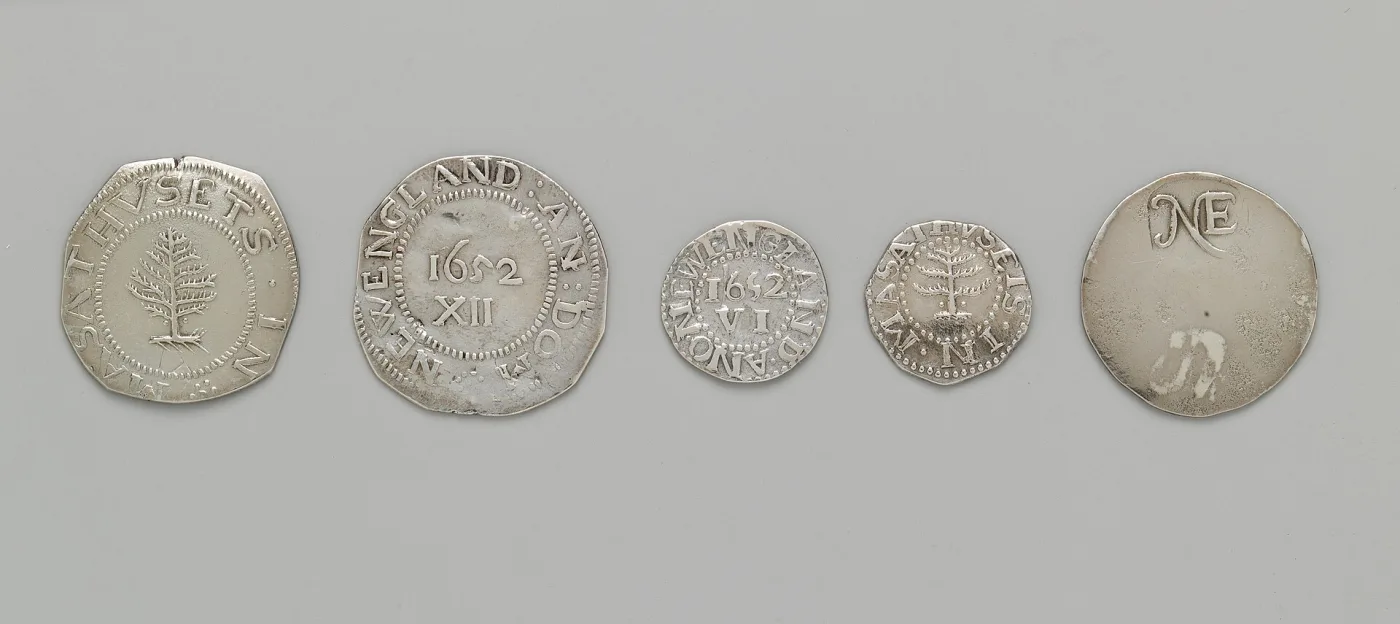
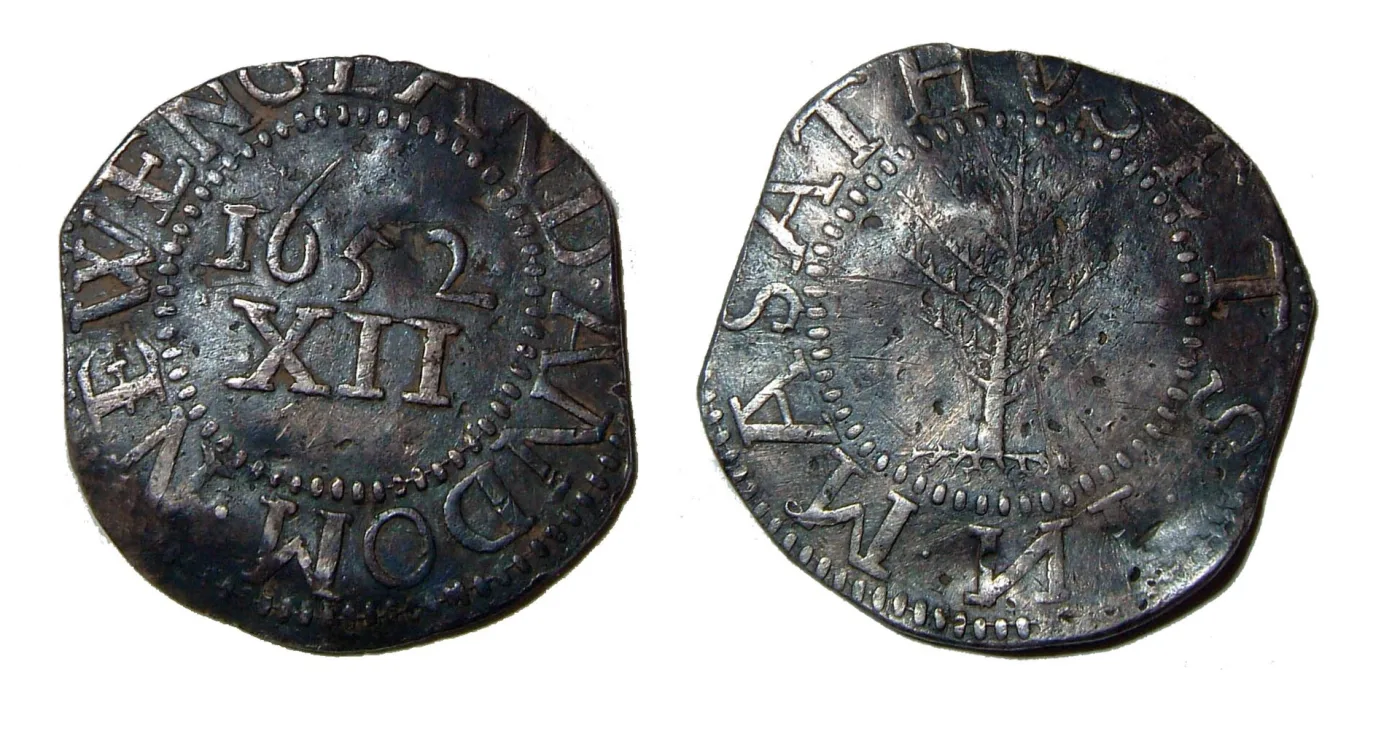
In 1652 the Massachusetts Bay Colony defied the Crown and opened a mint in Boston, producing the New England, Willow Tree, Oak Tree, and Pine Tree silver coins. These were the first coins struck in what is now the United States, and almost all of them carry the frozen date “1652” regardless of when they were actually made. The mint operated until about 1682, when royal pressure shut it down.
The Royal and Proprietary Era (1680s-1720s)
For decades afterward, attempts to supply the colonies with coin came mostly from England: the St. Patrick coppers brought to New Jersey, the American Plantations tokens of James II, William Wood’s Rosa Americana and Hibernia coinages of the 1720s, and various tokens and patterns. These were small change authorized (or merely tolerated) by the Crown, never a true national coinage.
The Spanish-Dollar Economy (Throughout)
Running underneath the entire period, the real money of daily commerce was foreign silver — overwhelmingly the Spanish milled dollar (the eight reales, or “piece of eight”), supplemented by other European coins. This foreign silver, not any homegrown issue, was the dominant circulating medium right up to and beyond the founding of the federal Mint.
The Confederation Era (1776-1788)
Independence unleashed a burst of homegrown coinage. The 1776 Continental dollar was the first dollar-sized coin associated with the new nation; in the mid-1780s several states (Connecticut, New Jersey, Massachusetts, Vermont) struck their own coppers under the Articles of Confederation; private speculators produced the Nova Constellatio coppers and a flock of patterns; and in 1787 the Congress of the Confederation contracted for the Fugio cent, the first coin authorized by the United States.
The Threshold of Federal Coinage (1789-1792)
The Constitution gave the federal government sole power to coin money, the Mint Act of 1792 created the Philadelphia Mint, and in 1793 the first federal cents and half cents appeared — the Large Cent and Half Cent. The very first of these was the 1793 Chain Cent, whose chain reverse was condemned and redesigned within weeks. With that, the colonial era closed and the regular U.S. series began.
How to Identify a Colonial Coin
Identifying these coins is detective work, but a consistent method makes it manageable. Work through the following checks before reaching for a catalog.
Step 1: Assess the Metal and “Feel”
Most colonial coins are copper — coppers, cents, and tokens — and many decades old, so they typically show genuine wear, an even brown or chocolate patina, and softness of detail. Massachusetts issues and a handful of others are silver. Gold is essentially absent from American colonial coinage. A “colonial” coin that looks bright, sharp, and machine-perfect deserves immediate suspicion of being a modern reproduction.
Step 2: Read Every Legend and Word
The inscriptions are the single best clue. Look for telltale Latin and English legends: NOVA CONSTELLATIO, AUCTORI CONNEC (Connecticut), NOVA CAESAREA (New Jersey), VERMON or VERMONTENSIUM, ROSA AMERICANA, FUGIO and MIND YOUR BUSINESS, WE ARE ONE, or GEORGIVS with a date. These phrases pin a coin to a specific issuer almost instantly.
Step 3: Identify the Central Device
Each series has signature imagery: a pine, oak, or willow tree (Massachusetts silver); a horse’s head and plow (New Jersey); a seated female figure (Connecticut, Nova Constellatio); a sundial under a sun (Fugio); thirteen linked rings (Fugio reverse and Continental dollar); a rose (Rosa Americana); a bust of George Washington (Washington pieces). Match the picture first, then narrow by legend.
Step 4: Find and Interpret the Date
Dates can mislead. Massachusetts silver is almost all frozen at 1652; the Continental dollar reads 1776; state coppers are dated 1785-1788; the Fugio is 1787. But be aware that contemporary counterfeits and later restrikes copied these dates, so a date confirms the type being imitated, not necessarily the period of manufacture.
Step 5: Attribute the Variety with a Reference
Colonial series are catalogued by die variety, not by date and mint mark. Specialists use dedicated numbering systems — Noe numbers for Massachusetts silver, Miller for Connecticut, Maris for New Jersey, Ryder/Bressett for Vermont, and Newman for the Fugio cent. For broad identification across all U.S. coinage, our complete coin identification guide covers the general method, and an AI app can often name the type from a photo in seconds before you dive into variety attribution.
Massachusetts Silver: The First American Coins
The silver coins of the Massachusetts Bay Colony are the cornerstone of any colonial collection — the first coins struck in the future United States and among the most historically important objects in American numismatics.
Why They Were Made
By 1652 the colony faced a chronic shortage of reliable coin and a flood of clipped, underweight, and counterfeit foreign pieces. In a bold act of de facto independence — England was in the throes of the Commonwealth, with no king on the throne — the General Court authorized a mint in Boston under John Hull and Robert Sanderson to turn bullion and foreign silver into standardized colonial coin.
The Four Types
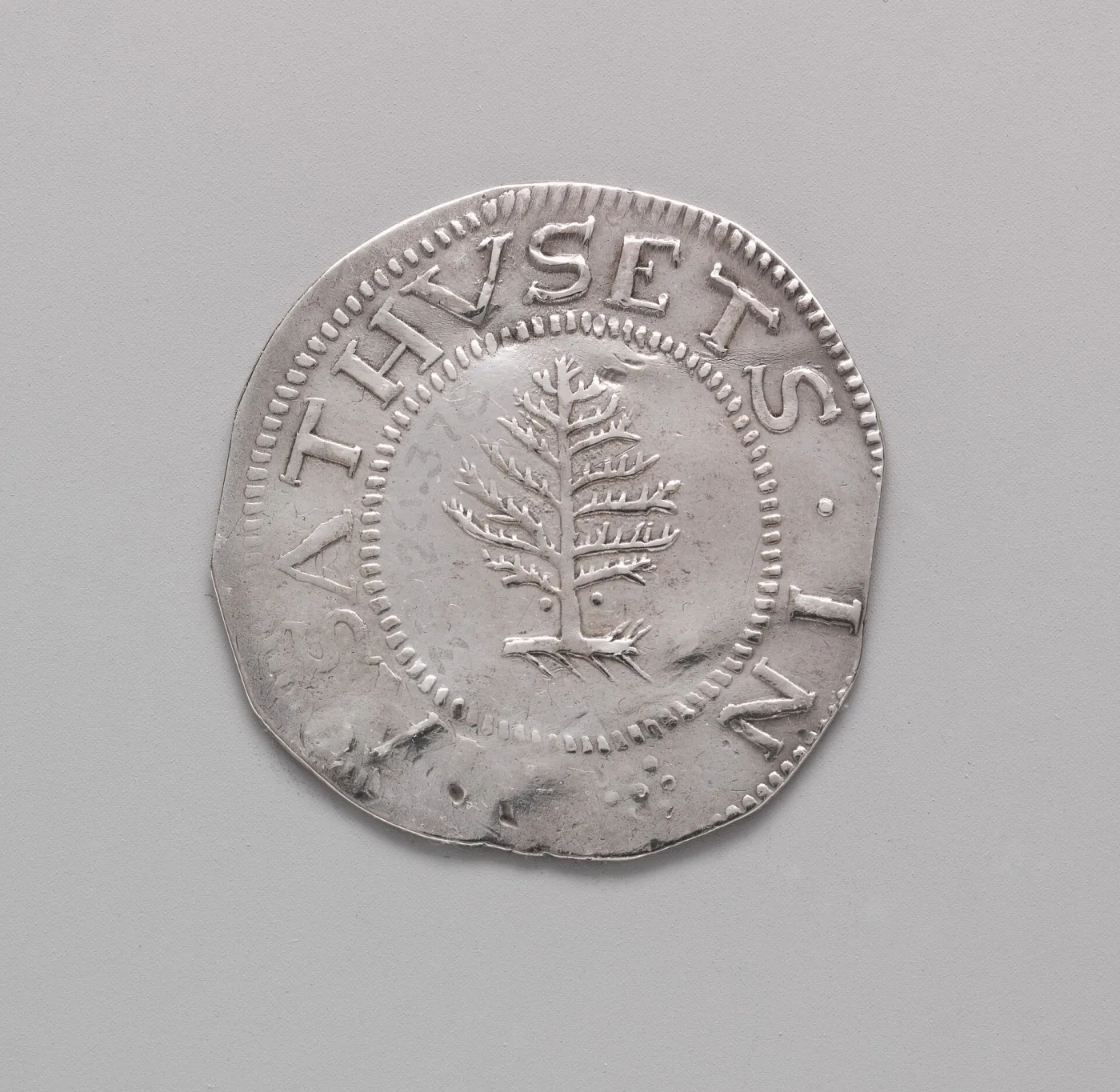
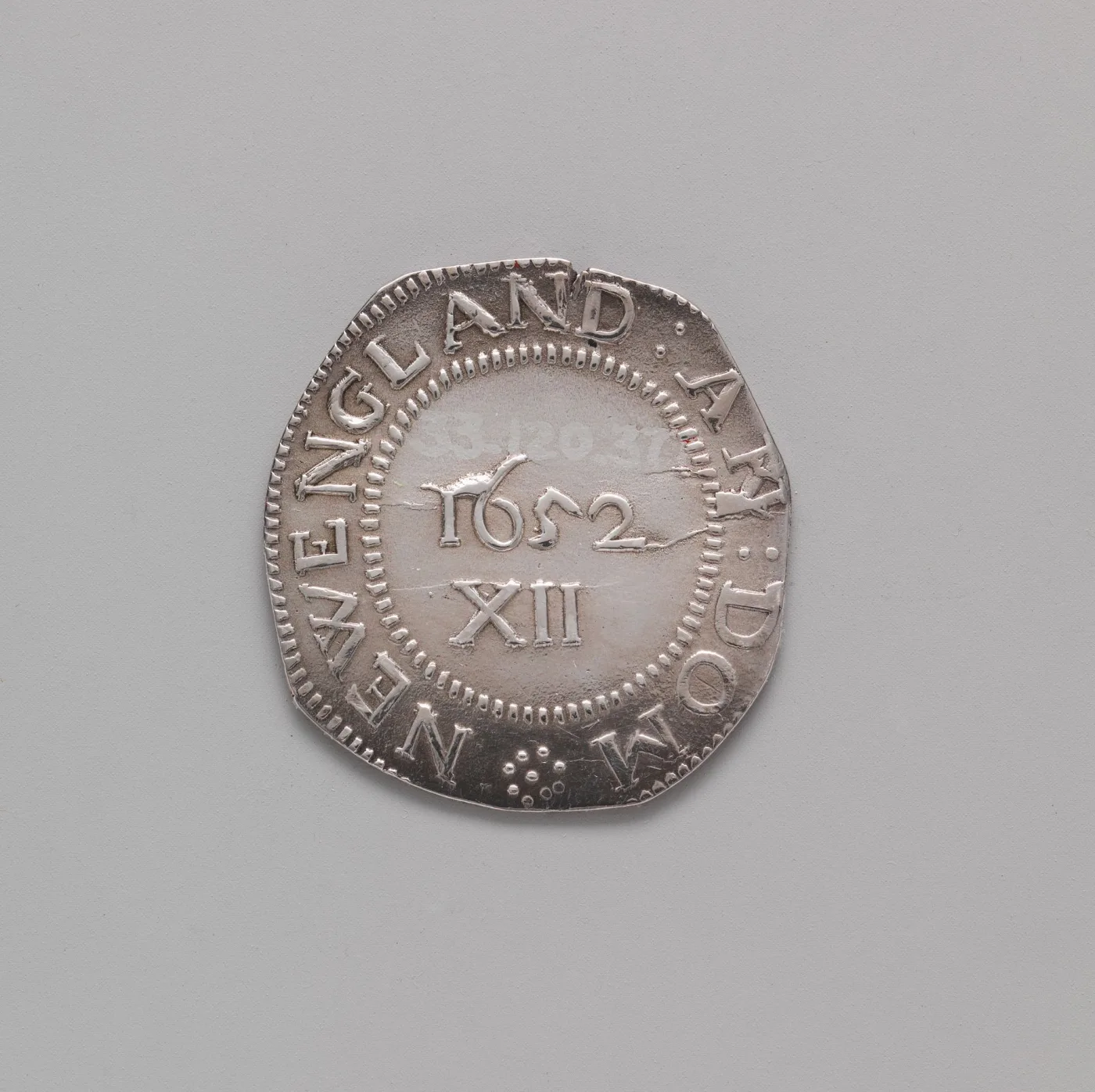
The series progressed through four designs. The New England (NE) coinage of 1652 is the crudest and rarest: simple planchets stamped only with “NE” on one side and the denomination (XII, VI, or III for twelve, six, or three pence) on the other. It was quickly replaced by fully designed coins bearing a tree: the Willow Tree (struck about 1653-1660, with an indistinct, scraggly tree and notoriously weak strikes), the Oak Tree (about 1660-1667), and the famous Pine Tree (about 1667-1682). All four overwhelmingly carry the date 1652 — a deliberate fiction to suggest the coins predated, and so escaped, the Crown’s later prohibitions.
Denominations and the “Pine Tree Shilling”
The coins were struck as the threepence, sixpence, shilling (twelvepence), and — for the Oak and Pine Tree only — the twopence. The shilling is the iconic denomination, and the “Pine Tree shilling” is one of the most storied coins in American history, woven into colonial legend and literature. Large planchet and small planchet varieties of the Pine Tree shilling reflect a change in minting technology late in the series.
Identification and Value
Identify Massachusetts silver by the tree device, the “MASATHVSETS” (note the colonial spelling) legend around the obverse, “NEW ENGLAND” and “AN DOM 1652” on the reverse, and the Roman numeral denomination. These are scarce, valuable coins: even well-worn Pine Tree shillings typically bring several thousand dollars, the Oak and Willow Tree pieces more, and the NE coinage and finest examples reach well into five and six figures. Because the stakes are high, authentication by a major service is strongly advised.
The Spanish Milled Dollar and Foreign Money
No discussion of colonial money is complete — or accurate — without the Spanish milled dollar, because it, not any American issue, was the everyday currency of the colonies and the early Republic.
The “Piece of Eight”
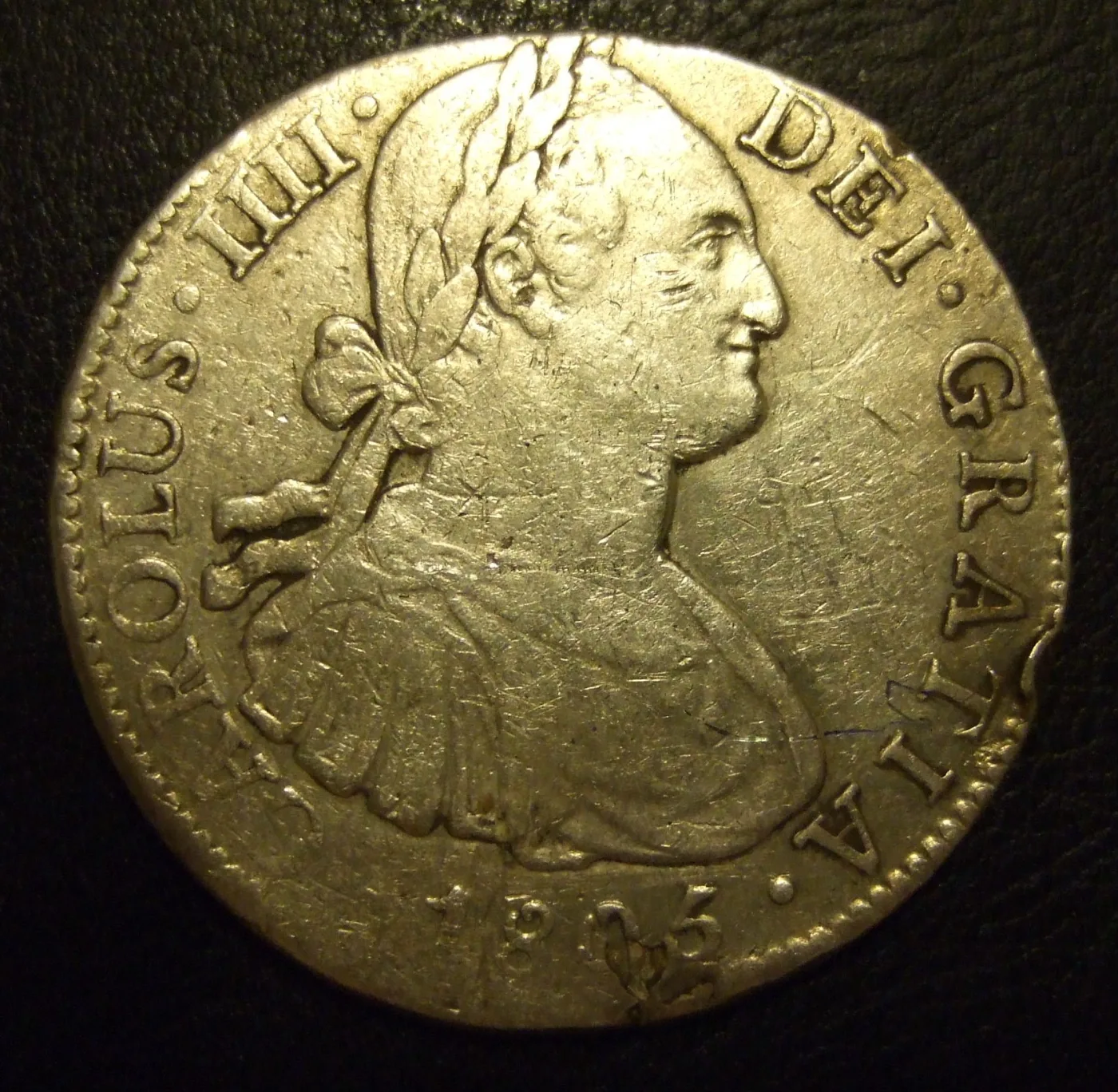
The Spanish (and Spanish-American) eight-reales coin, struck in vast quantities at mints in Mexico City, Potosí, Lima, and elsewhere, was the international trade dollar of the age. Colonists called it the “Spanish dollar” or “piece of eight” — the Spanish colonial real de a ocho, and it circulated everywhere. Its fractional reales — and the practice of physically cutting the coin into eight wedge-shaped “bits” to make change — gave us the phrase “two bits” for a quarter and shaped the very denomination of the U.S. dollar.
It Defined the U.S. Dollar
When Congress designed the new national coinage, it deliberately set the silver dollar’s weight and fineness to match the familiar Spanish dollar so the two would trade one-for-one. That is why the first U.S. silver dollar, the Flowing Hair dollar of 1794, and its successor the Draped Bust dollar, were modeled on the Spanish eight reales. Spanish and Spanish-American silver remained legal tender in the United States until 1857, long after the federal Mint opened.
Identifying Spanish Colonial Silver
Two broad styles appear in American contexts: the older, irregularly shaped cob coinage (hand-struck, crude, often with visible cross and shield designs) and the later, round, machine-made milled “pillar” and “portrait” dollars (showing the Spanish king’s bust or the twin Pillars of Hercules). Cut fractions — half, quarter, and eighth pieces — are commonly encountered and are collectible in their own right as evidence of how colonial commerce actually worked.
Other Foreign Coins
British halfpence (genuine and counterfeit), French coins and Dutch coins, and assorted European silver also passed through colonial hands. Worn, evasively-lettered British “halfpenny” coppers in particular turn up constantly and are easy to confuse with American coppers, so reading the legend carefully is essential; our guide to identifying British coins explains the monarchs and denominations behind these pieces.

Early Royal and Proprietary Issues
Between the Massachusetts silver and the Revolution, most coinage aimed at America came from England, by royal patent or private venture. These pieces are a distinct and colorful chapter.
St. Patrick Coppers
The St. Patrick “farthing” and “halfpenny,” originally Irish tokens, were brought to New Jersey in quantity by Mark Newby around 1681 and circulated there. They show King David playing a harp on one side and St. Patrick with a crowd or a church on the other, often with a distinctive splash of brass over the crown. They are the earliest coppers widely circulated in the American colonies.
American Plantations and Elephant Tokens
The 1688 American Plantations token, struck in tin under a patent from James II, was the first coin authorized by royal authority specifically for the American colonies. The undated “Elephant tokens” (London, Carolina, and New England varieties) are related curiosities showing an elephant on the obverse, prized today for their early association with the colonies.
Rosa Americana and Wood’s Hibernia (1722-1724)
William Wood obtained royal patents to strike coppers for America (the Rosa Americana series, in a brassy alloy, showing a crowned rose and the motto “ROSA AMERICANA UTILE DULCI”) and for Ireland (the Hibernia coppers, showing a seated Hibernia with a harp). The Rosa Americana pieces — twopence, penny, and halfpenny — were poorly received and circulated mostly by default, but they are a key collected series and the most “official” attempt at a colonial coinage before the Revolution.
Other Tokens and Curiosities
The field is rich with one-off rarities: the Higley coppers of Connecticut (1737-1739), privately made by Dr. Samuel Higley from his own copper and inscribed “VALUE ME AS YOU PLEASE” and “I AM GOOD COPPER,” are legendary and extremely valuable; the Irish-made Voce Populi coppers of 1760 circulated in the colonies; and the Pitt tokens commemorated the repeal of the Stamp Act. Each is a window into a specific moment of colonial life.
The State Coppers (1785-1788)
After independence, with the federal government not yet empowered to coin money, several states authorized their own copper coinage. These state coppers are the heart of post-colonial collecting — abundant enough to be affordable, yet so variety-rich that specialists spend lifetimes on a single state.
Connecticut Coppers (1785-1788)
The most prolific of the state coinages, Connecticut coppers show a mailed bust (loosely imitating contemporary British halfpence) with the legend “AUCTORI CONNEC” and a seated figure of Liberty with “INDE ET LIB” (Independence and Liberty) on the reverse. They exist in hundreds of die varieties catalogued by Miller numbers, including famous ones like the “African Head,” the “Laughing Head,” and the “Hercules Head.” Many were struck loosely on poor planchets, so they are usually found well worn.
New Jersey Coppers (1786-1788)
New Jersey’s coppers carry one of the most recognizable American colonial designs: a horse’s head above a plow with the legend “NOVA CAESAREA” (the Latin name for New Jersey), and a shield with “E PLURIBUS UNUM” on the reverse — one of the earliest official uses of that motto on a coin. Catalogued by Maris numbers, they include charming varieties nicknamed for their quirks, such as the “Serpent Head” and the “Sprig Above Plow.”
Massachusetts Cents and Half Cents (1787-1788)
Massachusetts established a true state mint and struck handsome cents and half cents dated 1787 and 1788 — notable as the first American coins denominated in cents, anticipating the federal decimal system. They show an Indian standing with a bow and arrow on the obverse and a spread eagle with a central shield on the reverse, with “MASSACHUSETTS” and the denomination spelled out. Because the mint lost money, production was short-lived, making these a finite and popular series.
Vermont Coppers (1785-1788)
The Vermont Republic (not yet a state) authorized coppers that began with a distinctive landscape design — a sun rising over the Green Mountains with a plow, legend “VERMONTS” or “VERMONTENSIUM RES PUBLICA” — and later shifted to a bust-and-Liberty design imitating British and Connecticut coppers. Catalogued by Ryder (Bressett) numbers, the early “Landscape” types are especially prized.
How to Tell the State Coppers Apart
Read the Latin legend first: “CONNEC” is Connecticut, “CAESAREA” is New Jersey, “VERMON” is Vermont, and a spelled-out “MASSACHUSETTS” with an Indian and eagle is Massachusetts. The central device confirms it — horse-and-plow for New Jersey, landscape or bust for Vermont, mailed bust and seated Liberty for Connecticut, Indian and eagle for Massachusetts.
Confederation-Era and Speculative Issues
Alongside the official state coppers, the 1780s teemed with private, speculative, and pattern coinages — some hoping to win a federal contract, others simply trying to profit from the coin shortage.
Nova Constellatio Coppers (1783-1785)
Privately struck (probably in Birmingham, England) for circulation in America, the Nova Constellatio coppers show an all-seeing eye radiating within a ring of thirteen stars and rays, the legend “NOVA CONSTELLATIO,” and a “U.S.” monogram within a wreath. They circulated widely and are among the more available pieces of the era. Separately, the related 1783 Nova Constellatio silver patterns (the “Quint,” “Bit,” and “Mark”) represent the very first proposed decimal coinage of the United States and are great rarities.
Immune Columbia and Confederatio Pieces
A cluster of rare 1785-1786 patterns — the “Immune Columbia” pieces and the “Confederatio” coppers — combined experimental obverses and reverses (a seated Columbia, a constellation of stars) as speculators and would-be contractors tried out designs for a national coinage. These are scarce and avidly studied.
Nova Eborac and New York-Related Coppers
New York never authorized an official state copper, but several issues are associated with it, including the “NOVA EBORAC” coppers (showing a seated figure and a bust, “Nova Eborac” being Latin for New York) and the rare, much-celebrated “Excelsior” and “George Clinton” coppers. The famous Brasher Doubloon — a privately made gold piece by New York goldsmith Ephraim Brasher — also belongs to this milieu and is among the most valuable coins in the world.
Private Tokens: Bar Copper, Talbot Allum & Lee, and More
The undated Bar copper (showing “USA” in monogram over thirteen bars, resembling the flag) and the Talbot, Allum & Lee cents (1794-1795 New York merchant tokens, some of whose planchets were later used for federal cents) round out the speculative scene. Many of these blur the line between coin, token, and pattern, which is part of their fascination. The American merchant-token tradition they began would flower a generation later in the Hard Times Tokens of the 1830s.
The 1776 Continental Dollar
The Continental dollar (or Continental Currency coin) holds a special place as the first dollar-sized coin associated with the United States, struck in the very year of the Declaration of Independence.
Design and Symbolism
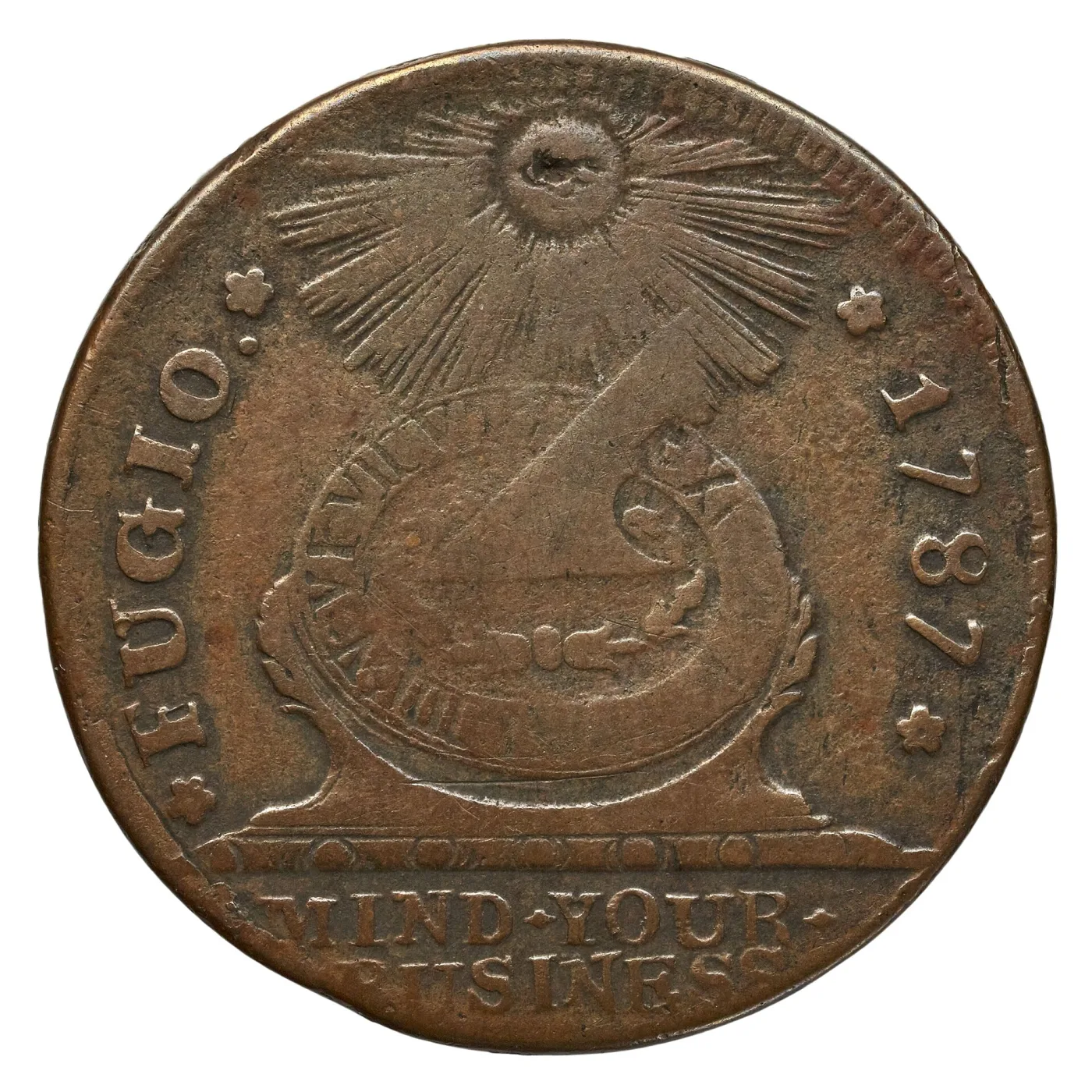
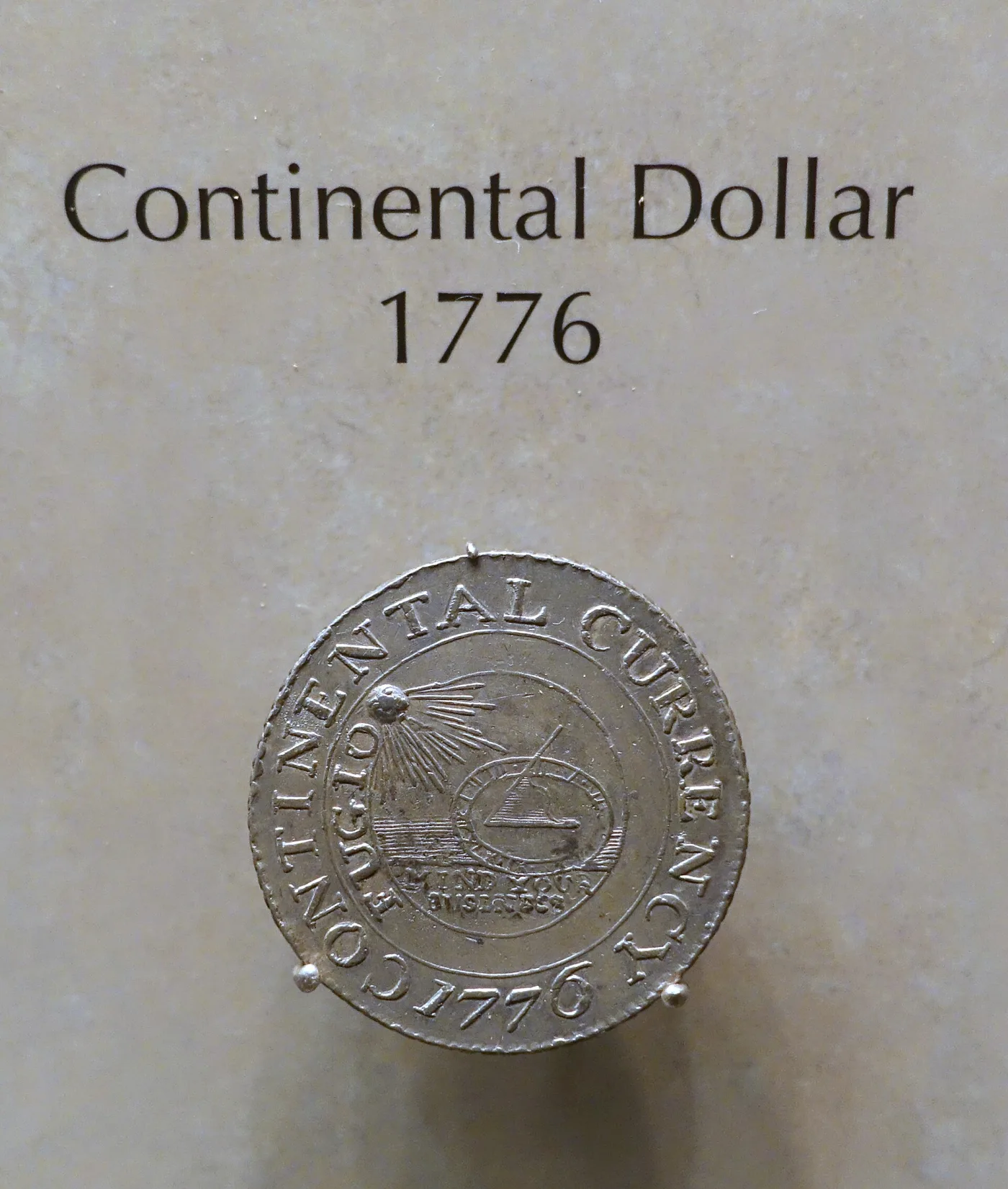
The obverse shows a sundial beneath a radiant sun with the legend “FUGIO” (Latin: “I fly,” i.e., time flies) and “MIND YOUR BUSINESS” — imagery traditionally attributed to Benjamin Franklin and later reused on the Fugio cent. The reverse displays thirteen interlinked rings, each naming a colony, surrounding “AMERICAN CONGRESS” and “WE ARE ONE” — a powerful emblem of the union of the states.
Metals, Spelling Varieties, and the Open Question
The coin is known struck in pewter (by far the most often encountered), brass, and silver (great rarities). The legend appears with several spellings of “currency” — notably CURENCY, CURRENCY, and the blundered CURRENCEY — which define the major varieties. Historians continue to debate whether these pieces were struck in America as an actual coin, intended as a substitute for the paper dollar, or produced in Europe as a medal or token; that scholarly uncertainty only adds to their mystique.
Identification and Value
Identify the Continental dollar by its sundial-and-rings design, the 1776 date, and the pewter (gray, soft) appearance of the common version. Genuine examples are valuable — pewter pieces typically run into the high four and five figures depending on grade and variety, with silver strikings reaching seven figures — and the type has been widely reproduced, so authentication is essential. Modern souvenir copies are common; a genuine piece will show period-correct manufacture and weight.
The 1787 Fugio Cent
If any single coin defines this field, it is the Fugio cent — the first coin authorized by the United States and a perennial favorite as the “first American cent.”
The First U.S.-Authorized Coin
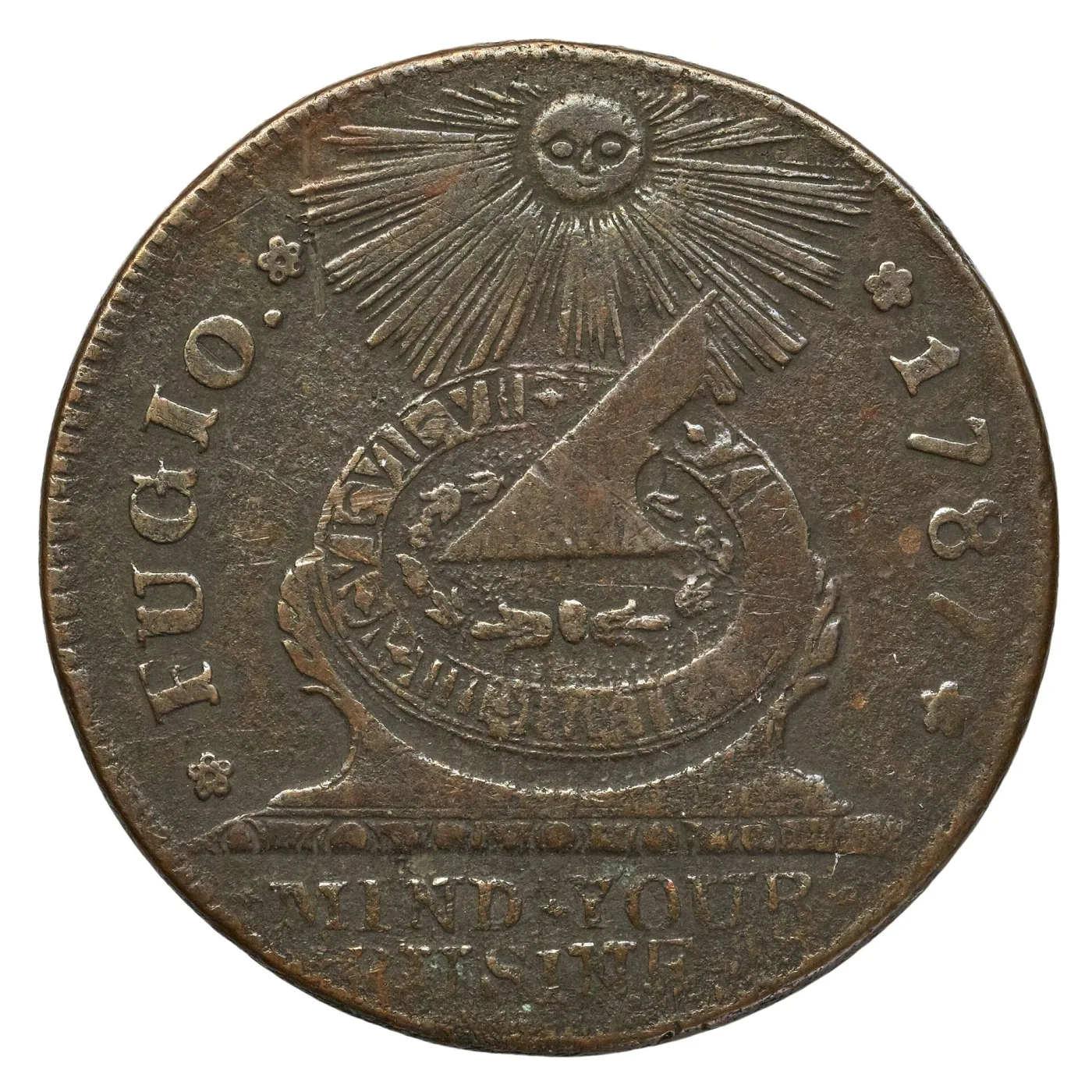
On April 21, 1787, the Congress of the Confederation contracted for a copper cent, struck by James Jarvis at a private mint. Because it carries the same Franklin-attributed design and motto as the Continental dollar, it is sometimes called the “Franklin cent.” It predates the federal Mint by six years and is therefore the first coin issued under the authority of the United States, making it a cornerstone of any type collection of early American coinage.
Design and the Two Famous Mottoes
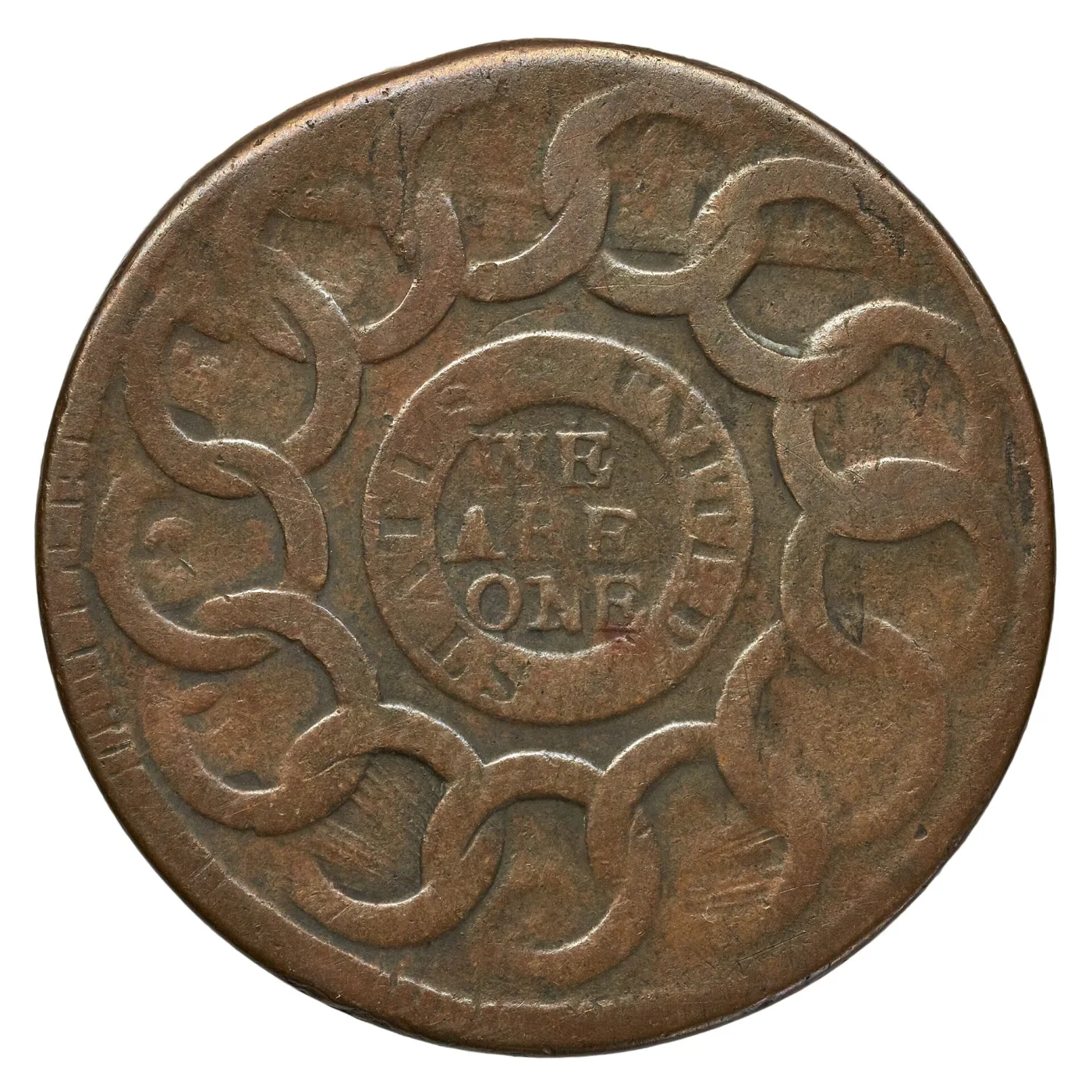
The obverse repeats the sundial beneath the sun, the word “FUGIO,” the date “1787,” and the homely admonition “MIND YOUR BUSINESS” — Franklin’s pointed double meaning: mind the passing of time and tend to your own affairs. The reverse shows thirteen linked rings around the central legends “UNITED STATES” (or “STATES UNITED,” a major variety) and “WE ARE ONE.” The thirteen rings, like those on the Continental dollar, symbolize the union of the original states.
Major Varieties
Fugio cents are catalogued by Newman variety numbers and fall into recognizable groups, covered in depth in our dedicated 1787 Fugio Cent identification guide. The two best-known reverse legends are “UNITED STATES” (around the rings) and “STATES UNITED” (across the rings), and there are pointed-rays and club-rays varieties on the obverse, plus the scarce “AMERICAN CONGRESS” reverse. A well-known hoard, the “Bank of New York hoard,” preserved a quantity of high-grade pieces, which is why attractive Uncirculated Fugio cents exist at all.
Identification and Value
The sundial-and-sun obverse with “FUGIO” and the linked-ring reverse make the type unmistakable. Common varieties in well-worn grades start around a few hundred dollars; problem-free higher grades and the Bank of New York Uncirculated pieces run into the low thousands, with rare varieties and superb gems much higher. As with all colonial coppers, originality and surface quality drive value, and the type is frequently reproduced, so caution is warranted.
The Washington Pieces
A distinctive group of coins and tokens bearing the portrait of George Washington bridges the colonial and federal eras and forms a popular collecting specialty of its own.
What They Are
Struck mostly in England between roughly 1783 and 1795 (with a few later), the Washington pieces were privately made tokens, patterns, and medals featuring Washington’s bust. Many were proposals or speculative ventures aimed at supplying coppers to America, produced at a moment when Washington’s image carried enormous commercial appeal. They range from common circulating-style coppers to rare patterns in silver and gold.
Notable Types
Popular issues include the “Washington & Independence” coppers, the “Liberty and Security” pieces, the “North Wales” halfpenny, the “Unity States” cent, the 1791 “Large Eagle” and “Small Eagle” cents, and the 1792 “Getz” patterns and “Born Virginia” pieces. The 1792 silver “Washington President” pattern is a notable rarity associated with the debate over whether the new nation’s coins should bear a portrait of the president — an idea ultimately rejected in favor of Liberty.
Why They Matter
Beyond their charm, the Washington pieces document a real constitutional debate: whether American coinage would imitate the monarchical custom of putting the head of state on the money. Congress chose Liberty instead, a decision that shaped the entire federal series from the Flowing Hair coinage onward. That makes the Washington pieces a tangible “road not taken” in U.S. numismatics.
Composition and Physical Characteristics
Because colonial coins were made by so many different producers, specifications vary widely — but a few general patterns help with identification and authentication.
Copper Coinage
The great majority of colonial and post-colonial coins are copper, struck roughly to the size and weight of contemporary British halfpence (about 28-30mm and 8-11 grams), though weights were poorly controlled and vary considerably from piece to piece. State coppers and the Fugio cent fall in this range. Rosa Americana pieces used a distinctive brassy “Bath metal” alloy that looks different from ordinary copper.
Silver Coinage
The Massachusetts coins are silver, struck to a (reduced) sterling-based standard; the threepence, sixpence, and shilling correspond to their pence values in silver. The Spanish dollars that circulated alongside them are .896-.903 fine silver, about 27 grams and 38-40mm — useful reference points when weighing suspected pieces.
Other Metals
The Continental dollar appears chiefly in pewter (a soft, gray tin alloy), with rare brass and silver strikings. The American Plantations token is tin. Gold is virtually unknown except for the legendary privately-struck Brasher Doubloon. Knowing the expected metal for a given type is itself a first-line authentication check.
Why Specifications Help Authenticate
Crude as they are, genuine colonial coins were made to rough period standards. A “copper” that is the wrong weight, a “pewter” Continental dollar that is too heavy or rings like silver, or a “Massachusetts shilling” that fails a specific-gravity test for silver is almost certainly a reproduction. Weight and metal tests, done non-destructively, screen out many fakes before design analysis even begins.
Grading Colonial Coins
Grading colonial coppers is its own discipline, because these coins were crudely made and heavily circulated; the standards differ in spirit from grading a sharp federal coin.
Wear Is Expected — Surface Is Everything
Most colonial coppers survive only in well-worn grades (Good to Fine), and that is normal and acceptable for the field. With wear taken for granted, surface quality becomes the dominant factor: a coin with smooth, original, glossy brown surfaces and good eye appeal can be worth far more than a higher-detail coin that is porous, corroded, or environmentally damaged. The general principles of the Sheldon scale still apply, as explained in our coin grading guide, but they are interpreted generously for these issues.
The Curse of Porosity and Corrosion
Buried and circulated for centuries, copper colonials are frequently porous (granular from corrosion), pitted, or covered with hard green or brown encrustation. Light, even, hard patina is desirable; active corrosion, roughness, and “tooled” or smoothed surfaces are serious problems that depress value and complicate grading. Many genuine coins receive “details” or net grades for these issues.
Strike and Planchet Quality
Because dies were crude and planchets often defective, weak strikes, off-center designs, clips, and laminations are common and are judged leniently — they are a normal part of how the coins were made, not damage. A reasonably well-centered, fully-legible example is above average for most state-copper varieties.
Why Professional Grading Helps
Given the prevalence of corrosion, tooling, and fakes, third-party grading from PCGS or NGC is especially valuable here: it authenticates the coin, attributes the variety, and renders an objective verdict on surface problems. For any significant colonial purchase, a certified holder provides real protection.
Counterfeit Detection and Authentication
Few areas of numismatics carry as much counterfeit risk as colonial coins, and — uniquely — some “counterfeits” are themselves collectible. Sorting this out is essential.
Three Different Kinds of “Fake”
First, contemporary counterfeits — coppers made in the period (often in England or America) to pass as genuine halfpence or state coppers — are an accepted, collected part of the field; “evasion” halfpence and counterfeit Connecticut coppers are studied and catalogued. Second, later restrikes and novodels from genuine or recut dies exist for some types. Third, modern reproductions and outright forgeries made to deceive collectors are the real danger, ranging from cheap souvenir copies to deceptive struck fakes.
Warning Signs of Modern Fakes
Be suspicious of a “colonial” coin that is too sharp, too bright, or too perfect; that has cast characteristics (a grainy surface, soft mushy detail, a seam on the edge, or trapped air bubbles); that is the wrong weight or rings wrong for its metal; or that carries a “COPY” mark (required on modern reproductions under the Hobby Protection Act, though unscrupulous sellers sometimes remove it). Many tourist-shop “Pine Tree shillings” and “Continental dollars” are obvious cast copies.
Altered and Tooled Genuine Coins
More subtle are genuine coins that have been improved — surfaces smoothed or “tooled” to hide corrosion, dates or letters re-engraved, or rare varieties faked by altering common ones. Examine any premium coin under 10x-20x magnification for tooling marks, unnatural surface texture, and added or re-cut detail, and compare against authenticated images of the variety.
Authentication Is Non-Negotiable for Rarities
For Massachusetts silver, the Continental dollar, high-grade Fugio cents, scarce state-copper varieties, and anything expensive, buy only coins certified by PCGS or NGC, ideally with variety attribution. The price gap between a genuine rarity and a clever fake or a tooled coin is large, and reputable certification is the surest protection a collector has.
Current Market Values
Values in this field span an enormous range — from affordable circulated coppers to seven-figure trophies. The figures below are approximate 2026 retail ranges for genuine, problem-free coins; corroded, tooled, or “details”-graded pieces sell at steep discounts, and rare die varieties can multiply these numbers many times over.
Affordable Entry Points
Common Connecticut and New Jersey coppers in well-worn but problem-free grades typically run from roughly $75 to $300, making them the most accessible genuine colonial coins. Common Fugio cents in low circulated grades start around a few hundred dollars, and many Washington pieces and Nova Constellatio coppers are similarly affordable. Cut fractions of Spanish dollars and worn Spanish reales can be had for modest sums and offer real colonial history cheaply.
Mid-Range Issues
Better varieties and higher grades of the state coppers, attractive Massachusetts cents and half cents, nicer Fugio cents, Rosa Americana pieces, and the more available Washington patterns generally run from several hundred into the low thousands of dollars, depending on condition and rarity. The Bank of New York Uncirculated Fugio cents fall in this band.
Rarities and Trophies
The blue-chip pieces are valued in five, six, and seven figures: Massachusetts silver (Pine Tree shillings in the low-to-mid thousands and up, with NE coinage and Willow Tree pieces far higher), silver Continental dollars, the Higley coppers, the Nova Constellatio silver patterns, the Immune Columbia and Confederatio pieces, and — at the very summit — the Brasher Doubloon, which has sold for several million dollars.
Market Trends
Colonial coins are driven by a small, knowledgeable, and devoted collector base, and the market for genuine, original-surface pieces has been strong and stable for years. Eye appeal and originality command large premiums, problem coins lag, and key rarities continue to set records whenever fresh examples appear. Because supply of nice original coppers is limited, patience and selectivity reward the collector far more than chasing quantity.
Collecting Strategies and Tips
Colonial coins can intimidate newcomers, but the field offers sensible entry points at every budget if you approach it with a plan.
Start With a Type Set
The most rewarding beginner goal is a type set: one representative example of each major category — a Connecticut copper, a New Jersey copper, a Fugio cent, a Massachusetts cent, a Spanish-dollar cut fraction, a Nova Constellatio copper, a Washington piece — rather than trying to complete any one variety series. This gives a broad, affordable, and visually varied collection that tells the whole story of early American money.
Or Specialize in One Series
Many collectors fall in love with a single series and pursue its die varieties in depth — Connecticut coppers by Miller number, New Jersey by Maris, Fugio cents by Newman, Massachusetts silver by Noe. Specializing turns the overwhelming variety count from a burden into the whole point, and the dedicated literature and clubs (such as the Colonial Coin Collectors Club, C4) make it deeply rewarding.
Buy the Surface, Not Just the Grade
On colonial coppers, originality and surface quality matter more than raw detail. Prioritize smooth, glossy, naturally patinated coins with good eye appeal over higher-detail pieces that are porous, corroded, recolored, or tooled. A pleasing original “Fine” is almost always a better long-term holding than a problem-laden “Very Fine.”
Learn the References and Buy Certified Rarities
Invest in the standard references — the Red Book to start, then the specialized variety guides and Q. David Bowers’s Whitman Encyclopedia of Colonial and Early American Coins — and learn the diagnostics before chasing rare varieties. For any expensive coin, insist on PCGS or NGC certification with variety attribution. Knowledge is the single best protection in a field this full of traps.
Proper Storage and Preservation
Colonial coins are old, often fragile-surfaced, and irreplaceable, so storage that preserves originality is essential — and copper is especially vulnerable.
Protect Copper From Active Corrosion
Copper colonials can develop active corrosion (“bronze disease,” a powdery green growth) in humid conditions, which slowly destroys the coin. Store in a cool, dry, stable environment with low humidity, use silica gel and anti-corrosion materials, and inspect periodically for any new green spotting that signals trouble.
Use Inert Holders and Avoid PVC
Never store these coins in PVC-containing flips, which leave a corrosive green residue over time. Use inert Mylar flips, hard plastic capsules, or certified-grading-service holders. For an old copper with a stable, original patina, an inert holder simply preserves what already exists — which is exactly the goal.
Never Clean, Tool, or “Improve”
Above all, never clean, polish, dip, or tool a colonial coin. Cleaning strips the original patina that the market prizes and leaves an unnatural surface that ruins value; tooling to remove corrosion is detectable and treated as damage. A naturally toned or even lightly corroded original coin is worth far more left untouched than any “improved” piece. Leave all conservation to professional services experienced with early copper.
Security and Documentation
For a collection that includes silver or scarce rarities, use a quality safe or a bank safe-deposit box, and keep an inventory with photographs, variety attributions, and certification numbers for insurance. A dedicated numismatic insurance policy is worth considering for any collection containing genuine colonial rarities.
Frequently Asked Questions
What are colonial coins?
Colonial coins are the coins and tokens that circulated in the American colonies and the early United States before the federal Mint began regular production in 1793. The collecting category is usually defined broadly, running from the 1652 Massachusetts silver through the post-colonial Confederation issues of the 1780s, including state coppers, the Continental dollar, the Fugio cent, foreign silver like the Spanish dollar, and various royal and private tokens.
What was the first coin made in America?
The first coins struck in what is now the United States were the Massachusetts silver coins beginning in 1652 — the New England (NE) coinage, followed by the Willow Tree, Oak Tree, and Pine Tree silver. Almost all carry the frozen date 1652. The first coin authorized by the United States government was the 1787 Fugio cent, struck six years before the federal Mint opened.
What is a Fugio cent?
The Fugio cent of 1787 is the first coin authorized by the United States, struck in copper by a private contractor under an act of the Congress of the Confederation. It shows a sundial beneath a sun with the word "FUGIO" and the motto "MIND YOUR BUSINESS" (a design attributed to Benjamin Franklin), and a reverse of thirteen linked rings around "UNITED STATES" or "STATES UNITED" and "WE ARE ONE." It is sometimes called the Franklin cent.
What money did colonial Americans actually use?
The everyday circulating money of the colonies was overwhelmingly foreign silver — above all the Spanish milled dollar (the eight reales, or "piece of eight") and its fractional reales, supplemented by British, French, and Dutch coins and by colonial paper currency. Homegrown coins like the Massachusetts silver and the later state coppers were a small part of the total supply, and Spanish silver remained legal tender in the U.S. until 1857.
Are colonial coins valuable?
It varies enormously. Common state coppers (Connecticut, New Jersey) and worn Spanish reales can be bought for as little as $75 to a few hundred dollars, making genuine colonial coins surprisingly accessible. At the other extreme, Massachusetts silver, silver Continental dollars, Higley coppers, and the Brasher Doubloon are worth from thousands into the millions. Rarity, die variety, originality, and surface quality drive value far more than age alone.
How do I tell a real colonial coin from a fake?
Check the metal and weight against what the type should be, look for genuine wear and even patina rather than a bright, too-perfect surface, and watch for cast characteristics like a grainy texture, soft detail, an edge seam, or air bubbles. Many souvenir reproductions exist, and some carry (or once carried) a "COPY" stamp. For anything valuable, buy only coins certified by PCGS or NGC, since deceptive struck fakes and tooled genuine coins require expert detection.
What is the difference between "colonial" and "post-colonial" coins?
Strictly, "colonial" coins date before independence in 1776, while the 1780s state coppers and the Fugio cent are often filed as "post-colonial" or "Confederation period" coinage — made after independence but before the Constitution gave the federal government the sole power to coin money. "Pre-federal" is a broader term for everything before the U.S. Mint. Collectors generally pursue all of it together as one continuous field.
Why are so many colonial coins so crudely made?
There was no national mint and, under British rule, no legal colonial mint for most of the period, so coins were produced by colonies, states, foreign mints, contractors, and speculators using crude, hand-prepared dies and poorly controlled planchets. Weak strikes, off-center designs, clips, and laminations are normal for the field and are judged leniently when grading — they reflect how the coins were genuinely made.
Can I still find colonial coins in circulation or the ground?
Not in circulation — colonial coins left everyday use generations ago and survive only in collections, dealer inventories, estates, and occasional archaeological or metal-detecting finds. Detectorists do still recover state coppers and Spanish silver in the original colonies, though such finds are usually corroded. Most collectors acquire colonial coins through specialist dealers, auctions, and clubs rather than from the ground.
Should I clean a dirty or corroded colonial copper?
Never. Cleaning strips the original patina the market prizes and leaves an unnatural surface that destroys value, and tooling to remove corrosion is detectable and treated as damage. An original coin — even toned, dirty, or lightly corroded — is worth far more left alone than any cleaned or "improved" piece. If a coin shows active corrosion (powdery green bronze disease), have it stabilized by a professional conservation service rather than attempting it yourself.