2026 Quarters and 1776~2026 Coins: How to Identify Every Design
In 2026 the coins in American pocket change all changed at once. To mark the 250th anniversary of the Declaration of Independence, the Semiquincentennial, the U.S. Mint replaced the single year on its circulating coins with a dual date, 1776 ~ 2026, and issued five new quarters, a new dime, and a new half dollar. The nickel keeps its familiar design with the new date, and the cent carries it too, although you will not find one in change.
That makes 2026 one of the busiest years in modern American coinage, and it raises the same question every new coin does: which one do I have, and is it worth anything? This guide walks through every 2026 design, how to tell them apart in seconds, where the mint mark hides on each one, and which pieces are worth putting aside.
What Are the 2026 Semiquincentennial Coins?
The program comes from the Circulating Collectible Coin Redesign Act of 2020, which allowed the Mint to redesign circulating coins for the nation’s 250th anniversary. The Mint began shipping the first 1776 ~ 2026 coins to the Federal Reserve Banks on January 5, 2026, and from there they reach ordinary bank rolls and cash drawers like any other coin.
Here is what changed for 2026:
| Coin | What is new in 2026 | Circulating mints |
|---|---|---|
| Quarter | Five new designs, each with its own obverse and reverse | P, D |
| Dime | Completely new design; reverse reads LIBERTY OVER TYRANNY | P, D |
| Half dollar | New design centred on the Statue of Liberty | P, D |
| Nickel | Jefferson and Monticello kept, with the 1776 ~ 2026 date | P, D |
| Cent | Lincoln kept, with the 1776 ~ 2026 date; not made for circulation | Collector products only |
The quarters get the most attention because there are five of them, and because they break with a long tradition: for most of the last century, a new quarter design meant a new reverse and the same portrait of Washington on the front. In 2026 both sides change, and Washington appears on only one of the five.
The year also has a one-dollar coin, sold from September 2026 in Mint rolls and bags: a golden dollar with a portrait of President Trump and the Presidential Seal on the reverse. It has its own guide, how to identify the 2026 Trump dollar, including the JULY 4th privy version.
The Fastest Way to Spot One: the 1776 ~ 2026 Date
Before you look at anything else, look at the date. A 2026 coin does not read “2026” on its own. It carries both years, and the way they are laid out varies by coin:
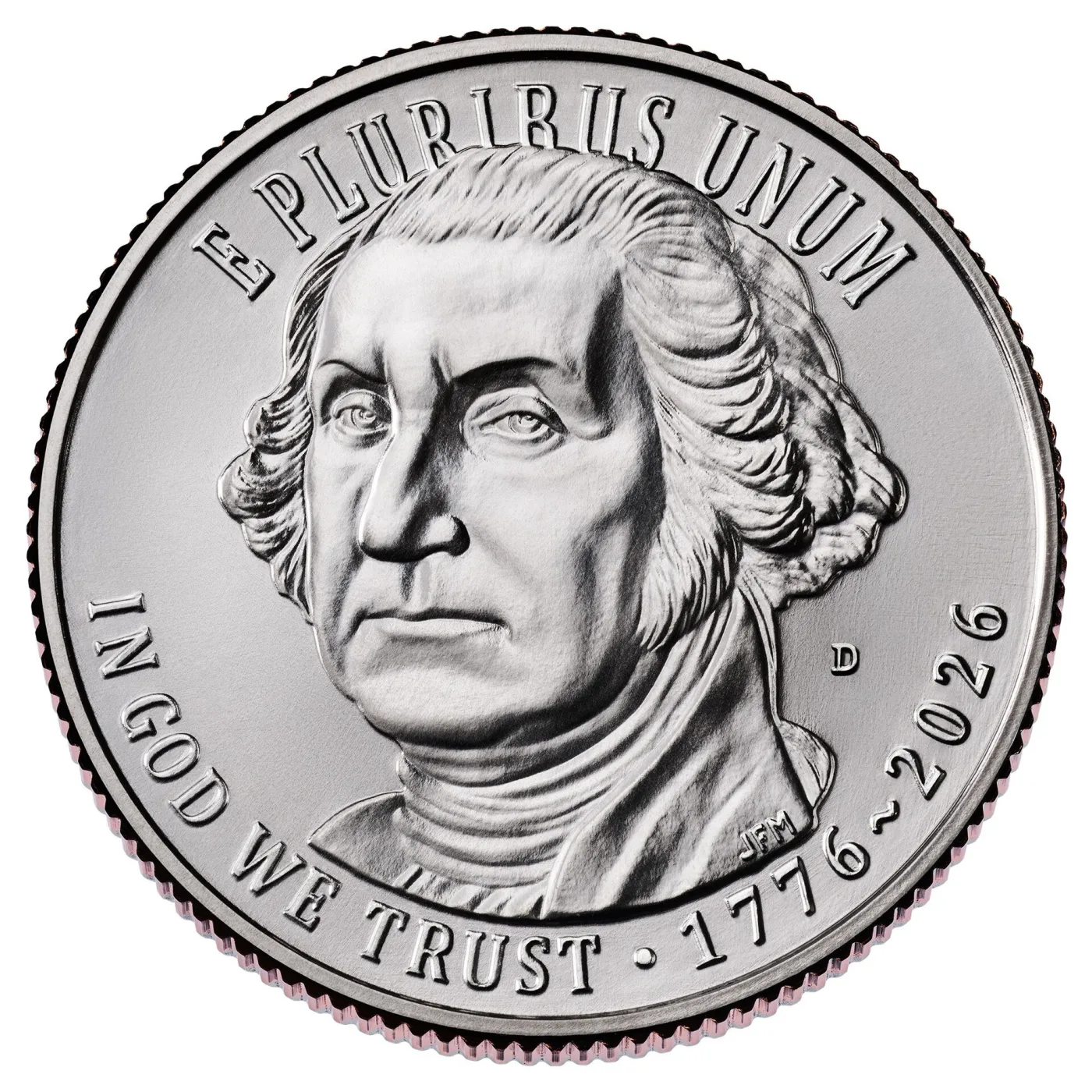
- On the quarters, the dates run along the rim as 1776~2026, joined by a small tilde, after IN GOD WE TRUST.
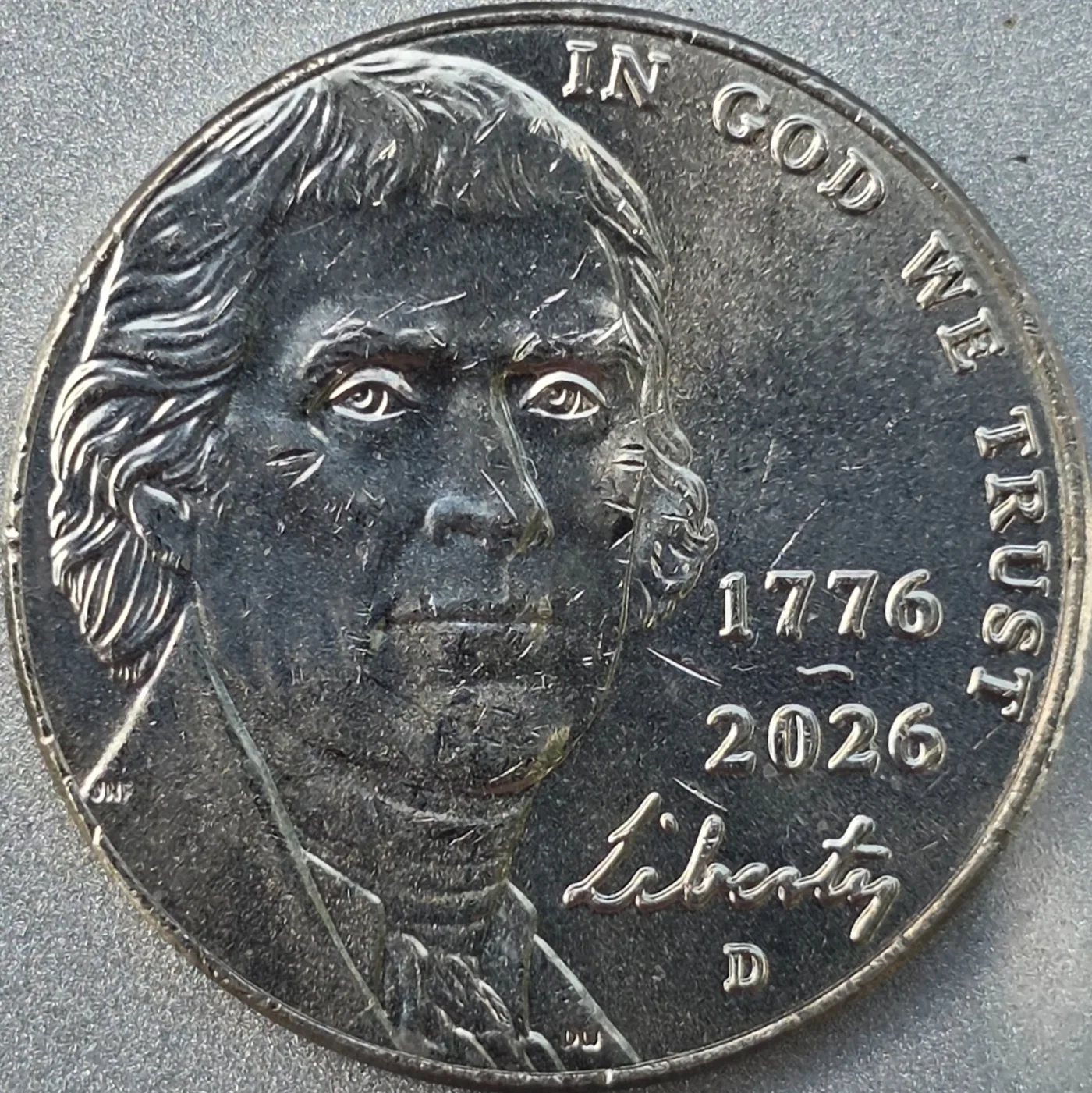
- On the nickel and the cent, 1776 sits directly above 2026 in a short stack beside the portrait.
If your coin has the two dates, it is from 2026. If it has a single date, it is from a different year even if the design looks unfamiliar. The American Women quarters of 2022 to 2025, for example, show one year and a right-facing Washington.
The Five 2026 Quarters
The five quarters were released one at a time through the year. Each is named for a founding moment in American history, and each pairs a portrait or scene on the obverse with a matching scene on the reverse.
| Quarter | Obverse | Reverse | Released |
|---|---|---|---|
| Mayflower Compact | Two Pilgrims | The Mayflower under sail | January 2026 |
| Revolutionary War | George Washington | A Continental Army soldier at Valley Forge | March 2026 |
| Declaration of Independence | Thomas Jefferson | The Liberty Bell | Late May to early June 2026 |
| U.S. Constitution | James Madison | Independence Hall’s steeple | August 10, 2026 |
| Gettysburg Address | Abraham Lincoln | Two clasped hands | Expected late October 2026 |
Published release dates for the second and third designs differ by a few days between sources, which is why the table gives the month. The order is not in doubt.
Mayflower Compact
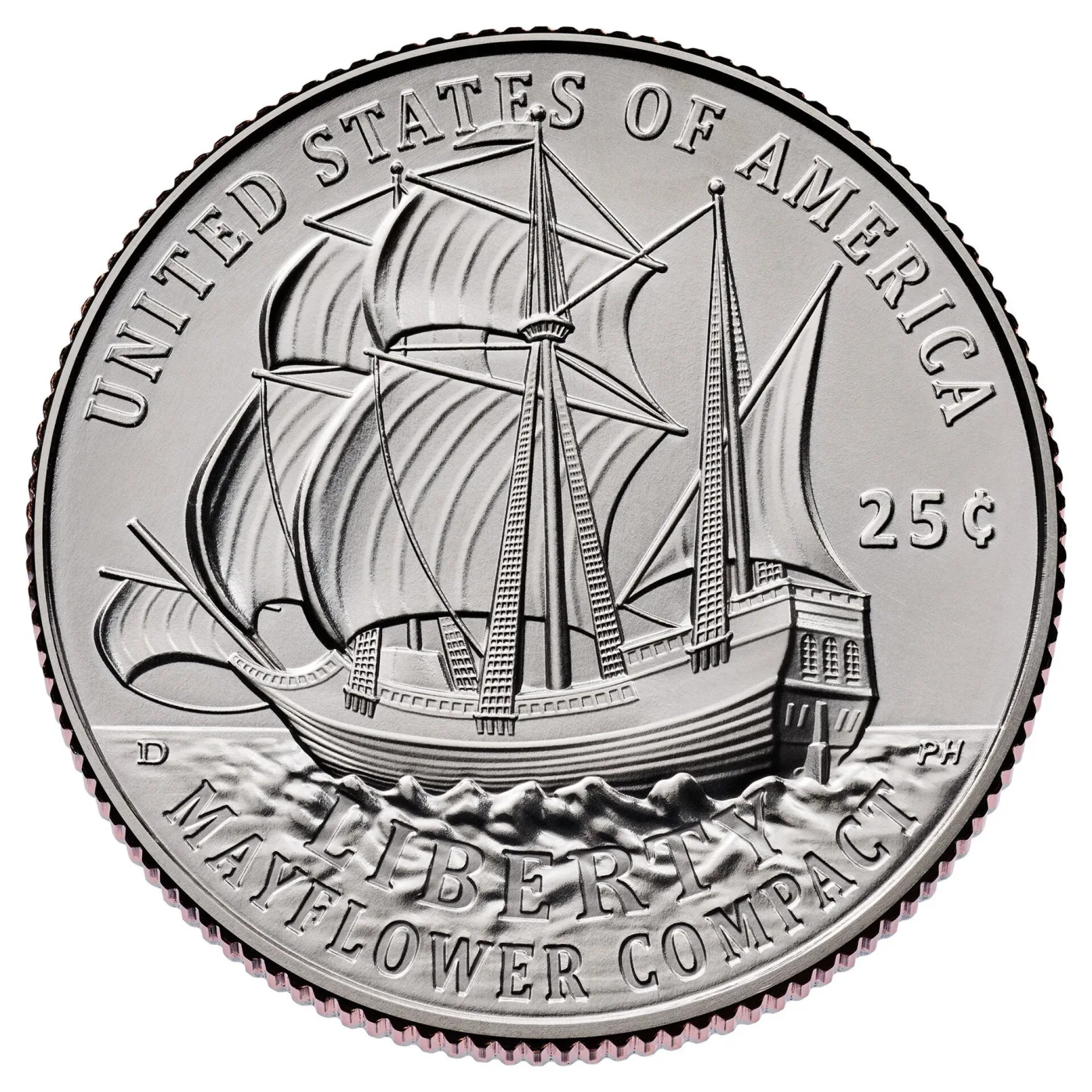
The first 2026 quarter shows two Pilgrims on the obverse and the Mayflower under full sail on the reverse, with LIBERTY across the waves and MAYFLOWER COMPACT around the bottom rim. The denomination appears as 25¢ on the reverse, to the right of the ship. This was the design that opened the program in January, so it is the one most likely to be in your change already.
Revolutionary War
The only 2026 quarter with George Washington on it. The obverse shows him as commander of the Continental Army, and the reverse shows a Continental soldier at Valley Forge, the winter encampment of 1777 to 1778. If you have a 2026 quarter with Washington’s portrait, this is the one.
Declaration of Independence
Thomas Jefferson, the Declaration’s principal author, is on the obverse, and the Liberty Bell is on the reverse. This is the design with the special July 4 coins described below, so it is the one to check most carefully.
U.S. Constitution
James Madison, often called the father of the Constitution, is on the obverse. The reverse shows the steeple of Independence Hall in Philadelphia, where the Constitution was drafted in 1787.
Gettysburg Address
The final design honors Lincoln’s 1863 address. Abraham Lincoln is on the obverse, and the reverse shows two clasped hands with the Address’s words “a new nation conceived in liberty.” It closes the program in the autumn, so it will be the hardest of the five to find in change until late in the year.

Where Is the Mint Mark?
The mint mark is a single letter that tells you where the coin was struck. On circulating 2026 coins it is P for Philadelphia or D for Denver. Both are struck in huge numbers for circulation, so neither letter makes an ordinary coin scarce.
What trips people up in 2026 is that the mint mark is not always in the same place. On the Mint’s official images of the first two quarters:
- The Mayflower Compact quarter carries its mint mark on the reverse, at the left just above the waves, opposite the designer’s initials on the right.
- The Revolutionary War quarter carries it on the obverse, to the right of Washington’s portrait.
So if you cannot find the letter on one side, turn the coin over. The general mint marks guide explains what each letter means across all US coinage and why a W or an S matters on other series.
The July 4 Declaration Quarters
On July 4, 2026, the Mint struck about 250,000 Declaration of Independence quarters with a special privy mark, a small extra symbol, and mixed them into regular shipments. They look like ordinary Declaration quarters at arm’s length, so check any Declaration quarter from 2026 for an extra mark in the design. A genuine one is a real find at face value, and it is exactly the kind of coin worth a second look before it goes back into circulation.
The New Dime and Half Dollar
The quarters share the spotlight with two completely redesigned coins.
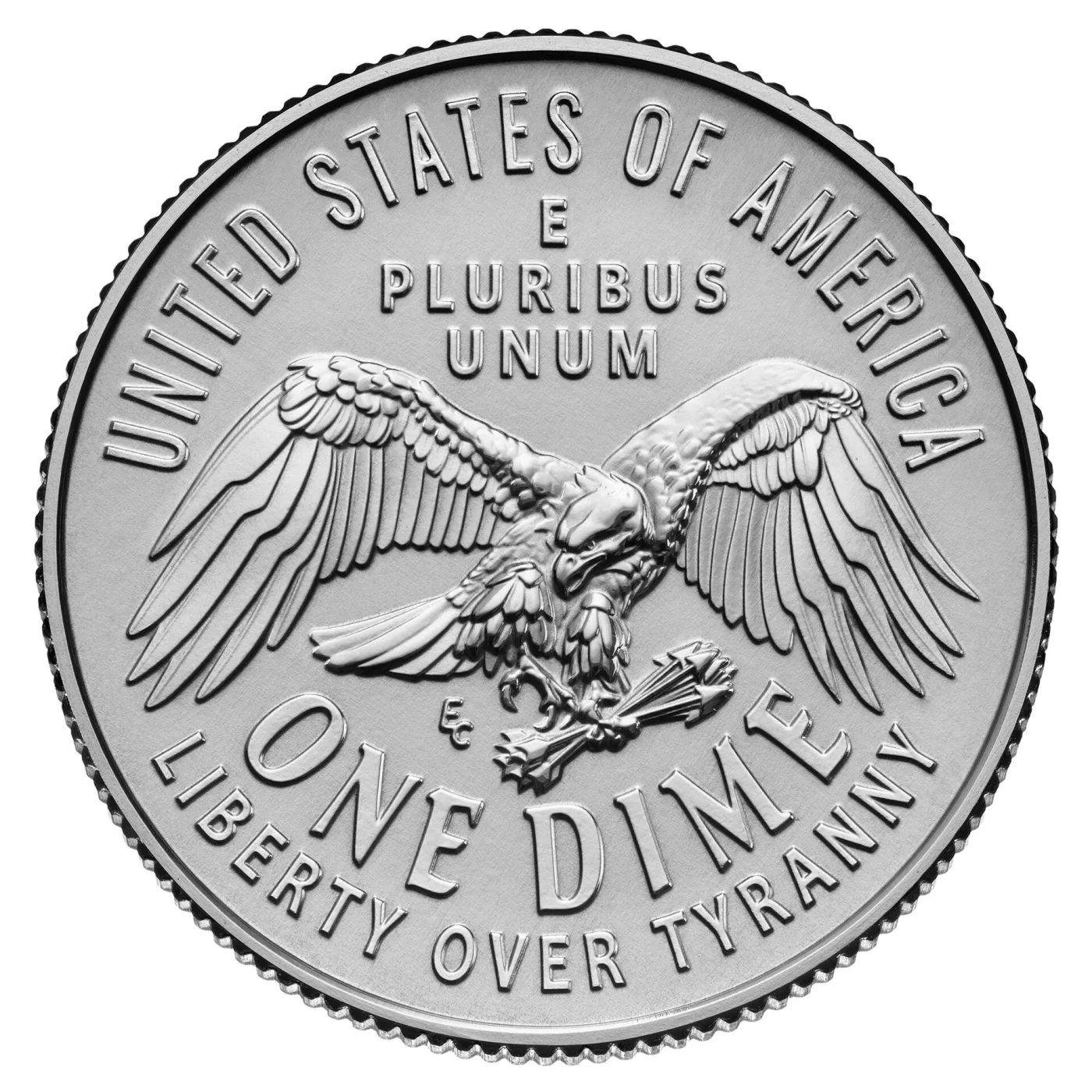
The dime. The 2026 dime drops Franklin Roosevelt for a design built around liberty and the Revolution. The obverse shows Liberty wearing a Liberty cap, and the reverse shows an eagle carrying arrows above the words LIBERTY OVER TYRANNY. The design is unmistakable next to the old one. For the Roosevelt dime that came before it, see the Roosevelt dime guide.
The half dollar. Known as the Enduring Liberty design, the 2026 half dollar shows the Statue of Liberty on the obverse and a torch being passed between generations on the reverse. Half dollars rarely circulate, so you are most likely to meet one in a bank roll or a mint set. The long-running Kennedy design it replaces for the year is covered in the Kennedy half dollar guide.
Both went into circulation in January 2026, alongside the Mayflower Compact quarter.
The 1776 ~ 2026 Nickel and Cent
The two smallest coins keep their designs and change only the date.
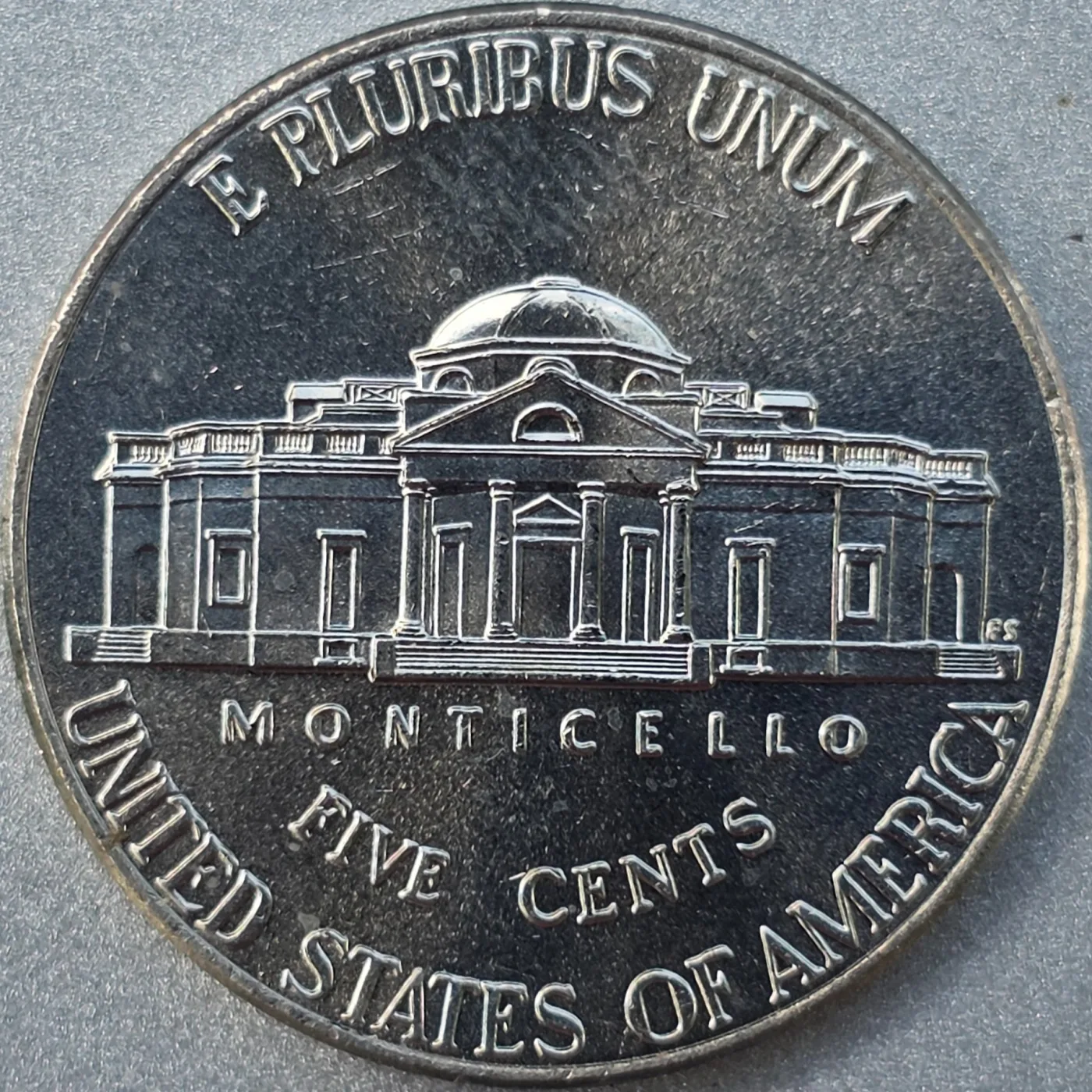
The nickel still shows Thomas Jefferson on the obverse and his home, Monticello, on the reverse. The difference is the stacked 1776 / 2026 date beside Jefferson’s portrait, with the mint mark below it. If you know the modern Jefferson nickel, the dual date is the only thing to look for.
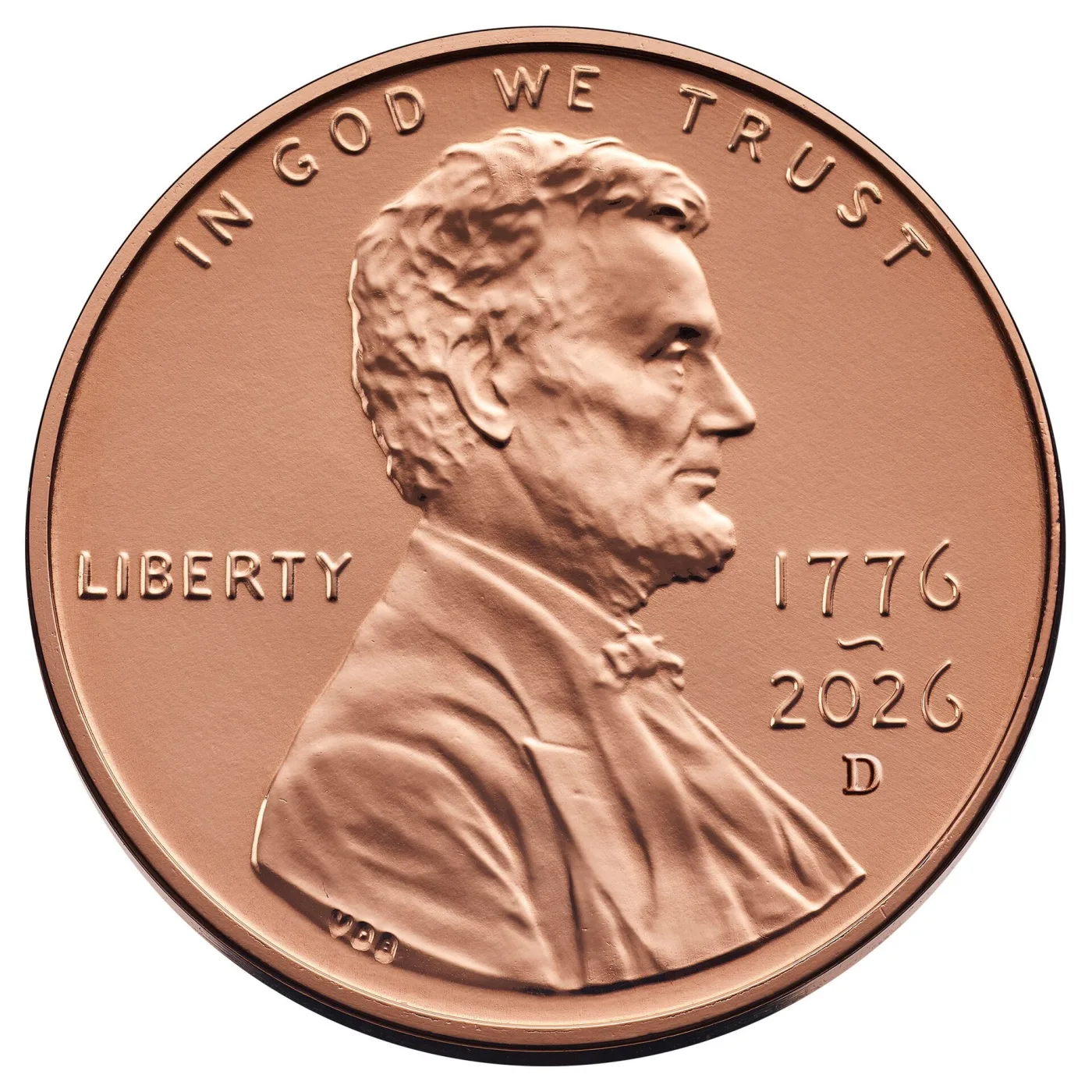
The cent keeps Abraham Lincoln and gets the same stacked dual date, but it is no longer made for circulation. The Mint stopped striking cents for everyday use, so a 2026 cent exists only in collector products such as annual sets. The Mint’s images show two versions: one with a D below the date, and one from Philadelphia with no letter at all. For the shield reverse that Lincoln cents have carried since 2010, see the Lincoln shield cent guide.
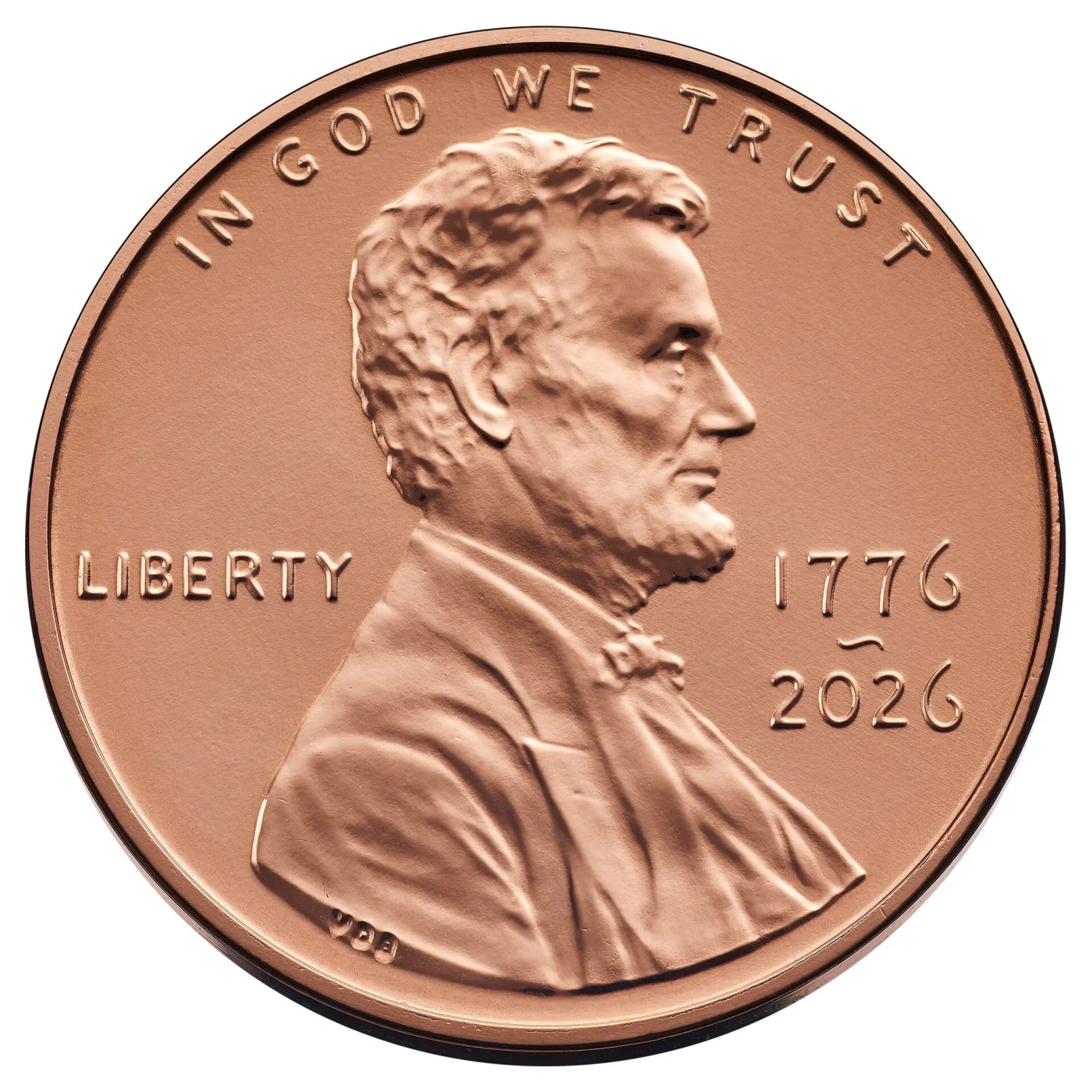
If a 2026 cent turns up in your change, it did not come from a bank. Someone opened a set and spent it.
Are 2026 Coins Worth Anything?
For the coins in your pocket, the honest answer is face value. The 2026 quarters were struck in the hundreds of millions for circulation, and a worn 2026 quarter is worth 25 cents like any other.
The ones worth setting aside are:
- A complete set. All five quarters, or all ten if you collect both P and D, is a satisfying one-year set that will be harder to finish from change in a few years than it is today.
- Uncirculated coins from new rolls. Coins pulled straight from bank rolls, with full original luster and no wear, are the ones collectors keep.
- The July 4 Declaration quarters. Only about 250,000 carry the privy mark, a tiny fraction of the design’s total.
- Genuine mint errors. Off-center strikes, doubled dies and similar mistakes can happen on any new design. The error coins guide explains how to tell a real error from damage.
- 2026 cents. Because they are made only for collectors, a 2026 cent is worth keeping even though its value is modest.
Do not clean any of them. Cleaning scratches the surface and removes the luster that makes an uncirculated coin worth keeping.
How to Collect a Complete 2026 Set
The simplest goal is the five quarters, one of each design. Because they were released through the year, the Mayflower Compact and Revolutionary War designs are the easiest to find now, and the Gettysburg Address quarter will take the longest to reach your change.
A few habits help:
- Check your change for the dual date. It is the fastest filter: anything without 1776 ~ 2026 can go straight back.
- Turn every 2026 quarter over. The mint mark moves between designs, and a Declaration quarter deserves a close look for the July 4 privy mark.
- Ask your bank for rolls of quarters and dimes once each new design is out. Fresh rolls give you uncirculated coins.
- Keep them in a folder or holder, not loose in a jar, so the surfaces stay clean.
The 2026 coins sit at the end of a long line of rotating-design programs, from the 50 State Quarters and the America the Beautiful quarters to the American Women series. What sets them apart is the dual date and the fact that every denomination changed in the same year. A full run of 1776 ~ 2026 coins, cent to half dollar, is a compact, affordable snapshot of the country’s 250th birthday, and the time to assemble it is while the coins are still turning up in change.
Frequently Asked Questions
Are 2026 quarters worth anything?
Almost always just 25 cents. The 2026 quarters are circulating coins struck in the hundreds of millions at Philadelphia and Denver, so an ordinary worn example is worth face value. What is worth setting aside is a complete set of all five designs, uncirculated coins pulled from fresh bank rolls, genuine mint errors, and the Declaration of Independence quarters struck on July 4, 2026 with a special privy mark.
How many different 2026 quarters are there?
Five. In release order they honor the Mayflower Compact, the Revolutionary War, the Declaration of Independence, the U.S. Constitution, and the Gettysburg Address. Each one has its own obverse and its own reverse, so unlike earlier programs the heads side changes too. Counting both circulating mints, P and D, a complete set is ten coins.
Why does my quarter say 1776 ~ 2026?
The two dates mark the 250th anniversary of American independence, the Semiquincentennial. Every circulating coin dated for 2026 carries the dual date instead of a single year, so seeing 1776 and 2026 together is the quickest way to recognize one of these coins in your change.
Is George Washington on the 2026 quarters?
Only on one of them. The Revolutionary War quarter shows Washington as commander of the Continental Army. The other four replace him with the subject of their design: two Pilgrims on the Mayflower Compact quarter, Thomas Jefferson on the Declaration of Independence quarter, James Madison on the Constitution quarter, and Abraham Lincoln on the Gettysburg Address quarter.
Where is the mint mark on a 2026 quarter?
It is not in the same place on every design, so check both sides. On the Mint's official images the Mayflower Compact quarter carries its D on the reverse, at the left just above the waves, while the Revolutionary War quarter carries it on the obverse, to the right of Washington's portrait. Circulating coins come only from Philadelphia (P) and Denver (D).
Is there a 2026 penny?
Yes, but not in your change. The cent is no longer struck for circulation, so the 2026 Lincoln cent with its 1776 ~ 2026 date is made only for collector products such as annual sets. If one turns up in change, it came out of a set someone opened, not from a bank.
Is the 2026 dime a new design?
Yes. For 2026 the dime gets a completely new design built around liberty and the Revolution. The reverse shows an eagle carrying arrows with the words LIBERTY OVER TYRANNY and ONE DIME, which makes it easy to tell apart from the Roosevelt dime at a glance. The half dollar also has a new design for the year, and the nickel keeps Jefferson and Monticello but adds the dual date.