2026 Trump Dollar Coin: How to Identify the Real One
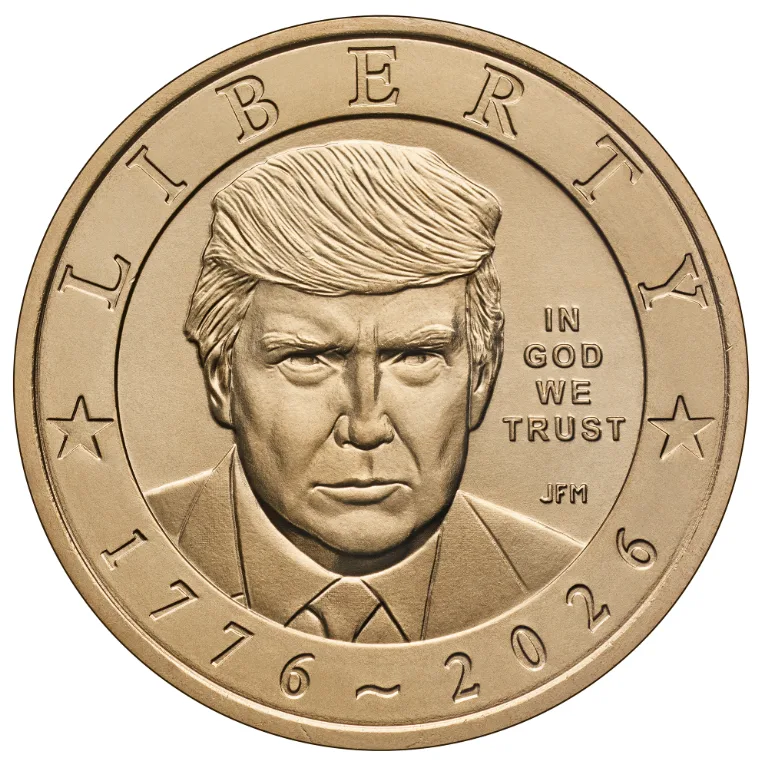
In September 2026 the United States Mint began selling a one-dollar coin with the portrait of the sitting president, Donald J. Trump. Its official name is the 2026 Semiquincentennial President Donald J. Trump $1 Coin, and it is part of the coinage marking the 250th anniversary of American independence. It is only the second time a living president has appeared on a U.S. coin, after Calvin Coolidge on the 1926 Sesquicentennial half dollar.
That makes it one of the most searched-for coins of the year, and it also means a flood of look-alikes. Private companies have sold gold-colored “Trump coins” for years, and none of them is money. This guide shows what the real coin looks like on both sides, why it has no mint mark, how to spot the scarce JULY 4th privy version, and how to tell the Mint’s coin from a novelty in a few seconds.
What the 2026 Trump Dollar Is
The coin was authorized by the Circulating Collectible Coin Redesign Act of 2020, the same law behind the 2026 quarters, dime and half dollar. That act allowed a special one-dollar coin for the Semiquincentennial in 2026 only. The Treasury chose a portrait of President Trump for it, and after a year of proposed designs and debate over whether a sitting president belonged on a coin, the Mint put the final version on sale at noon Eastern time on September 2, 2026.
It was sold in two forms, a roll of 25 coins and a bag of 100, and both were out of stock within hours. The Mint struck about nine million of the coins at Philadelphia in July and offered up to 8.75 million of them in rolls and bags.
Putting a living president on a coin broke with long tradition, and the plan drew objections in Congress and from members of the Citizens Coinage Advisory Committee. The Mint said its own legal review, and the Treasury’s, confirmed that the coin is authorized under the 2020 act. For identification purposes, what matters is the result: it is a genuine U.S. coin and legal tender for one dollar.
The Obverse: Portrait, LIBERTY and 1776 ~ 2026
The heads side shows President Trump facing almost straight forward, in a suit and tie, by the Mint’s Chief Engraver, Joseph Menna. His initials, JFM, sit in small letters below IN GOD WE TRUST, to the right of the portrait.
Read the legends to confirm you have the real coin:
- LIBERTY in large, widely spaced letters arcing across the top.
- IN GOD WE TRUST in four short lines in the right field.
- 1776 ~ 2026 along the bottom rim, the same dual date every Semiquincentennial coin carries.
- A five-pointed star at the left and right edges, between LIBERTY and the date.
Notice what is missing: there is no single year, no name under the portrait, and no mint mark.
The Reverse: the Presidential Seal with 250
The tails side reuses one of the best-known designs in modern American coinage. It is the Presidential Seal that former Chief Engraver Frank Gasparro created for the Kennedy half dollar in 1964, adapted for 2026: the numeral 250 now sits in the upper part of the shield on the eagle’s breast. Gasparro’s initials, FG, remain beside the eagle’s tail feathers.
The eagle holds an olive branch in one talon and a bundle of arrows in the other, with E PLURIBUS UNUM on a banner in its beak. UNITED STATES OF AMERICA runs around the top and ONE DOLLAR across the bottom.
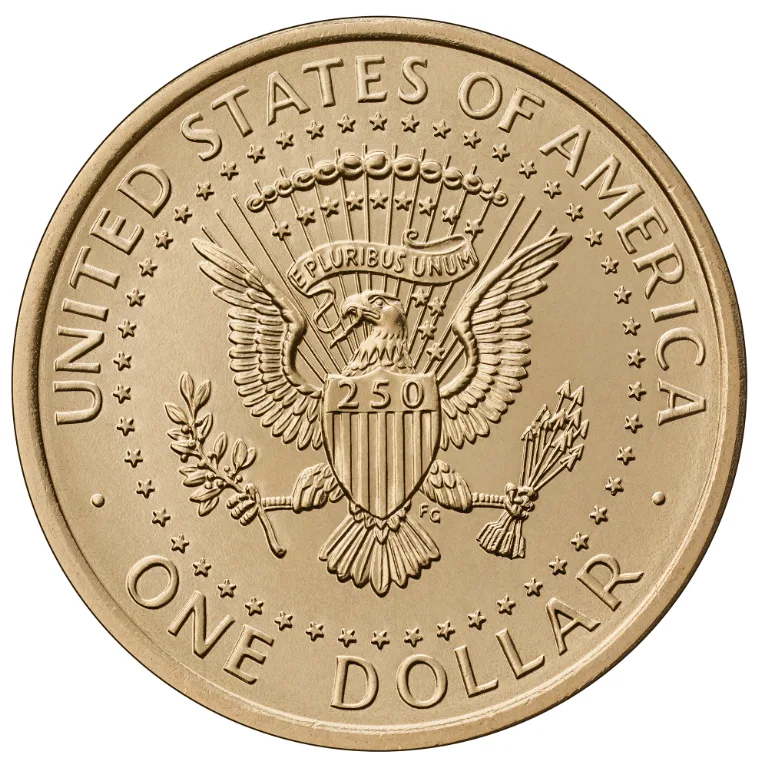
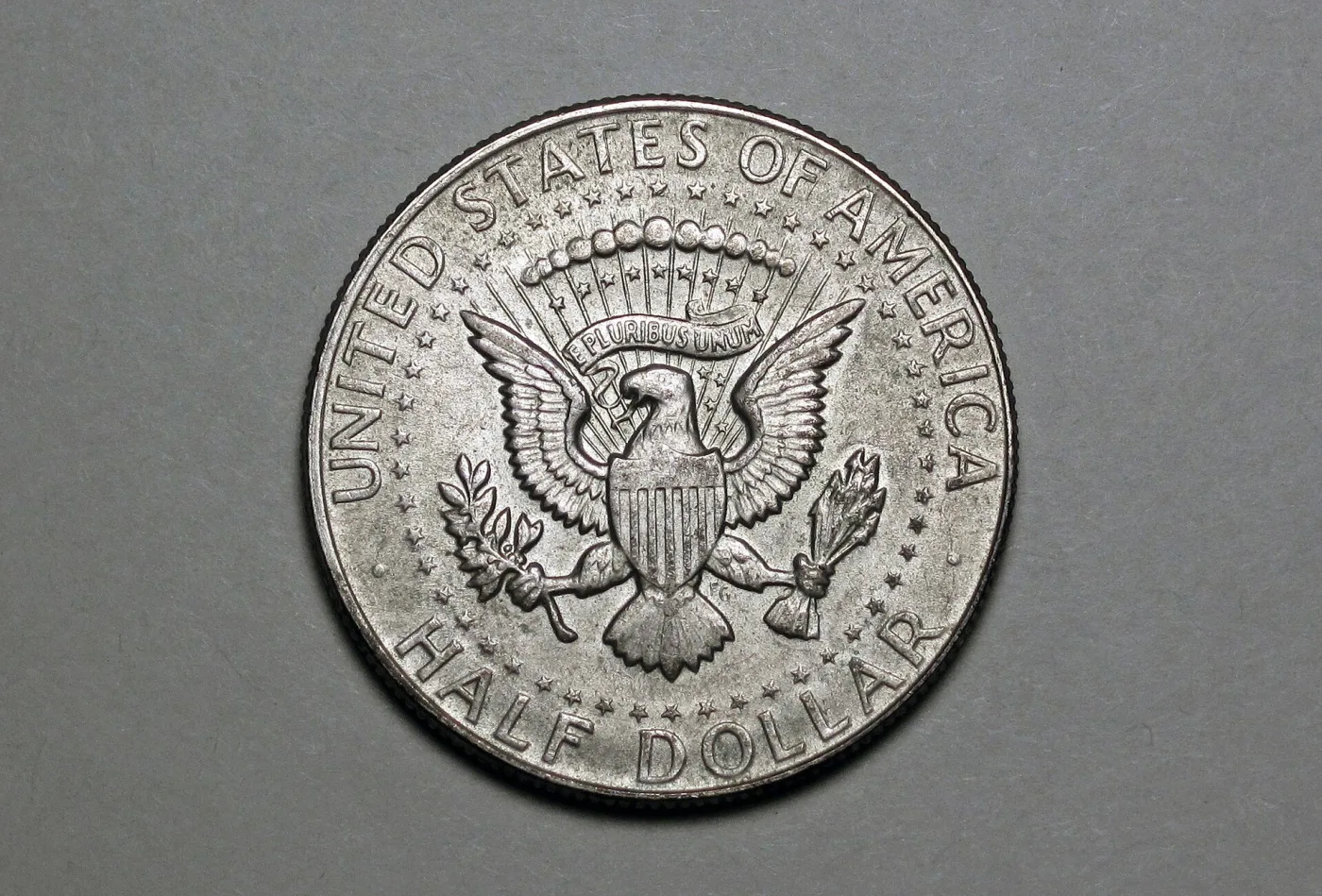
If the reverse reads HALF DOLLAR, you have a Kennedy half, not a Trump dollar. The color tells them apart too: the Kennedy half is silver-colored, the Trump dollar golden.
Quick Specifications
| Feature | 2026 Trump dollar |
|---|---|
| Official name | 2026 Semiquincentennial President Donald J. Trump $1 Coin |
| Denomination | One dollar, legal tender |
| Composition | Manganese brass: 88.5% copper, 6% zinc, 3.5% manganese, 2% nickel |
| Color | Golden, like the Sacagawea and Presidential dollars |
| Mint | Philadelphia |
| Mint mark | None |
| Obverse designer | Joseph Menna (initials JFM) |
| Reverse designer | Frank Gasparro (initials FG) |
| Released | September 2, 2026, in Mint rolls and bags |
| Special variety | 250,000 struck on July 4, 2026 with a JULY 4th privy mark |
The missing mint mark is the detail people most often ask about. Philadelphia coins frequently carry a P today, but this one does not, so a plain field is correct, not a sign of an error. Dealers and grading services often list it as 2026-P or 2026 (P); the P records where it was struck, not a letter you will find on the coin.
The JULY 4th Privy Coins
On July 4, 2026, the Mint struck 250,000 Trump dollars with a small extra mark to commemorate the anniversary date itself, and then mixed them at random into the same rolls and bags as the regular coins. Nothing on the packaging tells you whether a roll holds one.
The privy is a tiny two-line inscription, JULY above 4th, on the obverse in the open field to the left of the portrait, just above the star. On a regular coin that spot is empty. It is small, so check it under good light and a loupe before deciding a coin does not have it.
With about 250,000 privy coins among close to nine million struck, most rolls will not contain one, which is why the privy coins trade above face value. The grading service PCGS has already certified a privy coin as a first discovery example. The same July 4th idea appears on a batch of 2026 Declaration of Independence quarters, described in our 2026 coins guide.

The Final Coin vs the 2025 Proposed Designs
Many of the images still circulating online are not the coin that was issued. On October 3, 2025, the Treasury released design concepts: a profile portrait of Trump on the obverse, and on the reverse Trump with a raised fist in front of a flag, with the words FIGHT FIGHT FIGHT.
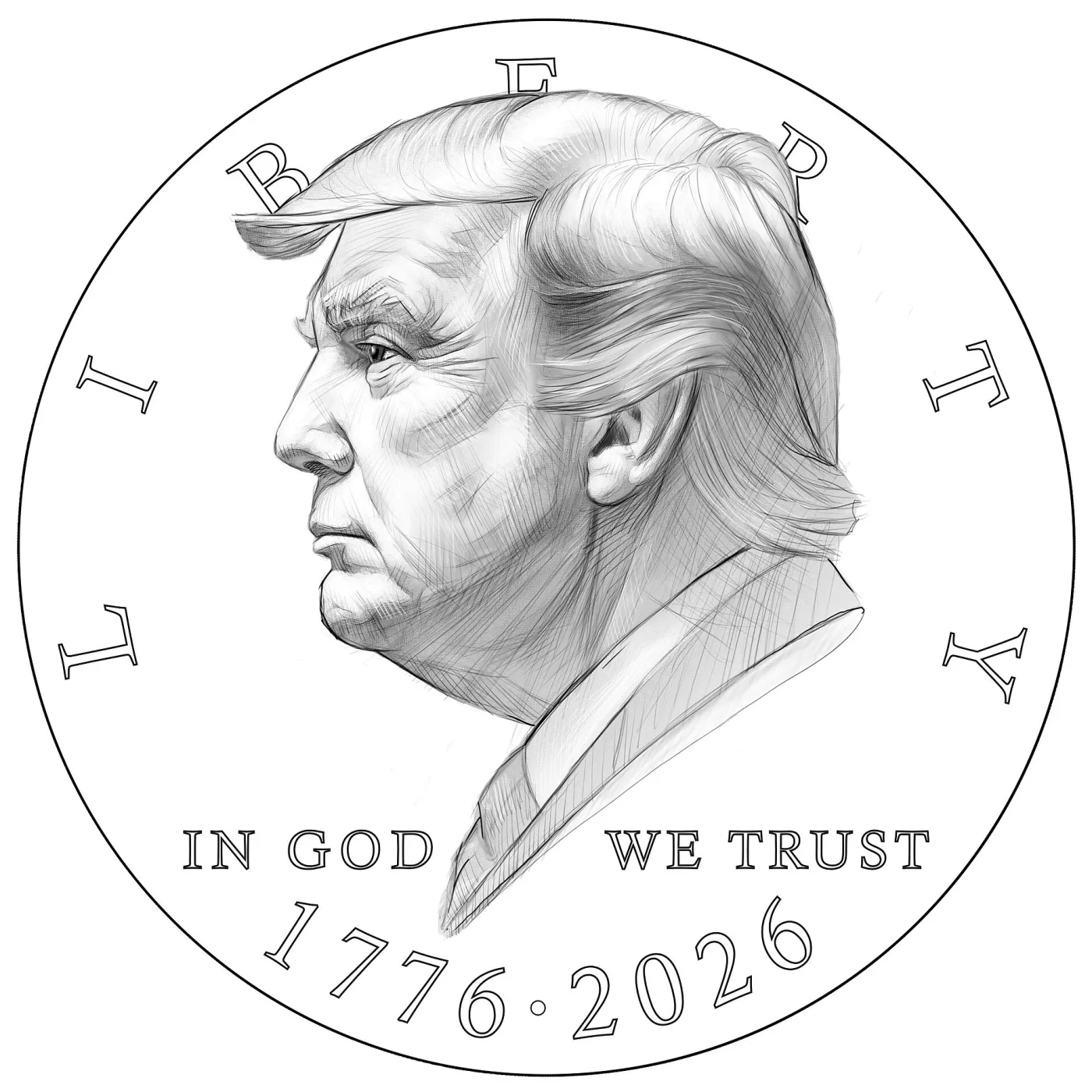
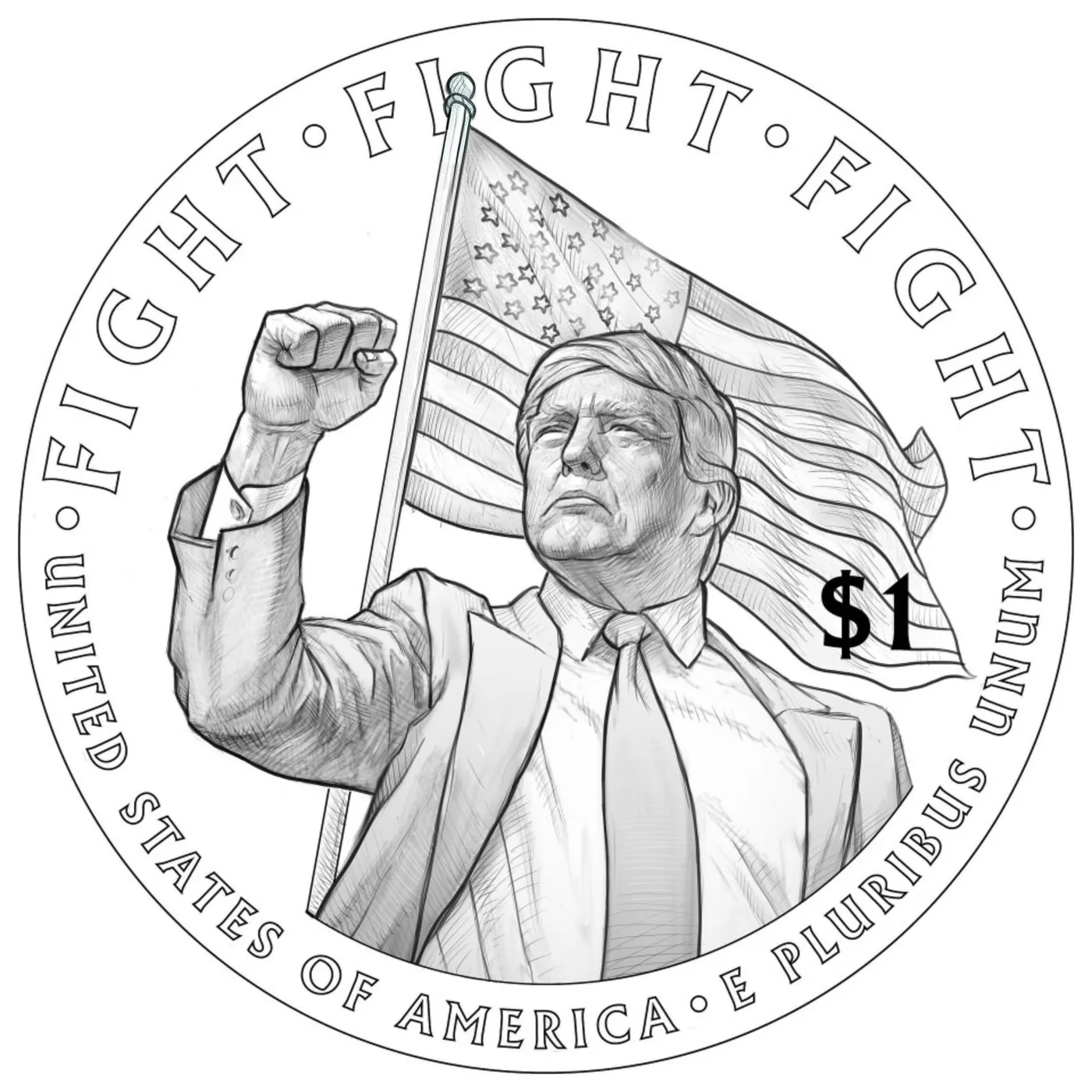
Neither drawing was used as released. The issued obverse is a near-frontal portrait rather than a profile, and the issued reverse is the Presidential Seal. So a “Trump dollar” showing the raised-fist scene or the words FIGHT FIGHT FIGHT is not a Mint coin. It is either a picture of the 2025 concept or a private product copying it.
It Is Not a Presidential Dollar
It is easy to assume the Trump dollar belongs to the Presidential dollar series, which put former presidents on golden dollar coins from 2007. It does not. That series honored only presidents who had died, and its coins share a Statue of Liberty reverse with a large $1. The Trump dollar is a one-year Semiquincentennial coin with its own reverse.
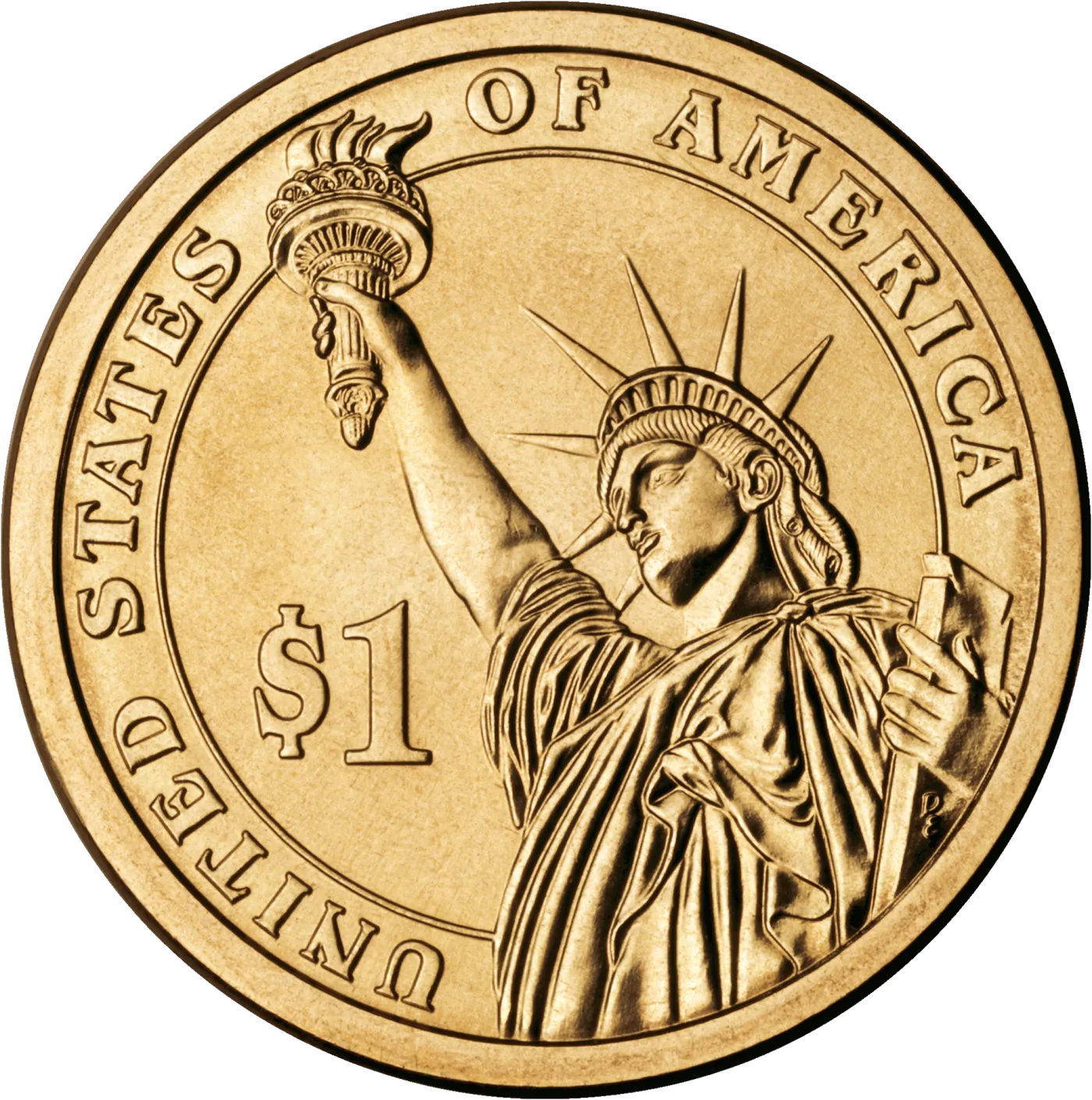
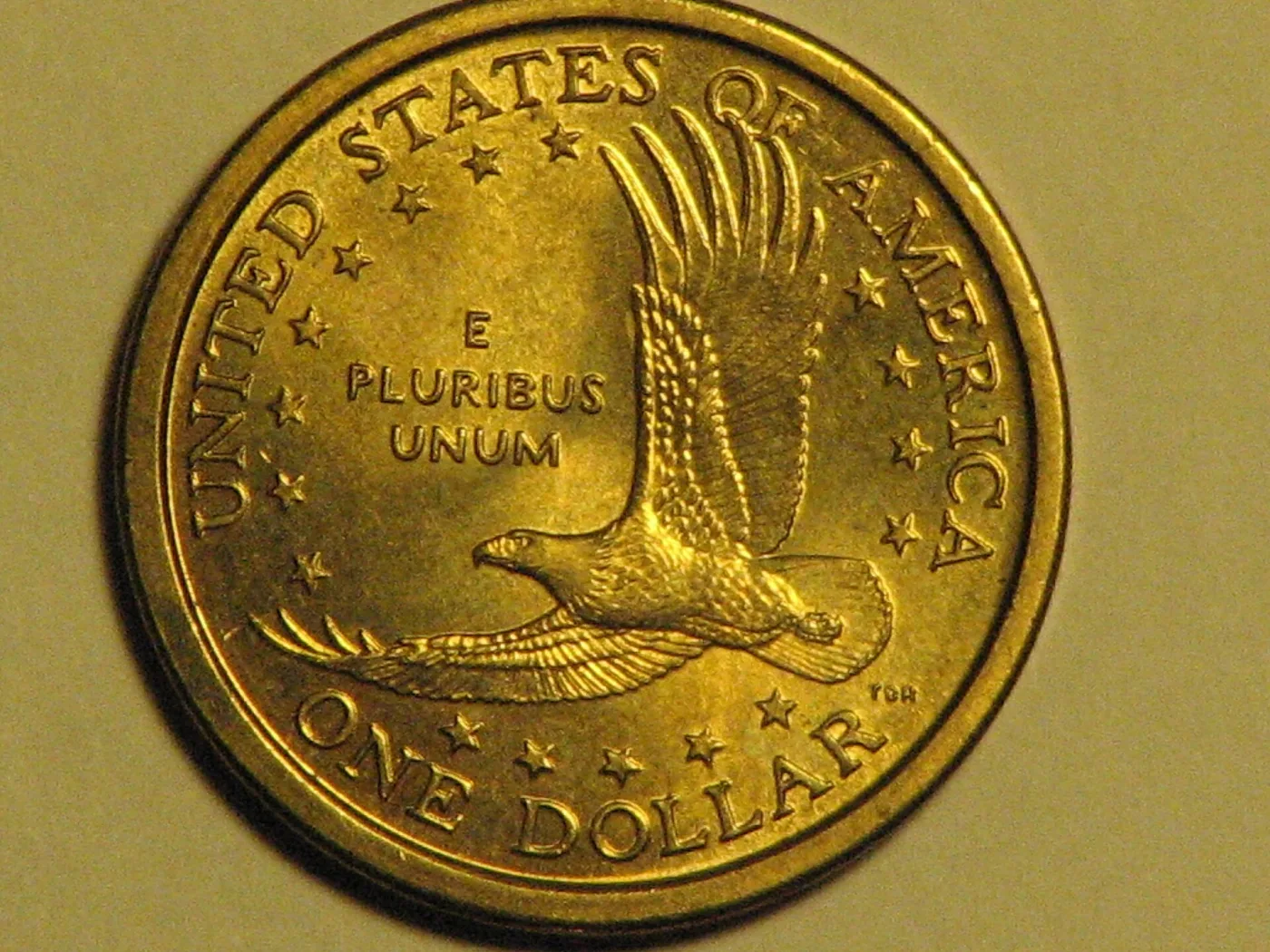
What the three coins do share is the metal. The Trump dollar is struck in the same manganese brass as the Sacagawea dollar and the Presidential dollars, which is why it looks gold without containing any.
Real Coin or Novelty? How to Tell
Gold-colored Trump coins, medallions, “Trump Bucks” and gold cards have been sold online and on television for years. They are souvenirs made by private companies. None of them is legal tender, and many are sold with promises that they will one day be worth a fortune or be redeemable at a bank. In May 2026, federal prosecutors in Manhattan charged two people with fraud over the sale of “Trump Bucks,” “Trump Dollars” and similar items marketed as a coming form of money.
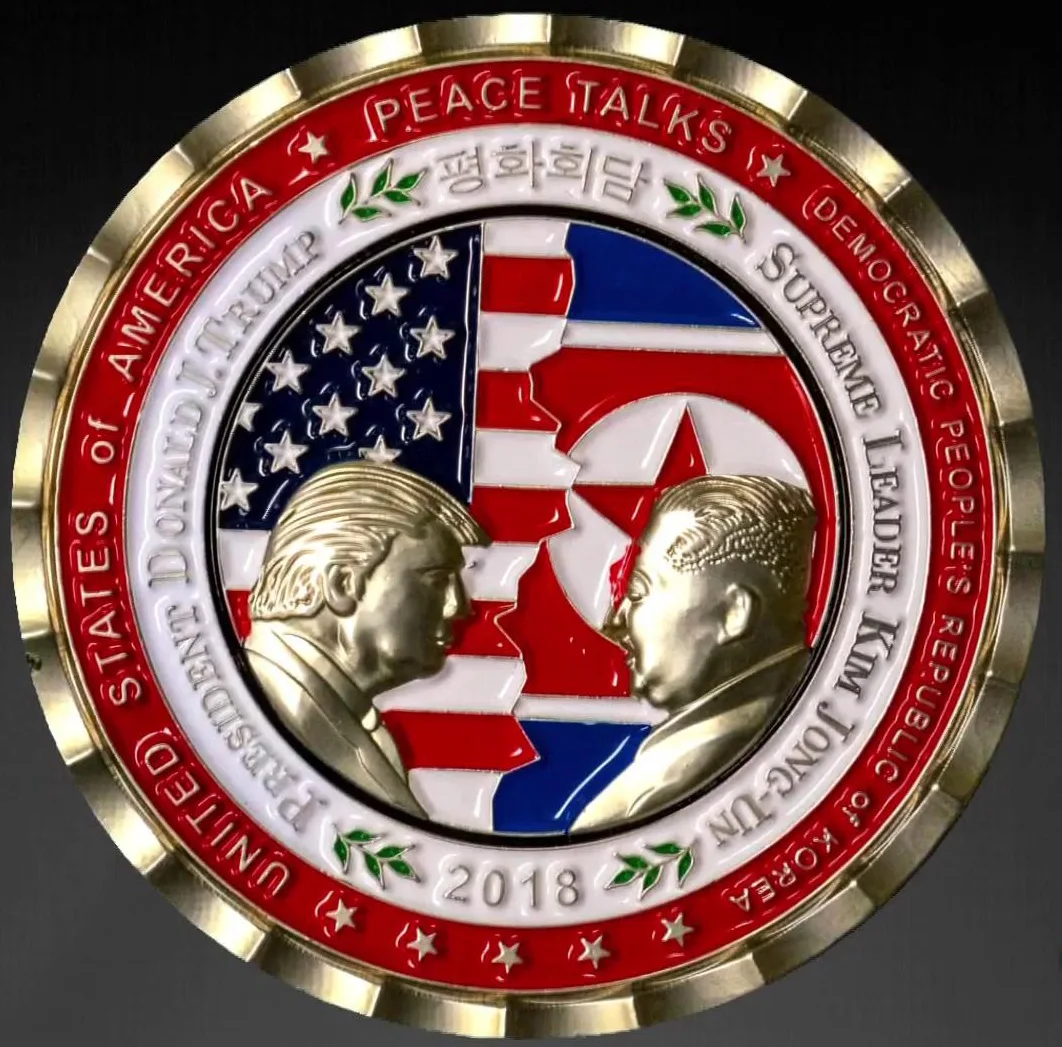
Use this checklist on any Trump coin you are shown:
| Check | Mint Trump dollar | Novelty “Trump coin” |
|---|---|---|
| Denomination | ONE DOLLAR on the reverse | None, or an invented one such as $1,000 |
| Date | 1776 ~ 2026 | Often 2024, 2025 or 2028, or no date |
| Wording | LIBERTY, IN GOD WE TRUST, UNITED STATES OF AMERICA, E PLURIBUS UNUM | Slogans, “commemorative,” “gold layered,” “24K plated” |
| Reverse | Presidential Seal eagle with 250 | Eagles, flags, the White House, Trump full-length |
| Color and finish | Uniform golden brass; mirror-like only on proofs | Bright plating, colored enamel, clear plastic capsule |
| Seller | U.S. Mint, or resold from Mint rolls and bags | TV and web advertisers, often with a “certificate” |
The strongest single test is the wording: a real U.S. coin states its country and denomination. If yours does not say UNITED STATES OF AMERICA and ONE DOLLAR, it is not the Mint’s coin. For the broader techniques used to check any suspicious piece, see our counterfeit detection guide.
The Mint has also announced a separate one-ounce, 24-karat gold proof coin with a Trump design. That is a different, far more expensive product sold directly by the Mint, and it should not be confused with either the base-metal dollar or the gold-plated novelties.
What Is a Trump Dollar Worth?
A regular Trump dollar is worth one dollar as money. Its collector value is modest because so many were made. At issue, the Mint charged $61 for a roll of 25 and $154.50 for a bag of 100, well above face value, and resale prices move with demand from week to week.
Three things make a coin worth more:
- The JULY 4th privy. Only 250,000 exist, and they sell for a clear premium over regular coins.
- Condition. Coins straight from a sealed Mint roll or bag, never handled, are worth more than ones that have been carried around.
- Grading. A privy coin or a high-grade regular coin certified by a grading service commands more than a raw one. Our grading guide explains what the grades mean.
Because prices are still settling, look at completed sales rather than asking prices, and be wary of any listing that calls a regular Trump dollar rare.
As for finding one in change: do not count on it. Dollar coins have been struck mostly for collectors since 2012, when the Treasury stopped making Presidential dollars for general circulation, so the likeliest way to get a Trump dollar is from a Mint roll or bag or from someone who bought one.
Identifying Yours
A genuine 2026 Trump dollar is golden, reads 1776 ~ 2026 under a forward-facing portrait, carries the Presidential Seal with 250 on the back, says ONE DOLLAR, and has no mint mark. If it also shows JULY above 4th to the left of the portrait, you have one of the 250,000 privy coins. Anything else, from a raised-fist design to a $1,000 face value, is a novelty, whatever its packaging says.
Frequently Asked Questions
Is the Trump dollar coin real money?
Yes. The 2026 Semiquincentennial President Donald J. Trump $1 coin is struck by the United States Mint and is legal tender for one dollar. It went on sale from the Mint on September 2, 2026. The many gold-colored Trump coins sold by private companies are a different thing: novelty medallions with no legal tender status.
How much is a 2026 Trump dollar worth?
As money, one dollar. As a collectible, most are worth little more than the premium buyers paid for them in Mint rolls and bags, because about nine million were struck. The exception is the JULY 4th privy coin, of which only 250,000 were made; those sell for more, but prices are still settling, so check sold listings rather than asking prices.
Where is the mint mark on the Trump dollar?
There isn't one. The Trump dollar is struck at the Philadelphia Mint and carries no mint mark on either side. A Trump dollar with a P, D, S or W on it is not the circulating-quality coin sold in Mint rolls and bags.
What is the JULY 4th privy mark on the Trump dollar?
It is a small two-line inscription, JULY above 4th, in the open field to the left of the portrait, just above the star. The Mint struck 250,000 Trump dollars with it on July 4, 2026 and mixed them at random into the rolls and bags it sold, so the only way to find one is to check each coin.
Is the Trump dollar made of gold?
No. It is made of the same golden-colored manganese brass as the Sacagawea and Presidential dollars: 88.5% copper, 6% zinc, 3.5% manganese and 2% nickel. The color comes from the alloy, not from gold. A separate one-ounce gold proof coin featuring Trump has been announced, but it is a different product.
Is my gold Trump coin worth anything?
If it does not say ONE DOLLAR and 1776 ~ 2026, it is almost certainly a privately made novelty, often gold-plated, and worth little beyond its novelty value however it was advertised. Words such as commemorative, gold-layered, a 2024 or 2028 date, or a denomination like $1,000 all point to a novelty rather than a Mint coin.