Lincoln Memorial Cent Identification Guide: Key Dates, Mint Marks, and Values
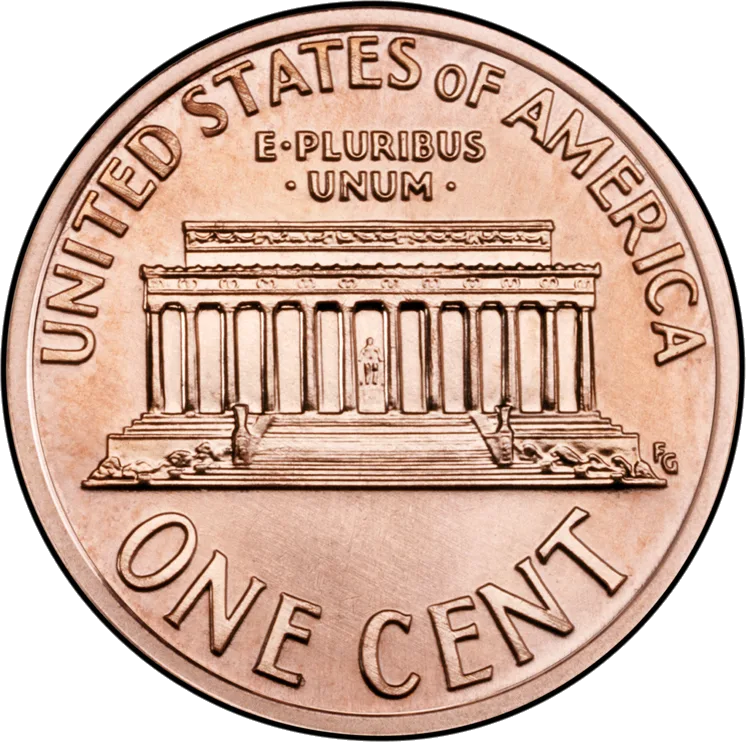
The Lincoln Memorial Cent is the coin most Americans grew up with. From 1959 through 2008, this is the penny that filled piggy banks, coin jars, and pocket change across half a century. Released in 1959 to mark the 150th anniversary (sesquicentennial) of Abraham Lincoln’s birth, it replaced the beloved wheat-ears reverse with a finely detailed engraving of the Lincoln Memorial in Washington, D.C. — making it the only U.S. coin to feature the same person on both the obverse and reverse, since a tiny statue of Lincoln is visible inside the building.
More than 350 billion Lincoln Memorial Cents were struck during the series, making it one of the most-produced coins in human history. With such enormous mintages, the overwhelming majority of these coins are worth exactly one cent. Yet hidden within those billions are some of the most valuable modern coins a hobbyist can find in circulation: the legendary 1969-S Doubled Die Obverse, the dramatic 1972 Doubled Die, the rare 1982-D Small Date copper transitional, the off-metal 1983 Doubled Die Reverse, and a handful of others that turn a one-cent coin into a four- or five-figure treasure.
This guide teaches you how to identify, grade, authenticate, and value Lincoln Memorial Cents. You will learn the critical 1982 copper-to-zinc transition that changed how every penny is weighed, how to spot genuine doubled dies versus worthless machine doubling, which mint marks matter, and exactly which dates are worth pulling from a roll. Whether you inherited a coffee can of pennies or are roll-hunting for the next big find, this is the knowledge that separates spenders from finders.
History and Design of the Memorial Cent
In 1959, the United States Mint celebrated the 150th anniversary of Abraham Lincoln’s birth by introducing a new reverse for the cent. The wheat-ears design that had appeared since 1909 — covered in our Lincoln Wheat Penny guide — was retired in favor of an image of the Lincoln Memorial. The obverse retained Victor David Brenner’s iconic Lincoln portrait, unchanged since its debut, creating an unbroken visual link across fifty years of coinage.
The reverse was designed by Frank Gasparro, then an assistant engraver at the Philadelphia Mint who would later become the tenth Chief Engraver of the United States. Gasparro’s design shows the Memorial head-on, so what appears on the coin is the twelve columns of the front colonnade — not the building’s full complement of thirty-six, which wraps around all four sides and cannot be seen from this angle. Rendering twelve of them, with their flutes and the steps below, on a coin only 19 millimeters across is the achievement. The inscriptions “UNITED STATES OF AMERICA,” “E PLURIBUS UNUM,” and “ONE CENT” surround the building. Gasparro placed his initials “FG” to the right of the Memorial, at the base of the shrubbery.
The Coin That Shows Lincoln Twice
One of the most charming facts about the Memorial Cent is that Lincoln appears on both sides. The obverse shows his profile portrait, while the reverse — if you look closely with a loupe — reveals the seated statue of Lincoln by Daniel Chester French inside the Memorial. This makes the Lincoln Memorial Cent the only circulating U.S. coin to depict the same individual on both faces, a numismatic curiosity that delights new collectors.
Production Timeline
Memorial Cents were struck from 1959 through 2008 at Philadelphia (no mint mark or “P” on rare issues), Denver (“D”), and San Francisco (“S,” primarily proofs after 1974, and circulation strikes 1968-1974). In 2009, four special reverse designs commemorated the bicentennial of Lincoln’s birth, and in 2010 the Union Shield reverse — also by an artist working under the modern engraving staff — replaced the Memorial permanently. The Memorial reverse therefore spans exactly 50 years, the same length as the wheat-cent era it succeeded.
The Frank Gasparro Connection
Frank Gasparro was one of the most prolific American coin designers of the twentieth century. Beyond the Memorial reverse, he designed the Kennedy Half Dollar reverse, the entire Susan B. Anthony Dollar, and the Eisenhower Dollar. His Memorial Cent reverse is among the most widely reproduced engravings in history, struck onto hundreds of billions of coins.
Physical Specifications and Composition
Understanding the physical specifications of Lincoln Memorial Cents is essential — not just for authentication, but because the metal composition itself changed mid-series in 1982, splitting the run into two distinct alloys that weigh noticeably different amounts.
Dimensions
Every Lincoln Memorial Cent measures 19.05 millimeters (0.750 inches) in diameter with a plain (non-reeded) edge, identical to the wheat cents before it. The diameter never changed across the entire series. What changed was the weight, driven entirely by the composition switch.
Metal Composition by Era
- 1959-1962: 95% copper, 5% tin and zinc (bronze). Weight 3.11 grams.
- 1962-1982: 95% copper, 5% zinc (the tin was removed in 1962). Weight 3.11 grams.
- 1982: Transition year — struck in BOTH brass (3.11 g) and copper-plated zinc (2.5 g).
- 1982-2008: 97.5% zinc core with a 2.5% copper plating. Weight 2.5 grams.
Why Weight Matters
A digital scale accurate to 0.01 grams is the single most useful tool for a Memorial Cent collector, because the 1982 transitional varieties can only be confirmed by weighing. A 1982 cent weighing about 3.11 grams is copper (brass); one weighing about 2.5 grams is zinc. This 0.6-gram difference is the entire basis for sorting the seven different 1982 varieties. The copper composition was abandoned because, by the early 1980s, the metal value of a copper cent exceeded one cent — the same economic pressure that ended silver coinage decades earlier in series like the Roosevelt Dime.
The 1982 Copper-to-Zinc Transition
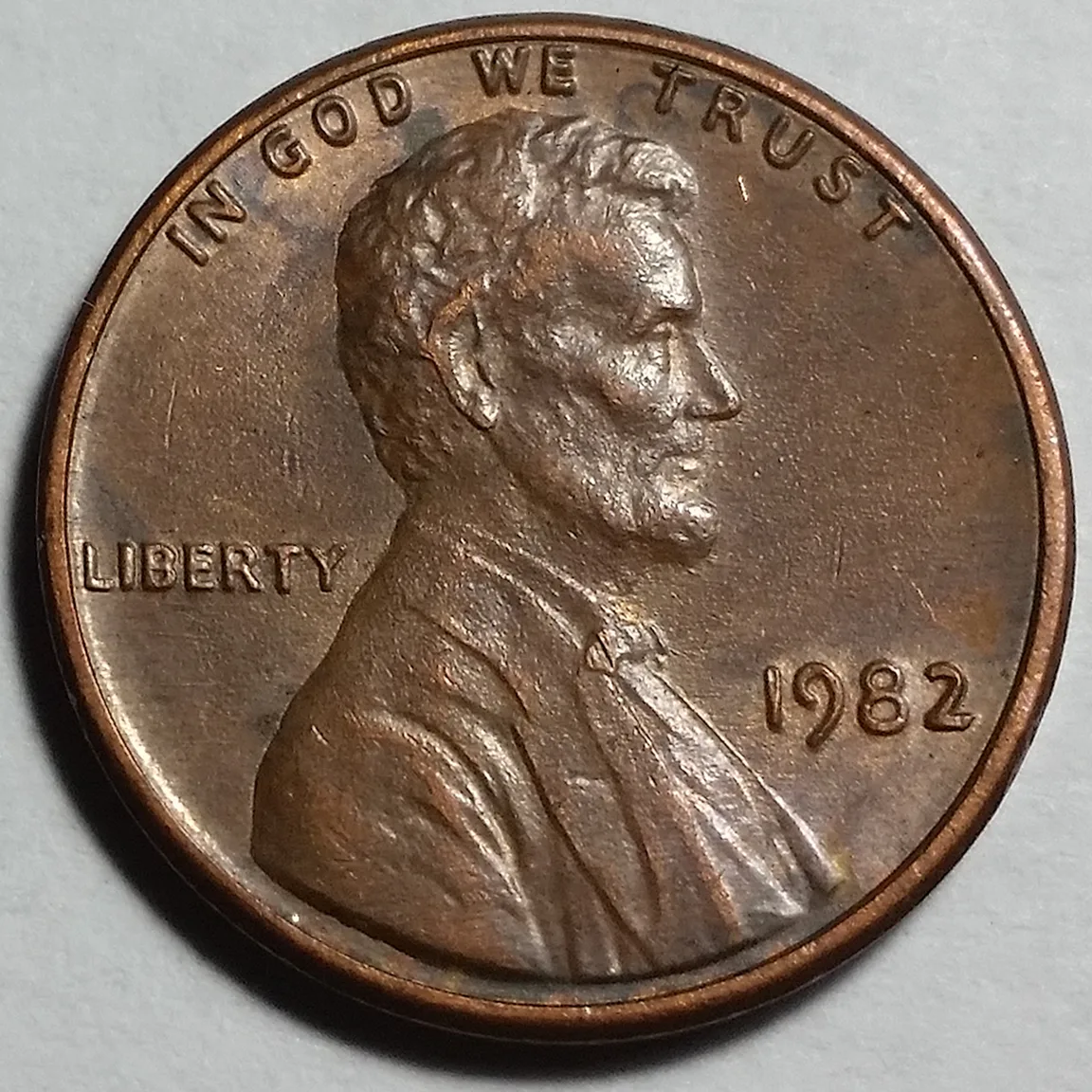
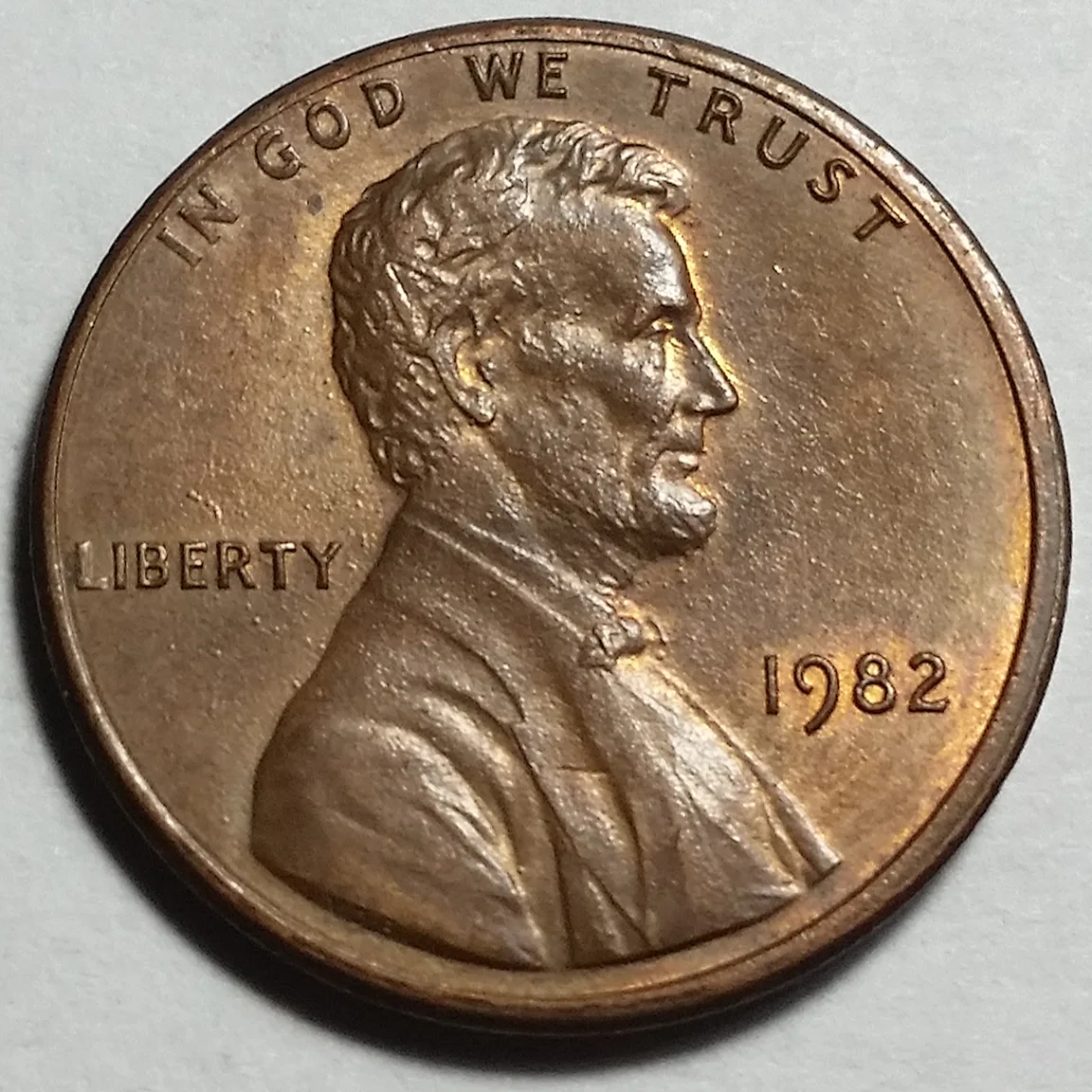
No year in the Memorial Cent series is more important to understand than 1982. Rising copper prices forced the Mint to switch from the traditional 95% copper alloy to a copper-plated zinc planchet partway through the year. Because the change happened mid-production and overlapped with a separate Small Date / Large Date design tweak, 1982 produced an unusual seven distinct collectible varieties.
The Seven 1982 Varieties
Combining the two mints (Philadelphia and Denver), the two compositions (copper and zinc), and the two date styles (Large Date and Small Date) yields these varieties:
- 1982 Large Date Copper (Philadelphia, 3.11 g)
- 1982 Small Date Copper (Philadelphia, 3.11 g)
- 1982 Large Date Zinc (Philadelphia, 2.5 g)
- 1982 Small Date Zinc (Philadelphia, 2.5 g)
- 1982-D Large Date Copper (Denver, 3.11 g)
- 1982-D Large Date Zinc (Denver, 2.5 g)
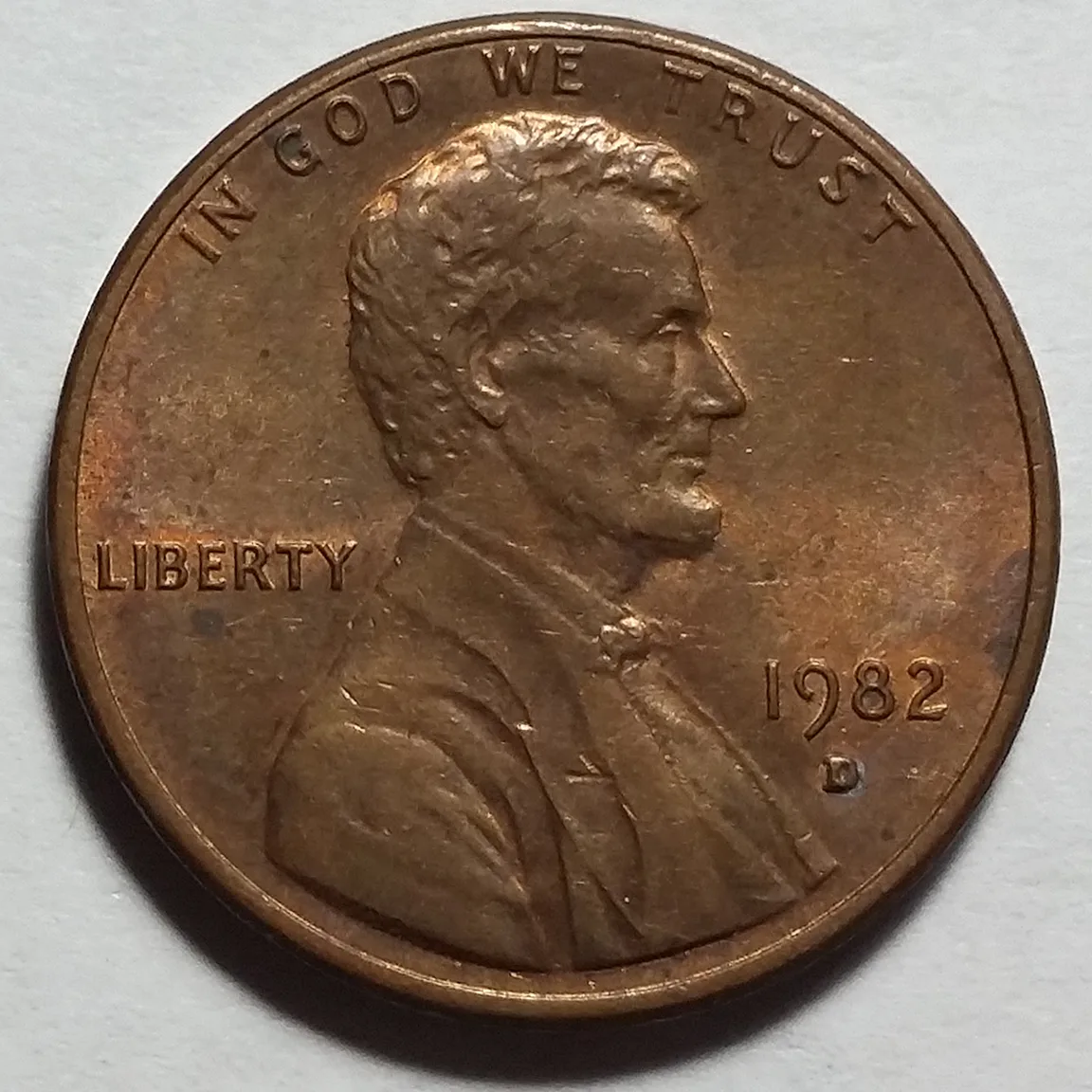
- 1982-D Small Date Zinc (Denver, 2.5 g)
The 1982-D Small Date Copper Discovery
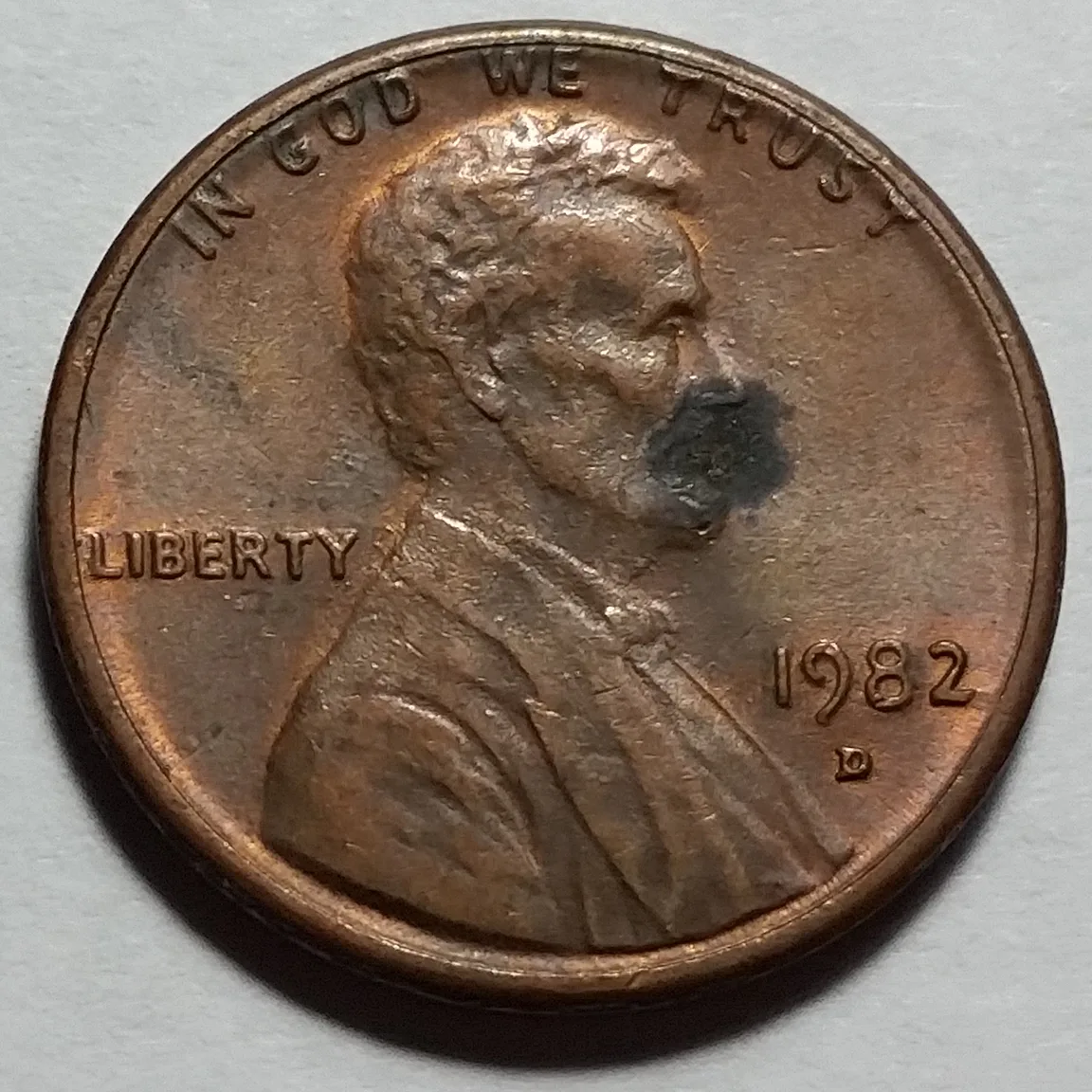
For decades, the list above was considered complete — there was no known 1982-D Small Date in copper. Then in 2016, a collector discovered the first authenticated 1982-D Small Date struck on a copper planchet, weighing 3.08 grams. A second example surfaced in 2017. Because only a handful exist, a genuine 1982-D Small Date copper cent is a major rarity worth $10,000 or more. To check your own coins: a 1982-D with the Small Date that weighs about 3.1 grams (not 2.5 grams) is potentially this rarity and should be authenticated immediately by PCGS or NGC.
How to Tell Copper from Zinc
The fastest method is weight: copper cents weigh 3.11 grams, zinc cents weigh 2.5 grams. A precise digital scale settles it instantly. Visually, zinc cents struck after 1982 often show “zinc rot” (bubbling or pitting under the copper plating) as they age, while copper cents tone more evenly. When a zinc cent’s plating is broken, the exposed core appears dull gray rather than the warm reddish tone of solid copper.
Mint Mark Locations and Identification
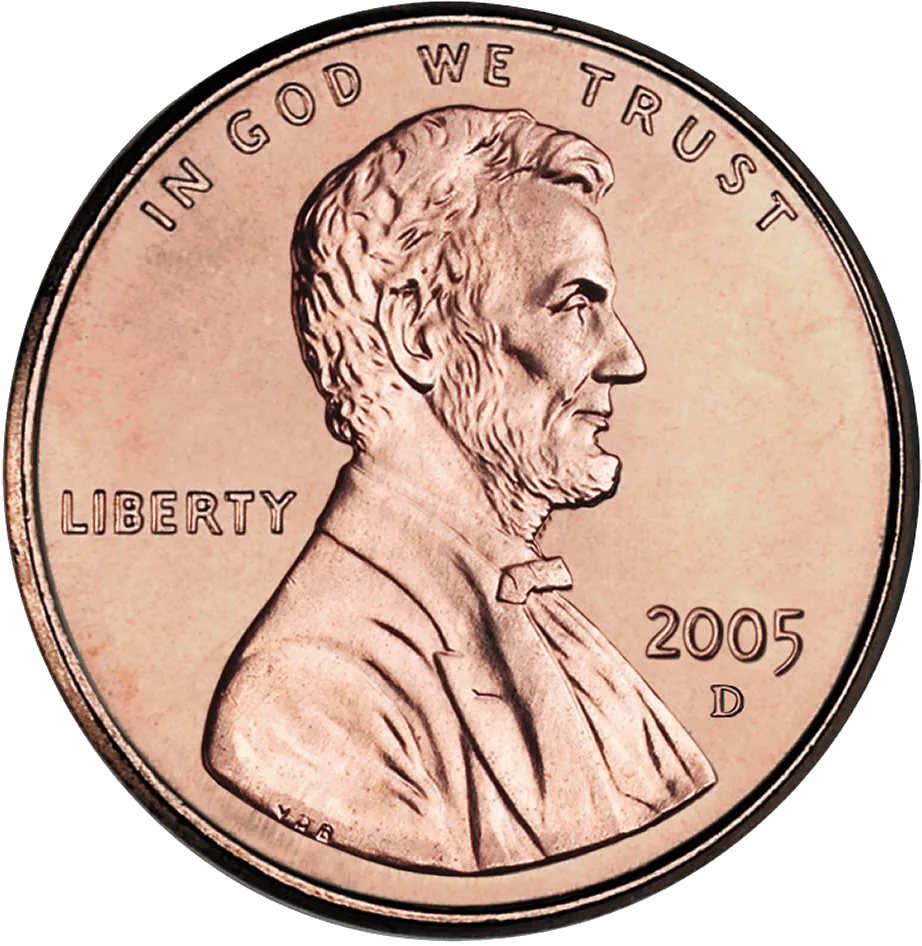
Mint marks on Lincoln Memorial Cents appear on the obverse, directly below the date, in the same position used on wheat cents. Reading the mint mark correctly is the first step in attributing any cent and matters greatly for the key-date varieties.
The Three Mint Facilities
- No mint mark (Philadelphia): The main mint struck cents every year. Philadelphia coins generally carry no premium except for variety coins.
- “D” (Denver): Denver struck cents throughout the series and is the source of several important varieties, including the 1982-D transitional rarities.
- “S” (San Francisco): San Francisco struck business-strike cents from 1968 to 1974, then shifted to proof-only production. The famous 1969-S and 1970-S doubled-die and Small Date varieties come from this mint.
The S Mint Mark and Proofs
From 1975 onward, all “S” cents are proof coins struck only for collector sets — they were never released into circulation. If you find an “S” cent in pocket change dated 1975 or later, it almost certainly came from a broken-up proof set. The pre-1975 “S” business strikes (1968-1974) are the ones to scrutinize, because that window contains the legendary 1969-S Doubled Die Obverse.
Reading Mint Marks on Worn Coins
Because Memorial Cents are relatively modern, most retain readable mint marks. On heavily worn or corroded zinc cents, however, the mint mark can be obscured by surface damage. A 7x to 10x loupe under good light usually resolves the letter. All mint marks on Memorial Cents are punched into the working die (not hand-punched onto individual coins as on 19th-century issues), so genuine mint marks are crisp and consistently positioned.
Key Dates and Major Rarities
While most Memorial Cents are common, a short list of key dates and varieties can be worth hundreds or thousands of dollars. Memorizing these is the first priority for any roll hunter, because every one of them can theoretically still turn up in circulation.
1969-S Doubled Die Obverse: The King
The 1969-S Doubled Die Obverse is the most valuable circulating Memorial Cent and one of the most famous modern U.S. coins. It shows strong, clearly separated doubling on the obverse lettering — “LIBERTY” and “IN GOD WE TRUST” — while the date and mint mark are NOT doubled (a critical authentication point, since the mint mark was added separately). Genuine examples are extremely rare; fewer than 100 are known. Values range from $25,000 in circulated grades to over $100,000 in Mint State Red. The FBI once confiscated examples believing they were counterfeit before the variety was authenticated.
1972 Doubled Die Obverse
The 1972 (Philadelphia) Doubled Die Obverse shows bold doubling on “LIBERTY,” “IN GOD WE TRUST,” and the date, visible to the naked eye. It is far more available than the 1969-S, with an estimated 20,000+ examples struck. Values run from $300 in circulated grades to $3,000+ in MS-65 Red. There are several minor 1972 doubled dies, but only the strong “DDO-1” carries the major premium — the others are worth far less.
1970-S Small Date
The 1970-S comes in Large Date and Small Date varieties. The Small Date (also called “high 7” because the 7 in the date aligns with the other digits) is the scarcer and more valuable version. A 1970-S Small Date is worth $30 to $50 in circulated condition and $200 or more in high Mint State grades. The 1970-S Small Date Doubled Die is rarer still and brings four figures.
1983 Doubled Die Reverse
The 1983 Doubled Die Reverse shows dramatic doubling on the reverse inscriptions, especially “ONE CENT” and “UNITED STATES OF AMERICA.” Because it is on the reverse, it is sometimes overlooked. Values range from $200 in circulated grades to $1,500+ in MS-65 Red. Note this is a zinc-era coin, so genuine examples weigh 2.5 grams.
1992 Close AM
The 1992 and 1992-D Close AM cents are transitional reverse varieties where the “A” and “M” of “AMERICA” nearly touch — a reverse design intended only for proof coins that mistakenly appeared on a tiny number of business strikes. Genuine examples are very rare and command $5,000 to $20,000. Look for the bottoms of the A and M almost touching, and the designer’s “FG” initials positioned farther from the Memorial than normal.

Doubled Dies and Die Varieties
The Memorial Cent series is a paradise for variety collectors. With hundreds of billions of coins struck, doubled dies, repunched mint marks, and other die varieties appear throughout the run. Learning to spot genuine doubling — and to reject the worthless look-alikes — is the most valuable skill a Memorial Cent hunter can develop.
True Doubled Die vs. Machine Doubling
A genuine doubled die occurs during die manufacture, when the die receives a doubled image during hubbing. Every coin struck from that die shows identical, rounded, raised doubling with separation and split serifs. Machine doubling (also called “strike doubling” or “shelf doubling”) happens during striking when the die shifts, producing flat, shelf-like, low doubling. Machine doubling is essentially worthless. The distinction is critical: a 1972 cent with machine doubling is worth one cent, while a genuine 1972 DDO-1 is worth hundreds, and our complete doubled die guide details every diagnostic for telling them apart. This same true-versus-machine-doubling test applies across the cent series, from the wheat cents to the modern Jefferson Nickel varieties.
Major Doubled Die Varieties
- 1969-S DDO: The king. Strong obverse doubling, undoubled mint mark. $25,000+.
- 1972 DDO-1: Bold obverse doubling visible without magnification. $300-$3,000.
- 1983 DDR: Strong reverse doubling on lettering. $200-$1,500.
- 1984 DDO: Doubling on Lincoln’s ear and beard (“doubled ear”). $150-$500.
- 1995 DDO: Doubling on “LIBERTY” and “IN GOD WE TRUST.” Common but popular. $20-$75.
The 1984 Doubled Ear and 1995 Doubled Die
The 1984 Doubled Die Obverse is best known for clear doubling of Lincoln’s earlobe, which is why collectors call it the “doubled ear.” The 1995 Doubled Die Obverse, by contrast, was found by the millions when the Mint released the variety widely; it shows doubling on the obverse lettering and is the most affordable major Memorial Cent doubled die, making it a perfect first variety for a beginning collector.
Repunched Mint Marks (RPMs)
Repunched mint marks occur when the mint mark was punched into the die more than once at slightly offset positions. Because mint marks were hand-punched into working dies through 1989 (after which they were added to the master die), Memorial Cents from 1959 to 1989 host hundreds of collectible RPMs. Most carry modest premiums of $2 to $20, though strong, well-documented examples can bring more.
Small Date vs Large Date Varieties
Beyond 1982, the Memorial Cent series features several Small Date and Large Date distinctions that affect value. Learning to recognize the difference in digit size and spacing is a core skill for attributing these coins.
1960 Small Date and Large Date
The very first major date variety of the series appeared in 1960, when both Philadelphia and Denver struck Small Date and Large Date cents. On the Small Date, the “1” and the “0” in the date are larger and the “6” has a different curve; on the Large Date, the digits are taller and the loop of the “9” is more open. The 1960 Small Date (Philadelphia) is the most valuable, worth $2 to $5 in circulated grades and significantly more in high Mint State. The 1960-D Small Date is more common and carries only a small premium.
1970-S Small Date and Large Date
As noted in the key dates, the 1970-S Small Date is the scarcer and more valuable variety. The quickest diagnostic: on the Small Date, the top of the “7” is level with the tops of the other digits, and “LIBERTY” is sharper; on the Large Date, the “7” dips below the other digits. The Small Date commands a strong premium while the Large Date is common.
1982 Small Date and Large Date
The 1982 Small Date and Large Date difference is most easily seen in the “2”: on the Large Date, the “2” has a flat, level base; on the Small Date, the “2” has a curved base and the digits are slightly smaller and more rounded. Combined with the copper/zinc weight test, the date style determines which of the seven 1982 varieties you hold.
Close AM and Wide AM Reverses
One of the most rewarding modern variety hunts involves the spacing between the “A” and “M” in “AMERICA” on the reverse. The Mint used two slightly different reverse hubs — one for proofs and one for business strikes — and occasionally the wrong reverse was paired with the wrong issue, creating valuable transitional errors.
Understanding Close AM vs Wide AM
On the normal business-strike reverse (Wide AM), the “A” and “M” of AMERICA have a clear gap between them, and the “FG” initials sit close to the Memorial. On the proof reverse (Close AM), the “A” and “M” nearly touch at their bases, and the “FG” initials are positioned farther from the Memorial. When a proof reverse die was mistakenly used on business strikes — or vice versa — the result is a sought-after error.
The Valuable Transitional Errors
- 1992 Close AM and 1992-D Close AM: Business strikes with the proof (Close AM) reverse. Very rare. $5,000-$20,000.
- 1998 Wide AM, 1999 Wide AM, 2000 Wide AM: Business strikes with the proof-only Wide AM hub crossover. The 1999 Wide AM is the scarcest, worth $400-$1,000; the 2000 Wide AM is more common at $20-$100.
How to Check Your Coins
Use a loupe to examine the AMERICA spacing and the FG initials position on cents dated 1992-2000. Compare against reference photos from PCGS CoinFacts. The combination of AM spacing and FG position together confirms the variety — checking only one can lead to misattribution. These late-date varieties are among the few Memorial Cents still findable in modern rolls and pocket change.
Proof Cents and Special Strikes
Throughout the series, the Mint produced proof Lincoln Memorial Cents for collectors. Proofs are struck twice on specially prepared planchets with polished dies, producing mirror-like fields and frosted devices. Understanding proofs helps you recognize them in mixed lots and distinguish them from business strikes.
Where Proofs Were Made
Proof cents were struck at Philadelphia (1959-1964, no mint mark) and at San Francisco (“S,” from 1968 onward). The 1965-1967 period produced no proofs; instead the Mint made Special Mint Set (SMS) coins with a satin finish during those years. After 1968, all proof cents carry the “S” mint mark and were sold only in proof sets.
The 1960 Small Date Proof
The 1960 Small Date proof is a notable scarce proof variety, more valuable than the Large Date proof of the same year. Proof Small Date cents show the same digit differences as their business-strike counterparts but with sharp, fully struck detail.
Cameo and Deep Cameo Proofs
Early proofs (1959-1971) with strong frost-to-mirror contrast earn Cameo (CAM) or Deep Cameo (DCAM) designations from grading services. These contrasted proofs are far scarcer than ordinary proofs of the same date and command significant premiums. A 1960 Small Date proof in Deep Cameo, for example, can be worth many times an ordinary proof.
Grading Lincoln Memorial Cents
Memorial Cents are graded on the Sheldon 1-70 scale used for all U.S. coins. Because the series is modern and many coins survive in Mint State, grading focuses heavily on the upper grades and on surface quality. The key grading points are Lincoln’s cheek and jaw on the obverse and the columns and steps of the Memorial on the reverse. The same Sheldon principles apply to every modern series, from the Washington Quarter to the Kennedy Half Dollar.
Circulated Grades (G-4 to AU-58)
Because Memorial Cents are recent, most circulated examples grade Very Fine or higher. In lower circulated grades, Lincoln’s cheek flattens and the Memorial columns merge together. By Extremely Fine, only the highest points show wear, and most column detail is visible. About Uncirculated coins retain most luster with only slight friction on Lincoln’s cheek and the Memorial steps.
Mint State (MS-60 to MS-70)
The vast majority of collectible Memorial Cents are graded Mint State. Distinctions between MS grades depend on the number and severity of contact marks, strike quality, and luster. The reverse columns of the Memorial should be sharply defined on a well-struck coin. Spotting and carbon spots, common on copper cents, lower the grade and eye appeal.
The Importance of Full Strike
Memorial Cents from certain years and mints are notorious for weak strikes, particularly in the Memorial columns and the steps. A fully struck coin with all columns and steps sharp will command a premium over a weakly struck example of the same numerical grade. Strike quality is especially important for zinc-era cents, which often show mushy detail.
Color Designations: Red, Red-Brown, Brown
Like all copper coinage, Memorial Cents carry a color designation that significantly affects value. The grading services assign one of three designations based on the percentage of original mint-red color remaining on the surface.
Red (RD)
At least 95% original mint-red color. Red is the most desirable designation and commands the highest prices. For common dates, Red examples are plentiful; for key dates and high grades, fully Red coins are scarce and valuable.
Red-Brown (RB)
Between 5% and 95% red color, the rest having toned to brown. Red-Brown coins typically sell for 40% to 70% of Red values. They represent natural, attractive aging and are popular with budget-conscious collectors.
Brown (BN)
Less than 5% red color. Brown coins are the most affordable. A pleasing, evenly toned brown cent can still be attractive, but Brown key dates sell for a fraction of their Red counterparts.
The Zinc Cent Problem
Zinc-era cents (1982-2008) present a unique preservation challenge. When the thin copper plating is breached, the reactive zinc core corrodes, producing “zinc rot” — bubbles, pitting, and dark spots. This is irreversible and severely reduces value. Pristine, spot-free zinc cents in full Red are harder to find than their massive mintages suggest, because so many have degraded.
Error Coins and Off-Metal Strikes
The enormous production of Memorial Cents generated a wide array of mint errors, many of which can still be found in circulation. Error collecting is a popular specialty, and Memorial Cents offer abundant, affordable material.
Off-Center Strikes
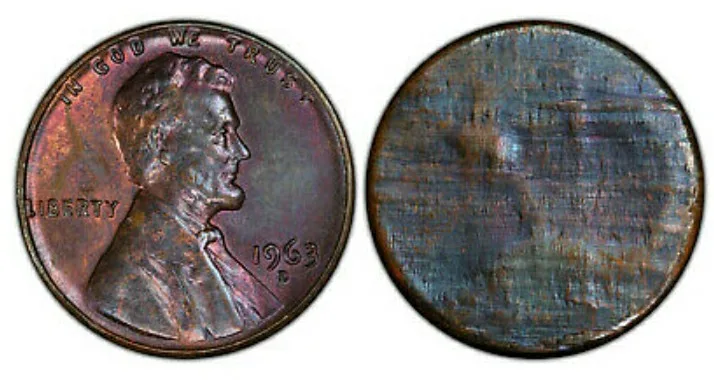
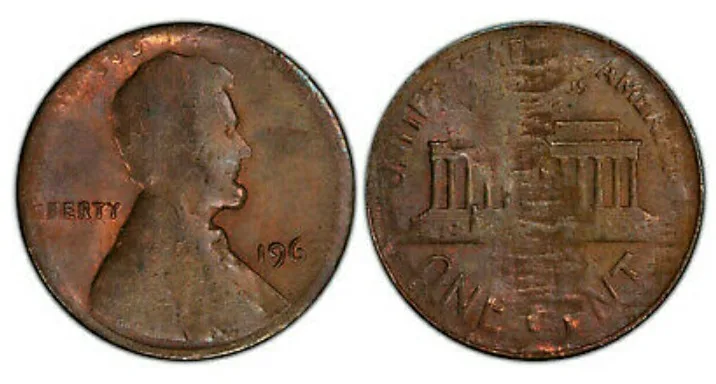
Off-center strikes occur when the planchet is misaligned in the collar. A 5-10% off-center cent might bring $3 to $10, while a 50% off-center coin with a full, readable date can bring $20 to $50. The percentage off-center and date visibility drive the value.
Clipped Planchets and Broadstrikes
Clipped planchets show a curved or straight section missing where the blanking die overlapped. Broadstrikes occur when a coin is struck without the retaining collar, producing a wider, rimless coin. Both are common Memorial Cent errors valued from a few dollars to $50 depending on severity.
Wrong-Planchet and Off-Metal Errors
Occasionally a cent design was struck on a planchet intended for another coin, such as a dime planchet. A Memorial Cent struck on a silver dime planchet is undersized and light, and can bring several hundred dollars. The transitional 1982 copper and zinc varieties are themselves a form of off-metal collecting, where weight determines the prize.
Die Cracks, Cuds, and BIE Errors
A popular minor error is the “BIE” cent, where a die crack between the “B” and “E” of “LIBERTY” resembles a small capital “I,” making the word read “LIBIERTY.” These sell for $1 to $10. Larger die cracks and “cuds” (raised blobs where a piece of the die broke away) are collected as a specialty and priced by size and placement.
Authentication and Counterfeit Detection
Because the headline Memorial Cent varieties carry large premiums, counterfeits and altered coins are a real problem. The good news is that most fakes are easy to expose with a loupe, a magnet, and a scale.
Rejecting Machine Doubling
The most common “fake” Memorial Cent rarity is simply a normal coin with machine doubling being sold as a genuine doubled die. Remember: genuine doubled-die doubling is raised, rounded, and shows separation and split serifs; machine doubling is flat and shelf-like. If the doubling looks like a flattened smear rather than a clear second image, it is machine doubling and worth face value.
The 1969-S DDO Authentication Points
A genuine 1969-S Doubled Die Obverse shows strong doubling on the obverse lettering but NO doubling on the date or mint mark, because the mint mark was punched separately. Counterfeits and machine-doubled coins often get this backward. Any suspected 1969-S DDO must be authenticated by PCGS or NGC before sale — the value is far too high to trust a raw coin.
The 1982 and 1982-D Weight Test
For the 1982 transitional varieties, a digital scale is the only reliable authenticator. Copper cents weigh 3.11 grams (±0.13 g tolerance), zinc cents weigh 2.5 grams (±0.10 g). Any 1982-D Small Date weighing near 3.1 grams is a potential five-figure rarity and must be authenticated immediately.
Altered and Added Mint Marks
Some fraudsters add an “S” to a common 1969 Philadelphia cent to fake a 1969-S, or alter dates to create scarce varieties. Examine the mint-mark area at high magnification for tooling marks, and compare digit shapes to reference images. The same altered-mint-mark tactics seen on classic series like the Buffalo Nickel are applied to valuable Memorial Cent varieties.
When to Seek Professional Grading
Any raw Memorial Cent that could be a 1969-S DDO, a 1972 DDO-1, a 1992 Close AM, or a 1982-D Small Date copper should be authenticated by PCGS, NGC, or ANACS. The grading fee is trivial compared to the four- and five-figure values at stake, and a slab provides both authentication and a guaranteed grade.
Storage and Preservation
Copper and zinc are both reactive metals, so proper storage is critical to preserving Memorial Cent value — especially for the zinc cents, which corrode far more readily than the earlier copper issues.
Handle by the Edges
Always hold cents by their edges. Fingerprints on copper etch permanently over time, leaving marks that reduce the grade. Use cotton or nitrile gloves when handling Mint State coins you intend to keep.
Storage Materials
Use archival-quality holders: Mylar flips, inert Air-Tite capsules, or certified slabs. Avoid soft PVC vinyl flips, which leach plasticizers that cause green corrosion on copper. For zinc cents, low humidity is even more important because moisture accelerates zinc rot beneath the plating.
Environment
Store cents in a climate-controlled space with stable temperature (65-72°F) and low humidity (below 50%). Silica gel packets help absorb moisture. Keep coins away from sulfur sources such as rubber bands, cardboard with high sulfur content, and wool, all of which accelerate toning.
Never Clean Your Cents
Cleaning is the fastest way to destroy a coin’s value. Abrasive cleaning leaves hairlines, chemical dips strip the natural surface, and even a water rinse can spot a copper coin. The same rule holds for every collectible coin, from a humble cent up to a Morgan Silver Dollar. If a coin needs conservation, use a professional service like NCS rather than attempting it yourself.
Current Market Values
Memorial Cent values span an enormous range — from face value for the billions of common dates to five and six figures for the rarest varieties. Here is a general guide to the market across the major segments.
Common Dates
The vast majority of Memorial Cents (1959-2008) are worth face value in circulated condition. In Mint State, common dates bring 5 to 50 cents in MS-63 Red and $1 to $5 in MS-65 Red. Pre-1982 copper cents carry a small intrinsic premium because their copper content is worth more than one cent, though melting cents is illegal.
Key Date and Variety Values
- 1969-S DDO: $25,000 (circulated) to $100,000+ (MS-65 Red)
- 1972 DDO-1: $300 (circulated) to $3,000+ (MS-65 Red)
- 1970-S Small Date: $30-$50 (circulated) to $200+ (MS-65 Red)
- 1983 DDR: $200 (circulated) to $1,500+ (MS-65 Red)
- 1992 Close AM: $5,000-$20,000
- 1999 Wide AM: $400-$1,000
- 1982-D Small Date Copper: $10,000+ (only a handful known)
- 1960 Small Date (P): $2-$5 (circulated) to $25+ (MS-65 Red)
Rolls and Bulk
Memorial Cent rolls (50 coins) sell for $1 to $5 depending on date and condition. Bank-wrapped rolls of pre-1982 copper cents trade at a premium to the zinc-era rolls because of copper content and the chance of finding varieties. Roll hunting — buying boxes of cents from the bank and searching them — remains the most popular and affordable way to hunt for the key varieties.
Building a Memorial Cent Collection
The Lincoln Memorial Cent is the perfect series for beginning collectors and roll hunters alike. With low entry costs, abundant material, and a handful of genuinely valuable targets, it offers something for every budget and interest.
Complete Date-and-Mint Set
A complete set of Memorial Cents by date and mint mark (excluding the major varieties) runs about 100 coins from 1959 to 2008. In circulated condition, most can be pulled directly from rolls and pocket change for face value. A complete Mint State Red set, including the Small Date varieties, can be assembled for $100 to $300 — making it one of the most affordable complete U.S. type collections available.
Variety Collecting
The real excitement lies in variety collecting: doubled dies, RPMs, Close/Wide AM transitionals, and the 1982 copper/zinc set. The Cherrypickers’ Guide and PCGS CoinFacts document the major varieties with attribution photos. A digital scale, a 10x loupe, and reference images are all you need to start cherry-picking valuable coins from common rolls. The same patient, learn-the-series approach rewards collectors across all American coinage, from classic U.S. coins to modern issues.
Roll Hunting Strategy
Buy boxes of cents ($25 = 50 rolls) from your bank, search them for copper cents (pre-1982), key dates, and varieties, then return the rest. Sort copper from zinc by weight or by the ring test (copper rings, zinc thuds). Set aside any 1960, 1969-S, 1970-S, 1972, 1982, 1983, 1992, and 1999 cents for closer inspection under magnification.
Final Tips
- Weigh every 1982 and 1982-D cent — the transitional varieties hinge on weight.
- Learn to distinguish true doubled dies from machine doubling before spending money.
- Always buy certified examples for any coin over $200.
- Check the AM spacing and FG position on 1992-2000 cents.
- Never clean your coins — patina is value.
- Keep a loupe, scale, and reference guide handy whenever searching rolls.