Lincoln Wheat Penny Identification Guide: Key Dates, Mint Marks, and Values
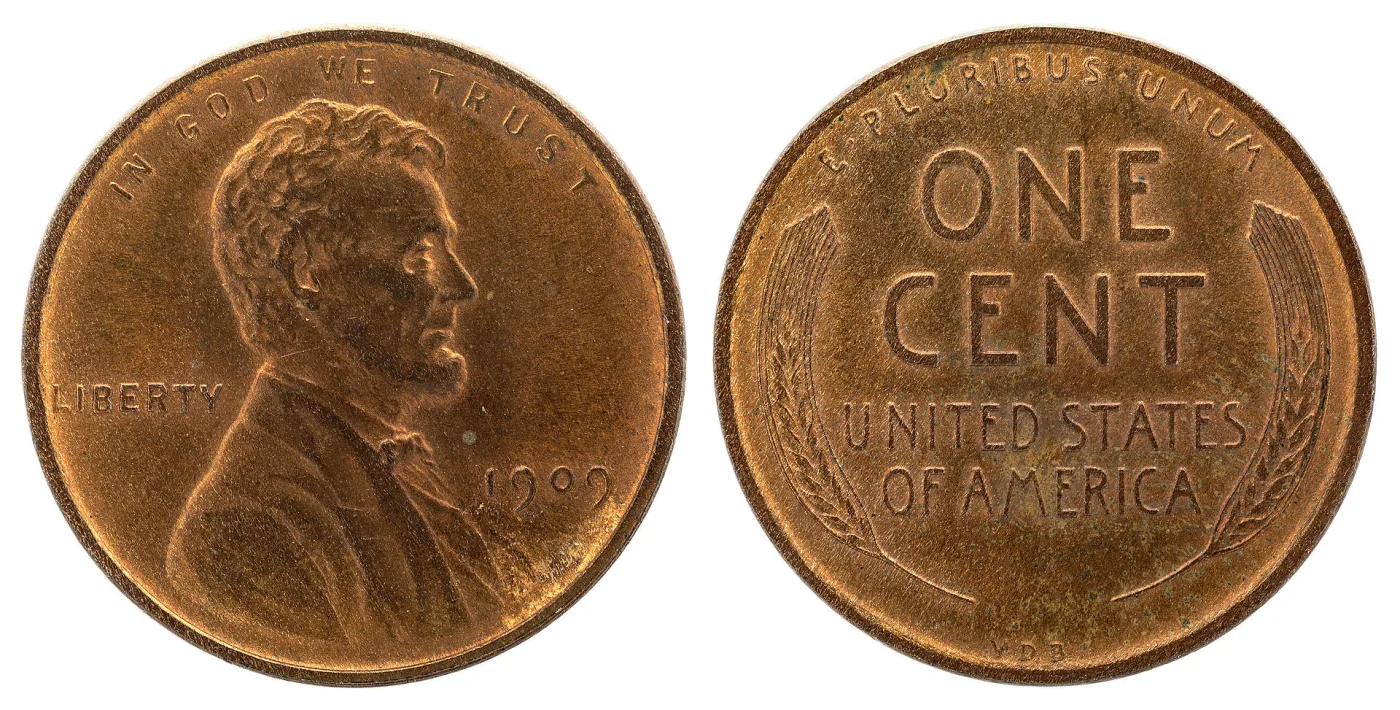
The Lincoln Wheat Penny is the gateway coin for millions of American collectors. Introduced in 1909 to mark the centennial of Abraham Lincoln’s birth, it was the first regular-issue United States coin to depict a real person rather than an allegorical figure. Designed by Lithuanian-American sculptor Victor David Brenner, the wheat-ears reverse remained in production for half a century until it was replaced by the Lincoln Memorial Cent in 1959.
During its 50-year run, more than 25 billion wheat cents were struck across three mints, and the series produced some of the most famous rarities in American numismatics. The 1909-S VDB, 1914-D, 1922 Plain (No D), 1943 copper, and the legendary 1955 Doubled Die Obverse are coins that every dealer, collector, and casual coin-jar hunter should recognize on sight. A single wheat cent pulled from circulation has been known to change lives.
This guide walks you through everything you need to identify, grade, authenticate, and value Lincoln Wheat Pennies. Whether you have inherited a coffee can full of old cents or are building a date-and-mint set, you will learn exactly what to look for, which varieties command premiums, and how to separate genuine rarities from the altered and counterfeit coins that flood the market.
History and Design of the Wheat Cent
In 1909, the United States Mint broke with over a century of tradition. Every cent struck since 1793 had featured allegorical figures such as Liberty or the Indian Head, but President Theodore Roosevelt wanted to redesign American coinage as part of his effort to elevate the nation’s artistic standards — the same campaign that produced the magnificent Saint-Gaudens Double Eagle. To commemorate the 100th anniversary of Abraham Lincoln’s birth, Roosevelt personally chose sculptor Victor David Brenner to create a new cent bearing Lincoln’s profile.
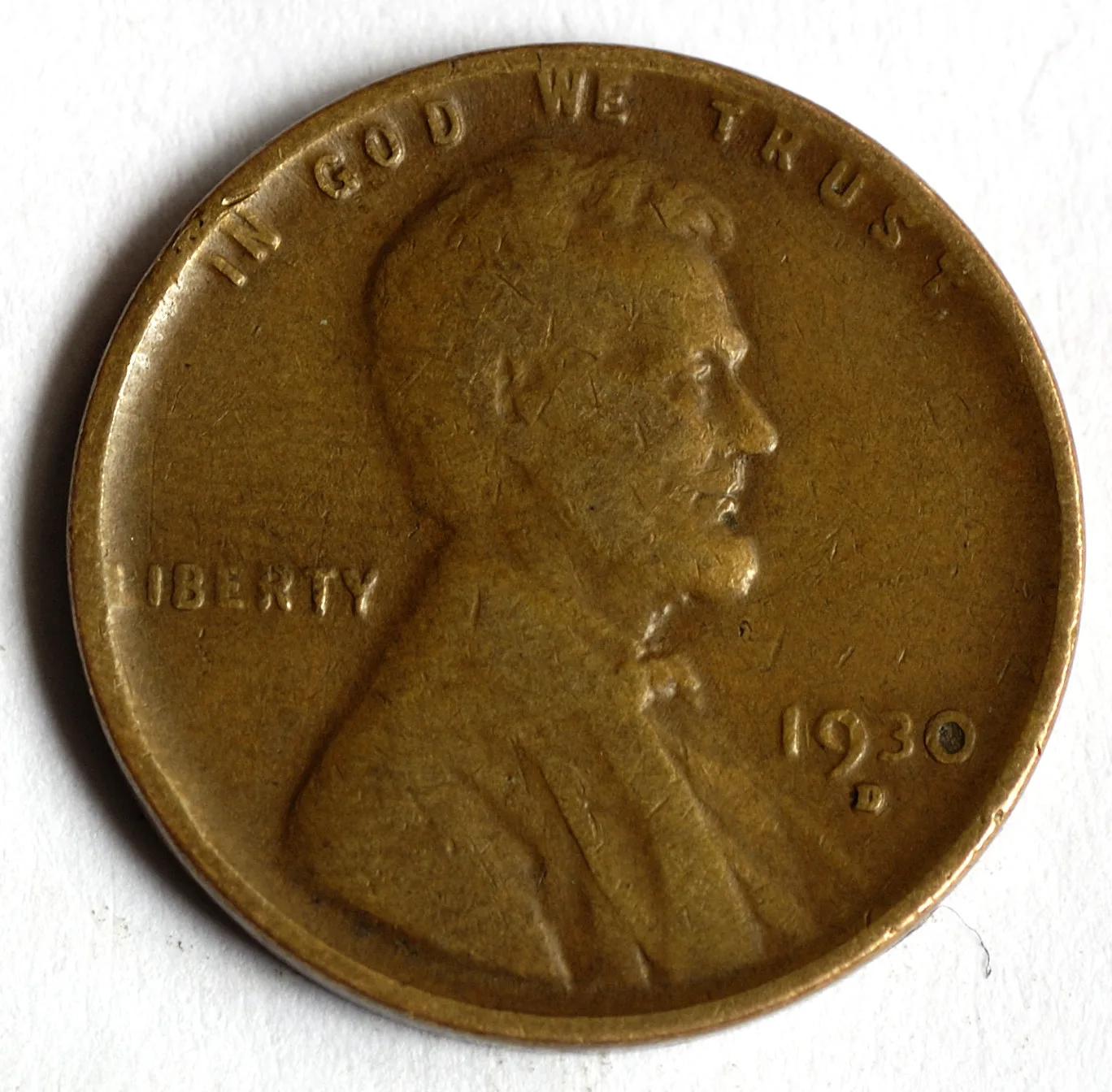
The resulting design, released on August 2, 1909, made Lincoln the first historical figure to appear on a regular-issue U.S. coin. The obverse shows Lincoln in right-facing profile, with “IN GOD WE TRUST” along the upper rim, “LIBERTY” to the left, and the date to the right. The reverse features two stylized stalks of durum wheat curving up the sides of the coin, framing the denomination “ONE CENT” and “UNITED STATES OF AMERICA,” with “E PLURIBUS UNUM” arched across the top.
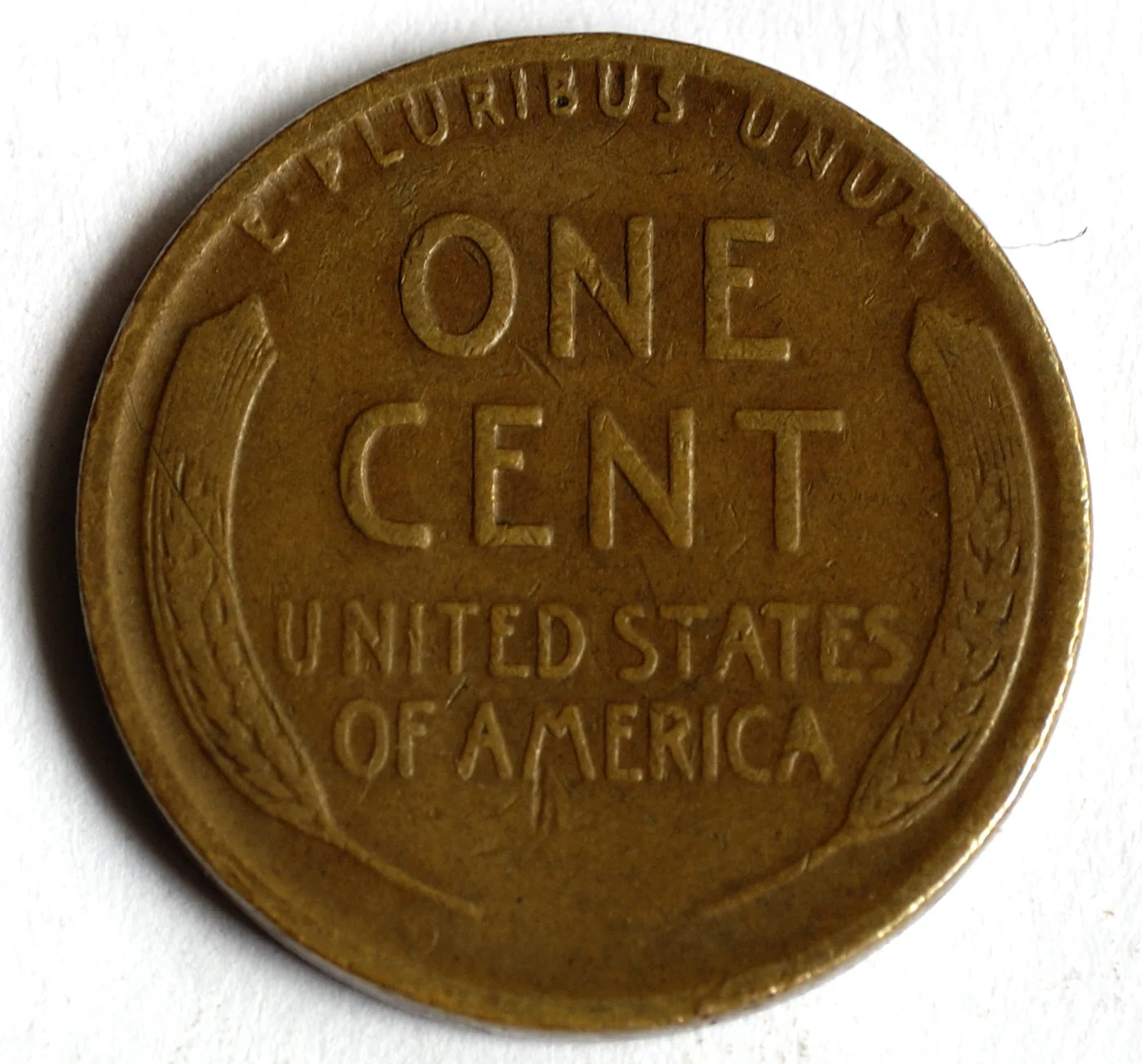
Brenner’s wheat-ears reverse replaced the Indian Head Penny that had circulated since 1859, which itself had succeeded the short-lived Flying Eagle Cent of 1856-1858. While some numismatists regretted the departure from allegory, the public embraced the new design, and the series eventually became the longest-running cent design in U.S. history until the Lincoln Memorial reverse surpassed it in length.
The Designer: Victor David Brenner
Brenner was a Lithuanian-born immigrant who had established himself as one of America’s leading medalists. His portrait of Lincoln was based on a plaque he had earlier sculpted from a Mathew Brady photograph. The Treasury liked the portrait enough that the basic obverse has remained unchanged for more than a century, making Brenner’s Lincoln one of the most reproduced portraits in the world.
Production Timeline
Lincoln Wheat Pennies were struck from 1909 through 1958 at three main facilities: Philadelphia (no mint mark), Denver (D), and San Francisco (S). In 1959, the reverse was changed to depict the Lincoln Memorial in honor of the sesquicentennial of Lincoln’s birth, ending the wheat-cent era. The obverse portrait, however, continues on today’s Lincoln Shield cents — an unbroken line that began in 1909.
Physical Specifications and Composition
Knowing the standard specifications of a Lincoln Wheat Penny is essential for authentication, especially when evaluating potential off-metal rarities like the 1943 copper or 1944 steel cents.
Dimensions and Weight
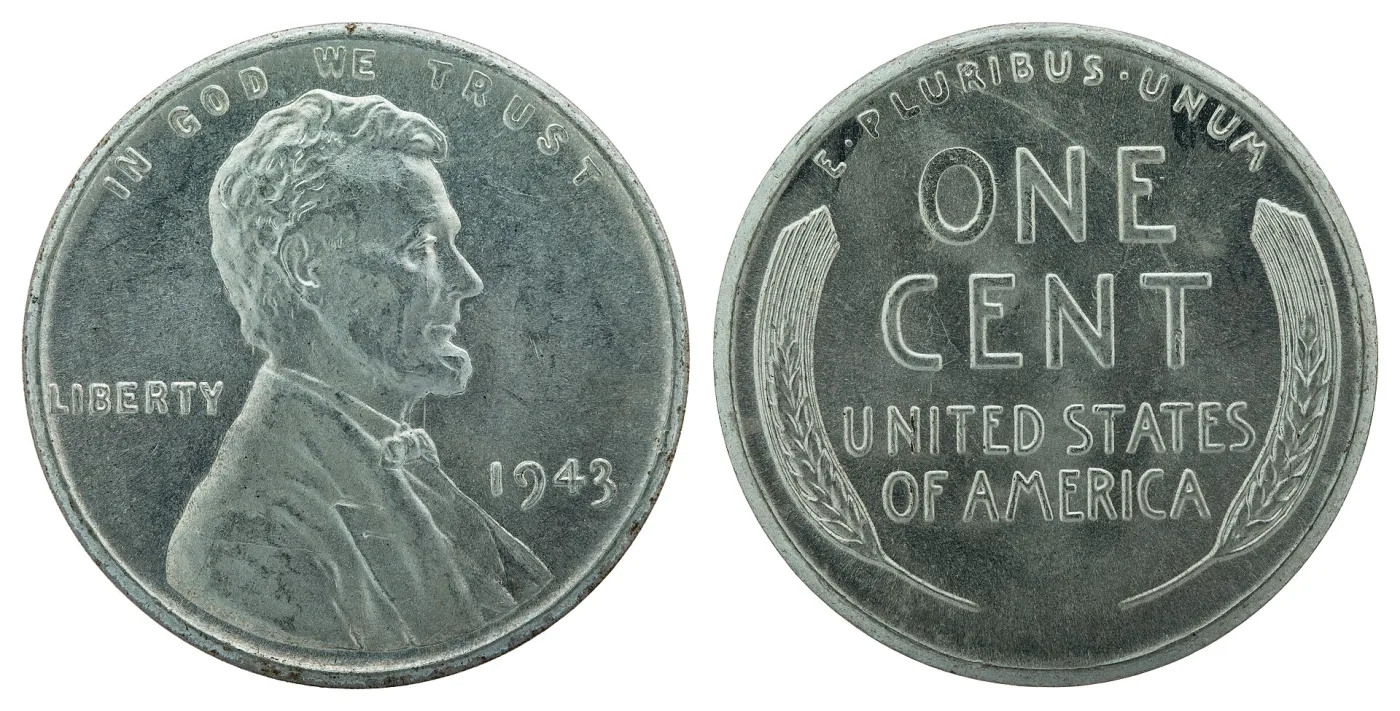
Every Lincoln Wheat Penny measures 19.05 millimeters (0.750 inches) in diameter and approximately 1.55 millimeters thick. Bronze cents weigh 3.11 grams, while the wartime 1943 zinc-coated steel cents weigh only 2.70 grams. The edge is plain (no reeding), a characteristic that helps distinguish genuine cents from cast counterfeits whose edges often show a seam or flashing. A digital scale accurate to 0.01 grams is one of the most valuable tools a wheat-cent collector can own.
Metal Composition by Era
- 1909-1942: 95% copper, 5% tin and zinc (traditional bronze).
- 1943: Zinc-coated steel. The only wheat cent struck in steel due to wartime copper conservation.
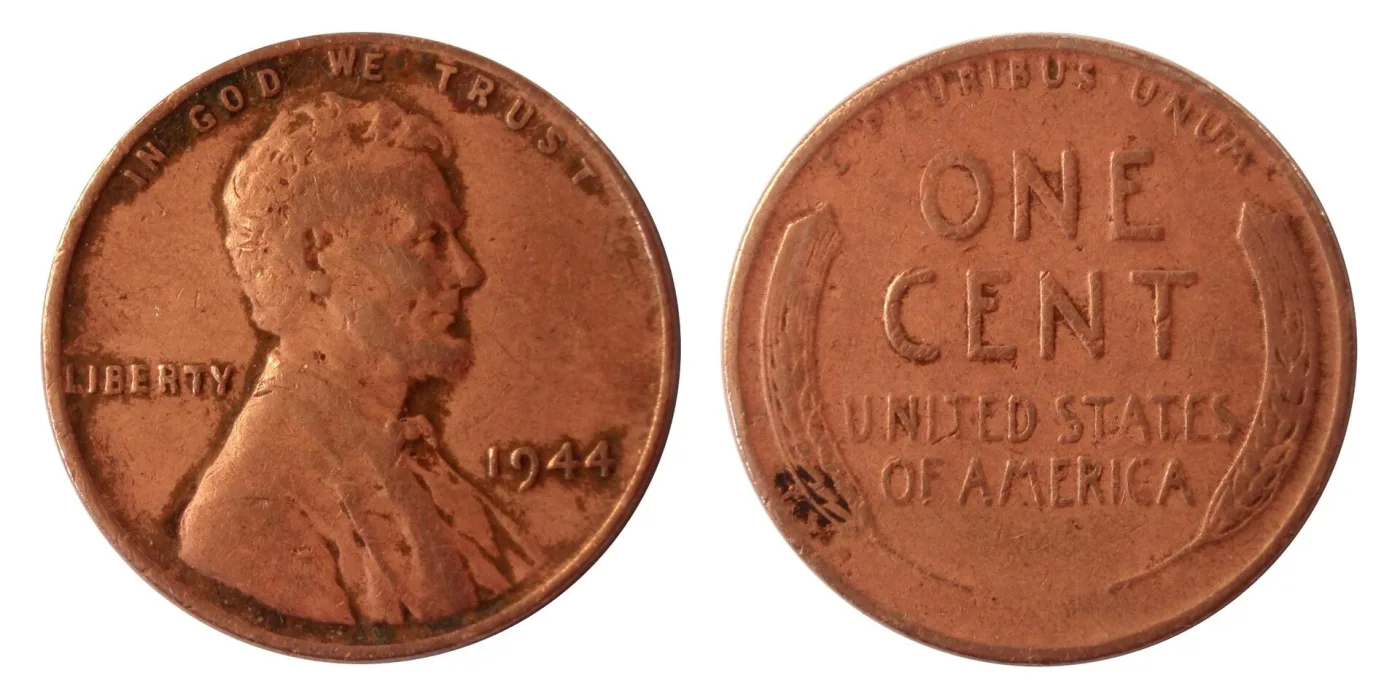
- 1944-1946: 95% copper, 5% zinc (shell-case cartridge brass with tin removed). Often called “shell case” cents.
- 1947-1958: Return to the original 95% copper, 5% tin and zinc bronze alloy.
Strike Characteristics
Lincoln Wheat Pennies show considerable strike variation across mints and years. Philadelphia issues are generally the best struck, with sharper details on Lincoln’s hair, beard, and the wheat-ear grain lines. Denver and San Francisco strikes are often softer, particularly in the 1910s and 1920s. Strike quality becomes a critical factor in grading: a fully struck 1926-S in Mint State will command a dramatic premium over the weak strikes that are typical for the date.
Mint Mark Locations and Identification
Mint marks on Lincoln Wheat Pennies appear on the obverse, directly below the date. The mark is small — roughly the size of a “V” in VDB — and reading it accurately is the difference between a common cent and a four-figure rarity.
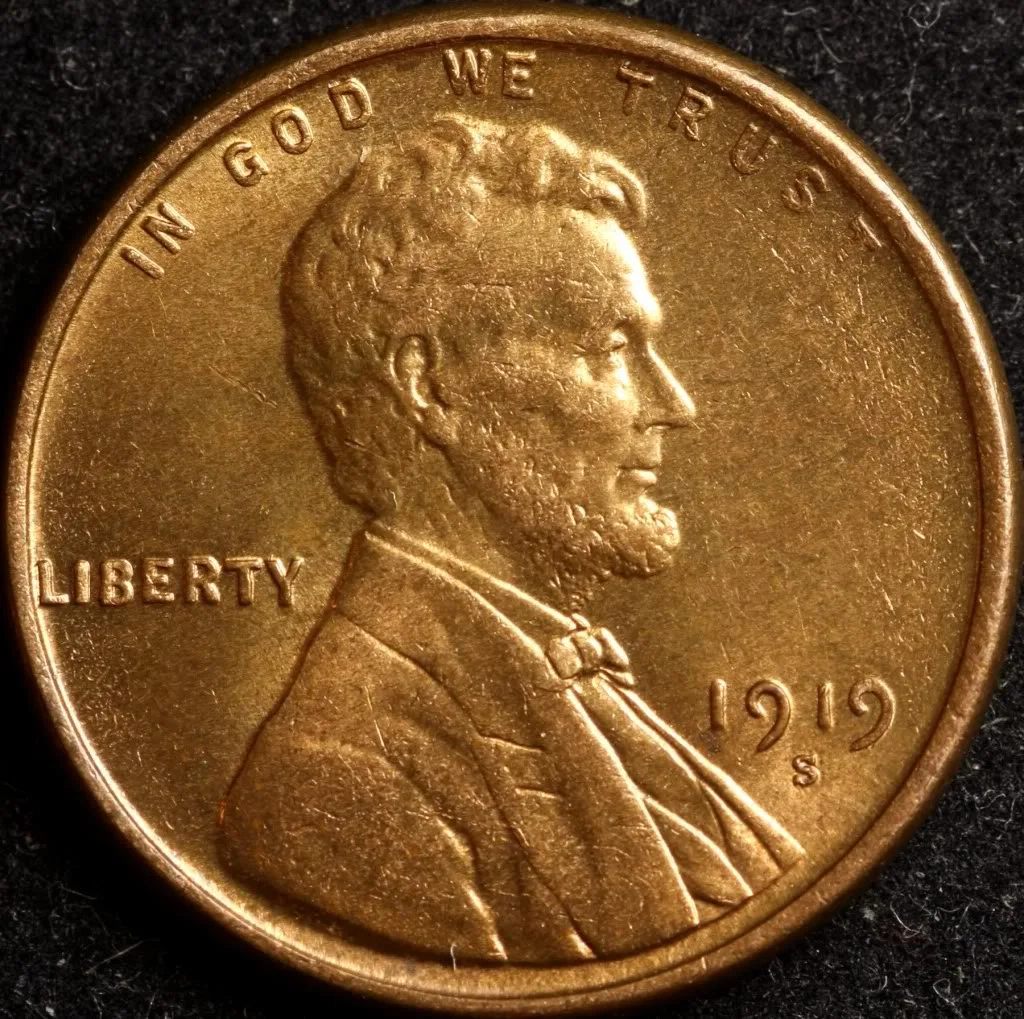
The Three Mint Facilities
- No mint mark (Philadelphia): The parent mint struck cents every year of the series. With a few exceptions, Philadelphia issues have the highest mintages and lowest premiums.
- “D” (Denver): The Denver Mint began striking cents in 1911 and produced most major key dates of the early series, including the 1914-D and the infamous 1922 Plain.
- “S” (San Francisco): The San Francisco Mint produced the very first major rarity, the 1909-S VDB, and continued making cents through 1955. San Francisco mintages tend to be low, producing many semi-keys.
Reading Worn Mint Marks
On well-worn wheat cents, the mint mark can become little more than a shadow. A 7x to 10x loupe, combined with oblique light, usually reveals enough of the shape to identify the mark. If the area below the date is completely smooth, the coin is almost certainly a Philadelphia issue. If there is any raised metal visible, compare its shape carefully to reference images — a small “D” is squarish and wider, while an “S” is curved and narrower.
Warning: Altered Mint Marks
Because 1909-S, 1914-D, and 1931-S wheat cents command substantial premiums, counterfeiters have long been in the habit of adding fake mint marks to common Philadelphia coins. Examine the mint-mark area at high magnification: tooling marks, disturbed fields, or a mint mark that sits noticeably higher or lower than genuine examples are dead giveaways. The same altered-mint-mark tactics used on Mercury Dimes are heavily applied to wheat cents, so skepticism is healthy.
The VDB Initials and 1909 Controversy
No discussion of Lincoln Wheat Pennies is complete without understanding the VDB initials. These three letters drove one of the most famous controversies in American coinage and created the first — and arguably most iconic — key date of the series.
Brenner’s Signature Controversy
When the first 1909 cents were released, Victor David Brenner had placed his initials “V.D.B.” prominently on the reverse, near the bottom rim between the wheat stalks. Public and press reaction was swift and largely negative: many felt the initials were too large and amounted to self-advertisement. Treasury Secretary Franklin MacVeagh ordered production halted after only a few days, and the mint removed the initials before resuming work.
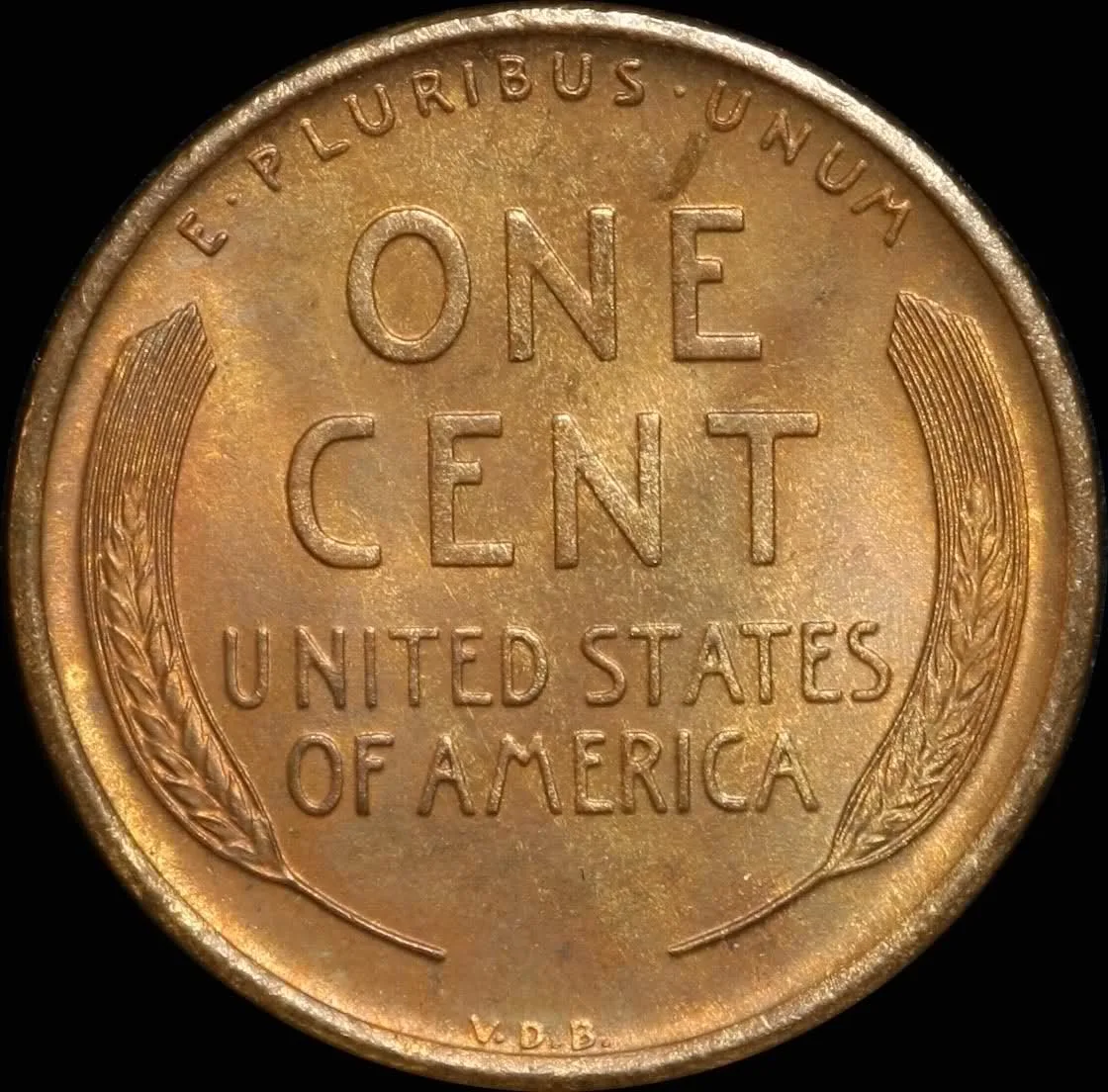
The Four 1909 Varieties
The interruption created four distinct first-year varieties that collectors still chase today:
- 1909 VDB: Philadelphia issue with initials. Mintage of 27,995,000. Common in all grades.
- 1909-S VDB: San Francisco issue with initials. Mintage of just 484,000 — the key to the series.
- 1909 (no VDB): Philadelphia issue after initials were removed. Mintage of 72,702,618. Common.
- 1909-S (no VDB): San Francisco issue after initials were removed. Mintage of 1,825,000. Semi-key.
The Initials Return
Brenner’s initials returned to the coin in 1918, this time discreetly placed on the truncation of Lincoln’s shoulder in tiny letters. They have remained there ever since. On worn coins, the VDB initials on the shoulder can disappear entirely — their absence is normal wear, not a variety.
Key Dates and Major Rarities
The Lincoln Wheat Penny series contains several dates that form the backbone of every serious collection. Memorizing these dates should be a collector’s first priority, because recognizing them at sight can turn a pocketful of loose cents into a life-changing find.
1909-S VDB: The Series Key
With a mintage of just 484,000, the 1909-S VDB is the most famous wheat cent and an icon of American numismatics. In Good-4, it typically sells for $800 to $1,000. In MS-65 Red, values exceed $15,000. Because of its high value, this coin is counterfeited more than any other cent. Authentication of both the “S” mint mark and the “VDB” initials (along with die characteristics) is essential before buying one.
1914-D: The Tough Key
The 1914-D has a mintage of 1,193,000, but survival rates are poor because most coins circulated heavily before being recognized as scarce. In Good-4, expect to pay $200 to $250. In MS-65 Red, prices can exceed $12,000. The 1914-D is the date most frequently faked by altering a 1944-D — watch for signs of a reshaped “1” and compare the “14” digits against reference images.
1922 Plain (No D)
In 1922, only the Denver Mint struck cents, so every 1922 wheat cent should carry a “D.” However, a grease-filled and heavily worn die pair — particularly Die Pair 2 — produced coins on which the mint mark is completely absent. The strong 1922 Plain Die Pair 2 with a sharp obverse strike is a major rarity, commanding $700 to $800 in Good and over $35,000 in MS-65 Red. Weak or partial “D” examples are far less valuable. Authentication by PCGS or NGC is essential.
1943 Copper (Bronze) Cent
In 1943, all cents were supposed to be struck in zinc-coated steel to conserve copper for the war effort. A small number — fewer than 40 genuine examples are known across all three mints — were mistakenly struck on leftover bronze planchets. A 1943 copper cent is one of the most valuable U.S. coins a hobbyist might plausibly find: authenticated examples have sold for $100,000 to over $1.7 million. Because the vast majority of “1943 copper cents” offered for sale are copper-plated steel cents, a magnet test is the first and simplest authentication step: a genuine 1943 bronze cent will not stick to a magnet.
1955 Doubled Die Obverse
The 1955 Doubled Die Obverse is perhaps the most dramatic doubled die in U.S. coinage. The date and the word “LIBERTY” show unmistakable doubling visible to the naked eye. Approximately 20,000 to 24,000 examples escaped into circulation before the mint noticed. In Good condition, values start around $1,200, and MS-65 Red examples can bring $15,000 or more. Do not confuse the famous 1955 DDO with the much more common 1955 “Poor Man’s Doubled Die,” which shows only minor machine doubling and is worth little beyond face value.
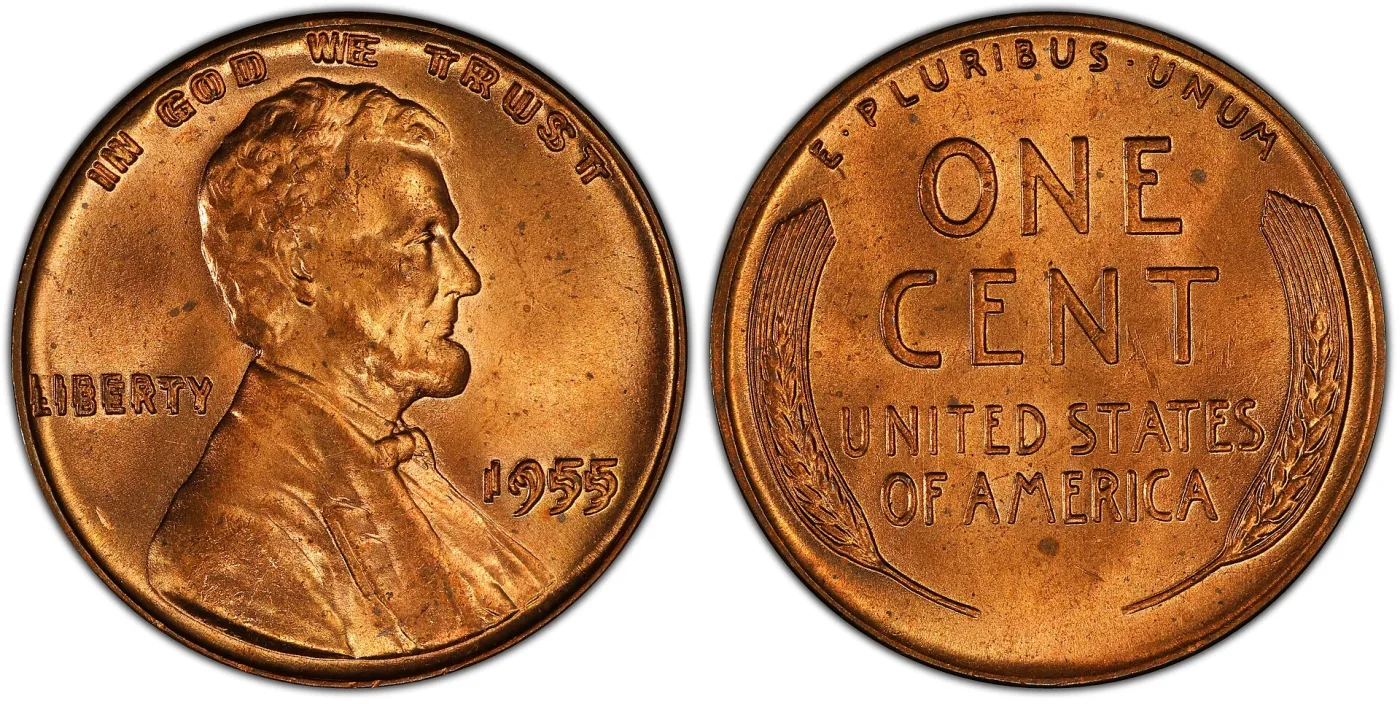

Semi-Key Dates and Better Dates
Beyond the headline rarities, the wheat cent series is filled with semi-key dates that carry meaningful premiums and make building a complete collection genuinely challenging. These dates are where many advanced collectors focus their energy, since they offer historical scarcity without the crushing prices of the major keys.
Early Series Semi-Keys (1909-1915)
- 1909-S (no VDB): Mintage 1,825,000. $110 in G-4 to $800+ in MS-63.
- 1910-S: Mintage 6,045,000. $15 in G-4 to $200+ in MS-63.
- 1911-S: Mintage 4,026,000. $40 in G-4 to $400+ in MS-63.
- 1912-S: Mintage 4,431,000. $25 in G-4 to $300+ in MS-63.
- 1913-S: Mintage 6,101,000. $15 in G-4 to $300+ in MS-63.
- 1914-S: Mintage 4,137,000. $25 in G-4 to $500+ in MS-63.
- 1915-S: Mintage 4,833,000. $20 in G-4 to $300+ in MS-63.
The Scarce Early Twenties
The 1920s produced several conditionally scarce dates. The 1924-D with a mintage of 2,520,000 is genuinely scarce, commanding $45 in G-4 and over $600 in MS-63 Red. The 1926-S, despite a higher mintage of 4,550,000, is notorious for weak strikes and is rarely found well-struck in Mint State — true Red examples bring five-figure prices. The 1931-S, with a mintage of just 866,000, is the lowest-mintage wheat cent of the 1930s and a popular semi-key at $100 to $150 in G-4.
1931-S and the Depression
The 1931-S is often saved as a curiosity because its mintage is the second-lowest in the entire series (after only the 1909-S VDB). Unlike the 1909-S VDB, however, the 1931-S was widely hoarded when collectors recognized its low mintage in real time, so Mint State examples are available. This makes it one of the few low-mintage wheat cents where a Red MS-65 is attainable for under $500.
Doubled Dies and Die Varieties
The wheat cent series is a goldmine for variety collectors. Because so many coins were produced over so many years, doubled dies, repunched mint marks, and die gouges are common — and some carry enormous premiums.
Understanding Doubled Dies vs. Machine Doubling
A true doubled die is a die that received doubled images during hubbing, meaning every coin struck from that die shows the same doubling. This is what makes doubled dies valuable. Machine doubling (also called “strike doubling” or “shelf doubling”) is caused by a shifted die during the striking process and produces a flat, shelf-like appearance. Machine doubling is essentially worthless. Learning to distinguish the two is critical: a 1955 coin with machine doubling is worth face value; a genuine 1955 DDO is worth thousands. Our doubled die identification guide walks through the exact diagnostics — notching, split serifs, and raised rounded doubling — that separate the valuable coin from the worthless look-alike.
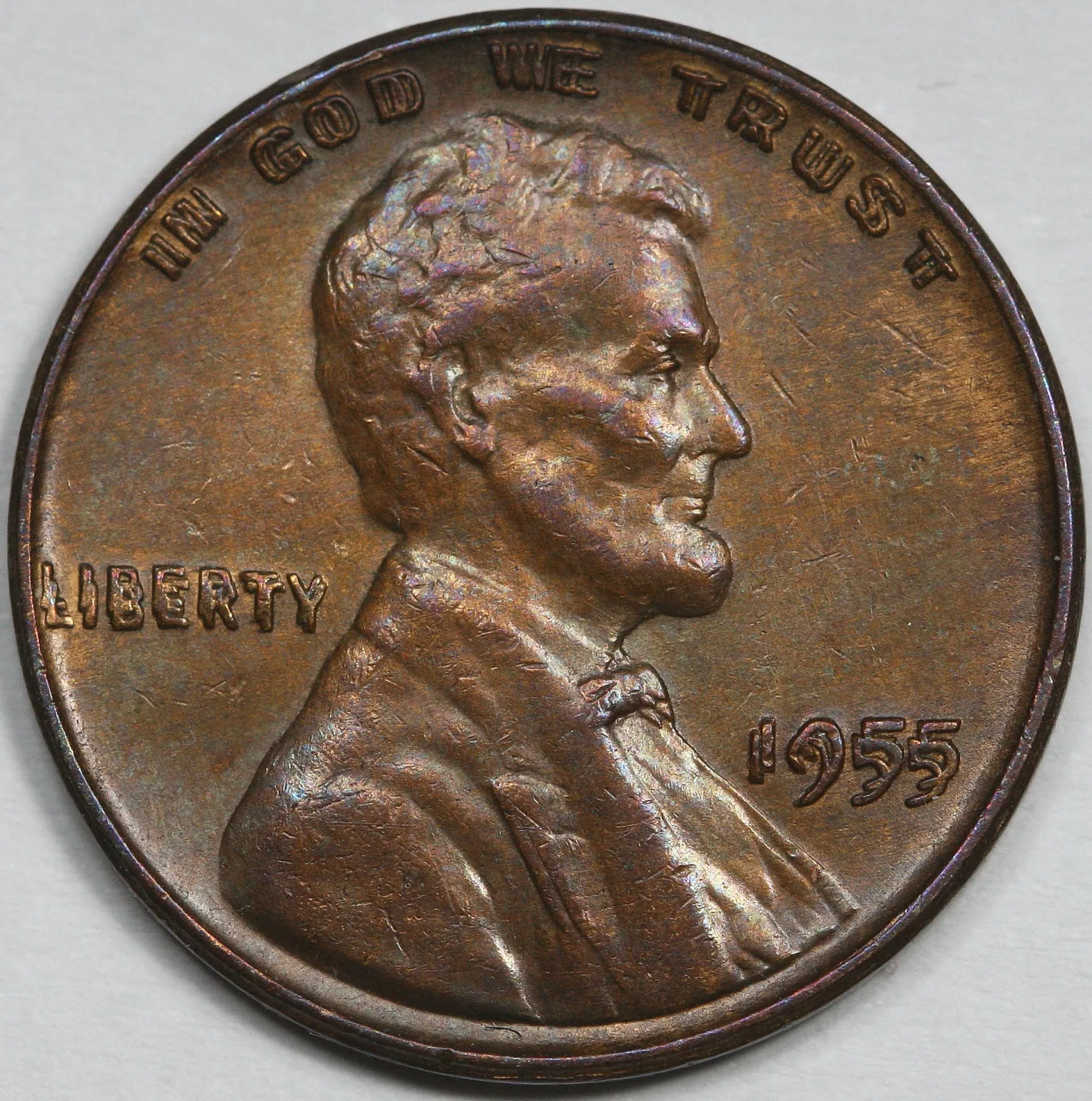
Major Doubled Die Varieties
- 1917 DDO: Strong doubling on “IN GOD WE TRUST” and the date. $80 in G-4 to $2,500+ in MS-63.
- 1936 DDO: Three known varieties (DDO-1, -2, -3) with doubling on “LIBERTY” and the date. $75 to $300 in G-4 depending on variety.
- 1955 DDO: The king. See detail above. Dramatic doubling on entire obverse lettering.
- 1958 DDO: Extremely rare (fewer than 5 known). Values in six figures.
Repunched Mint Marks (RPMs)
Repunched mint marks occurred when a mint worker punched a mint mark into a die more than once, usually at slightly different positions. Popular wheat-cent RPMs include the 1909-S/S (multiple varieties), 1917-D/D, 1944-D/D, and several 1950s D-over-D and S-over-S examples. Most RPMs carry modest premiums of 2x to 5x the normal coin’s value, though a few command significantly more.
1944-D/S and 1946-S/D Overmintmarks
Two of the most famous wheat-cent varieties are the 1944-D/S and the 1946-S/D, where one mint mark was punched over another. On the 1944-D/S, the tails of an underlying “S” are visible on either side of the “D.” These varieties command $150 to $300 in circulated grades and $1,000+ in Mint State.
1943 Steel Cents and 1944 Copper Cents
The wartime coinage of 1943 and 1944 produced some of the most famous — and most misunderstood — coins in American history. Every wheat-cent collector needs to understand the difference between normal wartime issues and the genuine off-metal rarities.
The 1943 Steel Cent (Normal Issue)
In 1943, copper was desperately needed for ammunition and electrical wiring in the war effort. The Mint struck approximately 1.09 billion cents in zinc-coated steel. These “steel pennies” are silver-gray when new and tend to corrode badly because the zinc coating scratches easily, exposing the reactive steel beneath. The same wartime metal pressures produced the silver war nickels of 1942-1945, which replaced nickel metal with a 35% silver alloy for the duration of the conflict. Despite the widespread myth that all 1943 cents are valuable, circulated examples sell for only 10 to 50 cents. Mint State examples reach $20 to $100, depending on eye appeal.
The 1943 Bronze Cent (Error)
A tiny number of 1943 cents were mistakenly struck on leftover 1942 bronze planchets. These are among the rarest and most valuable U.S. coins. As of this guide’s publication, approximately 27 are known from Philadelphia, fewer than 10 from San Francisco, and only one confirmed example from Denver. A 1943-D bronze sold for $1.7 million in 2010. Authentication by PCGS or NGC is mandatory. The first test is a magnet: genuine 1943 bronze cents will not stick.
The 1944 Steel Cent (Error)
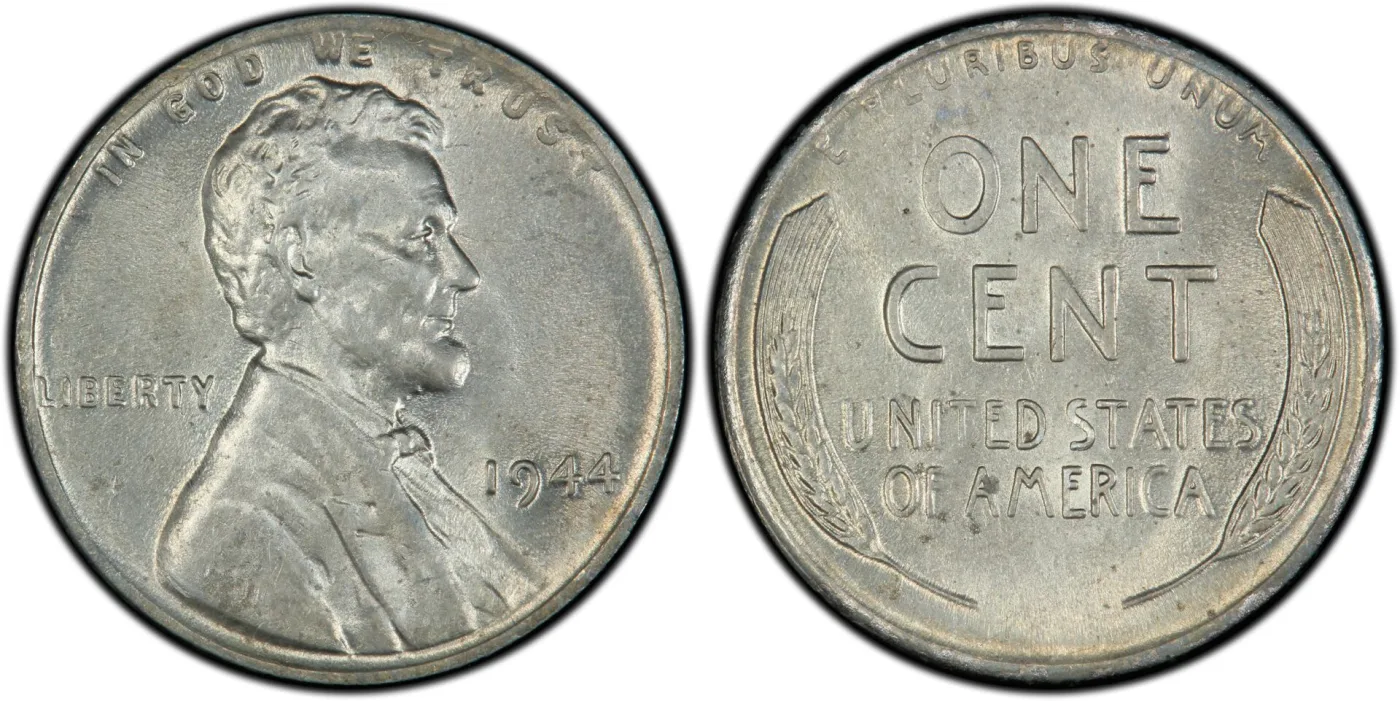
In 1944, the Mint returned to copper (using recycled shell casings), but a handful of leftover steel planchets were accidentally struck as cents. Approximately 30 examples are known from all mints. These 1944 steel cents are valued from $75,000 to over $180,000 depending on grade and mint. Unlike the 1943 bronze, 1944 steels will stick to a magnet — but most “1944 steel cents” offered for sale are damaged or plated regular cents.
The Copper-Plated Steel Cent Scam
The most common wheat-cent fraud involves a 1943 steel cent that has been copper-plated to imitate the rare 1943 bronze. The test is simple: place the coin against a magnet. If it sticks, it is steel, regardless of color, and not the rare bronze variety. Also be aware of altered-date cents where a “1948” has its “8” reshaped into a “3” — examine the last digit carefully at high magnification.
Grading Lincoln Wheat Pennies
Grading wheat cents follows the Sheldon 1-70 scale used for all U.S. coins. The key grading points on Lincoln Wheat Pennies focus on Lincoln’s cheek, the hair above his ear, and the wheat-ear details on the reverse. The same grading principles apply to related series like the Buffalo Nickel, the Standing Liberty Quarter, the Washington Quarter, and the Walking Liberty Half Dollar.
Good (G-4 to G-6)
Lincoln’s profile is visible but flat. The date is readable, though the last digit may be slightly worn. Lincoln’s coat and hair show no detail. On the reverse, the wheat ears are outlined but no grain detail is visible.
Very Good (VG-8 to VG-10)
Some hair detail begins to appear at the temple and above the ear. “LIBERTY” is fully readable, but the letters may show wear. On the reverse, some grain detail appears on the wheat ears.
Fine (F-12 to F-15)
Hair shows moderate detail. Lincoln’s bowtie is visible. The grain lines on the wheat ears are partially separated. Approximately half the original detail is visible.
Very Fine (VF-20 to VF-35)
Most hair detail is visible with wear only on the highest points. The bowtie and coat folds are distinct. Reverse shows clear separation of most grain lines on the wheat.
Extremely Fine (EF-40 to EF-45)
Only the slightest wear on the highest points. Lincoln’s cheek shows light smoothing. Hair detail is nearly complete. Reverse shows almost all grain lines distinctly.
About Uncirculated (AU-50 to AU-58)
Light friction wear is visible only on Lincoln’s cheek and the highest hair. Most original mint luster remains in the fields. AU-58 coins can appear Mint State to the naked eye and require magnification to detect wear.
Mint State (MS-60 to MS-70)
No wear. Full original luster. Differences between MS grades are based on the number and size of contact marks, strike quality, and eye appeal. Full Red MS-65 examples represent a major leap in value over MS-63 examples on many dates.
Color Designations: Red, Red-Brown, and Brown
Unlike silver coins, wheat cents have a color designation that dramatically affects value. Copper reacts with oxygen over time, changing from bright orange-red when struck to brown after decades of exposure. PCGS and NGC assign one of three color designations to Mint State wheat cents.
Red (RD)
At least 95% of the coin’s surface retains original mint red color. Red examples are the most valuable color designation and are increasingly scarce for early-date wheat cents. A Red 1909-S VDB in MS-65 might bring $18,000 while a Brown MS-65 of the same date might sell for $5,000 — nearly a 4x difference based on color alone.
Red-Brown (RB)
Between 5% and 95% red color. Red-Brown coins are typically priced at 50-70% of Red values. They are the most commonly encountered color designation for coins from the 1910s and 1920s, since true Red examples have become increasingly rare over time.
Brown (BN)
Less than 5% red color. Brown coins are the most affordable color designation and represent natural aging. A pleasing chocolate brown with no spots or stains can still be attractive, and many budget-minded collectors focus exclusively on Brown examples to build complete sets affordably.
Artificial Retoning
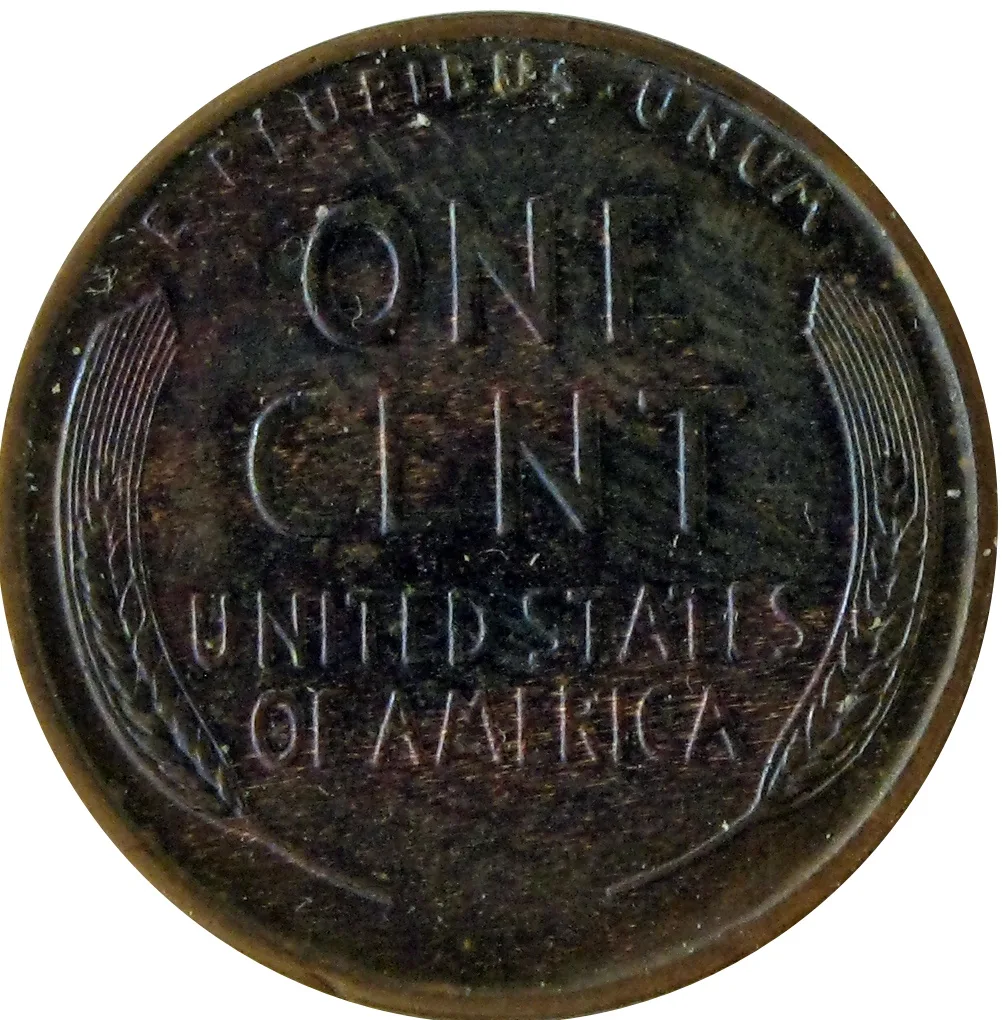
Be extremely cautious with coins that appear suspiciously red for their date. Dipped, cleaned, or artificially retoned coins can fool the eye but typically have unnatural color, orange-peel surfaces, or a dull appearance under magnification. Professional grading services will designate such coins as “Altered Surfaces” or refuse to encapsulate them.
Authentication and Counterfeit Detection
Because of the enormous values attached to key dates, wheat-cent counterfeiting has been a persistent problem for over a century. A healthy skepticism, a good loupe, and a digital scale are your best defenses.
Altered 1944-D into 1914-D
The most common wheat-cent alteration transforms a common 1944-D into a valuable 1914-D by reshaping the first “4” into a “1.” Examine the space between the “9” and the “14” in the date: on a genuine 1914-D, the digits have consistent spacing and a particular font shape. Altered coins almost always show tool marks around the “1” and the digit sits at a slightly different height.
Counterfeit 1909-S VDB Detection
Genuine 1909-S VDB cents have distinctive die characteristics. The “S” mint mark has a specific shape, and the VDB initials have particular spacing and depth. Common fakes involve adding an “S” to a 1909 VDB Philadelphia cent or adding the VDB initials to a 1909-S without them. Any 1909-S VDB purchase over $200 should be in a PCGS or NGC holder.
The 1943 Copper Magnet Test
As mentioned earlier, the first test for a 1943 copper cent is a magnet. If the coin sticks, it is steel with a copper coating and worthless as a rarity. Weight is the second test: a genuine bronze cent weighs 3.11 grams, while a steel cent weighs 2.70 grams, and a copper-plated steel cent still weighs about 2.7 to 2.8 grams.
Cast vs. Struck Counterfeits
Cast counterfeits show soft, mushy details, grainy fields, and often a seam along the edge where the mold halves met. Struck counterfeits are harder to detect but typically show die characteristics that do not match genuine coins. Comparing a suspect coin to high-resolution reference images from PCGS CoinFacts is one of the most effective detection methods.
When to Send for Professional Grading
Any raw wheat cent with a potential value over $300 should be authenticated by PCGS, NGC, or ANACS before purchase. The $30 to $50 grading fee is trivial compared to the risk of buying a counterfeit. Authentication also provides a precise grade that can differentiate a $500 coin from a $5,000 coin.
Error Coins and Off-Metal Strikes
Beyond doubled dies and mint-mark varieties, wheat cents produced a wide range of mint errors that are collected as a specialty of their own. Understanding these errors helps you recognize unusual coins in pocket change or estate finds.
Off-Center Strikes
Off-center strikes occur when a planchet is not fully aligned in the collar at the moment of striking. Values depend on the percentage off-center and whether the date is visible. A 5-10% off-center wheat cent might bring $15 to $30, while a 50% off-center example with full date can bring $150 or more.
Clipped Planchets
Clipped planchets have a curved or straight section missing where the blanking die overlapped a previously punched area of the strip. Small clips (5-10% of the coin) are common and bring modest premiums. Large multiple clips are more valuable.
Broadstrikes and Brockages
A broadstrike occurs when a coin is struck outside its collar, producing a wider, flatter coin with no rim. A brockage is rarer: one coin sticks to a die and strikes an incuse, mirror-image design onto the next planchet. Brockage wheat cents can command $200 to over $1,000 depending on the error’s completeness.
Wrong-Planchet Strikes
Rare errors where a wheat cent design was struck on a foreign planchet or a dime planchet. A wheat cent struck on a silver dime planchet is small and light, weighing just 2.50 grams. These cross-denomination errors can bring $500 to $5,000 depending on the combination and condition.
Storage and Preservation
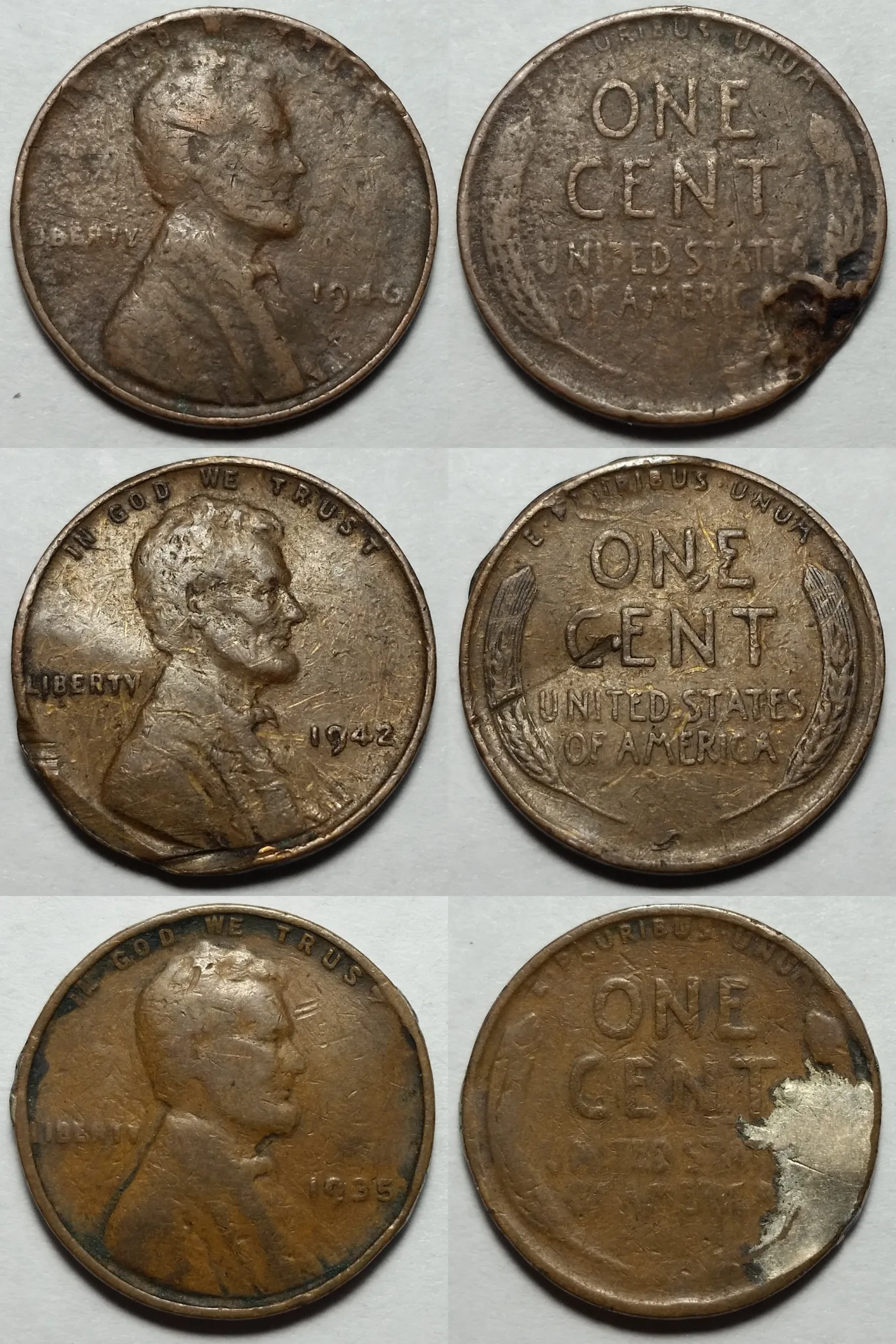
Copper is among the most reactive metals in circulating coinage, so proper storage is essential to preserve the color and surfaces that drive wheat-cent values. A poorly stored Red MS-65 can become a Brown MS-65 within a decade, losing the majority of its value.
Handle by the Edges
Always hold wheat cents by the edges. Fingerprints on copper are nearly impossible to remove and will ultimately leave permanent marks as the skin oils etch the surface. Cotton or nitrile gloves are ideal for handling Mint State coins.
Storage Materials
Use only archival-quality holders: Mylar flips, inert coin capsules (Air-Tite), or PCGS/NGC slabs. Avoid older PVC-containing soft vinyl flips, which leach plasticizers that cause green corrosion on copper. Dansco and Whitman albums are acceptable, though rubbing against the cardboard openings can cause hairline friction on high-grade coins.
Environment
Keep wheat cents in a climate-controlled space with stable temperature (65-72°F) and low humidity (below 50%). Silica gel packets near the collection help absorb moisture. Avoid basements, attics, and areas with temperature swings. Sulfur-containing materials (rubber bands, newspaper, wool) accelerate toning and should never contact the coins.
Never Clean Wheat Cents
Cleaning is the single worst thing you can do to a wheat cent. Harsh cleaners strip the patina, abrasive cleaning scratches the surface, and even a gentle rinse leaves water spots that reduce the grade. The same preservation logic applies to all collectible coins, from Morgan Silver Dollars down to the smallest copper cents. If a coin is dirty, consult a professional numismatic conservator such as NCS, who can stabilize the surface without causing grade-reducing damage.
Current Market Values
Wheat cent values span from a few cents for common dates to seven figures for the finest rarities. Here is a general guide to current market values across the major segments of the series.
Common Dates (1934-1958)
In circulated grades, common-date wheat cents from 1934 onward typically sell for 3 to 25 cents each. In Mint State, common dates range from $1 to $5 in MS-63 Brown, $3 to $10 in MS-63 Red-Brown, and $5 to $30 in MS-65 Red. These dates make up the bulk of most beginner collections and are ideal for practicing grading skills.
Better Dates (1920s-Early 1930s Branch Mints)
Branch-mint issues from 1920 to 1933 carry premiums from $1 to $50 in circulated grades, depending on specific date and mint. Mint State examples of better dates typically start at $30 and can reach several hundred dollars in MS-65 Red. The 1926-S and 1931-S stand out as particularly tough conditional rarities.
Key Date Values
- 1909-S VDB: $800 (G-4) to $18,000+ (MS-65 Red)
- 1909-S (no VDB): $110 (G-4) to $1,200+ (MS-65 Red)
- 1914-D: $200 (G-4) to $12,000+ (MS-65 Red)
- 1922 Plain (Die Pair 2): $700 (G-4) to $35,000+ (MS-65 Red)
- 1931-S: $100 (G-4) to $400+ (MS-65 Red)
- 1955 DDO: $1,200 (G-4) to $15,000+ (MS-65 Red)
- 1943 Bronze: $100,000+ in any genuine condition
- 1944 Steel: $75,000+ in any genuine condition
Rolls and Bulk
Wheat cent rolls (50 coins) of mixed dates typically sell for $3 to $10 per roll. Unsearched rolls from reputable dealers offer an affordable way to enjoy the hunt. However, “unsearched” rolls from auction sites are often anything but — serious finds are extremely rare in heavily picked-over lots.
Building a Lincoln Wheat Penny Collection
The Lincoln Wheat Penny series offers unmatched flexibility for collectors at every budget. From a dollar-store folder for a child to a museum-quality Red Gem set worth a house, there is a wheat-cent strategy for everyone.
Complete Date-and-Mint Set
A complete wheat-cent set includes approximately 143 regular-issue date-and-mint combinations from 1909 through 1958. In Very Good to Fine condition (excluding the 1909-S VDB, 1914-D, 1922 Plain, 1931-S, and 1955 DDO), a complete set can be assembled for approximately $300 to $500. Adding the major keys pushes the total to $2,500 to $4,000. In MS-65 Red, a complete set represents a major financial commitment, often $100,000 or more.
Short Set: 1934-1958
The short set covers the final 25 years of production and avoids all the major keys. A complete 52-coin short set in average circulated condition costs under $30 and is a perfect starter project. The same set in MS-65 Red runs approximately $500 to $1,000 and makes an impressive Dansco album display.
Type Set and Variety Collecting
Type collectors typically want just one representative wheat cent for a larger type set. A common 1940s or 1950s cent in MS-65 Red is inexpensive and beautifully showcases Brenner’s design. Variety collectors, on the other hand, chase specific die varieties: major doubled dies, repunched mint marks, and overmintmarks. Authoritative resources like the Cherrypickers’ Guide and Lincoln Cent Resource websites document hundreds of collectible varieties. The same fundamental approach of learning a series deeply applies across American coinage, from classic American coins to modern issues.
Where to Buy
Build relationships with reputable dealers who are ANA or PNG members. Major online dealers like David Lawrence Rare Coins, Heritage Auctions, and Great Collections sell certified wheat cents with strong buyer protections. Be very cautious on general auction sites where mislabeled, altered, and counterfeit wheat cents are common. A simple rule: if the price seems too good to be true, it almost certainly is.
Final Tips
- Always buy certified examples for coins over $200.
- Red MS-65 key dates tend to appreciate faster than Brown examples.
- Do not clean coins — ever.
- Weigh and magnet-test any unusual-looking 1943 or 1944 cent before getting excited.
- Keep a loupe, scale, and reference book nearby whenever sorting unidentified wheat cents.
- Join a local coin club to accelerate your learning and access better buying opportunities.