Proof Coins: How to Identify the Mirror-Finish Collector Coins
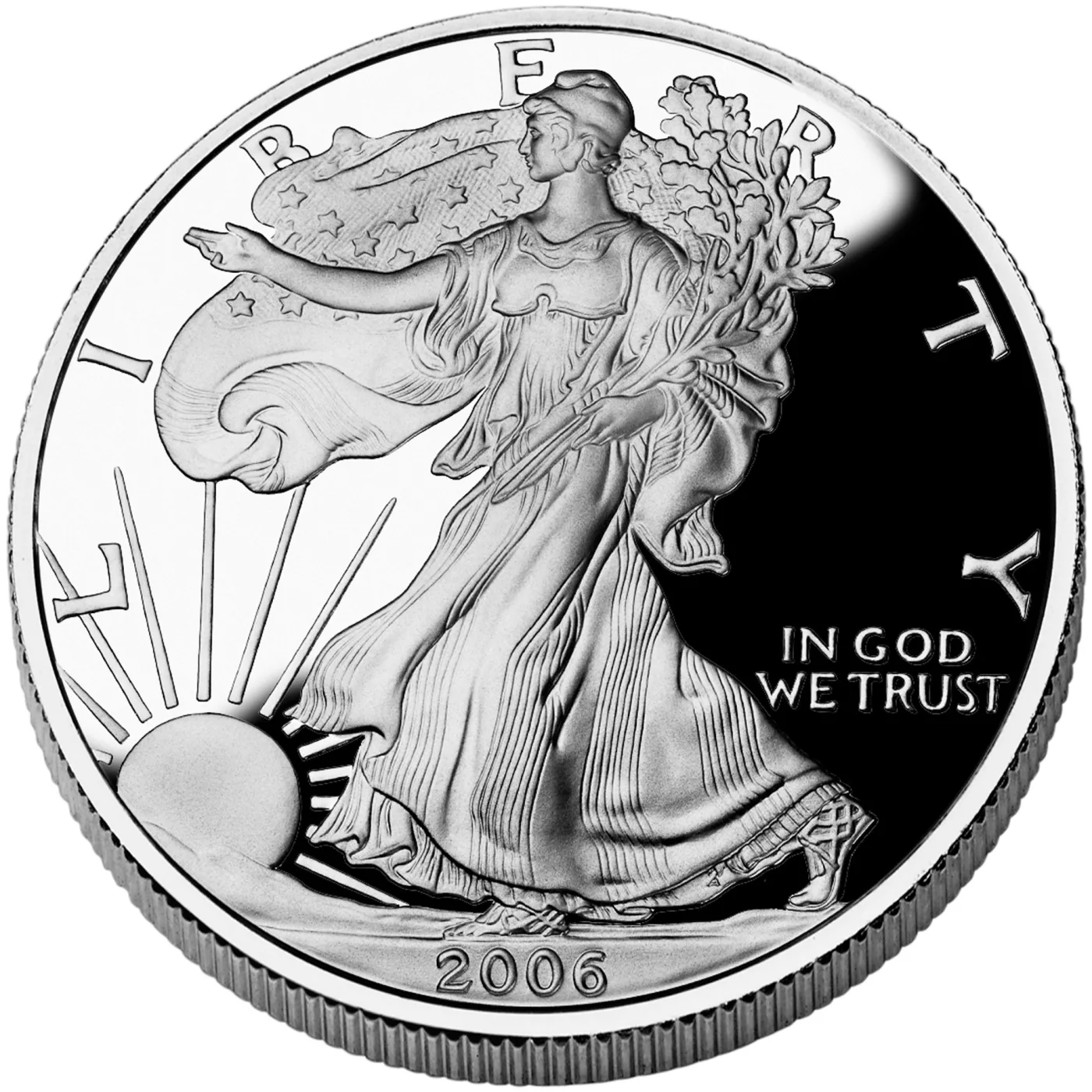
Pull a coin from a collection that catches the light like a tiny mirror—its flat surfaces gleaming while the lettering and portrait stand out in soft, frosted white—and you are almost certainly holding a proof coin. A proof is not a grade and not a denomination. It is a method of manufacture: a special, painstaking way of striking coins that produces the most beautiful examples the mint can make.
Proof coins confuse newcomers more than almost any other category, because the word “proof” sounds like it describes condition. It does not. A worn, fingerprint-covered proof is still a proof, and a flawless everyday coin is still not one. Understanding the difference—and learning to recognize a proof on sight—is one of the most useful skills a collector can develop, because proofs command large premiums and are frequently mistaken for ordinary coins (and vice versa).
This guide explains exactly what a proof coin is, how proofs are made, and—most importantly—how to tell one apart from a normal “business strike” using the mirror fields, frosted devices, squared rims, and other tell-tale signs. You will learn the cameo, deep cameo, and reverse-proof finishes, how proof sets work, where to find the mint mark, how proofs are graded on the PR/PF scale, the famous proof rarities and errors, how to spot cleaned or “impaired” proofs, and what proofs are worth in 2026. By the end you will be able to pick up a shining coin and know instantly whether it left the mint as a proof.
What Is a Proof Coin?
A proof coin is a coin produced by a special minting process intended to create a flawless, showpiece example rather than money for everyday commerce. The term “proof” refers entirely to the method of manufacture and the resulting surface quality—not to the coin’s denomination, design, or state of preservation.
Historically, the very first coins struck from a new pair of dies were called “proofs” because they proved that the dies were working correctly and were kept as reference pieces and presentation items for officials, dignitaries, and VIPs. Over time, mints refined this idea into a deliberate collector product: coins struck with extra care, on polished blanks, using polished dies, to produce mirror-like surfaces of exceptional beauty. Today the United States Mint sells proof coins directly to collectors, individually and in annual sets, and they are among the most popular numismatic products in the world.
The single most important thing to understand is this: “proof” is a noun describing how the coin was made, not an adjective describing how nice it looks. You can have a heavily worn, scratched, or fingerprinted proof coin—it is still a proof, just a damaged one. Conversely, a pristine, brilliant coin from ordinary production is not a proof, no matter how shiny it is. This distinction trips up more beginners than anything else in the hobby, and getting it straight is the foundation for everything below.
Why Collectors Prize Proofs
Proofs are prized for three reasons: their beauty (mirror fields and frosted devices are stunning in hand), their limited mintages (far fewer proofs are made than circulating coins), and their historical role (the finest surviving examples of many designs are proofs). Because they were made for collectors and usually preserved carefully, high-grade proofs of older designs can be among the most exquisite coins in existence.
How Proof Coins Are Made
Understanding the manufacturing process is the key to recognizing a proof, because every visual feature that identifies one is a direct result of how it was struck. Proof production differs from ordinary “business strike” production at nearly every step.
Polished Blanks (Planchets)
Proof coins begin with specially selected planchets that are cleaned, polished, and often burnished so the metal surface is smooth and reflective before striking. Business-strike planchets, by contrast, go straight into the presses with no such treatment.
Polished, Treated Dies
The dies used to strike proofs are highly polished in the flat “field” areas to a mirror finish. On modern proofs, the raised design elements of the die—the parts that form the portrait, lettering, and stars—are frequently treated (historically by light acid pickling or sandblasting, today by laser) to create a matte, frosted texture. Because a coin is a mirror image of its die, this produces the classic “cameo” look: mirror-bright fields surrounding frosted, sculpted devices.
Slow, High-Pressure, Multiple Strikes
Each proof is struck slowly and under higher-than-normal pressure, and—crucially—usually struck two or more times. The repeated strikes force the metal fully into every crevice of the die, producing razor-sharp detail, fully squared-off rims, and complete definition in the tiniest design elements. Business strikes are struck once, at high speed, at lower relative pressure, which leaves softer detail and rounded rims.
Handling and Packaging
Finished proofs are handled with extreme care—never dumped into bins like circulating coins. They are individually inspected and sealed in protective capsules or sets. This careful handling is why so many proofs survive in pristine condition, and why any wear, scratch, or fingerprint on a proof is considered damage that reduces its value.
Every identifying trait you will learn in the next sections—the mirror fields, the frost, the sharp squared rims, the wire-fine detail—flows directly from these four differences in manufacture. Once you connect the look to the process, identification becomes second nature.
Proof vs. Business Strike vs. Uncirculated
Three terms constantly get tangled together: proof, business strike, and uncirculated (or “mint state”). Separating them cleanly is essential.
Business Strike
A business strike (also called a circulation strike) is an ordinary coin made for commerce—the kind you get in change. It is struck once, at high speed, on an untreated planchet. Most coins ever made are business strikes.
Uncirculated / Mint State
“Uncirculated” or “mint state” describes a business strike that has never been used in commerce and therefore shows no wear. It is a statement about condition, not method. An uncirculated coin is still a business strike; it simply hasn’t circulated. On the grading scale these are the MS (Mint State) grades, MS-60 through MS-70, which we cover in depth in our coin grading guide.
Proof
A proof is a coin made by the special proof process described above. It is graded on its own scale—PR (or PF) 60 through 70—never on the MS scale, precisely because it is a different kind of object. A proof and an uncirculated coin can share the same date and design yet be manufactured completely differently.
The Key Insight
The clearest way to hold all three in your head: “business strike vs. proof” is a question of how the coin was made; “circulated vs. uncirculated” is a question of whether it was used. A proof can theoretically be circulated (an “impaired proof,” discussed later). An uncirculated coin is a never-used business strike. Keep those two axes separate and the confusion disappears.
A Word on “Prooflike”
Confusingly, some business strikes can look almost like proofs. When a business-strike die is fresh and highly polished, the first coins it makes can have reflective, mirror-like fields—these are called “prooflike” (PL) or, at the extreme, “deep mirror prooflike” (DMPL). They are not proofs; they are business strikes that happen to be very reflective. This effect is especially famous on the Morgan Silver Dollar, where DMPL examples are highly sought after. We will explain how to tell a true proof from a prooflike business strike below.
How to Identify a Proof Coin: 7 Tell-Tale Signs
Here is the practical heart of this guide. When you suspect a coin might be a proof, examine it under good light—ideally tilting it so light rakes across the surface—and check these seven features. The more of them that are present, the more confident you can be.
1. Mirror Fields
The flat, open areas of a proof (the “fields”) are deeply reflective, like a black mirror. Tilt the coin under a light: a true proof field will reflect a clear, sharp image and often appears to “go dark” as it mirrors the shadows around it. Business-strike fields, even uncirculated ones, look satiny or frosty by comparison, scattering light rather than reflecting it cleanly.
2. Frosted Devices (Contrast)
On most modern proofs, the raised elements—the portrait, lettering, date, and stars—have a soft, white, frosted texture that contrasts sharply against the mirror fields. This contrast is the “cameo” effect. Not every proof has strong frost (older proofs and worn ones may not), but when you see crisp white devices floating on a mirror background, you are almost certainly looking at a proof.
3. Razor-Sharp, Full Detail
Because proofs are struck multiple times under high pressure, every detail is complete and crisp—the finest hair strands, feather barbs, and lettering serifs are fully formed. Business strikes often show slight softness, especially at the high points and centers. If the strike looks impossibly sharp and complete, suspect a proof.
4. Squared, Sharp Rims
Proof rims are fully formed, high, and squared off with knife-like edges where the rim meets the field. Business-strike rims are lower and more rounded. Viewing the coin edge-on or at a low angle makes this difference obvious with a little practice.
5. Sharp, Clean Edges
The edge (the “third side” of the coin) on a proof is typically crisp and clean, and on reeded coins the reeding is sharp and evenly formed. The overall impression is one of precision manufacturing.
6. The Mint Mark
Most modern U.S. proofs were struck at the San Francisco Mint and carry an “S” mint mark; some special issues carry a “W” (West Point). A modern proof-looking coin with an “S” is a strong signal. We devote a whole section to this below, because the mint mark is one of the fastest confirmations available. For the full picture of every mint mark, see our coin mint marks guide.
7. The Packaging
Context matters. If the coin came sealed in a hard plastic capsule, in a rigid lens, or in a government proof-set holder, that is nearly conclusive. Proofs are sold in protective packaging and were never meant to be loose in a jar. A coin still in its original mint packaging removes almost all doubt.
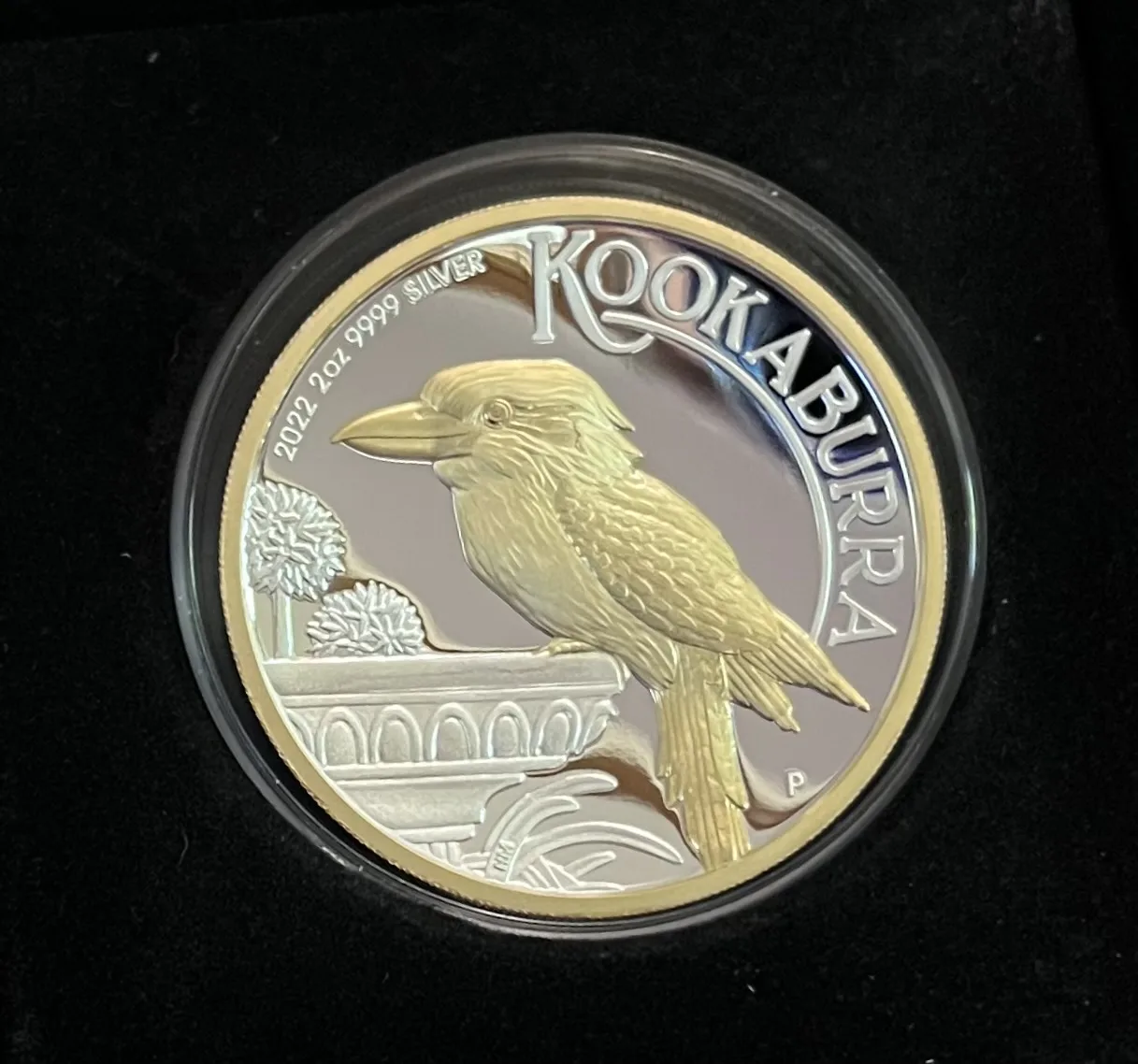
No single sign is absolutely decisive on its own—a very reflective prooflike business strike can fake sign #1, for instance—but the combination of mirror fields, frosted devices, and squared rims is the fingerprint of a genuine proof. When several signs line up, you can be confident.

Cameo, Deep Cameo, and the Frosted Look
The contrast between mirror fields and frosted devices is so prized that grading services measure it and add a designation to the grade. Understanding these terms is essential for reading a proof’s value.
Brilliant (No Designation)
Some proofs—especially older ones, or later strikes from a die whose frost has worn away—have mirror fields but little or no frost on the devices. The whole coin looks brilliant and reflective, with low contrast. These “brilliant proofs” carry no cameo designation.
Cameo (CAM / CA)
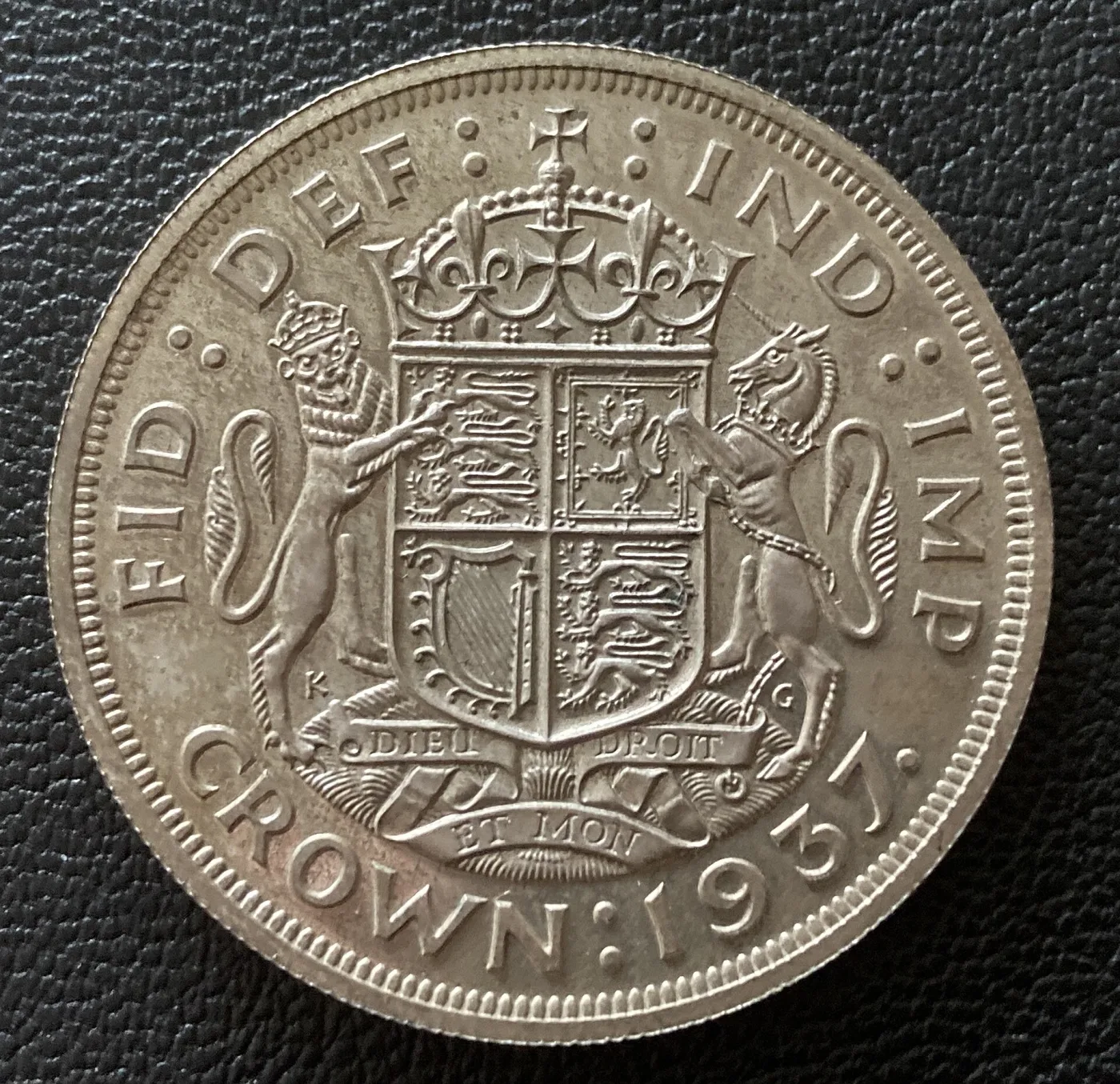
A “cameo” proof shows noticeable frost on the devices contrasting against mirror fields on both sides. The effect resembles a carved cameo brooch: white raised design on a dark, reflective background. Grading services abbreviate this CAM (PCGS) or CA.
Deep Cameo / Ultra Cameo (DCAM / UCAM)
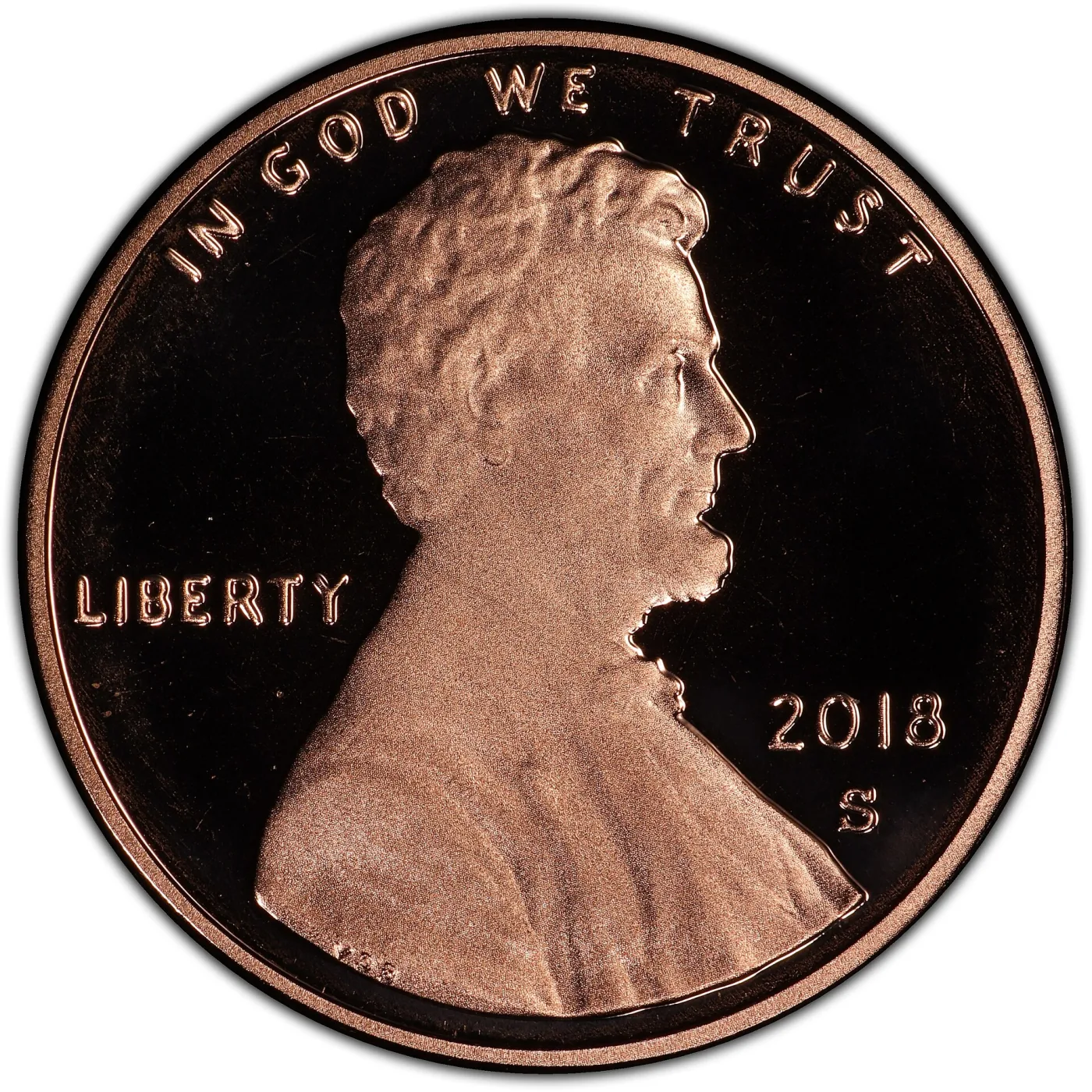
The top tier is a proof with deep, heavy, uniform frost and glassy fields producing dramatic black-and-white contrast on both sides. PCGS calls this Deep Cameo (DCAM); NGC calls it Ultra Cameo (UCAM). Deep-cameo proofs are the most visually striking and typically the most valuable, because early strikes from fresh, fully frosted dies are relatively scarce—the frost wears down as a die is used, so only the first coins off each die achieve full deep-cameo contrast.
Why Contrast Affects Value
For many proof issues, the difference between a brilliant proof, a cameo, and a deep cameo can multiply the value several times over—even though the underlying grade number is identical. A “PR-67” and a “PR-67 DCAM” are the same technical grade, but the deep-cameo example can be worth many times more. When you evaluate a proof, always assess the contrast, not just the surface condition. This interplay of contrast and grade is explored further in our grading guide.
Special Proof Finishes: Matte, Reverse, and Enhanced
Not every proof has the classic mirror-field-and-frost look. Over the decades, mints have produced several distinctive proof finishes that you should be able to recognize.
Matte and Sandblast Proofs
In the early 20th century (roughly 1907–1916), the U.S. Mint made “matte proofs” and “sandblast proofs” with a uniform, grainy, non-reflective surface all over—no mirror fields at all. These were made by sandblasting the dies or planchets. They are genuine proofs (struck with extra care, sharp detail, squared rims) but look completely different from a modern brilliant proof. Matte proofs of Lincoln cents, Buffalo nickels, and gold coins of that era are scarce and often misidentified precisely because they lack the expected mirror surface. Recognizing a matte proof requires attention to the sharp rims and full detail rather than reflectivity.
Reverse Proofs
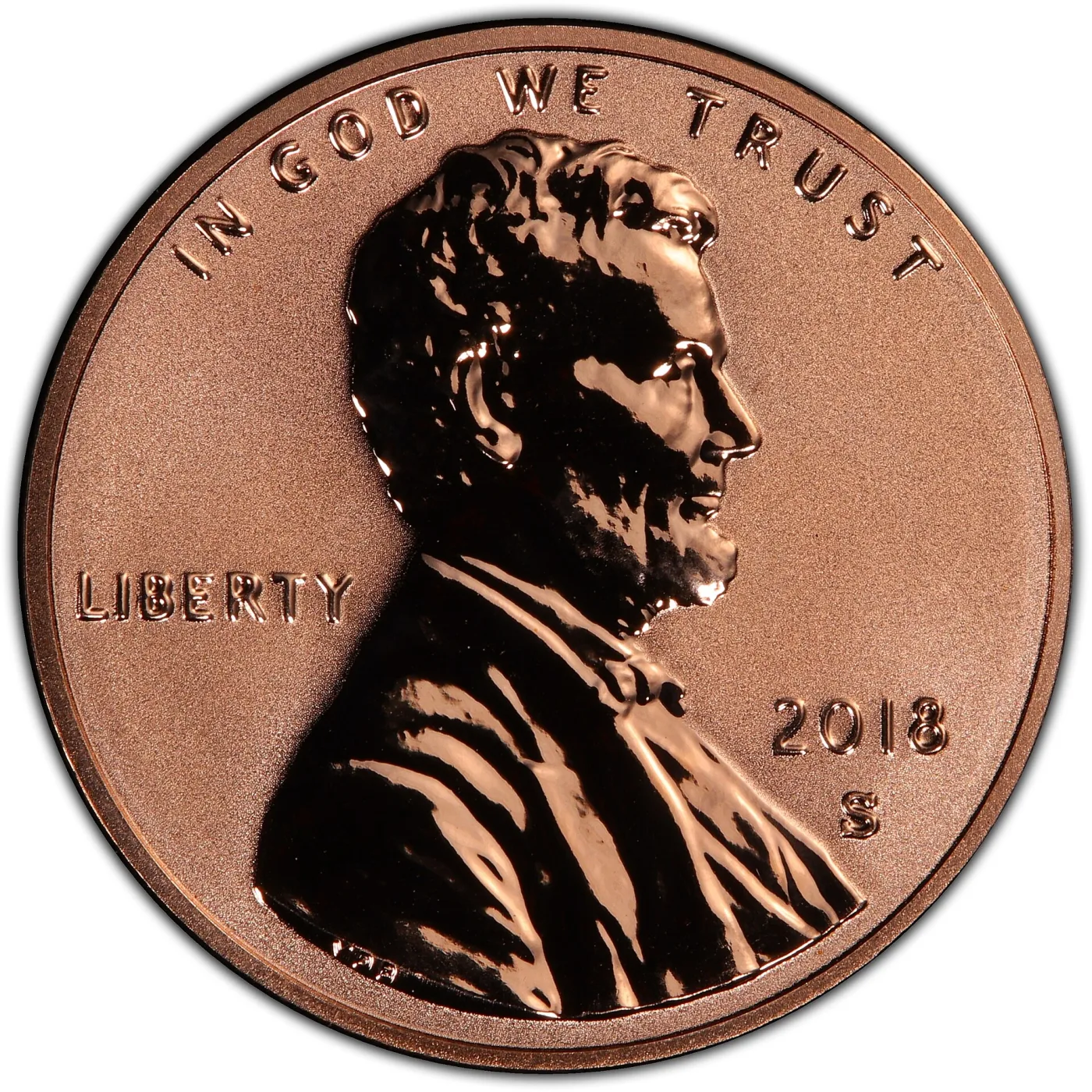
A “reverse proof” flips the usual formula: the fields are frosted and the raised devices are mirror-polished—the opposite of a standard cameo proof. The result is a striking negative-image effect. The U.S. Mint has used reverse proofs on many modern collector issues, most famously certain American Silver Eagle releases. If a coin has brilliant, mirror-like lettering and portrait against a soft frosted background, it is a reverse proof.
Enhanced Reverse Proofs
An “enhanced reverse proof” adds a third texture, using laser frosting to create multiple finishes on the same coin—combining mirrored, lightly frosted, and heavily frosted areas for extra depth and contrast. These are premium modern collector pieces, again seen on certain Silver Eagle and other special releases.
Burnished (Uncirculated Collector) Coins
Worth noting to avoid confusion: the Mint also sells “burnished” or “uncirculated” collector versions of bullion coins with a soft satin finish. These are not proofs—they lack mirror fields—but they are special collector strikes sold in packaging, so beginners sometimes lump them in with proofs. A burnished coin has a matte satin sheen, not a reflective mirror.
Proof Sets and Where They Come From
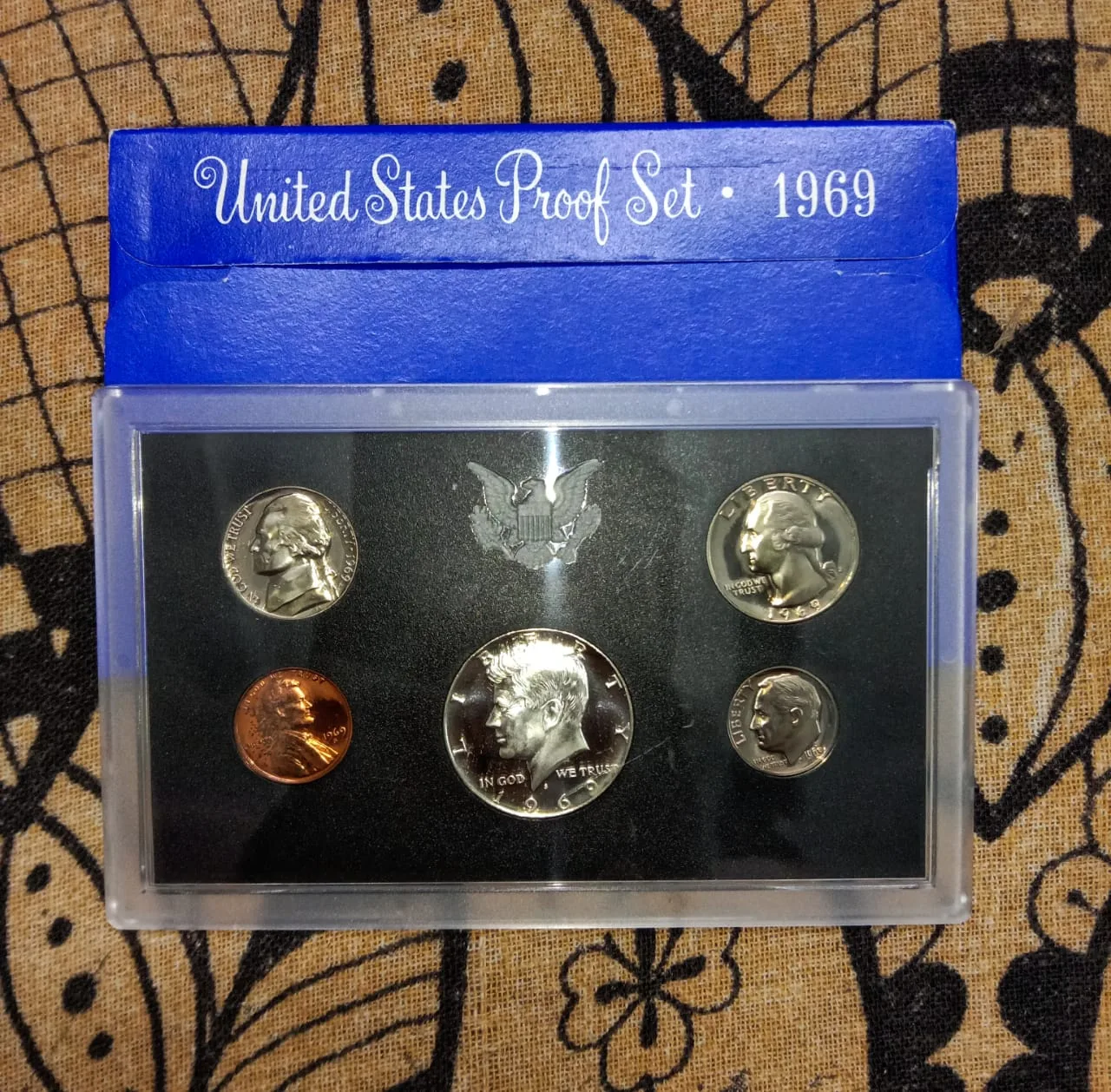
The most common way collectors encounter proofs is in proof sets—annual packages the U.S. Mint assembles and sells directly to the public, containing one proof example of each circulating denomination for that year.
What a Proof Set Contains
A standard modern proof set typically includes proof versions of the cent, nickel, dime, quarter (or the several quarters in a given year’s program), half dollar, and dollar, sealed in protective lenses inside an outer box or sleeve. The Mint has also long sold “silver proof sets,” in which the dime, quarter, and half dollar are struck in 90% (now .999) silver rather than the usual copper-nickel clad—these silver sets carry a premium for their metal content and their appeal to collectors.
A Brief History
The Mint sold proof coins individually and in various formats through the 19th and early 20th centuries, paused proof production during parts of the Depression and World War II, and resumed modern annual proof sets in 1950. Production has continued (with a gap in 1965–1967, when special mint sets replaced proofs) to the present day. Since 1968, essentially all U.S. proof coinage has been struck at San Francisco—hence the “S” mint mark that dominates modern proofs.
Why Sets Matter for Identification
If a coin is still in an original proof-set lens or a broken-out proof-set coin turns up loose, the set context immediately tells you it is a proof. Many proofs “escape” their sets over the decades when packaging is cut open, which is exactly why loose proofs get mistaken for business strikes—and why knowing the visual signs matters so much.
The Proof Mint Mark: Why “S” Matters
The mint mark is one of the quickest ways to confirm a modern proof, because U.S. proof production has been concentrated at specific facilities.
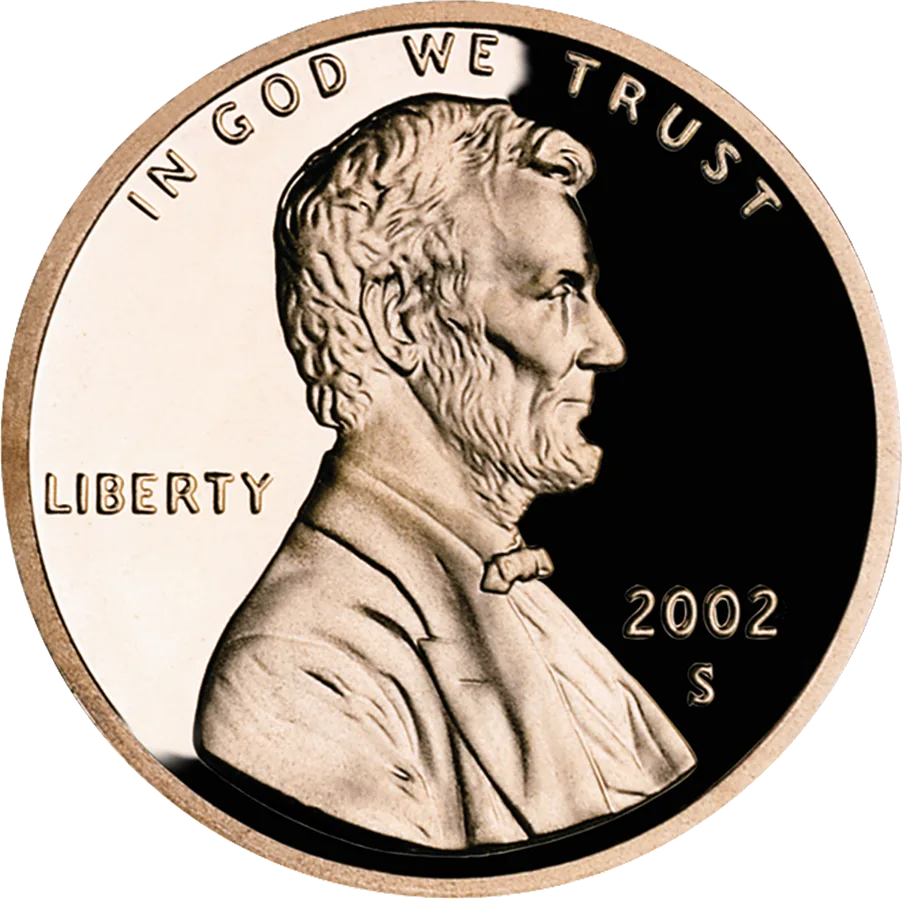
San Francisco “S”
Since 1968, the San Francisco Mint has struck the overwhelming majority of U.S. proof coins, and they carry an “S” mint mark. So a modern coin with mirror fields, frosted devices, and an “S” is almost certainly a proof. (Note the reverse is not always true: San Francisco has occasionally struck circulating and special business-strike coins too, so an “S” alone doesn’t guarantee proof—but combined with the proof surfaces, it is highly confirming.)
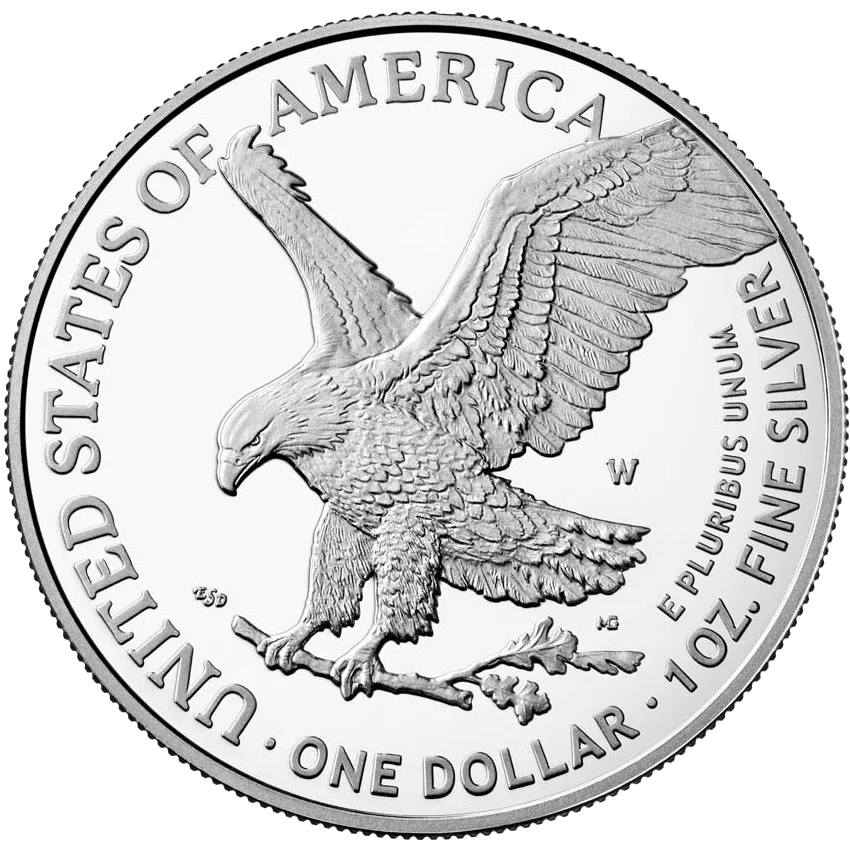
West Point “W”
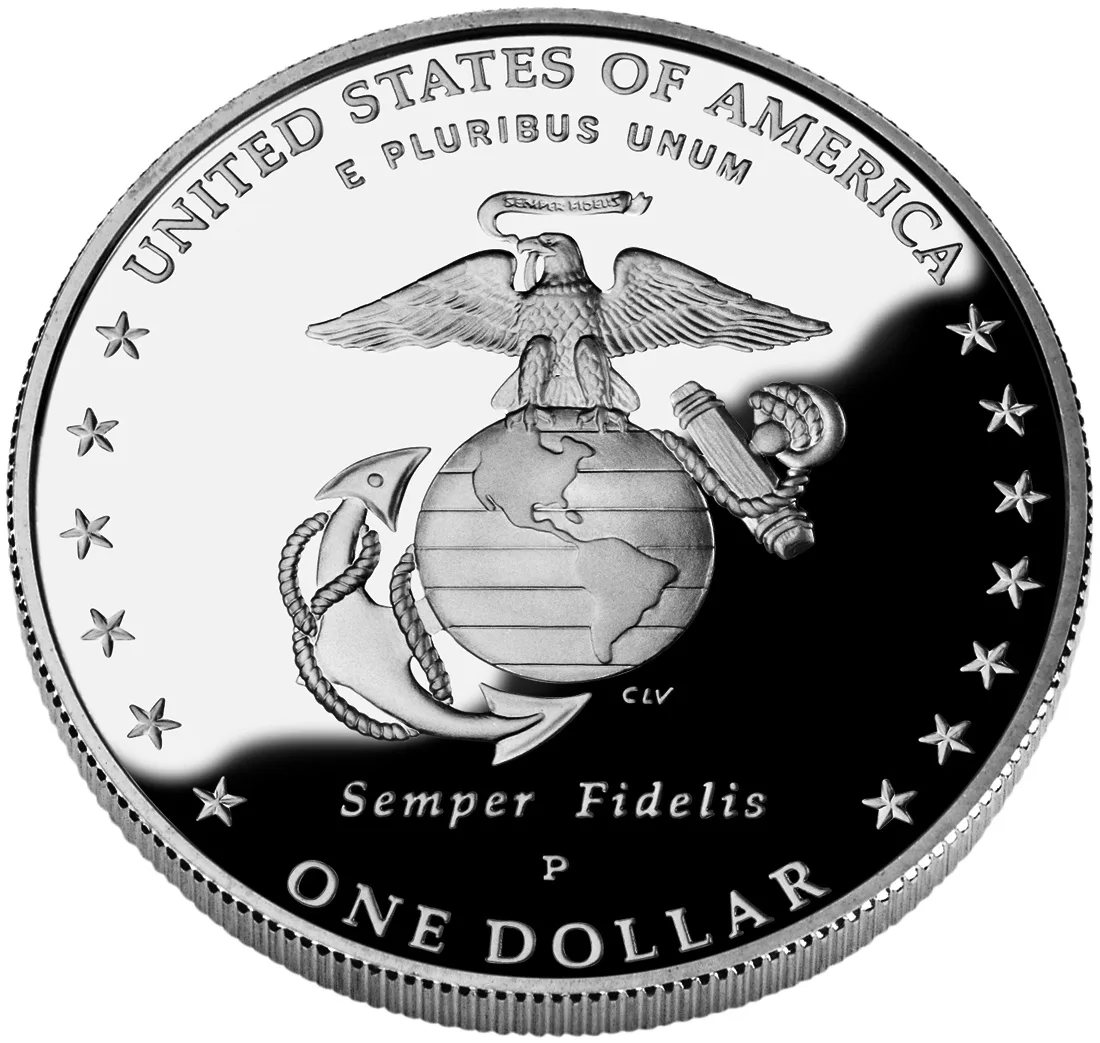
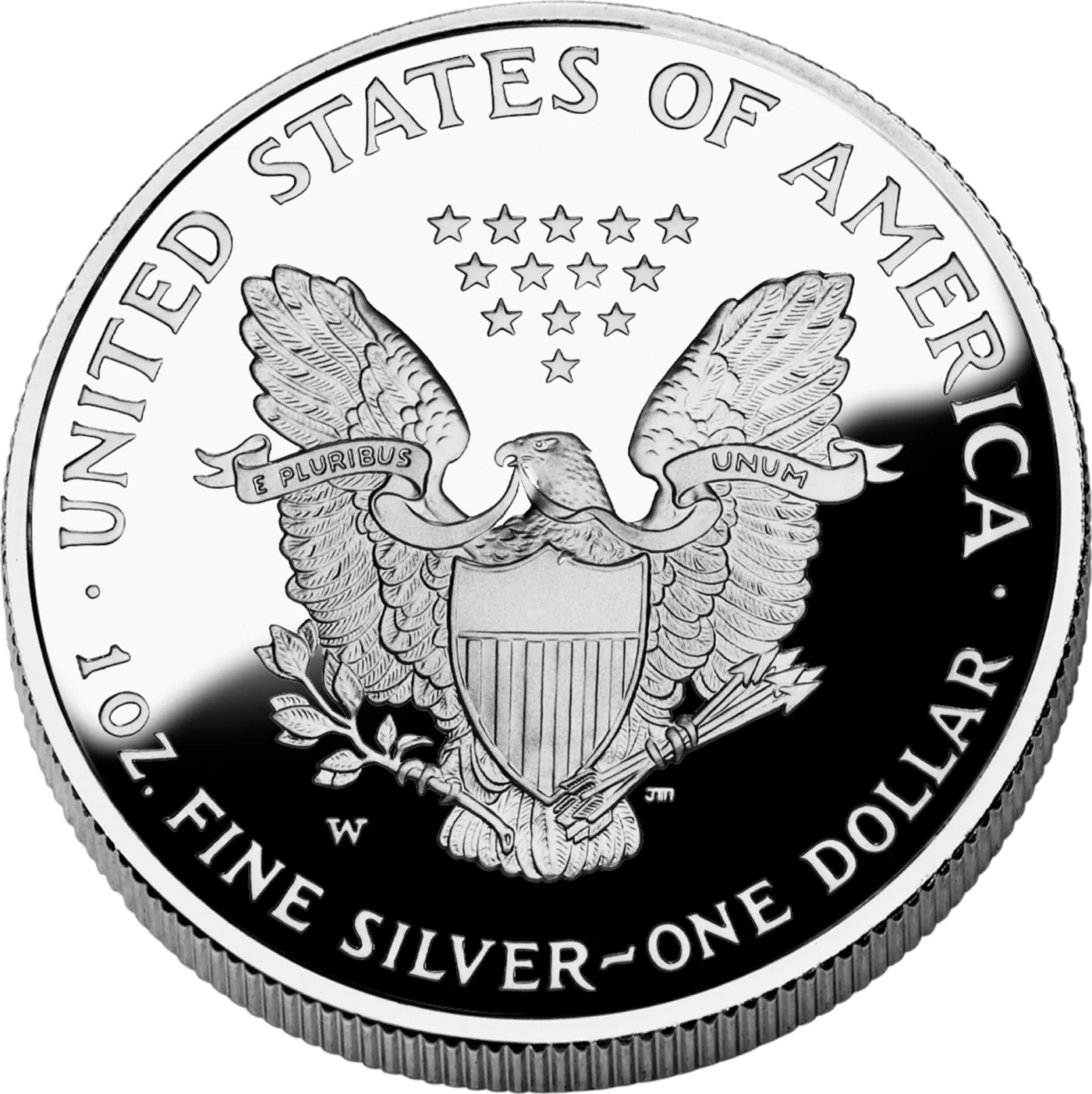
Some proof issues—particularly precious-metal coins like proof American Gold Eagles and certain Silver Eagles—are struck at West Point and carry a “W.” A proof-surfaced bullion coin with a “W” is a proof from West Point.
Philadelphia and the Older Picture
Before 1968, proofs were struck primarily at Philadelphia and generally carried no mint mark (like most Philadelphia coinage of the era). So a pre-1968 proof often has no mint mark at all—identification then relies entirely on the surface characteristics, not the mark. To understand exactly where each mint mark sits on each denomination and why the location changed over time, see our dedicated mint marks guide.
The practical rule: on a modern coin, an “S” (or “W” on bullion) alongside proof surfaces is strong confirmation; on an older coin, ignore the mint mark question and judge the proof status purely by the mirror fields, frost, sharp strike, and squared rims.
How Proof Coins Are Graded (PR / PF)
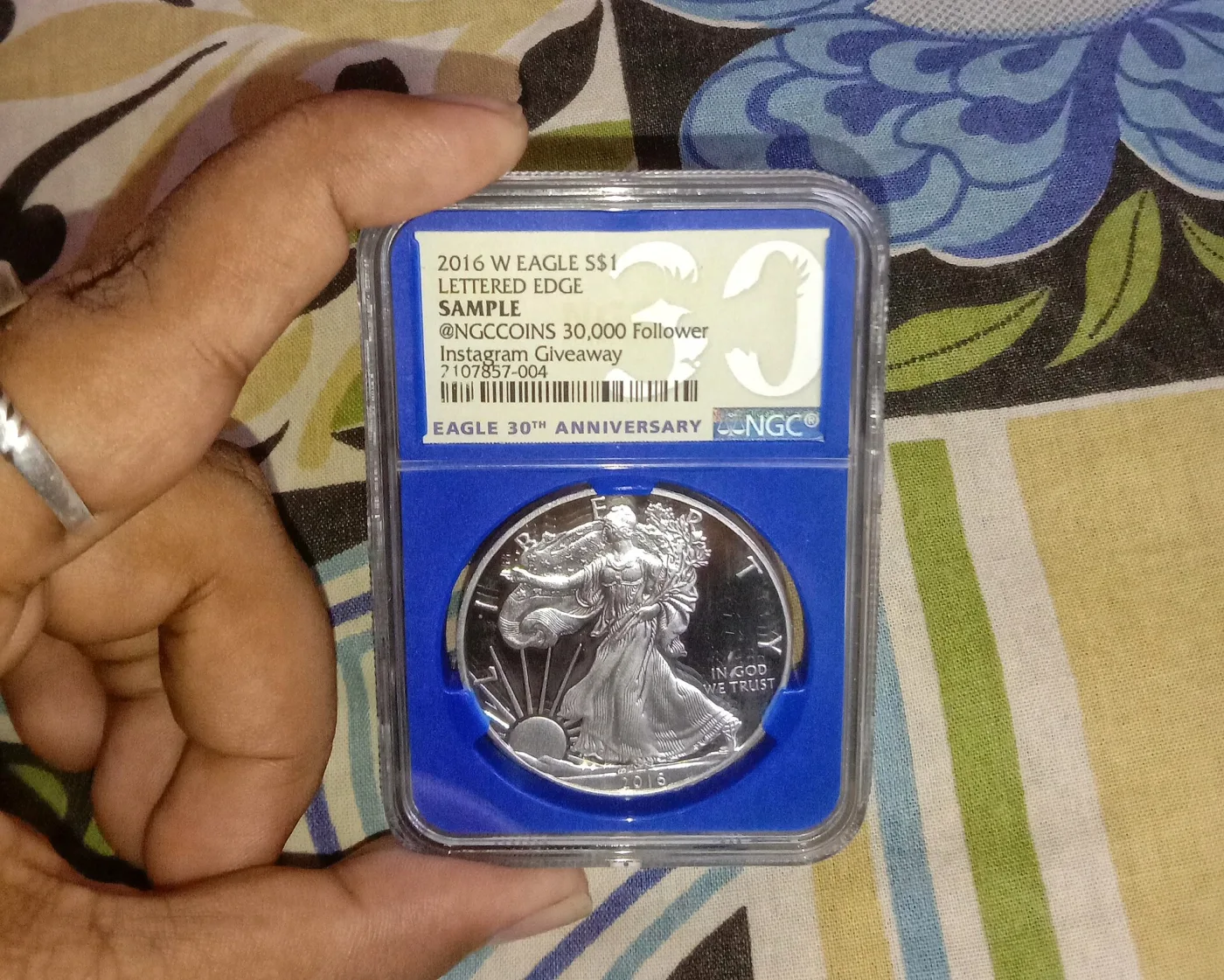
Proofs use the same 70-point Sheldon numbering as other coins, but with a “PR” or “PF” prefix instead of “MS.” The prefixes mean the same thing—PR (used by PCGS) and PF (used by NGC) both denote “proof.”
The Proof Grading Range
Because proofs are made carefully and usually preserved well, most surviving proofs grade quite high. The practical range you will encounter is roughly:
- PR-60 to PR-64: Proofs with noticeable hairlines, spots, or handling marks visible to the eye. Often these are “impaired” or lightly mishandled proofs.
- PR-65 (Gem Proof): A gem proof with only minor imperfections—the baseline for a “nice” collectible proof.
- PR-66 to PR-69: Superb proofs with progressively fewer and smaller flaws, requiring magnification to fault.
- PR-70: A perfect proof with no imperfections visible even under magnification. Modern PR-70 Deep Cameo coins are the pinnacle and command strong premiums.
What Graders Look At
Proof grading focuses heavily on surface preservation: hairlines (fine cleaning lines), contact marks, spots, milk spots, fingerprints, and haze all pull the grade down. Because proof fields are mirror-like, even tiny hairlines are glaringly obvious—so proofs are graded to a very demanding standard. Alongside the number, graders assign the cameo designation (none / CAM / DCAM) discussed earlier, which can matter as much as the grade itself.
The Deep-Cameo Multiplier
As noted, a proof’s value depends on both its numeric grade and its contrast designation. When you see a grade like “PR-69 DCAM” or “PF-70 UCAM,” read it as two pieces of information: the surface quality (69 or 70) and the contrast (deep/ultra cameo). Our grading guide covers the full Sheldon scale, third-party grading by PCGS and NGC, and how “details” grades apply to cleaned coins—all of which apply to proofs as well.
Impaired and Cleaned Proofs
Because proofs are struck once and then, in theory, could be spent, some proofs end up mishandled, spent, or cleaned. These damaged proofs have their own terminology and pitfalls.
Impaired Proofs
An “impaired proof” is a genuine proof that has been circulated, mishandled, or otherwise reduced below the pristine state proofs normally enjoy—showing wear, heavy hairlines, or damage. It is still a proof (the manufacturing method doesn’t change), but it grades low (below PR-60) and is worth far less than an intact one. Impaired proofs matter for identification because they can look surprisingly ordinary: a spent proof may have lost much of its mirror sheen, and only the sharp squared rims and full detail betray its proof origin.
Cleaned and Hairlined Proofs
Proof fields are mirror-smooth, so any wiping or cleaning leaves a web of fine hairlines that catch the light and are immediately visible. Cleaning a proof is especially destructive to its value. A cleaned proof will typically receive a “details” grade (e.g., “Proof Details—Cleaned”) from a grading service rather than a clean numeric grade. Never wipe or “polish” a proof—you will only destroy the very surface that gives it value.
Milk Spots and Haze
Modern silver proofs (and bullion proofs) sometimes develop “milk spots”—whitish, cloudy blemishes that resist removal and are believed to result from residue in the manufacturing process. Toning and haze can also develop over time. These blemishes lower the grade and value, and they are a known issue on some modern American Silver Eagle proofs. When evaluating a proof, inspect carefully for spots and haze under angled light.
Famous Proof Coins and Rarities
Proofs include some of the most storied and valuable coins in American numismatics. A few highlights show the range.
19th-Century Proofs
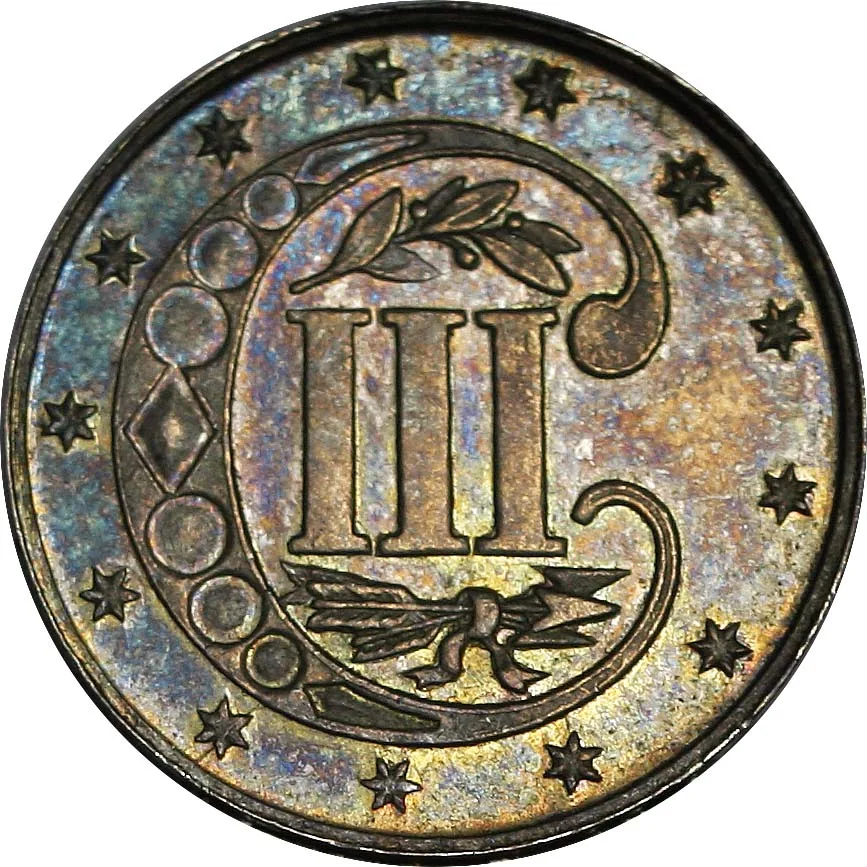
Throughout the 1800s the Mint struck small numbers of proofs of most denominations, sold to collectors and dignitaries. Because mintages were tiny—often just dozens to a few hundred pieces—proof versions of 19th-century designs like the Seated Liberty coinage, the various silver dollars, and early gold are genuine rarities today. A proof of a scarce date can be worth vastly more than its business-strike counterpart.
Proof Trade Dollars and Gold
Certain issues are known almost entirely as proofs. The final years of the Trade dollar (1879–1885), for example, were struck only as proofs for collectors, and the 1884 and 1885 Trade dollars are legendary rarities. Proof gold coins from the 19th century, made in minuscule quantities, are among the most coveted pieces in the entire U.S. series.
Modern Deep-Cameo Keys
Even in modern proof sets, certain coins are conditionally rare in the highest grades and contrasts. Early-1950s and 1950s–60s proofs with full deep-cameo contrast (before the Mint’s frosting techniques became consistent) are scarce and valuable, because most proofs of that era are brilliant or only lightly cameo. A common-date 1950s proof might be inexpensive as a brilliant example yet command a large premium in deep cameo.
Special Modern Issues
The Mint regularly releases limited proof and reverse-proof issues that become instant collector targets—anniversary sets, special finishes, and low-mintage commemoratives. Many U.S. commemorative coins are sold in both proof and uncirculated versions, and the proof versions are struck with the mirror-and-frost finish described throughout this guide.
Proof Errors: The Valuable “No S” Coins
Since virtually all modern proofs are struck at San Francisco with an “S” mint mark, a proof that is missing its “S” is a dramatic and valuable error—among the most famous modern U.S. rarities.
The “No S” Proofs
On rare occasions, a proof die was prepared and put into service without its “S” mint mark. The resulting coins—perfect proofs in every way except the missing letter—are extraordinary rarities because they occur only within proof sets and in tiny numbers. Famous examples include the “No S” proof Roosevelt dimes of 1968, 1970, 1975, and 1983, plus various “No S” proof cents, nickels, and quarters of specific years.
The Legendary 1975 No S Dime
The 1975 “No S” proof Roosevelt Dime is one of the rarest and most valuable modern U.S. coins, with only a tiny handful known to exist—examples have sold for six figures. It exists only in 1975 proof sets, never in circulation, and its discovery is every proof-set hunter’s dream.
Why These Sit Within the Error World
These missing-mint-mark proofs belong to the broader field of error coins and mint errors, alongside doubled dies, off-center strikes, and repunched mint marks. What makes the proof “No S” errors special is their combination of flawless proof quality and genuine rarity—a perfect coin with a perfect mistake. If you own proof sets from the years listed above, examining the dimes (and other denominations) for a missing “S” is well worth the effort. And note the counterpart on the circulating side: the 1968 and 1970 Lincoln Memorial cent proofs also have celebrated “No S” varieties.
What Proof Coins Are Worth in 2026
Proof values span an enormous range, from a few dollars to hundreds of thousands, depending on date, denomination, grade, contrast, and rarity. Here is how to think about it.
Modern Proof Sets (1970s–Present)
Common modern proof sets are affordable—often selling in the range of their original issue price or modestly above, because millions were made. Individual modern clad proofs are typically worth a few dollars. Their value rises with top grades (PR-69/70) and deep-cameo contrast, and silver proof sets carry additional value from their precious-metal content, which tracks the silver market.
Mid-Century Proofs (1950s–1960s)
Proofs from 1950 through 1964 are common as brilliant examples but can be surprisingly valuable in high-grade deep cameo, where they are genuinely scarce. This is the classic case where the same coin might be worth a few dollars brilliant and a large multiple in deep cameo—so the contrast designation drives the price.
Classic and 19th-Century Proofs
Pre-1950 proofs, and especially 19th-century proofs, are scarce to rare and valued accordingly—from hundreds to many thousands of dollars, and into six or seven figures for the great rarities. Because these are so valuable and so frequently faked or misattributed, professional authentication is essential.
Factors That Drive Proof Value
- Grade: PR-70 commands a large premium over PR-69 on modern issues.
- Contrast: Deep Cameo / Ultra Cameo can multiply value several times over.
- Rarity: Low original mintage and conditional rarity in top grades.
- Eye appeal: Freedom from spots, haze, hairlines, and toning problems.
- Metal content: Silver and gold proofs carry bullion value as a floor.
- Errors: “No S” and other proof errors are worth extraordinary premiums.
As with all coins, published values are guides, not guarantees—actual prices depend on the specific coin, the market, and where you buy or sell. For anything potentially valuable, get it authenticated and graded by PCGS or NGC before relying on a number.
Common Mistakes and Misconceptions
A handful of persistent errors trip up collectors evaluating proofs. Clearing them up will sharpen your eye.
“Proof Means Perfect Condition”
No. Proof is a manufacturing method, not a grade. A proof can be worn, cleaned, or damaged (an impaired proof) and still be a proof. Likewise, a flawless everyday coin is not a proof no matter how nice it looks. Method and condition are separate questions.
“Any Shiny or Mirror-Like Coin Is a Proof”
Not so. Fresh business-strike dies can produce “prooflike” (PL) or “deep mirror prooflike” (DMPL) coins with reflective fields—but these are business strikes, not proofs. Look for the full package: mirror fields plus frosted devices plus squared knife-sharp rims plus flawless multiple-strike detail. Prooflike business strikes lack the squared proof rims and the crisp, doubled-strike sharpness.
“Proof Sets Are Always Valuable Investments”
Common modern proof sets were made in the millions and often trade around issue price; they are wonderful to collect but are not automatically rare or profitable. Value concentrates in top grades, deep cameo, key issues, and errors—not in ordinary modern sets by the box.
“You Can Clean a Proof to Make It Shine Again”
Never. Cleaning a proof scratches the mirror surface with hairlines that are instantly visible and permanently reduce the value, usually relegating the coin to a “details” grade. Preserve proofs exactly as they are—handle only by the edges, keep them in their capsules, and never wipe them.
“The Mint Mark Alone Tells You It’s a Proof”
An “S” mint mark on a modern coin is a strong hint but not proof by itself, because San Francisco has struck business strikes too. Confirm with the surface characteristics. Conversely, older proofs may carry no mint mark at all, so never rule out a proof just because a mark is absent.
Frequently Asked Questions
What is a proof coin?
A proof coin is a coin made by a special, high-care minting process—polished planchets, polished and often frosted dies, and multiple high-pressure strikes—that produces mirror-like fields, sharp detail, and squared rims. "Proof" describes how the coin was made, not its denomination or condition.
How can I tell if a coin is a proof?
Look for deeply reflective mirror fields, frosted (white) raised devices contrasting against those fields, razor-sharp full detail, high squared rims, and—on modern coins—an "S" or "W" mint mark. Original capsule or proof-set packaging is nearly conclusive. The combination of these signs, not any single one, confirms a proof.
Is a proof coin worth more than a regular coin?
Usually yes. Proofs are made in far smaller numbers than circulating coins and are prized for their beauty, so a proof typically carries a premium over the business-strike version of the same date. The premium varies enormously with grade, cameo contrast, and rarity.
What does "cameo" or "deep cameo" mean on a proof?
It describes the contrast between frosted devices and mirror fields. "Cameo" (CAM) means noticeable frost-to-mirror contrast; "Deep Cameo" (DCAM) or "Ultra Cameo" (UCAM) means heavy, dramatic black-and-white contrast on both sides. Higher contrast usually means higher value, even at the same numeric grade.
What is the difference between a proof and an uncirculated coin?
A proof is made by the special proof process and graded on the PR/PF scale. An "uncirculated" (mint state) coin is an ordinary business strike that has never been used, graded on the MS scale. Proof vs. business strike is about how the coin was made; circulated vs. uncirculated is about whether it was used.
Can I clean a proof coin to make it look better?
No—never clean a proof. The mirror surface shows hairlines from any wiping, which permanently damages the coin and slashes its value (often resulting in a "details—cleaned" grade). Handle proofs only by the edges and keep them in their protective holders.
Why do most proof coins have an "S" mint mark?
Because since 1968 the San Francisco Mint has struck the vast majority of U.S. proof coins. Some precious-metal proofs carry a "W" for West Point, and pre-1968 proofs (mostly from Philadelphia) often carry no mint mark at all.
What is a "No S" proof coin?
It is a rare error where a proof was struck from a die that was mistakenly prepared without its "S" mint mark. Because modern proofs should all have an "S," a missing one makes the coin a major rarity—the 1975 No S Roosevelt dime, for example, is worth six figures.