Kingdom of Hawaii Coins: How to Identify the 1847 Cent and the 1883 Kalākaua Silver
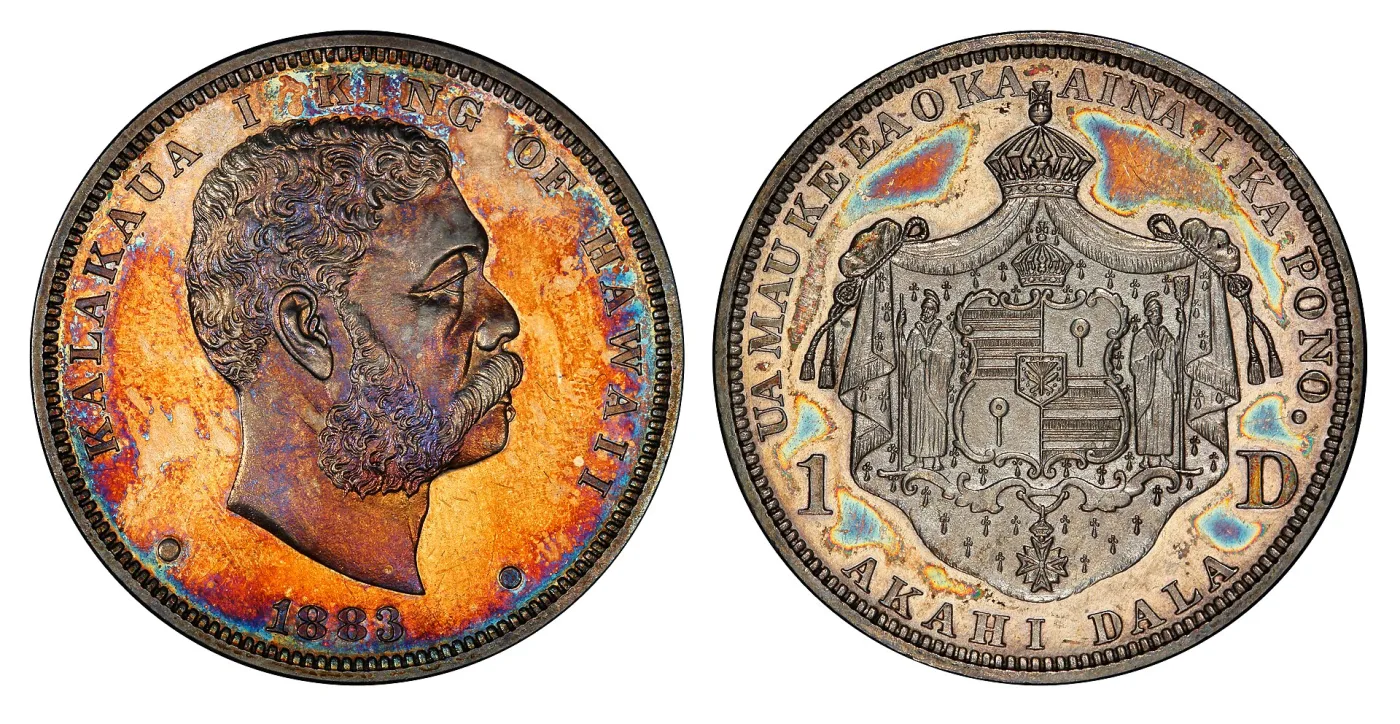
The Kingdom of Hawaii issued its own coins exactly twice. In 1847 it ordered a copper cent bearing King Kamehameha III. In 1883 it ordered a full set of silver coins bearing King Kalākaua, struck for it by the United States Mint in San Francisco. Both sets are small, both are well documented, and both were copied for tourists in the twentieth century, so the questions people bring to them are always the same: which coin is this, how many were made, and is it real?
This guide answers those three questions. It covers the five denominations you can meet, how to read their Hawaiian legends, the mintages and melt figures that explain why some are scarce, and the details that separate a genuine coin from a souvenir.
The Two Issues at a Glance
Every Hawaiian coin is either an 1847 copper cent or an 1883-dated silver coin. Nothing else was struck for circulation by the kingdom. Read the denomination on the reverse and you have identified the coin.
| Reverse reads | Meaning | Metal | Struck | Melted |
|---|---|---|---|---|
| HAPA HANERI | One cent | Copper | 100,000 | Most withdrawn by 1884 |
| UMI KENETA (ONE DIME) | Ten cents | Silver | 250,000 | 79 |
| HAPAHA (1/4 D) | Quarter dollar | Silver | 500,000 | 257,400 |
| HAPALUA (1/2 D) | Half dollar | Silver | 700,000 | 612,245 |
| AKAHI DALA (1 D) | One dollar | Silver | 500,000 | about 453,600 |
| HAPAWALU | Eighth dollar | Silver | Proofs only, about 20 | — |
The 1883 striking and melt figures agree across the published accounts except for the dollar, where one gives 453,652 melted and another 453,622. Both leave about 46,000 dollars, which is also the survivor figure CoinWeek quotes, so the table rounds it.
The 1847 Copper Cent
The first coin of the kingdom was ordered in 1846 under its coinage law: 100,000 copper cents dated 1847. They were made in the United States by a private firm. Coin references attribute them to H. M. & E. I. Richards of Attleboro, Massachusetts; there is no mint mark, and Wikipedia’s account notes the attribution comes from Walter Breen.
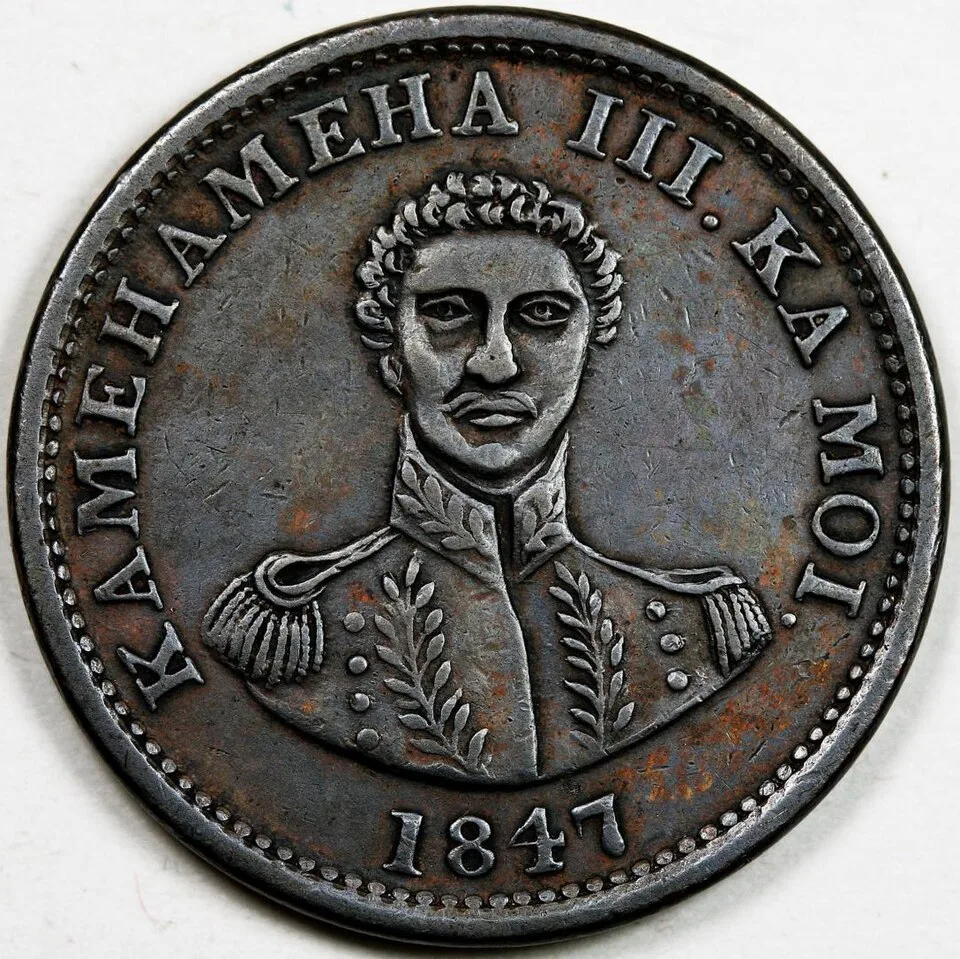
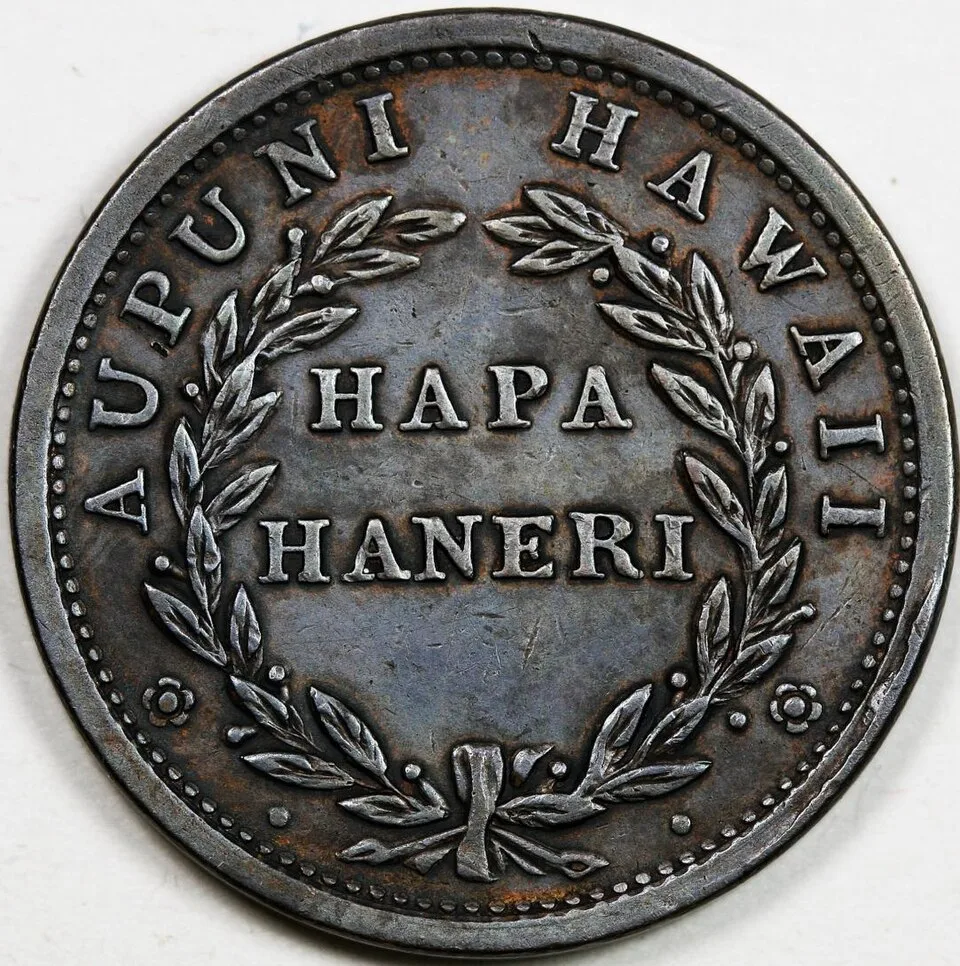
How to recognize it. The cent is the only Hawaiian coin with a facing portrait and the only one in copper, which makes it impossible to confuse with the 1883 silver.
Varieties. There are two obverse dies, told apart by the 4 in the date. One has a plain 4; the other has a crosslet 4, with a small serif bar on the end of the crossbar. The reverse wreaths differ in the number of berries, and references count 13, 15, 17 or 18. Specialists combine the two into numbered die pairs. Sources disagree on which combinations are scarcest, so treat any rarity claim on a raw coin as unproven.
Why so few circulated. The cent was unpopular. Both CoinSite and Wikipedia say so and point to the crude portrait of the king. The Treasury still held 11,595 of them in 1862, and the cent stopped being legal tender in 1884, when the new silver coinage replaced it.
The spelling. HAPA HANERI is often called a misspelling. Wikipedia’s article on the Hawaiian dollar disagrees, noting that HANERI was the accepted form for “hundred” through much of the century and appears on Hawaiian banknotes of 1879 to 1900. We report both readings because the sources split, and the coin is the same either way.
The 1883 Kalākaua Silver
In 1883 the Hawaiian government ordered $1,000,000 in face value of silver coins, arranged through the sugar magnate Claus Spreckels. The United States Mint at San Francisco struck them from November 1883 to mid-1884. Every piece is dated 1883, whatever year it was struck, and none carries a mint mark.
Charles E. Barber, Chief Engraver of the US Mint and the designer of the Barber dime, quarter and half dollar, cut the designs. The coins were made to the same size, weight and silver standard as the US coins of the same denominations, so the dollar matches a Morgan dollar: 26.73 grams of 90% silver, about 38 mm across.

The obverse: the same on all four
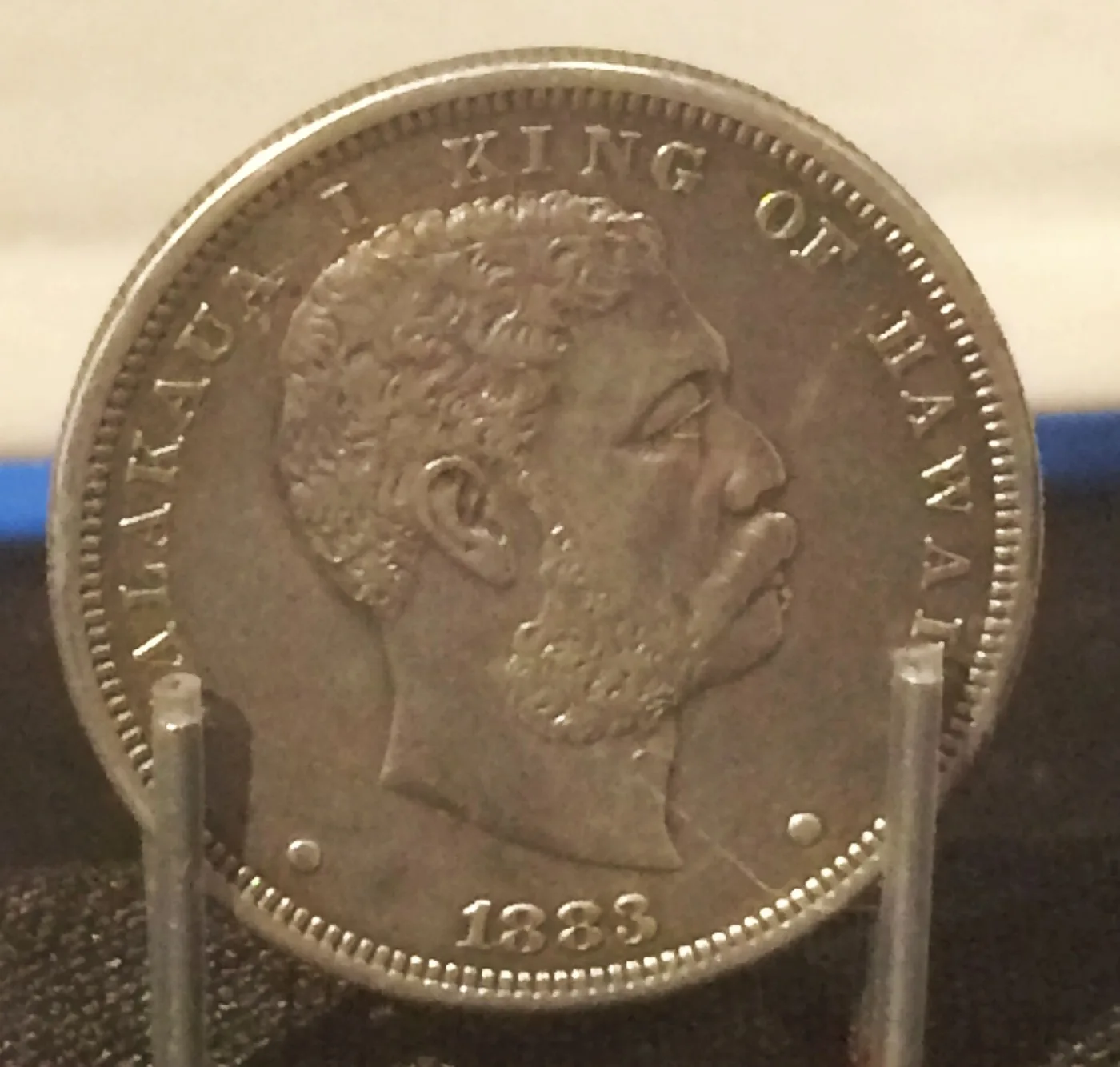
Every 1883 coin shows King Kalākaua’s bare head facing right, with KALAKAUA I KING OF HAWAII around it and the date 1883 below, set between two dots. Kalākaua reigned from 1874 to 1891.
The reverses: what tells them apart
The reverse names the denomination twice on the three large coins: as a fraction beside the shield (1 D, 1/2 D, 1/4 D) and in Hawaiian at the bottom. Around the top runs the royal motto, UA MAU KE EA O KA AINA I KA PONO, “The life of the land is perpetuated in righteousness”, today the motto of the State of Hawaii.
- Dollar (AKAHI DALA). The full royal arms: a crowned shield with two supporters, on a draped mantle, with the star of a royal order hanging below. It is the only denomination with the mantle.
- Half dollar (HAPALUA) and quarter (HAPAHA). A crowned shield with no mantle or supporters, and 1/2 D or 1/4 D either side.
- Dime (UMI KENETA). No shield. ONE DIME sits inside a wreath topped by a crown, with UMI KENETA below the bow and the motto above.
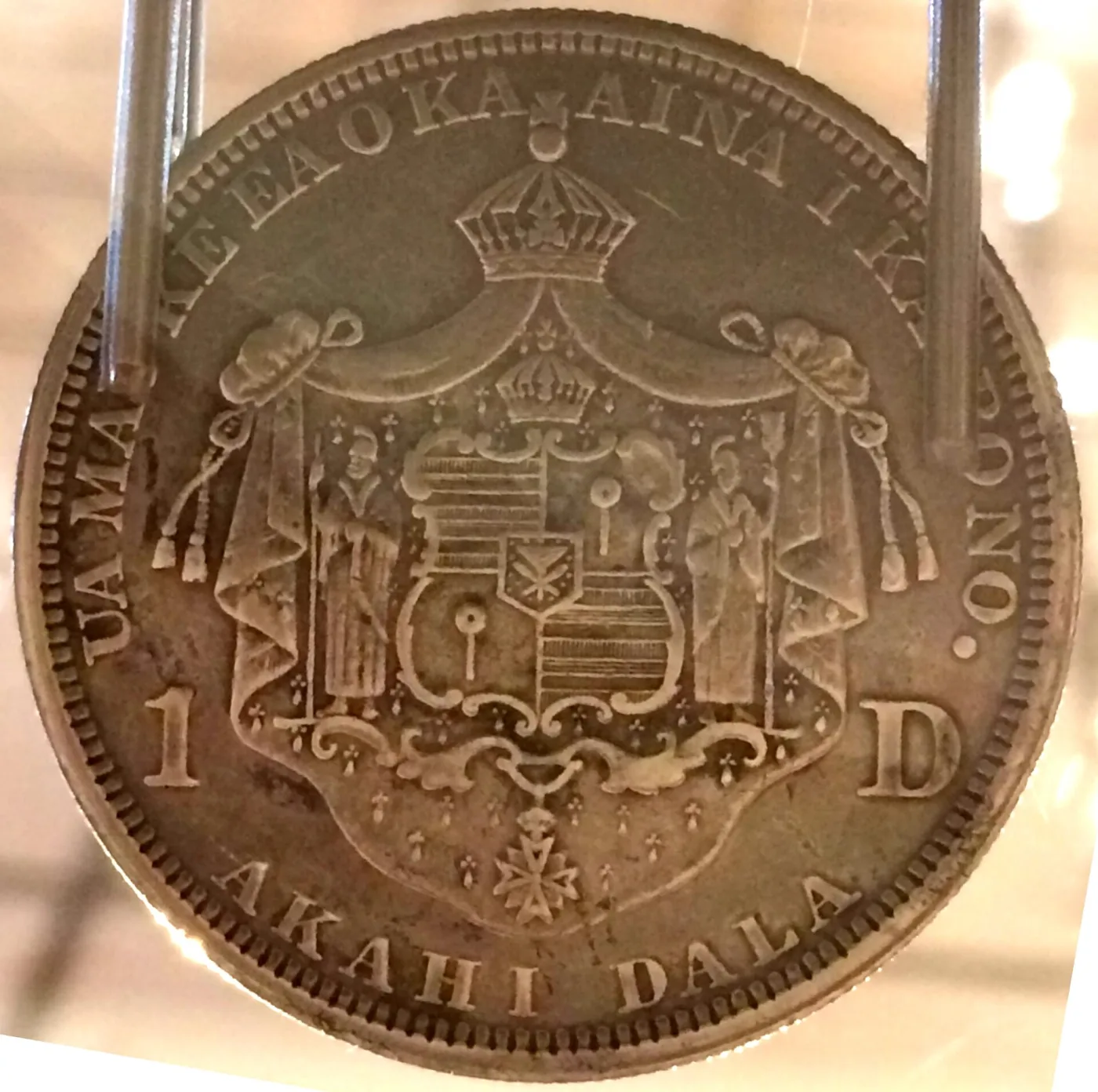
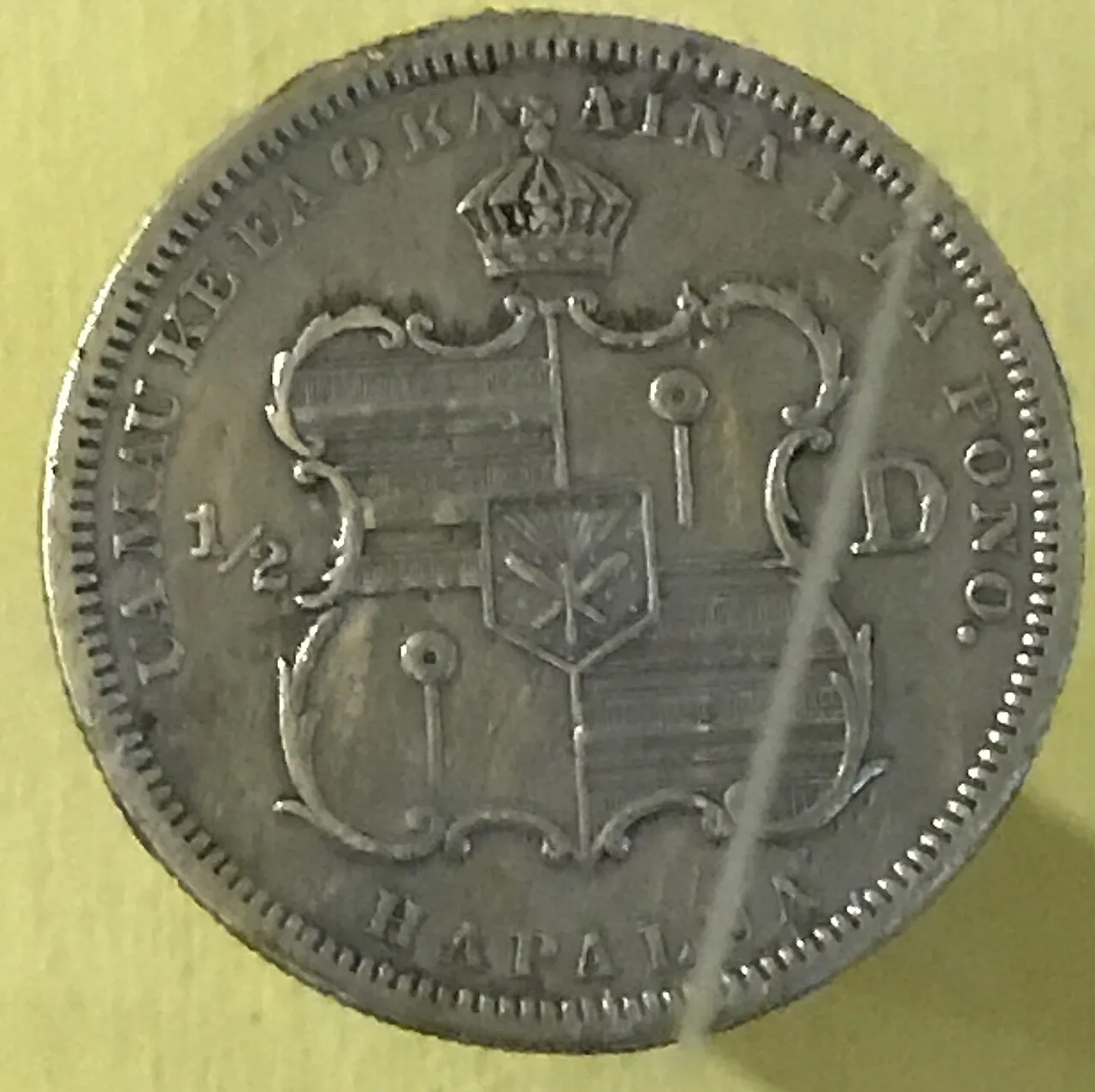
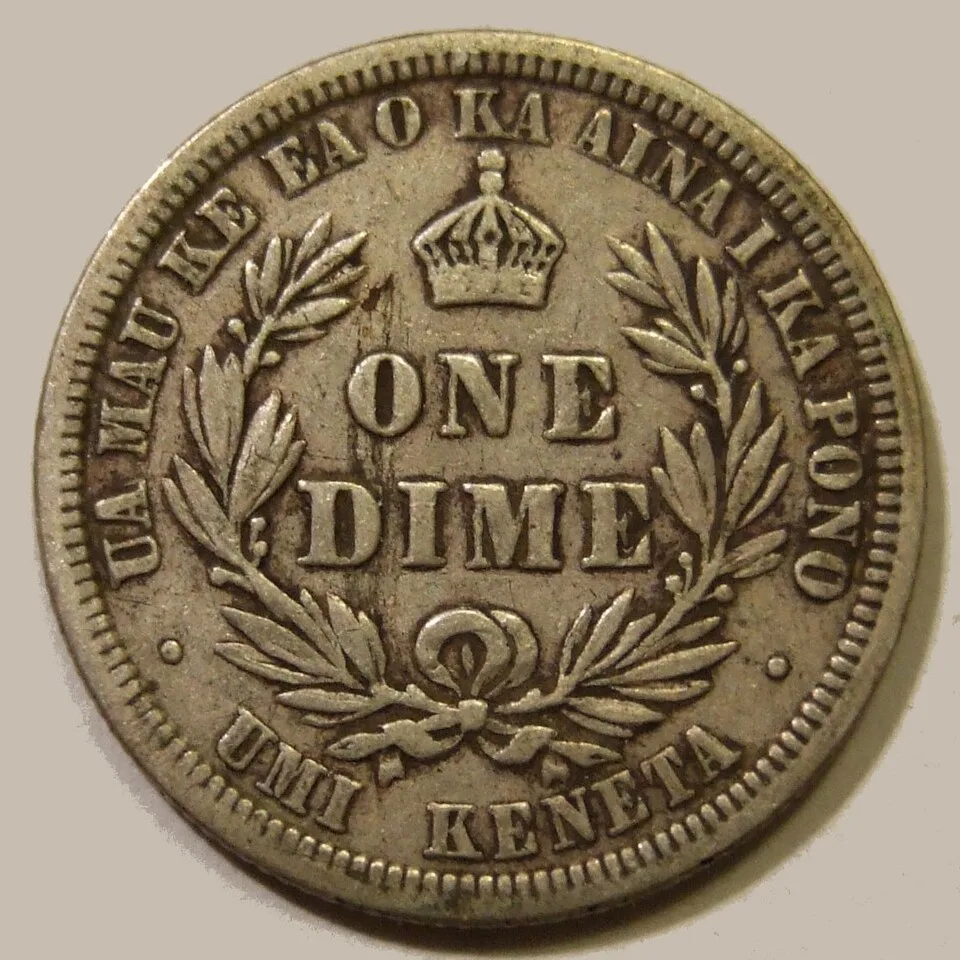
A conflict we resolved from the coin. Wikipedia’s article on the coinage puts UMI KENETA inside the dime’s wreath and ONE DIME below it. BellaOnline’s account and the Classical Numismatic Group’s catalogue entry both put ONE DIME inside the wreath, and the photograph above shows exactly that. We followed the coin.
The eighth dollar and the proofs
The original order included a 12½-cent piece, the hapawalu. It was dropped for a dime so that Hawaii’s coins would line up with American ones, and it exists only as a proof: about 20 were struck. Proofs of the four regular denominations were made for presentation, never for sale. Wikipedia’s mintage table gives 26 of each; BellaOnline describes about six four-piece sets and about twenty five-piece sets that include the hapawalu. A proof Hawaiian coin is a major rarity, and one offered raw should be authenticated first.
Why the Half and Dollar Are Scarce
After annexation the coins were withdrawn. An act of Congress in 1903 set January 1, 1904 as the deadline to exchange them for US money, after which they stopped being legal tender, and the exchanged coins were melted at the San Francisco Mint. By 1907 about $814,000 of the original $1,000,000 had come back.
The exchange fell almost entirely on the larger coins. Nearly 9 in 10 half dollars and dollars were melted, about half the quarters, and only 79 dimes. That is why the dime is the denomination you are most likely to find and why surviving halves and dollars are the ones collectors chase. Many of the coins that escaped were made into jewelry: Coin World and Wikipedia both describe pins, watch fobs and belts made from them, often with the arms side enameled. A coin with solder marks, a loop, or enamel is usually a genuine coin with jewelry damage, and collectors value it below an unmounted one.
Spotting Replicas
Souvenir copies of both issues are common, and some are close enough to fool a quick look.
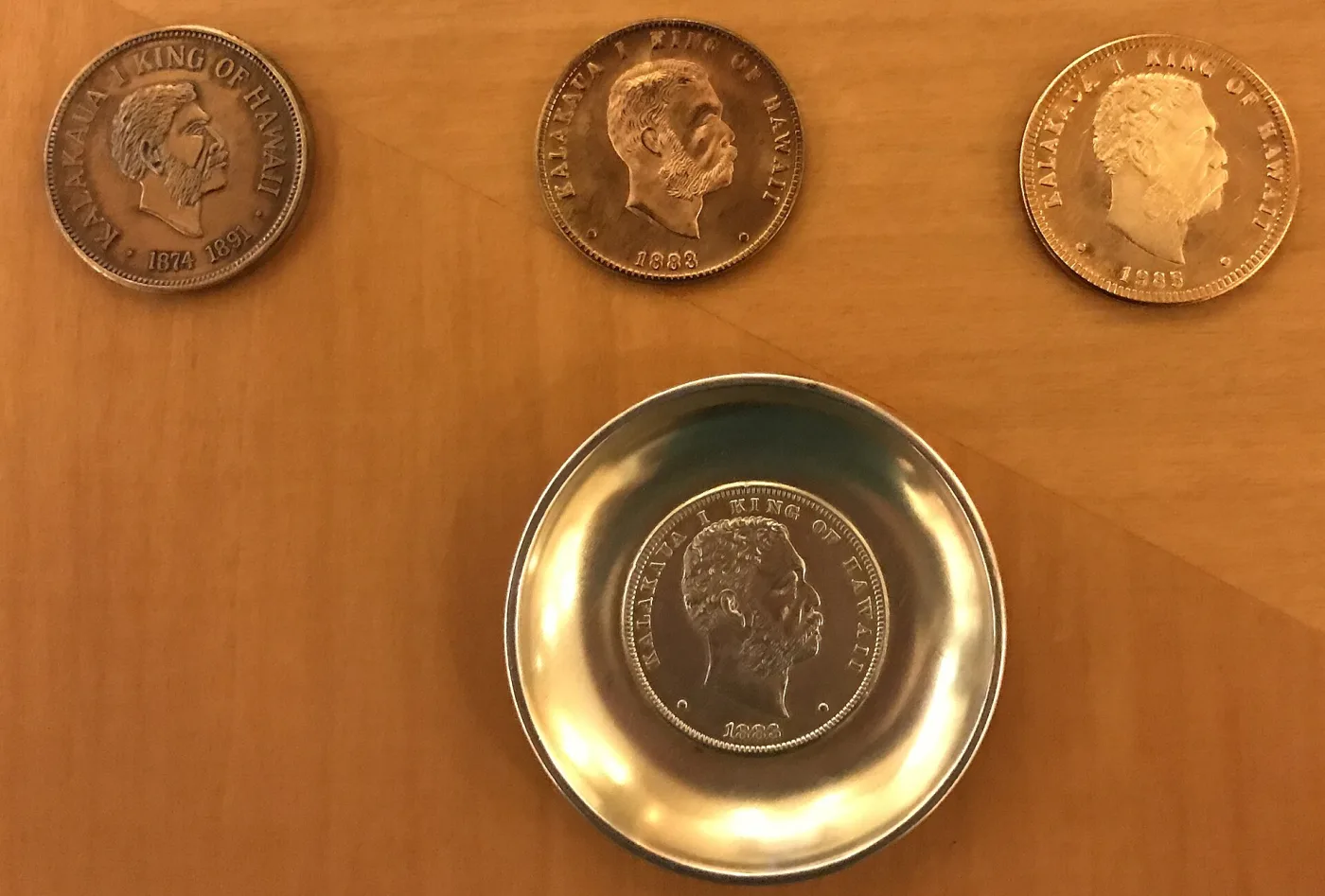
Check these points, in order:
- The date. A genuine 1883 coin carries only 1883. A piece dated 1874 1891 is a commemorative of the reign, not a coin.
- The metal. The 1883 coins are silver. A yellow, brassy coin is a replica.
- The weight. A genuine dollar is struck to 26.73 grams, a genuine dime to the US dime standard of 2.5 grams. A replica in base metal will usually miss by a wide margin.
- The details. Compare the hair, beard and lettering with the photographs above. Replicas tend to show soft hair, uneven letters and a flat field. For more general checks, see our counterfeit detection guide.
- The 1847 cent. Souvenir copies keep the 1847 date. CoinSite dates them to the 1947 centennial and says they are usually brass; a genuine cent is copper.
If a coin passes all of that and you plan to sell it, have it certified. The third-party grading guide explains what that involves.
Sources
Every fact above comes from at least two of these, and conflicts are noted where they occur: Wikipedia, “Kalākaua coinage”, “Coins of the Hawaiian dollar” and “Hawaiian dollar”; BellaOnline, “The Silver Coinage of the Kingdom of Hawaii”; CoinSite, “1847 Hawaiian Cent”; CoinWeek on the 1883 dollar; Coin World on Hawaiian coin jewelry; APMEX, “Was There an 1883 Hawaii Quarter?”; the Classical Numismatic Group catalogue description of the 1883 dime; and Numista’s catalogue entry for the 1883 dollar.
Frequently Asked Questions
What coins did the Kingdom of Hawaii issue?
Two issues. The first was a copper cent dated 1847, with King Kamehameha III on the front and HAPA HANERI in a wreath on the back; 100,000 were made. The second was a silver set dated 1883 with King Kalākaua on the front: the dime (UMI KENETA), quarter (HAPAHA), half dollar (HAPALUA) and dollar (AKAHI DALA). A fifth silver denomination, the eighth dollar (HAPAWALU), exists only as a proof of about 20 pieces.
Where were the 1883 Hawaiian coins made?
The circulating 1883 coins were struck by the United States Mint at San Francisco, in late 1883 and the first half of 1884, all with the date 1883. Chief Engraver Charles E. Barber made the designs. The coins carry no mint mark.
Is my 1883 Hawaiian dollar real?
Start with the obverse. A genuine coin reads KALAKAUA I KING OF HAWAII with the date 1883 below the bust. A coin dated 1874 1891 (the years of Kalākaua's reign) is a souvenir piece, not a coin. Then check the reverse for 1 D and AKAHI DALA, the weight (a genuine dollar is struck to the US silver dollar standard of 26.73 grams) and the metal: a brass-yellow coin is a replica. For any coin you plan to buy or sell at a premium, use a certified example.
Why are Hawaiian half dollars and dollars scarce?
Most of them were melted. Congress ordered the coins exchanged for US money, with January 1, 1904 as the cut-off, and the exchanged coins went to the San Francisco Mint for melting. Of 700,000 half dollars, about 612,000 were melted, and of 500,000 dollars, about 454,000. Almost all the dimes survived the exchange, which is why the dime is the easiest denomination to find.
Is the 1847 Hawaiian cent misspelled?
Accounts differ. Many references describe HAPA HANERI as a misspelling of the Hawaiian for 'one hundredth', but the Wikipedia account of the Hawaiian dollar notes that HANERI was the accepted spelling for 'hundred' through much of the 19th century and appears on Hawaiian banknotes of 1879 to 1900. What all sources agree on is that the cent was unpopular, partly because of its crude portrait of the king.
Is a souvenir 1847 Hawaiian cent worth anything?
No. Modern souvenir copies of the 1847 cent keep the 1847 date and have no numismatic value. CoinSite dates them to the 1947 centennial and notes they are usually brass rather than copper. Compare the portrait, lettering and berries in the wreath with a photograph of a genuine coin before paying a premium.