Umayyad Dirham: How to Read the Mint, the Date and the Type
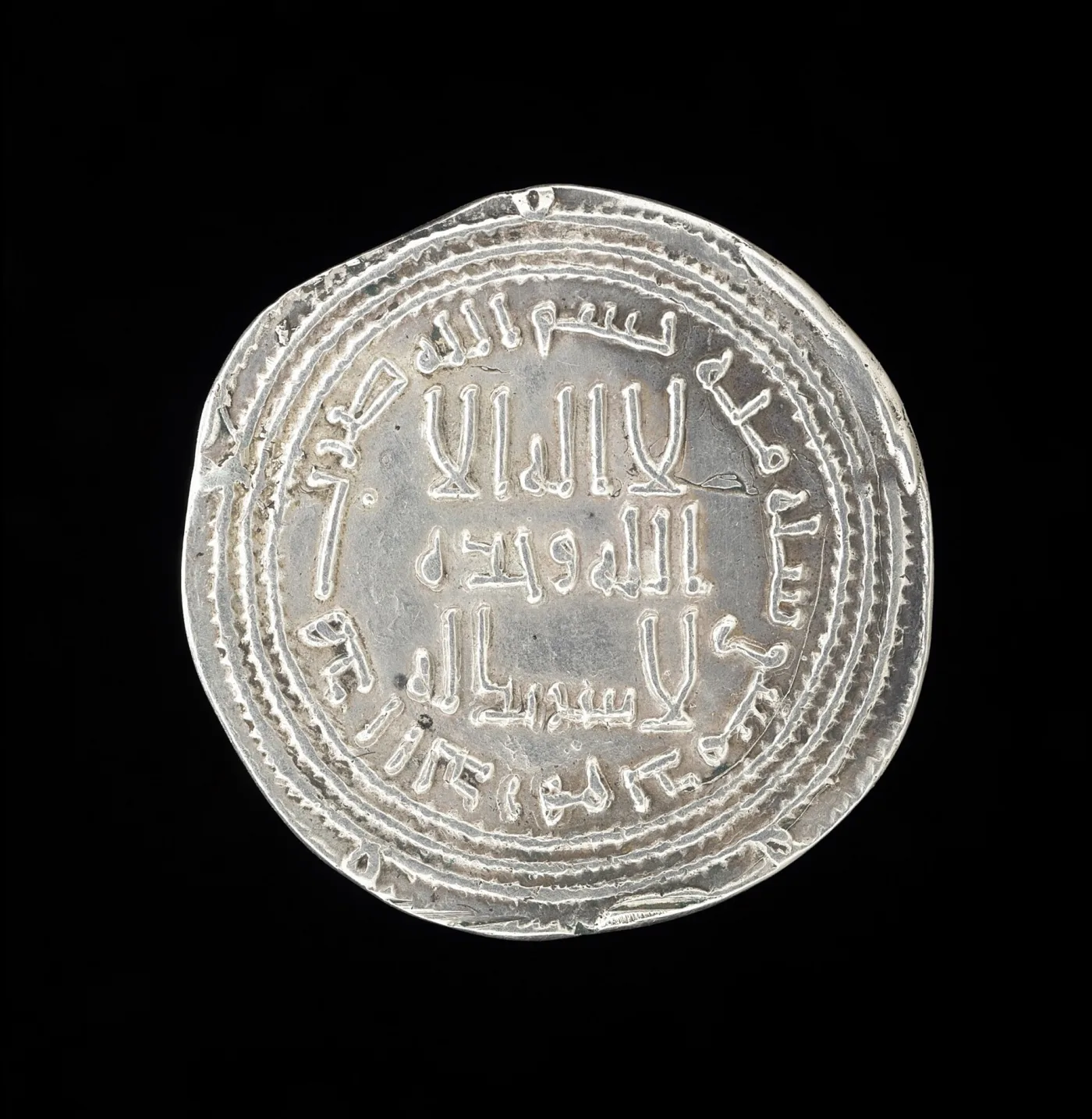
A thin silver coin with no picture, covered on both sides in angular Arabic script, is one of the most common “what is this?” coins in old collections. A large share of them are dirhams of the Umayyad caliphs, struck from the end of the 7th century to the middle of the 8th, and they are far easier to read than they look. Every one follows the same layout, and the two things a collector wants, the mint and the year, sit in the same place on every coin.
This guide shows how to tell an Umayyad dirham from the coins either side of it, where to find the mint, and how to read a date written in words. For the general method that applies to any coin, start with the coin identification guide.
Three Coins That Get Confused
Three kinds of early Islamic silver coin turn up together, and the first job is to decide which one you have.
| Arab-Sasanian | Umayyad reform dirham | Early Abbasid dirham | |
|---|---|---|---|
| When | From the conquest of Iran into the 80s AH (around 650 to 705) | AH 78–79 to AH 132 (697/699 to 750) | From AH 132 (750) |
| Images | Crowned bust and fire altar | None | None |
| Script | Pahlavi, with a little Arabic in the margin | Kufic Arabic only | Kufic Arabic only |
| Names a person | Often a governor, sometimes the caliph | No | Not on the earliest issues |
| Centre of the reverse | Fire altar with two attendants | Surah 112 | “Muhammad is the messenger of God” |
| Typical size | About 4 g, over 30 mm | About 2.9 g, 26–28 mm | — |
The weights and sizes are from catalogued examples: two Arab-Sasanian drachms in the Classical Numismatic Group’s records weigh 4.12 g at 30 mm and 4.00 g at 34 mm, while reform dirhams of Wasit and Damascus in the Khalili Collection and the British Museum are listed at 2.90 to 2.92 g and 27 to 28 mm.
Before the Reform: Arab-Sasanian Coins
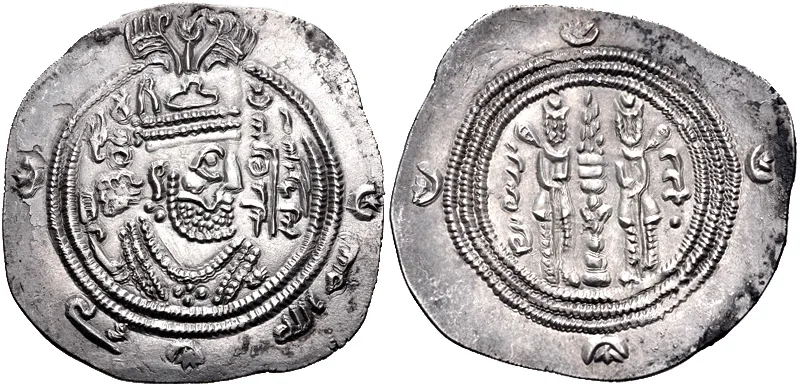
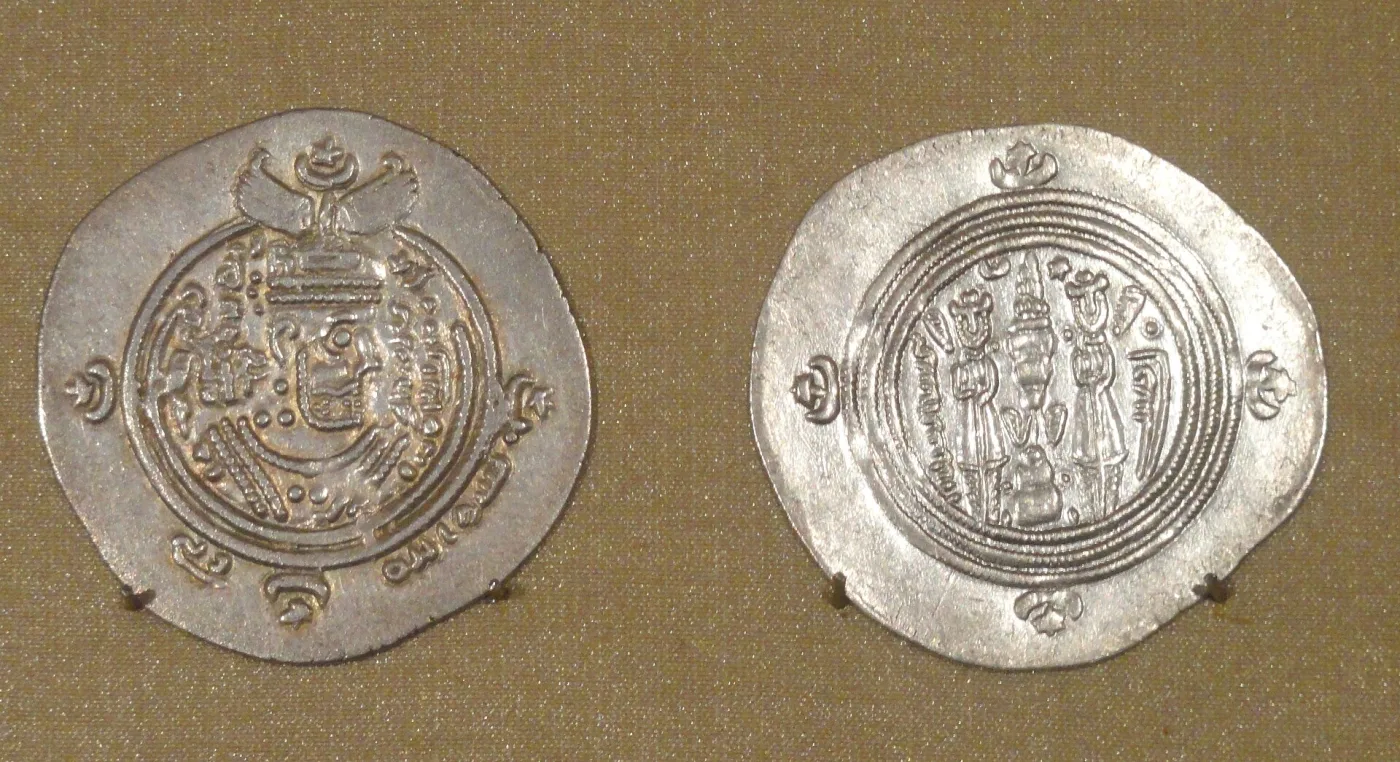
When the Arab armies took over the Sasanian Persian empire in the mid-7th century, they did not replace its money. Governors went on striking the Persian silver coin in the Persian style: on the front, a crowned bust copied from the coins of Khosrau II, and on the back, a Zoroastrian fire altar flanked by two standing attendants. The legends stayed in Pahlavi, the Middle Persian script.
What changed was the margin. An Arabic phrase, most often bism Allah (in the name of God), was added in the space outside the rings on the front, and that is the first thing to look for.
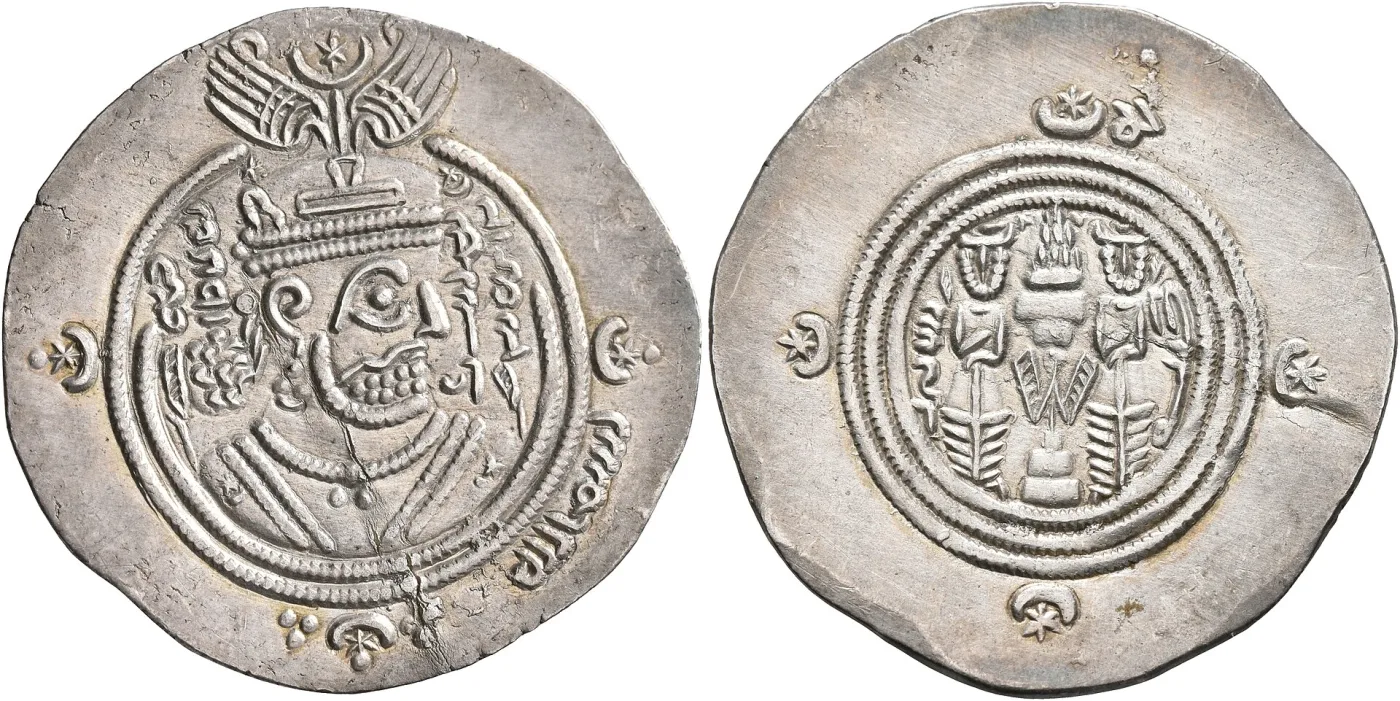
From around the 670s, governors began putting their own names on the coins in Pahlavi, which is why so many of these pieces are catalogued by governor rather than by ruler. Some even name the caliph. The coin below carries the name of Mu’awiya I, the first Umayyad caliph, in Pahlavi, with the title commander of the faithful.
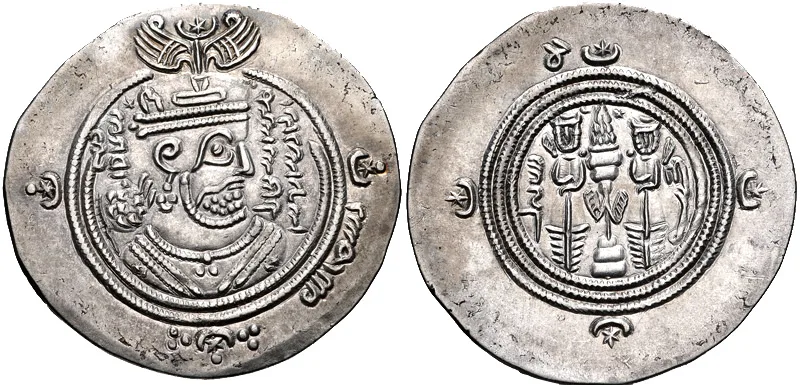
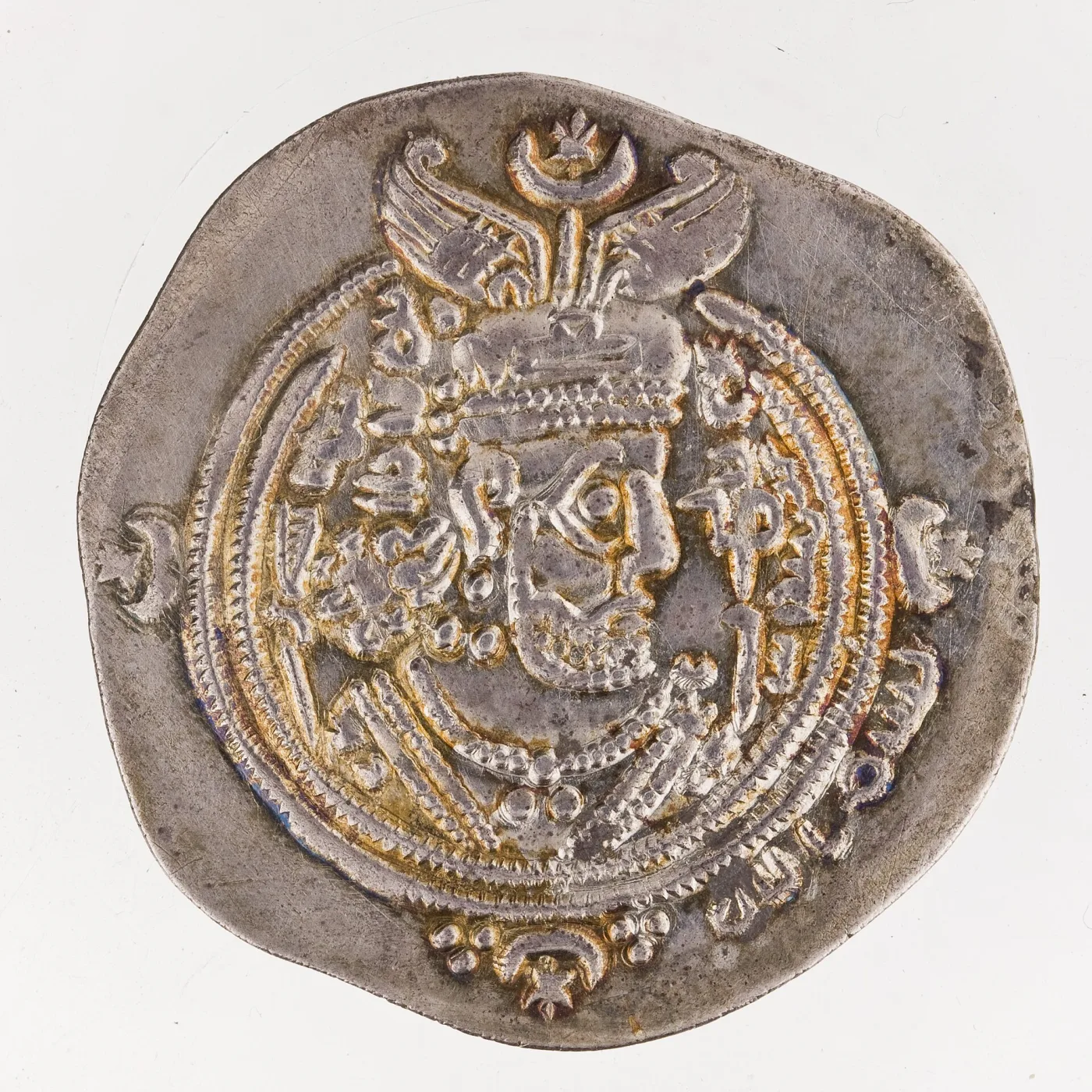
The Persian style did not stop the moment the reform began. A drachm of Ubayd Allah ibn Abi Bakra, governor of Sijistan, is dated AH 80 (698/9) in Pahlavi, after the first reformed dirhams had been struck elsewhere, and Arab-Sasanian issues from the east run into the mid-80s AH.

The Reform of Abd al-Malik
The caliph Abd al-Malik replaced all of this with coins that carry no image at all. The gold dinar came first, in AH 77 (696/7). The silver dirham followed, and here the sources differ by a year: J. Bacharach dates the first all-epigraphic dirhams to AH 78, while the standard account puts the new silver coin at AH 79 (698), when it was struck at many mints at once. Both are true of the coins that survive, so the safe statement is that reform dirhams begin in AH 78–79.
The new dirham was lighter and smaller than the Persian drachm, and its design was nothing but text. It did not change for half a century.
Reading the Obverse: Where the Mint and Date Are
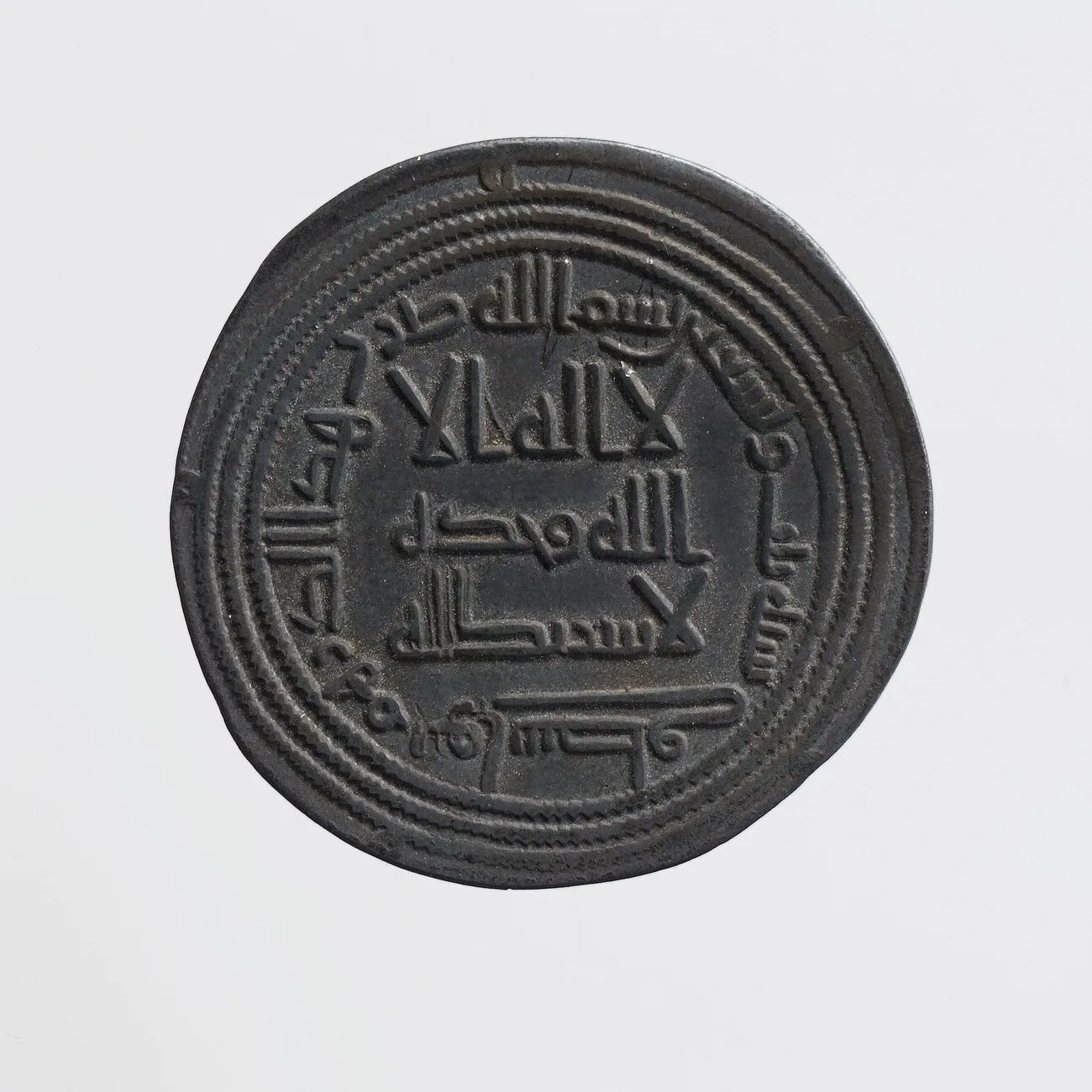
Find the side with three lines in the centre. That is the obverse, and its centre carries the declaration of faith:
la ilaha illa Allah wahdahu la sharika lahu: there is no god but God alone, He has no associate.
The ring of writing round it is the part that identifies your coin. It follows a fixed formula:
bism Allah duriba hadha al-dirham bi- [mint] fi sanat [year in words]
In the name of God, this dirham was struck in [mint] in the year [year].
Start reading the margin at bism Allah. The word after bi- is the mint. A dirham of AH 79 published from Walker’s British Museum catalogue reads bi-r-Ramhurmuz fi sanat tis’ wa sab’in: struck in Ramhurmuz in the year nine and seventy.
Mint names you will meet
The mint is written as a place name, not a letter. Some of the names that appear on Umayyad dirhams in museum catalogues:
| Name on the coin | Where it is |
|---|---|
| Dimashq | Damascus, Syria |
| Wasit | Iraq |
| al-Basra | Basra, Iraq |
| Ramhurmuz | Khuzistan, Iran |
| Sarakhs | Khurasan, on the Iran–Turkmenistan border |
| Marw | Merv, Turkmenistan |
| Balkh | Northern Afghanistan |
| al-Andalus | Muslim Spain (Umayyad emirate, from the 140s AH) |
Catalogues list Wasit dirhams with dates running from the 80s AH to 132, the last year of the dynasty.
The year is written in words
There are no numerals on an Umayyad dirham. The year is spelled out in Arabic at the end of the margin, units before tens, so AH 79 reads “nine and seventy” and AH 94 reads “four and ninety”.
The year is a Hijri year (AH). To turn it into a Western date, use the formula in the Hijri calendar section of our Indian coins guide and give the answer as two years, because a Hijri year straddles two of ours. The coin at the top of this page is AH 100, which LACMA dates to 718–719; the Met’s coin above is AH 93, or 711–712.
Reading the Reverse
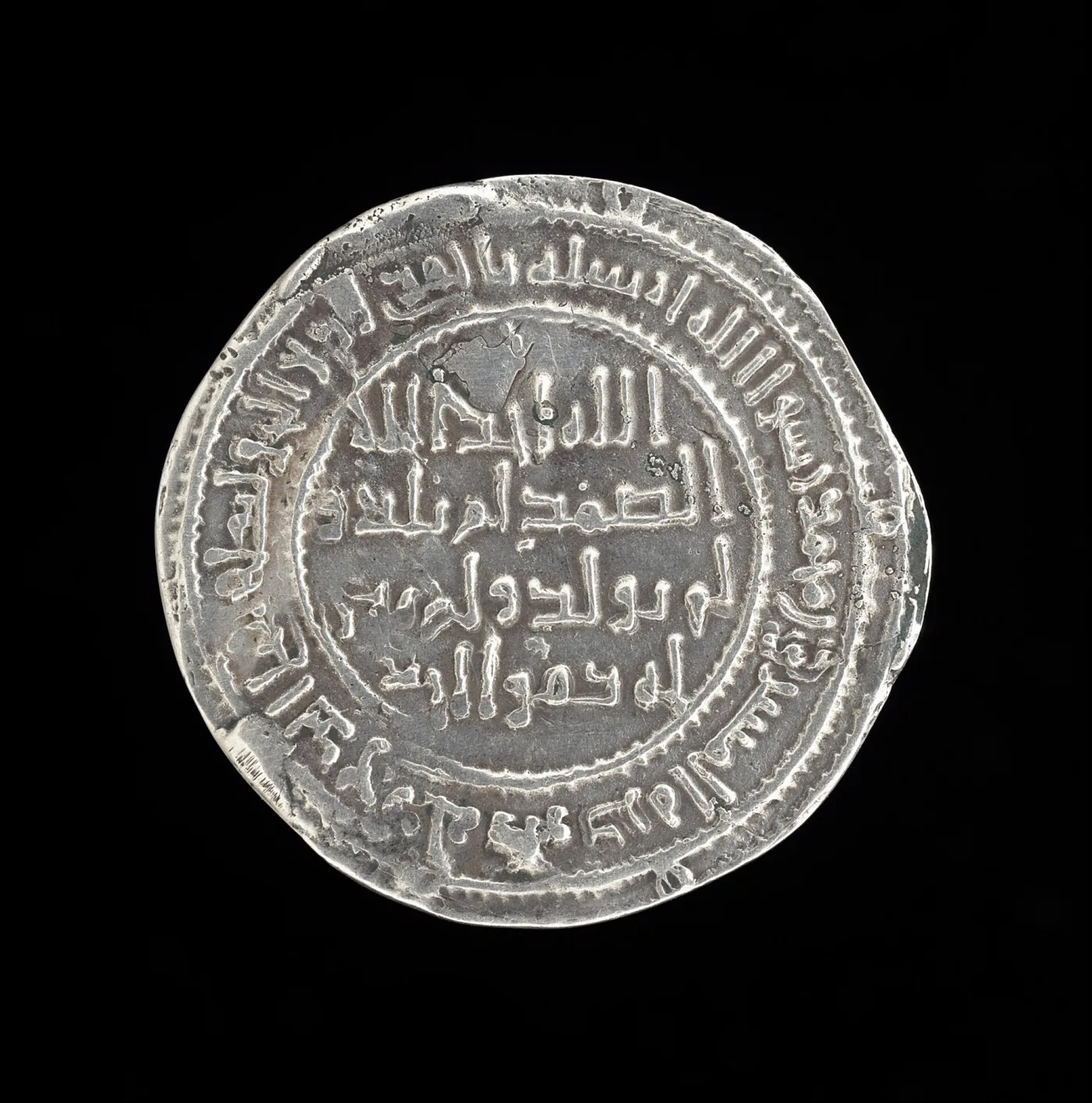
Turn the coin over. The centre now holds four or five lines: Surah 112 of the Qur’an, al-Ikhlas.
God is one, God the eternal. He did not beget and was not begotten, and there is none like unto Him.
The margin round it is a statement of the Prophet’s mission, beginning Muhammad rasul Allah, “Muhammad is the messenger of God, who sent him with guidance and the religion of truth”.
Umayyad or Abbasid?
The Abbasids overthrew the Umayyads in AH 132 (750) and at first kept the reform dirham almost exactly as it was. The change that matters is in the centre of the reverse: Abbasid dirhams replace Surah 112 with the short formula Muhammad / rasul / Allah, “Muhammad is the messenger of God”, in three lines.
So the quick test is:
- Reverse centre is four or five lines beginning Allah ahad: Umayyad.
- Reverse centre is three short lines, Muhammad, rasul, Allah: Abbasid.
Do not rely on the date alone for the transition year. Dirhams dated 132 exist with the Umayyad Surah 112 reverse and with the new Abbasid one, depending on who held the mint when the coin was struck.
A third family carries the Umayyad name after 750: the Umayyad emirate in Spain, whose dirhams name the mint as al-Andalus and are dated from the 140s AH. If your coin says al-Andalus, it belongs to that later series, not to the caliphate in Damascus.
Checking a Coin Before You Trust It
A reform dirham should be a thin, broad silver coin close to 2.9 g and 26 to 28 mm across. A piece that is much heavier, thick, or cast with soft, rounded letters deserves suspicion, and so does one that looks like a perfect copy of a famous museum example.
A short checklist:
- Picture or no picture? A bust and fire altar means Arab-Sasanian; text only means reform dirham or later.
- Find the three-line side and read the margin from bism Allah.
- The word after bi- is the mint.
- The last words are the year, units first.
- Turn it over. Surah 112 in the centre is Umayyad; Muhammad rasul Allah is Abbasid.
- Weigh it. About 2.9 g for a reform dirham, about 4 g for an Arab-Sasanian drachm.
When the script defeats you, a clear photo of each side is enough for Coin Identifier to suggest the type, and from there the mint and date are a matter of reading the margin. Coins with Arabic script but a later look, such as Mughal rupees, are covered in our Indian coins guide.
Frequently Asked Questions
How do I know if my coin is an Umayyad dirham?
Look for a thin silver coin about 26 to 28 mm across and close to 2.9 grams, covered on both sides in angular Kufic Arabic with no picture at all. One side has three lines in the centre and a single ring of writing round them; the other has four or five lines in the centre, usually Surah 112 of the Qur'an. If the coin shows a crowned bust and a fire altar instead, it is the earlier Arab-Sasanian type.
Where is the mint name on an Umayyad dirham?
In the margin round the three-line side. The legend runs: in the name of God, this dirham was struck in [mint] in the year [date]. The mint is the word straight after 'bi', so on a coin of Damascus it reads Dimashq, and on a coin of Ramhurmuz it reads Ramhurmuz.
Why can't I find numbers for the date on my dirham?
Because there are none. Umayyad dirhams write the year out in Arabic words at the end of the margin legend, units before tens. A coin of AH 79 says 'nine and seventy', and one of AH 94 says 'four and ninety'. Once you have the Hijri year, convert it to the Western calendar.
What is the difference between an Umayyad and an Abbasid dirham?
The centre of the reverse. Umayyad reform dirhams carry Surah 112 there, the short chapter beginning 'God is one'. The Abbasids, who took power in AH 132 (750), put 'Muhammad is the messenger of God' in that place instead. Coins dated 132 itself are known in both forms, so read the field, not just the date.
What is an Arab-Sasanian dirham?
A coin of the first decades of Islamic rule in Iran and Iraq that keeps the old Persian design: a crowned bust copied from the Sasanian king Khosrau II on one side and a fire altar with two attendants on the other. Arab governors added an Arabic phrase such as bismillah in the margin and, from around the 670s, their own names in Pahlavi script.
Is there a ruler's name on an Umayyad dirham?
No. The reformed Umayyad dirham names no caliph and no governor, which is why catalogues list most of them as anonymous and attribute them by mint and year. The name of a person is one of the clearest signs you are looking at something else: an Arab-Sasanian piece, or a later dynasty.