1909 VDB Cent: Which of the Four Do You Have?
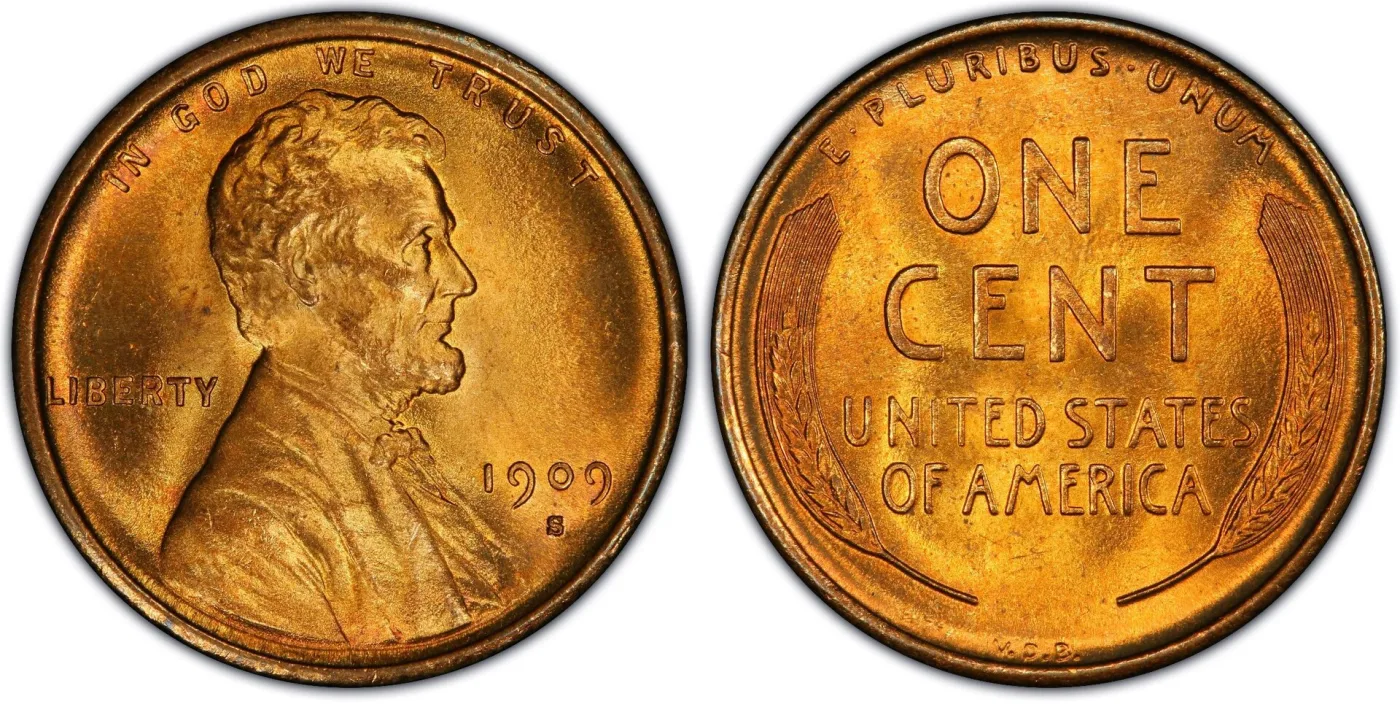
Four different cents are dated 1909, and they are worth wildly different amounts. One of them is the most famous key date in American coin collecting; another looks almost identical and is worth a few dollars. Telling them apart takes two checks, on opposite faces of the coin, and about ten seconds once you know where to look.
This guide covers where the initials and the mint mark sit, what the mintages actually were, how the key date is faked, and what a worn example looks like — because most 1909 cents that turn up in a jar are not the sharp red specimens used in catalogue photographs.
The Four Cents of 1909
1909 was the first year of the Lincoln cent, and it produced four distinct coins. Two mints struck it — Philadelphia, which used no mint mark, and San Francisco, which used an S — and partway through the year the designer’s initials were removed from the reverse. Every 1909 cent is therefore one of four combinations.
| Coin | Mint mark | Initials | Mintage |
|---|---|---|---|
| 1909 VDB | none (Philadelphia) | V.D.B. present | 27,995,000 |
| 1909-S VDB | S (San Francisco) | V.D.B. present | 484,000 |
| 1909 | none (Philadelphia) | no initials | 72,702,618 |
| 1909-S | S (San Francisco) | no initials | 1,825,000 |
The numbers are the whole story. Roughly one 1909 cent in every 58 struck that year is the S-VDB, and that scarcity has held its value for over a century. The 1909-S without initials is a genuine semi-key in its own right at 1,825,000. The two Philadelphia issues are common, and a circulated 1909 VDB is an inexpensive coin despite carrying the same initials as the rarity.
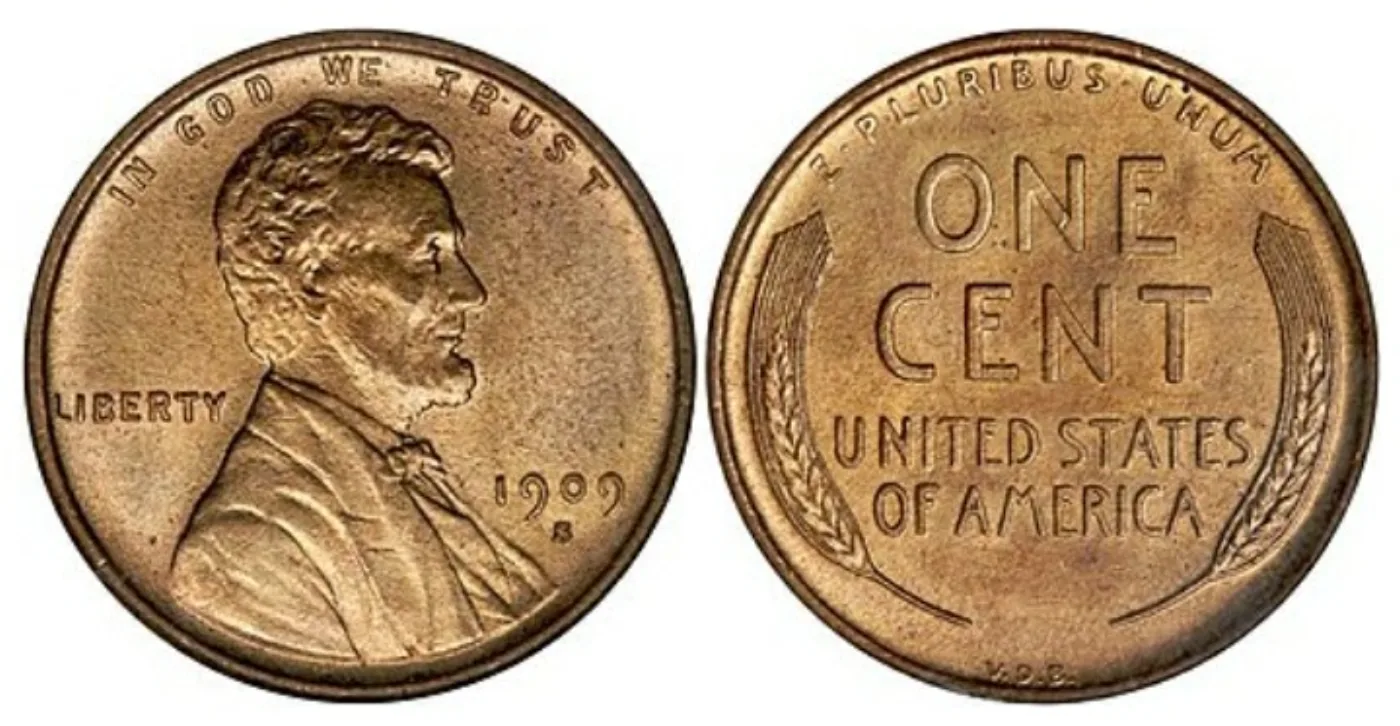
Where the VDB Initials Sit
Turn the coin to the reverse — the side with the wheat ears. The initials sit at the very bottom, on the rim between the two stalk ends, reading V.D.B. in small serif capitals. Nothing else occupies that space, so the check is binary: either there are three letters there or the rim is bare.
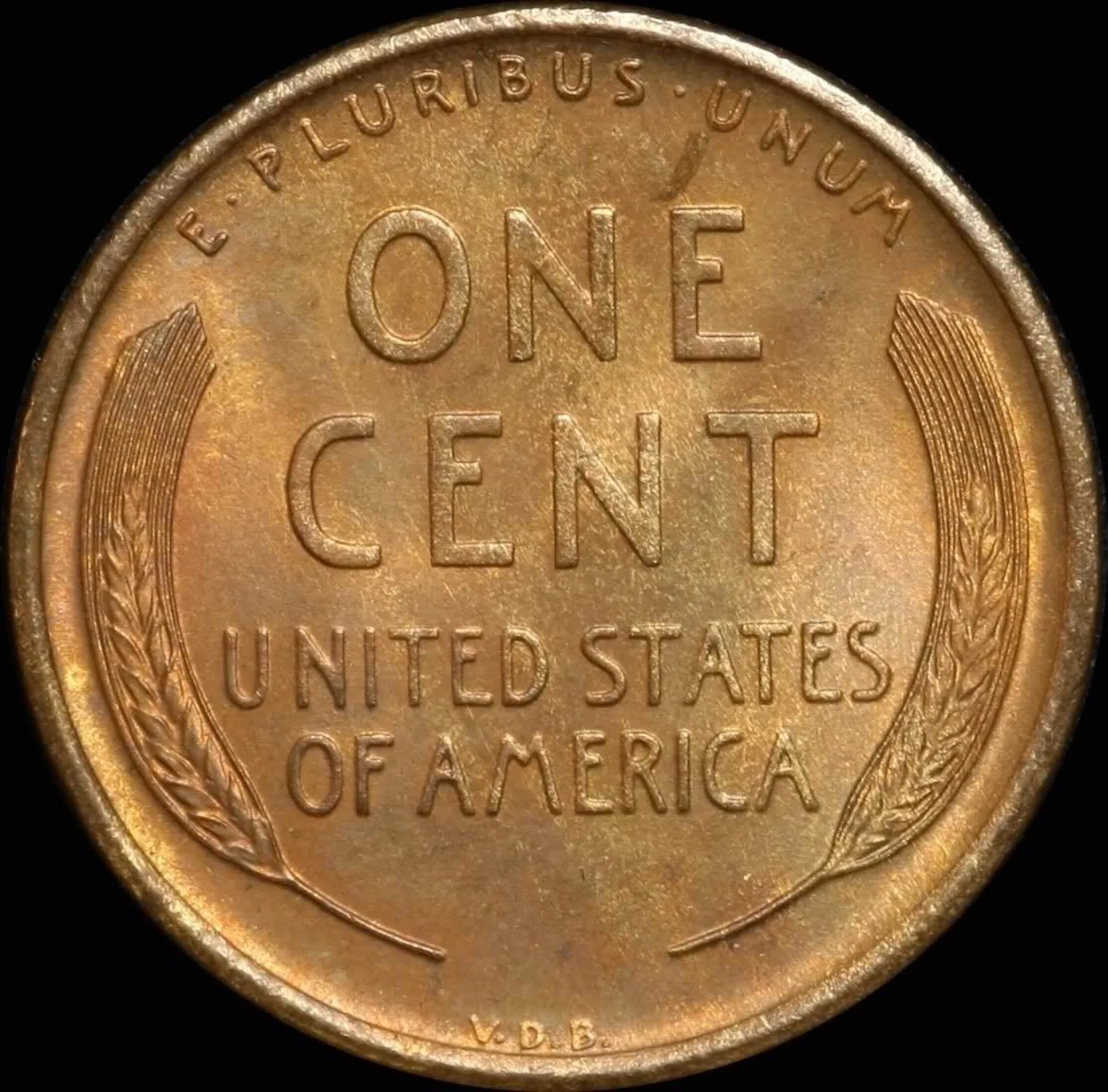
The letters belong to Victor David Brenner, who designed the coin. They were considered too prominent for circulating money almost as soon as the cent was released, and were removed partway through 1909 — which is what created the four-way split in the first place. Brenner’s initials came back in 1918, but relocated to the obverse, where they sit in much smaller letters on Lincoln’s shoulder. That later placement is normal on wheat cents from 1918 onward and is not the same thing as a 1909 VDB.
Where the Mint Mark Sits
Now turn the coin back to the obverse. The mint mark is directly below the date, a single S for San Francisco. Philadelphia used no mark at all in this series, so a blank space below the date means Philadelphia — not a missing mark.
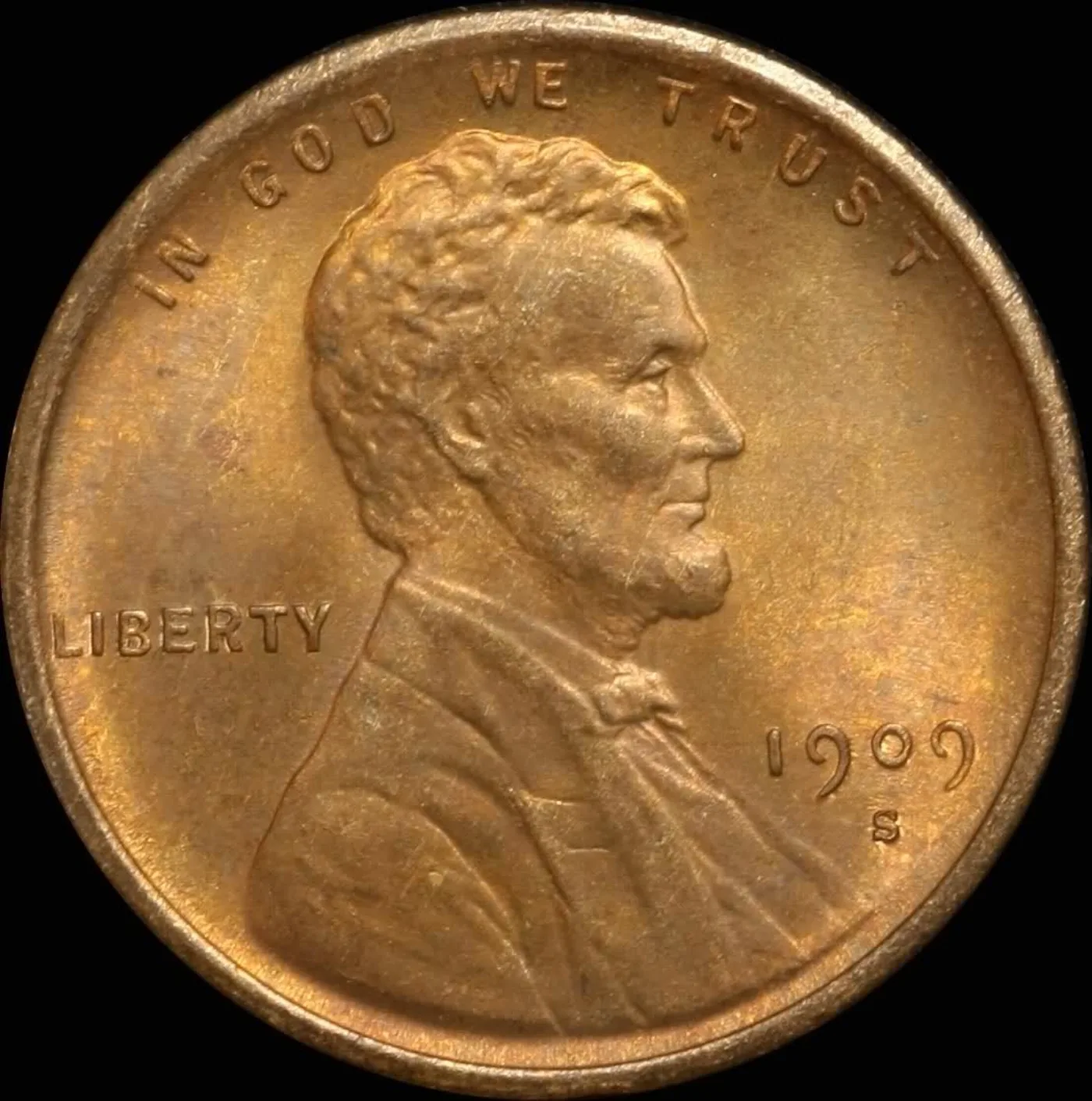
Because the two diagnostics live on opposite faces, checking only one tells you half the answer. A reverse showing V.D.B. narrows the coin to two of the four; you still need the obverse to know whether it is the common Philadelphia issue or the key date. The same discipline applies across the series, and the general placement rules are covered in our guide to mint marks.

How the Key Date Is Faked
A 484,000-mintage coin that is worth many times a common one, and whose entire identity rests on a single added letter, is an obvious target. The 1909-S VDB is among the most frequently counterfeited US coins, and the usual method is not a cast copy — it is alteration of a genuine cent.
The commonest approach is adding an S to a real 1909 VDB from Philadelphia. That donor coin is cheap, already carries the correct initials and the correct date, and needs only one letter to become the rarity. Altered dates on later S-mint cents are also seen, where digits are reshaped or transplanted.
What to look at, in order:
- The mint mark’s seating. A genuine S sits in a consistent position and angle relative to the date. An added one is often slightly off in spacing, rotation, or distance from the rim.
- The surface around it. Attaching metal leaves traces — tooling marks, a faint seam, a difference in lustre or colour in the immediate area, or a surface that looks smoothed where the field should show normal texture.
- The date digits. On an altered date the numerals may differ subtly in style, spacing or depth from each other.
- Weight and diameter. Cast fakes frequently fail here even when the detail looks convincing.
None of these is conclusive alone, and a well-executed alteration can pass a casual look. That is the practical argument for the next section. The broader techniques are covered in our guide to counterfeit detection, and the 1909-S VDB sits alongside the other major key dates that attract the same attention.
Buying a Certified Example
For a coin this heavily altered, third-party certification is not a luxury. A graded example arrives sealed in a holder with the attribution printed on the label, which transfers the authentication question to a firm that has examined the coin directly.
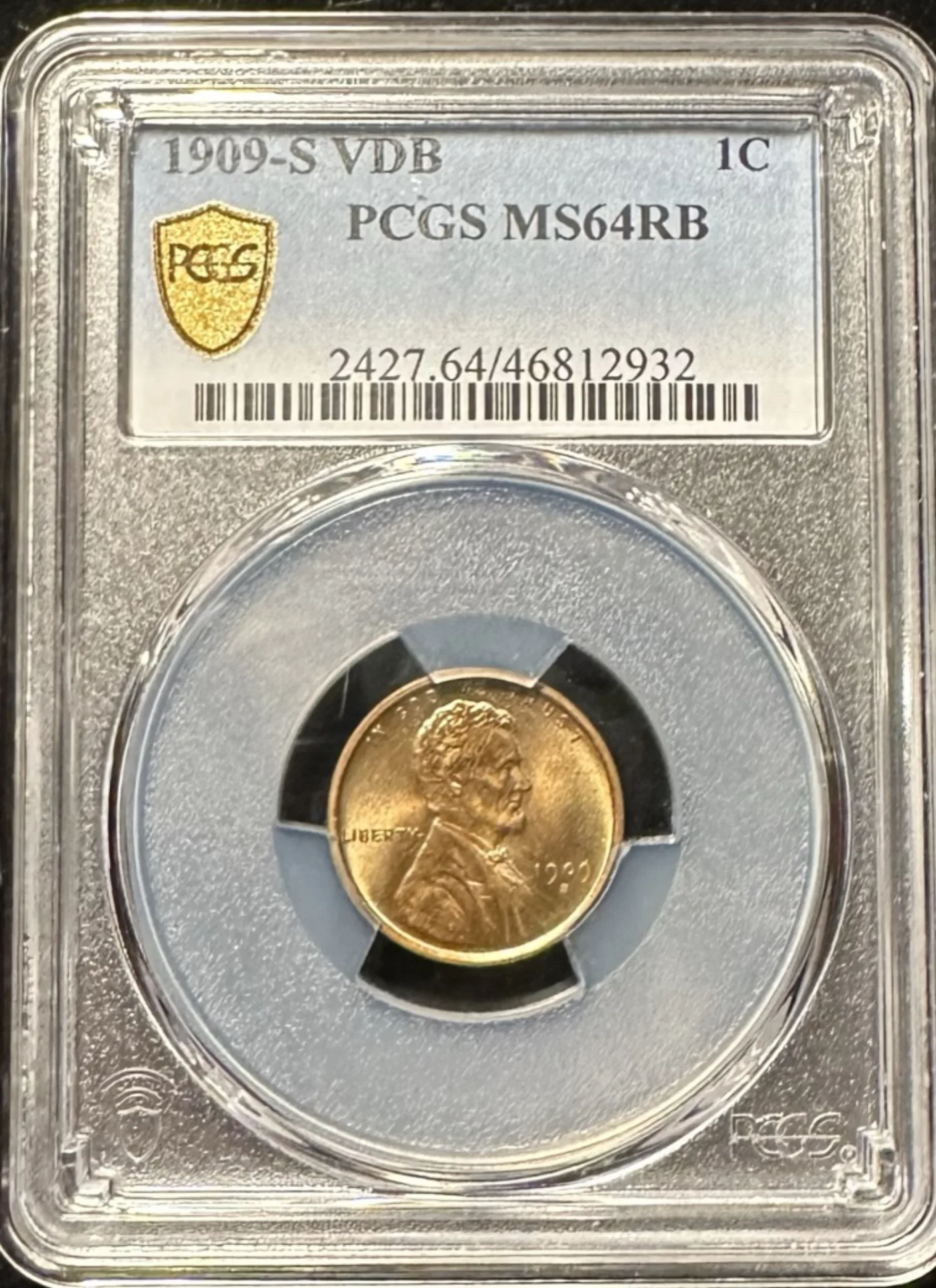
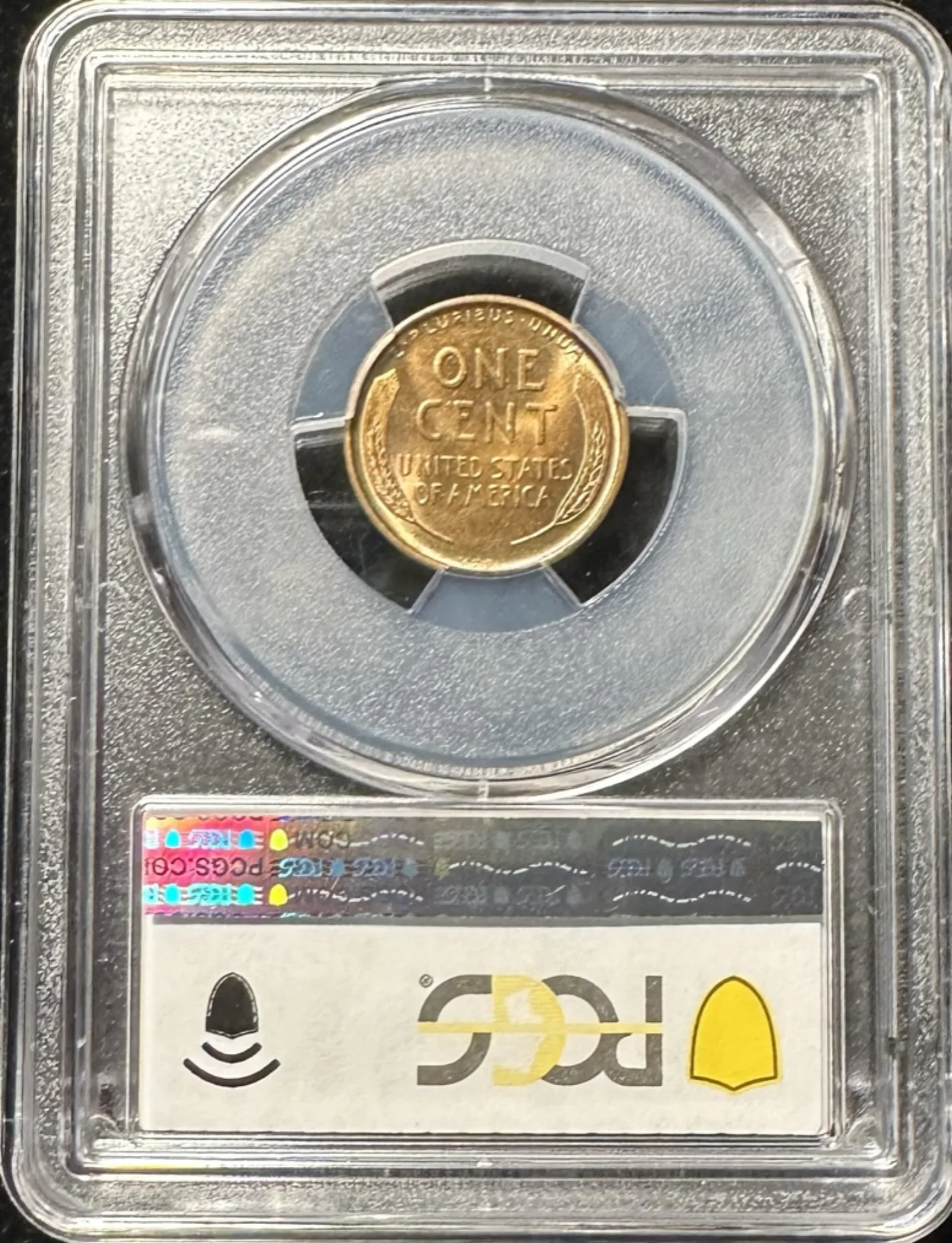
The grade on the label also drives the price, and on a key date the spread between grades is steep. How the services arrive at those numbers is covered in our guide to third-party grading.
Reading a Worn Coin
Catalogue photographs show gem examples. The coin that turns up in an inherited jar is brown, rubbed, and has spent decades in circulation — and the bottom rim of the reverse, where the initials sit, is exactly where wear lands first.
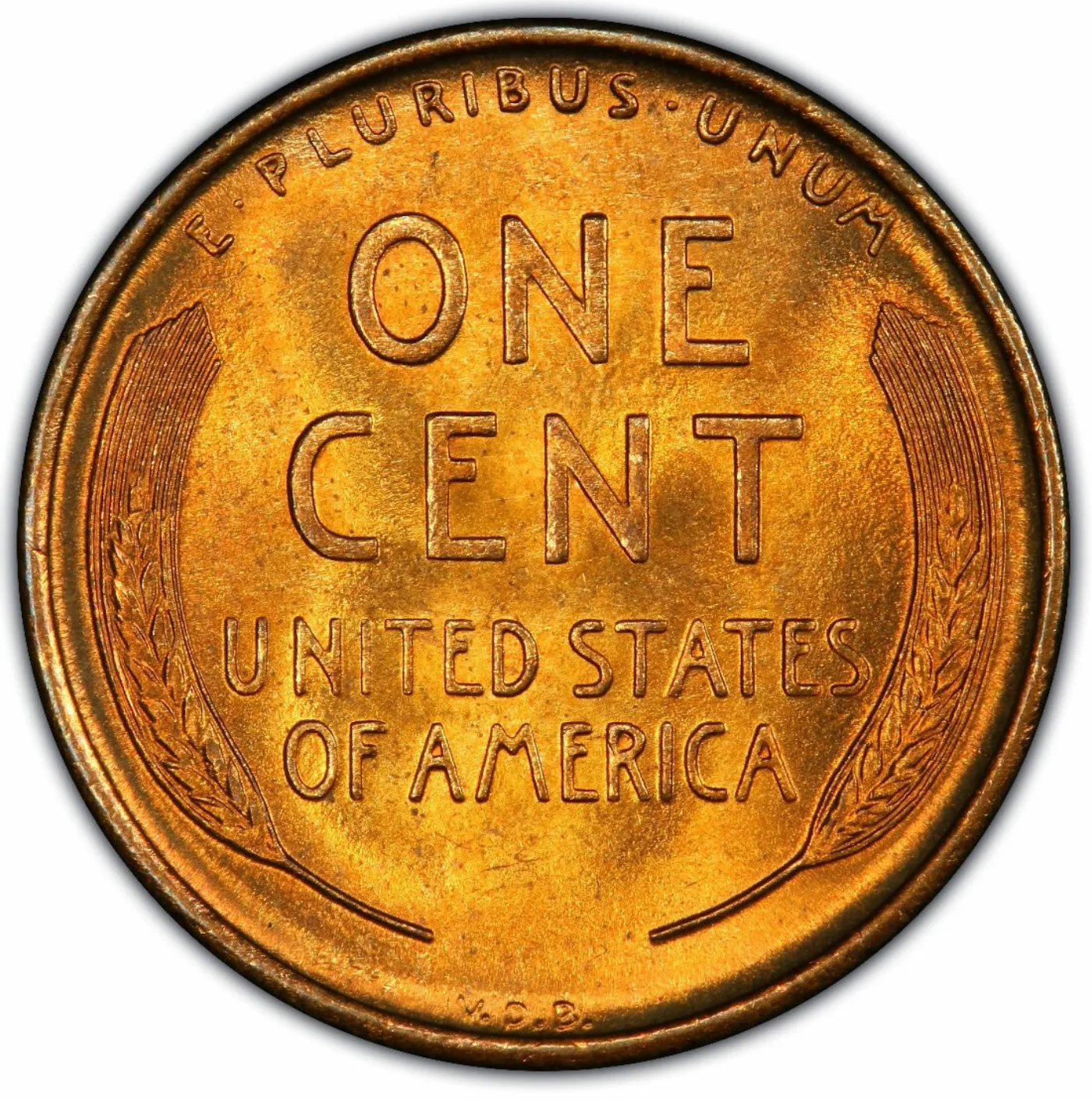
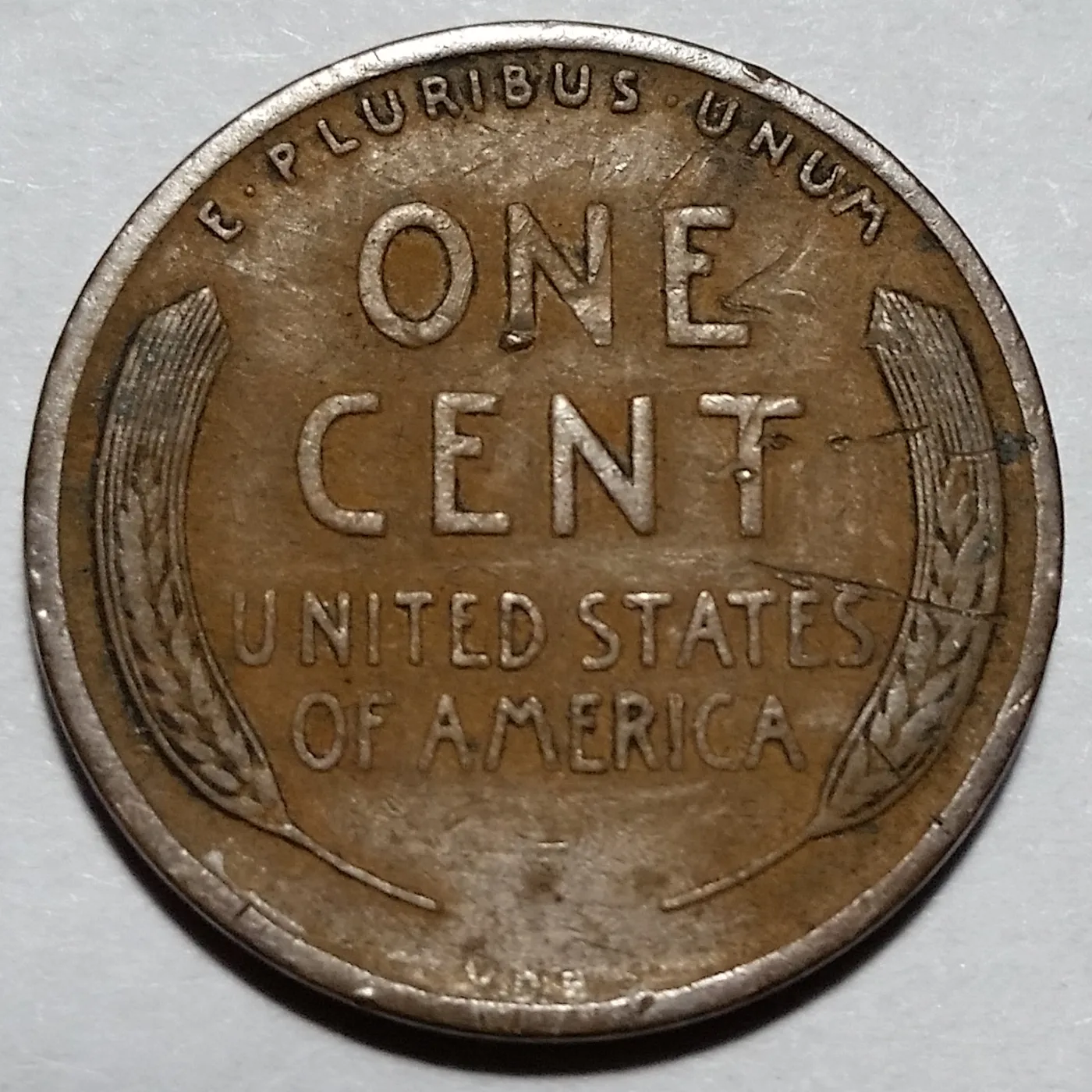
Two habits help. Photograph the rim area and enlarge the image rather than straining at the coin, and never clean a cent to make the initials easier to see — cleaning destroys the original surface and a substantial part of the value along with it, as our guide to cleaning and preservation sets out.
The Short Version
Check the reverse rim for V.D.B. Check under the date for an S. Both present is the key date; initials alone is the common Philadelphia coin; S alone is the semi-key; neither is the most common of the four. Two looks, opposite faces, ten seconds.
And if both are present, treat the coin as unverified until someone qualified has examined it. The 1909-S VDB is faked precisely because one added letter is all that separates a few dollars from a great deal more.
Frequently Asked Questions
Where are the VDB initials on a 1909 cent?
On the reverse, at the very bottom edge, between the ends of the two wheat stalks. They read V.D.B. and are small — on a worn coin they can be almost invisible, but nothing else occupies that spot, so if the rim there is clean the coin has no initials.
Where is the mint mark on a 1909 Lincoln cent?
On the obverse, directly below the date. An S means San Francisco. No mint mark means Philadelphia. The two marks sit on opposite sides of the coin, so you have to turn it over to identify a 1909 cent — checking only one face tells you half the answer.
How much rarer is the 1909-S VDB than the others?
Enormously. San Francisco struck 484,000 1909-S VDB cents. Philadelphia struck 27,995,000 with the initials and 72,702,618 without, and San Francisco struck a further 1,825,000 without. The key date is roughly one coin in every 58 struck that year.
Why were the VDB initials removed in 1909?
Victor David Brenner designed the cent, and his initials were considered too prominent for a circulating coin once it was released. They were taken off the reverse partway through 1909. Brenner's initials returned in 1918, but moved to the obverse, where they sit in tiny letters on Lincoln's shoulder.
How is a fake 1909-S VDB usually made?
Most commonly by adding an S mint mark to a genuine 1909 VDB from Philadelphia, since that coin is common and already carries the initials. Altered dates on later S-mint cents are also seen. Look for a mint mark that sits at the wrong angle or spacing, tooling marks around it, or a surface that differs in colour where metal has been worked.