Classic Head Large Cent Identification Guide: John Reich Design, 1809 Key Date, 1810/09 and 1811/0 Overdates, Sheldon Varieties, Grading, and Values
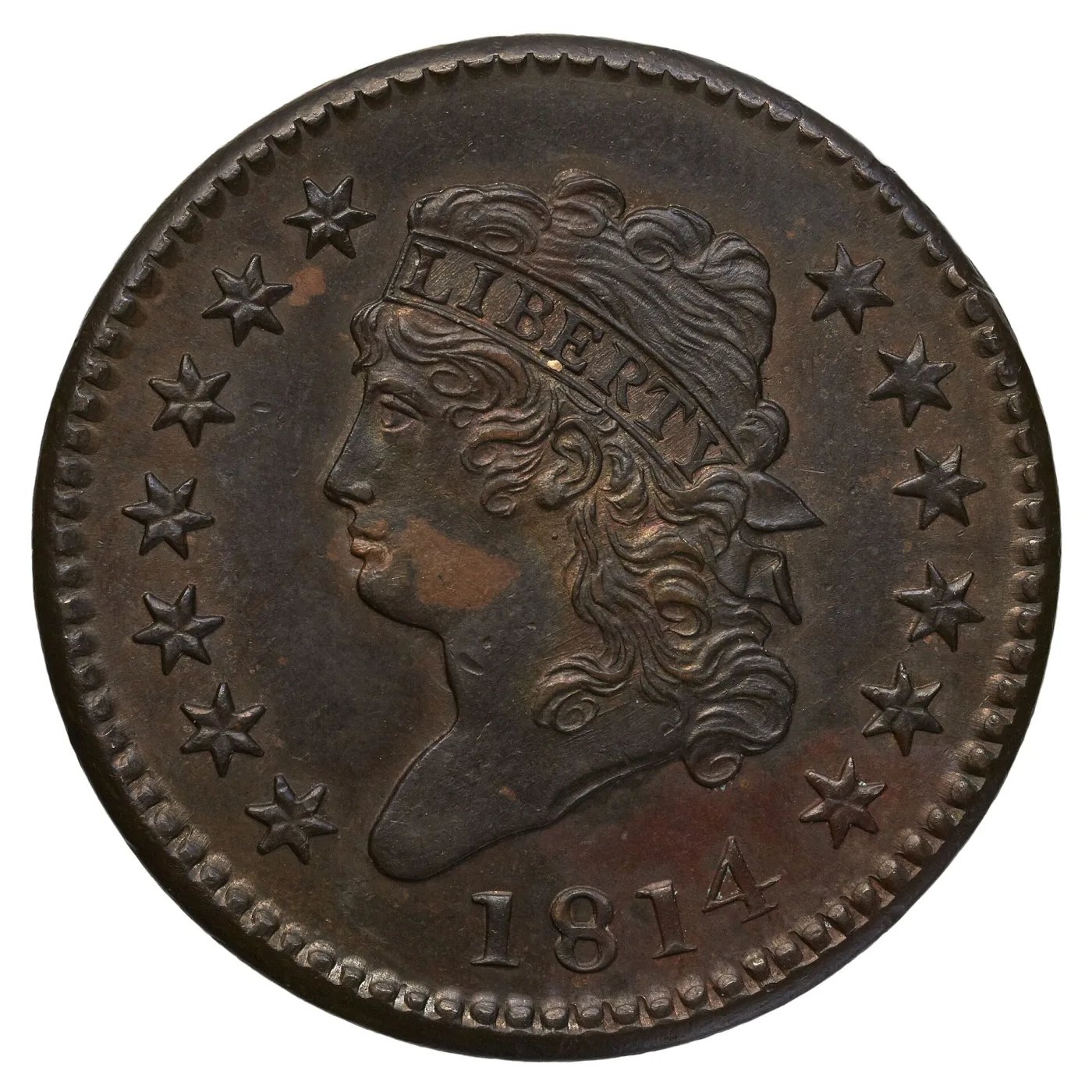
The Classic Head Large Cent is the third major design type of the United States large cent (one-cent) denomination, struck in pure copper at the Philadelphia Mint every year from 1808 through 1814. It is the shortest-lived of all the large cent types — just seven dates over seven consecutive years — yet it is one of the most challenging and rewarding series in early American copper to collect. Designed by John Reich, the German-born engraver hired in 1807 to modernize American coinage, the Classic Head introduced a Greek-revival portrait of Liberty wearing a band inscribed “LIBERTY” across her forehead, the same classical motif Reich applied to the half cent beginning in 1809.
What makes the Classic Head Large Cent so distinctive is not its rarity by mintage — most dates were produced in the hundreds of thousands or low millions — but the notorious quality of the copper itself. The planchets supplied to the Mint during the War of 1812 era were soft, impure, and prone to porosity, so the overwhelming majority of surviving Classic Head cents are dark, granular, and weakly struck. A glossy, fully struck, problem-free Classic Head cent is the exception rather than the rule, and that scarcity of quality — rather than scarcity of mintage — is what drives prices skyward in higher grades. A single 1809 in Mint State Brown has sold for over $129,000.
This guide is the comprehensive 2026 reference for identifying, attributing, grading, authenticating, and valuing Classic Head Large Cents. You will learn the diagnostic features that separate the Classic Head from the earlier Draped Bust large cent and the later Coronet/Matron Head large cent, how to recognize the 1809 key date, the 1810/09 and 1811/0 overdates, the 1812 Small Date and Large Date, the 1814 Plain 4 and Crosslet 4, the Sheldon die-variety attribution system, EAC grading standards for porous copper, counterfeit and altered-date detection, and current retail market values across every date. Whether you are pulling a mystery copper from an inherited collection, completing a four-coin large cent type set, or chasing high-grade examples of this short and difficult series, this guide will give you a working specialist’s command of the type.
History and Background
The Classic Head Large Cent was introduced in 1808 as part of a broad Mint redesign led by John Reich, who had been hired by the Philadelphia Mint in 1807 specifically to modernize the appearance of American coinage. Reich had already replaced Robert Scot’s Draped Bust design on the half dollar in 1807 with the Capped Bust style that would dominate American silver for three decades. The copper denominations received the next round of his attention: the Classic Head replaced the Draped Bust large cent beginning in 1808, and replaced the Draped Bust half cent beginning in 1809.
The name “Classic Head” refers to the Greek and Roman classical revival in early-nineteenth-century American art and architecture. Reich’s Liberty wears a band inscribed “LIBERTY” across her forehead — a stylistic flourish meant to evoke the laurel wreaths and victory crowns of antiquity — with her hair tied in a knot at the back. The design signaled an independent republican tradition rooted in classical antiquity rather than the monarchical iconography of the British, French, and Spanish coins still circulating in 1810s America. Ironically, the portrait was widely criticized at the time: Liberty’s full, rounded features struck many contemporaries as more masculine than graceful, and the design was never beloved during its brief life.
Unlike the half cent — whose Classic Head version limped along irregularly from 1809 to 1836 with a thirteen-year production gap — the Classic Head Large Cent was struck consistently every single year of its existence: 1808, 1809, 1810, 1811, 1812, 1813, and 1814. There are no missing dates and no proof-only or restrike issues within the type. This makes it, on paper, one of the most straightforward large cent series to complete by date. The difficulty lies entirely in condition and surface quality, not in finding examples of each year.
The War of 1812 and the End of the Type
The Classic Head era coincided almost exactly with the buildup to and prosecution of the War of 1812. The war severely disrupted the Mint’s supply of copper planchets, which were imported from Boulton & Watt of Birmingham, England — the very country the United States was now fighting. As British planchet shipments dried up, the Mint was forced to use whatever domestic copper it could obtain, much of it of poor quality. Cent production ceased entirely after 1814, and no large cents were struck in 1815 at all — the only year between 1793 and 1857 with no large cent production. When coinage resumed in 1816, the Mint introduced a new design, the Coronet (Matron) Head, retiring the Classic Head from the large cent after just seven years.
Companion to the Classic Head Half Cent
The same Reich portrait was used on the Classic Head half cent beginning in 1809. The half cent retained the design all the way through 1836, long after the large cent abandoned it — making the two denominations a natural companion pairing for collectors. Reich’s Classic Head motif also outlived both coppers in gold: William Kneass adapted it for the Classic Head Quarter Eagle ($2.50 gold) of 1834-1839 and the matching half eagle, carrying the same fillet-headband Liberty onto the precious-metal coinage. A John Reich type collector typically pursues both Classic Head coppers alongside Reich’s silver Capped Bust issues, such as the Capped Bust half dollar, the Capped Bust quarter, and the Capped Bust dime.
Design and Diagnostic Features
Identifying a Classic Head large cent at a glance requires only a few features, but distinguishing it from the adjacent Draped Bust and Coronet types — and attributing dates and varieties within the series — requires careful attention to the headband, lettering, stars, and date placement.
Obverse
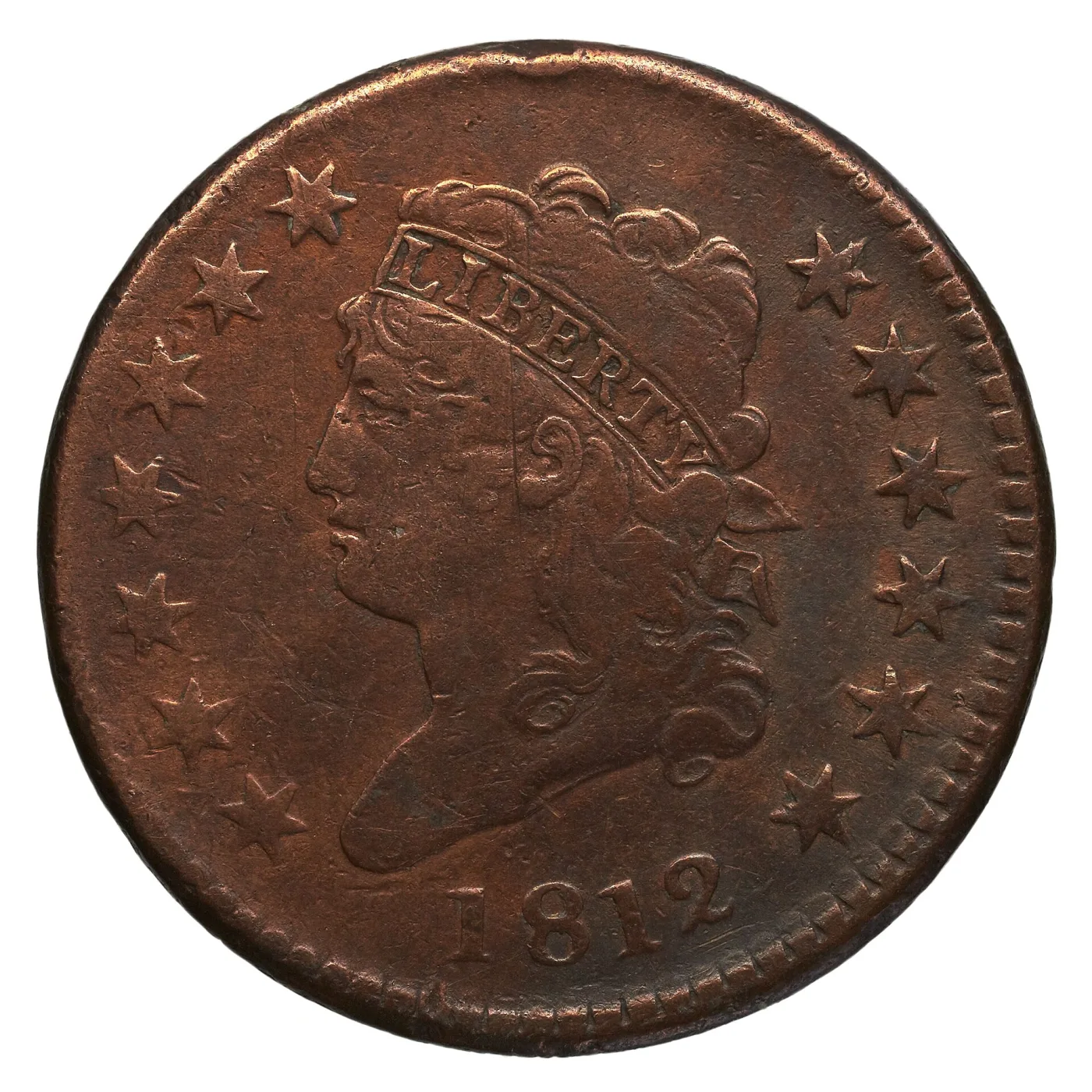
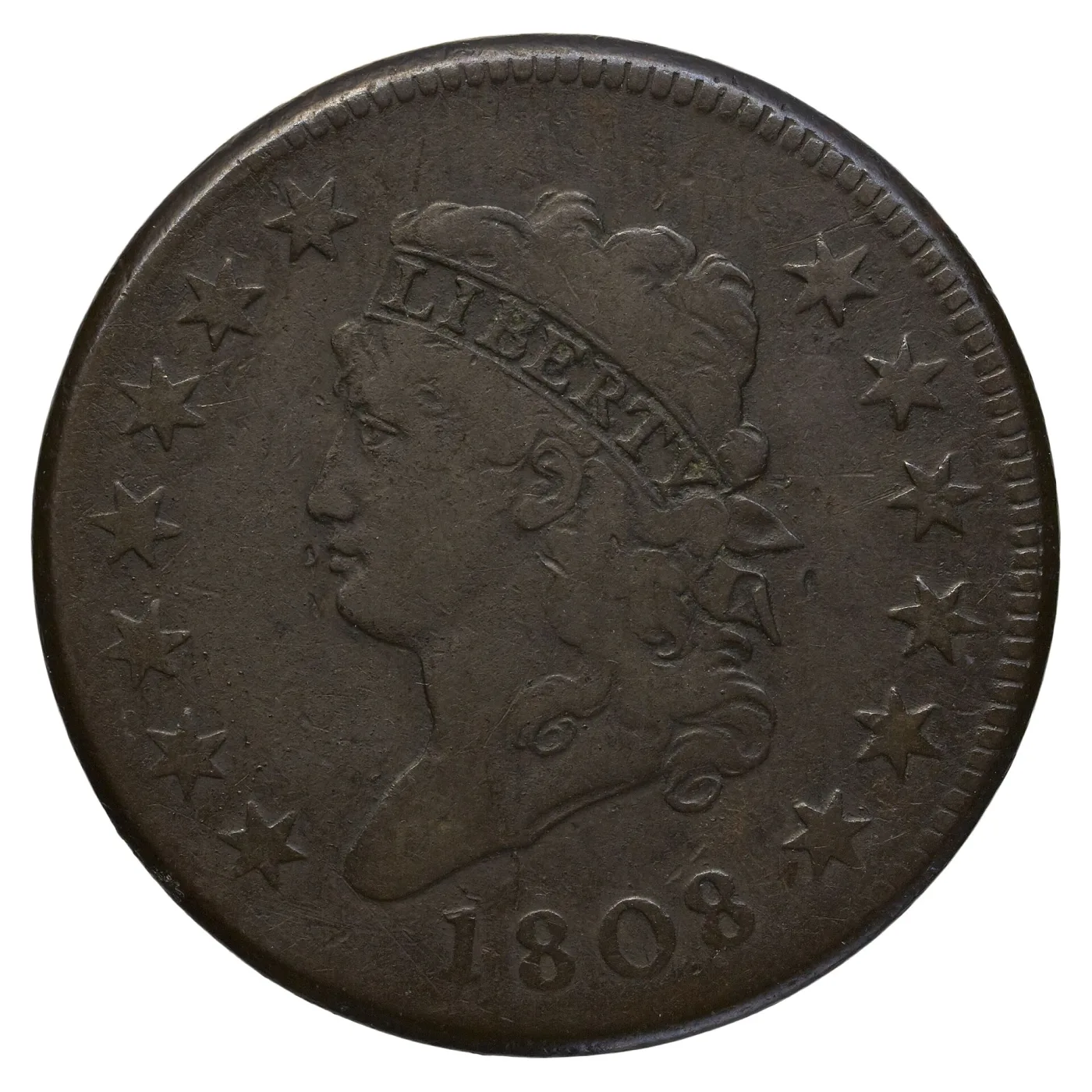
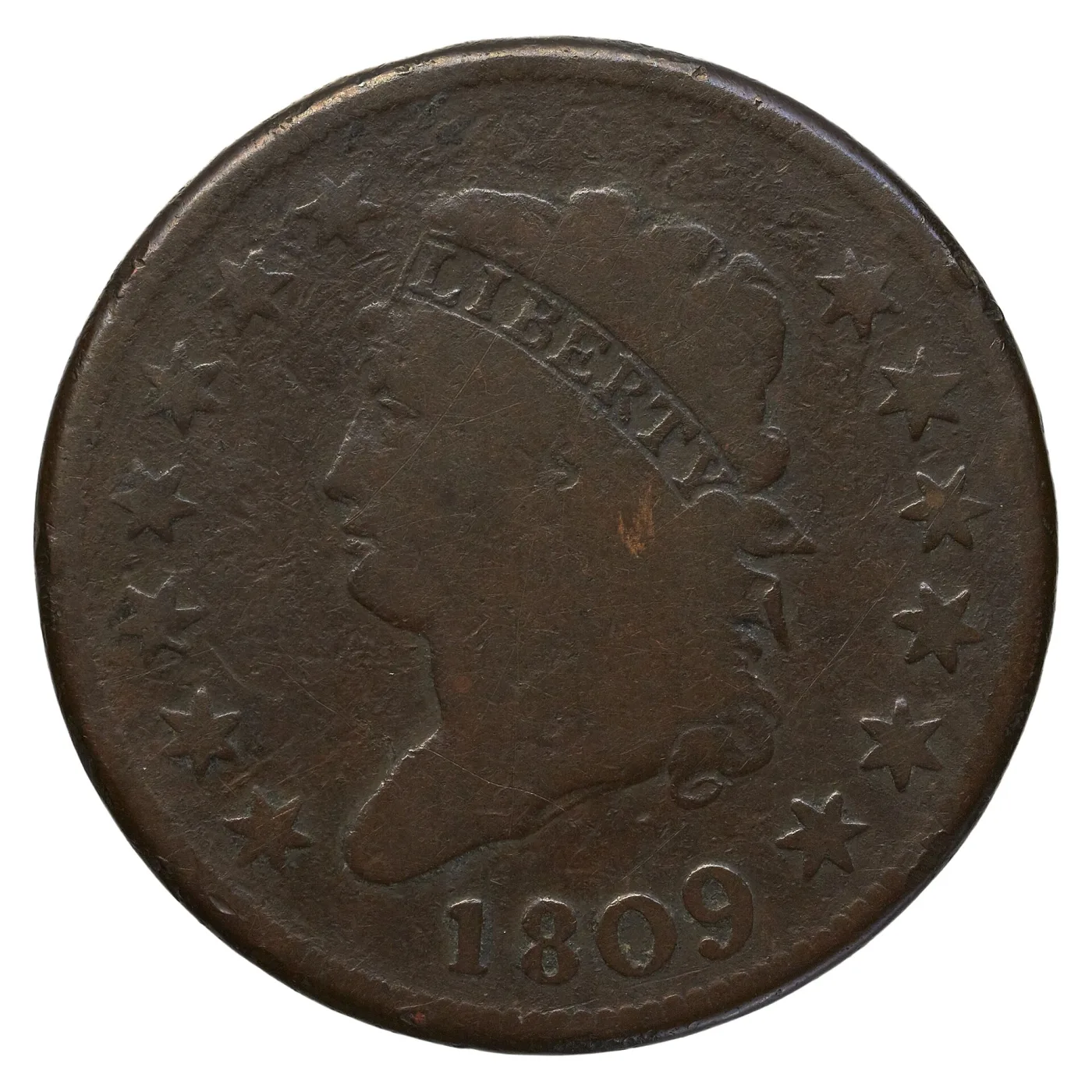
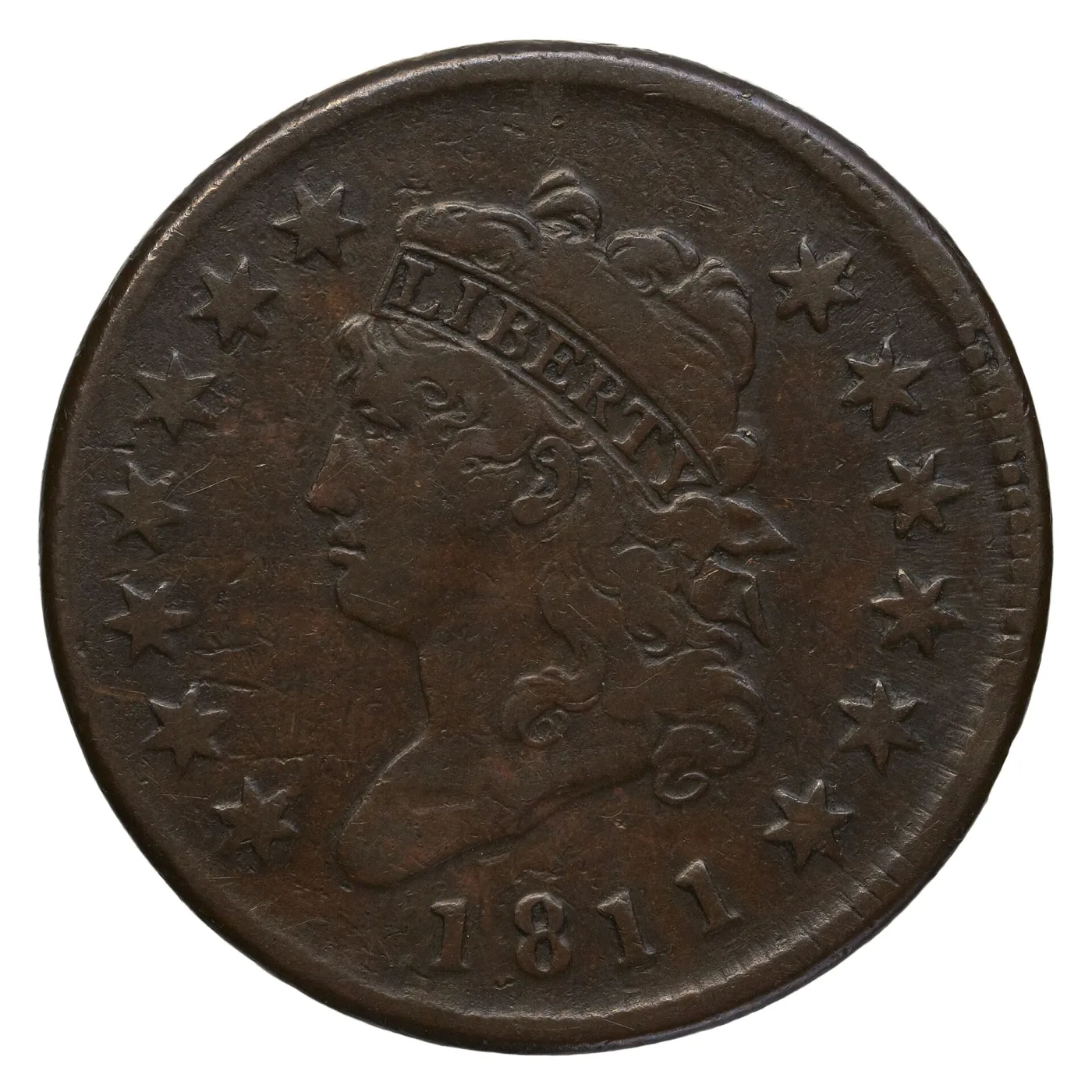
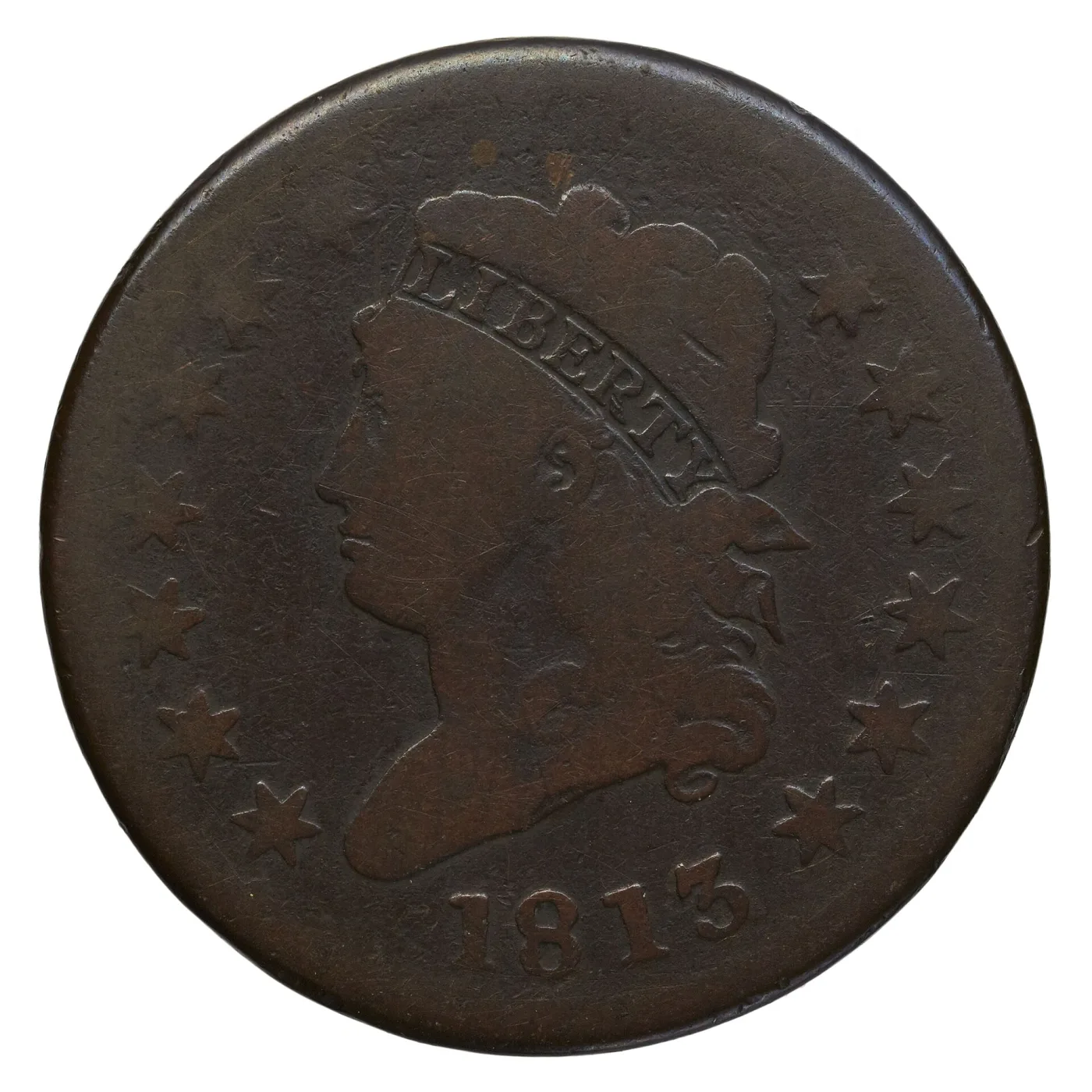
Liberty faces left, with her hair tied in a knot at the back of the head and a broad band inscribed “LIBERTY” running across her forehead. A curl of hair falls down in front of and behind the ear. Thirteen stars surround the portrait — seven to the left, six to the right — and the date appears below the bust at the base of the coin. There is no mint mark on any Classic Head large cent; the entire series was struck at the Philadelphia Mint, and branch mints did not yet exist.
Reverse
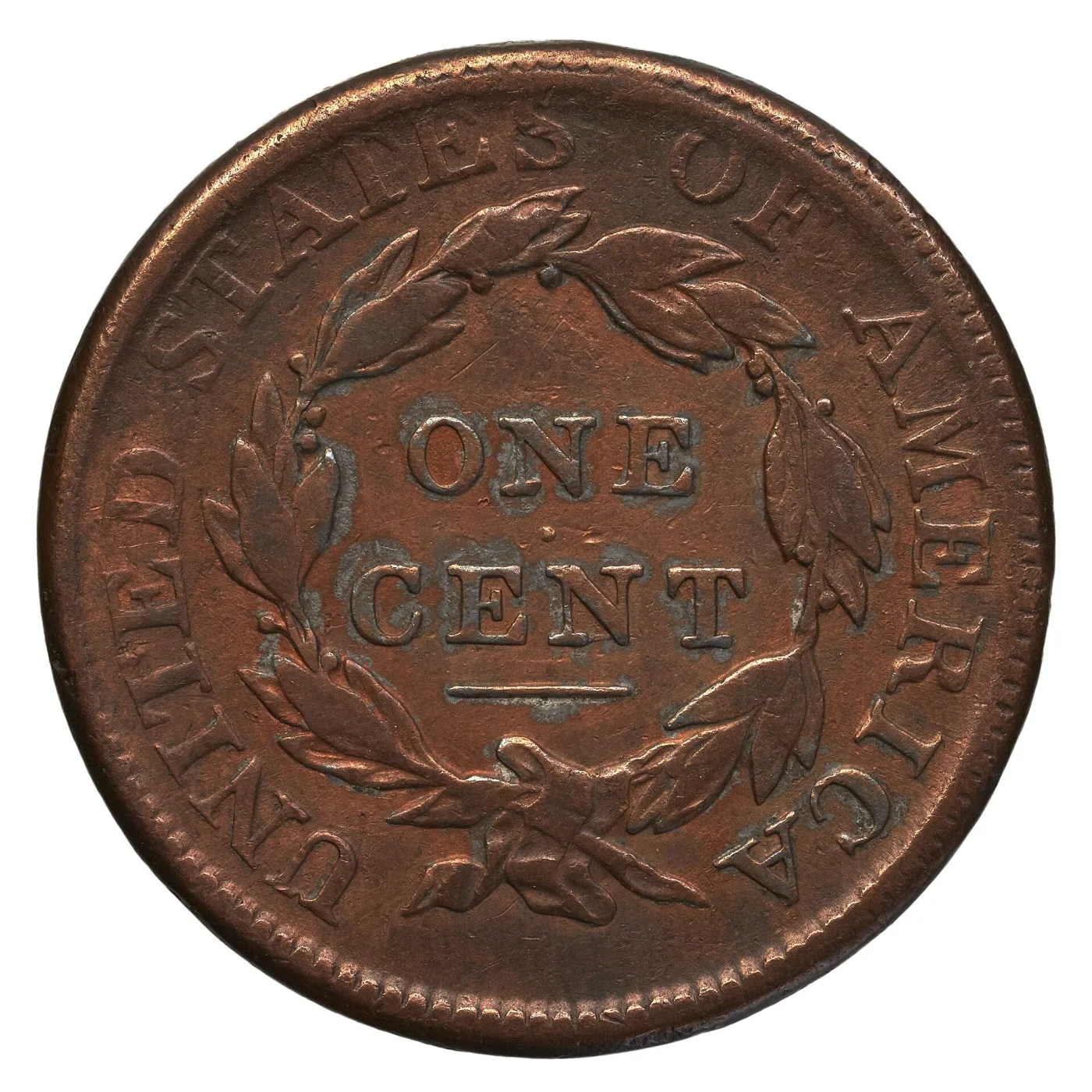
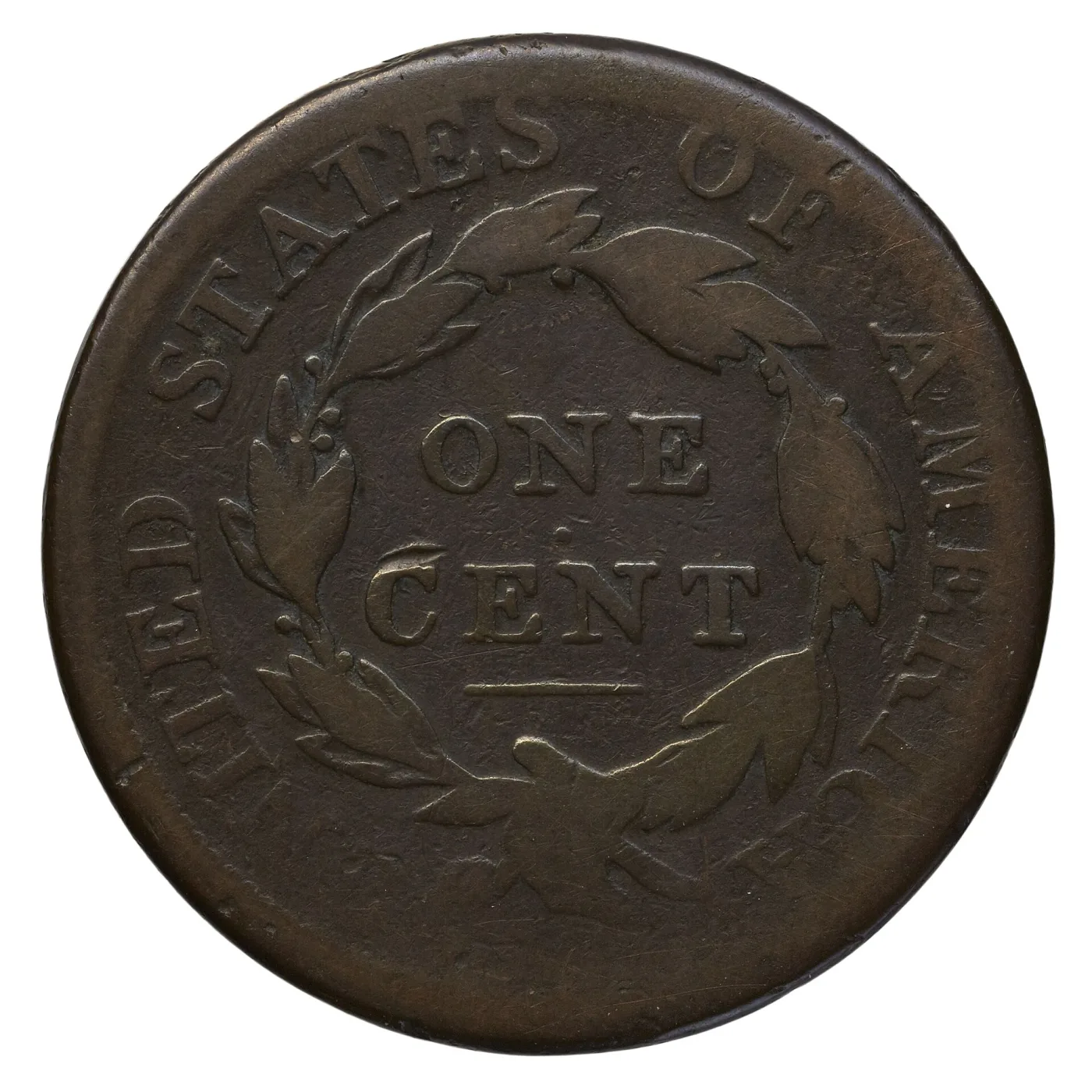
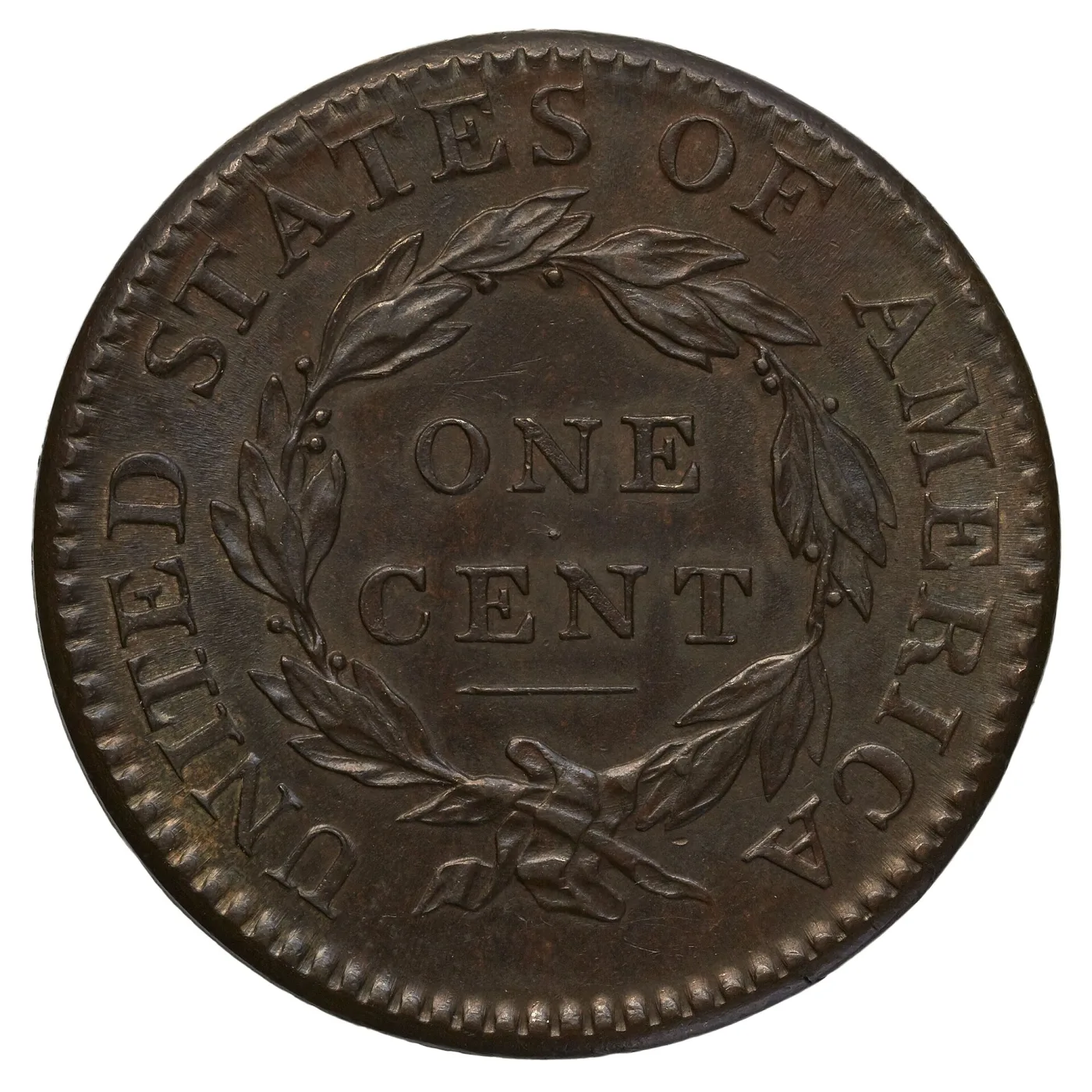
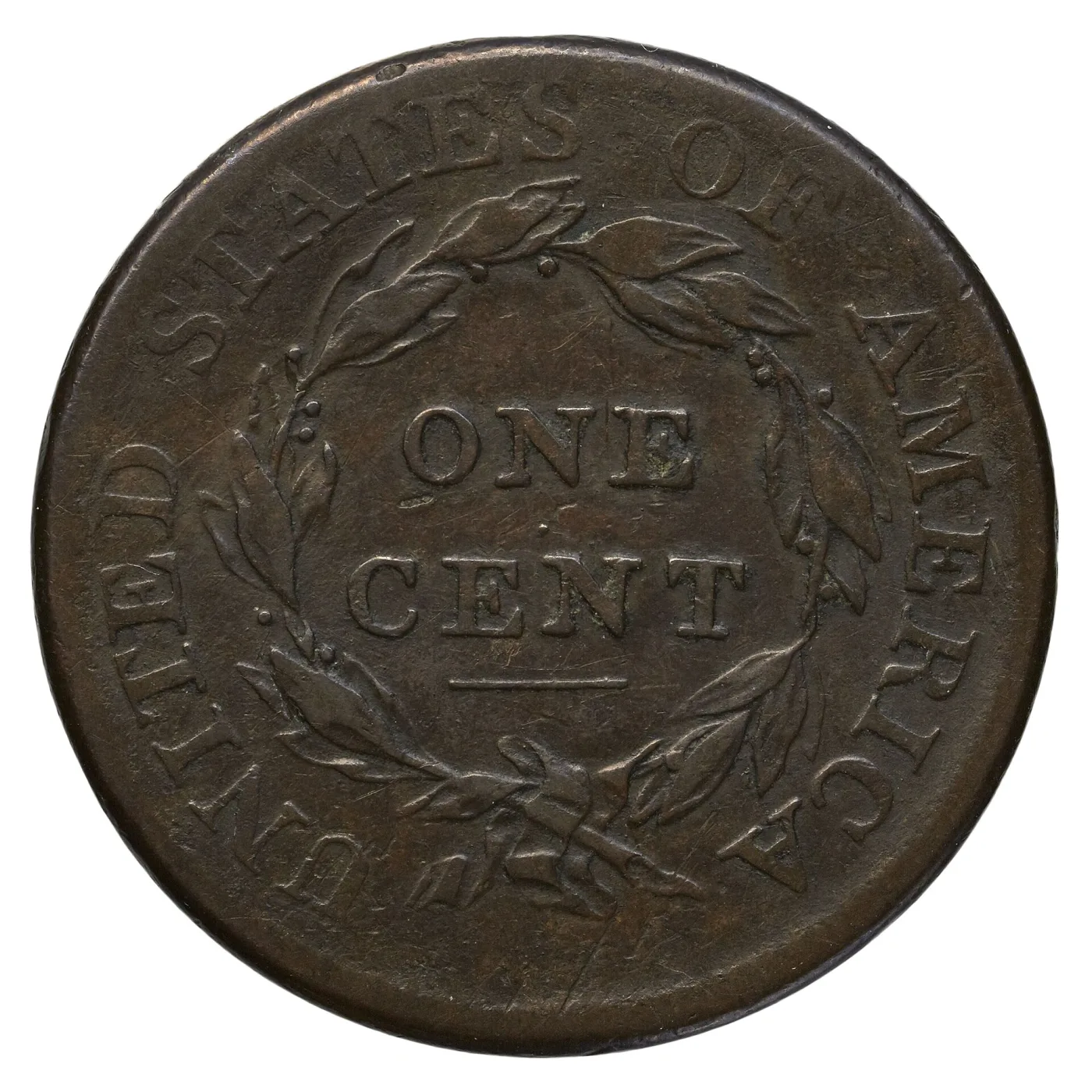
The reverse shows “ONE CENT” inside a continuous wreath of laurel-style leaves, with “UNITED STATES OF AMERICA” arching around the outside. The wreath is tied at the bottom with a ribbon bow, and the field between that bow and the rim is empty. Reich dropped the fraction here exactly as he dropped the “1/200” from his half cent, so a Classic Head cent carries no “1/100” at all. That absence is a useful dating check in its own right, because every earlier large cent — Chain, Wreath, Liberty Cap and Draped Bust — does carry the fraction. If you are looking at a cent with “1/100” under the wreath, it is not a Classic Head.
Edge
The edge is plain (not lettered, not reeded). Earlier large cents of the 1790s sometimes carried lettered or decorated edges, but all Classic Head cents have a plain edge. Any large cent with a lettered edge is not a Classic Head.
Diagnostic Quick Identification
To separate the three early portrait types at a glance, look at the head:
- Draped Bust (1796-1807): Liberty’s hair flows loosely back, tied with a ribbon bow at the back; drapery covers the bust; “LIBERTY” arches above the head as separate raised letters.
- Classic Head (1808-1814): Liberty wears a broad classical band across the forehead reading “LIBERTY”; hair is tied in a knot at the back; the head is full and rounded. The headband is the single most reliable visual cue.
- Coronet / Matron Head (1816-1839): Liberty wears a coronet (tiara) on top of her head inscribed “LIBERTY,” with beaded hair cords; the head sits higher and more upright.
The forehead band versus the coronet-on-top distinction is the fastest way to tell a Classic Head from the Coronet type that followed it.
Composition and Physical Specifications
The Classic Head Large Cent specifications match the large cent denomination of the period and are essential for authentication.
Standard Specifications (1808-1814)
- Composition: 100% copper (pure)
- Weight: 10.89 grams (168 grains)
- Diameter: approximately 29 mm
- Edge: Plain
- Mint: Philadelphia only (no mint mark)
- Designer: John Reich (obverse and reverse)
- Years struck: 1808, 1809, 1810, 1811, 1812, 1813, 1814 (all seven years, no gaps)
Any coin claimed to be a Classic Head large cent that weighs far outside the 10.0-11.5 gram range, has a diameter outside roughly 28-30 mm, or has a non-plain edge should be examined for authenticity. Note that genuine Classic Head cents on porous, corroded planchets can weigh slightly under standard because of metal loss to corrosion, so weight alone is not conclusive — it is one data point among several.
The Planchet Quality Problem
No discussion of the Classic Head Large Cent is complete without understanding the central fact of the series: the copper itself is bad. This single issue dominates grading, value, and collecting strategy more than any rarity or variety.
Why the Copper Is Poor
The Mint’s high-quality planchets came from Boulton & Watt in Birmingham, England. As tensions with Britain escalated toward the War of 1812 and then erupted into open conflict, those shipments became unreliable and finally stopped. The Mint substituted domestically sourced copper of inconsistent purity, often containing impurities that made the planchets brittle, prone to surface porosity, and difficult to strike up fully. The result is that a large share of Classic Head cents — even technically high-grade examples — show dark color, granular or “porous” surfaces, planchet flaws, and weak central detail.
What Porosity Looks Like
Porosity appears as a fine, rough, sandpaper-like texture across the fields and devices, often accompanied by dark, uneven color. It is the result of copper corrosion and impurity reacting over two centuries, and it cannot be removed without destroying the coin. Collectors distinguish “porous” (rough texture throughout) from “granular” (coarser) and from “smooth/glossy” (the prized minority of coins with original undisturbed surfaces). A smooth, glossy Classic Head cent in any grade commands a strong premium precisely because so few survive that way.
Why This Matters for Value
Because clean surfaces are scarce, the price spread between an average porous example and a smooth, glossy one of the same technical grade can be enormous — often 2x to 5x or more. This is unlike most U.S. series, where date and grade drive nearly all the value. For Classic Head cents, surface quality is a third pricing axis as important as date and grade. When evaluating any Classic Head cent, assess the surface first: is it smooth and glossy, lightly porous, or heavily porous and corroded? That judgment will frame everything else about the coin’s value.
Date-by-Date Analysis (1808-1814)
The Classic Head Large Cent contains exactly seven dates, struck in seven consecutive years with no gaps. The values below are 2026 retail estimates for problem-free examples with average (lightly porous) surfaces; smooth, glossy examples command substantial premiums, while heavily corroded examples trade at steep discounts.
1808 — First Year of Type
Mintage: 1,007,000. The first year of the Classic Head design on the large cent. Available in circulated grades, genuinely scarce in the higher grades, and rare with smooth surfaces. A single major die variety (Sheldon-277 is the most familiar) plus minor sub-varieties. Approximate values: G-4 $90, F-12 $300, VF-20 $600, EF-40 $1,500, AU-50 $3,500, MS-63 BN $12,000+.
1809 — The Key Date
Mintage: 222,867 — the lowest of the series and the recognized key date of the Classic Head large cent. The 1809 is notoriously found dark and porous, and finding any example with pleasing surfaces is a major challenge. Only one die marriage is known for the date (Sheldon-280), which means every genuine 1809 Classic Head cent is the same variety. There is also a recognized 1809 “9 over inverted 9” treatment of the final digit collected by specialists. The famous record sale of an 1809 in MS-64 Brown realized $129,250, illustrating how dramatically value escalates for this date in top condition. Approximate values: G-4 $200, F-12 $650, VF-20 $1,400, EF-40 $3,500, AU-50 $8,000, MS-63 BN $30,000+.
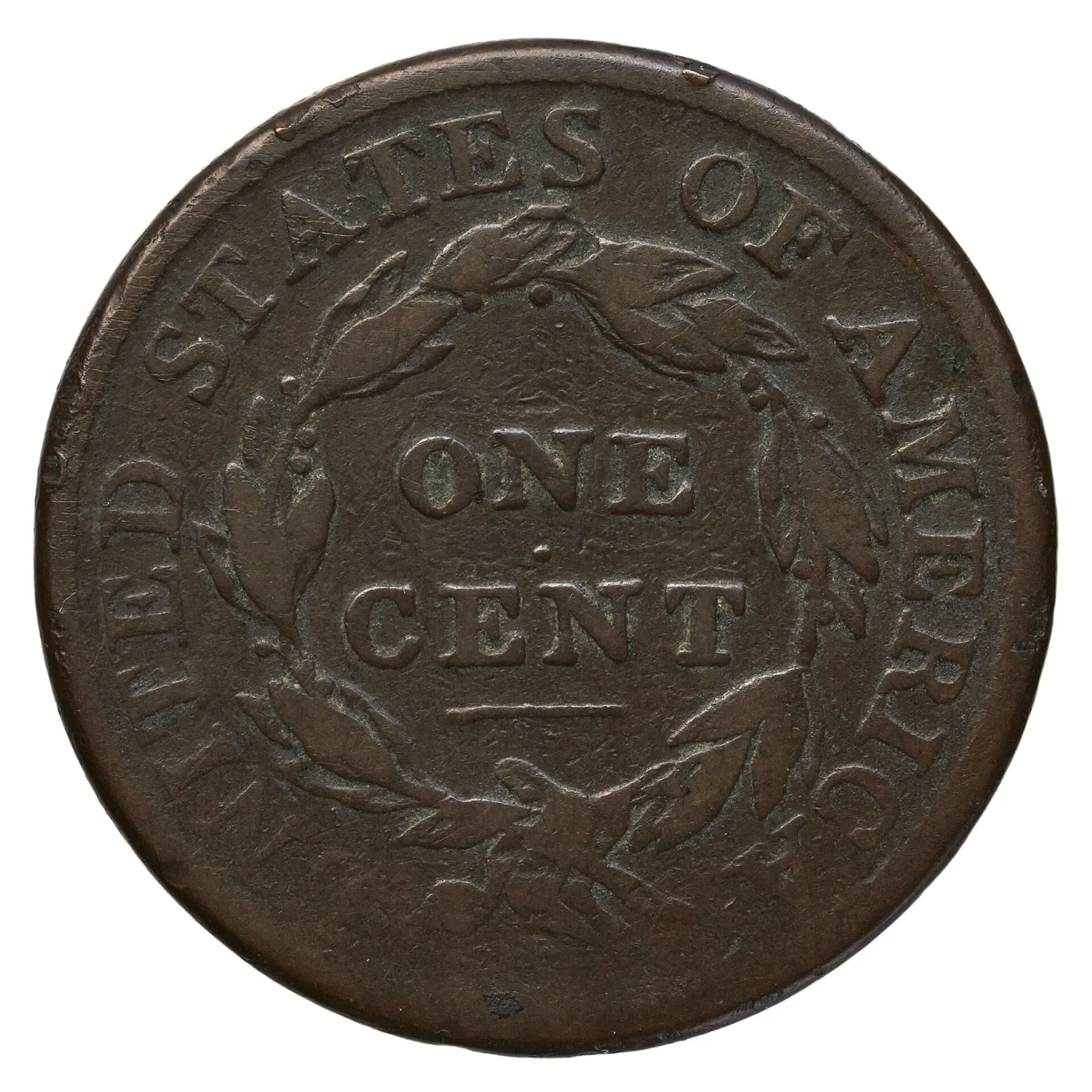
1810 — Highest Mintage / 1810/09 Overdate
Mintage: 1,458,500 — the highest-output year of the series. The 1810 exists in two principal varieties: the Normal Date and the 1810/09 Overdate, where an 1810 die was punched over a leftover 1809 die, leaving traces of the 9 beneath the 0. Both are collected; the overdate carries a premium. Approximate values (Normal Date): G-4 $70, F-12 $200, VF-20 $450, EF-40 $1,200, AU-50 $3,000, MS-63 BN $10,000+. The 1810/09 Overdate runs roughly 1.5x to 2x these figures in circulated grades.
1811 — Low Mintage / 1811/0 Overdate (S-286)
Mintage: 218,025 — the second-lowest mintage of the series, very close to the 1809. The 1811 exists in just two die marriages: the 1811/0 Overdate (Sheldon-286), in which an 1811 die was punched over an 1810 die, and the Normal Date (Sheldon-287). The 1811 rivals the 1809 as the hardest date to find with good surfaces, and many collectors consider the two together as the twin difficulty of the type. Approximate values (Normal Date): G-4 $120, F-12 $400, VF-20 $900, EF-40 $2,200, AU-50 $5,500, MS-63 BN $20,000+. The 1811/0 Overdate (S-286) trades at a premium, particularly in higher grades.
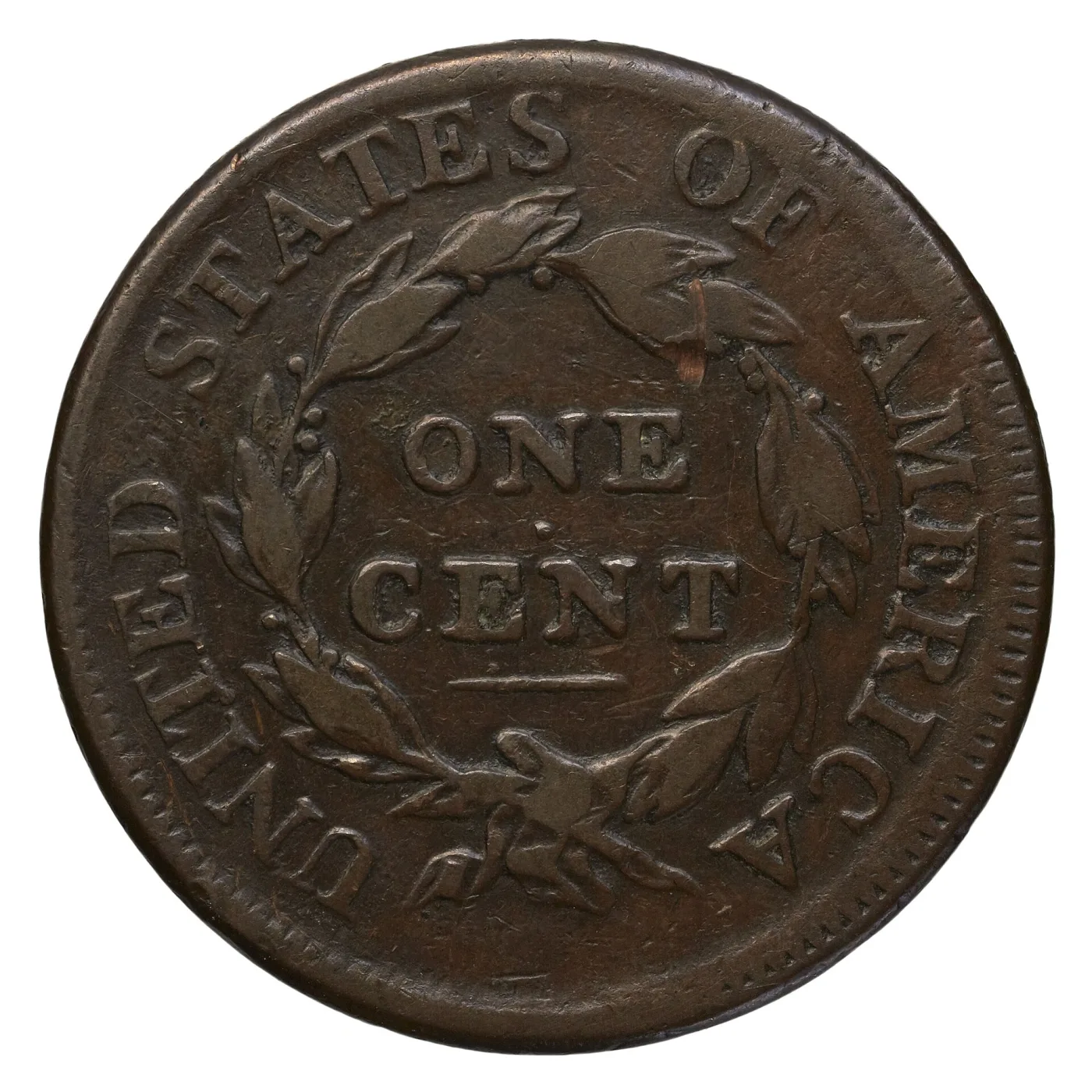
1812 — Small Date and Large Date
Mintage: 1,075,500. The 1812 is a more available date with two collected varieties: the Small Date and the Large Date, distinguished by the size of the numerals in the date. Both are reasonably obtainable in circulated grades. Approximate values: G-4 $80, F-12 $220, VF-20 $475, EF-40 $1,200, AU-50 $3,000, MS-63 BN $10,000+.
1813 — Scarcer Date
Mintage: 418,000. The 1813 is scarcer than the 1810, 1812, and 1814 and is often cited as one of the tougher dates of the series after the 1809 and 1811, particularly with clean surfaces. Approximate values: G-4 $120, F-12 $350, VF-20 $750, EF-40 $1,800, AU-50 $4,500, MS-63 BN $15,000+.
1814 — Final Year / Plain 4 and Crosslet 4
Mintage: 357,830. The final year of the Classic Head type and of large cent production before the 1815 gap. The 1814 exists in two well-known varieties distinguished by the style of the “4” in the date: the Plain 4 (a simple, open-topped 4) and the Crosslet 4 (a 4 with a small horizontal serif or “crosslet” at the right end of the crossbar). Both are collected and roughly comparable in availability. Approximate values: G-4 $90, F-12 $250, VF-20 $550, EF-40 $1,400, AU-50 $3,200, MS-63 BN $11,000+.
Key Dates, Rarities, and Condition Rarities
The Classic Head Large Cent is unusual in that no date is genuinely rare by mintage — even the key 1809 saw over 222,000 pieces struck. The rarity is almost entirely a matter of surviving condition and surface quality.
Key Dates by Mintage and Demand
- 1809: Lowest mintage (222,867) and the recognized key date. Single die marriage (S-280). Notoriously dark and porous; clean examples are major rarities.
- 1811: Second-lowest mintage (218,025) and a close rival to the 1809 for difficulty in clean condition. The 1811/0 Overdate (S-286) adds a sought-after variety dimension.
- 1813: A semi-key date, scarcer than the higher-mintage years and tough with good surfaces.
The Condition-Rarity Reality
Because so few Classic Head cents survive with smooth, glossy, problem-free surfaces, the entire type behaves as a condition rarity in higher grades. Mint State examples of any date are scarce, and Mint State examples with full red or red-brown color are extraordinary — the impure planchets simply did not preserve original mint color the way later, cleaner copper did. This is why a common-mintage 1810 in Gem Mint State can be worth more than a low-mintage key date in a circulated grade. When pricing Classic Head cents, condition and surface almost always matter more than the date.
Premium Varieties
- 1810/09 Overdate: The leftover-9 traces under the 0 make this a popular and collectible major variety.
- 1811/0 Overdate (S-286): The most famous variety of the series, combining a low-mintage date with a dramatic overdate.
- 1812 Small Date vs Large Date: A pair of collectible date-size varieties.
- 1814 Plain 4 vs Crosslet 4: A pair of collectible date-style varieties closing out the series.

Major Varieties and Overdates
The Classic Head Large Cent has fewer die varieties than the sprawling Draped Bust or Coronet Head series, but several of its varieties are famous and significantly affect value. Identify the variety before pricing any Classic Head cent in EF or better.
1810/09 Overdate
The 1810/09 shows traces of an underlying 9 beneath the final 0 of the date, the result of an 1810 die being punched over an unused 1809 die. Under a 5x or 10x loupe, the curve of the buried 9 is visible within and beside the 0. The overdate is the more interesting of the two 1810 varieties and carries a premium over the Normal Date.
1811/0 Overdate (Sheldon-286)
The single most celebrated variety of the type. An 1811 die was punched over a leftover 1810 die, leaving the top of the underlying 0 visible behind and below the final 1. Cataloged as Sheldon-286, it is one of only two die marriages for 1811 (the other being the Normal Date, Sheldon-287). Because the 1811 is already a low-mintage date, the overdate combines genuine scarcity with strong variety demand and commands meaningful premiums, especially in higher grades.
1812 Small Date vs Large Date
The 1812 comes with two sizes of date numerals. The Large Date has noticeably taller, heavier digits; the Small Date has smaller, more compact numerals. Both are collected; comparison to reference photos is the surest way to attribute a given coin, since the difference is one of proportion rather than a distinct feature.
1814 Plain 4 vs Crosslet 4
The 1814 date appears with two styles of the digit 4. The Plain 4 has a simple, open form with no serif at the end of the horizontal crossbar. The Crosslet 4 adds a small vertical serif or “crosslet” at the right end of the crossbar. This same Plain-4-versus-Crosslet-4 distinction appears on other coins of the era and is a classic early-copper attribution point. Examine the right end of the 4’s crossbar under magnification to attribute the variety.
9 Over Inverted 9 (1809)
The 1809 is sometimes encountered with the final digit showing repunching or an inverted-9 treatment. While less universally cataloged than the overdates above, it is collected by Classic Head specialists and noted in detailed variety references.
Sheldon Variety Attribution
Classic Head Large Cent varieties are cataloged under the Sheldon numbering system, the standard attribution language for U.S. large cents of 1793-1814. This is a crucial point that trips up newcomers: large cents use Sheldon (S-) numbers, while half cents use Cohen (C-) numbers. Do not confuse the two systems — a “C-1” belongs to the half cent world, while large cents of this era are “S-” numbers.
How Sheldon Numbers Work
The Sheldon system, established by Dr. William H. Sheldon in his landmark 1949 reference Early American Cents (later revised as Penny Whimsy in 1958), assigns a unique number to each die marriage — a specific obverse die paired with a specific reverse die. For the Classic Head series, the die marriages run roughly from Sheldon-277 through Sheldon-294, covering all seven dates. Some dates, like the 1809, have only a single die marriage (S-280), while others have several. Two of the most cited Classic Head Sheldon numbers are S-286 (the 1811/0 Overdate) and S-287 (the 1811 Normal Date).
NC Numbers
Extremely rare die marriages that Sheldon could not confirm with enough specimens were assigned “NC” (“Non-Collectible”) designations. A handful of Classic Head NC varieties exist and are prized by advanced specialists, though they are encountered far less often than in the Draped Bust series.
Why Sheldon Numbers Matter
Some die marriages are dramatically scarcer than others, and the rarity of a specific variety can multiply the value of an otherwise common date. Auction catalogs and certified-coin labels routinely cite the Sheldon number, and serious large cent collectors buy by variety as much as by date. Membership in the Early American Coppers (EAC) club and access to the standard references — Sheldon’s Penny Whimsy and William Noyes’s photographic die-state studies — are essential for advanced attribution. For most collectors, simply recording the Sheldon number from the certification label or auction description is sufficient.
Grading Classic Head Large Cents
Grading the Classic Head series is more demanding than grading almost any other large cent type, precisely because of the planchet quality problem. A grader must assess both technical wear (the Sheldon Scale, 1-70) and surface condition (porosity, color, planchet quality, eye appeal) — and for this series the surface assessment often matters more than the wear assessment.
Key Wear Points
The first areas to show wear on a Classic Head large cent are the high points of the portrait: Liberty’s hair above the eye and around the ear, the curl in front of the ear, and the cheek. The “LIBERTY” headband should be fully legible in Fine and better. On the reverse, the highest points of the wreath leaves and the bow wear first. Because so many examples are also weakly struck, a grader must distinguish wear (smooth, flattened high points) from strike weakness (soft detail present from the moment of minting) — a distinction that takes practice and reference comparison.
Color Designations
Mint State copper is graded in three color categories:
- BN (Brown): Less than 5% original mint red. The overwhelming majority of Mint State Classic Head cents fall here.
- RB (Red-Brown): 5%-95% original mint red. Scarce and carries a substantial premium.
- RD (Red): 95%+ original mint red. Exceptionally rare for this series because the impure planchets rarely preserved original color; commands an enormous premium when found.
The Surface (Porosity) Factor
Beyond wear and color, every Classic Head cent must be assessed for surface quality. A coin may grade VF-20 by wear but have heavily porous, granular surfaces that drop its market value below a smoother F-12. Third-party services assign “details” grades (e.g., “VF Details, Environmental Damage” or “Corrosion”) to coins with significant porosity, while EAC graders apply sharp numerical deductions. Always evaluate surface texture under good light: smooth and glossy is premium, lightly porous is average, and heavily porous or corroded is a discount coin.
EAC vs PCGS/NGC Grading
EAC (Early American Coppers) grades are typically 5-15 points more conservative than PCGS/NGC grades for the same coin, and the gap is often even wider for the porous Classic Head series. An EAC “VF-20” might receive a PCGS “EF-40.” EAC graders deduct heavily for porosity, cleaning, and any non-original surface — exactly the problems that plague this type. When buying from an EAC dealer, expect lower numerical grades but coins whose grade better reflects true quality; when buying certified PCGS/NGC coins, read the surface yourself and do not assume a high number means a smooth coin.
Counterfeit Detection and Authentication
Classic Head Large Cents have been counterfeited and, more commonly, altered for over a century — especially the 1809 key date and the 1811/0 overdate.
Altered Dates
The most common deception is altering a common date to a scarcer one. A genuine 1810 or 1812 can be tooled to read 1809, and a Normal Date 1811 can have its date manipulated to imitate the 1811/0 overdate. Examine the date digits under 10x magnification for irregular spacing, raised tool marks, smoothing in the fields around the date, or color differences between the digits and the surrounding surface. Because the 1809 has only one die marriage (S-280), any genuine 1809 must match that variety’s known diagnostics — a quick way to expose an altered date.
Cast Counterfeits
Cast counterfeits show characteristic surface pitting (the casting “orange peel”), softened detail, and seams along the edge. They typically weigh slightly differently from genuine struck coins and lack the crisp rims of a struck piece. The edge of a struck coin is sharp; a cast counterfeit edge often shows file or grinding marks where a casting seam was removed. Note that genuine Classic Head porosity is different in texture from casting pitting — porosity is finer and more uniform, while casting pits are often rounder and more irregular.
Modern Replicas
Replica and souvenir Classic Head cents exist, typically struck in brass or plated base metal and often bearing “COPY” stamped on the coin (required by U.S. law since 1973). They weigh incorrectly and show the wrong color under bright light. Always check weight and color before believing a too-good-to-be-true find.
Third-Party Certification
For any Classic Head large cent worth more than about $500, certification by PCGS, NGC, or ANACS is strongly recommended; for the 1809, the 1811/0 (S-286), and any Mint State example, certification is essentially required for resale. Certification resolves both authenticity and the surface/porosity question, which is critical for a series where surface quality drives so much of the value. Collectors should also weigh the EAC net-grading tradition, which applies sharper deductions for problems than the third-party services.
Current Market Values
Classic Head Large Cent values vary dramatically by date, variety, grade, and — uniquely for this series — surface quality. The figures below are 2026 retail estimates for problem-free examples with average (lightly porous) surfaces. Smooth, glossy examples can bring 2x-5x these figures; heavily porous or corroded coins trade well below them. Auction results for premium pieces can exceed retail substantially in strong markets.
Common Dates (1810, 1812, 1814)
- G-4: $70-$90
- F-12: $200-$250
- VF-20: $450-$550
- EF-40: $1,200-$1,400
- AU-50: $3,000-$3,200
- MS-63 BN: $10,000-$11,000
- MS-65 RB: $30,000+ (extreme rarity)
Better Dates (1808, 1813)
- G-4: $90-$120
- F-12: $300-$350
- VF-20: $600-$750
- EF-40: $1,500-$1,800
- AU-50: $3,500-$4,500
- MS-63 BN: $12,000-$15,000
Key Date — 1809
- G-4: $200
- F-12: $650
- VF-20: $1,400
- EF-40: $3,500
- AU-50: $8,000
- MS-63 BN: $30,000+
- MS-64 BN: $100,000+ (a documented sale reached $129,250)
Low-Mintage Date — 1811 (Normal Date, S-287)
- G-4: $120
- F-12: $400
- VF-20: $900
- EF-40: $2,200
- AU-50: $5,500
- MS-63 BN: $20,000+
Premium Varieties
- 1810/09 Overdate: roughly 1.5x-2x the Normal Date 1810 in circulated grades.
- 1811/0 Overdate (S-286): a strong premium over the Normal Date 1811, widening in higher grades.
- 1812 Small Date / Large Date: generally modest premiums; check current variety demand.
- 1814 Plain 4 / Crosslet 4: generally comparable; modest premiums for the scarcer of the two in a given grade.
Collecting Strategies
The Classic Head Large Cent supports several collecting approaches, from a single affordable type coin to an advanced surface-quality or variety pursuit.
Type Set
The simplest approach is a single Classic Head large cent as part of a four-coin large cent type set (Liberty Cap, Draped Bust, Classic Head, and Coronet/Braided Hair). Choose a common date such as 1810, 1812, or 1814 in VF-20 or EF-40. Budget: $450-$1,400 for a presentable circulated example. Prioritize surfaces — a smooth VF is a far better type coin than a porous EF, even at the same price.
Complete Date Set (Seven Coins)
Because the series has only seven dates and no gaps, a complete date set is achievable for most collectors — the challenge is condition and the 1809/1811 keys, not finding the years. A Fine-grade seven-coin set runs roughly $2,500-$3,500; an EF set runs roughly $12,000-$16,000; a matched Mint State set is a major undertaking costing well into six figures. The 1809 will be the most expensive and hardest coin to source with acceptable surfaces.
Variety Set
Adding the major varieties — the 1810/09 Overdate, the 1811/0 Overdate (S-286), the 1812 Small and Large Dates, and the 1814 Plain 4 and Crosslet 4 — turns the seven-coin date set into an eleven-coin variety set that captures the most interesting features of the type. This is a popular intermediate goal that adds depth without the open-ended commitment of a full Sheldon-marriage set.
Sheldon Die-Marriage Set
The advanced pursuit is a complete set of Sheldon die marriages (roughly S-277 through S-294 plus any NC varieties). This is an open-ended specialty requiring EAC membership, the standard die-state references, and patience, since some marriages appear infrequently. It is the deepest way to collect the type and the natural endpoint for a dedicated Classic Head specialist.
Surface-Quality Set
A uniquely Classic Head approach is to build a date or type set specifically of smooth, glossy, problem-free coins, accepting lower technical grades in exchange for original surfaces. A set of glossy VF coins is more difficult — and often more rewarding — than a set of higher-graded porous coins, and it reflects a sophisticated understanding of what makes this series special.
Where Classic Head Fits in a Broader Collection
Many collectors pursue the Classic Head large cent alongside its companion Classic Head half cent and the silver Capped Bust coinage by the same designer, John Reich — the Capped Bust half dollar, Capped Bust quarter, and Capped Bust dime. A John Reich type collection across all denominations is a historically coherent and popular way to assemble early American coinage of the 1808-1830s era.
Storage and Preservation
Copper is the most chemically reactive of the coinage metals, and the already-compromised planchets of the Classic Head series make careful handling especially important.
Never Clean Copper
Cleaning copper destroys natural patina and microscopic surface detail and is irreversible. Cleaned coins are described as “harshly cleaned,” “lightly cleaned,” or “recolored” and receive details grades, trading at 30%-70% discounts. This is doubly important for Classic Head cents: collectors prize original surfaces, and even an unattractive original-color coin is worth more than a cleaned one of the same technical grade. Never attempt to “improve” a dark or porous Classic Head cent — the porosity cannot be removed, and any attempt will only add a cleaning problem on top of it.
Avoid PVC and Plasticizers
PVC (“polyvinyl chloride”) flips and album pages leach plasticizers that react with copper to form a green slime. This is one of the most common preservation disasters for inherited copper collections. Move any coin out of PVC flips immediately and store in inert Mylar, acid-free paper envelopes, or hard plastic capsules.
Humidity Control
High humidity accelerates copper corrosion and spotting — a particular danger for porous Classic Head planchets, which corrode faster than clean copper. Store copper coins below 50% relative humidity, ideally 30%-40%, with silica gel packets in the storage container. Avoid basements, attics, and garages where humidity swings with the seasons.
Long-Term Storage
For long-term storage of valuable coins, certified PCGS or NGC holders provide an inert sealed environment. Raw coins should be kept in acid-free, sulfur-free paper envelopes inside Mylar flips, or in inert hard plastic capsules. Inspect stored copper annually for new spotting or color change and address any problem immediately, since active corrosion on a porous planchet can progress quickly.
Frequently Asked Questions
What is a Classic Head Large Cent worth in 2026?
Common-date Classic Head large cents (1810, 1812, 1814) in well-circulated grades retail for roughly $70-$550, rising to $1,200+ in EF and $10,000+ in Mint State. The 1809 key date starts around $200 in Good and reaches $30,000+ in Mint State, with a documented MS-64 Brown sale of $129,250. Surface quality matters enormously: smooth, glossy examples can bring several times the value of porous coins in the same technical grade.
What's the key date in the Classic Head Large Cent series?
The 1809 (mintage 222,867) is the recognized key date — lowest mintage, a single die marriage, and notoriously hard to find with clean surfaces. The 1811 (mintage 218,025) is a very close second and, with its 1811/0 overdate, is nearly as difficult and desirable.
Why are so many Classic Head Large Cents dark and porous?
The Mint's supply of high-quality British planchets from Boulton & Watt was disrupted by the War of 1812. The Mint substituted impure domestic copper, which corroded and developed porous, granular surfaces over two centuries. As a result, smooth, glossy Classic Head cents are scarce and command large premiums.
Do Classic Head Large Cents use Sheldon or Cohen numbers?
Sheldon (S-) numbers. Large cents of 1793-1814 are attributed by the Sheldon system; half cents use the Cohen (C-) system. The 1811/0 Overdate is Sheldon-286 and the 1811 Normal Date is Sheldon-287, for example. Do not confuse the two attribution systems.
What's the difference between the 1814 Plain 4 and Crosslet 4?
The two varieties differ in the style of the digit 4 in the date. The Plain 4 has a simple, open form with no serif at the end of the crossbar; the Crosslet 4 has a small vertical serif (a "crosslet") at the right end of the crossbar. Examine the right end of the 4's horizontal bar under magnification to attribute the coin.
How is the Classic Head Large Cent different from the Classic Head Half Cent?
They share John Reich's same Liberty portrait but differ in denomination and lifespan. The large cent is about 29 mm, weighs 10.89 grams, reads "ONE CENT" with no fraction beneath the wreath, and was struck only 1808-1814. The half cent is about 23.5 mm, weighs 5.44 grams, reads "HALF CENT" with no fraction, and was struck irregularly from 1809-1836. Large cents use Sheldon numbers; half cents use Cohen numbers.
Should I clean my dark Classic Head Large Cent?
Never. Cleaning copper removes 30%-70% of the value and produces a details grade. The porosity on a Classic Head cent is baked into the planchet and cannot be removed by cleaning — any attempt only adds a cleaning problem. An original dark coin is always worth more than a cleaned one of the same grade.
What came before and after the Classic Head Large Cent?
The Draped Bust large cent (1796-1807) came before it, and the Coronet/Matron Head large cent (1816-1839) came after. No large cents were struck in 1815, the only gap year in the entire 1793-1857 large cent run. For the full sweep of the denomination, see the large cent overview guide.
Can I find Classic Head Large Cents in circulation today?
No. Large cents were discontinued in 1857 and have not circulated for well over 165 years. They are found only through coin dealers, auctions, estate sales, and inherited collections, and are not legal tender for current transactions.