Nuremberg Jeton Identification Guide: Is Your Old Brass Coin a Reckoning Counter?
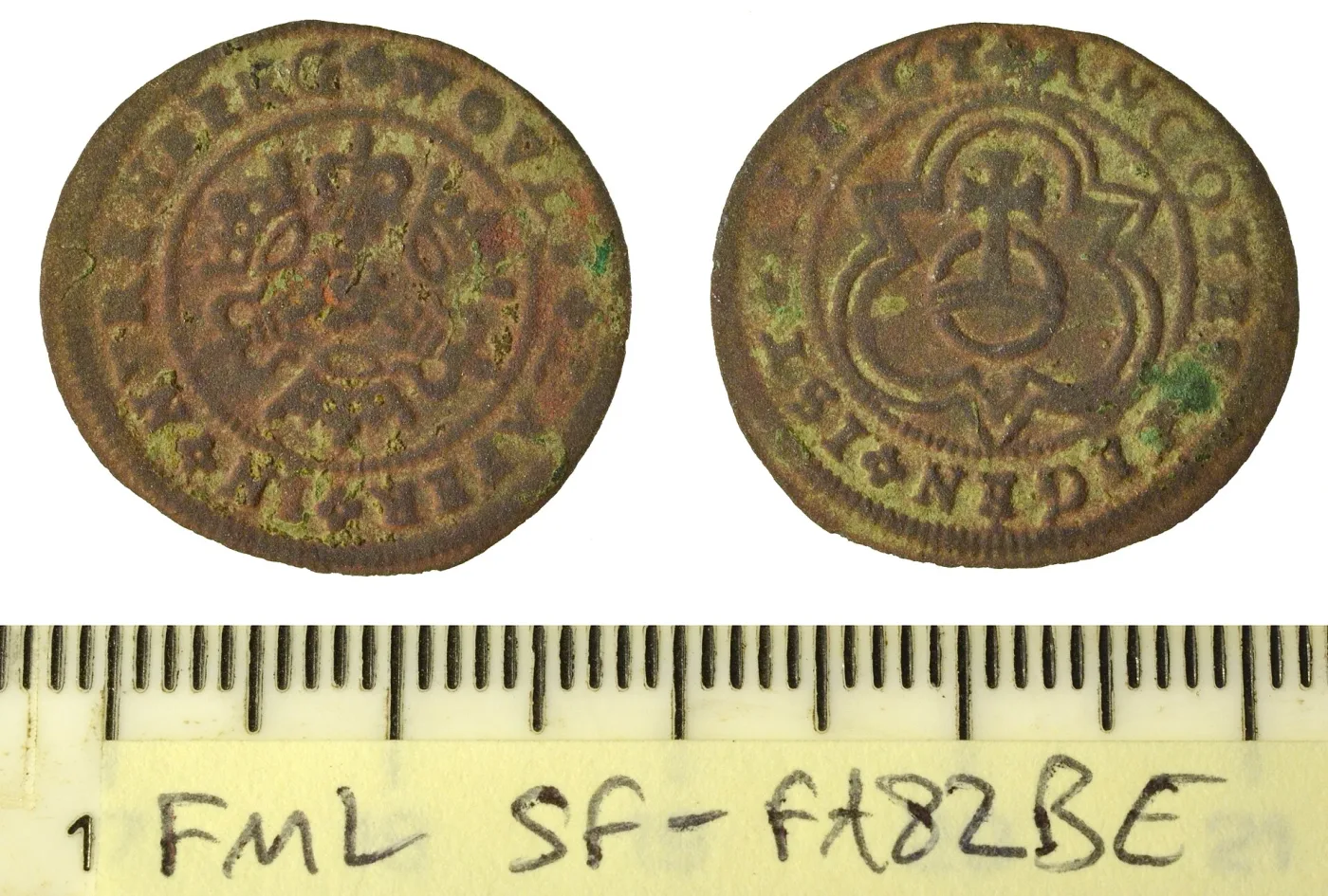
You have dug up, or found in a jar, a thin brass disc about the size of a coin. One side shows a cross on a ball inside a three-lobed frame. The other shows crowns and fleurs-de-lis around a small flower, and the lettering around the edge is in old German, or is not a language at all. There is no date you can read, no denomination, and no country name. It is almost certainly a Nuremberg jeton, and it was never money.
Jetons (also spelled jettons) are reckoning counters: tokens moved across a lined board to do arithmetic, in the way beads are moved on an abacus. From the late fifteenth century, the city of Nuremberg turned them out in enormous numbers and shipped them across Europe, which is why they are among the most common finds of the period in British soil. This guide shows how to tell a jeton from a coin, how to name its type and its maker, what the German legends mean, and what one is realistically worth.
What a Jeton Was For
Before written arithmetic with Arabic numerals took over, accounts were done on a counting board: a table, cloth or board ruled into lines or columns. A counter placed on one line stood for units, on the next for tens, and so on, so the counter itself never carried a value. Its position on the board did.
Counting boards were in common use in Europe from about 1200 to 1700. Specially struck counters began in France in the mid-thirteenth century, and England made its own in brass from the late thirteenth century to the end of the fourteenth, often with a hole or a dent in the centre so they could not be silvered and passed as pennies. As pen reckoning with Arabic numerals spread, the boards fell out of use, and by the seventeenth century the trade had largely moved to gaming counters and commemorative pieces.
That history gives the first rule of identification: a jeton has no denomination. If the piece says ONE PENNY or 1 PFENNIG, it is a coin. If it has a design and a legend but no value anywhere, you are looking at a counter, a token or a medal.
Five Signs You Are Holding a Nuremberg Jeton
- No denomination and no ruler’s title. Coins name the issuing authority. A Nuremberg stock jeton names its maker or carries a motto.
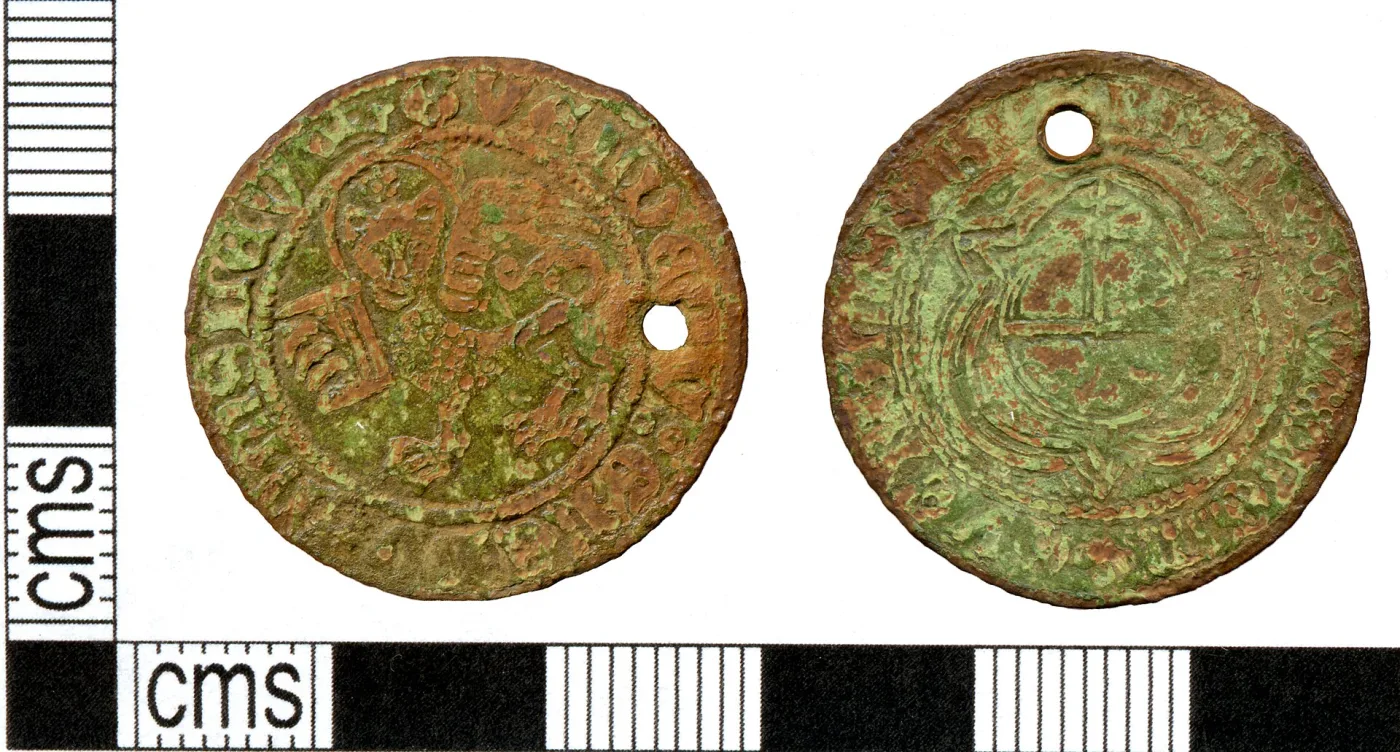
- A cross on a ball inside a three-lobed or four-lobed frame. This is the imperial orb (the German Reichsapfel) in a tressure, and it is the reverse of the most common types.
- A personal name followed by IN NVR, IN NVRENB or a longer form. The obverse legend of a signed jeton usually reads as a master’s name followed by “in Nuremberg”, abbreviated to fit.
- A German motto, or letters that spell nothing. Many early jetons carry “fictitious” legends of meaningless letters, and some carry garbled or mirror-image lettering. A nonsense legend is a feature of the type, not a sign of a fake.
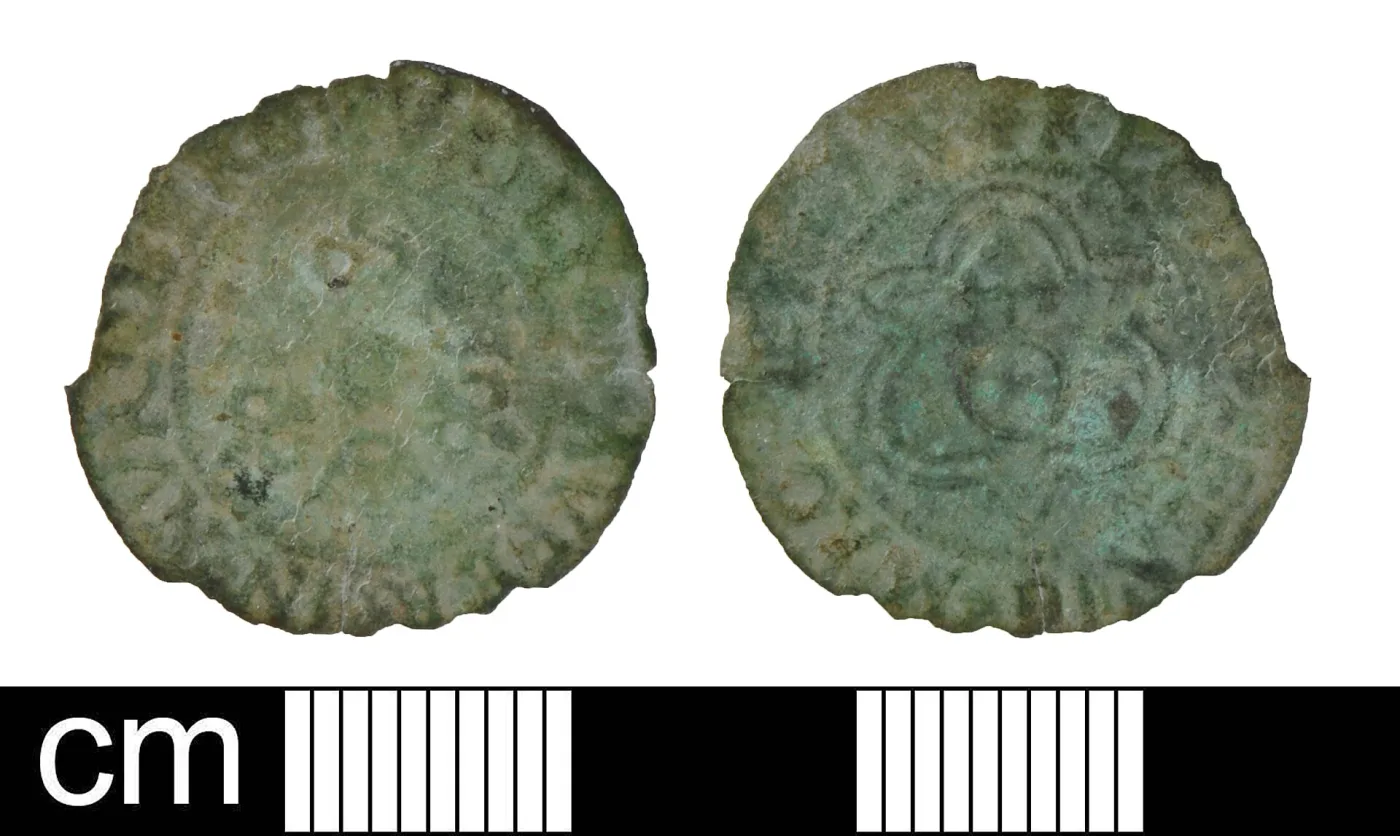
- Thin copper alloy. Jetons were usually struck in copper or brass. A dug example is typically green or brown, often cracked or chipped at the edge, like the ones in the photographs below.
The Main Types at a Glance
Collectors sort Nuremberg jetons by design. The dates below are approximate, and reference sources do not all agree on them. Where they disagree, the table gives the range both support and the notes below say how.
| Type | Obverse | Reverse | Approximate date |
|---|---|---|---|
| Ship penny | A sailing ship in profile | Four fleurs-de-lis in a lozenge | From about 1490, mostly 16th century |
| Lion of St Mark | The winged lion of Venice holding the Gospels | Imperial orb in a tressure | 16th century, about 1500 to the 1570s |
| Rose / orb | Three crowns and three lis around a central rose | Imperial orb in a tressure | About 1550 to 1630 at its peak |
| Rechenmeister | A reckoner seated at his counting table | An alphabet in lines | About the 1550s to the 1590s |
The rose / orb type is the one you are most likely to hold. One detailed type list puts it at well over half of all Nuremberg jetons found, and finds from British excavations bear that out. Because several types share the orb reverse, always identify from the obverse: a rose ringed by crowns and lis, a lion with wings, a ship, or a seated figure.

The Rose / Orb Type
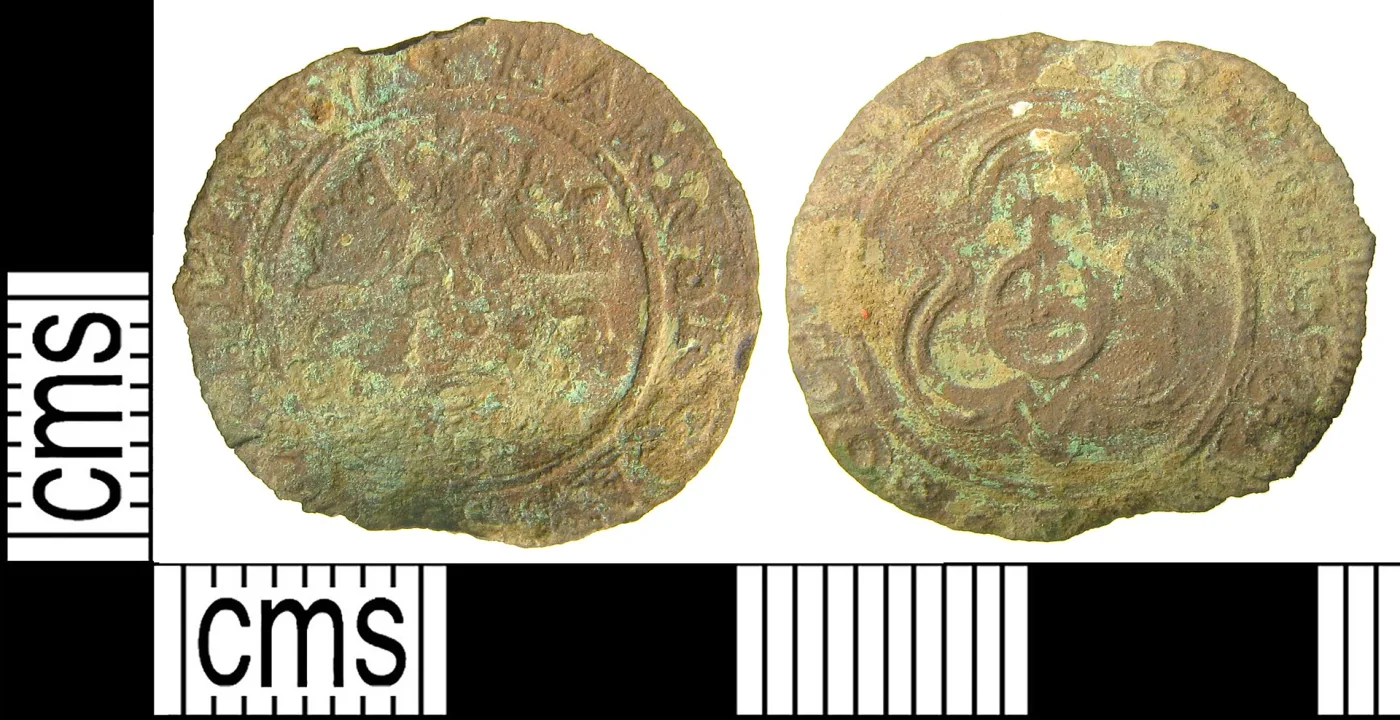
On the obverse, three small crowns alternate with three fleurs-de-lis around a central rose or rosette. On the reverse, the imperial orb, a ball topped by a cross, sits inside a three-lobed frame, with small lis or other ornaments in the spaces between the lobes. The legend on one side names the maker; the other side carries a motto or a repeat of the maker’s name.
The type was struck by many masters across roughly eighty years, so the design alone does not date a piece closely. The maker’s name does, which is why the legend is worth the effort of reading.
The Ship, the Lion and the Rechenmeister
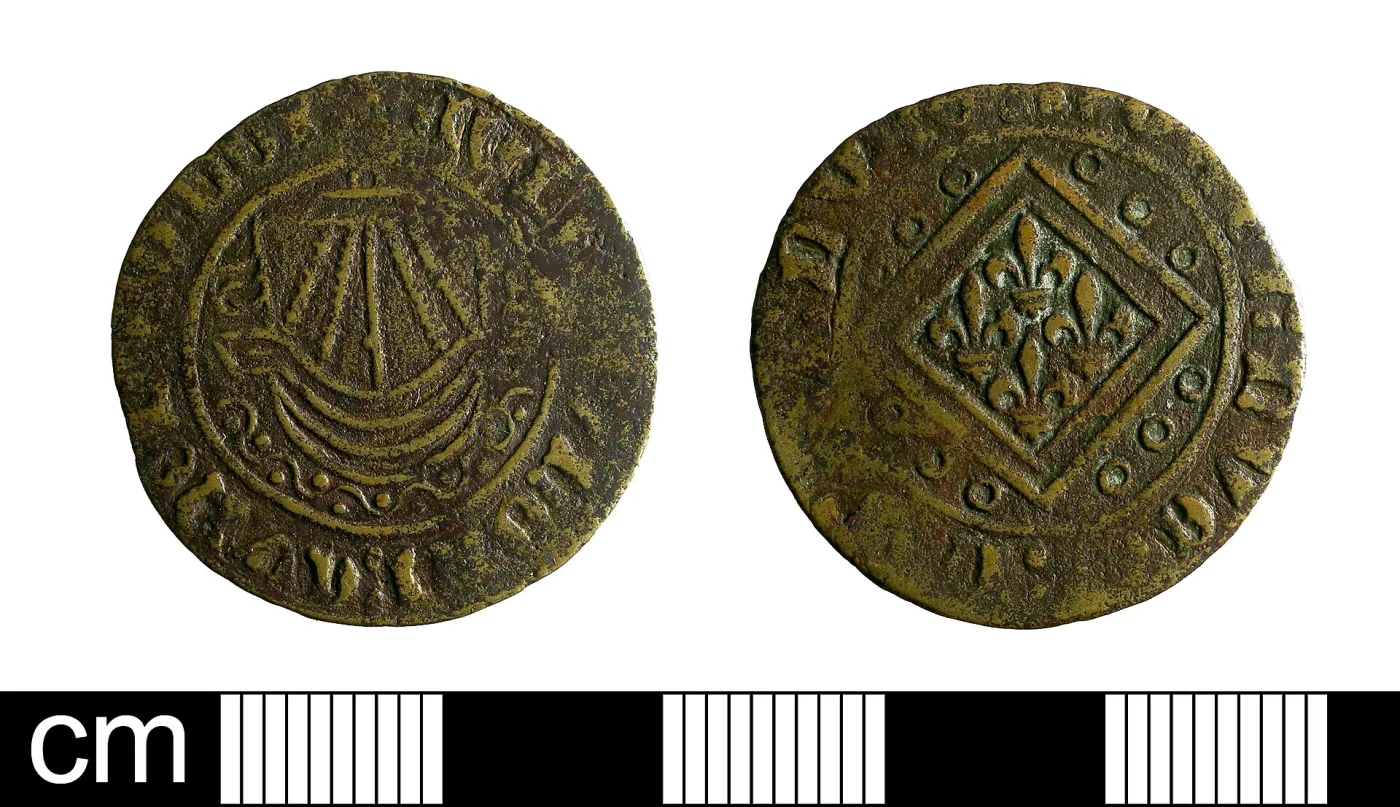
Ship pennies are the older look: a ship with a mast and rigging on one side and four fleurs-de-lis in a diamond on the other. Auction and excavation records date them from about 1490 to about 1550. One type list runs the range on into the 1610s; both agree the type begins around 1490 and belongs mainly to the first half of the sixteenth century. They are a common find in England.
Lion of St Mark jetons show the winged lion of Venice holding a book. Many are anonymous stock pieces. Records date them from about 1500 to about 1570, and one type list extends that to the 1580s, so “sixteenth century” is the safe answer.
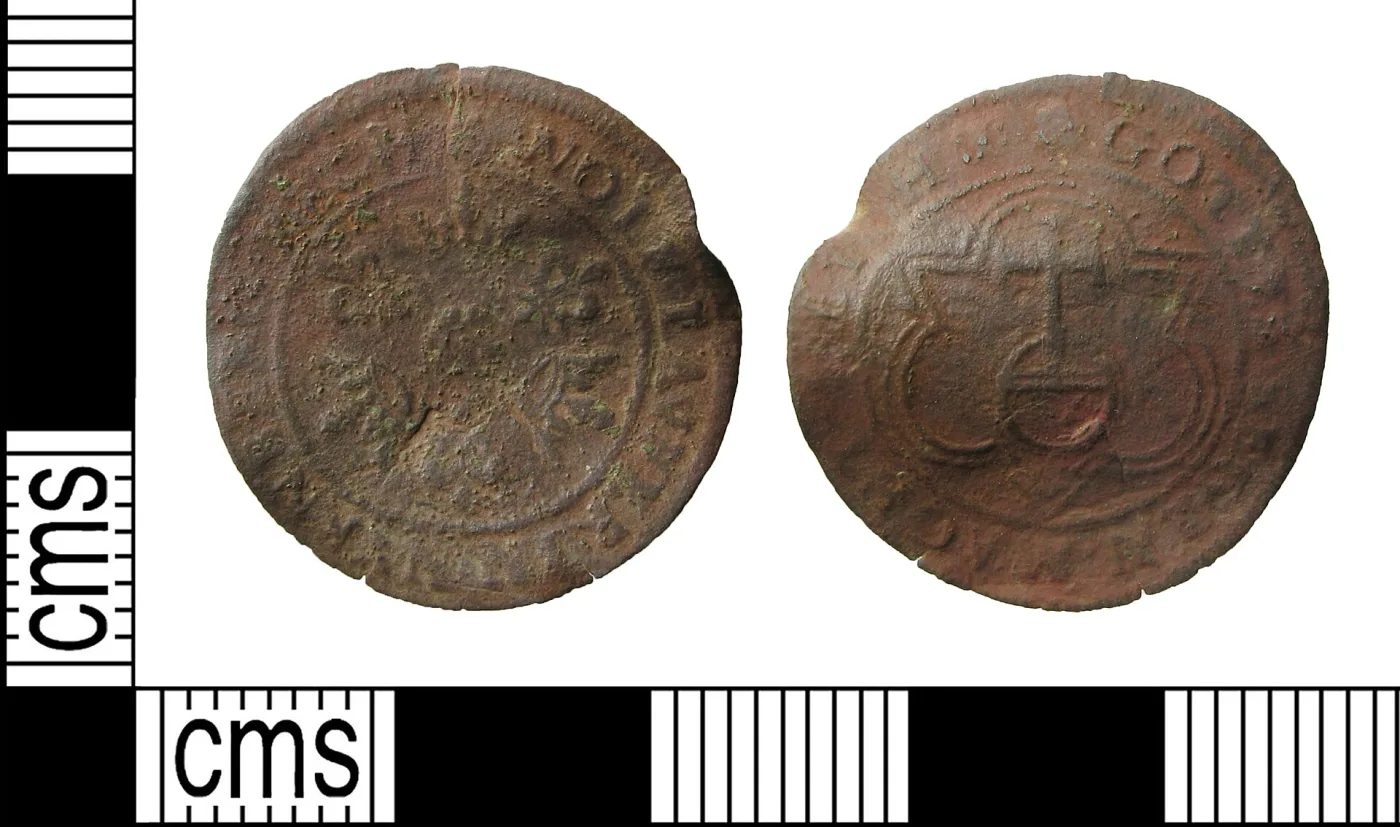
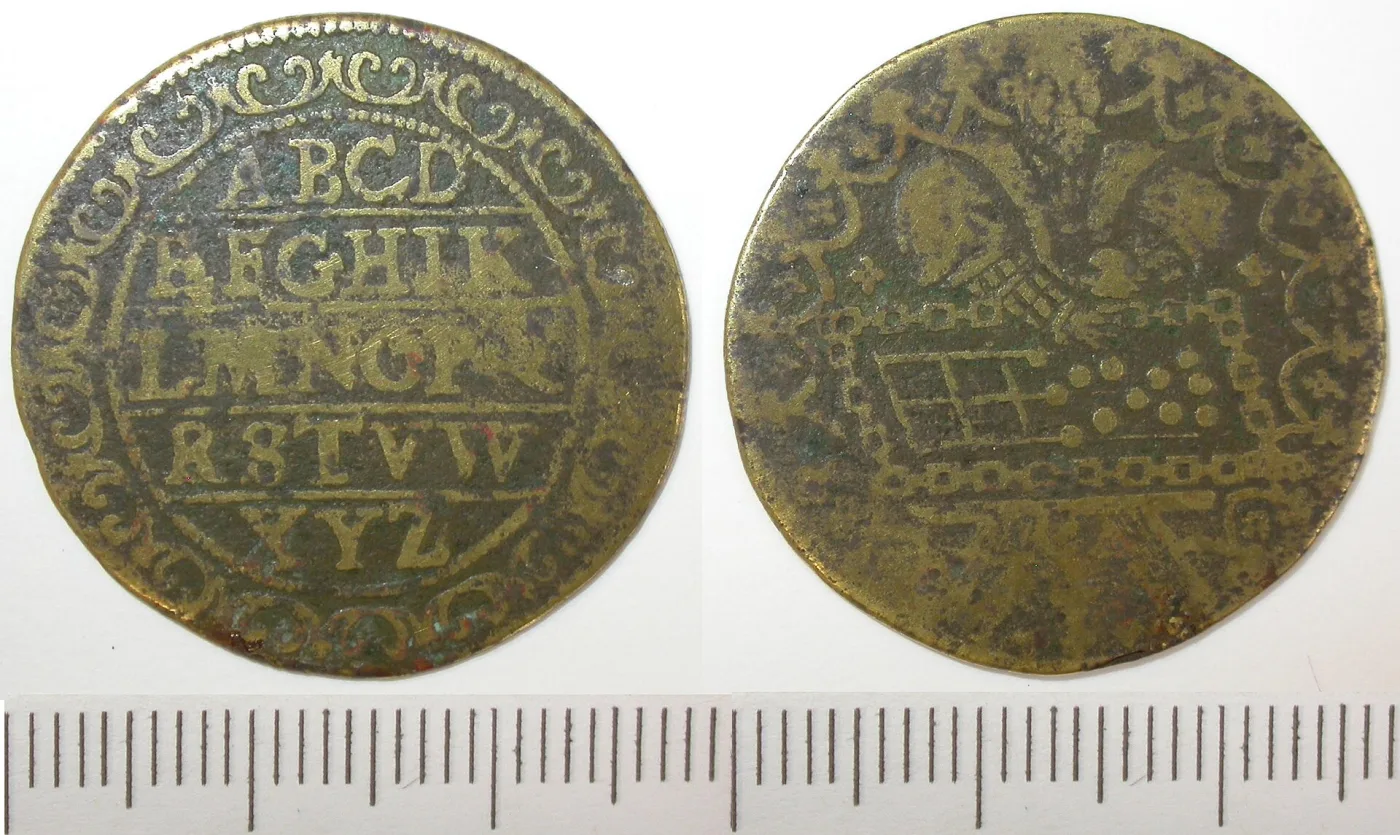
Rechenmeister jetons show the user of the object: a reckoner seated facing you at his counting table. The reverse typically carries the alphabet in rows. They date from about the 1550s to the 1590s, and the Wolf Laufer examples fall in his working years, 1554 to 1601.
Reading the Maker’s Name
From about the middle of the sixteenth century, makers’ names became common on Nuremberg jetons, and the trade was largely in the hands of a few families: Schultes, Krauwinckel and Laufer (also spelled Lauffer). The legend gives the name in a contracted form, for example HANNS KRAVWINCKEL IN NVR, with V standing for U. Spellings vary from die to die, so compare letters rather than expecting an exact match.
The working dates below come from C. F. Gebert’s study of the Nuremberg jeton makers, and the jeton references consulted for this guide agree on them.
| Master | Working dates |
|---|---|
| Georg (Iorg) Schultes | 1515–1559 |
| Damianus Krauwinckel | 1543–1581 |
| Wolf Laufer I | 1554–1601 |
| Hans Krauwinckel I | 1562–1586 |
| Egidius Krauwinckel | 1570–1613 |
| Hans Krauwinckel II | 1586–1635 |
Two men signed themselves Hans Krauwinckel, and their legends look alike. Hans I worked from 1562 to 1586 and Hans II from 1586 to his death in 1635. Hans II was the more prolific, and his jetons are the most commonly found of all, so an unattributed “Hans Krauwinckel” piece is more likely his, but the legend alone does not prove which master struck it. Finds records sometimes leave a two-generation family attribution open, as “I or II”, for exactly this reason.
What the Legends Mean
The mottoes are short German proverbs and pious sayings. A few you will meet often, with the spelling as struck:
| Legend | Meaning |
|---|---|
| GOTES SEGEN MACHT REICH | God's blessing makes rich |
| GOT ALEIN DIE EERE SEI | To God alone be the honour |
| GLVCK BESCHERT IST VNGEWERT | Fortune given is not guaranteed |
If you can read only a few letters, that is normal for a dug piece. GOT or GOTES at the top of the reverse, or NVR near the end of the obverse legend, is often enough to confirm the attribution as a Nuremberg counter.
Why So Many Turn Up in Britain
English jeton making died out at the end of the Middle Ages, undercut by imports from France and the Low Countries. Nuremberg makers at first copied their neighbours’ designs, then won the market with cheap mass production, and by the middle of the sixteenth century they had it almost to themselves. Counters were used by officials and merchants, lost in the ordinary way, and are now found by detectorists and archaeologists in large numbers, which is why the photographs in this guide are almost all finds recorded in England and Wales.
What Is a Nuremberg Jeton Worth?
Not much, as a rule, and that is worth knowing before you pay for one. Common rose / orb jetons by the Krauwinckels and Laufers survive by the thousand. Recorded sales and dealer prices for ordinary examples run from a few dollars to a few tens of dollars: one recorded auction result for a Hans Krauwinckel II piece in Very Fine was $12 plus buyer’s premium, one coin reference estimates $15 to $50 for an ordinary Krauwinckel jeton, and a price catalogue gives about $20 for a worn example. A crisp, well-preserved jeton, or a scarcer type, can bring more: the same catalogue gives about $200 for a well-preserved example of the Krauwinckel series.
The value of a corroded dug example is mostly historical. If you want to clean one, read our guide to cleaning and preserving coins first: the same rules apply, and a bright, scrubbed jeton is worth less than a dull one with its surface intact.
Jeton, Token or Coin?
Jetons belong to the same broad family as later tokens and medals. America’s own Hard Times tokens and Civil War tokens are a different thing, because they passed as money in place of scarce cents. A jeton never did: it was a calculating aid, and its value lay only in where it sat on the board. If your piece has a value written on it, start instead with our general coin identification guide, or with the German coins guide if the legend is German and includes a denomination such as PFENNIG or KREUZER.
Frequently Asked Questions
What is a Nuremberg jeton?
A jeton (or jetton) is a reckoning counter: a coin-like token moved across a lined counting board to do arithmetic. It carries no value of its own; its position on the board gave it one. From the late fifteenth century the city of Nuremberg mass-produced them in copper alloy and by the middle of the sixteenth century dominated the trade, which is why they are such common finds.
Is a jeton a coin?
No. A jeton was never money. It has no denomination and no ruler's title, and it was not legal tender. Coins state their value and the authority that issued them; a Nuremberg jeton carries a design, a maker's name or a motto, and nothing else.
How do I identify the maker of a jeton?
Read the legend on the obverse. Signed Nuremberg jetons usually give the master's name followed by IN NVR or a longer form of Nuremberg, for example HANNS KRAVWINCKEL IN NVR, with V standing for U. The most common names are Krauwinckel, Laufer and Schultes. Two masters signed as Hans Krauwinckel (Hans I, 1562 to 1586, and Hans II, 1586 to 1635), so the legend alone does not always say which one.
What does GOTES SEGEN MACHT REICH mean?
It means God's blessing makes rich. It is one of several German mottoes on Nuremberg jetons, alongside GOT ALEIN DIE EERE SEI (to God alone be the honour) and GLVCK BESCHERT IST VNGEWERT (fortune given is not guaranteed). Many early jetons carry meaningless letters instead of a real legend.
How much is a Nuremberg jeton worth?
Usually a few dollars to a few tens of dollars. Common rose and orb jetons by the Krauwinckels and Laufers survive in large numbers: one recorded auction result for a Hans Krauwinckel II piece in Very Fine was $12 plus buyer's premium, and one coin reference estimates $15 to $50 for an ordinary example. Well-preserved pieces and scarcer types bring more.
Why do I keep finding jetons in Britain?
English jeton making died out at the end of the Middle Ages, and by the middle of the sixteenth century Nuremberg makers had almost the whole market. Officials and merchants used them for accounts and lost them in the ordinary way, so detectorists and archaeologists now find them in large numbers.