Civil War Tokens Identification Guide: Patriotic Pieces, Merchant Store Cards, Fuld Numbers, Die Varieties, and Values
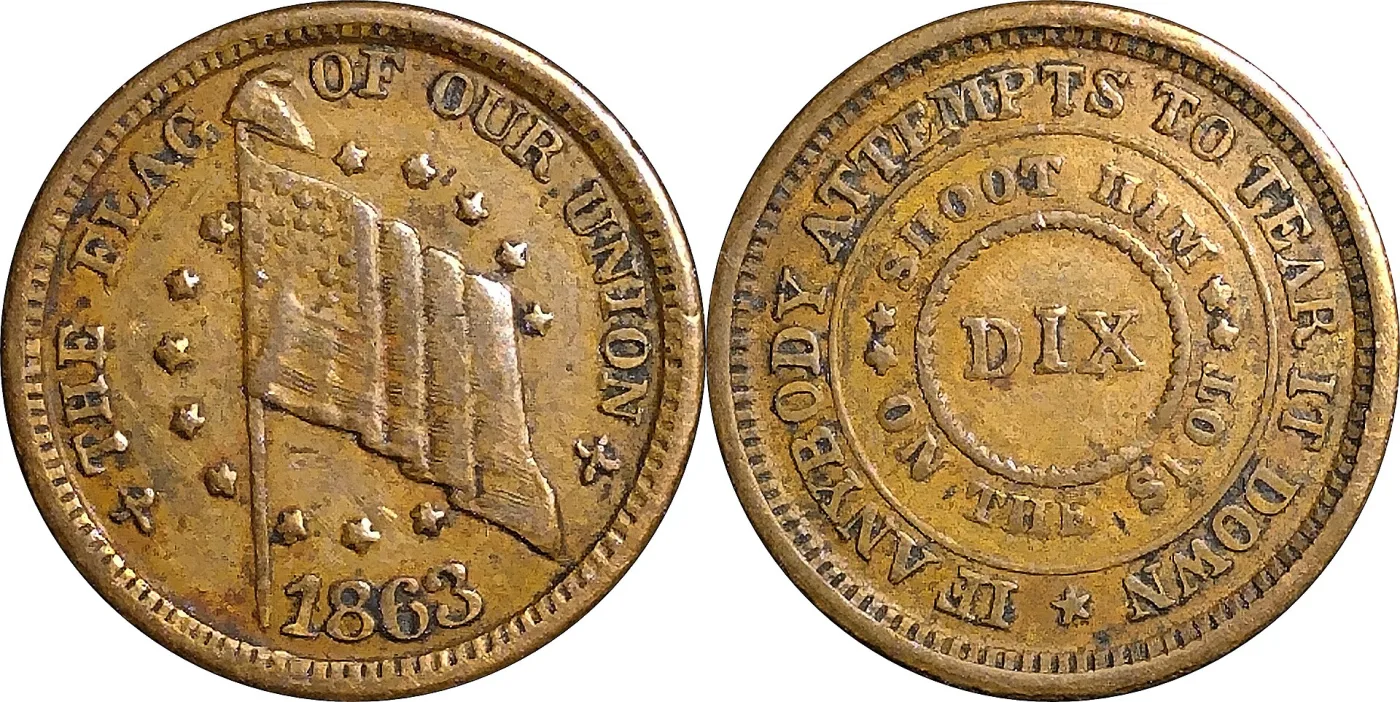
Civil War Tokens are small copper and brass pieces, about the size of a contemporary cent, that Americans struck and spent as money during the desperate coin shortage of the Civil War — roughly 1861 to 1865. They were not issued by the United States Mint. They were made by private die-sinkers, merchants, and patriots after federal cents vanished from circulation, and an estimated 25 million or more of them passed from hand to hand across the North as one-cent change. On their faces they carry the flags, eagles, cannons, and defiant slogans of a nation at war, along with the names and trades of thousands of ordinary Northern businesses.
For collectors, Civil War Tokens are one of the richest, deepest, and most affordable fields in all of American numismatics. They belong to exonumia — coin-like objects that are not official coins — yet they are pursued with the same intensity as any federal series, catalogued by their own specialized numbering systems and chased by die variety, metal, rarity, and the town a merchant called home. A single common token can be had for the price of a sandwich, while a great rarity from a tiny frontier shop can bring four or five figures. Few areas of the hobby pack this much genuine history, variety, and value into a piece you can still buy for pocket change.
This guide is your complete 2026 reference for identifying, classifying, grading, authenticating, and valuing Civil War Tokens. We explain exactly what they are and the wartime emergency that produced them, walk through the two great families — patriotic tokens and merchant store cards — decode the Fuld numbering system that organizes them, cover the famous slogans and the sutler tokens of the army camps, and show you how to separate a genuine 1860s piece from a modern copy. Whether you have inherited a mysterious “penny” that turns out to be a flag-waving war relic, or you want to build a focused collection of the money the Union spent on itself, you will finish knowing how to read these little copper witnesses to America’s greatest crisis.
What Are Civil War Tokens?
Civil War Tokens are privately issued copper, brass, and (rarely) other-metal pieces, struck mostly between 1861 and 1865, that circulated unofficially as one-cent pieces during the Civil War. No government authorized them, so they are not coins in the legal sense, but the public accepted them as cents because genuine federal coppers had all but disappeared. In numismatics they sit near the head of the broad category of exonumia: tokens, medals, and coin-like objects that are collected alongside, but are distinct from, official coinage.
Physically, the typical Civil War Token closely imitates the small copper-nickel Indian Head cent then in circulation — about 19 millimeters across, much smaller and thinner than the old large cent. That visual kinship was deliberate: a token built to be mistaken for a cent had to share the cent’s size and look so it would be accepted in trade. The pieces are sometimes loosely called “copperheads,” a play both on the copper they were made of and on the antiwar Northern Democrats of the day.
Two Great Families
Collectors divide the series into two broad groups. The patriotic tokens carry national and political imagery and slogans — flags, eagles, the bust of Washington, the Monitor warship, and war cries like “THE UNION MUST AND SHALL BE PRESERVED” — but name no particular business. The merchant store cards are advertising pieces bearing the name, address, and trade of a specific shop — a grocer, druggist, saloon, hardware dealer, or hat maker — issued both to make change and to promote the business. A specialized third strand, the sutler tokens, served the licensed merchants who followed the armies.
Why They Matter
Civil War Tokens are among the most direct artifacts of the Northern home front. On a single piece you can hold a citizen’s patriotism, a soldier’s camp economy, or the storefront of a long-vanished antebellum business, all struck in copper during the nation’s bloodiest war. They are primary historical documents of the conflict’s effect on everyday commerce — and because tens of millions were made, they remain genuinely affordable, making them one of the best value-for-history fields in the entire hobby.
The History Behind Them: The Cent Shortage of 1862
Understanding why these tokens exist is the key to identifying their imagery and dating them, because the whole episode grew out of a specific monetary emergency. The story is one of hoarding, a vanished cent, and private enterprise rushing to fill the gap.
Hoarding and the Vanishing Coin
When the Civil War began in 1861 and Union fortunes looked uncertain, Americans did what people always do in a crisis: they hoarded hard money. Gold disappeared first, then silver, and by 1862 even the humble copper-nickel cent had been pulled from circulation and squirreled away. The federal government’s suspension of specie payments at the end of 1861 made paper greenbacks the everyday currency, but greenbacks came in no denomination small enough to make change for a loaf of bread or a glass of beer. Commerce ground against a wall of missing small change.
The Scramble for Small Change
Merchants improvised frantically. They handed out postage stamps, sometimes sealed in little brass-and-mica cases (the famous “encased postage”), they issued paper “shinplasters” and fractional notes, and they accepted anything cent-sized that looked like money. Into this vacuum stepped private die-sinkers — many of them button and medal makers already tooled up to strike small metal discs — who began producing cent-sized copper tokens by the millions. A token cost the maker a fraction of a cent to produce but passed as a full cent, so there was profit in it as well as a public service.
A Familiar Pattern
This was not the first time private copper had filled a coinage gap. A generation earlier, during the financial panic that followed Andrew Jackson’s war on the national bank, Americans had spent privately struck Hard Times Tokens for exactly the same reason. Civil War Tokens are the direct descendant of that earlier wave — the same idea (cent-sized private copper substituting for a missing federal cent) on a far larger scale, with tens of millions struck instead of a few million.
The Government Responds and the Era Ends
The federal government moved on two fronts. It issued official Postage Currency and then Fractional Currency paper notes to supply small change, and in 1864 it reformed the cent itself: the Coinage Act of April 22, 1864 replaced the hoarded copper-nickel cent with a lighter bronze cent that was not worth hoarding, and authorized the new bronze Two Cent Piece the same year. Crucially, the same act outlawed the private issue of one-cent and two-cent tokens. Combined with the return of federal coppers to circulation, that law ended the Civil War Token era almost overnight, in 1864.
How to Identify a Civil War Token
Many people first meet a Civil War Token without knowing what it is — an “old penny” from a family hoard or a metal-detecting find that, on a closer look, is plainly not a regular coin. A consistent method quickly tells you what you have.
Step 1: Confirm It Is a Token, Not a Coin
A genuine U.S. cent of this era is the small Indian Head cent reading “UNITED STATES OF AMERICA” with “ONE CENT” in a wreath. A Civil War Token will instead carry a patriotic slogan, a flag or cannon, an eagle, a portrait, a business name, or an oddly worded value. If the piece is cent-sized (about 19 mm), copper or brass, dated roughly 1861 to 1864, and says anything other than a normal federal legend, you are almost certainly holding a Civil War Token rather than a coin. For the general method of distinguishing coins from tokens and medals, our complete coin identification guide lays out the first principles.
Step 2: Read Every Word and Slogan
The inscriptions are the heart of identification. Patriotic pieces shout their loyalty: THE UNION MUST AND SHALL BE PRESERVED, OUR COUNTRY, OUR ARMY, ARMY & NAVY, THE FEDERAL UNION IT MUST BE PRESERVED, NOT ONE CENT, or the famous Dix line about the flag. Store cards instead spell out a merchant’s name, trade, and city (“KNICKERBOCKER CURRENCY,” a saloon, a “BOOTS & SHOES” dealer, a street and town). Copy the full legend on both sides exactly; the catalog numbers are built on it.
Step 3: Identify the Central Images
The devices are vivid and specific. Look for the national flag, an eagle (often on a shield or with arrows), crossed cannons and cannonballs, a Liberty head or Indian-head bust imitating the cent, the bust of George Washington or Andrew Jackson, the ironclad warship USS Monitor, a wreath enclosing “NOT ONE CENT,” or a phrygian liberty cap. Each device ties to a known patriotic theme — and the same die was often paired with many different reverses.
Step 4: Find the Date and the Metal
Most tokens are dated 1863, with 1861, 1862, and 1864 also common; many store cards carry a date too. Note the metal — the great majority are copper or brass, but pieces in copper-nickel, white metal, silver, or even rubber exist and are usually scarce and valuable. The date and metal both feed into attribution and rarity.
Step 5: Attribute the Variety With a Reference
Like other token series, Civil War Tokens are catalogued by specialized die-variety numbers rather than by date and mint mark. Patriotic pieces are attributed by a die-pairing system (an obverse die number and a reverse die number), and store cards by a town-and-merchant numbering scheme, both standardized in the references compiled by George and Melvin Fuld. Matching your token’s dies and legends to a Fuld listing pins it down precisely. An AI identification app can often name the type from a clear photo of both sides before you reach for the catalog.
Patriotic Tokens
The patriotic pieces are the most recognizable face of the series and the reason many people are drawn to it. They are, in effect, the lapel pins and protest placards of the Northern home front, struck in copper and spent as money. Knowing the recurring themes lets you read almost any example.
Flags, Eagles, and the Union
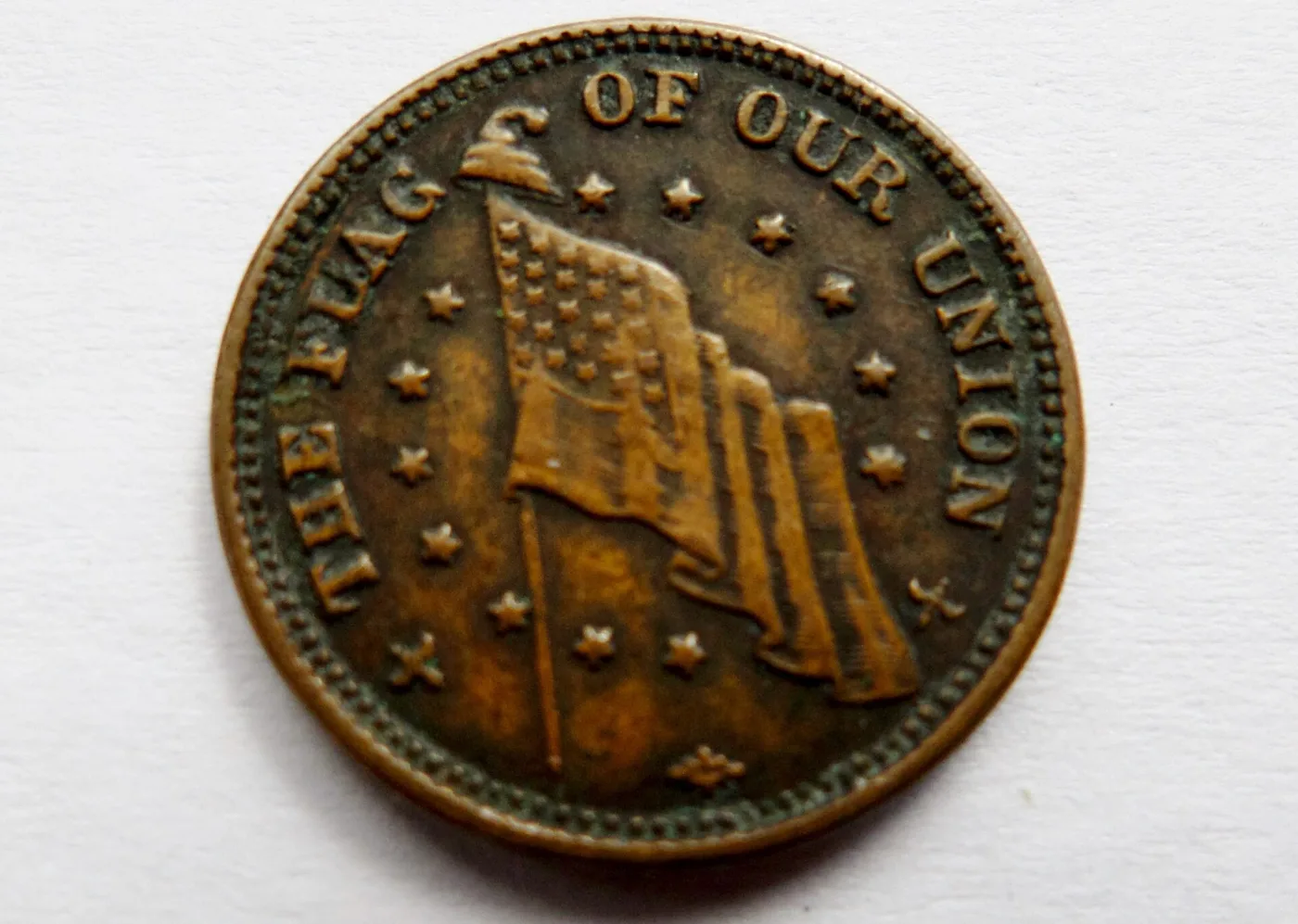
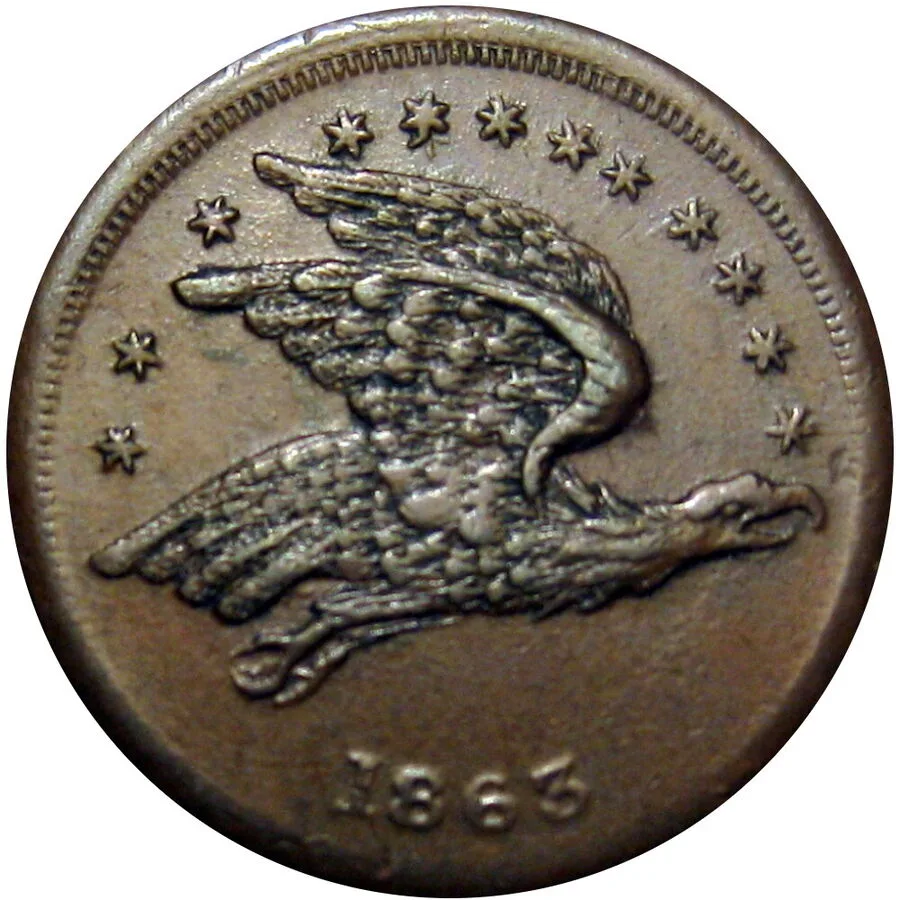
National devices dominate the patriotic group. A waving flag is the single most common image, frequently paired with a defiant slogan such as “THE UNION FOREVER” or “THE FLAG OF OUR UNION.” The eagle — perched on a shield, clutching arrows, or with wings spread — appears constantly, as does the Union shield itself, the same heraldic motif that the Mint placed on the contemporary Two Cent Piece and the later Shield nickel. These pieces broadcast loyalty to the Union cause in the plainest possible visual language.
Portraits: Washington, Jackson, and Liberty
Busts gave the tokens patriotic gravity. George Washington is the most frequently portrayed figure, lending the founder’s authority to the war effort, and Andrew Jackson — remembered as the president who faced down secession in the Nullification Crisis — also appears with his “THE FEDERAL UNION IT MUST BE PRESERVED” toast. Many pieces simply show a Liberty head or an Indian-head portrait copied closely from the cent so the token would pass for the real thing.
The Tools of War
Martial imagery is everywhere. Tokens show crossed cannons with stacked cannonballs, crossed swords or muskets, drums and flags, and the new ironclad USS Monitor, whose 1862 duel with the CSS Virginia (Merrimack) had electrified the North. “ARMY & NAVY” pieces honor the fighting services directly. These devices place the token squarely in the war and help date it to the conflict years.
The “NOT ONE CENT” Legends
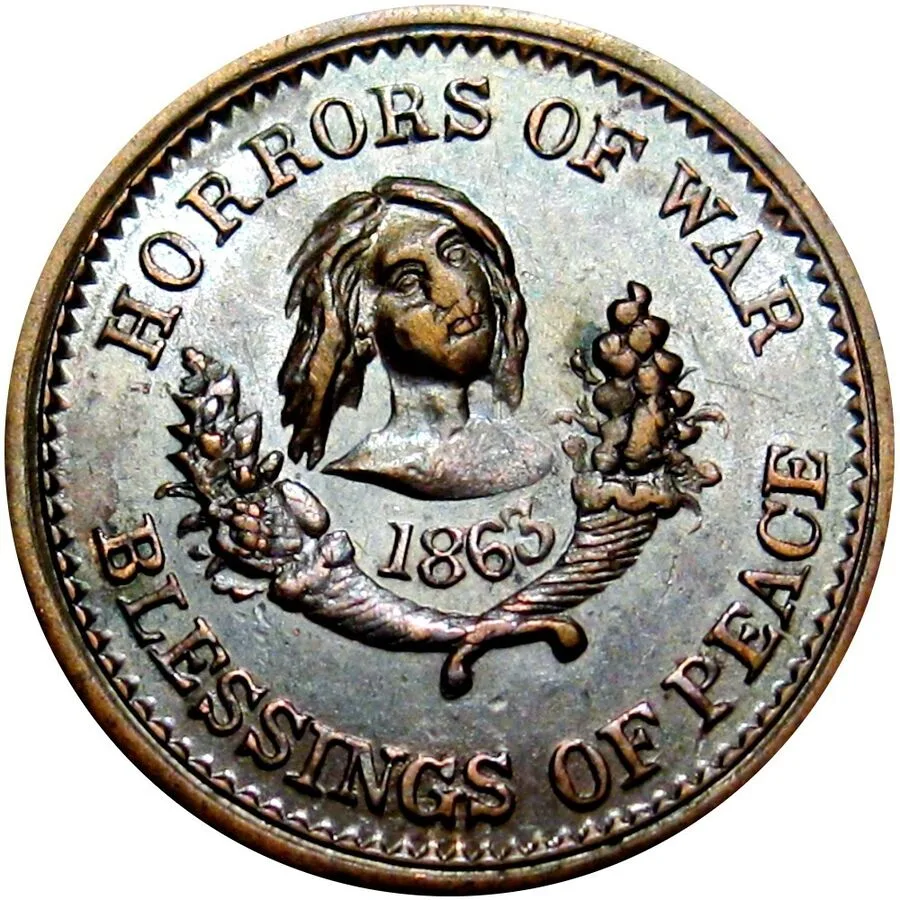
As in the earlier Hard Times series, some patriotic tokens carry the careful wording “NOT ONE CENT” (often within a wreath, mimicking the federal “ONE CENT” reverse). Because counterfeiting federal coins was illegal, a token that pointedly was not a claim to be a U.S. cent gave its maker a measure of legal cover — even as the piece spent as a cent in practice. Reading the slogan and matching the imagery to these themes will identify the great majority of patriotic pieces.

Merchant Store Cards
The other great half of the series is the merchant store card — a token issued by a specific business that served simultaneously as advertising and as change. Store cards actually outnumber the patriotic pieces, and they offer a remarkable street-level window into Northern commerce during the war.
What a Store Card Says
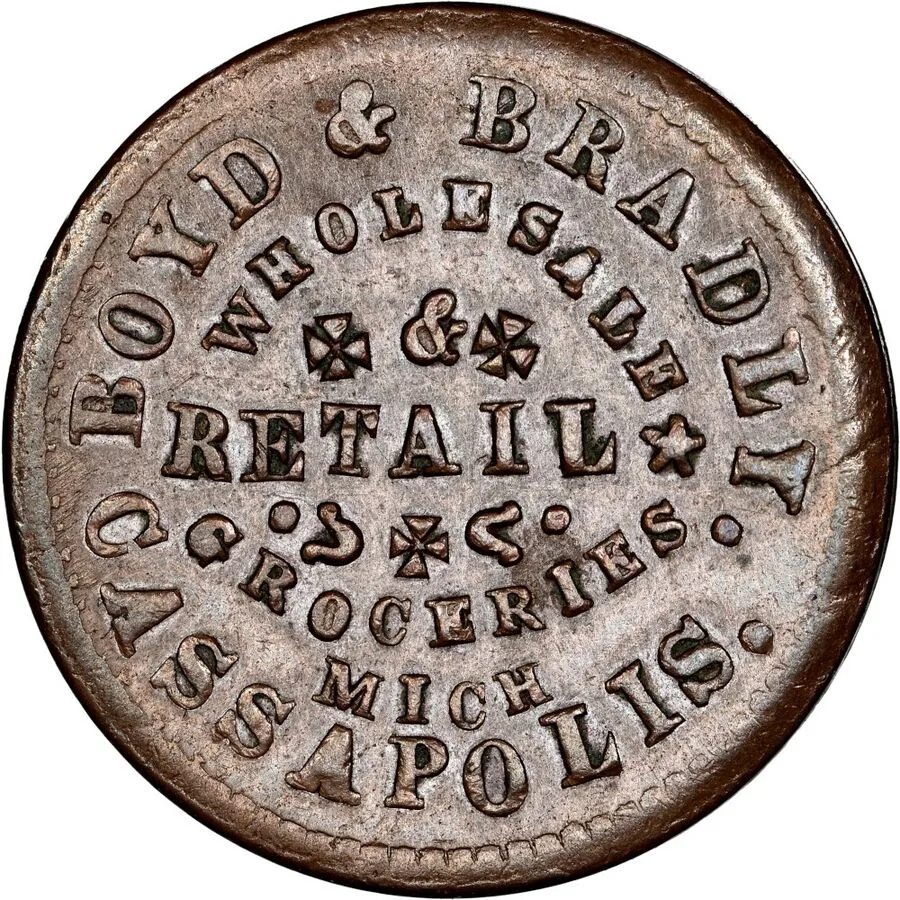
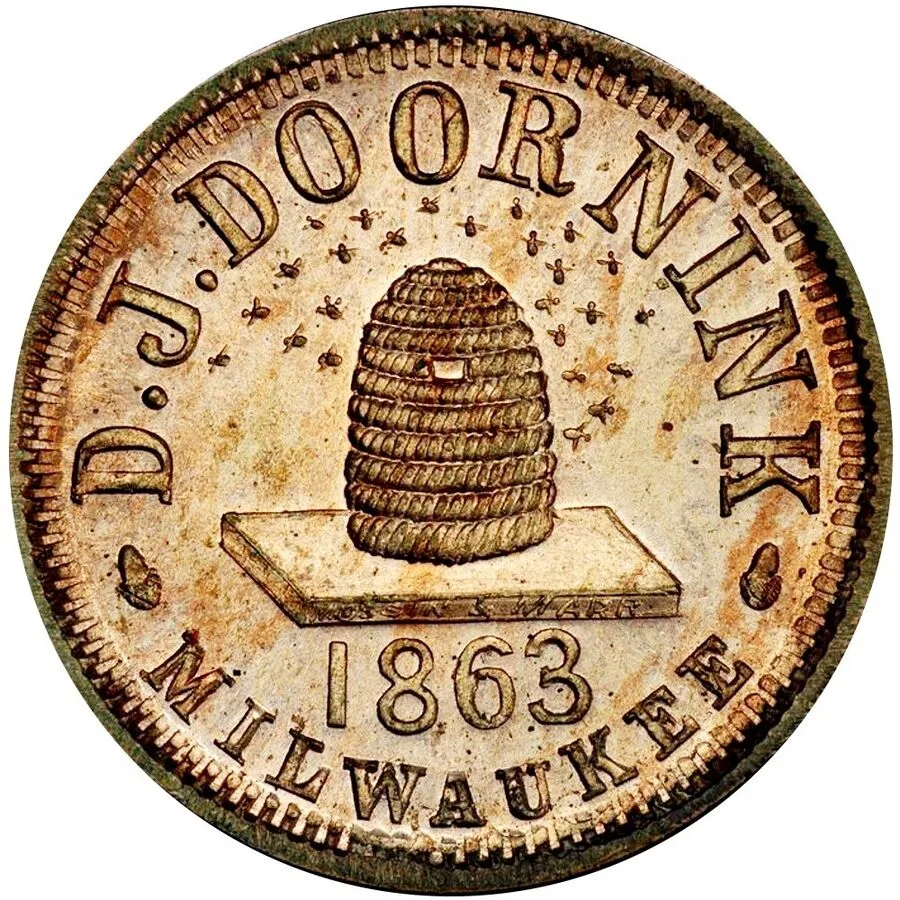
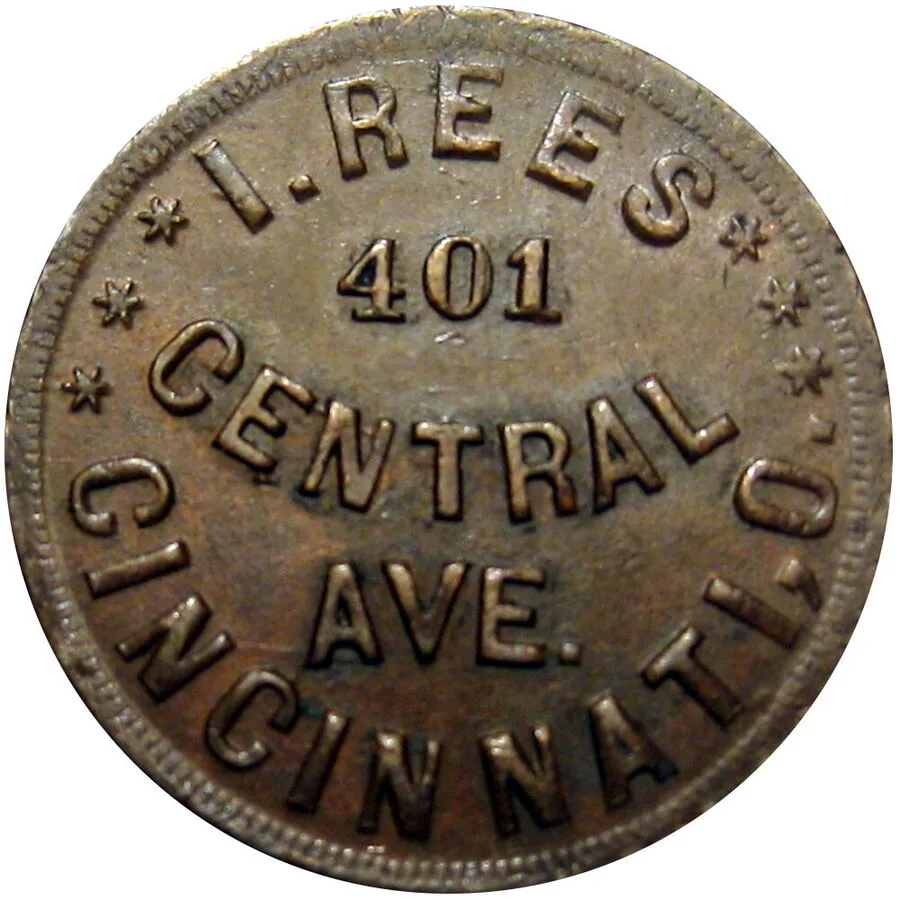
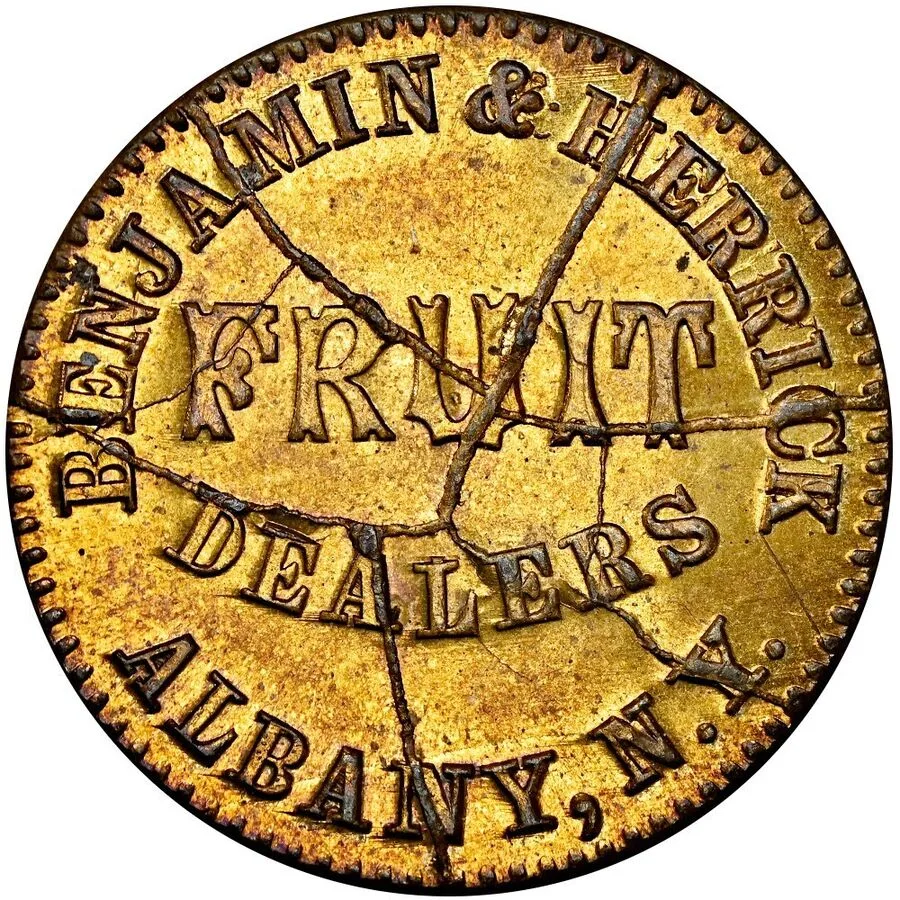
A store card typically names the proprietor, the type of business, and a town: a grocer, a druggist, a saloon or “lager beer” hall, a hardware or “stove” dealer, a hatter, a boot-and-shoe shop, a billiard room, a dentist, or a dry-goods house. Many add a line of advertising or an explicit promise to redeem the token — “GOOD FOR 1 CENT,” “REDEEMED IN GOODS,” or “CHEAP CASH STORE.” Some pair a business name on one side with a generic patriotic die on the other, using a shared “stock” die the maker reused across many customers.
Geography and the Cities
Because store cards name a place, they let you map the wartime token economy directly. They cluster heavily in the manufacturing North and Midwest — Ohio, Indiana, Illinois, New York, Michigan, Wisconsin, and Pennsylvania produced the great bulk of them, with cities like Cincinnati, New York, Chicago, Milwaukee, and Detroit especially well represented. A token naming a Cincinnati saloon or a small-town Indiana grocer is both historically evocative and, for the common issuers, very inexpensive.
The “Stock” Reverses
The same eagle, flag, or “BUSINESS CARD” reverse die often appears on cards from many different merchants — the die-sinker simply struck the customer’s name on a new obverse and reused an existing reverse. Recognizing these shared stock reverses helps you attribute a worn or partially legible piece by matching the reverse even when the merchant’s name is unclear, and it points you toward the shop that made it.
Why Collectors Love Them
Store cards turn a token collection into a directory of Civil War-era business. Specialists pursue them by state, by city, by trade (all the saloons, all the druggists), or by die-sinker, and a worn copper naming a long-gone Ohio merchant can be had for a few dollars. They are an ideal entry point for a collector who wants genuine 1860s history without the premium that the most famous patriotic dies command.
Sutler Tokens and Camp Money
A distinctive and highly prized subgroup stands a little apart from the civilian tokens: the sutler tokens, the private money of the army camps. They are scarcer, more historically charged, and more valuable than ordinary store cards.
Who the Sutlers Were
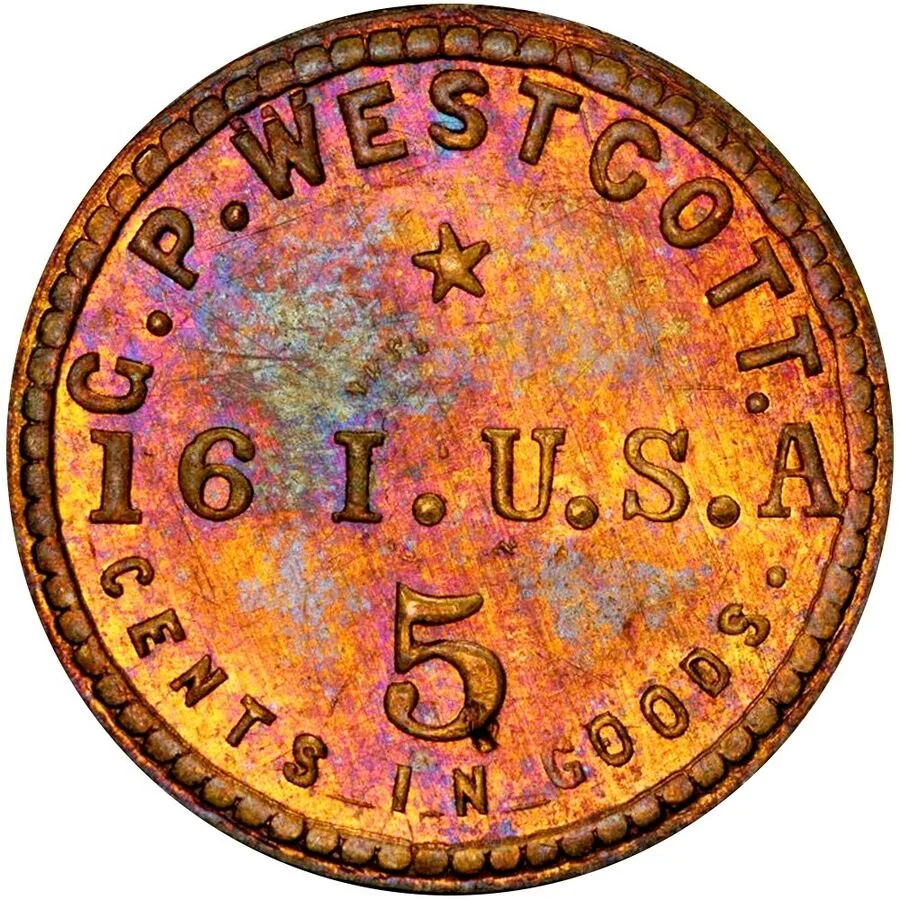
A sutler was a civilian merchant licensed to follow a specific military unit and sell soldiers the small comforts the army did not supply — tobacco, writing paper, canned goods, needles, treats. Because federal coin was as scarce in camp as it was at home, and because soldiers were paid irregularly, sutlers issued their own tokens, redeemable only at their own tent, to extend credit and make change against the next payday.
How to Recognize Them
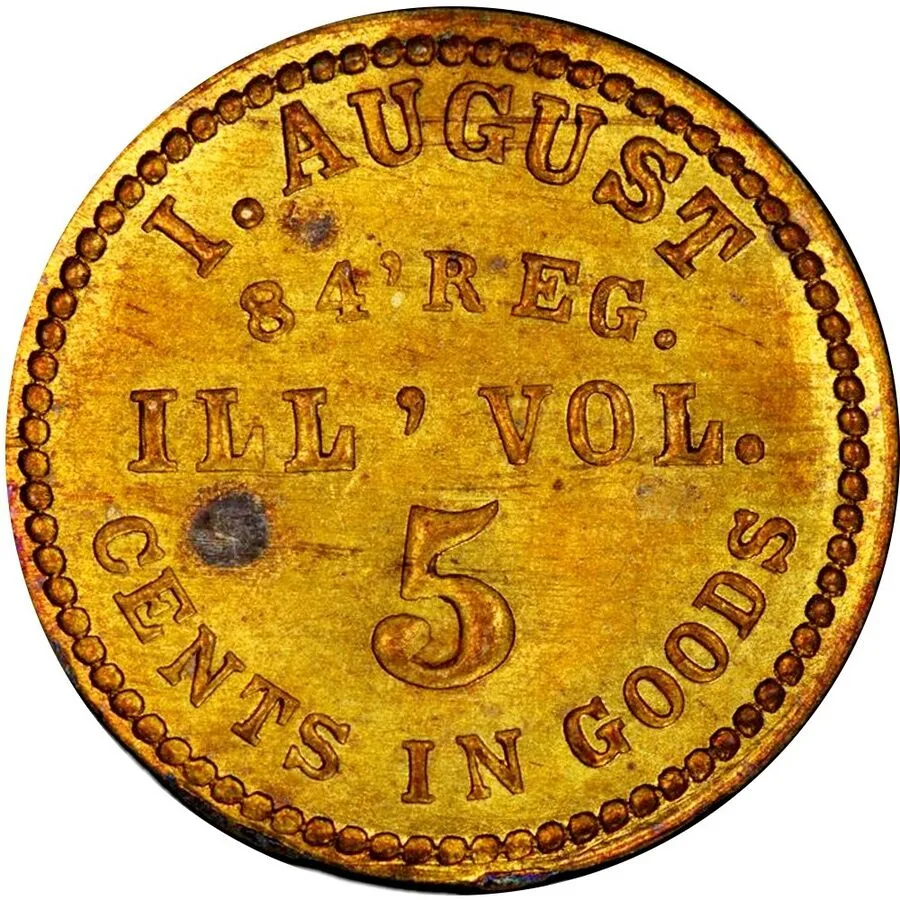
Sutler tokens usually name the sutler and, crucially, the military unit he was attached to — a regiment and state (“SUTLER, 1ST REGT. N.H. VOLS.” or similar), sometimes with a denomination (“GOOD FOR 25 CENTS IN GOODS”). That regimental identification is what sets them apart and makes them so collectible: a sutler token ties directly to a named body of soldiers who marched and fought in the war. Many were struck on the same blanks and by the same makers as civilian store cards, so the fabric is familiar even when the inscription is unique.
Why They Command Premiums
Sutler tokens are scarce because they were made in small numbers for a single regiment, used hard in the field, and often lost or discarded when a unit was mustered out. Surviving examples are eagerly sought by both token collectors and Civil War militaria collectors, and that double demand — numismatic and military — pushes their prices well above ordinary store cards, sometimes into the hundreds or thousands of dollars for rare regiments.
Famous Slogans and the “Dix” Token
A handful of legends appear so often, and are so closely tied to the war’s mood, that recognizing them is central to understanding the series and identifying the most popular dies.
The “Dix” Token
The single most famous patriotic legend comes from a real order. In January 1861, Treasury Secretary John A. Dix, dealing with secessionists in New Orleans who threatened a U.S. revenue cutter, telegraphed the instruction: “If any one attempts to haul down the American flag, shoot him on the spot.” The line became a Northern rallying cry, and die-sinkers put it (in various abbreviated and slightly garbled forms) on a whole family of tokens, usually paired with a waving flag. A famous engraver’s error even rendered the word “the” as “tne” on one popular die, creating a collectible variety of its own. These “Dix” tokens are among the most sought-after patriotic pieces.
Union Slogans
Other legends echo across the series: “THE UNION MUST AND SHALL BE PRESERVED” (Jackson’s famous toast, revived for the war), “OUR COUNTRY,” “OUR ARMY,” “ARMY & NAVY,” “THE FLAG OF OUR UNION,” and “UNION FOR EVER.” Reading the slogan and matching it to the flag, eagle, or portrait it accompanies will identify the great majority of patriotic dies, and many of these legends are catalogued as specific Fuld reverse dies.
Why the Slogans Help
Because the patriotic dies were mixed and matched freely, the legend is often your fastest route to attribution — a particular wording corresponds to a particular catalogued die, and pinning down the die on each side is exactly how the Fuld system identifies a patriotic token. Recognizing the famous slogans on sight turns a confusing little copper into a precisely identifiable piece of war history.
Cataloging: Fuld Numbers and Rarity
To attribute and value Civil War Tokens you need to understand the numbering systems that organize them, because dealers, auction houses, and certified holders refer to pieces by these numbers rather than by date alone.
The Fulds and the Standard References
The definitive cataloging work was done by George Fuld and Melvin Fuld, the father-and-son scholars whose references became the universal standard for the series. Their books — one for Patriotic Civil War Tokens and one for U.S. Civil War Store Cards — assign every known die and piece a precise number, and the entire hobby now speaks in “Fuld numbers.” The Civil War Token Society maintains and updates this scholarship.
How Patriotic Numbers Work
Patriotic tokens are attributed by the pairing of two dies: an obverse die number and a reverse die number, written together (for example, a token might be “Fuld 219/322”). Because a die-sinker mixed obverse and reverse dies freely, the same obverse can appear with many reverses and vice versa, and each distinct pairing — each “die marriage” — is its own catalogued variety with its own rarity. Identifying a patriotic token therefore means identifying the die on each side and looking up the combination.
How Store Card Numbers Work
Store cards are organized geographically. The Fuld store-card system numbers pieces by state, town, and merchant, with die and metal suffixes — a format that lets a collector find every token from a given city or every issue of a given shop. A store card’s attribution thus pins down where it was spent and who issued it, which is a large part of these tokens’ appeal.
Rarity Ratings
Both systems assign rarity ratings (an “R” scale) that are essential to value. A common patriotic die marriage may be rated R-1 (more than 5,000 known), while a scarce store card, a rare die pairing, or an off-metal striking can be R-8, R-9, or R-10 (just a handful, or even a single piece, known). Because two tokens in identical grade can differ in price a hundredfold based on rarity, always pair the grade with the Fuld number and its R-rating when evaluating a piece — the same disciplined, variety-by-variety approach used across early American copper and tokens.
The Die-Sinkers and Major Makers
Civil War Tokens were produced by a network of skilled private die-sinkers and minters, mostly in the cities of the North and Midwest, and recognizing their hands helps with both attribution and appreciation of the craft.
The Leading Producers
The most prolific shops worked in the manufacturing centers. Engravers and firms such as the Scovill Manufacturing Company of Waterbury, Connecticut (a major button and brass maker, also active in the Hard Times era), John Stanton and William K. Lanphear of Cincinnati, the Broas Brothers and Emil Sigel of New York, and Benjamin C. True of Cincinnati cut dies, supplied copper and brass planchets, and struck tokens to order for merchants and for general circulation. Cincinnati and New York were the two great production hubs.
Signed Dies and Shared Designs
Some die-sinkers signed their work with tiny initials on the die, which aids attribution; others are recognized by their characteristic lettering, style, and the stock reverses they reused. Because a single shop served many clients, you will see the same eagle, flag, or “BUSINESS CARD” reverse on tokens for completely different merchants — a strong clue to the maker even when the design is unsigned.
The Lindenmueller Lesson
The scale of private token issue is captured by a famous episode: the New York saloon-keeper Gustavus Lindenmueller issued around a million of his own copper tokens, which circulated widely in the city. When a horse-car railroad that had accepted them in fares asked him to redeem the pile it had collected, Lindenmueller simply refused — and the company had no legal recourse, since the tokens were not money. That refusal, multiplied across countless smaller issuers, helped convince Congress to outlaw private cent tokens in 1864.
Composition and Physical Characteristics
Because they were privately made, Civil War Tokens vary in their details, but a few consistent specifications help with both identification and authentication.
Copper and Brass Pieces
The great majority are struck in copper or brass, deliberately matched to the size of the contemporary small cent — roughly 19 to 20 millimeters in diameter and thin, quite unlike the big, heavy large cent of earlier decades. This intentional similarity to the Indian Head cent is itself a defining trait: a token built to be mistaken for a cent shares the cent’s basic dimensions and, when it survives in better grades, a copper or yellowish-brass color.
Off-Metal Strikings
Beyond the common coppers and brasses, tokens exist in copper-nickel (imitating the older cent’s alloy), white metal, nickel, silver, and even hard rubber, usually struck in small numbers as samples or for collectors. These off-metal pieces are generally scarce and command strong premiums, and the metal is part of the Fuld attribution.
Edges, Dies, and Strike
Most Civil War Tokens have plain edges, like the cents they imitated. Because they were struck on private presses from hand-cut dies, expect occasional die cracks, clashing, weak areas, and some variation in centering — these are normal manufacturing traits, not damage. The same dies were used until they failed, so progressive die states (a crack that grows token to token) are common and themselves collectible.
Why Specifications Help Authenticate
Knowing the expected metal and size is a first-line authentication check. A “Civil War Token” that is plainly the wrong size, that shows cast graininess or an edge seam, or that is struck in an obviously modern-looking metal deserves suspicion. Measuring a piece against the known 19-millimeter standard and confirming a struck (not cast) surface screens out many obvious reproductions before you even study the dies.
Grading Civil War Tokens
Grading these tokens follows the same general principles as grading copper coins, but with a few adjustments that reflect how they were made and used.
The Sheldon Scale Applies, With Allowances
Civil War Tokens are graded on the familiar 1-to-70 Sheldon scale used throughout U.S. numismatics, from well-worn Good up through Mint State. The same standards described in our coin grading guide apply, but graders make allowances for the crude private manufacture: weak strikes, minor die flaws, and planchet imperfections are judged more leniently than they would be on a federal coin, because they are inherent to how the tokens were produced.
Surface and Color Are Decisive on Copper
As with all copper, surface quality and color heavily influence both grade and value. An original brown token with smooth, glossy surfaces and good eye appeal is worth far more than a higher-detail piece that is porous, corroded, cleaned, or recolored. Traces of original red (“RD”) on an Uncirculated token add a strong premium, exactly as they do on early cents, while spots, environmental damage, and bright cleaning sharply reduce desirability. Brass tokens are judged on the same originality-first basis.
Circulated Is Normal
Because these pieces actually circulated as money during a coin shortage, many survive only in circulated grades, and that is entirely acceptable for the field. A problem-free, evenly worn token with a clear legend and pleasing patina is a perfectly collectible example. That said, Civil War Tokens left circulation quickly when the law killed the series in 1864, so high-grade Uncirculated survivors — especially of the more common patriotic dies — are more available here than in many older copper series, which keeps choice examples surprisingly affordable.
Professional Grading and Attribution
The major services (PCGS and NGC) grade and encapsulate Civil War Tokens, and crucially they attribute the Fuld numbers on the holder. For any valuable or heavily collected piece — a rare die marriage, a sutler token, an off-metal striking — a certified, attributed holder both authenticates the token and confirms the exact variety, which, given how much value depends on the precise Fuld number and R-rating, is well worth it.
Counterfeit Detection and Authentication
Civil War Tokens carry real counterfeit and alteration risk, and the situation is nuanced because the popular patriotic designs have long attracted reproduction. Sorting genuine from fake is essential before paying a premium.
Modern Reproductions and Restrikes
The popular patriotic dies, especially the flag-and-Dix types, have been reproduced as souvenirs and “fantasy” pieces, and some original dies survived to be restruck later, occasionally in off metals, by collectors and dealers in the decades after the war. Be cautious of a token that looks too sharp, too bright, or machine-perfect; that shows cast characteristics such as a grainy surface, soft mushy detail, trapped air bubbles, or an edge seam; or that is struck in an anomalous metal. Some modern copies carry (or once carried, before removal) a “COPY” stamp as required by the Hobby Protection Act.
Altered and “Improved” Genuine Tokens
More subtle problems involve genuine tokens that have been tampered with: surfaces smoothed or tooled to hide corrosion, letters re-engraved, or common pieces altered to imitate a rarer die pairing or a scarcer metal. Examine any premium token under 10x to 20x magnification for tooling marks, unnatural texture, and re-cut detail, and compare it against authenticated images of the specific Fuld dies.
Fantasy and “Concoction” Pieces
Be aware of later “concoctions” — pieces struck from genuine dies in unusual die pairings or rare metals specifically to sell to collectors, rather than for circulation during the war. These have their own (usually lower) standing in the series and should not be confused with original wartime circulation strikes; the Fuld references and the Civil War Token Society note which combinations are considered contemporary and which are later fabrications.
When to Insist on Certification
For sutler tokens, rare die marriages, off-metal strikings, scarce store cards, and any expensive piece, buy only examples certified and attributed by PCGS or NGC. The price gap between a genuine rarity and a clever fake, a tooled coin, a restrike, or a misattributed common piece is large, and professional certification is the surest protection a collector has in a field this rich in look-alikes.
Current Market Values
Values span a wide range, from inexpensive common coppers to four- and five-figure rarities. The figures below are approximate 2026 retail ranges for genuine, problem-free pieces; corroded, cleaned, or “details”-graded tokens sell at steep discounts, and scarce Fuld numbers can multiply these figures many times over.
Affordable Entry Points
Common patriotic die marriages and common store cards in circulated-to-lightly-worn grades typically run from roughly $10 to $40, making genuine Civil War Tokens one of the cheapest pieces of authentic Civil War history a collector can own. Many flag, eagle, and “NOT ONE CENT” patriotics, and ordinary Ohio and New York store cards, fall in this band, and a beginner can assemble a varied starter group for very little money.
Mid-Range Pieces
Choice Uncirculated common types with original color, more desirable patriotic dies (popular Dix, Monitor, and Washington pieces), scarcer store cards, and better-condition examples generally run from about $40 to several hundred dollars. Attractive, problem-free pieces with full red surfaces, and many scarcer-but-not-rare city store cards, occupy this middle ground, which is where most serious collecting activity happens.
Rarities and Trophies
The blue-chip pieces are valued from high hundreds into four and five figures: sutler tokens of desirable regiments, rare die marriages, scarce-town store cards known from only a few examples, off-metal strikings (silver, copper-nickel, white metal, rubber), and exceptional high-grade survivors with original color. As with all copper, outstanding eye appeal and high certified grades drive the strongest prices, and a great rarity in superb condition can far exceed these ranges.
Market Trends
Civil War Tokens are supported by a large, dedicated, and well-organized collector base — anchored by the Civil War Token Society — and the market for genuine, original-surface pieces has been steady and healthy for years. Eye appeal, original red color, scarce Fuld numbers, and the crossover appeal of sutler tokens to militaria collectors all command premiums; problem coins lag; and key rarities continue to perform well at auction. Because common tokens remain so affordable while rarities are genuinely scarce, the series rewards both the beginner and the specialist.
Collecting Strategies and Tips
Civil War Tokens offer sensible entry points at every budget, and a clear plan turns a sprawling series into a rewarding pursuit.
Start With a Type or Theme Set
A great beginner goal is a small type set: one good example of each major theme — a flag patriotic, a “NOT ONE CENT” wreath piece, a Washington or Jackson portrait, a cannon or Monitor war token, and a local store card. This gives a broad, affordable, and visually varied collection that tells the whole story of the wartime coin shortage without requiring any single rarity.
Or Specialize
Many collectors fall for one corner of the series and pursue it in depth — patriotic die marriages by Fuld number, store cards by home state or city, the issues of a single die-sinker, the famous Dix tokens, or the historically charged sutler tokens. Collecting your own state’s store cards is an especially popular and rewarding approach, turning the field’s vast depth from a burden into the point.
Buy the Surface, Not Just the Grade
On copper and brass tokens, originality and surface quality matter more than raw sharpness. Prioritize smooth, glossy, naturally patinated pieces with good eye appeal over higher-detail tokens that are porous, corroded, recolored, or tooled. A pleasing original example is almost always a better long-term holding than a problem-laden higher-grade piece, and it will be far easier to sell later.
Learn the References and Buy Certified Rarities
Invest in the standard references — the Fulds’ catalogs of patriotic tokens and store cards — and learn to read Fuld die numbers and R-ratings before chasing scarce pieces; the Civil War Token Society is an invaluable resource. For any expensive token, insist on PCGS or NGC certification with Fuld attribution. In a series with this many dies, marriages, and metals, knowledge is the single best protection against overpaying or buying a fake.
Proper Storage and Preservation
Civil War Tokens are old copper and brass objects with irreplaceable original surfaces, so storage that preserves originality is essential — and copper is especially vulnerable to damage.
Protect Copper From Active Corrosion
Like all copper, these tokens can develop active corrosion (verdigris or “bronze disease,” a powdery green growth) in humid conditions, which slowly destroys the surface. Store them in a cool, dry, stable, low-humidity environment, use silica gel and anti-corrosion materials, and inspect periodically for any new green spotting that signals trouble. Brass tokens deserve the same care.
Use Inert Holders and Avoid PVC
Never store copper or brass tokens in PVC-containing flips, which leave a corrosive green residue over time. Use inert Mylar flips, hard plastic capsules, or certified-grading-service holders. For a token with a stable, original brown or brass patina, an inert holder simply preserves what already exists — which is exactly the goal.
Never Clean, Tool, or “Improve”
Above all, never clean, polish, dip, or tool a Civil War Token. Cleaning strips the original patina the market prizes and leaves an unnatural surface that ruins value; tooling to remove corrosion is detectable and treated as damage. A naturally toned — or even lightly corroded — original token is worth far more left untouched than any “improved” piece. Leave all conservation to professional services experienced with early copper.
Documentation and Security
Keep an inventory with photographs of both sides, the Fuld numbers, R-ratings, and any certification numbers, both for your own attribution and for insurance. For a collection that includes scarce sutler tokens or off-metal rarities, a quality safe or a bank safe-deposit box is sensible, and a dedicated numismatic insurance policy is worth considering for any significant holding.
Frequently Asked Questions
What are Civil War Tokens?
Civil War Tokens are privately made copper and brass pieces, struck mostly between 1861 and 1865, that circulated unofficially as one-cent coins during the Civil War coin shortage. They were not issued by the U.S. Mint but by private die-sinkers and merchants, and they fall into two main groups: patriotic tokens carrying flags, eagles, and Union slogans, and merchant store cards advertising a specific business. A scarcer third group, sutler tokens, served the merchants who followed the armies. They belong to the collecting field called exonumia.
Why were Civil War Tokens made?
They were made because hoarding during the war stripped small change from circulation. As Union fortunes looked uncertain, Americans hoarded gold, then silver, then even the copper-nickel cent, and the government's suspension of specie payments left only paper greenbacks that came in no small denominations. With no cents to make change, merchants and die-sinkers produced cent-sized copper tokens by the millions to keep commerce moving — repeating the pattern set by Hard Times Tokens a generation earlier.
Are Civil War Tokens worth anything?
Yes, and the range is wide. Common patriotic dies and common store cards in circulated grades typically sell for about $10 to $40, making genuine examples very affordable. Choice Uncirculated pieces with original color, popular patriotic dies, and scarcer store cards run from roughly $40 into the hundreds, while sutler tokens, rare die marriages, off-metal strikings, and exceptional high-grade survivors reach four and five figures. Value depends heavily on the exact Fuld number, rarity rating, grade, metal, and surface quality.
What is the difference between patriotic tokens and store cards?
Patriotic tokens carry national or political imagery and slogans — flags, eagles, portraits of Washington or Jackson, war cries like "THE UNION MUST AND SHALL BE PRESERVED" — but name no particular business. Store cards are advertising tokens that name a specific merchant, their trade, and their town, and often promise to redeem the piece in goods. Store cards actually outnumber patriotic tokens, and they are catalogued geographically by state, town, and merchant, while patriotics are catalogued by the pairing of their two dies.
What are Fuld numbers?
Fuld numbers are the standard cataloging system for Civil War Tokens, created by the scholars George and Melvin Fuld. Patriotic tokens are identified by a pairing of an obverse die number and a reverse die number (for example, "Fuld 219/322"), because the dies were mixed and matched freely. Store cards are numbered geographically by state, town, and merchant. Dealers, auction houses, and grading services all refer to tokens by their Fuld numbers, which are paired with an R-rarity rating to establish value.
What is a sutler token?
A sutler token is a token issued by a sutler — a civilian merchant licensed to follow a specific military unit and sell soldiers small goods. Because coin was scarce in camp and soldiers were paid irregularly, sutlers issued their own tokens, redeemable only at their tent, to make change and extend credit. Sutler tokens usually name both the sutler and his regiment, which ties them directly to a named body of troops. They are scarce and highly prized by both token and Civil War militaria collectors, and they command strong premiums.
Why are some called "copperheads"?
"Copperhead" is a loose nickname for Civil War Tokens that plays on two meanings: the copper the tokens were made of, and the "Copperheads," the antiwar faction of Northern Democrats who opposed the war. The term is informal and a little imprecise — it is sometimes used for the whole series and sometimes for particular pieces — but you will encounter it among collectors and dealers as a colorful synonym for these cent-sized wartime coppers.
Are Civil War Tokens the same as Hard Times Tokens?
No, but they are close cousins. Hard Times Tokens were struck during the economic crisis of roughly 1832 to 1844, while Civil War Tokens were privately struck cent-sized coppers made during the coin shortage of 1861 to 1865. Both arose from the same cause — a lack of federal small change — and both include political/patriotic and merchant (store-card) types, but they belong to different eras, use different cataloging systems (Low/HT numbers versus Fuld numbers), and Civil War Tokens are smaller (matching the small cent) and far more numerous.
How can I tell a Civil War Token from a real cent?
A genuine U.S. cent of this era is the small Indian Head cent reading "UNITED STATES OF AMERICA" with "ONE CENT" in a wreath. A Civil War Token instead carries a patriotic slogan, a flag, cannon, or eagle, a portrait, a merchant's name and town, or an oddly worded value like "NOT ONE CENT." If a cent-sized copper or brass piece dated about 1861 to 1864 says anything other than the normal federal legend, it is almost certainly a Civil War Token rather than a coin.
Should I clean a dirty or corroded Civil War Token?
Never. Cleaning strips the original patina the market prizes and leaves an unnatural surface that destroys value, and tooling to remove corrosion is detectable and treated as damage. An original token — even toned, dirty, or lightly corroded — is worth far more left alone than any cleaned or "improved" piece. If a token shows active corrosion (powdery green bronze disease), have it stabilized by a professional conservation service rather than attempting it yourself.