Roman Copper Coin Identification: Name Your Bronze by Size and Reverse
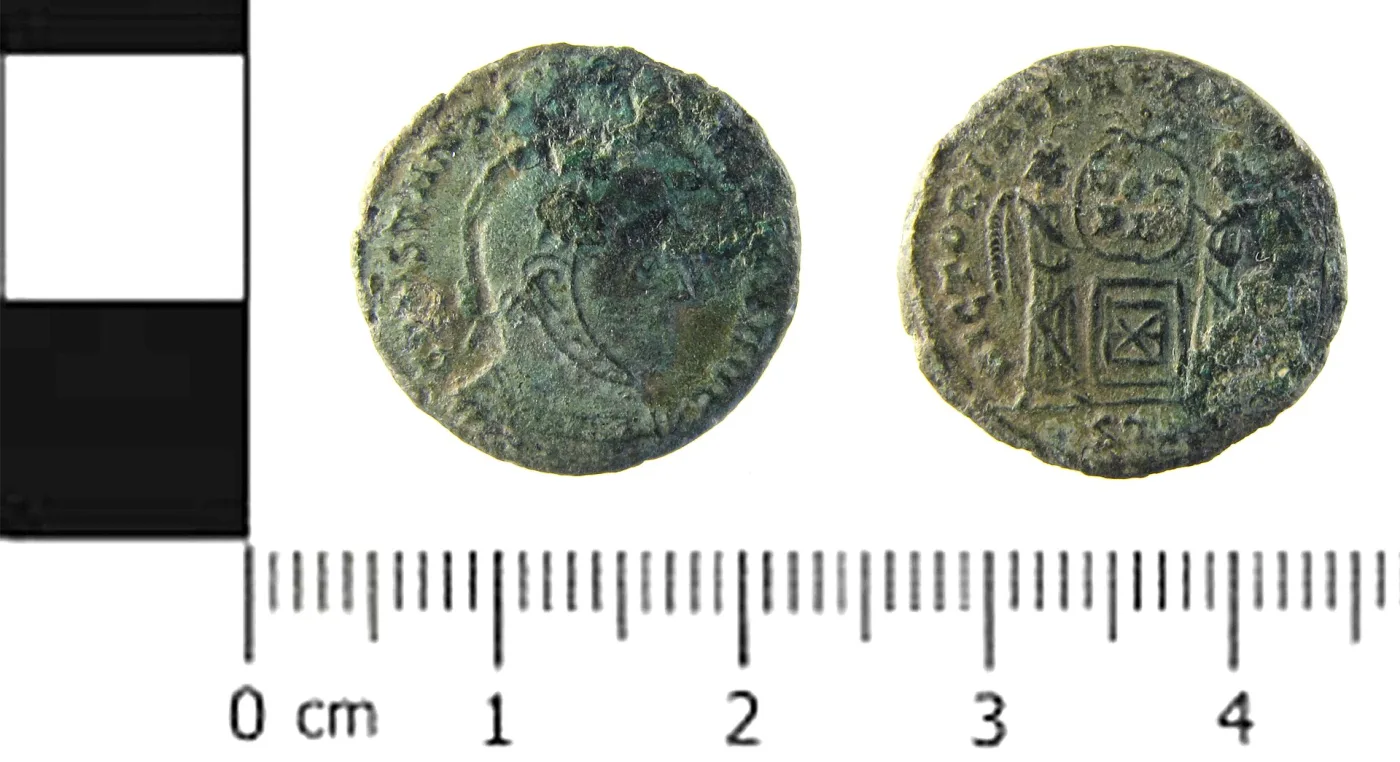
Most Roman “copper” coins in private hands today are not the big brass sestertii of museum cases. They are small, green or brown bronzes of the fourth century, about the size of a US dime or nickel, found by the thousand in fields from Britain to the Balkans. They rarely show their date or denomination, and a worn one may have only half a legend left.
That sounds hopeless and is not. Three questions identify most of them: how big is it, what is the emperor wearing, and what is happening on the reverse? This guide works through those three, with photographs of real finds rather than auction-grade coins, because a corroded field find is what most readers are holding.
For the wider picture of Roman coinage, gold and silver included, start with our ancient Roman coins identification guide. This page is the close-up on the base-metal coins.
Copper, bronze or brass?
The Romans used more than one copper alloy, and the words get blurred.
- After Augustus’ coinage reform of about 23 BC, the sestertius and dupondius were struck in orichalcum, a brass with a golden colour when new. The as was struck in reddish copper.
- From Diocletian’s reform of about 294 AD, small change was a single copper-alloy coin with a thin silver wash on the surface, which most of these coins have long since lost.
Finds recorders in Britain write “copper alloy” for all of them, and that is the honest description: you cannot tell the alloy reliably by eye once a coin has spent seventeen centuries in soil. Colour helps only on a clean early-imperial coin, where yellow suggests brass and red suggests copper.
Step 1: Measure it
A ruler or calipers is the most useful tool you own here. Diameter splits the base-metal coinage into two worlds.
Over about 25 mm, thick and heavy: probably an early-imperial sestertius, dupondius or as. These usually carry a large S C on the reverse, for Senatus Consulto. The other candidate at this size is one of Diocletian’s early folles of about 10 g, from the 290s, which have a late-style portrait and no S C.
Under about 21 mm, thin and light: almost certainly a late Roman nummus of the fourth century. Collectors classify these by size because the ancient names of most late bronzes are uncertain:
| Class | Diameter | What it usually is |
|---|---|---|
| AE1 | over 25 mm | Early folles of Diocletian’s reform, which weighed about 10 g, and a few large later issues |
| AE2 | 21–25 mm | Larger issues of the mid fourth century |
| AE3 | 17–21 mm | The bulk of Constantinian and Valentinianic bronzes |
| AE4 | under 17 mm | The smallest late issues, and many contemporary copies |
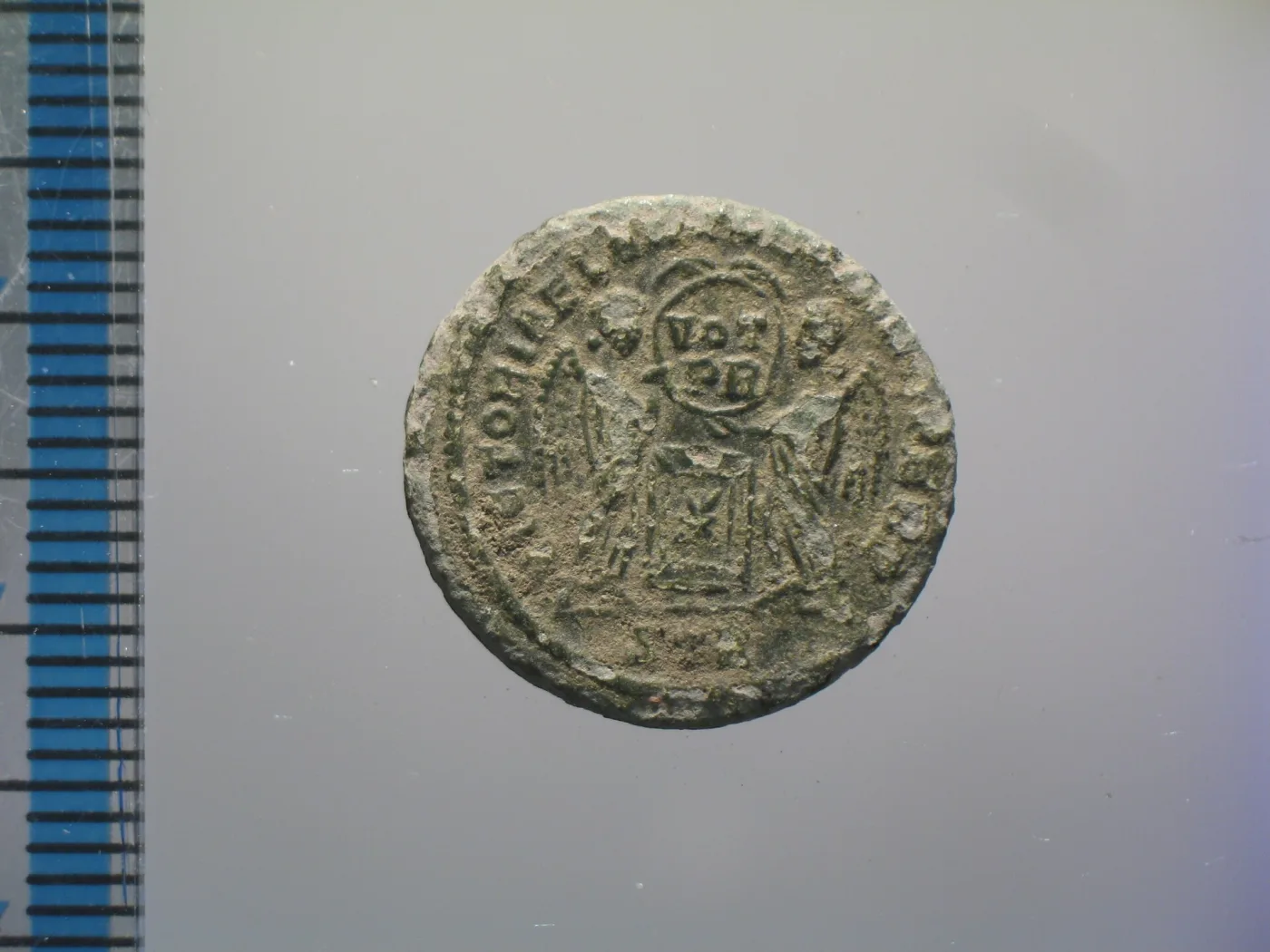
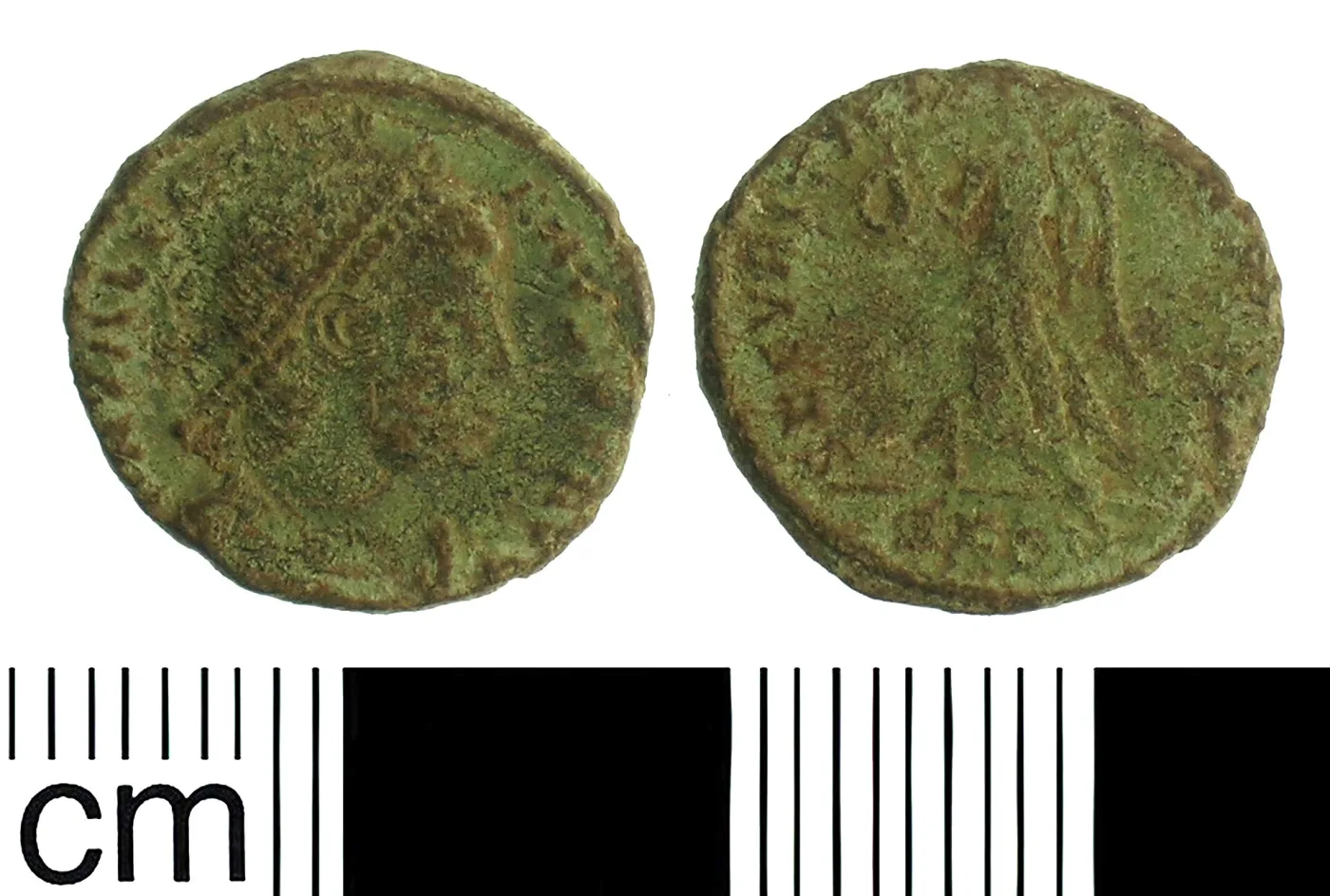
The coin in the photograph at the top of this page is a nummus of Constantine I recorded at 17.2 mm and 2.19 g: an AE3, and a typical one.
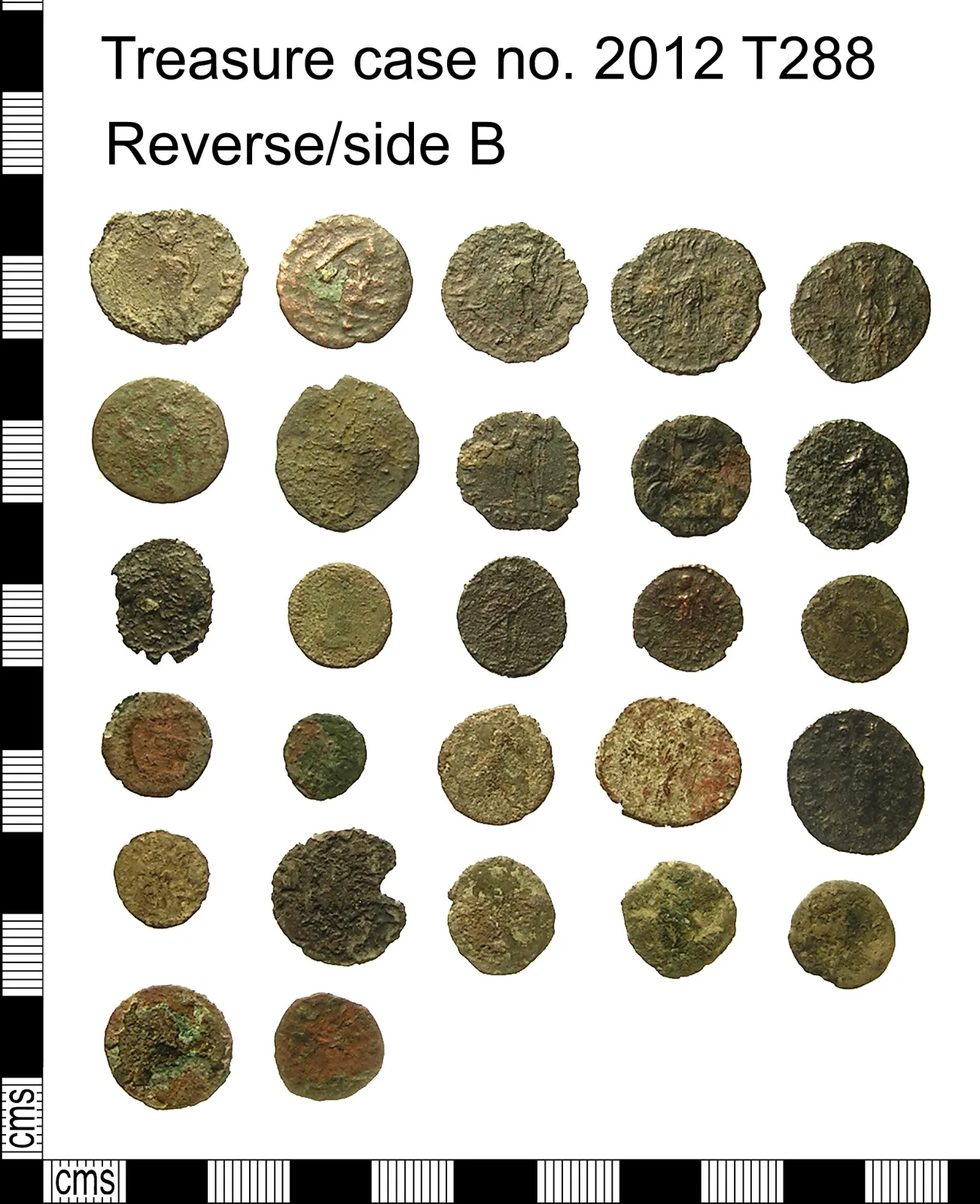
Step 2: Check the crown on the large coins
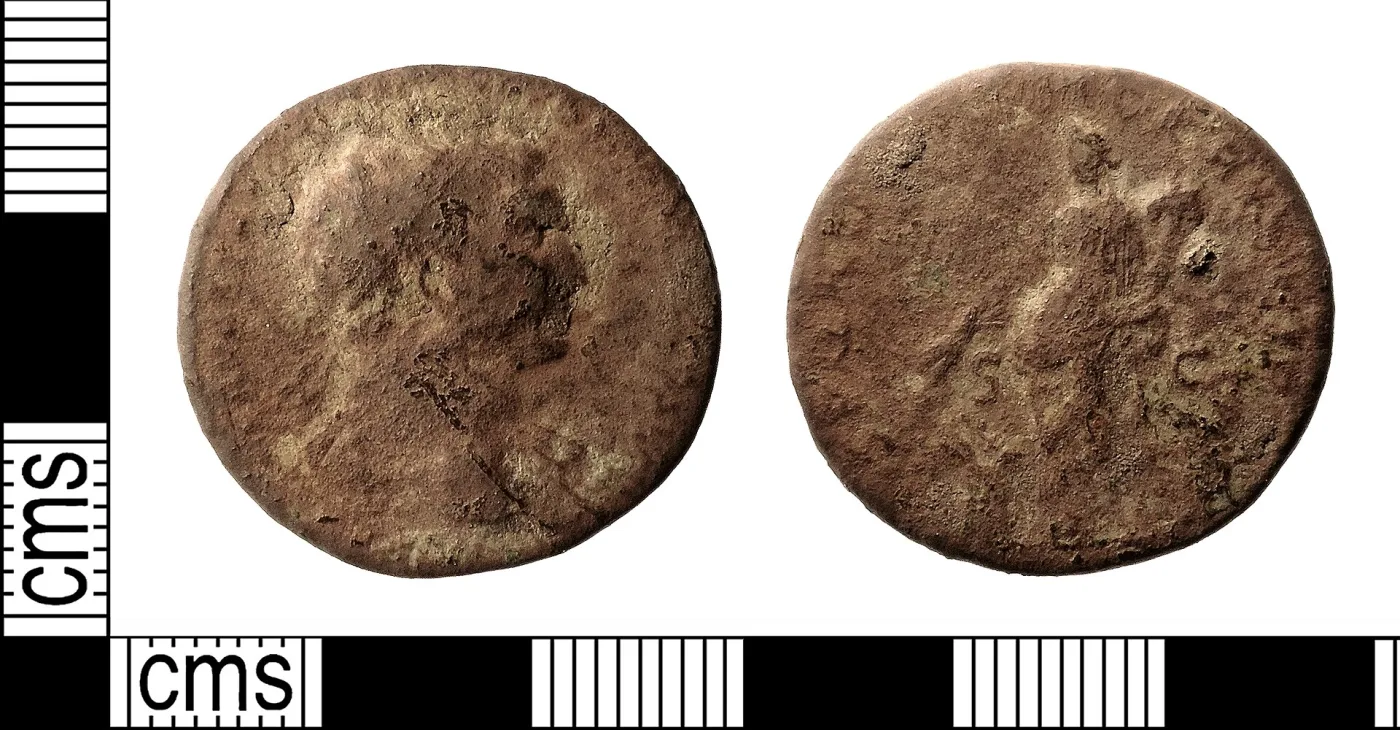
On early-imperial base metal, the three denominations you will meet most often were worth, under Augustus’ system, 1 sestertius = 2 dupondii = 4 asses. The sestertius is the easy one, the largest and heaviest, usually over 30 mm. The dupondius and the as were close to the same size, and that is where the crown comes in.
From 66 AD, under Nero, the dupondius normally shows the emperor in a radiate crown, a band with spikes, while the as shows him laureate, in a laurel wreath. The radiate crown marked the double value. Dupondii struck before Nero, and some after, have no crown, and heavy patina hides the brass-versus-copper colour difference, so an uncrowned coin of this size can stay “dupondius or as”.

Step 3: Match the reverse on the small coins
Late Roman bronzes were struck in large issues of a few designs at a time, which is good news: a handful of reverse types covers a large share of what turns up. Match the scene first, then use whatever letters survive to confirm it.
| Reverse legend | What you see | Struck | Main emperors |
|---|---|---|---|
| VICTORIAE LAETAE PRINC PERP | Two Victories hold a shield inscribed VOT PR over an altar | c. 318–320 | Constantine I |
| GLORIA EXERCITVS | Two soldiers flanking two standards; a later, lighter version has one standard | from 330 | Constantine I and his family |
| FEL TEMP REPARATIO | A soldier spearing a horseman who has fallen from his horse | 350s | Constantius II and his Caesars |
| SECVRITAS REIPVBLICAE | Victory advancing left with a wreath and palm | 360s–370s | Valentinian I, Valens, Gratian |
VICTORIAE LAETAE PRINC PERP
Two winged Victories face each other and hold a shield over a small altar. The shield reads VOT / PR, usually expanded as Votis Populi Romani, the vows of the Roman people. The altar front varies between mints, sometimes plain and sometimes with a star or diamond. Struck around 318–320, at Trier, Ticinum, London, Arles, Siscia and others.
GLORIA EXERCITVS
“The glory of the army”: two soldiers stand on either side of military standards. The two-standard version was struck from about 330 for Constantine I and his sons. A later and lighter version shows one standard between the soldiers, so count the standards before you read anything else.
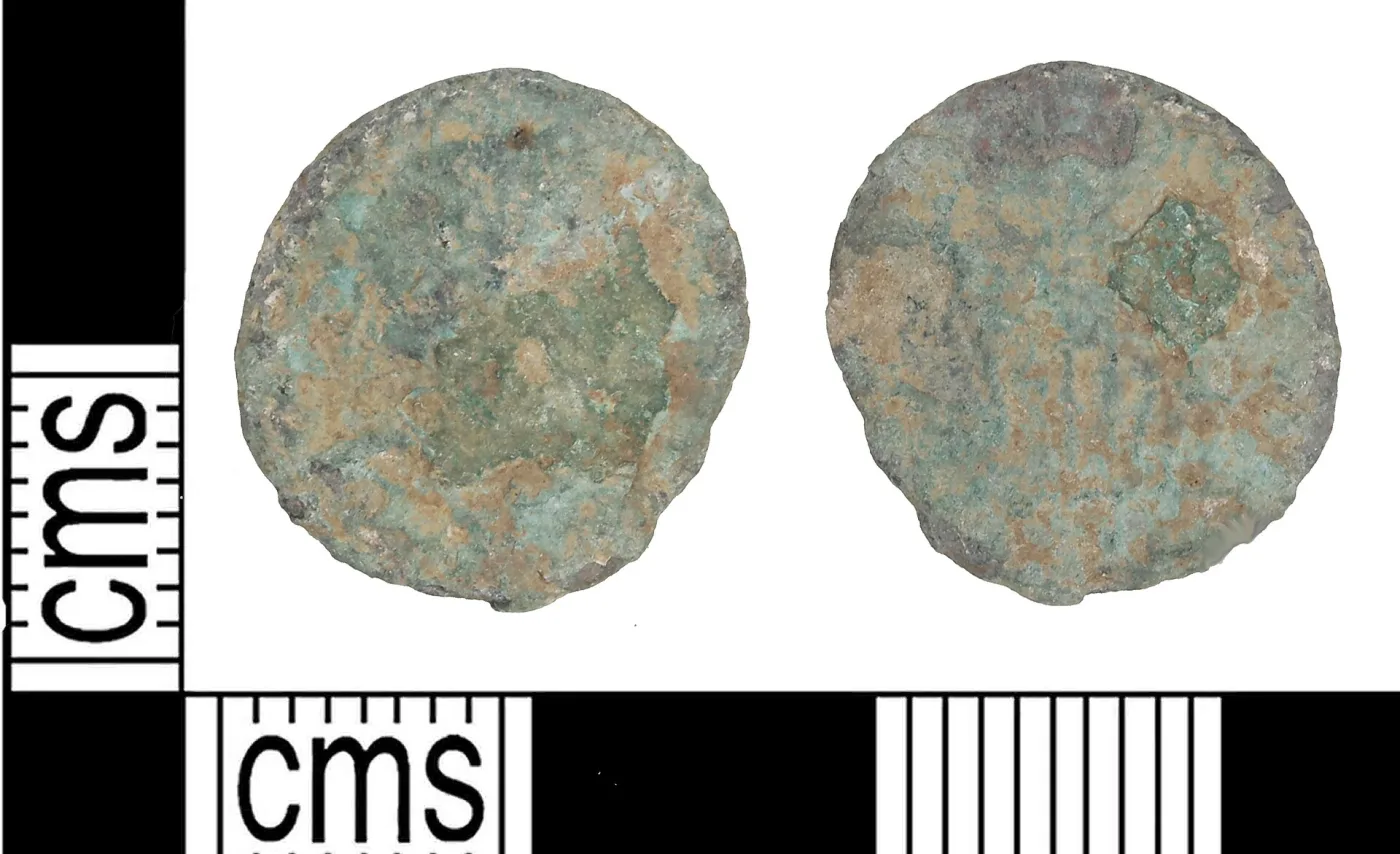
FEL TEMP REPARATIO, the fallen horseman
Several designs share this abbreviated legend, a promise of restored good times. The one you are most likely to meet is the fallen horseman: a soldier on the left spears an enemy tumbling from his horse. It belongs to the 350s, in the reign of Constantius II and his Caesars.
The sources disagree on its exact span: catalogue entries date individual issues to 350–355, while British finds records date some examples to 355–361. Both fall inside Reece period 18, AD 348–364, and “the 350s” is true for both, which is how we give it here.
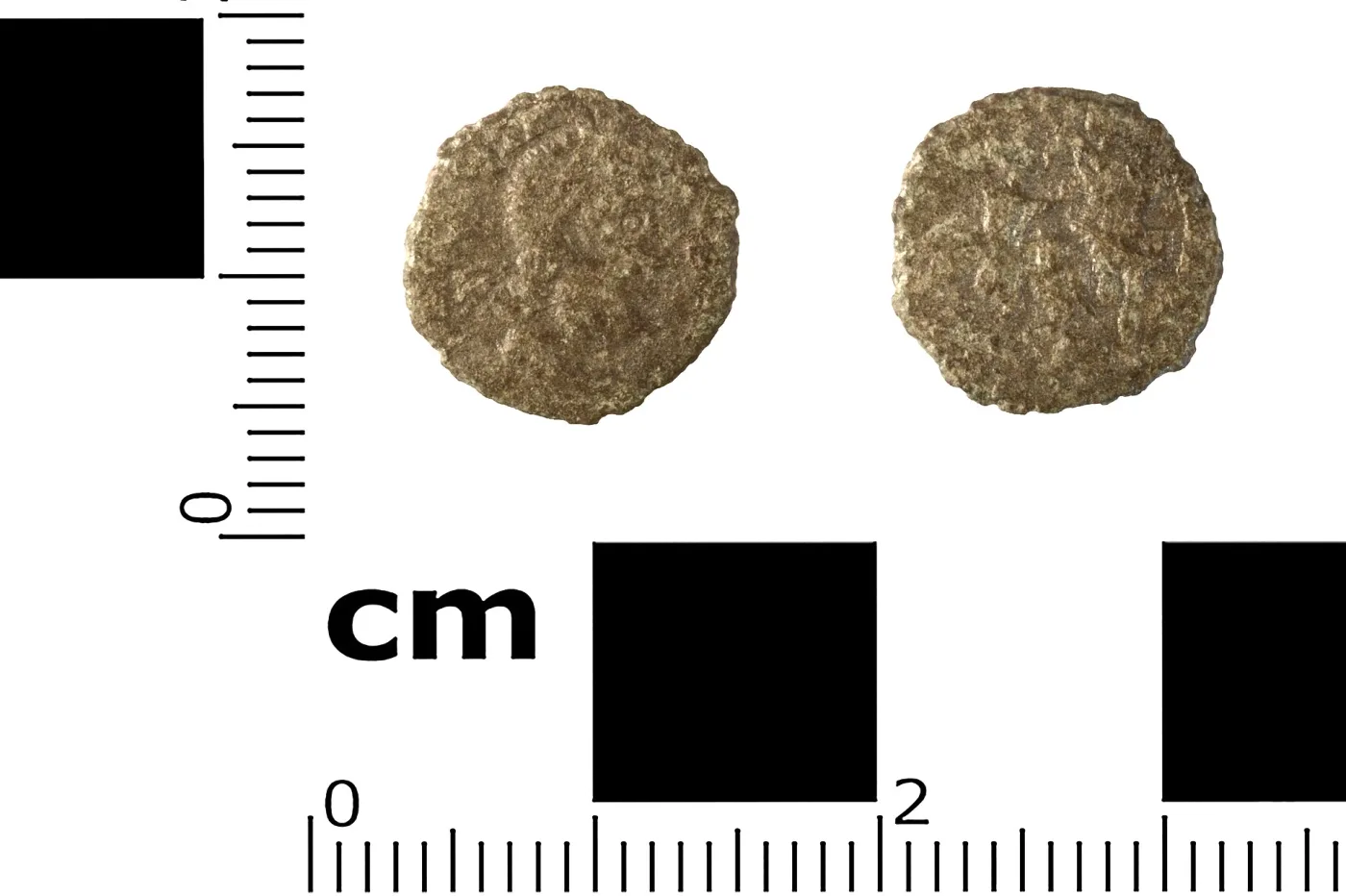
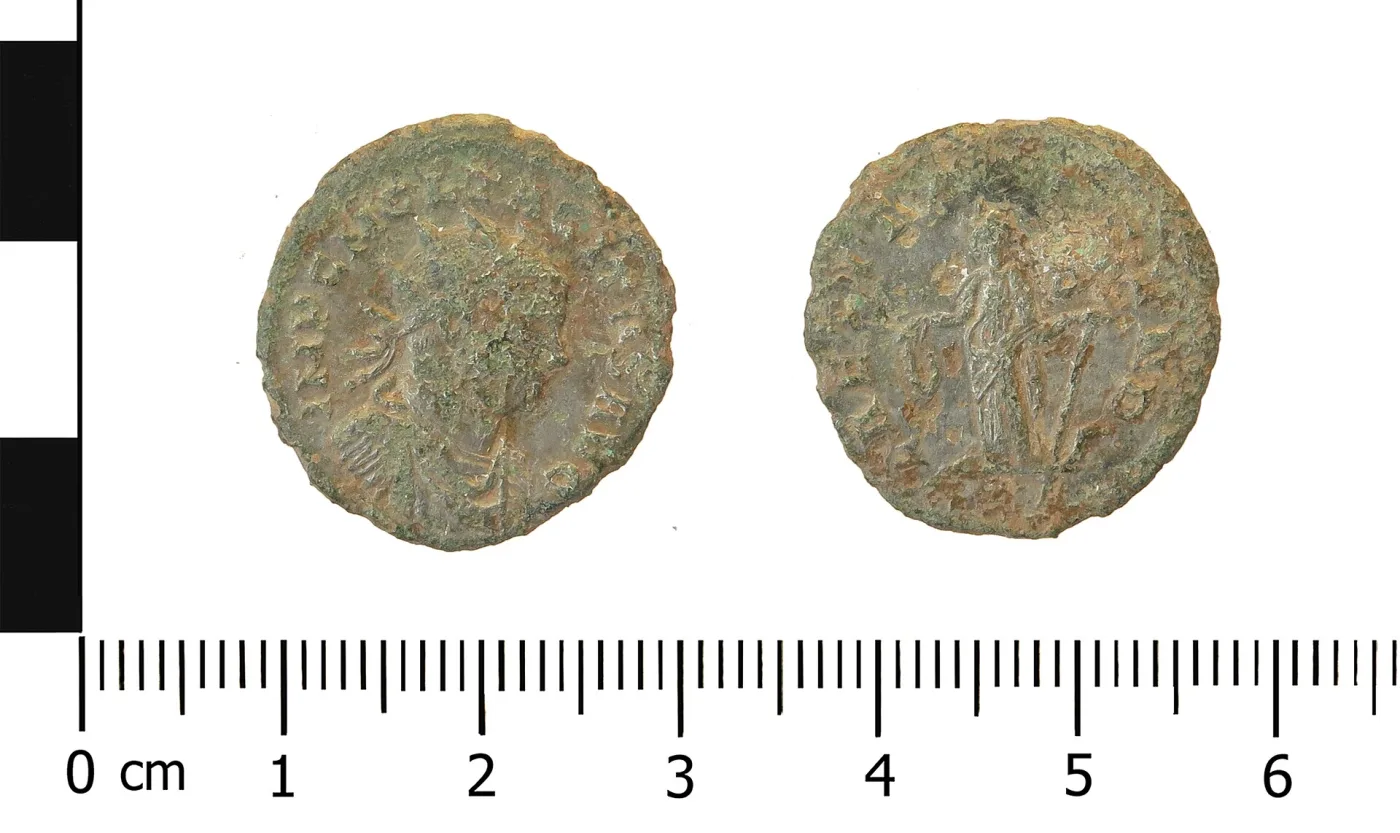
SECVRITAS REIPVBLICAE
“The security of the state”: Victory walks to the left holding a wreath out in one hand and a palm over her shoulder. The obverse shows a diademed emperor: Valentinian I, his brother Valens or his son Gratian. These coins date to the 360s and 370s.
Here too the sources differ by a few years: British finds records give AD 364–378 for the type, while catalogue entries date individual issues to 367–375. The table gives the decades, which are true for both.
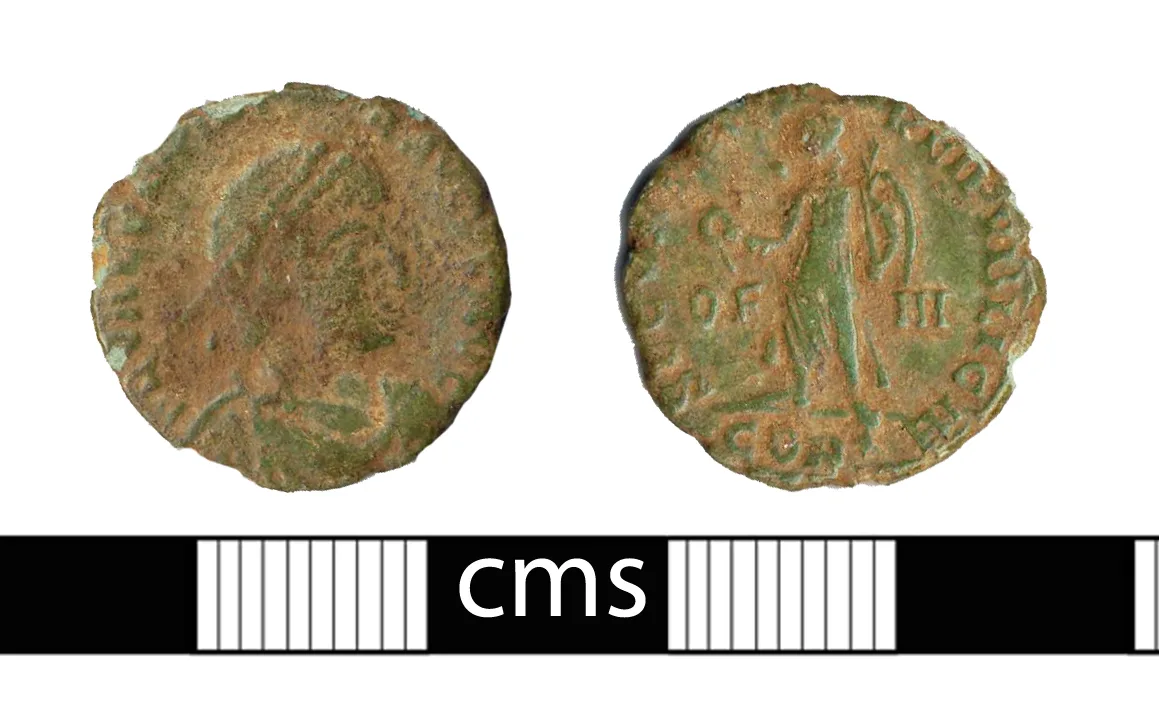
Step 4: Read what letters survive
You rarely need the whole legend. Three places on the coin do most of the work:
- The end of the obverse legend. AVG marks a reigning emperor; NOB C or NOB CAES marks a junior Caesar. That alone halves the list on many Constantinian coins.
- The reverse legend. Even three or four letters, such as GLOR or REPA, are often enough to confirm a type you have matched by its scene.
- The exergue, the strip below the reverse scene. Letters here name the mint and often the workshop. A clear exergue is what turns “an AE3 of Constantine” into a specific catalogue number in Roman Imperial Coinage (RIC).
If none of the letters survive, size plus reverse scene is still a valid attribution. The Portable Antiquities Scheme in Britain records thousands of coins that way and publishes the result as a Reece period, a fixed date band devised by the archaeologist Richard Reece. The four that cover the coins on this page:
| Reece period | Dates | Reverse types above |
|---|---|---|
| 16 | AD 317–330 | VICTORIAE LAETAE PRINC PERP |
| 17 | AD 330–348 | GLORIA EXERCITVS |
| 18 | AD 348–364 | FEL TEMP REPARATIO fallen horseman |
| 19 | AD 364–378 | SECVRITAS REIPVBLICAE |
Contemporary copies
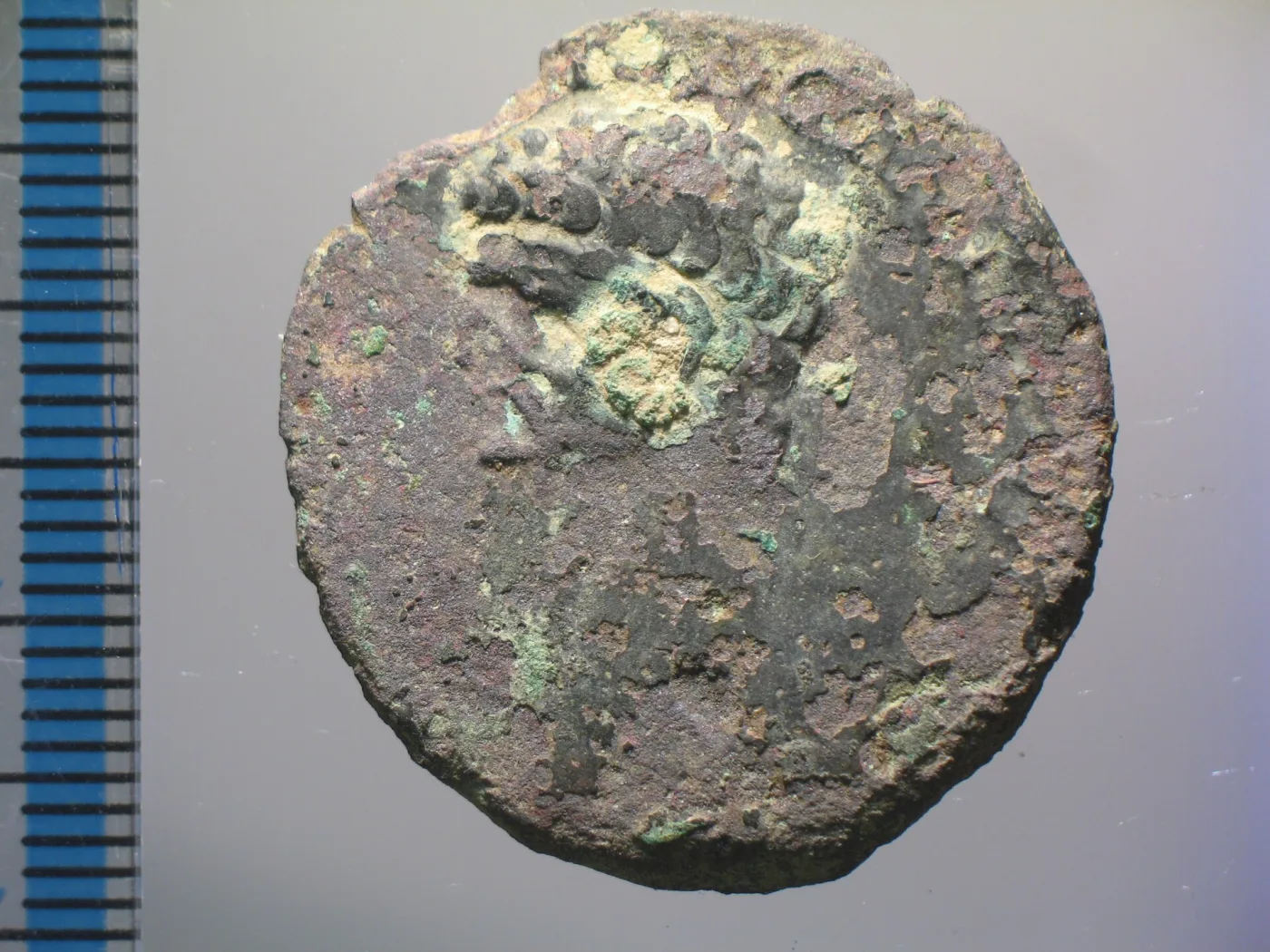
Not every Roman-looking bronze came from an imperial mint. Copies were made in antiquity, and they are genuinely ancient. Signs include a diameter or weight well below the official type, crude or blundered letters, and a portrait drawn as a few lines.
Ancient copies are a separate question from modern fakes, which we cover in the counterfeit detection guide. If you found the coin in the ground yourself, it is almost certainly ancient, official or not.
Before you clean it
Photograph the coin on both sides, beside a ruler, before you do anything else. Records like the ones on this page attribute coins in exactly the state shown, and cleaning can remove the last legible letters. If you do clean an excavated bronze, follow the gentle methods in our coin cleaning and preservation guide, and keep any coin with powdery bright-green spots away from the rest.
If your coin shows a Christian cross, a large letter M, or a facing bust, it may be later than anything here: compare it with our Byzantine coins identification guide.
Quick identification checklist
- Measure the diameter. Over 25 mm and heavy: early empire. Under 21 mm: fourth century.
- Large coin: look for S C, then the crown. Radiate means dupondius, laureate means as, the biggest is a sestertius.
- Small coin: match the reverse scene to the four types above, then count standards or look for VOT PR.
- Read the end of the obverse legend for AVG or NOB C.
- Check the exergue for a mint mark.
- Weigh it. A coin far lighter than its type may be a contemporary copy.
- Photograph it with the Coin Identifier app and compare the match against the scene you identified by eye.
Frequently Asked Questions
Are Roman coins copper or bronze?
Both words are used loosely. After Augustus' reform the as was struck in reddish copper, while the sestertius and dupondius were orichalcum, a golden brass. Later Roman small change, from Diocletian's nummus of about 294 AD to the fourth-century coins collectors call AE3 and AE4, was a copper alloy; Diocletian's coin was issued with a thin silver surface layer that later issues largely lost. Finds recorders usually write 'copper alloy' because the exact metal cannot be told by eye.
How do I tell a dupondius from an as?
Look at the emperor's head. From Nero's reign, in 66 AD, the dupondius normally shows a radiate crown of spikes and the as a laurel wreath. The dupondius was struck in brass and the as in copper, so a clean dupondius looks yellower, though patina often hides that. Earlier dupondii have no crown and are hard to separate from asses.
What does AE3 mean on a Roman coin?
AE3 is a size class, not a Roman denomination. Collectors sort late Roman bronzes by diameter because the ancient names of most of them are uncertain: AE1 is over 25 mm, AE2 21 to 25 mm, AE3 17 to 21 mm and AE4 under 17 mm. Most fourth-century bronzes found today are AE3 or AE4.
What is the soldier spearing a horseman on a Roman coin?
That is the FEL TEMP REPARATIO 'fallen horseman' type, struck in the 350s under Constantius II and his Caesars. A soldier on the left spears an enemy who has fallen from his horse. It was copied at the time, so small, crude or lightweight examples may be contemporary copies.
What does VOT PR on a Roman coin mean?
VOT PR is usually read as VOTIS POPVLI ROMANI, the vows of the Roman people. It appears on a shield held by two Victories over an altar on the VICTORIAE LAETAE PRINC PERP nummi of Constantine I, struck around 318 to 320 at many mints.
How can I date a worn Roman bronze with no readable legend?
Measure it, then match what you can see of the reverse. Diameter puts it in a size class and the reverse scene usually narrows it to a few years. British finds recorders publish the result as a Reece period, a fixed date band: period 16 is AD 317 to 330, period 17 is 330 to 348, period 18 is 348 to 364 and period 19 is 364 to 378.