Byzantine Coins Identification Guide: How to Read, Date, and Value the Coins of Byzantium
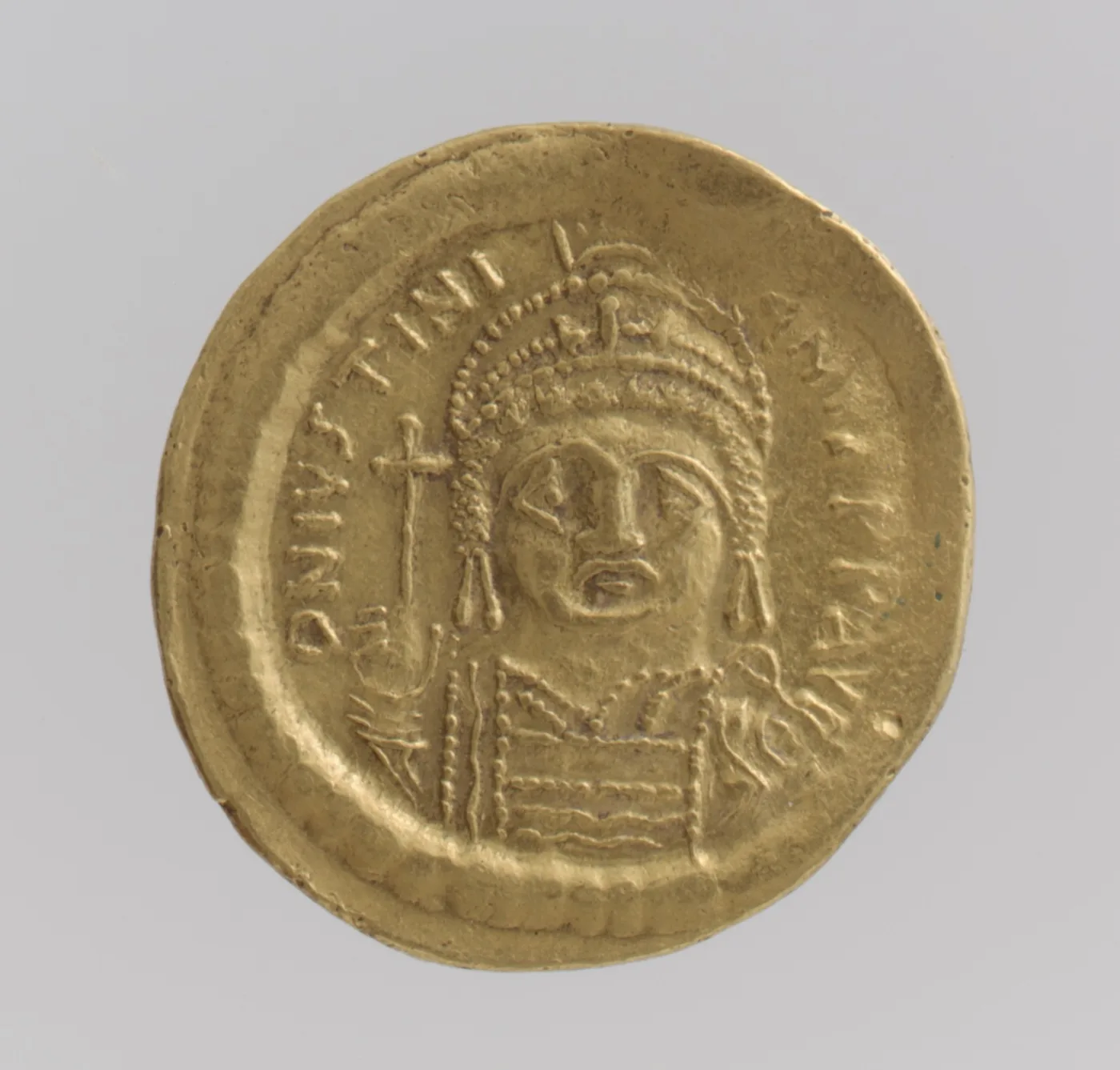
Byzantine coins are the great overlooked bargain of ancient numismatics. For nearly a thousand years — from the coinage reform of Anastasius I in 498 CE to the fall of Constantinople in 1453 — the Eastern Roman Empire struck coins in gold, silver, and copper that carried the faces of emperors, empresses, Christ, the Virgin Mary, and the saints across three continents. Its gold solidus was so trusted that it served as the dollar of the medieval world, changing hands unquestioned from Britain to China. Yet today a handsome Byzantine bronze can cost less than dinner, and even solid gold coins of the empire sell for a fraction of what comparable rarities bring in other series.
The catch is that Byzantine coins intimidate newcomers more than almost any other coinage. The legends slide from Latin into Greek and back into strange mixtures of both. The flans are ragged, overstruck on earlier coins, and — in the later centuries — deliberately cup-shaped, which convinces many first-time finders that their coin is damaged. There are no dates in the modern sense, the emperors number in the dozens, and the same giant letter M dominates millions of surviving bronzes. It looks like chaos.
It is not. Byzantine coinage is in fact one of the most systematic coinages of the ancient and medieval world, built on marks of value, mint signatures, regnal years, and officina letters that tell you far more than most ancient coins ever will. This guide walks through what counts as a Byzantine coin, the anatomy of obverse and reverse, the denominations in gold, silver, and copper, how to read the legends and the famous CONOB signature, how to date a coin by regnal year and style, the mints and their marks, the five great periods of the coinage, the religious iconography, the anonymous folles, the mysterious cup-shaped coins, famous rarities, realistic 2026 values, grading, counterfeit detection, and the references that resolve any coin you cannot place. By the end, that intimidating letter M will read like a price tag.
Why Byzantine Coins Are Easier Than They Look
Most collectors meet their first Byzantine coin the same way: a thick, ragged bronze turns up in a dealer’s junk box or an inherited collection, dominated by a huge M and surrounded by letters that refuse to form a Latin word. It looks impossibly obscure. In reality, that coin is announcing its denomination, its mint, the year of the emperor’s reign in which it was struck, and even which workshop inside the mint produced it — information a Roman denarius or a Greek tetradrachm never gives you.
A Coinage Built on Labels
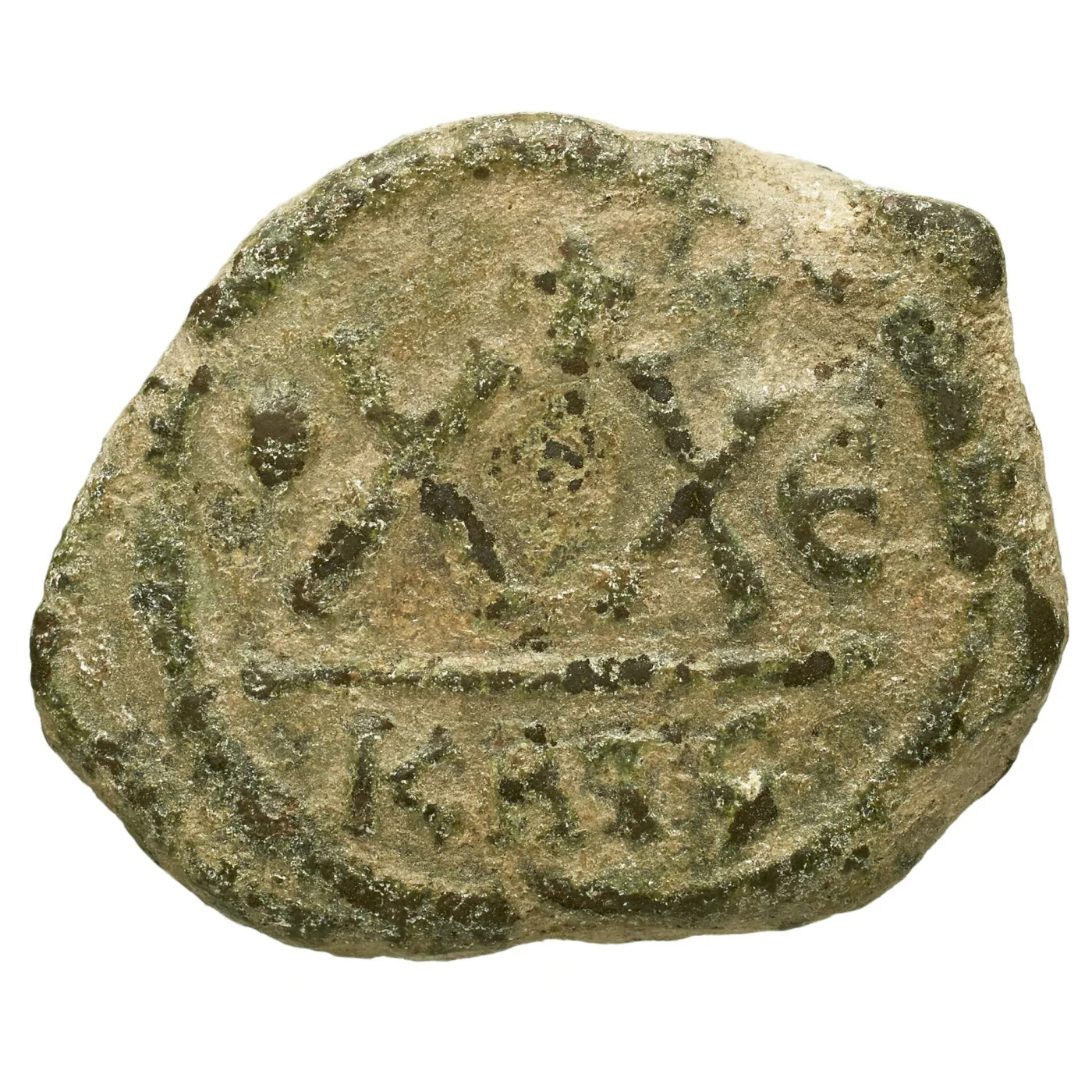
The Byzantine bronze coinage introduced in 498 CE is self-describing. The big letter on the reverse is a Greek numeral stating the value: M means 40 nummi, K means 20, I means 10, E means 5. Below it sits the mint signature; to either side, often, the word ANNO and a regnal year. Once you know that single convention, an enormous share of all Byzantine coins in existence — the copper folles and their fractions — practically identify themselves.
Fewer Variables Than Roman Coinage
Byzantine coinage also has a shorter cast list than the Roman series it grew from. There are no competing usurpers striking in dozens of provincial cities, no thousand local Greek mints — just a modest roster of imperial mints and a single line of emperors (with occasional co-emperors) whose names, once transliterated, repeat familiar forms: Justinian, Justin, Heraclius, Constantine, Leo, Basil, Romanus, Alexius, Manuel, John. Match the name, the value letter, and the mint, and you have an attribution that a specialist catalog will confirm in minutes.
What Counts as a Byzantine Coin
“Byzantine” is a modern label. The people who struck these coins called themselves Romans, and their coinage is simply the money of the Roman Empire continuing in the East after the West collapsed. Where you draw the line between “Roman” and “Byzantine” is therefore a convention, and collectors follow a practical one.
The Conventional Starting Point: 491–498 CE
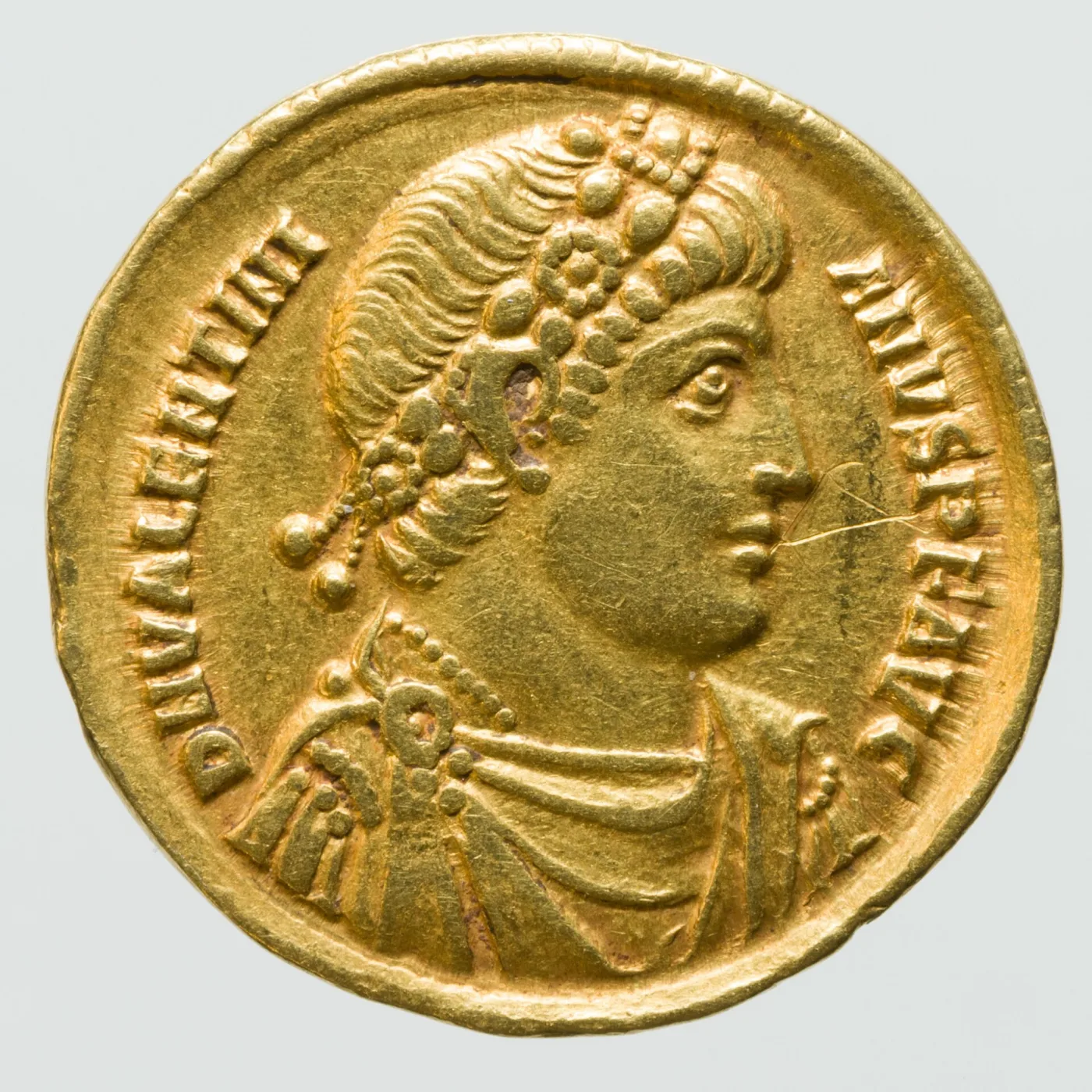
Numismatists conventionally begin the Byzantine series with the emperor Anastasius I (491–518), and specifically with his coinage reform of 498 CE, which replaced the miserable little nummi of the fifth century with large, clearly marked bronze denominations. Everything before Anastasius is cataloged as ancient Roman coinage; everything after him, struck by the emperors ruling from Constantinople until the city fell to the Ottomans in 1453, is Byzantine. The gold solidus that anchors the system is older still — Constantine the Great introduced it around 312 CE — and it passed into the Byzantine series unchanged in weight and purity, one of the longest-lived coin standards in history.
What the Series Includes
The Byzantine series covers coins struck by the central imperial government at Constantinople and its provincial mints from Italy and North Africa to Syria and the Crimea. Around the edges sit related coinages that collectors often meet in the same trays: the gold and bronze of the Vandals and Ostrogoths imitating imperial types, Arab-Byzantine bronzes struck by the early caliphate copying the follis, Latin and Bulgarian imitations of the cup-shaped trachea after 1204, and the coinages of breakaway Byzantine states such as Trebizond. This guide focuses on the imperial series, but knowing the imitations exist saves confusion when a “Byzantine” coin refuses to match any emperor.
Anatomy of a Byzantine Coin
Byzantine coins follow a consistent layout inherited from late Rome, and learning the parts makes every later step easier.
The Obverse: Emperor or Sacred Image
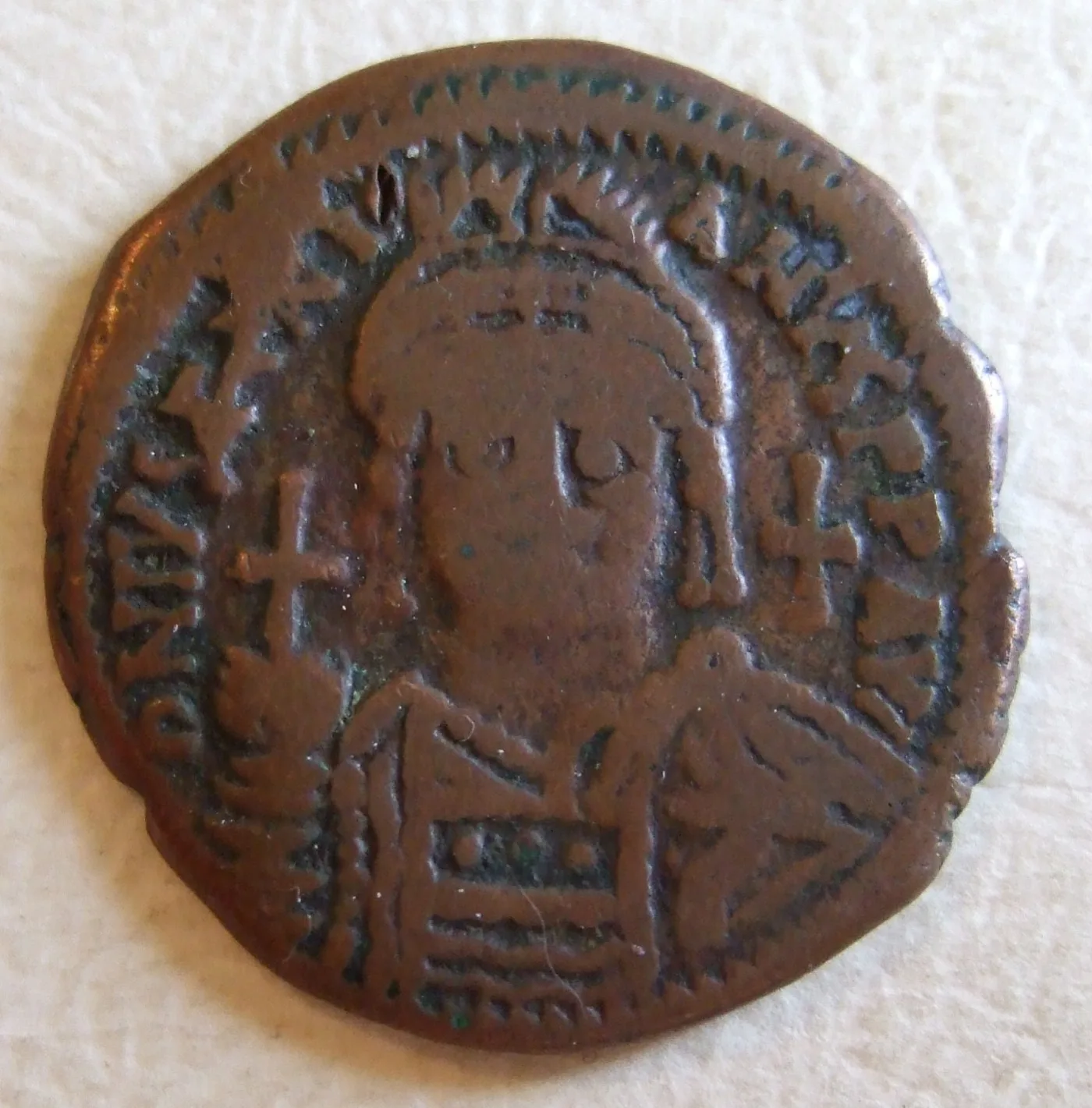
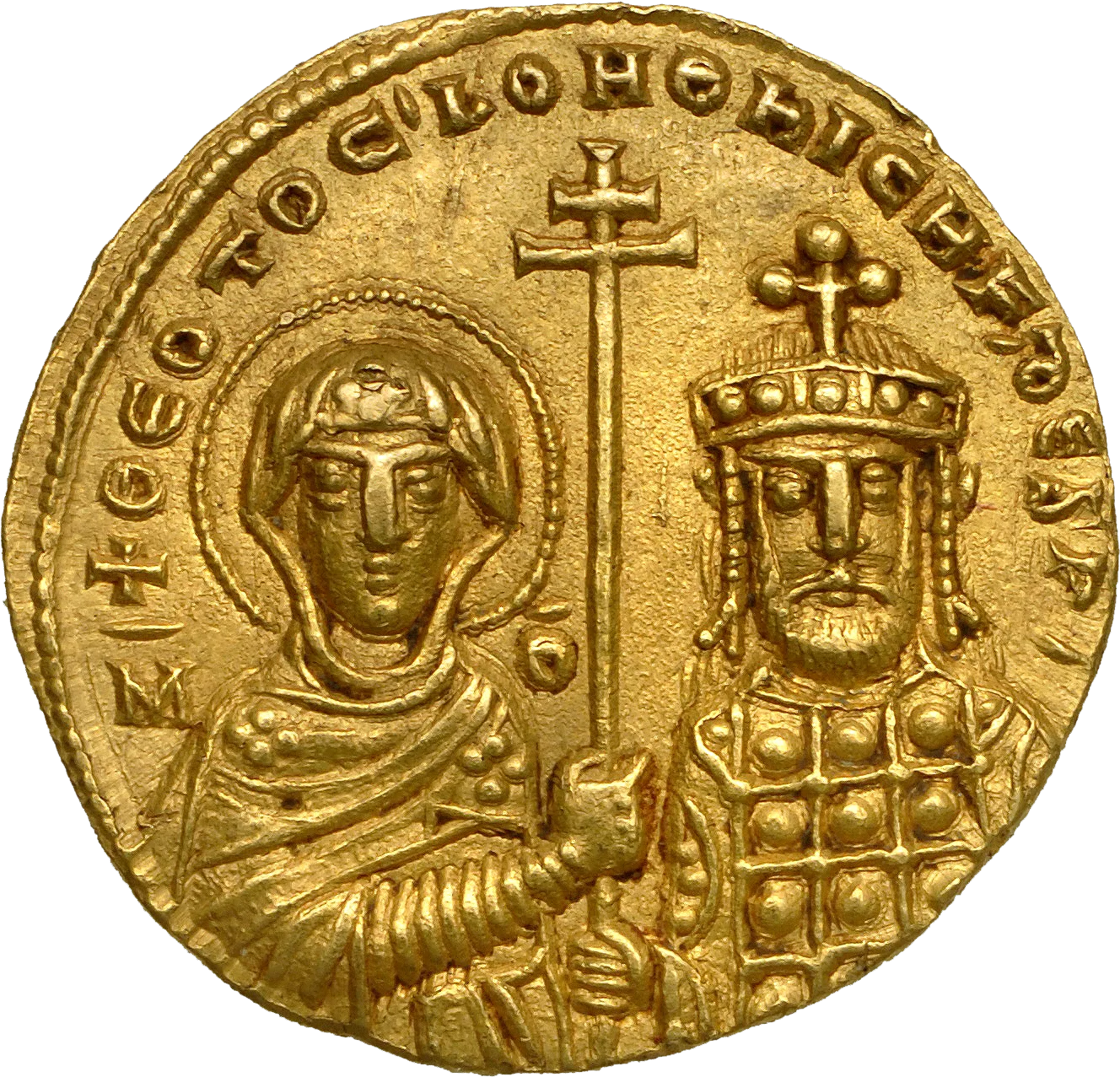
The obverse (front) normally carries the imperial portrait — at first a helmeted or diademed profile in the late Roman manner, then, from the sixth and especially the seventh century, a facing bust that stares straight out of the coin. Emperors wear a crown topped with a cross, often with pendilia (jewelled pendants hanging beside the face), and hold a globus cruciger (orb with cross), a cross-tipped scepter, or the akakia (a silk pouch of dust symbolizing mortality). Co-emperors, empresses, and imperial sons frequently share the design — two or three facing figures side by side is a classic Byzantine composition. In some periods the obverse instead carries Christ or the Virgin, with the emperor demoted to the reverse.
The Reverse: Value, Cross, or Holy Figure
Early bronze reverses are dominated by the mark of value (M, K, I, E) with the mint and date arranged around it. Gold reverses favor religious and dynastic types: a winged Victory (soon rechristened as an angel), a cross potent on steps — the famous monument-cross of Golgotha — the emperor’s heir, or Christ enthroned. Silver carries crosses and legends in several lines. From the ninth century onward, reverses increasingly carry portraits of Christ, the Virgin, or warrior saints crowning or blessing the emperor.
Fabric: The Look and Feel
Byzantine fabric — the physical character of the coin — is distinctive. Flans are often irregular, thick, and struck off-center; bronzes are frequently overstruck on earlier coins, with ghosts of the undertype visible beneath the design. Gold is thin, broad, and neatly struck by comparison. And from the mid-eleventh century, most denominations become scyphate (cup-shaped) on purpose. None of these traits are damage; they are diagnostic features that help confirm a coin is genuinely Byzantine.
Denominations: Gold, Silver, and Copper
Byzantine money rested on three metals with a fairly stable internal logic: gold for taxes, the army, and large transactions; copper for daily life; silver as an occasional, prestige-heavy middle tier.
Gold: Solidus, Semissis, Tremissis
The solidus (in Greek, nomisma) was the empire’s flagship: about 4.5 grams of essentially pure gold, struck at 72 to the Roman pound, and held to standard for seven centuries. Its fractions were the semissis (half solidus) and the tremissis (third solidus, about 1.5 grams), both common in the early centuries. In the tenth and eleventh centuries the solidus split into the broad, thin histamenon and the lighter tetarteron; after the debasements of the eleventh century, Alexius I’s reform of 1092 created the hyperpyron, a slightly alloyed successor (about 20.5 carats) that carried Byzantine gold into the fourteenth century, when gold coinage finally ceased.
Silver: Hexagram, Miliaresion, Stavraton
Silver appears in episodes. The hexagram, a heavy silver coin introduced by Heraclius around 615 to pay for the Persian wars, is famous for its legend “God, help the Romans.” The thin, broad miliaresion, introduced under Leo III around 720, carries a cross on steps and a several-line legend and anchored middle-period silver. In the last century of the empire, with gold gone, the big silver stavraton and its fractions became the principal coinage — including the desperately rare issues of Constantine XI, the final emperor.
Copper: The Follis and Its Fractions
The copper follis of 40 nummi is the workhorse of Byzantine collecting — big, affordable, and struck in vast numbers. Its Greek-numeral fractions make the early system easy to read:
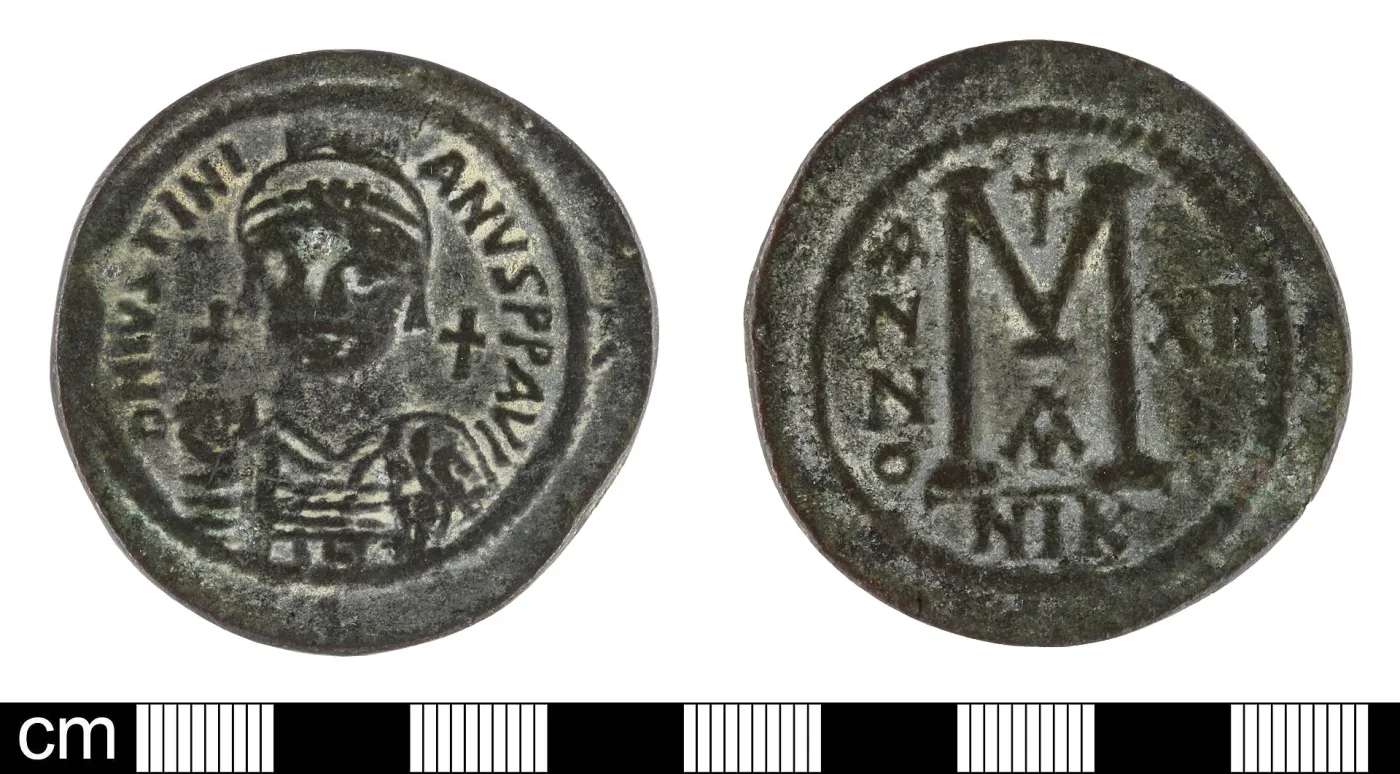
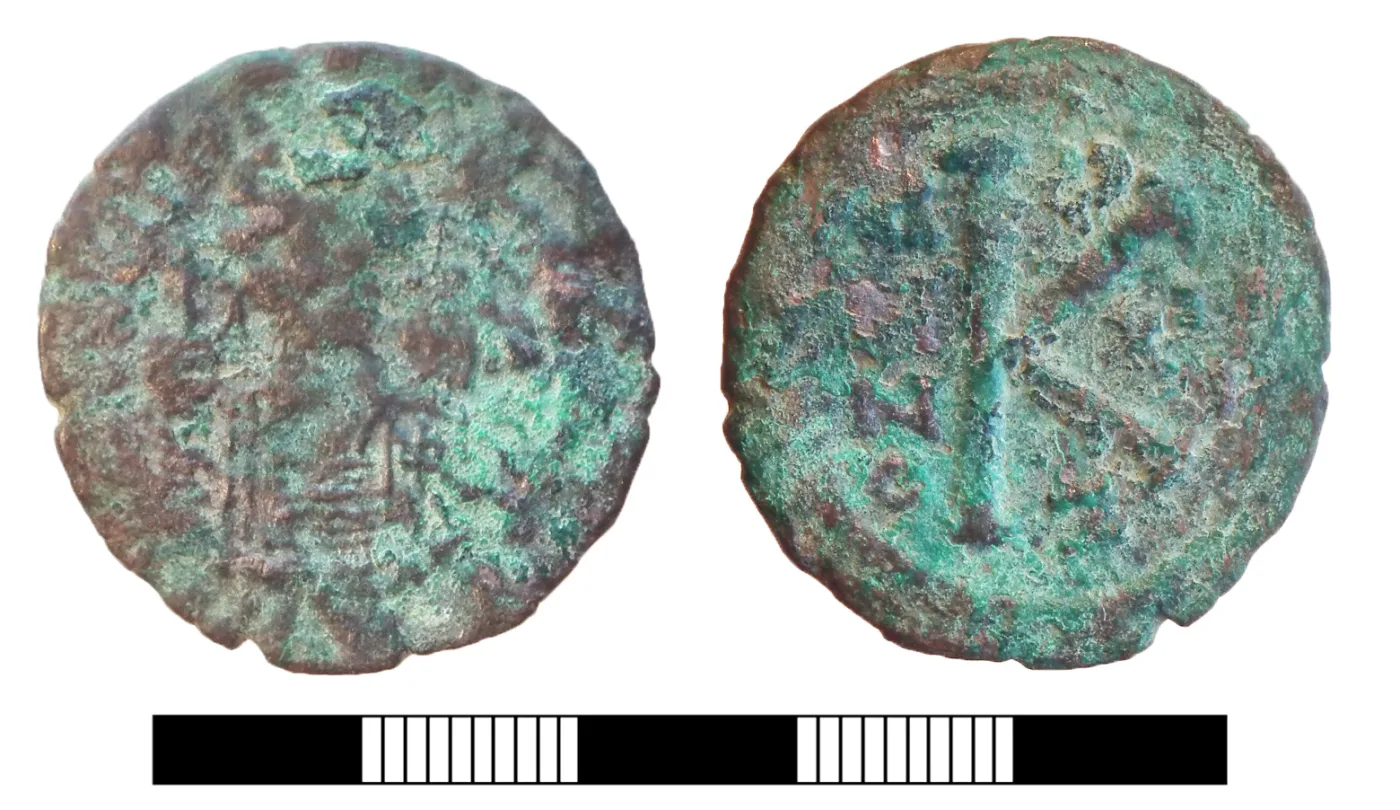
- M — follis, 40 nummi
- K — half follis, 20 nummi
- I — decanummium, 10 nummi
- E — pentanummium, 5 nummi
Alexandria eccentrically used its own marks (IB for 12 nummi, S for 6), and Cherson in the Crimea cast its coins rather than striking them. After the seventh century the fractions fade and the follis shrinks; from 1092 the small flat copper tetarteron and the cup-shaped billon aspron trachy (a copper-silver alloy) take over the small change of the Komnenian world.
Reading the Legends: From Latin to Greek
Nothing marks a coin as Byzantine faster than its lettering — and nothing scares off beginners faster. The secret is that the legends follow rigid formulas, so you are never translating, only pattern-matching.
The Latin Phase
Early Byzantine legends are pure late-Roman Latin: D N IVSTINIANVS P P AVG — Dominus Noster Justinianus Perpetuus Augustus, “Our Lord Justinian, Eternal Emperor.” Read the name between D N and P P AVG and you have the emperor. The letters are blocky Roman capitals, with V doing duty for U.
The Mixed and Greek Phases
From the seventh century, Greek letters and words infiltrate: the emperor becomes basileus (king), rendered in forms like bASILEUS with a small b, and titles like despotes appear. Mature legends run fully Greek: IhSUS XRISTUS bASILEU bASILE (“Jesus Christ, King of Kings”) on the anonymous folles, or EN TOUTO NIKA (“In this sign, conquer”). If you already know a little of the alphabet from ancient Greek coins, it transfers directly — the same lunate sigma written as C, the same H for eta — with the added quirk that Byzantine engravers freely mixed Latin and Greek letterforms in a single word.
The Sacred Abbreviations
A handful of contracted holy names unlock the religious types. IC XC abbreviates “Jesus Christ” (first and last letters of each Greek word, usually with a bar above); MP ΘV abbreviates Meter Theou, “Mother of God,” flanking the Virgin; NI KA completes the cross motto “Jesus Christ conquers.” Warrior saints are labelled outright — O AΓIOC ΓEWPΓIOC is Saint George. Spotting these four-letter groups instantly identifies the figure portrayed, which in turn narrows the emperor and period.
Dating Byzantine Coins by Regnal Year and Style
No Byzantine coin carries a calendar date, but many carry something almost as good — and the rest can be bracketed by style.
ANNO and the Regnal Year
In 538/9 — his twelfth regnal year — Justinian I began dating the follis: the word ANNO runs down the left field and the year of the reign, in Roman-Greek numerals, down the right. A follis of Justinian reading ANNO XII was struck in 538/9; one reading ANNO XXXI in 557/8. The habit continued, on and off, through the seventh century. Add the regnal year to the accession date of the named emperor and you have the coin dated to a twelve-month window — precision most ancient coins never approach.
Indictions, Overstrikes, and Style
Where explicit years are absent, other clues bracket a coin. Overstruck bronzes preserve datable undertypes beneath them. The module (diameter and weight) of the follis shrank in well-documented stages, so size alone roughly dates a seventh-century bronze. And style evolves recognizably: neat profile busts belong to the fifth and sixth centuries, bearded facing busts with the cross-on-steps to the seventh, austere cross-and-legend types to the iconoclast eighth and ninth, Christ portraits and saints to the tenth onward, and cup-shaped flans to the late eleventh century and after. With a little exposure, you can place an unidentified Byzantine coin within a century at arm’s length.
Mint Marks, CONOB, and Officina Letters
Byzantine coins are refreshingly explicit about where they were made — a courtesy modern coins would not extend so clearly until mint marks became standard on them centuries later.
The Mint Signatures
On bronzes, the mint’s abbreviation sits in the exergue (the segment below the design). The principal signatures are:
- CON — Constantinople, the capital and dominant mint
- NIKO / NIK / NIC — Nicomedia
- KYZ — Cyzicus
- ANT / THEUP — Antioch, restyled Theoupolis (“City of God”) after the earthquakes of the 520s
- ALE — Alexandria (with its odd IB and S denominations)
- KAR / CAR — Carthage
- RAV — Ravenna; ROM — Rome
- TES — Thessalonica; SCL — Sicily (Syracuse)
- CHERSON (in Greek letters) — the Crimean outpost that cast its coins
CONOB and the Gold Signature
Gold tells its story differently. The exergue of a solidus almost always reads CONOB — CON for Constantinople plus OB for obryzum, “refined gold,” with OB doubling as the Greek numeral 72: seventy-two pure-gold solidi to the pound. Western mints used variants like COMOB, and Carthage and Italy produced solidi with their own subtle signatures. CONOB is so characteristic that its presence alone identifies a gold coin as belonging to the late Roman–Byzantine solidus family.
Officina Letters
Beneath the M of a follis, or at the end of a gold reverse legend, sits a single Greek letter — A, B, Γ, Δ, E and beyond — identifying the officina, the numbered workshop within the mint that struck the coin. Constantinople ran five bronze officinae for much of the sixth century and up to ten for gold. The officina letter matters for specialists and catalog numbers; for identification, just recognize that the stray letter under the M is a workshop number, not part of the date or mint.
The Five Great Periods of Byzantine Coinage
A thousand years of coinage falls into five broad phases, and placing a coin in the right phase is half the identification.
1. The Early Empire (491–610): Reform and Reconquest
Anastasius, Justin I, Justinian I, Justin II, Tiberius II, and Maurice preside over the classic marked-bronze system and a stable solidus. Portraits are profile, then facing; legends are Latin; folles are large and dated. Justin II’s folles show him enthroned beside the empress Sophia — the first of many imperial couples. This is the most approachable period for a beginning collector.
2. The Age of Crisis (610–717): Heraclius and the Shrinking Follis
Heraclius and his successors fight Persia and then the Arab conquests, and the coinage shows the strain: folles shrink, overstriking becomes universal, and the hexagram appears to stretch the silver. Designs feature the emperor with his sons standing in a row, and Constans II issues wild bearded facing portraits. In 692 Justinian II places the bust of Christ on the solidus for the first time — a landmark of world coinage.
3. Iconoclasm and Recovery (717–867): Crosses and Dynasties
Under the iconoclast emperors, religious images vanish from the coins; designs become austere — crosses on steps, multi-line legends, and family galleries of co-emperors meant to cement dynasties. The empress Irene strikes coins in her own sole name (797–802), a rarity prized by collectors. The miliaresion becomes the standard silver.
4. The Macedonian Zenith (867–1081): Christ Returns
With icons restored, Christ Pantokrator dominates: on the folles of Basil I onward, then on the anonymous folles that omit the emperor entirely. Gold splits into histamenon and tetarteron and, late in the period, visibly debases — pale, slightly dished nomismata betray the eleventh-century crisis.
5. Komnenian and Palaiologan Coinage (1081–1453): The Cup-Shaped World
Alexius I’s 1092 reform rebuilds the system around the gold hyperpyron and a cascade of cup-shaped (trachy) denominations in electrum, billon, and copper. After the Fourth Crusade sacks Constantinople in 1204, imitations multiply; the restored empire of the Palaiologoi strikes hyperpyra showing the Virgin rising within the city walls, and ends its monetary history with the silver stavraton, struck until the very weeks the city fell in 1453.

Christ, the Virgin, and the Saints: Reading the Iconography
Byzantine coinage is the first great Christian coinage, and its religious images are not decoration — they are identification tools, because each type belongs to specific reigns.
Christ Pantokrator
The facing bust of Christ — cross behind the head, Gospels in the left hand, right hand raised in blessing, IC XC in the fields — appears first under Justinian II, vanishes under iconoclasm, and returns from the 840s to become the defining Byzantine image.
Variants (enthroned, standing, beardless “Emmanuel”) distinguish issues and, on the anonymous folles, define the classes.
The Virgin and the Warrior Saints
The Virgin Mary, marked MP ΘV, appears praying (orans), holding the Christ child, crowning the emperor, or rising protectively within the walls of Constantinople on Palaiologan gold. Warrior saints — George, Demetrius, Theodore, and the archangel Michael — stand beside late emperors, spear in hand. An emperor being crowned or blessed by a holy figure is a hallmark of the last four centuries of the series.
The Hand of God and the Cross
Watch also for the Manus Dei, the hand of God reaching from above to crown the emperor, and for the empire’s endless inventory of crosses: cross potent on steps, patriarchal double-bar cross, jewelled processional crosses held between co-rulers. Each variant is catalog-significant, and on silver and iconoclast-era coins the cross often is the entire design.
The Anonymous Folles
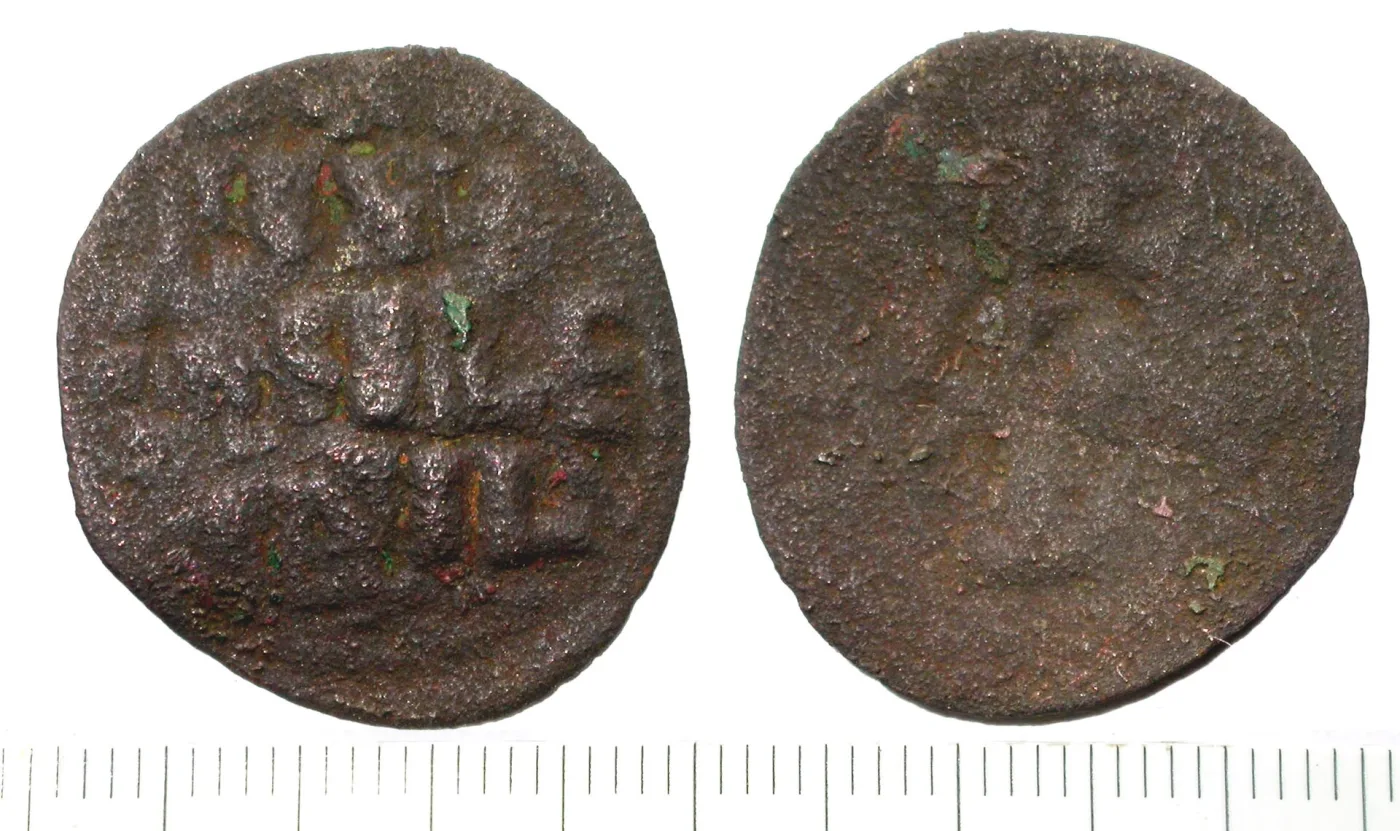
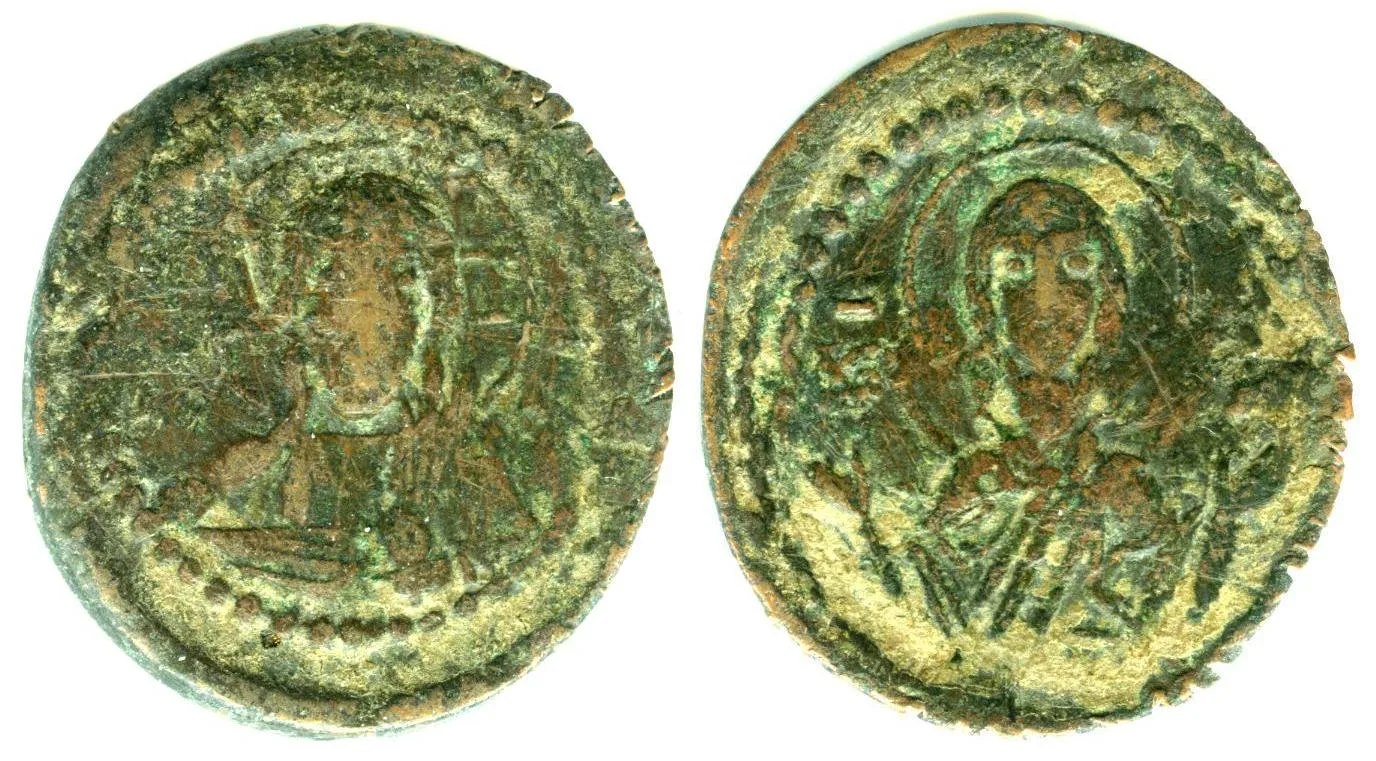
Around 970, the mints did something unprecedented: they stopped naming the emperor on the copper coinage altogether. For more than a century, folles carried only the bust of Christ and religious legends — “Jesus Christ, King of Kings” — as if the money belonged to Christ himself.
How the Classes Work
Because no emperor is named, numismatists sort the anonymous folles into lettered classes — Class A1 and A2 (attributed to John I Tzimiskes and Basil II’s era), Class B, Class C, and onward through roughly Class N — distinguished by the design details: bust versus standing Christ, the style of the cross on the reverse, ornaments in the fields. Standard references assign each class to a reign or pair of reigns, so a “nameless” coin is still datable within a few decades.
Why Collectors Love Them
Anonymous folles are big, dramatic, spiritually striking coins that remain inexpensive — a clear, well-centered Class A2 with a strong Christ portrait is one of the best values in all of ancient and medieval numismatics. They are also ubiquitous: hoards from the Balkans and Anatolia have kept the market supplied for decades, and nearly every world-coin junk box hides one mislabelled as “medieval token.”
The Cup-Shaped Coins (Scyphates)
Sooner or later every collector meets a thin, dished coin — concave on one face, convex on the other — and assumes it was bent or spooned. It was made that way.
What Trachea Are
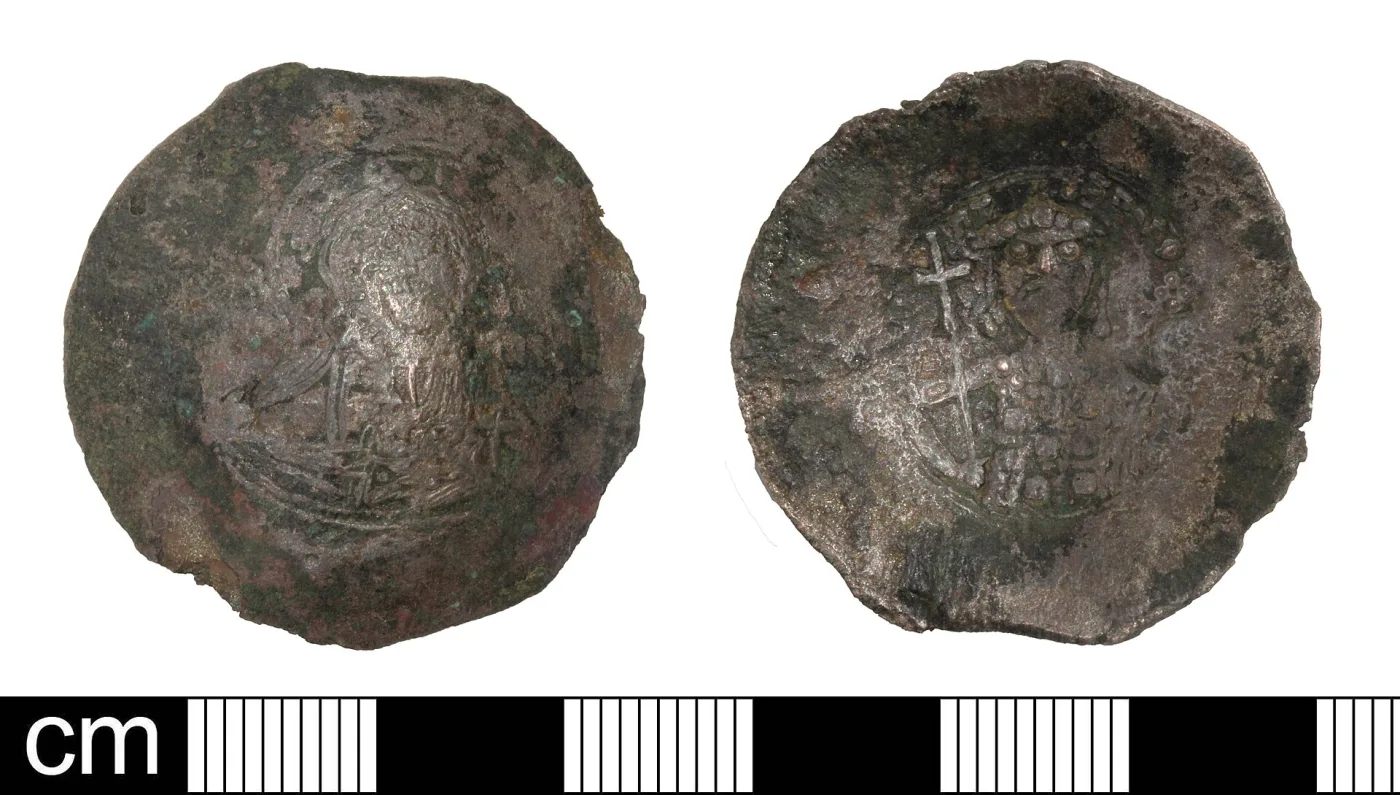
From the mid-eleventh century, and systematically after Alexius I’s reform of 1092, most Byzantine denominations above the humble copper tetarteron were struck scyphate — cup-shaped — in gold, electrum (pale gold-silver), billon (silver-copper), and finally plain copper. Contemporaries called them trachea, “rough” coins. The curvature required striking each coin twice with rocking blows, so trachea routinely show doubled or flat areas: normal manufacture, not damage.
Identifying a Trachy
The convex side usually carries Christ or the Virgin; the concave side, the emperor standing with a saint or receiving divine blessing. Metal and fabric set the denomination: a solid-gold cup is a hyperpyron; pale electrum, an aspron trachy worth a third of one; coppery billon with a silvery wash, the small change of the twelfth century. After 1204, crude Latin and Bulgarian imitations flood the region — thinner, sketchier, and often clipped into ragged shapes — and are collected as their own specialty.
Step-by-Step Identification Workflow
With the background in place, most Byzantine coins yield to a simple sequence:
The Seven Steps
- 1. Confirm it is Byzantine. Look for the giveaways: a value letter (M, K, I, E), a facing imperial or holy bust, IC XC or MP ΘV, CONOB on gold, a cup-shaped flan, or mixed Greek-Latin lettering.
- 2. Note metal and fabric. Gold, pale electrum, silver, billon, or copper; flat or scyphate; struck or (for Cherson) cast. This alone brackets period and denomination.
- 3. Read the value mark or size the coin. On early bronze, the big letter is the denomination. Later, weight and diameter stand in for it.
- 4. Find the mint. Check the exergue for CON, THEUP, ALE, and the rest; on gold, expect CONOB.
- 5. Extract the emperor’s name. Between D N and P AVG in the Latin phase; around bASILEUS or ΔECΠOTHC in the Greek phase. Transliterate patiently — IUSTINIANUS, hERACLIUS, ROMANOS.
- 6. Use ANNO, officina, and iconography. A regnal year dates the coin exactly; the religious type narrows the reign when the name is off-flan.
- 7. Match to a catalog. Confirm the attribution against Sear’s Byzantine Coins and Their Values (an “SB number”) or the Dumbarton Oaks catalogs, or by image-matching in the online databases covered below.
Steps one through four take seconds with practice. Photographing the coin in raking light first makes every later step easier, since Byzantine legends often survive best as shallow relief visible only at an angle.
Famous Types and Key Rarities
Every series has its trophies. These are the Byzantine coins that anchor advanced collections and auction headlines, the series’ equivalent of the key dates that drive US collecting.
Landmarks of the Series
- Justinian I’s dated folles (538–565) — the huge, magnificent ANNO bronzes of the reconquest era; common enough to own, spectacular in high grade.
- The Christ solidus of Justinian II (c. 692) — the first coin of Christ, struck in two reigns with two different Christ portraits; a five-figure coin in fine condition.
- The hexagram of Heraclius — “God, help the Romans” in an hour of genuine peril.
- The solo coinage of Empress Irene (797–802) — gold of the only woman to rule Byzantium alone in her own name; rare and fiercely contested at auction.
- The Class A2 anonymous follis (c. 976–1030s) — the iconic Christ Pantokrator bronze, the entry point to the whole series.
- Palaiologan hyperpyra of Michael VIII and Andronicus II — the Virgin within the walls of Constantinople, the last gold of Rome.
- The stavraton of Constantine XI (1449–1453) — silver struck during the empire’s final siege; a hoard revealed in the 1990s brought this ultimate rarity to market, and examples now command tens of thousands of dollars.
Sleepers Worth Knowing
Less famous but undervalued: the eccentric cast bronzes of Cherson; Alexandria’s 12-nummi pieces; Sicilian folles of Constans II struck as the emperor moved his court west; and the pale electrum trachea of the Komnenoi, real precious-metal coins of a romantic era that still sell for the price of a modern proof set.
What Byzantine Coins Are Worth in 2026
Byzantine values remain gentle compared with Roman and Greek equivalents, which is precisely the attraction. Realistic 2026 retail ranges:
Copper and Billon
Worn but identifiable folles run $15–40; pleasant Very Fine examples of Justinian’s dated folles bring $75–250 depending on size and centering, with exceptional large-module pieces higher. Anonymous folles run $30–150 for attractive examples, more for sharp Class A2 portraits. Billon aspron trachea are $20–60; Latin and Bulgarian imitative trachea often under $25. Cherson casts trade around $30–80.
Silver
Hexagrams of Heraclius and Constans II bring $150–400 in collectible grades. Miliaresia run $100–300. Late stavrata of John VIII cluster around $250–600; anything of Constantine XI is a five-figure event.
Gold
This is where Byzantium astonishes newcomers: a genuine 1,400-year-old solidus of a major emperor — Justinian, Heraclius, Constans II — costs $450–900 in Very Fine to Extremely Fine, barely above some modern bullion premiums. Tremisses run $250–450. Histamena of the Macedonian emperors bring $500–1,200; Komnenian hyperpyra $300–600; electrum trachea $100–250. Prices climb steeply only for rare reigns, the Christ solidi, and superb NGC-graded examples. Two cautions: ex-jewelry mounts and clipping cut gold values sharply, and — as with every coin in this guide — never clean a Byzantine coin; the principles in our cleaning and preservation guide apply with full force to ancient surfaces, where a stripped patina can halve the price.
Grading Byzantine Coins
Byzantine coins are graded like other ancients — by wear, strike, and surface considered separately — and the standard American vocabulary of coin grading applies only loosely.
Wear Versus Strike
The central skill is separating wear (smooth, rounded high points from circulation) from weak strike (mushy detail the coin never had). Byzantine bronzes were struck fast on irregular, often previously used flans, so flat areas, off-center designs, and visible undertypes are the rule. A follis can honestly grade Extremely Fine for wear while showing only half its legend. Trachea add the doubling inherent in their two-blow striking. Grade the best-struck areas, and treat full, centered legends as the premium feature they are.
Surfaces and Professional Grading
Surface problems — earthen deposits, porosity, cleaning scratches, edge splits, graffiti scratched into gold in antiquity — matter as much as wear. Attractive smooth brown or green patina on bronze earns a premium; raw, stripped-pink surfaces forfeit one. For valuable pieces, NGC Ancients encapsulation, which grades strike and surface on separate 1–5 scales alongside the adjectival grade, has become the market standard; our guide to third-party grading services explains how the slabbing system works and when it pays for itself.
Counterfeits and How to Avoid Them
Byzantine coins are faked less intensively than Greek silver or Roman gold, but the traffic is real — especially in gold, and especially in tourist markets from Istanbul to the Balkans.
What to Watch For
Most fakes are casts: grainy surfaces, soft details, casting bubbles, and a telltale seam on the edge, the same signatures described in our counterfeit detection guide. Gold demands a scale: a genuine solidus weighs about 4.4–4.5 grams, and pre-1092 examples are essentially pure, soft, deep-yellow gold — pale color or a weight off by more than a tenth of a gram is disqualifying. Watch also for fourrées (ancient plated forgeries with copper peeking through), tooling that re-engraves worn detail, repaired mount marks at twelve o’clock on gold, and modern pressed replicas of the famous Christ types, which are sold openly as souvenirs and then resold dishonestly as genuine.
Buying Safely
The defenses are the usual ones, applied firmly: buy from established ancient-coin dealers and auction houses that guarantee authenticity for life, favor coins with documented provenance or old collection pedigrees, compare any expensive purchase against die-matched genuine examples in the auction archives, and treat bargain-priced gold from online marketplaces as fake until proven otherwise. For four-figure purchases, NGC Ancients certification or a dealer’s written lifetime guarantee is cheap insurance.
References and Online Tools
Byzantine numismatics is superbly documented, and most of the essential tools are free.
The Standard Catalogs
The collector’s bible is David Sear’s Byzantine Coins and Their Values, whose “SB numbers” are the lingua franca of dealer listings. The scholarly backbone is the multi-volume Dumbarton Oaks Catalogue (DOC), covering the collection at Dumbarton Oaks in Washington; Philip Grierson’s single-volume Byzantine Coins is the best readable overview, and Hahn’s Moneta Imperii Byzantini serves specialists in the early period.
Free Online Resources
Dumbarton Oaks has placed its entire coin collection online with photographs — an unmatched free reference for image-matching. Auction archives such as acsearch and CoinArchives show decades of realized prices for realistic valuation; WildWinds and the major collector forums identify coins from photographs; and the online fake-reports databases catalog known forgeries with die photos. Between Sear numbers and these archives, virtually any Byzantine coin can be attributed and valued from your desk.
When to Get Expert Help
For suspected rarities — anything of Irene, the Christ solidi, late Palaiologan silver — or for gold of uncertain authenticity, consult a specialist dealer in ancients or submit to NGC Ancients before money changes hands. The Byzantine field is friendly and its experts accessible; a photograph posted to a major forum routinely draws a confident attribution within hours.
Frequently Asked Questions
How do I know if my coin is Byzantine?
Check the shortlist of giveaways: a large M, K, I, or E on the reverse; a stiff facing portrait of an emperor or of Christ; the abbreviations IC XC or MP ΘV; CONOB in the exergue of a gold coin; ANNO with a numeral beside a big letter; a deliberately cup-shaped flan; or legends mixing Latin and Greek letters. Any one of these makes Byzantine the leading suspect.
What does the big M on my coin mean?
M is the Greek numeral 40 — the coin is a follis of 40 nummi, the standard large copper coin from 498 CE into the ninth century. The letters around it typically spell the emperor's name, ANNO plus a regnal year in the fields dates it, the small letter beneath the M is the mint workshop (officina), and the letters below the line name the mint itself, such as CON for Constantinople.
What does CONOB mean on Byzantine gold?
CONOB combines CON, for Constantinople, with OB for obryzum, "pure gold" — OB also being the Greek numeral 72, since 72 solidi were struck from one Roman pound of gold. It is a purity-and-mint signature, not a word, and it appears on solidi and their fractions for centuries.
Why is my Byzantine coin cup-shaped?
It was struck that way. From the mid-eleventh century, most Byzantine denominations were made scyphate — concave — a shape scholars still debate the purpose of (stackability and distinguishing debased issues are leading theories). Cup-shaped coins, called trachea, normally show doubled or weak patches from their two-blow striking; neither the curve nor the doubling is damage.
Are Byzantine gold coins expensive?
Far less than most people expect. Common solidi of major sixth- and seventh-century emperors sell for roughly $450–900 — often less than a modern one-ounce bullion coin — and Komnenian hyperpyra for $300–600. Prices rise sharply only for rare rulers, the first Christ portraits, and top-graded examples, making Byzantine gold one of the most affordable ways to own ancient precious metal.
Is it legal to own Byzantine coins?
In the United States and most of Europe, yes — buying and selling ancient coins is a long-established lawful trade. The complications sit at the source countries: several Mediterranean states claim newly excavated antiquities, and US import restrictions cover coins from some of them, including types struck in modern Turkey and the Balkans. Buy from reputable dealers who guarantee lawful provenance, keep invoices, and prize documented collection history.