Standing Liberty Quarter: Type 1 or Type 2?
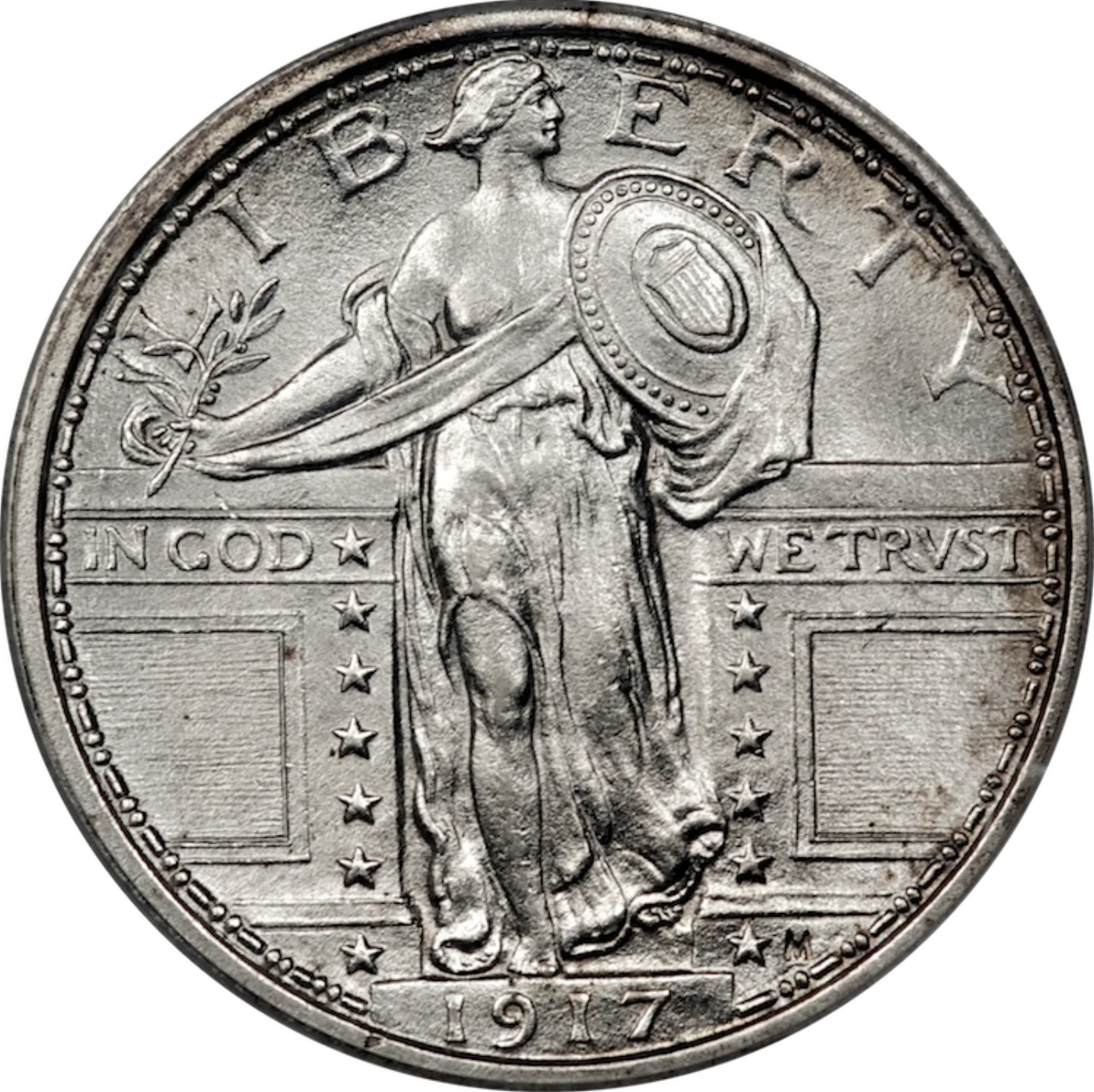
The Standing Liberty quarter was redesigned partway through 1917, one year into a fourteen-year run. Everything struck before the change is called Type 1; everything after it is Type 2. The two are not equally common, they are not equally valuable, and the year 1917 exists in both — so a 1917 quarter cannot be priced until it has been typed.
The good news is that the check takes about three seconds and works on the reverse, which matters more than it sounds: on this series the obverse is usually the worn face. Here is what to look at, why the design changed, and what to do with the enormous number of these quarters whose date has rubbed away entirely.
The Three-Second Check: Stars Under the Eagle
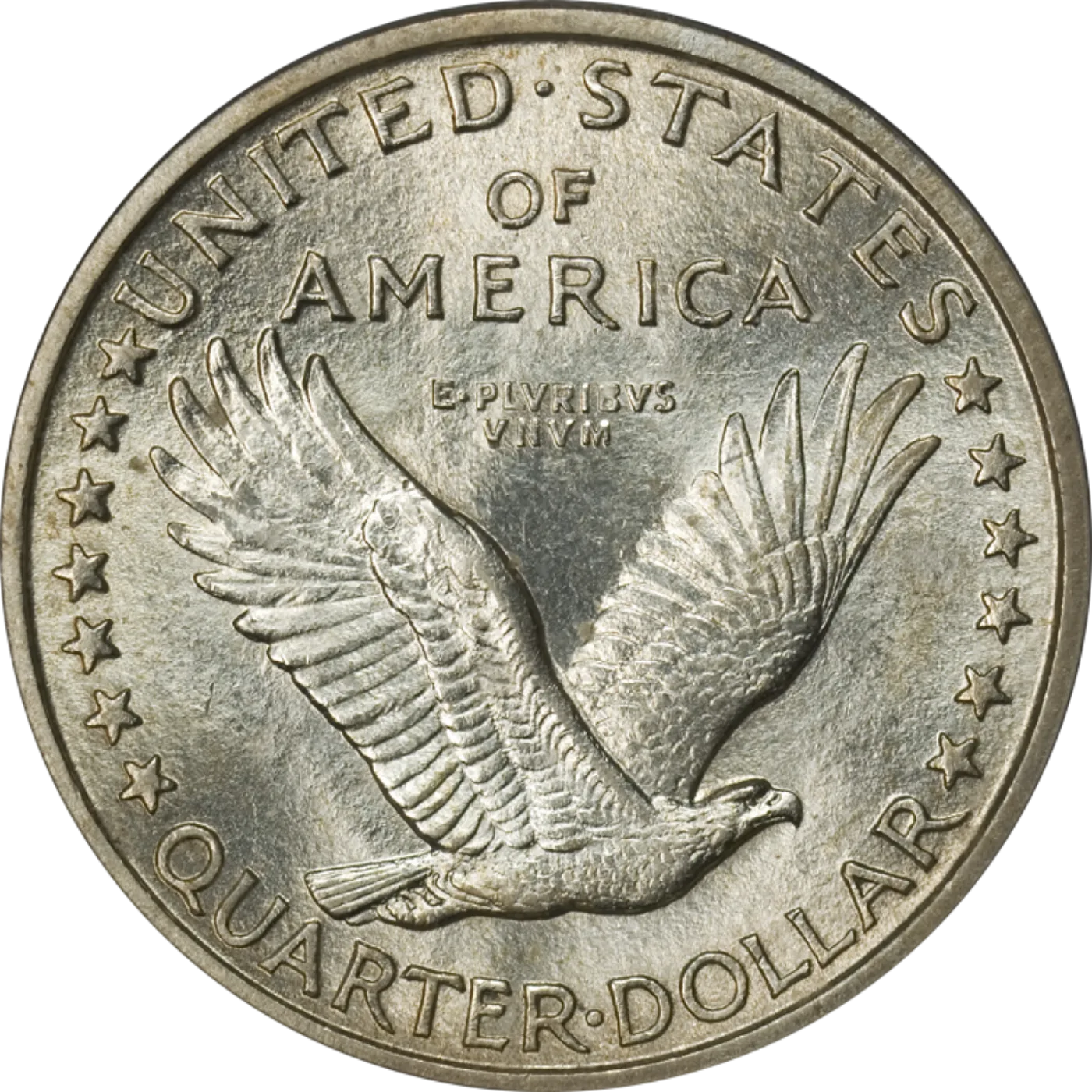
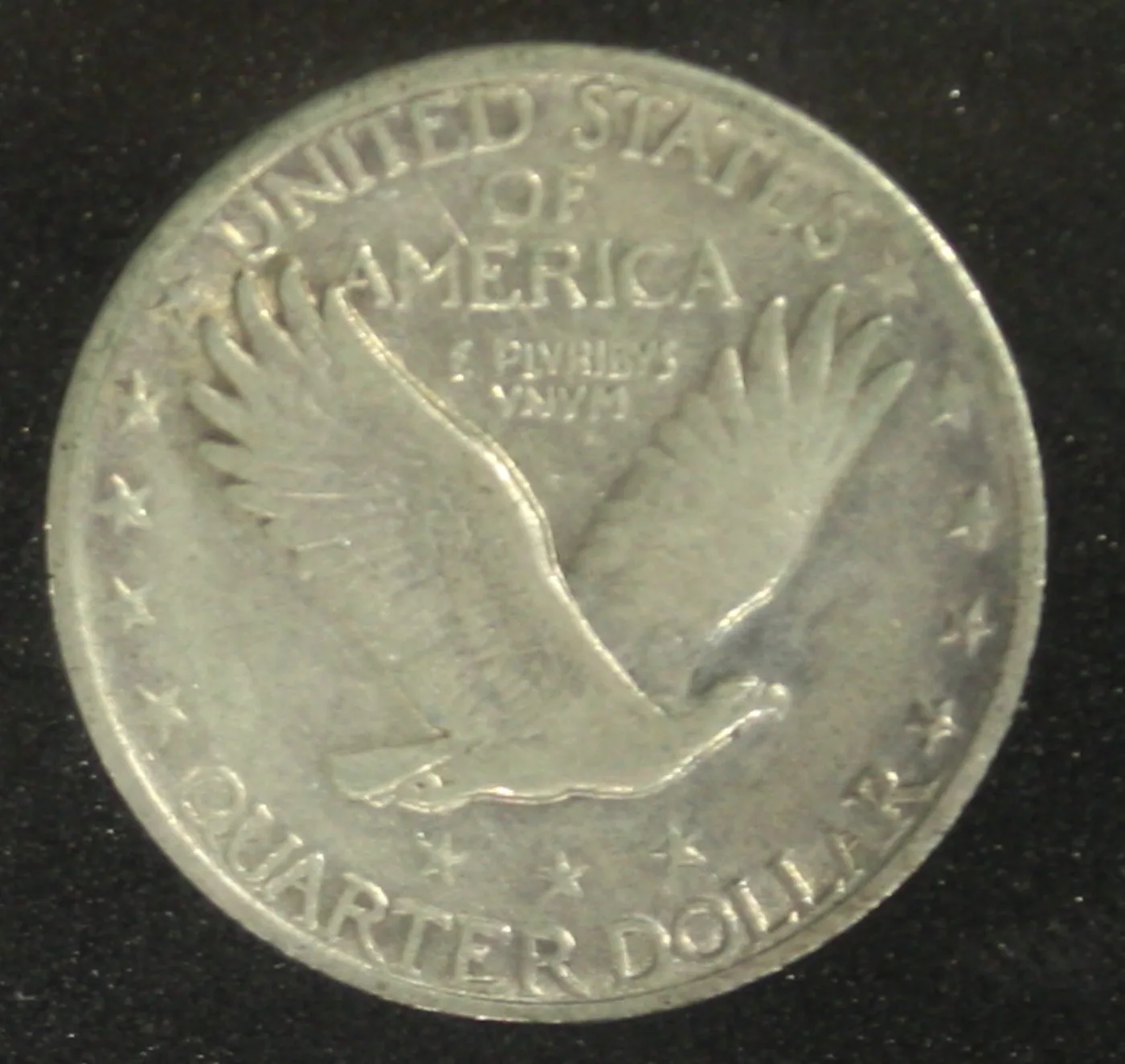
Turn the coin to the reverse, the side with the flying eagle, and look at the empty band between the eagle’s tail and the lettering QUARTER DOLLAR along the bottom rim.
If three small stars sit in that band, the coin is a Type 2. If the band is bare and the stars all run around the sides of the coin instead, it is a Type 1. There is no in-between and no year where the rule fails.
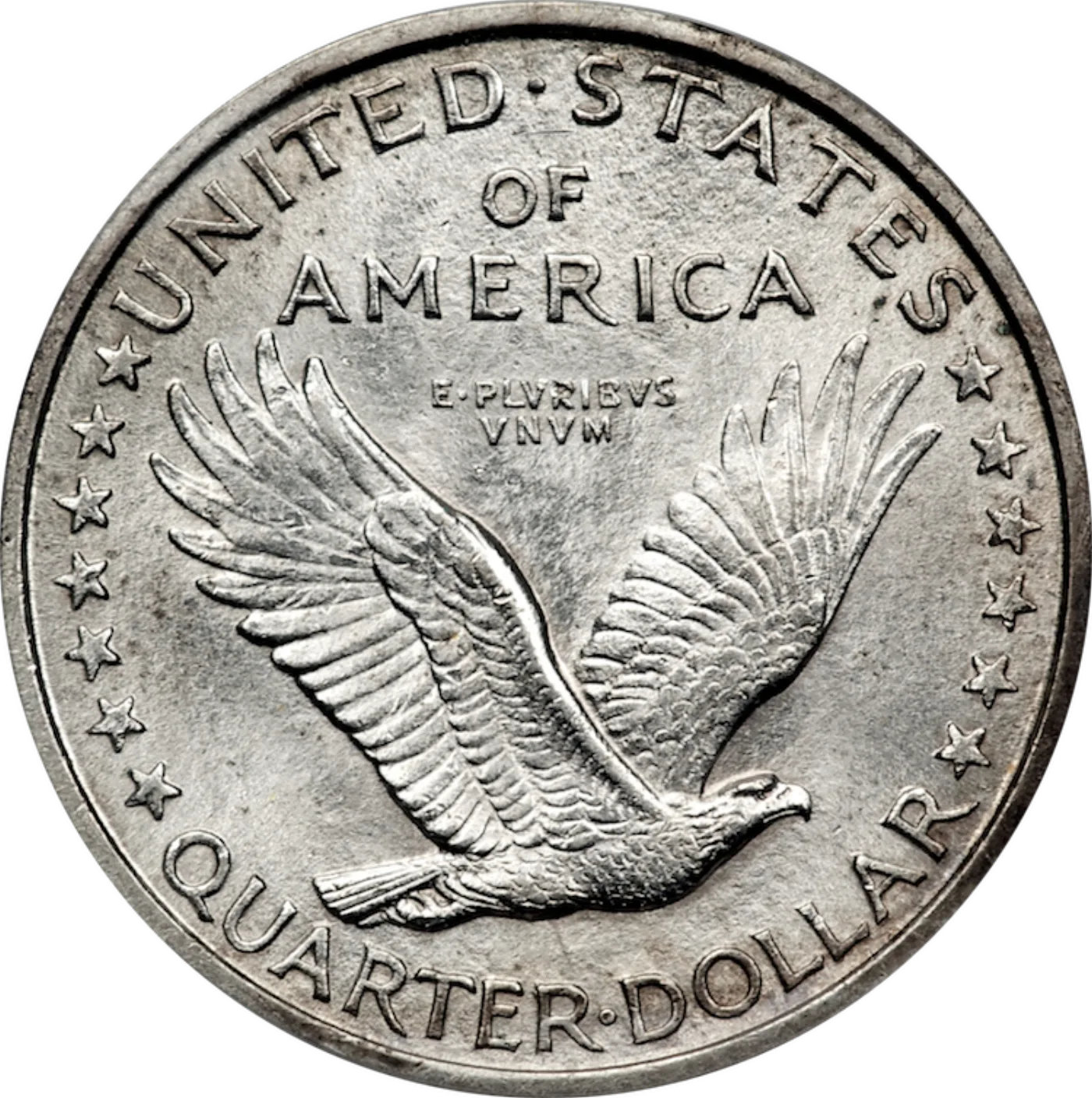
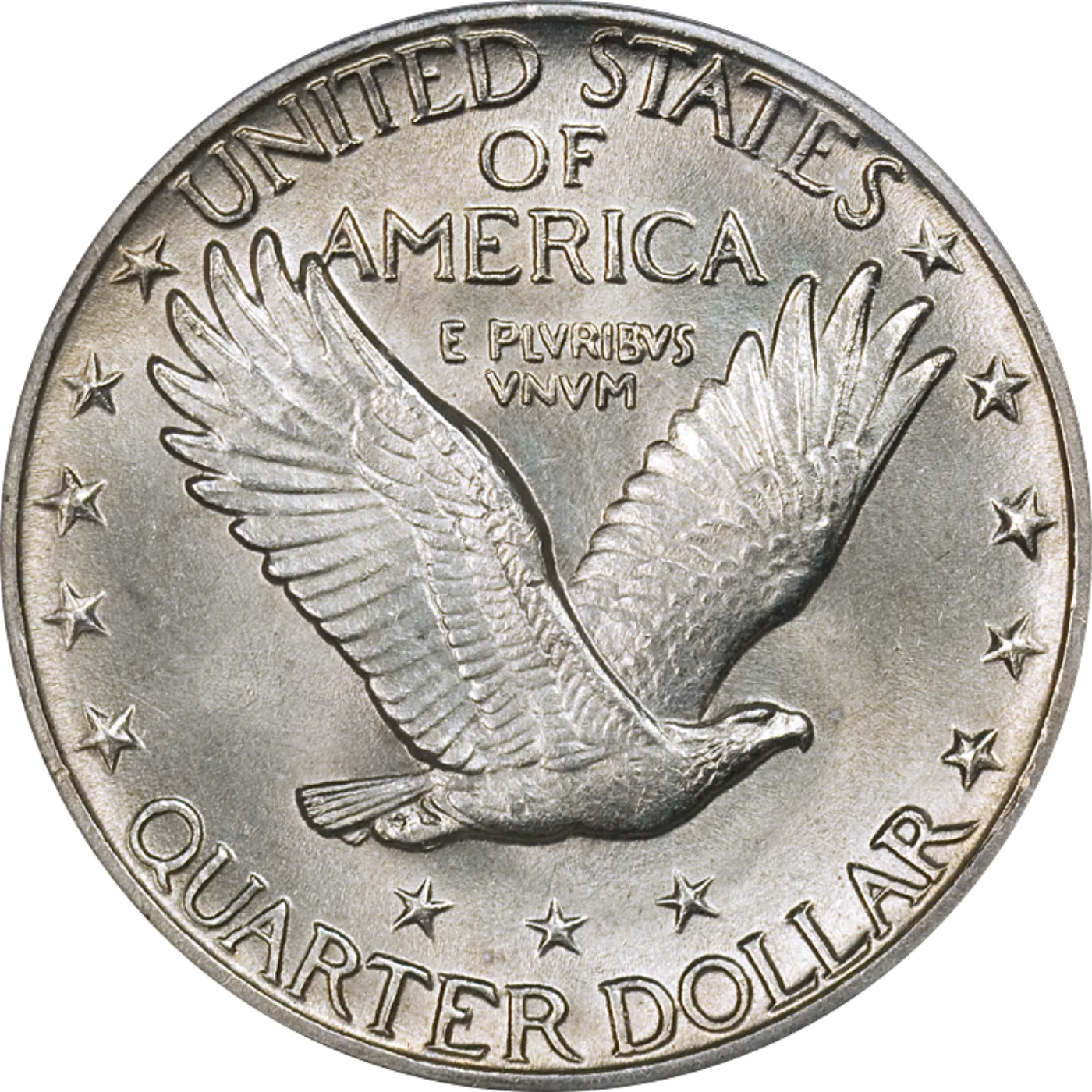
Both coins carry thirteen stars. The redesign did not add or remove any — it relocated three of them and raised the eagle to make room. That is why counting the stars along one side is unreliable and looking at the single band below the eagle is not.
The Obverse Tell: Bare Breast or Chain Mail
The obverse gives the same answer by a different route. On a Type 1, Liberty’s right breast is uncovered. On a Type 2 her torso is protected by a coat of mail, rendered as a fine mesh of raised dots running from her shoulder across her chest.
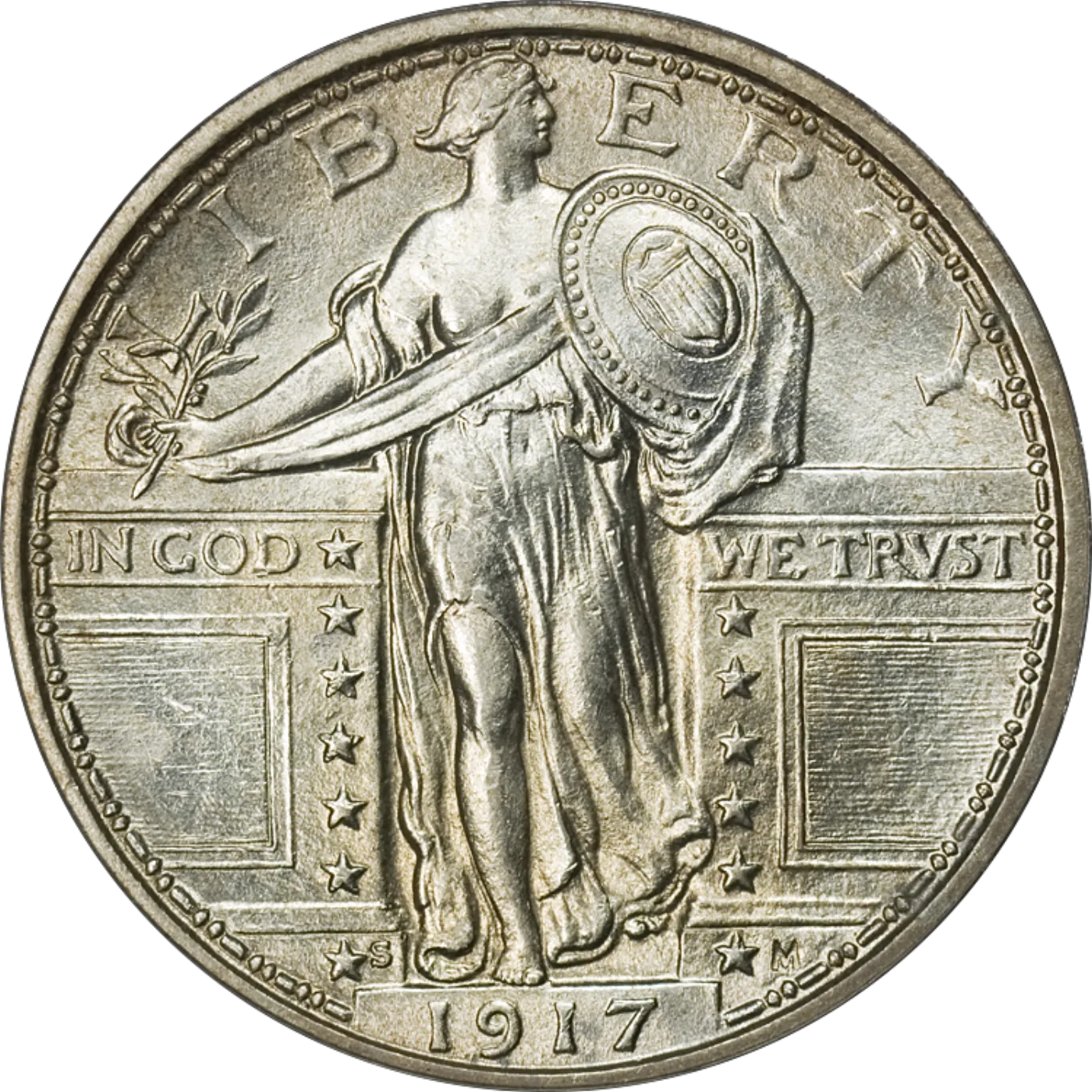
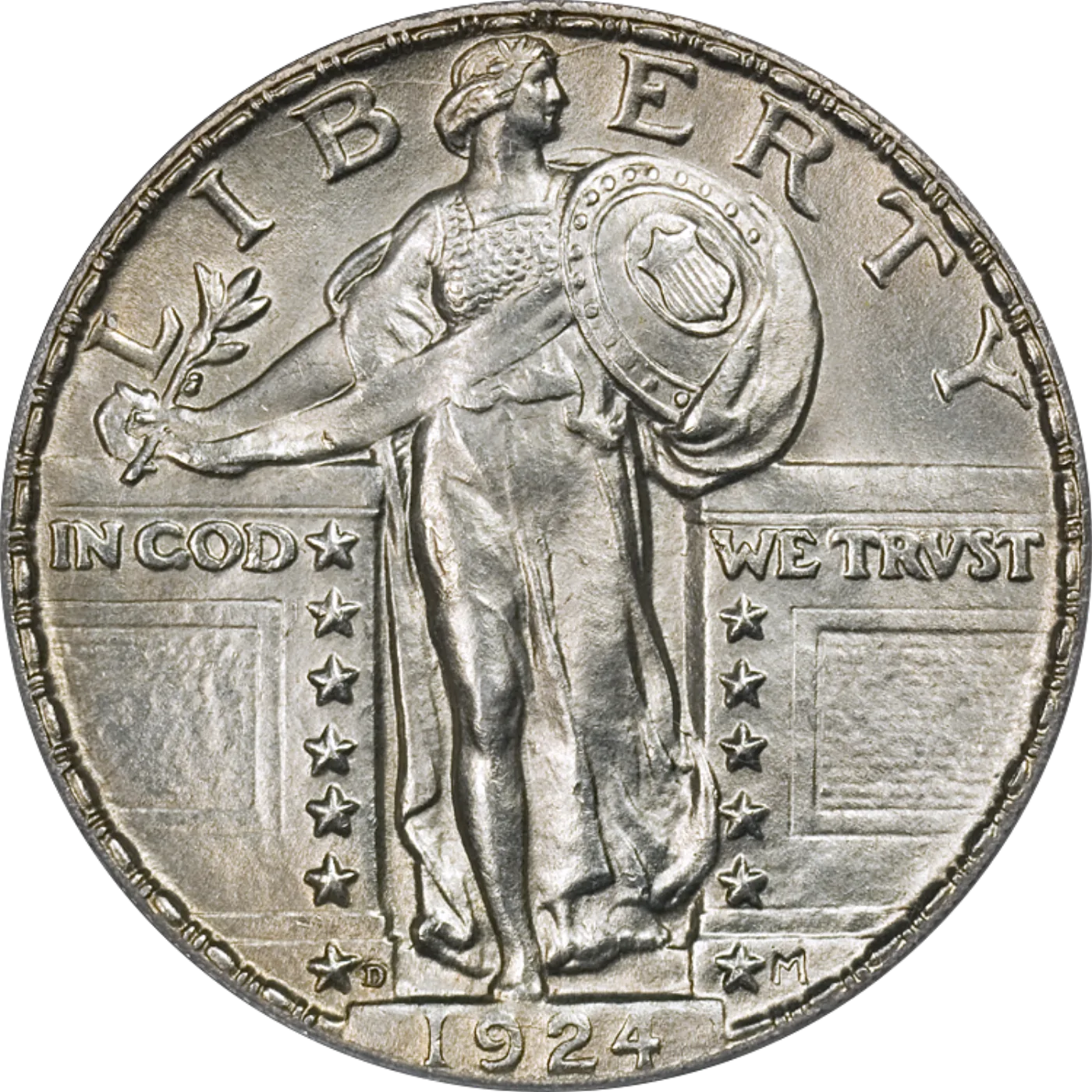
The obverse check is the one to distrust on a circulated coin. Liberty’s chest is a high point of the design, and once the coin has seen real use the mail flattens into a smooth surface that can pass for bare skin under poor light. The stars below the eagle sit lower in the field and survive much longer. When the two faces seem to disagree, believe the reverse.
The story usually attached to the change is that public outrage at the exposed breast forced the Mint’s hand. Researchers who have worked through the Mint’s surviving correspondence have not found evidence of any such campaign. The modifications came from the designer, Hermon MacNeil, who was unhappy with how his first version struck up, and they went well beyond the torso — the eagle was repositioned and the stars rearranged at the same time. An armoured figure also read differently in 1917, the year the United States entered the First World War, than it had in 1916.
1917: The Only Year That Comes Both Ways
Because the change landed mid-year, 1917 was struck in both types at all three mints. Six different 1917 quarters exist, and they are not interchangeable. The table below splits the year’s production by type and mint — the one comparison that decides what a 1917 actually is.
| Mint | Type 1 mintage | Type 2 mintage | Share struck as Type 1 |
|---|---|---|---|
| Philadelphia (no mark) | 8,740,000 | 13,880,000 | 39% |
| Denver (D) | 1,509,200 | 6,224,400 | 20% |
| San Francisco (S) | 1,952,000 | 5,552,000 | 26% |
| All mints, 1917 | 12,201,200 | 25,656,400 | 32% |
Every mint made fewer Type 1 quarters than Type 2 ones, and Denver made the fewest by a wide margin — only about one 1917-D in five is a Type 1. Add the 52,000 pieces struck in 1916 and the entire Type 1 population comes to roughly 12.25 million coins against more than 200 million Type 2s across the rest of the series. That two-year window is why Type 1 carries a premium in matching grades, and why the check is worth doing before anyone quotes you a price.
The 1916 is the series key at 52,000 pieces, and it is a Type 1 by definition. It is also faked often enough that a raw example claiming to be one deserves the same scepticism as any other key date, and is worth submitting for third-party grading before money changes hands.

The 1925 Recessed Date
There is a third change, and it is the reason most surviving Standing Liberty quarters are hard to date at all. From 1916 through 1924 the date sat raised on top of the pedestal beneath Liberty’s feet, standing proud of the surface at one of the design’s highest points. Coins wear from the high points down, so the date was among the first things to go.
In 1925 the Mint sank the date into the pedestal instead of raising it above. Dates from 1925 to 1930 sit in a shallow recess, protected by the metal around them, and they survive circulation far better than the nine years that came before.
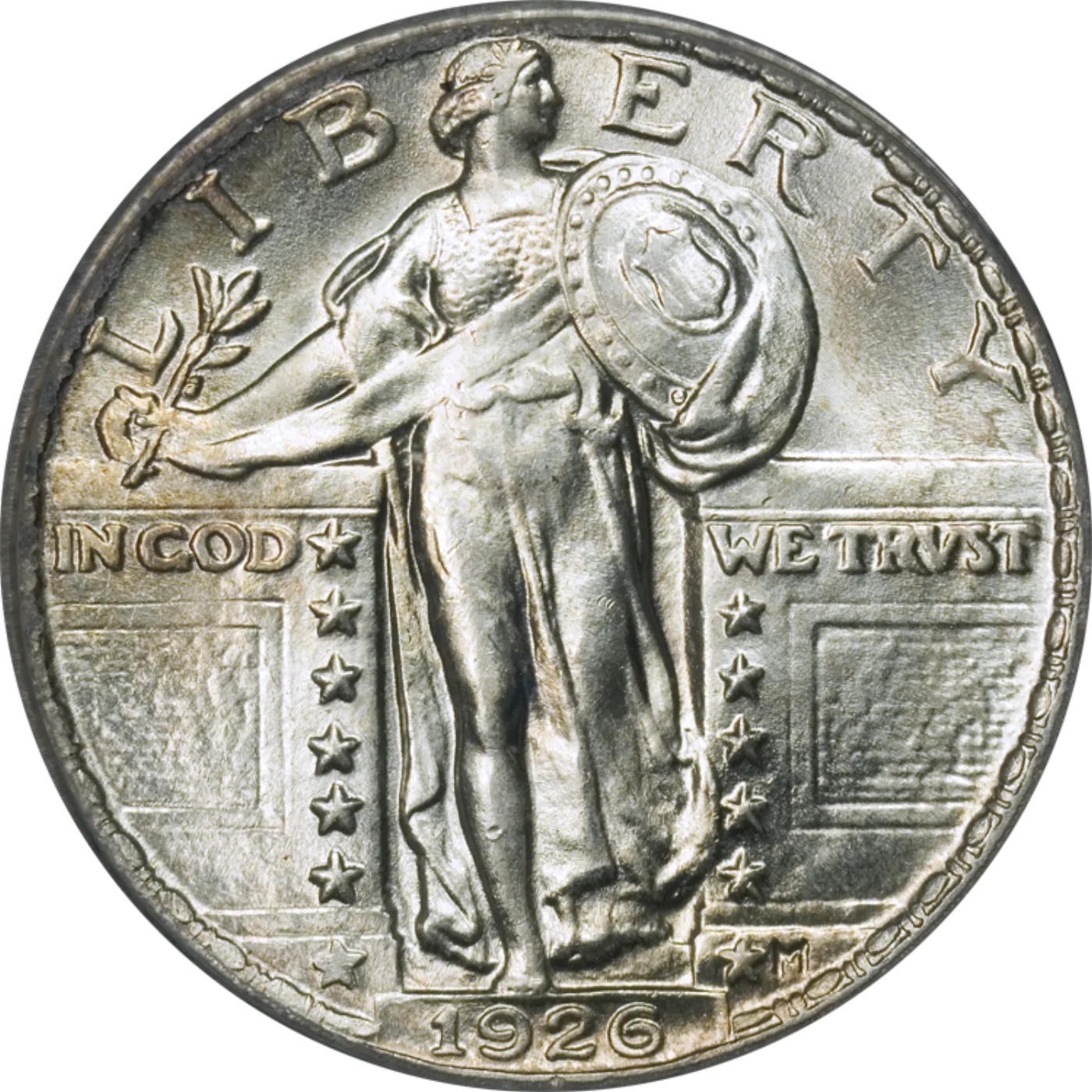
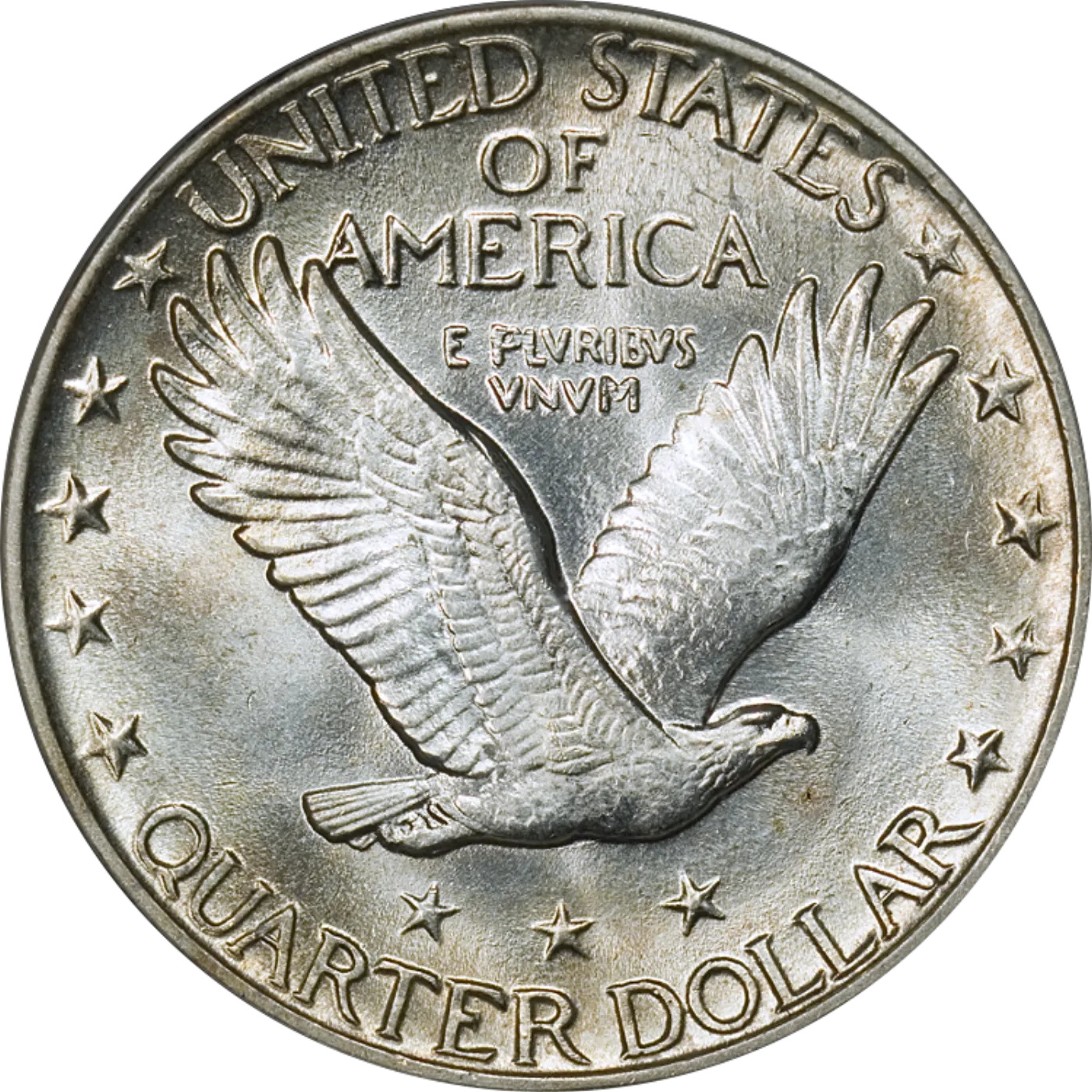
The naming of this sub-type is where references stop agreeing. Some call 1925–1930 Type 2b and 1917–1924 Type 2a; others promote the recessed date to Type 3. The grading services sidestep the argument and simply label these coins by date. Whatever it is called, it is a modification within Type 2 and not a fourth design — the reverse settles the type, and the pedestal only tells you which side of 1925 the coin falls on.
Typing a Worn or Dateless Quarter
Raised dates plus decades of circulation produced a very large population of Standing Liberty quarters with no readable date whatsoever. They turn up in inherited jars constantly, and most people assume they are unidentifiable. They are not — they just have to be identified by design instead of by date.
Typing a dateless coin narrows it more than most people expect. A Type 1 must be a 1916 or a 1917, because no other year was struck that way — two years out of fourteen. A Type 2 could be anything from 1917 to 1930, but if the date is gone entirely it is almost certainly pre-1925, since the recessed dates rarely wear away completely. A blank pedestal is itself a dating clue.
What a dateless coin cannot do is prove it is the 1916. The features that separate a 1916 from a 1917 Type 1 are fine obverse details, and those are precisely what a coin in that state has lost. Treat the 1916 possibility as remote and unprovable rather than as a lottery ticket.
Two practical notes. Dateless quarters are still 90% silver and trade on their metal content, which is why they show up priced as junk silver rather than as collectable coins. And the acid date-restoration fluids sold for dateless Buffalo nickels do work on these — but they etch the surface permanently, the result will not grade, and a restored date makes the coin worth its silver and very little more. For how wear is assessed before it reaches that stage, see our coin grading guide.
Everything else about the series — the 1918/7-S overdate, Full Head strike designations, the year-by-year mintages — is covered in the full Standing Liberty quarter guide. If the mint mark itself is what you are struggling to read, the placement conventions across US series are set out in our guide to mint marks. And when the series ended in 1930 it was replaced by the Washington quarter, which is what most silver quarters found alongside these will turn out to be.
The Short Version
Check the band under the eagle. Three stars is Type 2, nothing is Type 1. Confirm on the obverse if the coin is sharp enough to read — bare chest for Type 1, chain mail for Type 2 — and trust the reverse when the two disagree.
A Type 1 is a 1916 or a 1917 and nothing else, which is worth knowing even when the date has gone. A Type 2 with a legible date sunk into its pedestal is 1925 or later. Those two facts will place almost any Standing Liberty quarter within a few years, without a reference book and without the date.
Frequently Asked Questions
How do I tell a Type 1 Standing Liberty quarter from a Type 2?
Look at the space between the eagle's tail and the words QUARTER DOLLAR on the reverse. Three small stars there means Type 2. An empty field there means Type 1. The obverse confirms it: Type 1 leaves Liberty's right breast uncovered, Type 2 covers her torso in a coat of mail.
Which years were struck as Type 1?
Only 1916 and part of 1917. The design was modified partway through 1917, so that year exists in both types, and every quarter dated 1918 through 1930 is a Type 2. A Type 1 is therefore always a 1916 or a 1917, with no exceptions.
Where is the mint mark on a Standing Liberty quarter?
On the obverse, to the left of the date and just left of the pedestal Liberty stands on. D is Denver and S is San Francisco. Philadelphia used no mark, so a blank space there means Philadelphia rather than a missing mint mark.
Why do so many Standing Liberty quarters have no date?
From 1916 to 1924 the date sat raised on top of the pedestal, which is the highest point in that part of the design and so the first thing a circulating coin rubs away. The Mint recessed the date into the pedestal in 1925, and dates from 1925 to 1930 survive far better as a result.
Can a dateless Standing Liberty quarter still be identified?
It can be typed, which narrows the date more than most people expect. A dateless Type 1 has to be a 1916 or a 1917, because no other year was struck that way. A dateless Type 2 could be any year from 1917 to 1930. Attributing a worn coin specifically to 1916 is not realistic, since the detail that would distinguish it is exactly the detail that has worn away.
Is a Type 1 worth more than a Type 2?
In comparable condition, generally yes. Type 1 was struck for two years against Type 2's fourteen, and in 1917 every mint made fewer Type 1 quarters than Type 2 ones. Condition still dominates: a well-preserved Type 2 is worth more than a heavily worn Type 1.