1944 Steel Penny: How to Tell a Real One, and What It's Worth
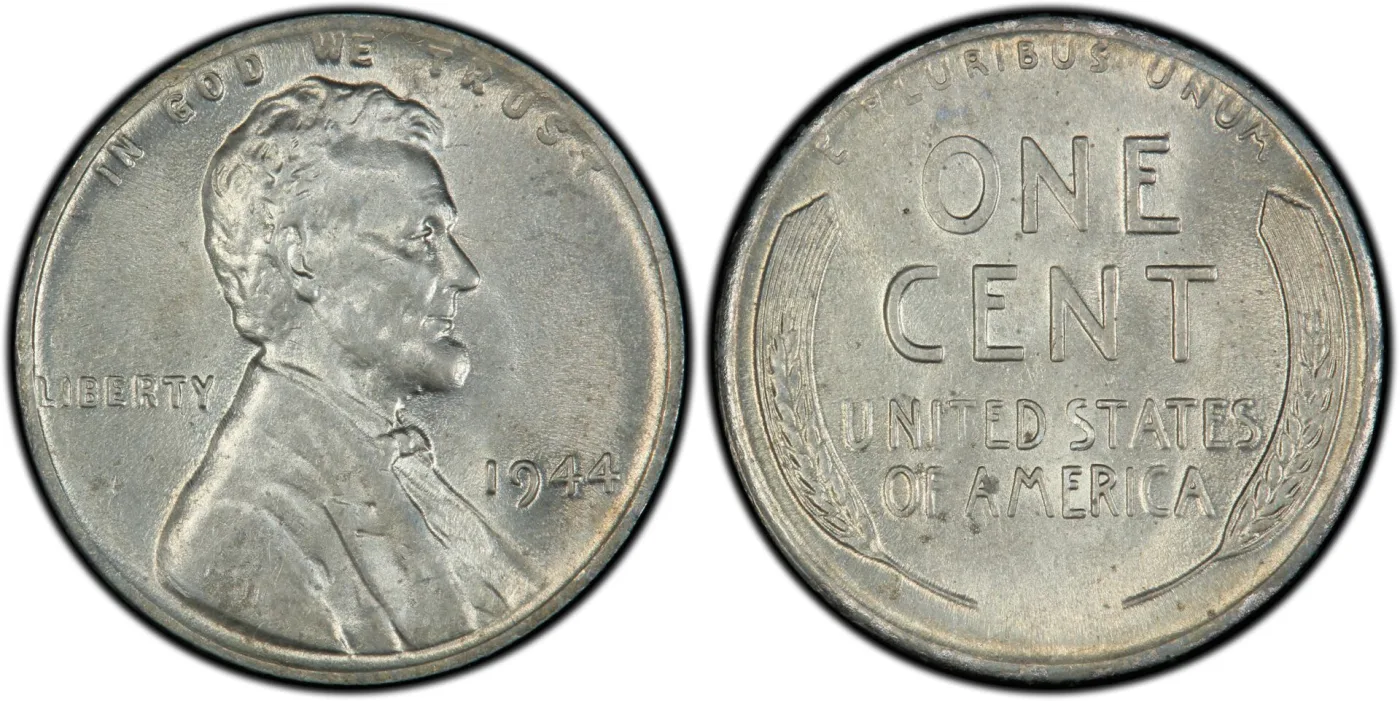
A silver-gray Lincoln cent dated 1944 is either one of the rarest coins in American circulation or one of the most common tricks played on it. The genuine article exists: in 1944 a few leftover steel blanks from the previous year were struck by mistake, and only a few dozen are known from all three mints. But for every real one there are many more 1943 steel cents with a reworked date, and 1944 copper cents that someone has plated to look like steel.
This guide is about that one question. It shows what a normal 1944 cent is made of and worth, why a steel one can exist at all, how many are known from each mint, and the two home tests (a magnet and a scale) that sort almost every candidate before anyone has to pay for an opinion.
The Short Answer
Ordinary 1944 cents are copper-colored, not magnetic, and weigh about 3.11 grams. Over two billion were struck, and a circulated one is worth well under a dollar.
A genuine 1944 steel cent is silver-gray (or rusty), sticks to a magnet, and weighs about 2.7 grams. Only a few dozen are known, and even worn examples sell for five figures.
If your gray 1944 cent fails either test, it is not a steel error. If it passes both, check the date under magnification before you do anything else, because an altered 1943 passes both tests too.
Why 1944 Cents Are Copper, and 1943 Cents Are Steel
In 1943 the Mint stopped using copper in the cent so the metal could go to the war effort, and struck the coin in zinc-coated steel instead. It made a great many of them: 684,628,670 at Philadelphia, 217,660,000 at Denver and 191,550,000 at San Francisco, about 1.09 billion in all. Once the thin zinc coating wore through, the steel underneath rusted, which is why so many 1943 cents are found dark and pitted today.
For 1944 the Mint went back to a copper alloy. The new cents were 95% copper and 5% zinc, with no tin, and are known to collectors as “shell case” cents because part of the metal came from spent cartridge cases. How large that part was is disputed: the popular account says the alloy was made from shell casings, while PCGS commentary, following the researcher David Lange, calls the all-shell-casing story a myth and notes that Philadelphia’s mintage alone was too large to have come from reclaimed war material. Either way the coin weighs 3.11 grams, measures 19 mm, and looks like any other copper cent. The same alloy was used through 1946.
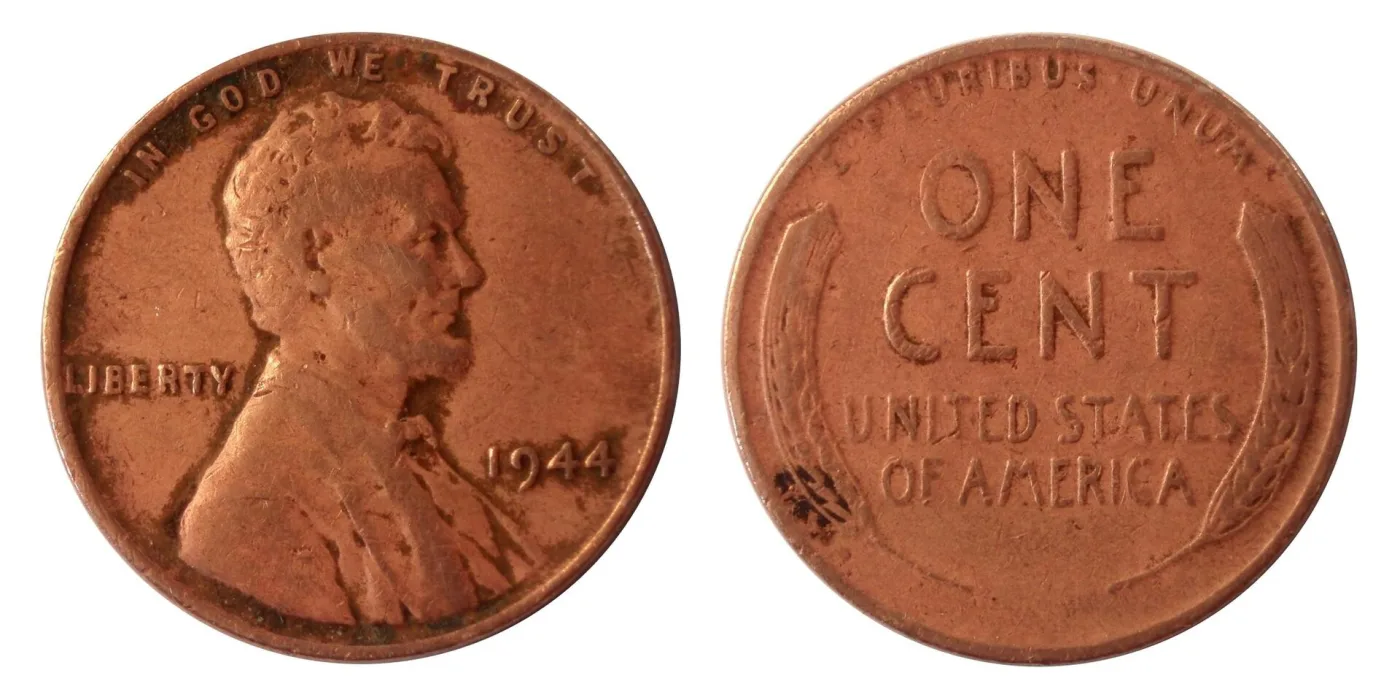
The Three 1944 Cents
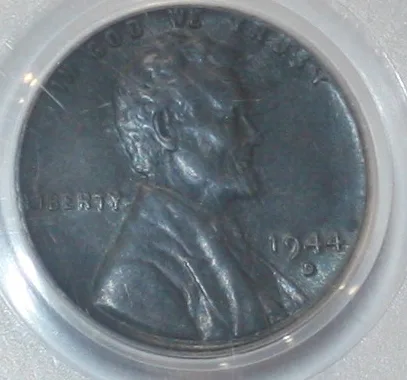
Three mints struck cents dated 1944, and the mint mark below the date tells you which.
| Coin | Mint mark | Struck (copper alloy) | Known on steel |
|---|---|---|---|
| 1944 | none | about 1.435 billion | roughly 25–30 |
| 1944-D | D | 430,578,000 | 7 |
| 1944-S | S | 282,760,000 | 2 |
The Denver and San Francisco mintages agree across CopperCoins and Gainesville Coins. The Philadelphia figure does not: CopperCoins gives 1,435,000,000 and Gainesville Coins 1,435,400,000, so the table rounds to about 1.435 billion, which is true either way.
The steel counts are estimates and have moved over time. For Philadelphia, a 1996 estimate by David Lange put the number at 27, a PCGS auction listing says no more than 30 are known, and other references go as low as 20; “roughly 25–30” fits the recent figures. For Denver, CoinWeek cites a PCGS surviving population of seven. For San Francisco, CoinWeek and PCGS CoinFacts both say two; older references listed only one, so the second appears to be a later discovery.
No proof cents were struck from 1943 through 1949; proof coinage resumed in 1950. A “1944 proof” cent is therefore not a thing, whatever a listing calls it.
How a 1944 Steel Cent Happened
The 1944 steel cent is a transitional error: a blank of the old metal struck with dies of the new year. The standard explanation is that zinc-coated steel blanks left over from 1943 stayed in the production stream and were fed into the presses with 1944 dies. It is the mirror image of the famous 1943 copper cent, which is a leftover 1942 bronze blank struck with 1943 dies.
There is a second explanation for some of them. The Mint was striking coins for other countries during the war, and CoinWeek and PCGS both note that some 1944 “steel” cents may have been struck on blanks meant for a foreign coin of similar size rather than on leftover 1943 cent blanks. The two sources name different foreign coins, so this guide does not pick one. For a collector the practical point is the same: a genuine piece is authenticated and attributed by a grading service, not by its owner.
Test 1: The Magnet
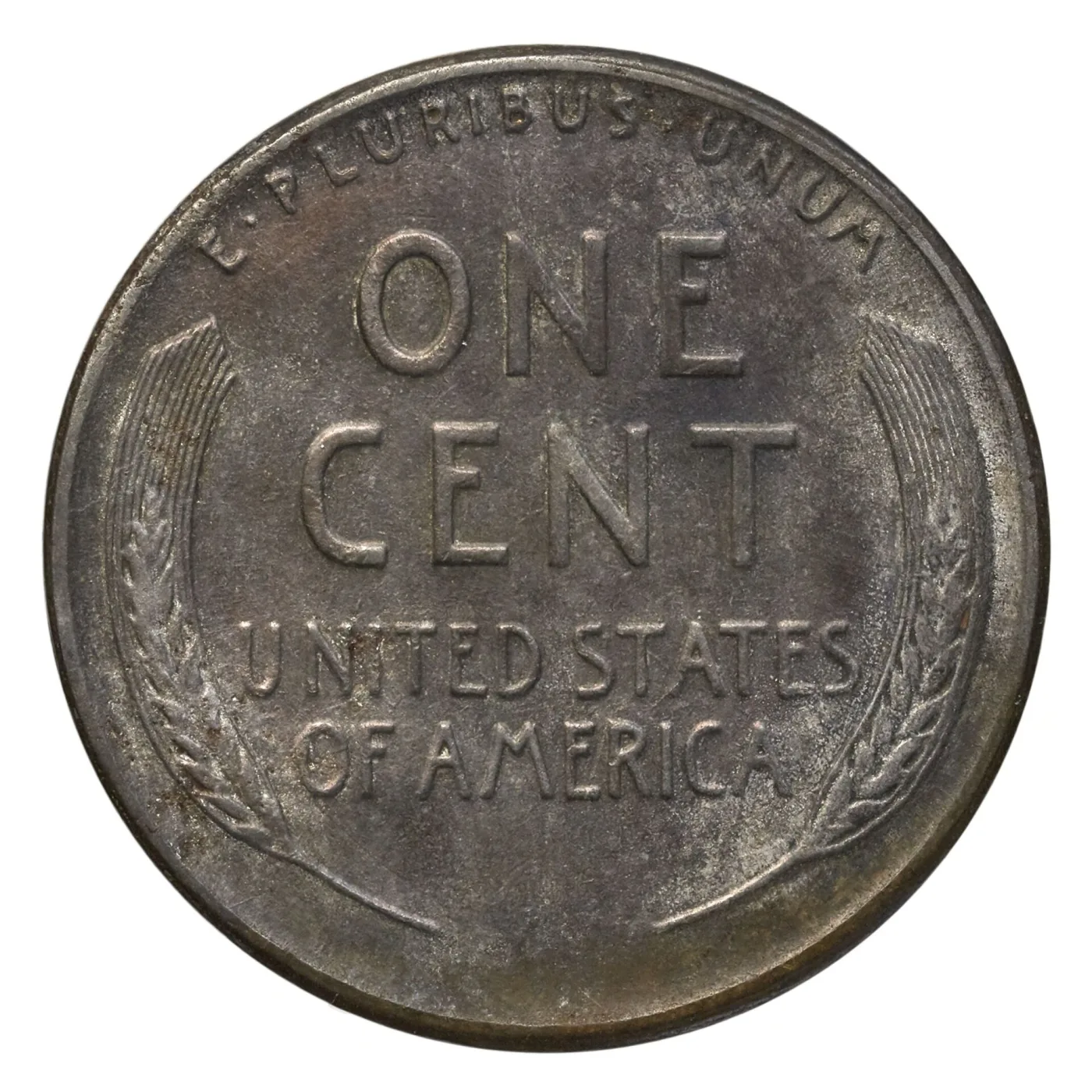
Steel is magnetic. Copper, zinc and the 1944 alloy are not. Hold a strong magnet near the coin.
- It does not react: the coin is not steel. A silver-gray 1944 that ignores the magnet is a copper cent that has been plated with zinc or nickel, or chemically treated, after it left the Mint. Plating copper cents to imitate steel is one of the two common ways these fakes are made.
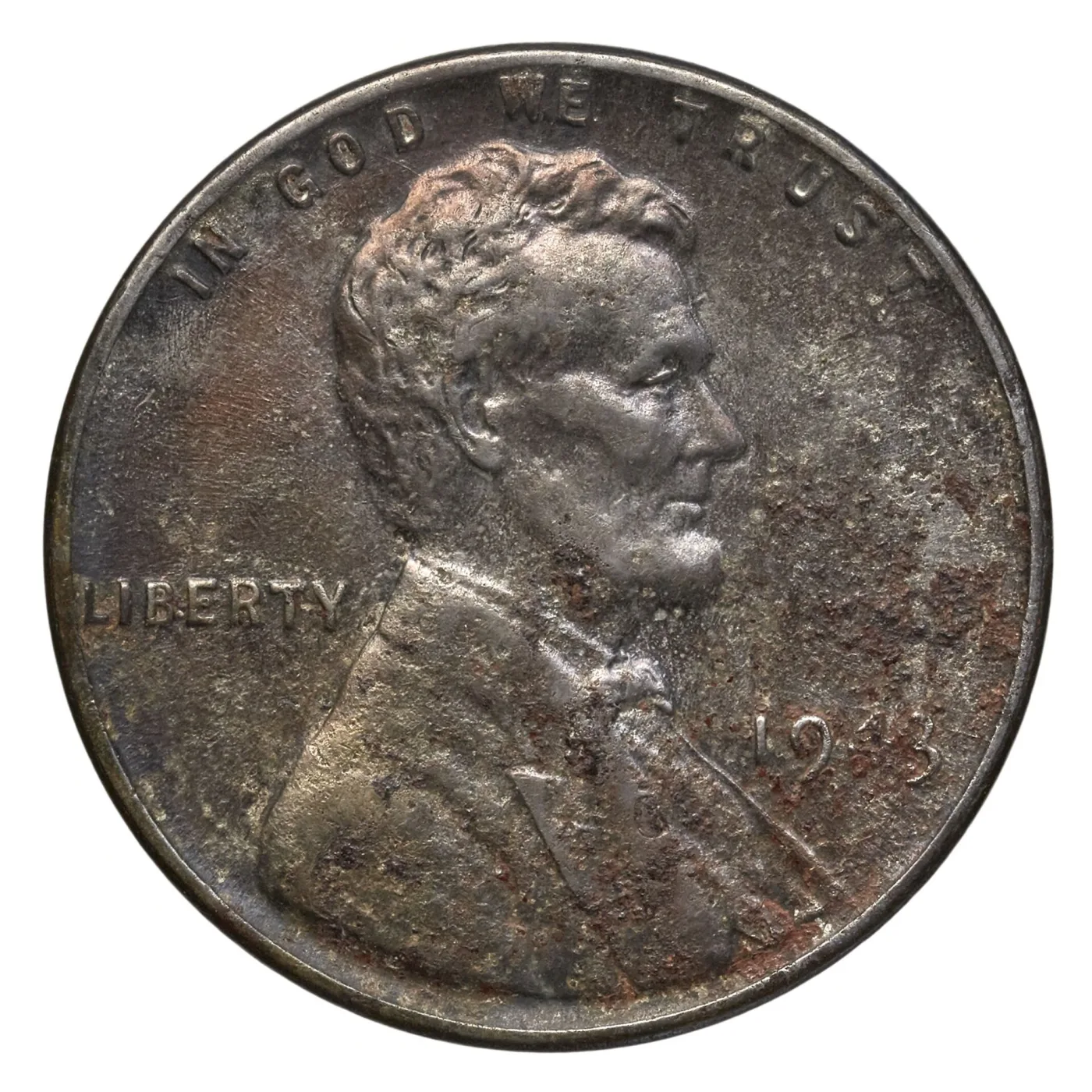
- It sticks: the coin has a steel core. That rules out plated copper, but not the second common fake: a genuine 1943 steel cent whose last digit has been reworked into a 4. Go to the scale, and then to the date.
The same test runs the other way for 1943. A copper-colored 1943 that sticks to a magnet is a steel cent that has been copper-plated, not the rare bronze error.
Test 2: The Scale
A scale that reads to 0.01 gram settles what the magnet leaves open.
| Coin | Metal | Weight | Magnet |
|---|---|---|---|
| Normal 1944 cent | 95% copper, 5% zinc | 3.11 g | No |
| Normal 1943 cent | Zinc-coated steel | about 2.7 g | Yes |
| Genuine 1944 steel error | Zinc-coated steel | about 2.7 g | Yes |
| Plated 1944 copper cent | Copper alloy under a coating | about 3.1 g | No |
| 1943 steel with altered date | Zinc-coated steel | about 2.7 g | Yes |
A gray 1944 that weighs around 3.1 grams is a copper cent, whatever its color. One that weighs about 2.7 grams and sticks to a magnet is made of steel, which narrows it to two candidates: the rare error, or a 1943 with a reworked date. The scale cannot tell those two apart, because they are the same metal. Only the date can.

Test 3: The Date
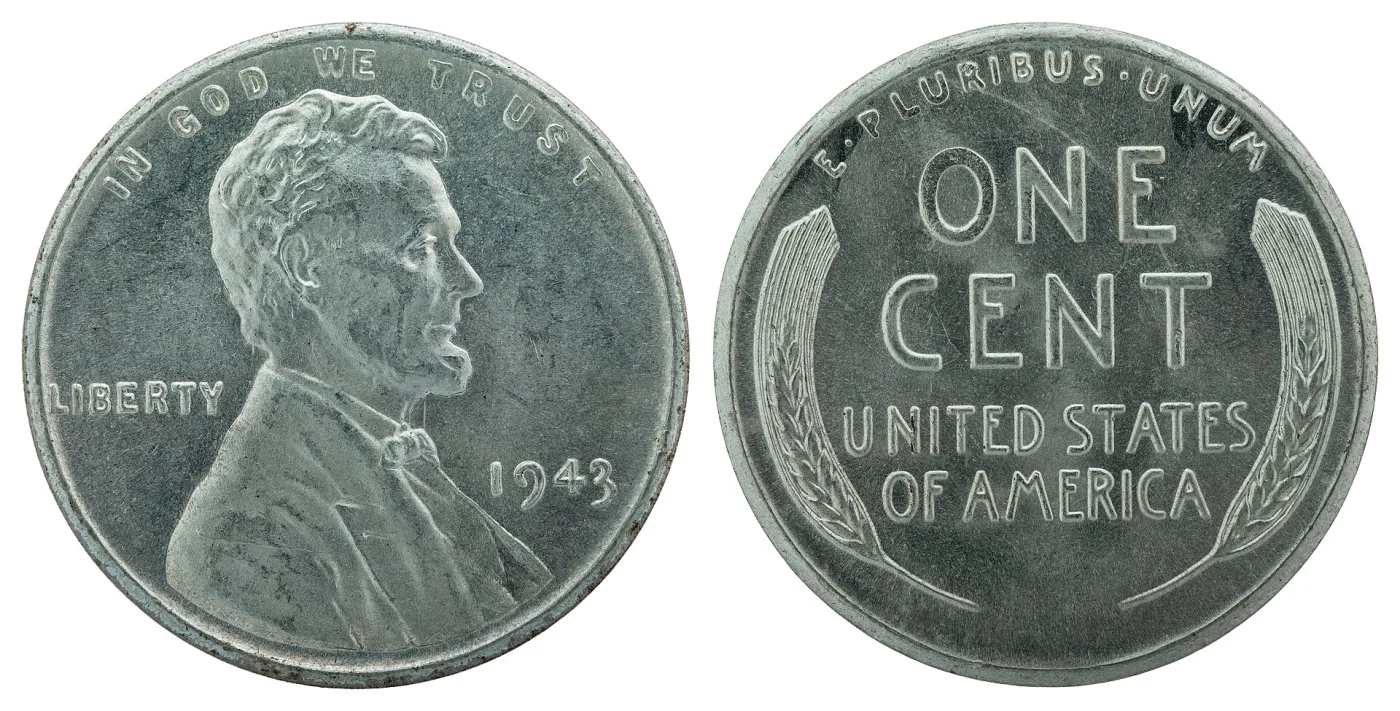
Look at the last digit under a 5x to 10x loupe, next to a normal 1944 cent if you have one.
- The shape of the 4. Compare it with the first 4 in the same date. Both were punched into the die by the same font, so they should match in height, width and stroke. A last digit that is smaller, thinner, or set at a slightly different angle from the first 4 has been made by hand.
- Tool marks. Scratches, a roughened field, or metal pushed up around the last digit point to engraving. Collectors on the main forums also warn that plating can be used to hide this work.
- The rest of the coin. A 1943 and a 1944 share the same designs, so nothing else on the coin gives an altered date away. That is exactly why fakers start with a 1943.
If the date looks clean, stop handling the coin and send it to PCGS or NGC. Do not clean it, scrape it to “see what’s underneath”, or try to remove rust: a cleaned surface is graded as “details” and costs a genuine coin thousands of dollars.
What a 1944 Penny Is Worth
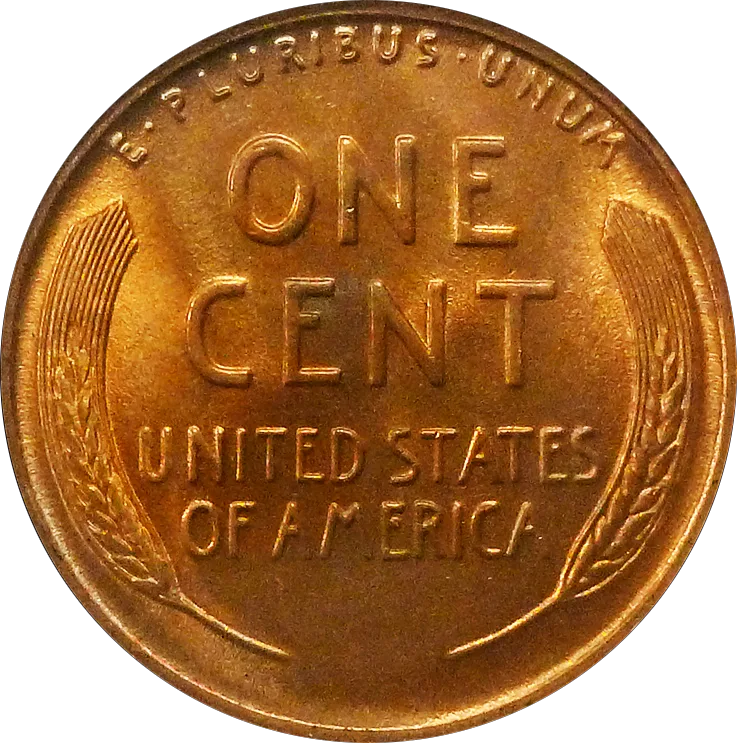
Normal 1944, 1944-D and 1944-S cents
These are among the most common wheat cents there are. In circulated grades CopperCoins puts them at 5 to 30 cents and Gainesville Coins at about 20 cents. In Mint State, CopperCoins and CoinWeek both put an MS65 Red coin at around $12 and an MS67 Red at around $150; the price climbs steeply above that because MS67 coins are scarce and MS68 coins very rare.
1944-D/S overmintmark
The one variety worth checking every 1944-D for. On these coins a D was punched over an S that had already been punched into the die. On the best-known one (FS-511, the “D/S North”) the top curve of the S shows directly above the D; on the second (FS-512, the “D/S West”) traces of the S show on either side of the D’s upright, and it is much less obvious and worth less. A Mint State D/S North brings a few hundred dollars: CopperCoins puts an uncirculated example at about $700, Gainesville Coins at $715 in MS65, and Greysheet records PCGS MS64 Red-Brown coins selling for $480 in 2023.
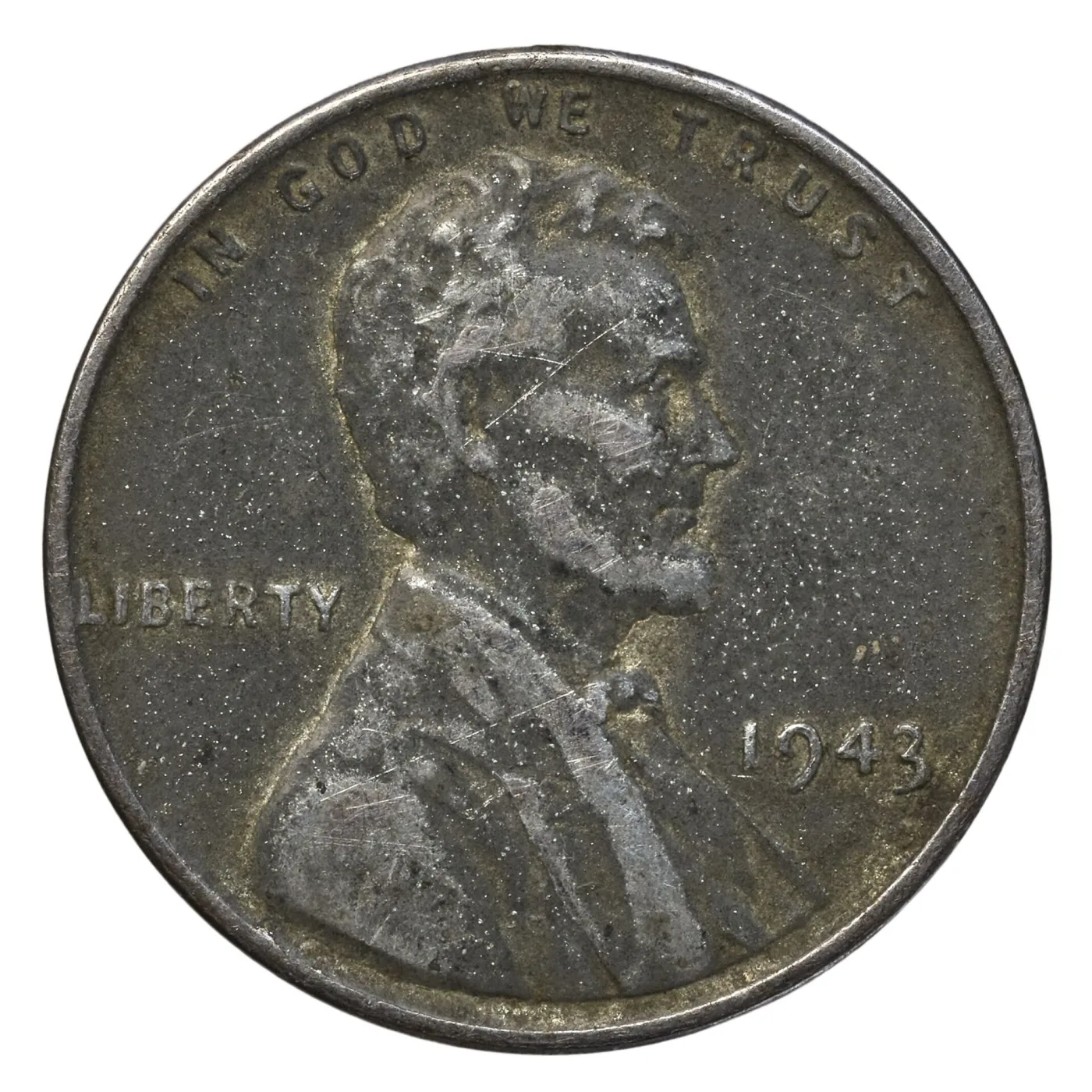
1944 steel cents
| Coin | Known | A recorded sale |
|---|---|---|
| 1944 steel | roughly 25–30 | Top recorded sale about $180,000 |
| 1944-D steel | 7 | NGC MS63, $115,000 (2007); NGC MS61, $58,201.50 (January 2012) |
| 1944-S steel | 2 | PCGS MS66, $408,000 (2021) |
Most surviving 1944 steel cents are worn, and worn ones still sell for five figures. CoinWeek’s record of sales includes PCGS AU53 coins at $30,550 to $37,375 and a cleaned NGC AU Details coin at $21,600 in November 2023. The Philadelphia high of about $180,000 comes from Gainesville Coins and matches the “over $180,000” figure given in our Lincoln wheat penny guide.
The 1944-S MS66 is the finer of the two San Francisco coins and the only one in Mint State. It sold for $408,000 in 2021 as part of Bob R. Simpson’s collection of off-metal Lincoln cents.
Other Things a 1944 Cent Can Be Mistaken For
- A 1914-D. The most common alteration in the whole wheat cent series runs the other way: a common 1944-D with its first 4 reshaped into a 1, to pass as the key-date 1914-D. Check the spacing of the date on any “1914-D” before you buy it; our key dates guide covers the tell-tale signs.
- A dark or toned copper cent. A 1944 cent that has turned gray-brown with age or from a fire is still copper. It fails the magnet test.
- Repunched mint marks and doubled dies. All three 1944 mints produced minor die varieties, such as the 1944-D/D repunched mint mark, most of them visible only under magnification and worth small premiums. They are a different subject from the steel error; see our error coins guide for how to tell a real doubled die from machine doubling.
Before You Do Anything With It
- Magnet. No reaction means it is not a steel cent.
- Scale. About 3.1 grams means copper; about 2.7 grams means steel.
- Date. Compare the last 4 with the first. Any doubt means an altered 1943.
- Grading service. A coin that passes all three goes to PCGS or NGC before it goes anywhere else. Any coin worth tens of thousands of dollars is faked, and no buyer will pay that for an uncertified one.
A photo can tell you which coin you are holding, but it cannot weigh it or test it with a magnet. Those two tests, and a grading service, are what decide a 1944 steel cent.
Frequently Asked Questions
Is a 1944 steel penny real?
Yes, but very few exist. In 1944 a small number of leftover zinc-coated steel blanks from 1943 were struck with 1944 dies by mistake. Roughly 25 to 30 are known from Philadelphia, seven from Denver and two from San Francisco. Most silver-gray 1944 cents offered today are copper cents that have been plated, or 1943 steel cents with an altered date.
How can I tell if my 1944 steel penny is real?
Start with a magnet: a genuine steel cent sticks, so a gray 1944 that ignores the magnet is a plated copper cent. Then weigh it: a steel cent weighs about 2.7 grams and a normal 1944 copper cent 3.11 grams. A coin that passes both may still be a 1943 with its last digit reworked into a 4, so compare the two 4s in the date under magnification and send anything promising to PCGS or NGC.
How much is a 1944 steel penny worth?
Even worn examples sell for five figures: PCGS AU53 coins have brought $30,550 to $37,375, and a cleaned NGC AU Details coin $21,600 in 2023. A 1944-D steel graded NGC MS61 sold for $58,201.50 in 2012, and the finer of the two 1944-S steel cents, graded PCGS MS66, sold for $408,000 in 2021.
How much is a normal 1944 wheat penny worth?
Very little. Over two billion 1944 cents were struck at Philadelphia, Denver and San Francisco, and a circulated one is worth a few cents to about a quarter. Mint State examples with full red color are worth around $12 in MS65 and around $150 in MS67. The 1944-D/S overmintmark variety is worth a few hundred dollars in Mint State.
What are 1944 pennies made of?
95% copper and 5% zinc, with no tin, weighing 3.11 grams. Collectors call 1944 to 1946 cents shell case cents because part of the metal came from spent cartridge cases. Only the 1943 cent was struck in zinc-coated steel, which is why a steel 1944 is an error.
Is a 1944 penny that sticks to a magnet valuable?
It might be. A 1944 cent that sticks to a magnet has a steel core, so it is either the rare steel error or a 1943 steel cent with an altered date. Weigh it, look closely at the last digit of the date, and have it authenticated by PCGS or NGC before you sell it or clean it.