Civil War Token Rarity Scale: What R-1 to R-10 Really Mean
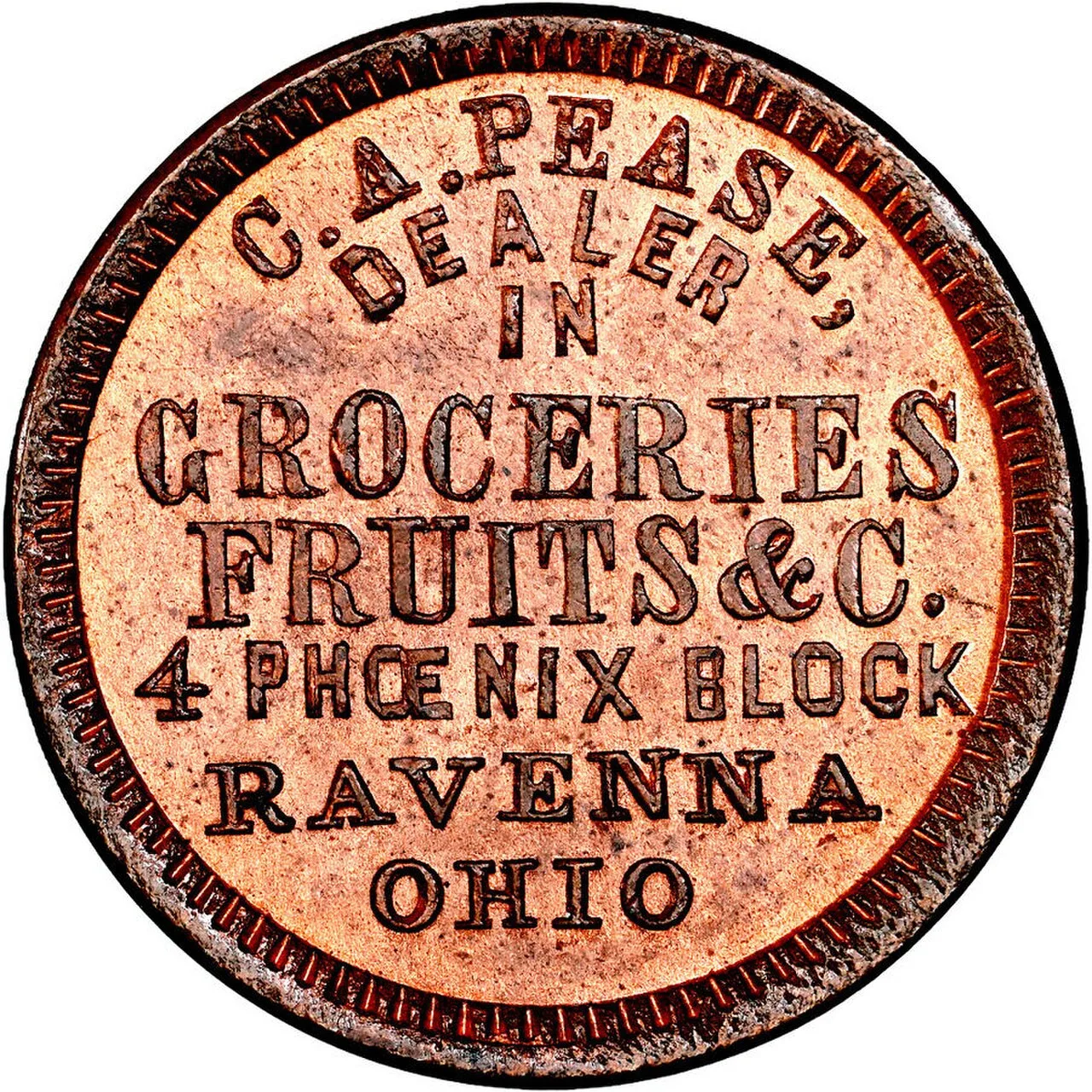
A Civil War token listed as “R-8” or “R-9” is making a claim about how many examples exist, not about how old, how pretty or how valuable it is. That number comes from the Fuld rarity scale, a ten-step ladder that runs from R-1, for tokens that survive by the thousands, to R-10, for a piece believed to be the only one.
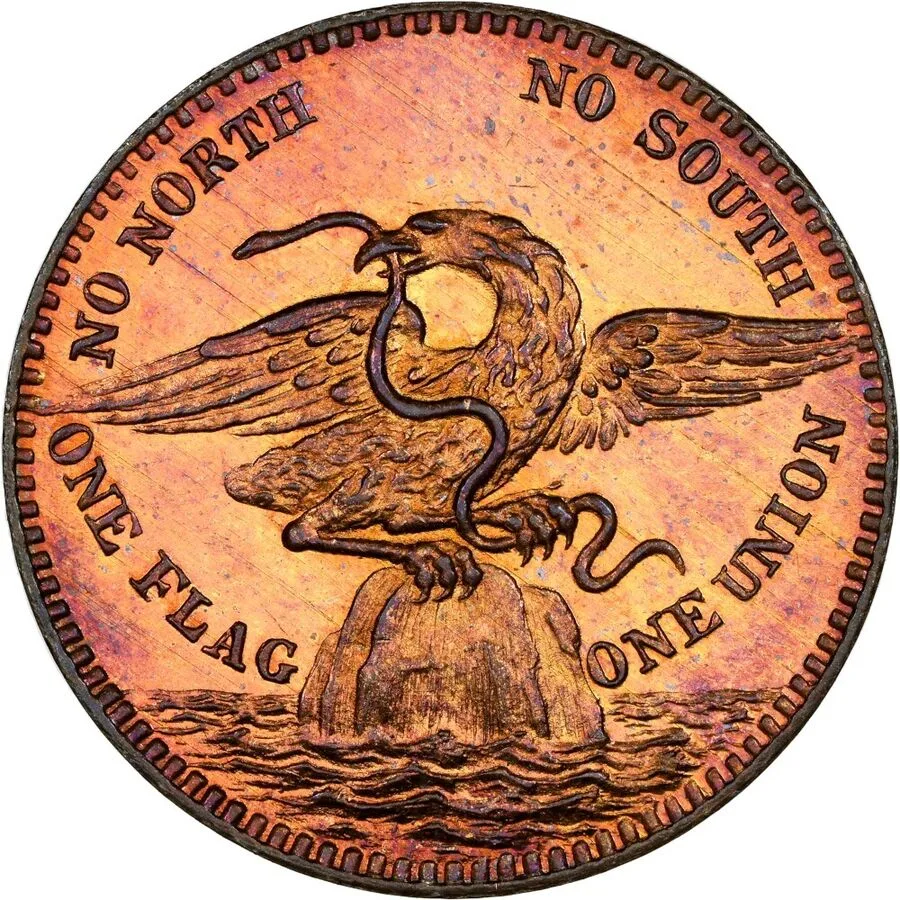
This guide sets out the scale, explains what a rating is attached to, shows how to find the rating for a token in your hand, and covers the places where the published numbers disagree. For the tokens themselves (patriotic pieces, store cards, sutler tokens and the history of the 1860s cent shortage), see the Civil War tokens identification guide.
The scale at a glance
The Civil War Token Society, which maintains the standard references, publishes the scale as follows. The same figures appear in the Wikipedia article on Civil War tokens and in NGC’s collector registry descriptions.
| Rating | Estimated number in existence |
|---|---|
| R-1 | more than 5,000 (very common) |
| R-2 | 2,001 to 5,000 |
| R-3 | 501 to 2,000 |
| R-4 | 201 to 500 |
| R-5 | 76 to 200 |
| R-6 | 21 to 75 |
| R-7 | 11 to 20 |
| R-8 | 5 to 10 |
| R-9 | 2 to 4 |
| R-10 | 1 (believed to be unique) |
| NV | not verified (may not exist) |
The counts are estimates of how many exist, not mintages. The scale describes how many survive today, not how many were struck in the 1860s. The steps are also uneven. The gap between R-1 and R-2 is thousands of pieces, while the gap between R-9 and R-10 is a single coin.
The “NV” line is the Society’s own addition: a die pairing or metal that appears in a reference but has not been verified, and may not exist.
Where the scale comes from
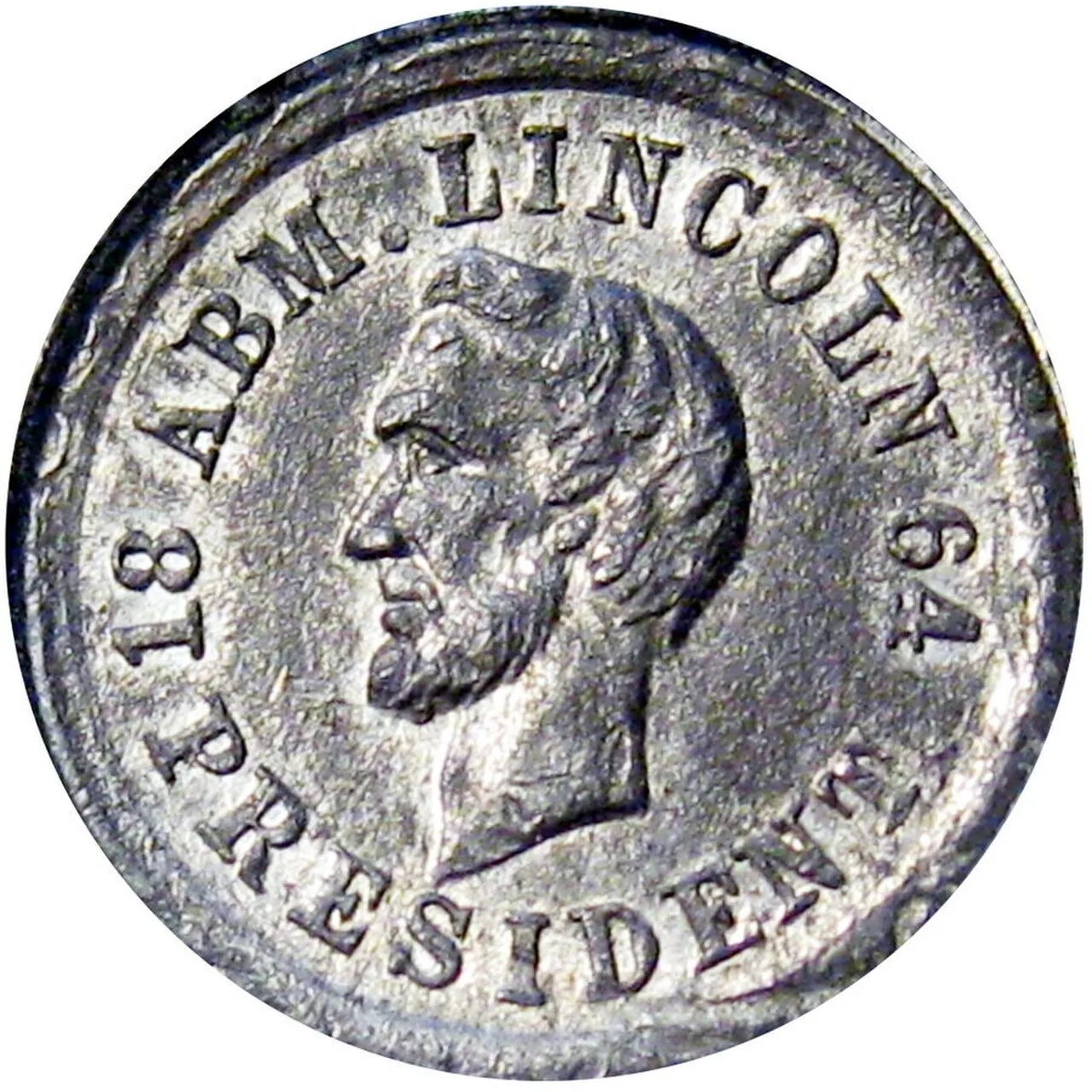
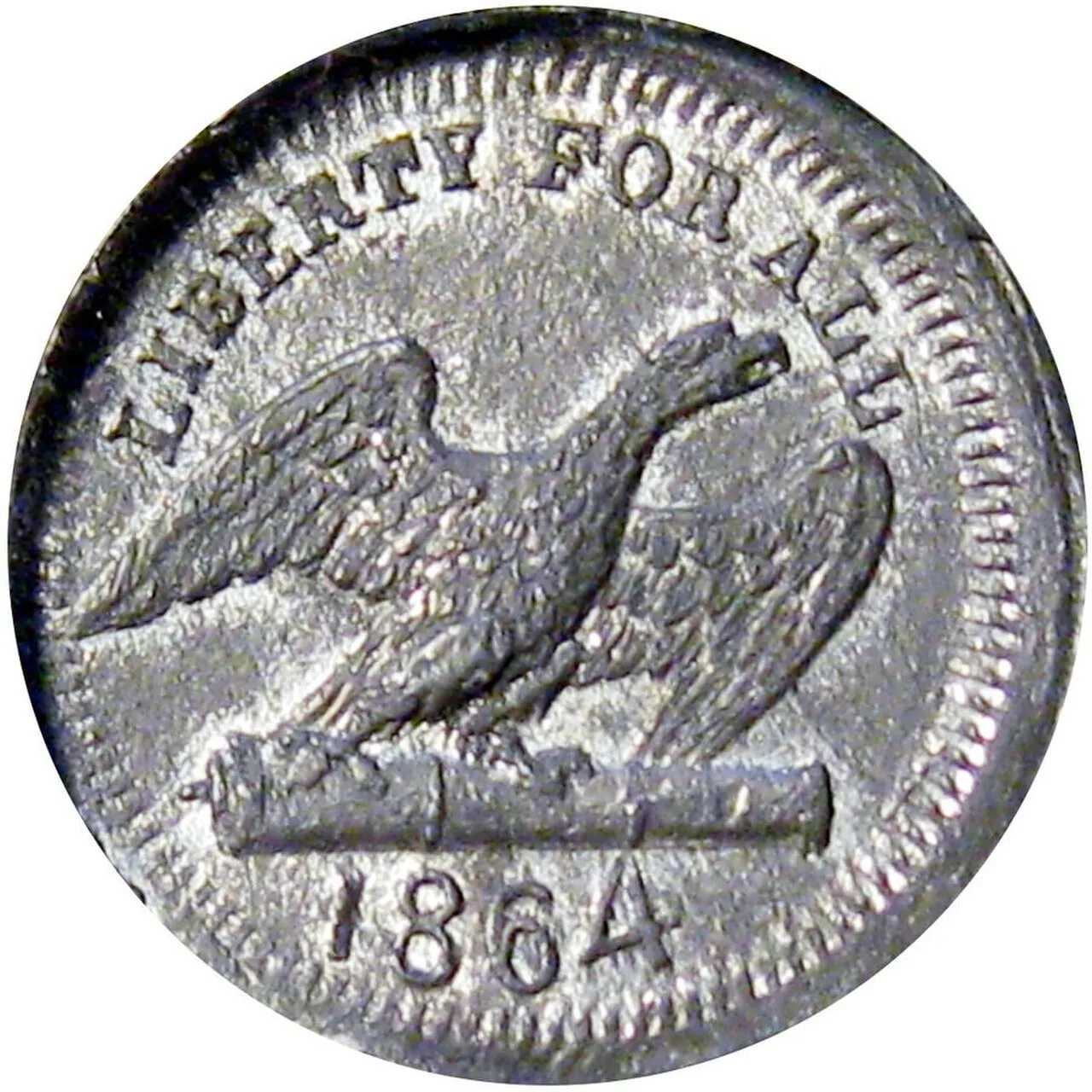
The scale was devised by George Fuld, a numismatic dealer and writer, and it is used in the catalogues he compiled with his father, Melvin Fuld: Patriotic Civil War Tokens, first published by Whitman around 1960 after a serial run in The Numismatic Scrapbook Magazine, and U.S. Civil War Store Cards, whose 1975 edition was published by Quarterman. Both books went through revised editions, and the Civil War Token Society, founded in 1967, has carried the work forward.
That last point matters for how you read a rating. The Society says its members follow sales of Civil War tokens in order to determine and refine the rarities for new editions of the references. A rating is therefore a living estimate. A token rated R-9 in an old edition may be R-8 in a newer one because more examples turned up, and new die pairings that are not in Fuld at all are still being found and offered as such.
A rating belongs to a variety, not a design
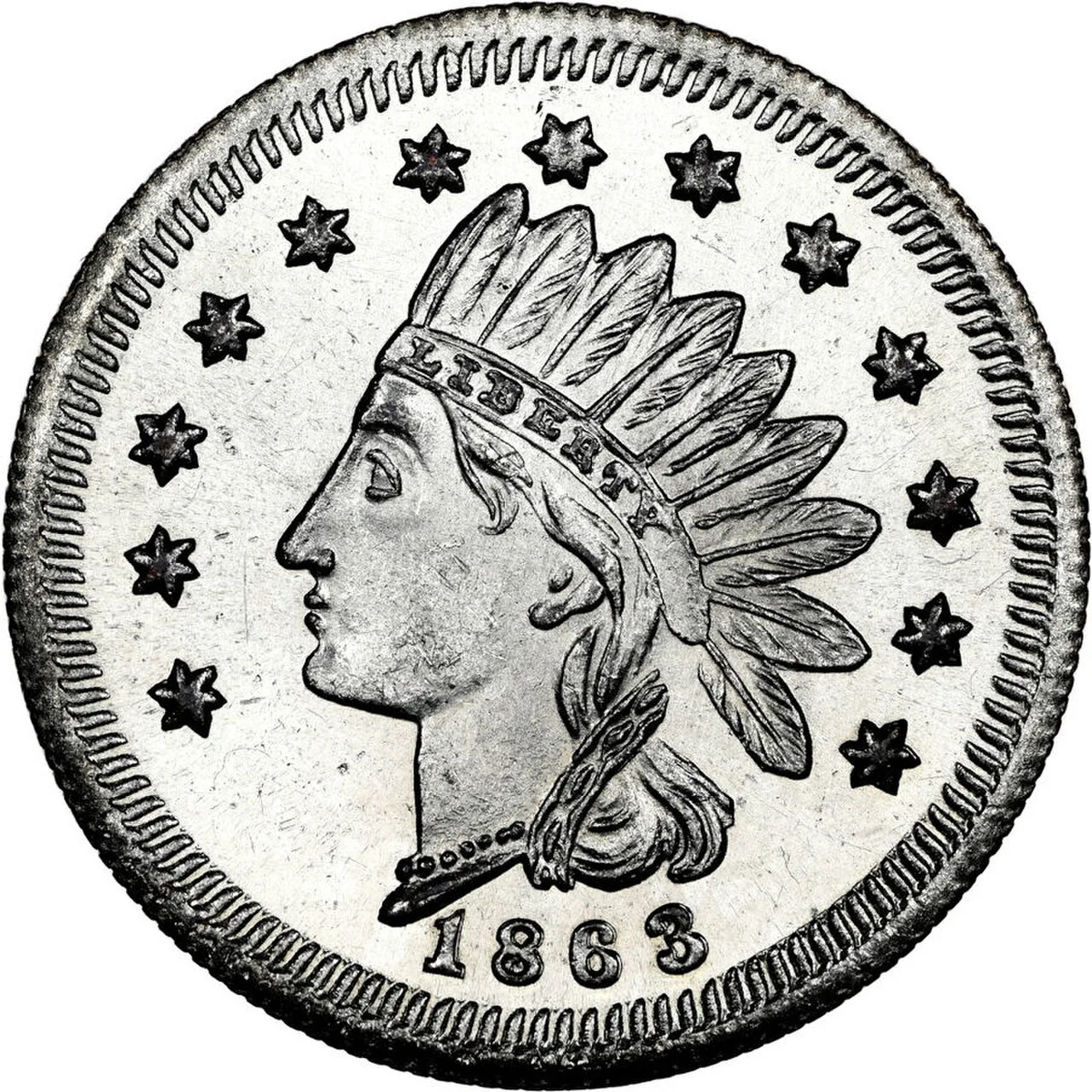
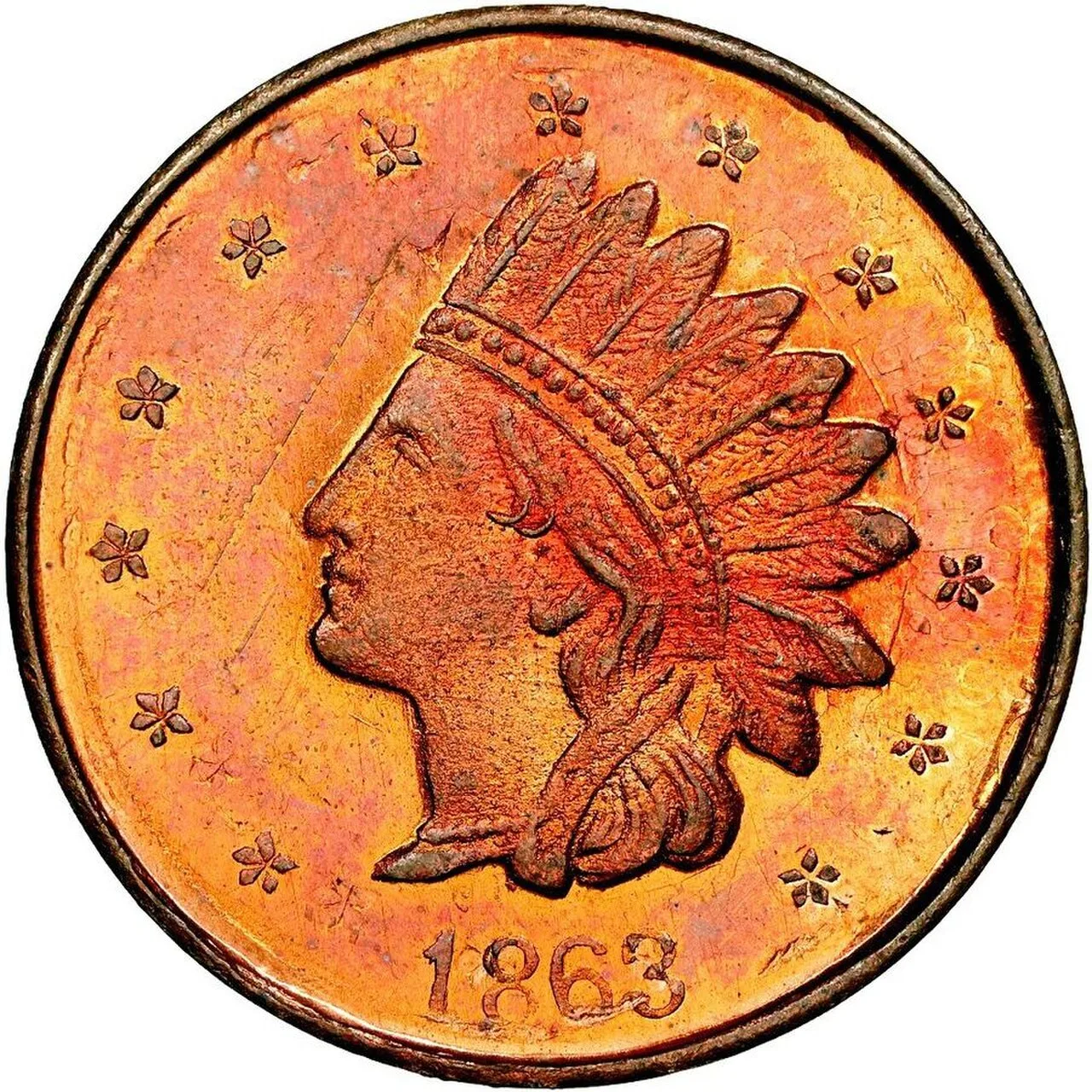
The most common mistake is to look up a design, such as “Indian head with OUR NAVY” or “a Cincinnati grocer’s card”, and take a rating from it. Ratings are not given to designs. They are given to a catalogue number, and a catalogue number pins down three things.
Patriotic tokens are numbered by their dies. The first number is the obverse die, the second the reverse die, and a letter after them gives the metal. PCGS lists, for example, “F-36/432a Copper” for a NO COMPROMISE WITH TRAITORS piece and “F-136/397a Copper” for a UNION MUST AND SHALL BE PRESERVED piece. Change either die and you have a different number; change the metal and you have a different number again.
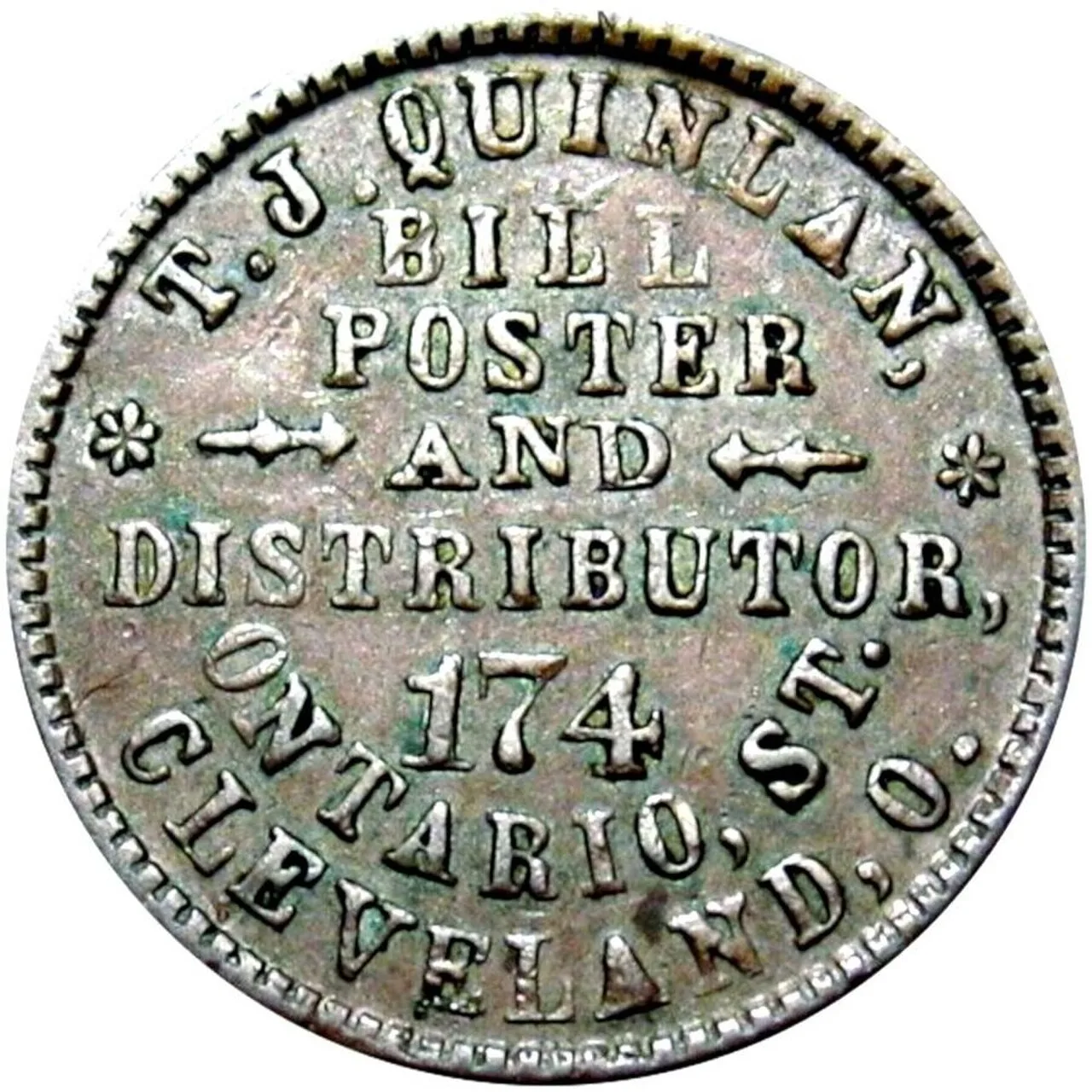
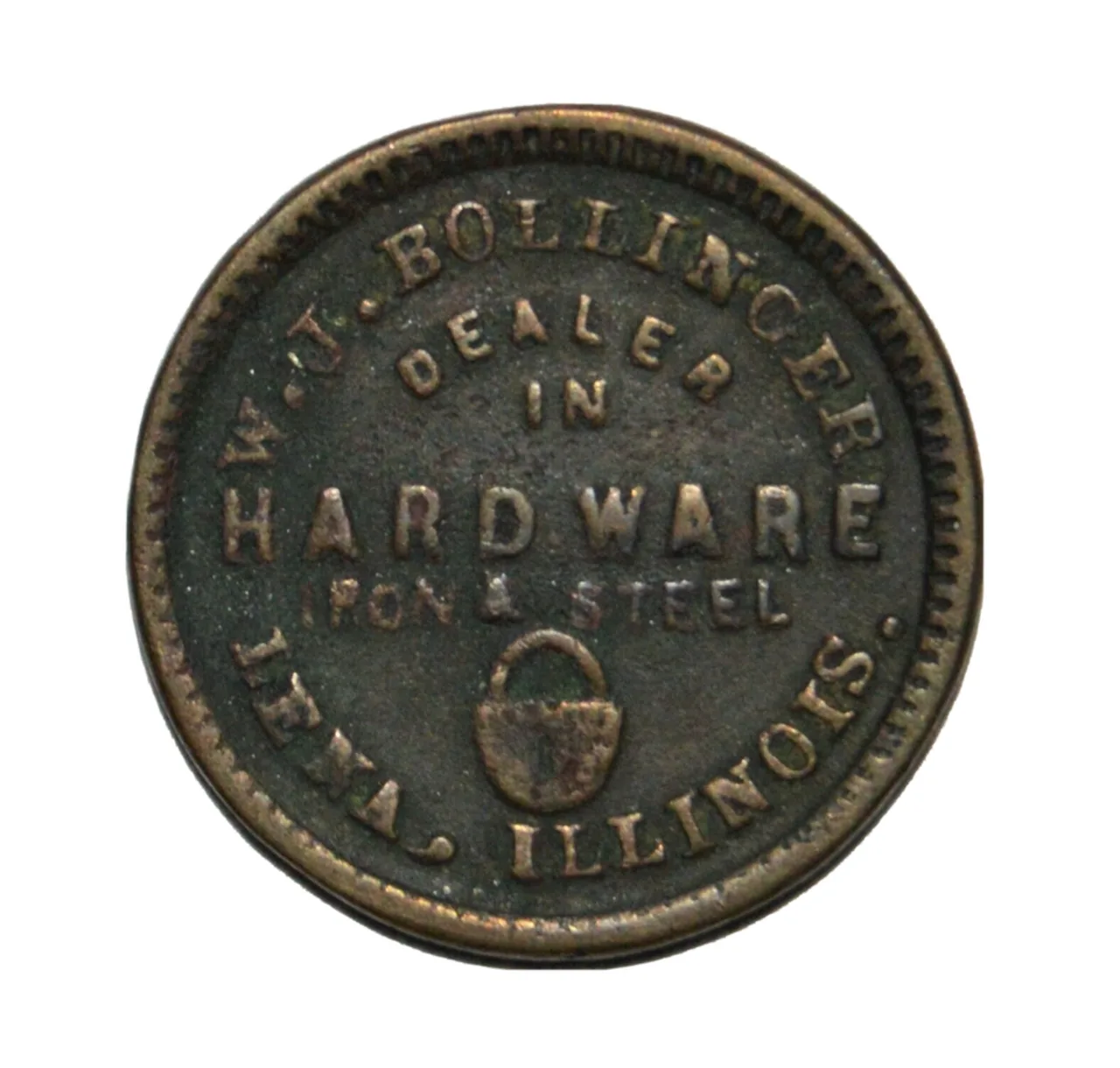
Store cards are numbered by place. A store card number starts with a state abbreviation and a town number, adds a letter for the merchant, then a die-combination number and the metal letter. CoinWeek’s worked example is NY-630G-2b: New York, town 630 (New York City), merchant G, die combination 2, in brass. Dealer and catalogue listings follow the same pattern, with numbers such as NY-630BS-2a for a New York City card and WI-510A-1a for an 1863 Milwaukee card.
In both systems “a” is copper and “b” is brass. Other letters stand for other metals, and the Society’s records include copper-nickel, white metal, German silver, silver, lead, zinc, hard rubber and even aluminium. Published keys to the letters beyond “a” and “b” do not agree with each other, so check the letter against the edition of the reference you are using rather than a list copied from a forum.
Because each metal is its own number, the same pair of dies can be common in copper and very rare in another metal. The rating on a listing applies to that exact combination of dies and metal, and to nothing else.

How to find the rating for your token
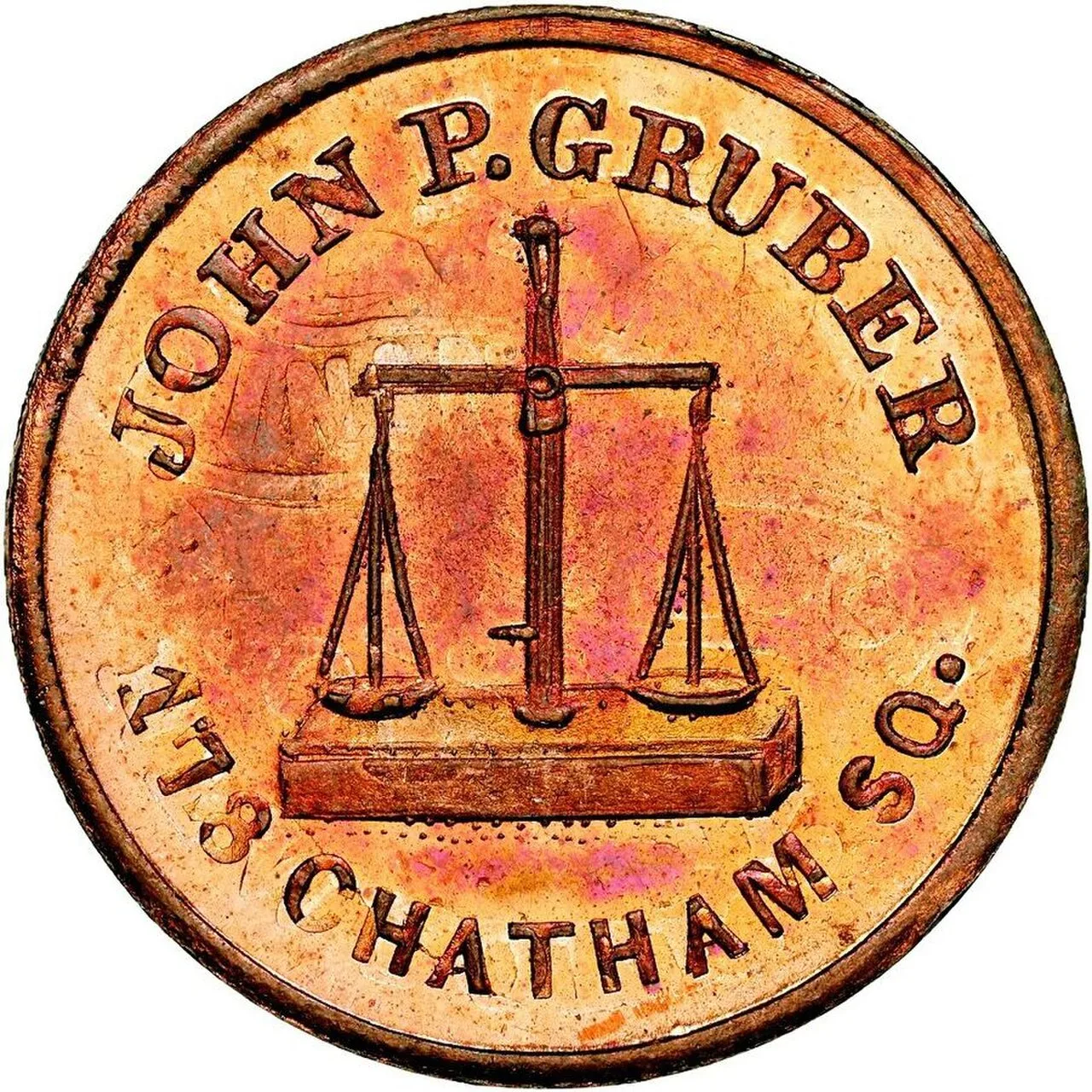
- Read both sides completely. Every word, the date, and any initials or small letters near the rim. Store cards and most patriotic dies are identified largely from their legends.
- Decide which family it belongs to. A merchant’s name, a trade and a town make it a store card. Slogans, portraits, flags and no business name make it a patriotic token.
- Find the die numbers or the merchant entry in the relevant Fuld reference. For a patriotic token, find each side separately, then look up the pairing.
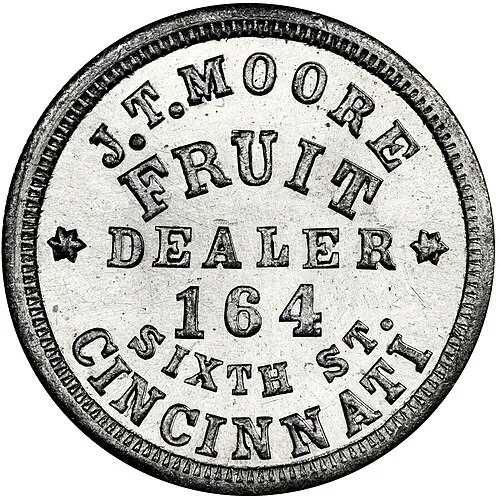
- Identify the metal. Most tokens are copper or brass. A silvery token may be copper-nickel, white metal or German silver; these are hard to tell apart by eye, and a plated copper token can look like any of them. If the metal decides the rating, have it tested or let a grading service attribute it.
- Read the rating for that exact number. Then check whether a newer edition has revised it.
A token graded by PCGS or NGC is usually attributed by Fuld number on the holder, which removes the guesswork from steps 3 and 4. An AI identifier app can usually name the type from a clear photograph of both sides, which tells you which section of the reference to open.
What a rating does and does not tell you about value
Rarity is one of several things that set a token’s price, and the Society says as much. Condition is the other big one: a common R-1 token in full original red Mint State can outsell a worn R-6.
So treat a high rating as a reason to look harder, not as a price. Three practical rules follow from how the scale works:
- An R-rating on a listing is the seller’s attribution. It is only as good as the die and metal identification behind it. A token described as “R-9 white metal” that is actually a plated copper piece is an R-1 or R-2 token with a story attached.
- Check the edition. A rating quoted from an old reference may have been revised downward as more examples surfaced.
- At the R-7 end and above, insist on attribution. At those numbers a single misread die or metal changes the token from very rare to common, and a holder that states the Fuld number settles it.
Where the published numbers disagree
The scale is quoted in more than one form, and the differences are at the boundaries. The Civil War Token Society, Wikipedia and NGC’s registry text all give non-overlapping bands: R-5 is 76 to 200, R-6 is 21 to 75, R-7 is 11 to 20, and R-9 is 2 to 4. A CoinWeek article gives rounder bands that overlap at the edges: R-5 as 75 to 200, R-6 as 20 to 75, R-7 as 10 to 20, and R-9 as 2 to 5. On that version a token with five known examples is both R-8 and R-9.
This guide uses the Society’s figures, because the Society is the body that maintains the ratings in the references and its bands leave no number in two places.
Estimates of the size of the whole series also vary. The Society puts total production at perhaps 50 million tokens with about 3 million surviving, across roughly 12,000 varieties. Wikipedia gives 25 million tokens in circulation by 1864 and 7,000 to 8,000 varieties, and a CoinsWeekly article cites some 15,000 varieties. The sources count at different dates and probably by different rules for what makes a separate variety, so treat any single total as approximate.
Common misreadings
- “R-1” is not the rarest. The scale runs the other way: 1 is the most common and 10 is unique.
- Not every old token is on this scale. The Fuld ratings cover Civil War tokens of the 1860s. The earlier Hard Times tokens of the 1830s and 1840s have their own catalogue and their own numbers.
- A rating is not a grade. Grades run from 1 to 70 on the Sheldon scale, as explained in the coin grading guide. A token has both, and they measure different things.
- “Not in Fuld” is not automatically a rarity. It may be a genuinely new die pairing, or a misattribution.
Frequently Asked Questions
What does R-1 to R-10 mean on a Civil War token?
It is the Fuld rarity scale, an estimate of how many examples of a specific token survive. R-1 means more than 5,000, R-2 2,001 to 5,000, R-3 501 to 2,000, R-4 201 to 500, R-5 76 to 200, R-6 21 to 75, R-7 11 to 20, R-8 5 to 10, R-9 2 to 4, and R-10 a single piece believed to be unique. Lower numbers are more common, higher numbers rarer.
Who created the Civil War token rarity scale?
The scale was developed by George Fuld, a numismatic dealer and writer, and it is used in the standard references he compiled with his father Melvin Fuld: Patriotic Civil War Tokens and U.S. Civil War Store Cards. The Civil War Token Society, founded in 1967, now maintains and refines the ratings for new editions.
Is an R-9 Civil War token valuable?
Often, but not automatically. Rarity is one of several factors in a token's price, and condition is the other major one. A rating also only applies to the exact catalogue number, meaning the specific dies and the metal. If the attribution is wrong, the rating is wrong, so for anything listed at R-7 or above, look for a token attributed by PCGS or NGC with its Fuld number on the holder.
Does a Civil War token's rarity rating ever change?
Yes. The ratings are estimates, and the Civil War Token Society says its members follow sales to determine and refine the rarities for new editions of the reference books. A rating quoted from an old edition may have been revised, and new die pairings that are not listed in Fuld are still being reported.
Is R-1 the rarest Civil War token rating?
No, it is the most common. The scale runs from R-1, for tokens estimated at more than 5,000 surviving, to R-10, for a token believed to be unique.
Why do some sources give different numbers for the rarity scale?
Some articles round the bands so that they overlap, giving R-9 as 2 to 5 and R-8 as 5 to 10, for example. The Civil War Token Society's own table uses non-overlapping bands, with R-9 as 2 to 4, and that is the version to rely on.