1922 Silver Dollar Value: P, D and S Peace Dollars, and the Ones Worth More
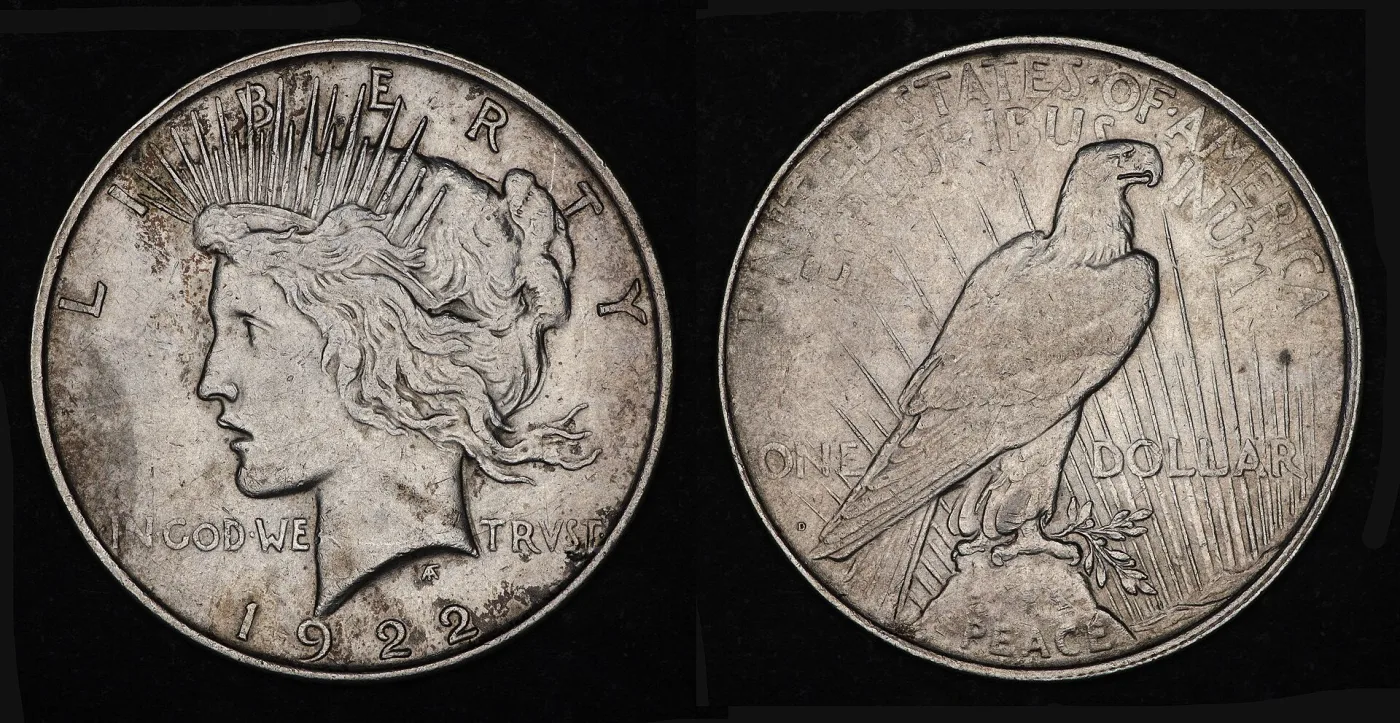
Nearly everyone who searches for a 1922 silver dollar is holding the same coin: a Peace dollar, the large silver dollar with Liberty in a spiked crown on the front and an eagle at rest on the back. 1922 was the biggest year the series ever had. Over 84 million were struck at three mints, and that is why most 1922 dollars are worth about their weight in silver.
The exceptions exist, but they are narrow. This guide shows which 1922 dollar you have, where to read its mint mark, how to work out the melt value that sets its floor, what each grade sells for, and the few 1922s that are worth far more: the high-relief coins nearly all melted in 1922, and a handful of die varieties a loupe can find. For the whole series from 1921 to 1935, see the Peace dollar guide.
The Short Answer
A 1922 silver dollar is a Peace dollar. There are no 1922 Morgan dollars. It contains 0.77344 troy ounces of pure silver, so its value starts at that weight times the day’s silver price.
A circulated 1922 from any of the three mints sells for its silver value plus a modest premium. Uncirculated coins up to about MS63 carry a modest premium. Real money starts at MS65, and the big numbers belong to coins most owners will never see: the high-relief proofs, and the scarcer die varieties.
| Mint mark | Mintage | What most examples are worth | |
|---|---|---|---|
| 1922 | none (Philadelphia) | 51,737,000 | Silver value plus a modest premium |
| 1922-D | D (Denver) | 15,063,000 | Silver value plus a modest premium; more than the P in MS65 |
| 1922-S | S (San Francisco) | 17,475,000 | Silver value plus a modest premium; the scarcest of the three in MS65 and finer |
| 1922 High Relief | none | about 32,000 to 35,000 struck, nearly all melted | Six figures for a genuine survivor |
Which 1922 Dollar Do You Have?
Three different coins answer to “1922 dollar”, and they are easy to tell apart.
The Peace dollar is the one in your hand almost every time. It is 38.1 mm across and weighs 26.73 grams, 90% silver and 10% copper, with a reeded edge. Liberty faces left wearing a crown of rays, the word LIBERTY arcs above her, and the date 1922 runs along the bottom. On the back an eagle perches on a rock with an olive branch, above the word PEACE.
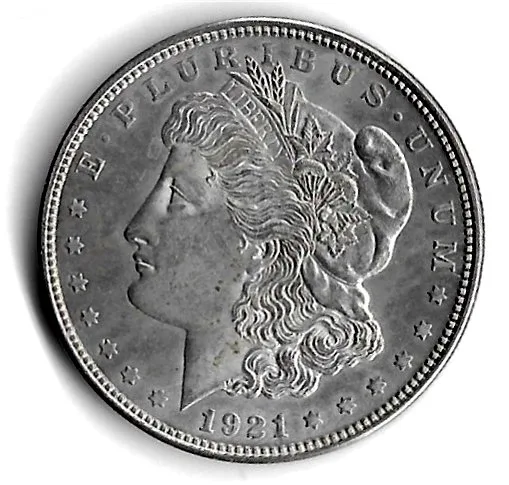
There is no 1922 Morgan dollar. The Morgan was struck from 1878 to 1904 and then once more in 1921, to replace coins melted under the Pittman Act of 1918. The Peace dollar took over the same year. A listing for a “1922 Morgan” is either a mislabelled Peace dollar or a fake, because the Mint never made one. See the Morgan dollar guide for the 1921 Morgans, which are a different story.
The 1922 Grant Memorial gold dollar is the rare third option. It is a small gold commemorative, smaller than a dime, with Ulysses S. Grant on the front, struck in March 1922 for the centennial of his birth. About 10,000 were made, roughly half with a small incuse star in the obverse field that was added to help sales. If your 1922 dollar is gold and tiny, it is this coin, and it belongs with the classic commemoratives, not here.
Mintages and the Mint Mark
All three mints struck Peace dollars in 1922, and all three did so in huge numbers. Philadelphia alone made 51,737,000, the largest single mintage in the series. Denver added 15,063,000 and San Francisco 17,475,000.
The mint mark is on the reverse, at the lower left: under the word ONE, just above the tip of the eagle’s wing and close to the rim. It is a small letter standing alone in open field, so it is easy to miss on a worn coin. Tilt the coin under a lamp and use a 5x or 10x loupe before deciding there is nothing there.
- No letter: Philadelphia, the most common 1922 of all.
- D: Denver.
- S: San Francisco.
The mint mark matters less for a 1922 than for most dates. In circulated grades all three trade at about the same price. It starts to matter in gem Mint State, where the D and especially the S are harder to find. For how mint marks work across all US coinage, see the mint marks guide.

What a 1922 Peace Dollar Is Worth
Start with melt value
Every 1922 Peace dollar holds 0.77344 troy ounces of pure silver, and that sets a floor no buyer goes below:
Melt value = 0.77344 × silver spot price per troy ounce
At $30 silver that is about $23.20. At $50 it is about $38.67. Look up the day’s spot price and do the sum before you look at any price list, because circulated 1922s follow silver more than anything else. The junk silver guide explains spot prices and how dealers price silver by weight.
Then add the premium for grade
Price guides disagree, mostly because they were written at different silver prices, so the useful thing to read is the shape of the numbers rather than any one figure. Here are two published retail guides for the Philadelphia coin side by side:
| Grade | USA Coin Book (Feb 2026) | Gainesville Coins |
|---|---|---|
| VF-20 | $70 | $40 |
| EF-40 | $73 | $42 |
| AU-50 | $77 | $56 (AU) |
| MS-60 / MS-61 | $83 | $52 |
| MS-63 | — | $85 |
| MS-65 | $667 | $210 |
Read across a row and the two guides disagree, which is normal: each was priced on a different date, at a different silver price, so neither column is a quote for your coin. Read down a column and the pattern is the same in both. Values climb slowly from Very Fine through MS63, then jump at MS65. Below MS65, a 1922 dollar is a silver coin with a small collector premium. At MS65 and above it becomes a collector’s coin.
The Denver and San Francisco coins follow the same curve in circulated grades. USA Coin Book prices both at $73 in VF-20, against $70 for Philadelphia, and they separate only in gem condition: about $720 for a 1922-D in MS65 and about $1,473 for a 1922-S. NGC’s figures point the same way, with top-grade Mint State 1922-S coins priced above the best 1922-D.
What moves a coin down the table is condition you can see: a full cartwheel of mint luster, no wear on Liberty’s cheek and the hair above her eye, and few bag marks in the open fields.
The 1922 High Relief
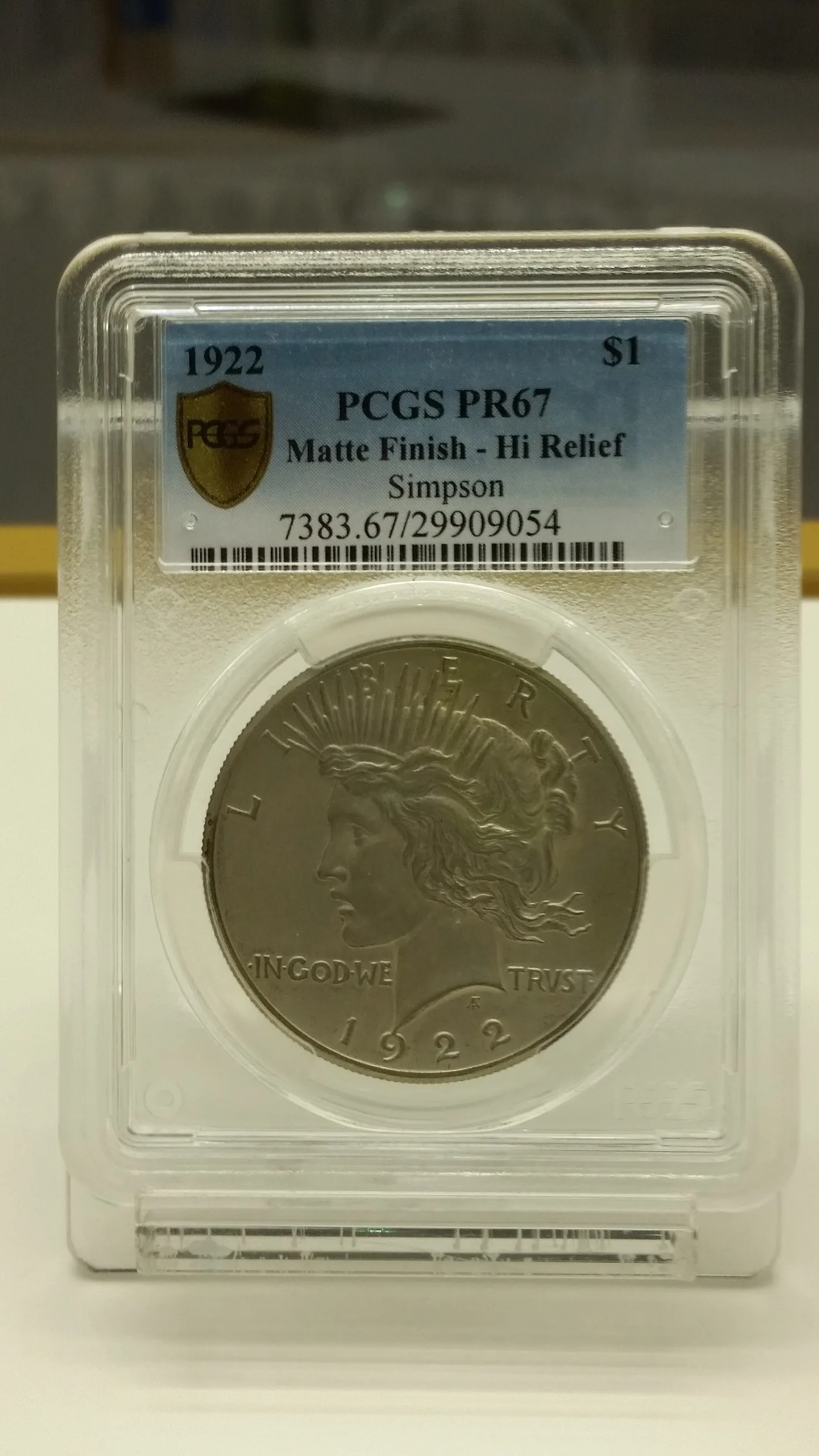
The first Peace dollars, dated 1921, were struck in high relief. The design rose sharply from the field, and it wore out dies and needed too much pressure for mass production. The Mint tried again with the same relief in January 1922 and struck roughly 32,000 to 35,000 coins, depending on the source, before abandoning it. Those coins were melted. Low-relief production began in February 1922, and every 1922 dollar in ordinary circulation is low relief.
The survivors are a handful of proofs, about six to twelve by the published estimates, and almost all have a matte finish. Price guides value them in six figures.
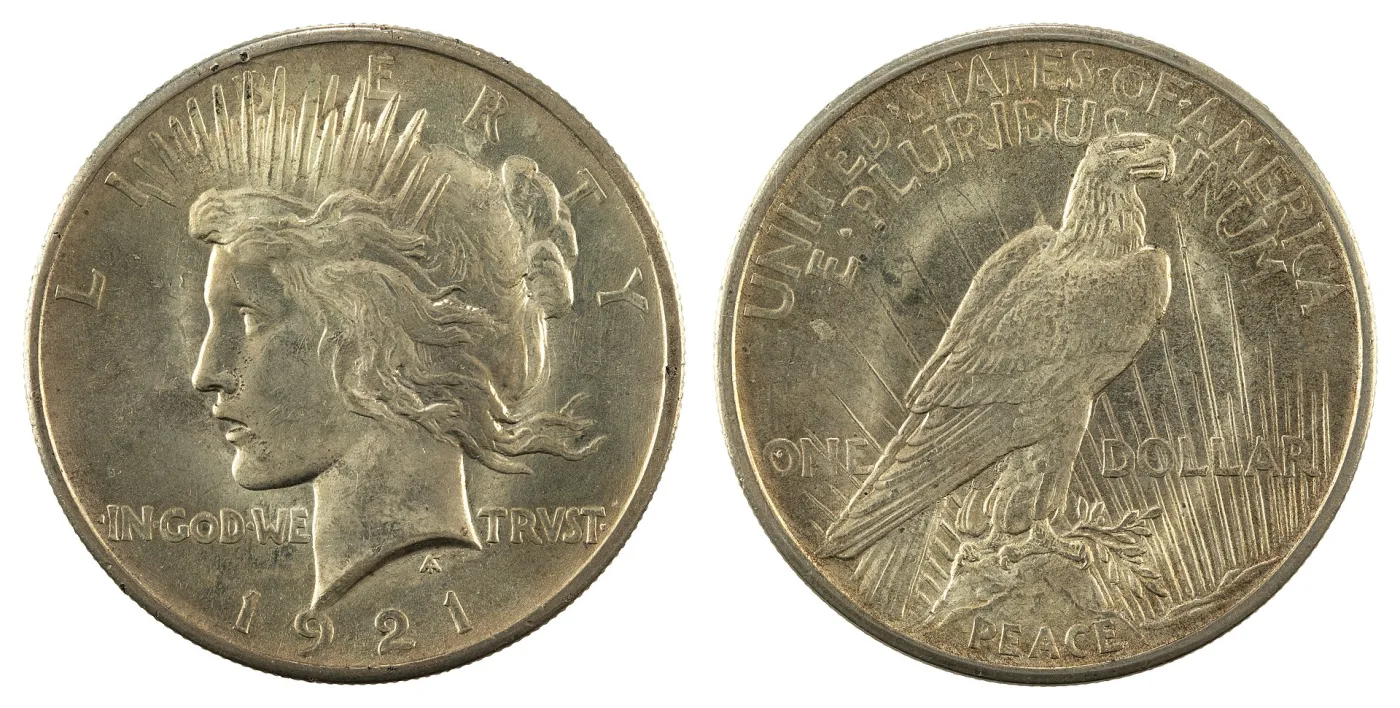
If a circulated 1922 in a drawer looks “high”, compare it with a 1921. On the 1921 the rays of the crown are thick and stand well up from the field, and Liberty’s profile looks sculpted. Low-relief 1922s look flatter, with finer rays. A high-relief 1922 that has been in circulation is so unlikely that the realistic conclusion is a low-relief coin, a 1921, or a fake. Anything that really fits the description goes to PCGS or NGC before it goes anywhere else.
Die Varieties Worth a Loupe
So many dies were used in 1922 that collectors have catalogued dozens of die varieties, numbered in the Van Allen-Mallis (VAM) system. Three Philadelphia varieties are on the widely collected Top 50 list, and they sell for a premium over a normal 1922 in the same grade:
| Variety | Mint | What to look for |
|---|---|---|
| VAM-2A “Earring” | Philadelphia | A die break at Liberty’s ear that hangs like an earring |
| VAM-5A “Scar Cheek” | Philadelphia | A raised line on Liberty’s cheek, as the name says; compare the PCGS CoinFacts photos before you claim one |
| VAM-12A “Moustache” | Philadelphia | A die crack under Liberty’s nose, from a thin line over the lips to a thick bar reaching toward the cheek |
One trap: VAM numbers restart for each date and mint. A “1922-D VAM-2A” is a different die from the 1922 Philadelphia Earring, so check the mint mark before you match a coin to a listing. All of these are raised features on the coin, made by a damaged die. A scratch or gouge cut into the surface is damage, not a variety.
Who Designed It
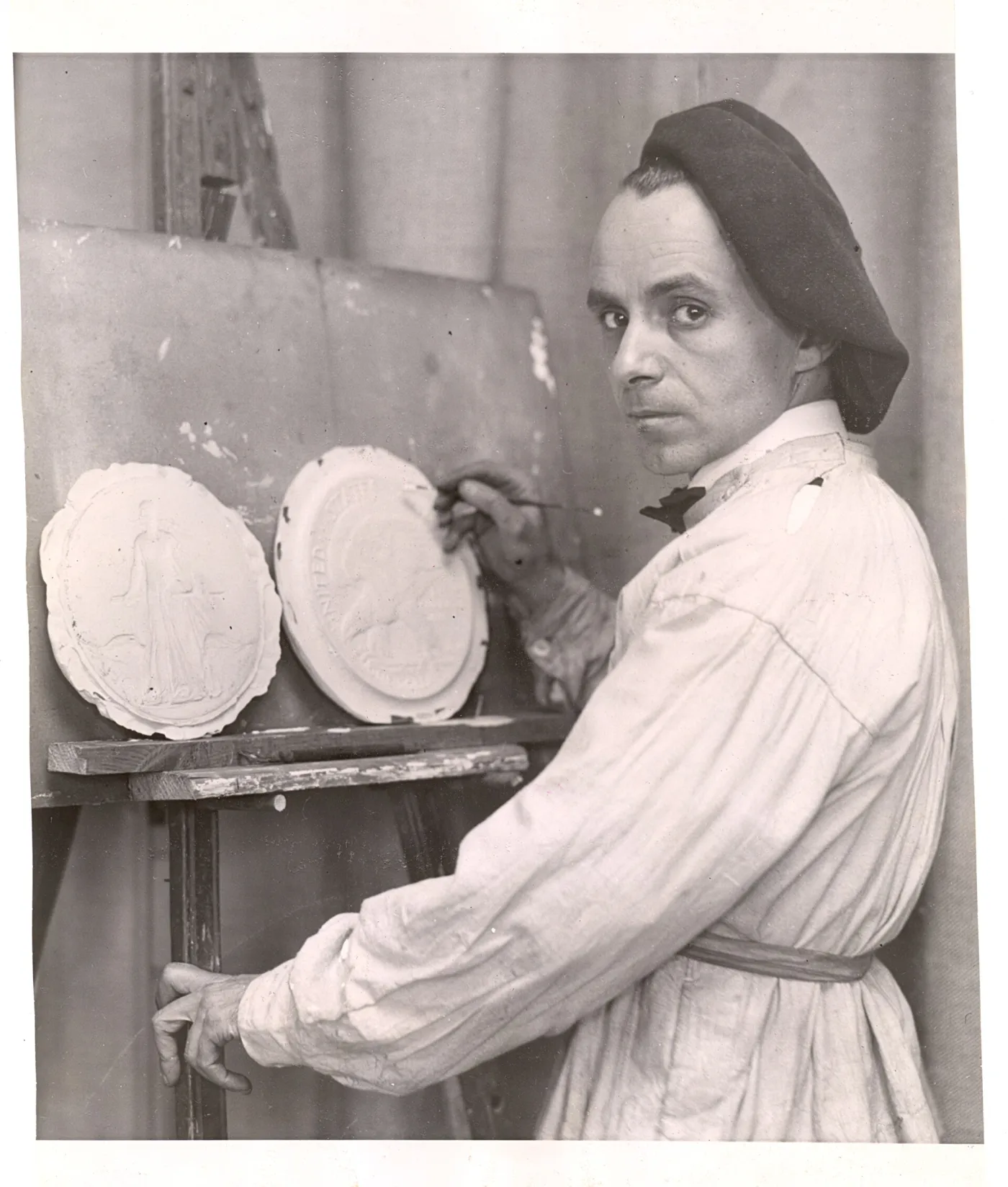
The Peace dollar is the work of Anthony de Francisci, a young sculptor whose design was chosen in December 1921. His wife, Teresa de Francisci, was the model for Liberty. Her profile is the Liberty on every 1922 dollar.
Should You Grade or Sell It?
For a circulated 1922, grading costs more than it adds. Sell it to a dealer at a fair margin over melt, or keep it as silver. Grading makes sense only for a coin that looks fully uncirculated, with no wear on the cheek and bright, unbroken luster, or for one that matches one of the varieties above.
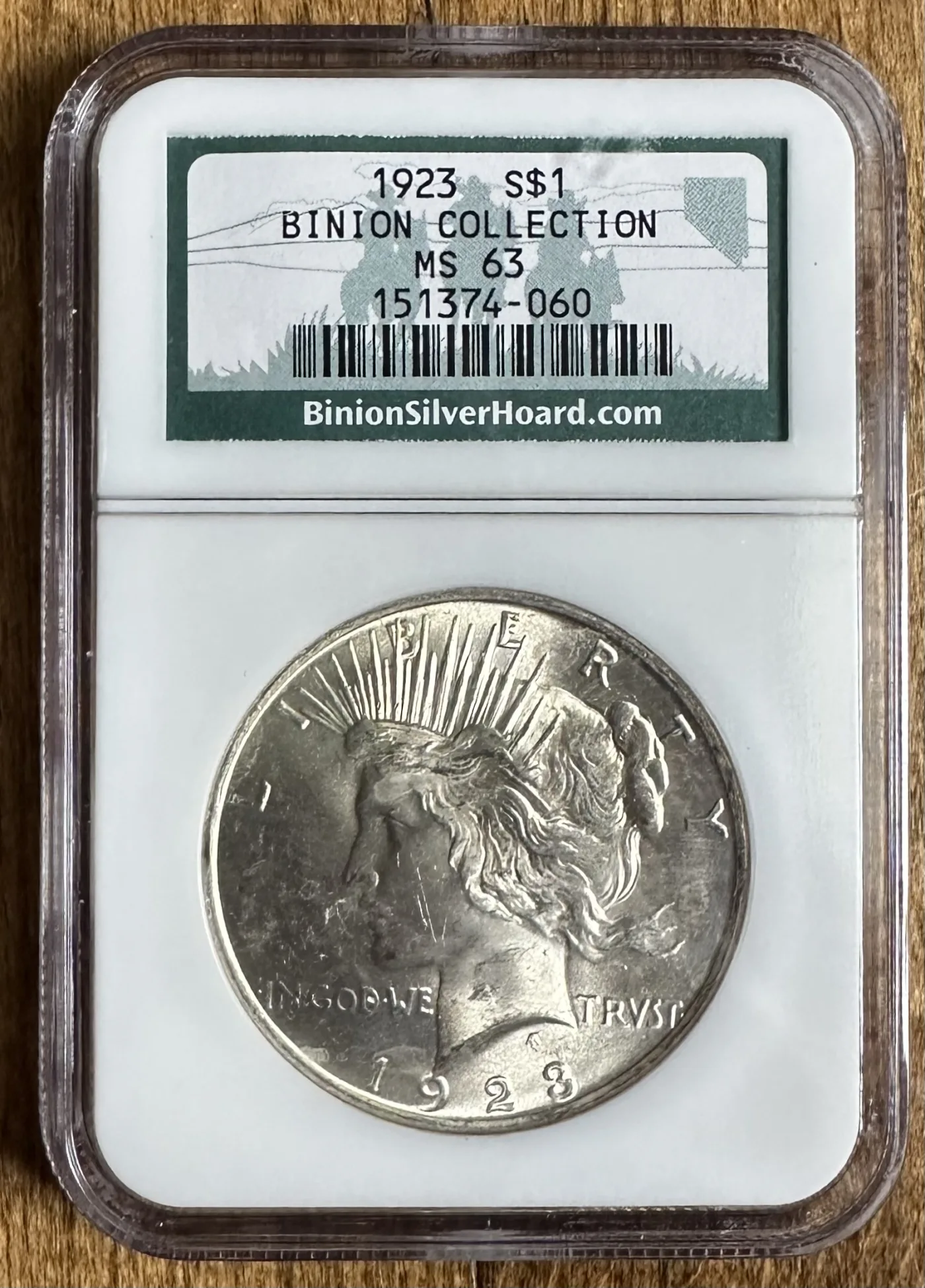
Whatever you decide, do not clean it. A polished or dipped 1922 loses most of its collector premium and is worth melt. The coin cleaning guide explains why.
Frequently Asked Questions
How much is a 1922 silver dollar worth?
Most 1922 silver dollars are worth their silver content plus a modest premium. Each holds 0.77344 troy ounces of pure silver, so multiply that by today's silver spot price for the floor. Circulated coins from all three mints sell for somewhat above that, uncirculated MS60 to MS63 coins for a little more, and only gem MS65 and finer coins, the rare high-relief proofs, and a few die varieties sell for much more.
Is a 1922 silver dollar rare?
No. 1922 is the most common year of the Peace dollar: Philadelphia struck 51,737,000, Denver 15,063,000 and San Francisco 17,475,000, over 84 million in all. The rare 1922 is the high-relief version, of which only about a dozen or fewer survive, nearly all of them proofs.
Is there a 1922 Morgan silver dollar?
No. The Morgan dollar was last struck for circulation in 1921, and the Peace dollar replaced it the same year. Every 1922 silver dollar is a Peace dollar. A coin sold as a 1922 Morgan is either mislabelled or not genuine.
Where is the mint mark on a 1922 Peace dollar?
On the reverse, at the lower left: below the word ONE, just above the tip of the eagle's wing and close to the rim. A D means Denver and an S means San Francisco. Philadelphia coins have no mint mark.
How do I know if my 1922 Peace dollar is high relief?
Almost certainly it is not. About 32,000 to 35,000 high-relief 1922 dollars were struck in January 1922 and nearly all were melted. The few survivors are mostly proofs with a dull matte surface. Any worn or ordinary-looking 1922 is the low-relief coin that was struck in the tens of millions. If you believe you have a high relief, have it authenticated by PCGS or NGC.
Is the 1922 gold dollar the same as a 1922 silver dollar?
No. The 1922 Grant Memorial gold dollar is a small gold commemorative, smaller than a dime, with Ulysses S. Grant on the obverse. About 10,000 were struck, half of them with a small star in the field. It is a different coin from the large silver Peace dollar and is worth far more.